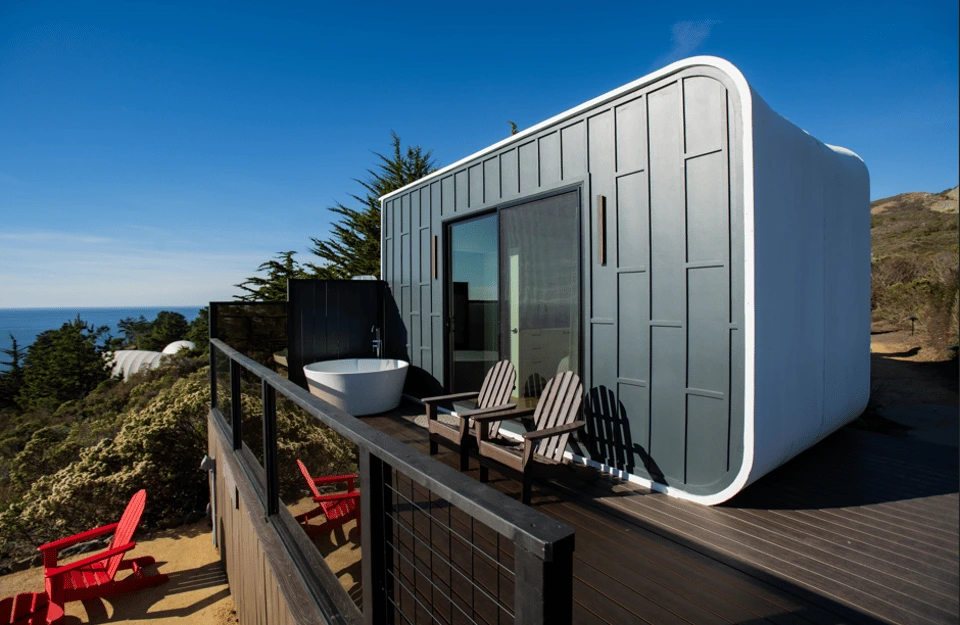
Prefab modular homes,
built in a factory. Printed in a day.
A prefab modular home is built in a controlled factory and delivered nearly complete — Azure takes it further by 3D-printing the whole structure from recycled plastic. From $24,900, up to 70% faster than site-built, move-in ready in weeks.
Prefab, modular, manufactured — what's the difference?
Prefab is the umbrella term: any home with major parts prefabricated in a factory instead of built stick-by-stick on your lot. Under that umbrella sit several very different products, and knowing which is which saves you money and permitting headaches.
Modular homes are a type of prefab. They're built as complete three-dimensional modules in a factory, transported to your site, and set on a permanent foundation. Crucially, they're built to the same state and local building codes as a site-built house — so they're financed, appraised, and insured like one. That's what "prefab modular homes" means: factory-built, code-built, permanent housing.
Manufactured homes (the successors to mobile homes) look similar but are built to the federal HUD code on a permanent steel chassis. They're often cheaper up front, but many jurisdictions restrict where they can go, and lenders treat them differently. A modular home is real property; a manufactured home often isn't.
3D-printed modular homes are the newest, third way to prefabricate. Instead of framing modules from lumber inside a factory, Azure robotically prints the entire structural shell — walls, roofline, integrated framing for openings — from fortified recycled polymers, then finishes it as a modular unit. You get the code path and permanence of modular with a printed envelope: seamless, sealed, and produced with zero print waste from the equivalent of 100,000 recycled plastic bottles per 120 sq ft.
Prices across the prefab world vary enormously by type and size — our guide to how much modular homes cost breaks down realistic budgets. If you're weighing footprints, start with small modular homes for compact sites or affordable modular homes if budget leads the decision.
From order to move-in, in 5 steps.
This is Azure's real production process — with real durations. Most of the "build" happens in the factory before your site ever sees a truck.
Configure your unit
Choose your model, layout, and finish options with a salesperson or through the online configurator. About an hour of your time locks in the spec and the fixed price.
Print your home
A robotic printer builds the structural shell from recycled materials in as little as one day — no framing crew, no cutting waste, no weather delays.
Install finishes
Electrical, plumbing, and interior finishes are all completed inside the factory — the same controlled conditions the shell was printed in.
Delivery
Your finished module is transported from our Gardena, CA facility to your site as one nearly-complete unit.
On-site installation
The unit is set, connected to utilities, and hooked up — then it's move-in ready. Days of site work, not months.
Weeks, not months
Add it up: the entire journey runs weeks end to end — up to 70% faster than traditional construction, with pricing fixed from day one.
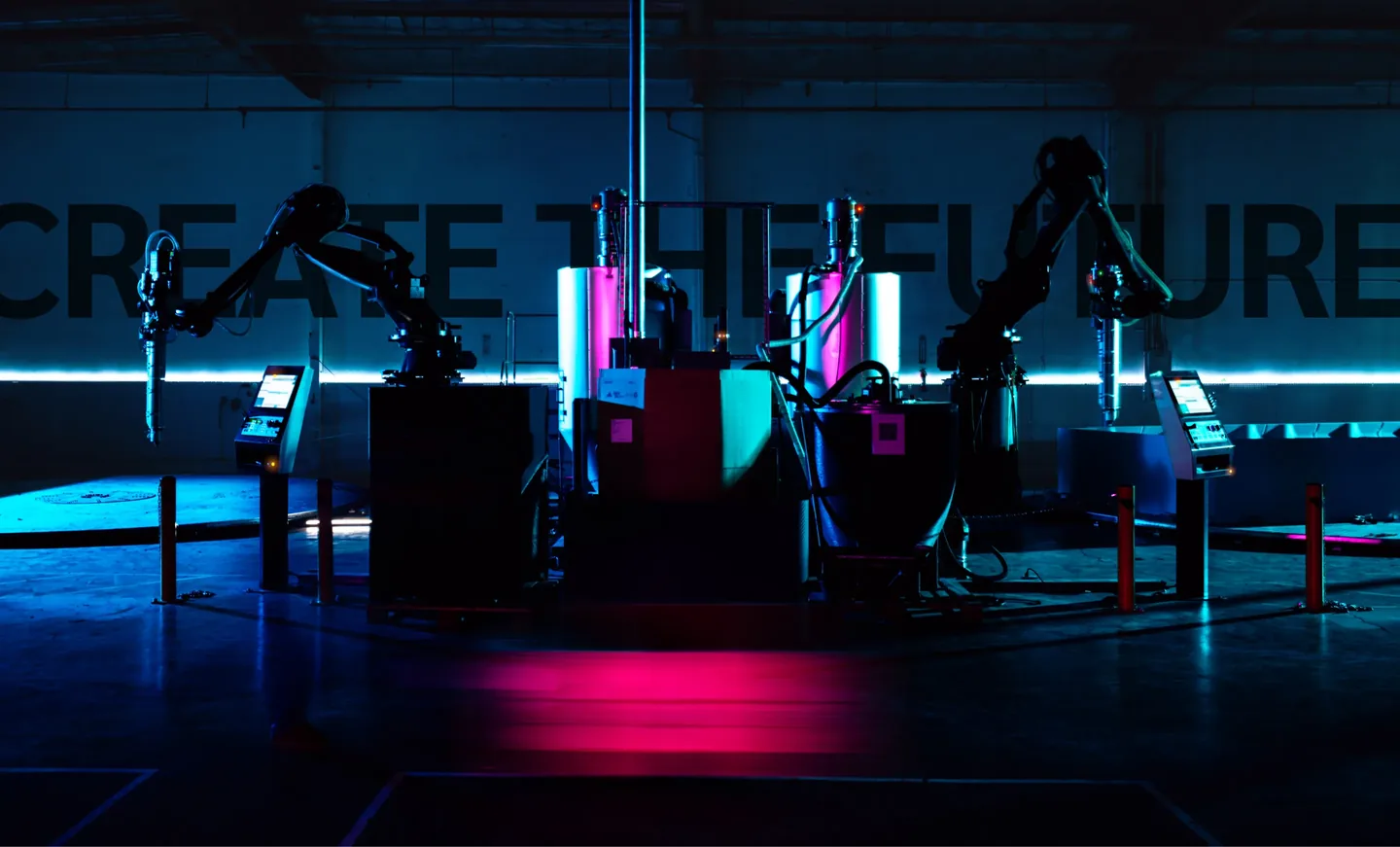
Printed, not framed.
Most prefab modular factories are assembly lines for lumber — the same stick-framing as site building, just indoors. Azure's Gardena facility is different: robotic arms print each structural shell in continuous layers of fortified recycled polymer, to tolerances hand framing can't match.
Because the shell is one printed piece rather than thousands of fastened parts, the envelope is inherently sealed and energy efficient, and there's no cut-off waste heading to landfill — 0% print waste, every unit. It's the reason TIME named Azure's homes among the Best Inventions of 2022.
Every unit — from studios to full 1–2 bedroom homes and ADUs — comes off this same line.
Why the factory wins.
The whole point of prefab is moving risk off your lot and into a controlled environment. Here's what that changes in practice.
- Shell printed in ±1 day, finished in 4–15 days
- Fixed price locked at configuration
- No weather delays — build runs indoors
- Consistent, machine-precise quality control
- Site disruption measured in days (1–4)
- Months of framing, trades, and sequencing
- Costs drift with change orders and labor
- Rain, heat, and supply gaps stall the schedule
- Quality varies crew to crew, day to day
- Your lot is a construction site for a season
Factory-built, finished for living.
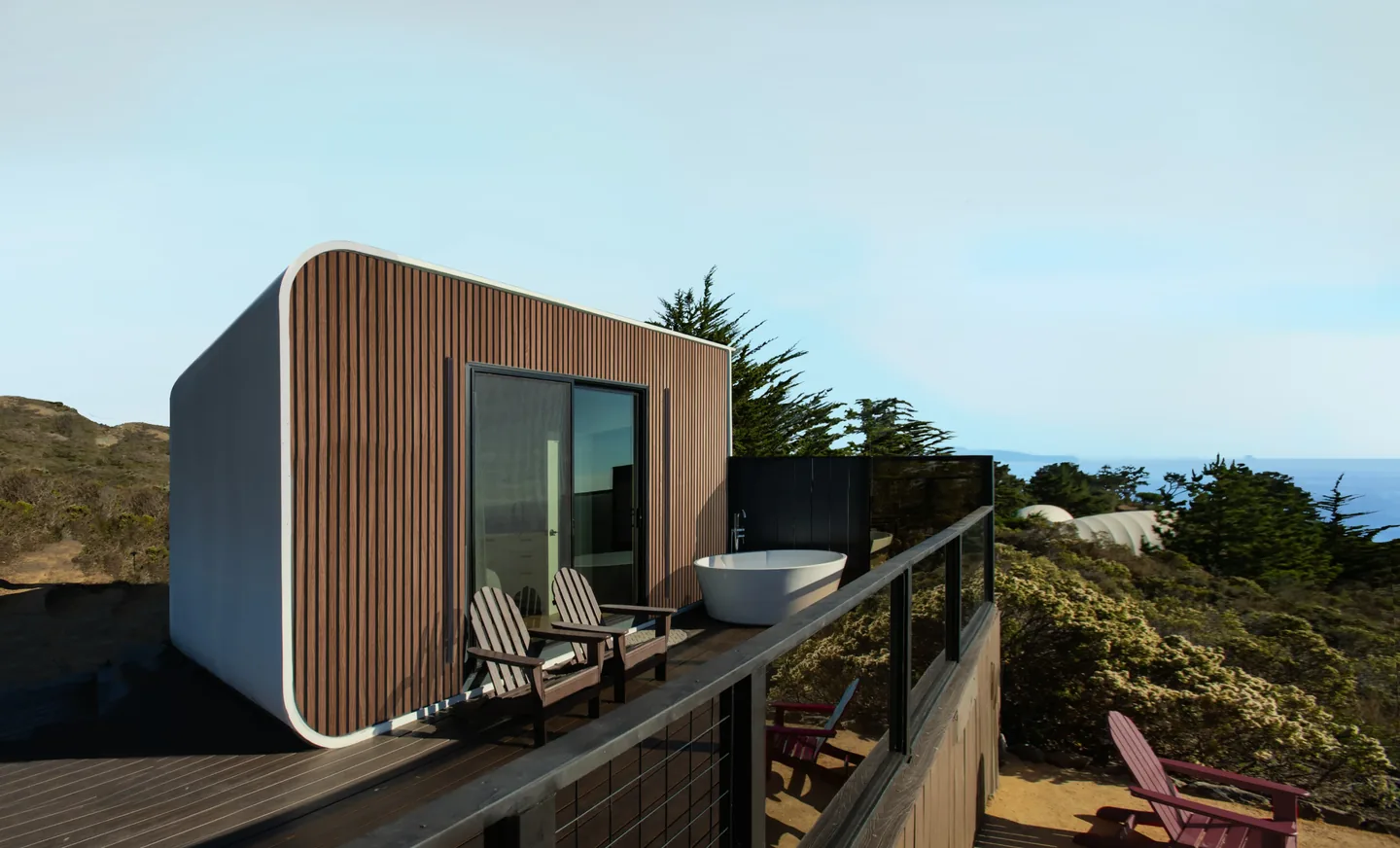 Studio Series
 Delivered & living in it
 X Series on wheels
Configure your prefab modular home.
Step 1 takes about an hour. Tell us your site and needs — we'll send models, fixed pricing, and current lead times.
The third way to prefab.
Azure Printed Homes builds the world's first robotically 3D-printed modular structures from recycled plastic, at our factory in Gardena, California. The lineup runs from tiny homes and backyard studios from $24,900 (Studio Series N_100, 100 sq ft) through homes on wheels, up to 900 sq ft two-bedroom homes and ADUs — every one printed, finished, and quality-checked before it leaves the building.
Because the process is standardized, so is the outcome: fixed pricing, published timelines, and a structure that arrives exactly as configured. Loan pre-qualification is available through our financing partner Acorn Finance, and if you want a unit tailored to your spec, see our custom modular homes options.
Not sure which prefab type fits your project?
Book a free consultation — we'll walk through zoning, foundations, timelines, and whether a printed modular unit is right for your site.
Prefab modular home FAQs.
What is the difference between prefab and modular homes?
"Prefab" is the umbrella term for any home substantially built in a factory. "Modular" is one type of prefab: complete 3D modules built to state and local building codes, delivered to your site, and set on a permanent foundation. So every modular home is prefab, but not every prefab home is modular — panelized kits and manufactured (HUD-code) homes are prefab too.
Is a prefab modular home the same as a manufactured home?
No. Manufactured homes are built to the federal HUD code on a permanent steel chassis and are often restricted by local zoning, while modular homes meet the same building codes as site-built houses and sit on permanent foundations. That difference affects where you can place the home and how lenders, appraisers, and insurers treat it.
Where do 3D-printed homes fit in the prefab world?
They're a new, third way to prefabricate. Instead of framing modules from lumber in a factory, Azure robotically prints the entire structural shell from fortified recycled polymers, then completes it as a modular unit. You get the modular code path and permanence with a printed envelope — seamless, sealed, and produced with 0% print waste.
How long does Azure's prefab modular process take end to end?
Five steps: configuration takes about an hour; printing the shell takes roughly one day; factory finishing (electrical, plumbing, interiors) takes 4–15 days; delivery takes 1–2 days; and on-site installation with utility hookups takes 1–4 days. In total that's weeks from order to move-in — up to 70% faster than traditional construction.
How much of the home is actually finished in the factory?
Nearly all of it. The shell is printed, then electrical, plumbing, and interior finishes are installed inside the factory before the unit ships. On-site work is limited to setting the unit, connecting utilities, and final hookups — typically 1–4 days — so your lot is never a months-long construction site.
What do Azure's prefab modular homes cost?
Studio Series units start at $24,900 (N_100, 100 sq ft), homes on wheels start at $69,900, and full homes and ADUs run from $89,900 (360 sq ft) to $219,900 (900 sq ft, 2 bed / 1.5 bath). Pricing is fixed at configuration, and loan pre-qualification is available through Acorn Finance.
Keep researching modular.
Ready to start step one?
Tell us about your site and what you need the home to do, and we'll send models, fixed pricing, and current lead times. We respond to every inquiry within one business day.
18101 S Figueroa St
Gardena, CA 90248