
How much are modular homes,
really?
The honest answer, with real numbers: market price ranges by size, every cost that gets added on top of the sticker price — and Azure's actual 3D-printed model prices, from $24,900 to $219,900.
How much do modular homes cost in 2026?
Across the U.S. market, most modular homes cost roughly $80–$160 per square foot for the factory-built home itself, and about $120–$270 per square foot once land preparation, foundation, delivery, and installation are included — industry estimates that vary widely by region, size, and finish level. In practice that puts a small studio unit in the low tens of thousands and a full-size family modular home anywhere from about $150,000 to $400,000 all-in.
Azure's prices are simpler, because the home is 3D-printed and fully finished in our Gardena, CA factory: real starting prices run from $24,900 for a 100 sq ft studio to $219,900 for a 900 sq ft 2-bedroom home, with electrical, plumbing, and interior finishes already installed before delivery. If you're shopping the budget end of the market, our guides to affordable modular homes and modular homes under $100k break down what those numbers buy.
Modular home prices by size.
Typical all-in U.S. price ranges by home size — industry estimates, not Azure quotes. Actual figures depend heavily on region, site conditions, and finish level.
*Industry estimates for planning purposes, including typical site work; not quotes. Azure row shows actual base prices before site costs.
The real cost of modular homes: what drives the price.
The advertised base price is only part of the budget. Six line items decide what you'll actually spend — on any modular home, from any builder.
The factory-built home
The largest line item: the structure itself, sized by square footage and spec. With Azure this includes electrical, plumbing, and interior finishes installed in the factory — not a bare shell.
Land prep & grading
Clearing, grading, and access for delivery. Industry estimates run a few thousand dollars for a flat lot to tens of thousands for sloped or remote sites.
Pad, piers, or slab
Modular homes need an engineered foundation. Simple pier systems cost far less than full slabs or basements — smaller units like Azure's need lighter foundations.
Hookups & connections
Water, sewer or septic, and electrical connections. Cost depends almost entirely on how far your site sits from existing service — budget more for rural land.
Transport & placement
Hauling the home from the factory and setting it on the foundation, sometimes with a crane. Distance from the factory and site access drive this cost.
Permits & fees
Building permits, plan checks, and impact fees vary enormously by city and county — from a few hundred dollars to five figures in some California jurisdictions.
Azure's actual lineup & starting prices.
Every model below is 3D-printed from recycled plastic and finished in the factory — these are real published starting prices, not "call for pricing."
Starting prices for the base configuration, before site work, delivery, and permits. Azure also builds tiny homes from $24,900 and soundproof office pods — see the full lineup on the models page.
Fixed factory pricing, no surprise overruns.
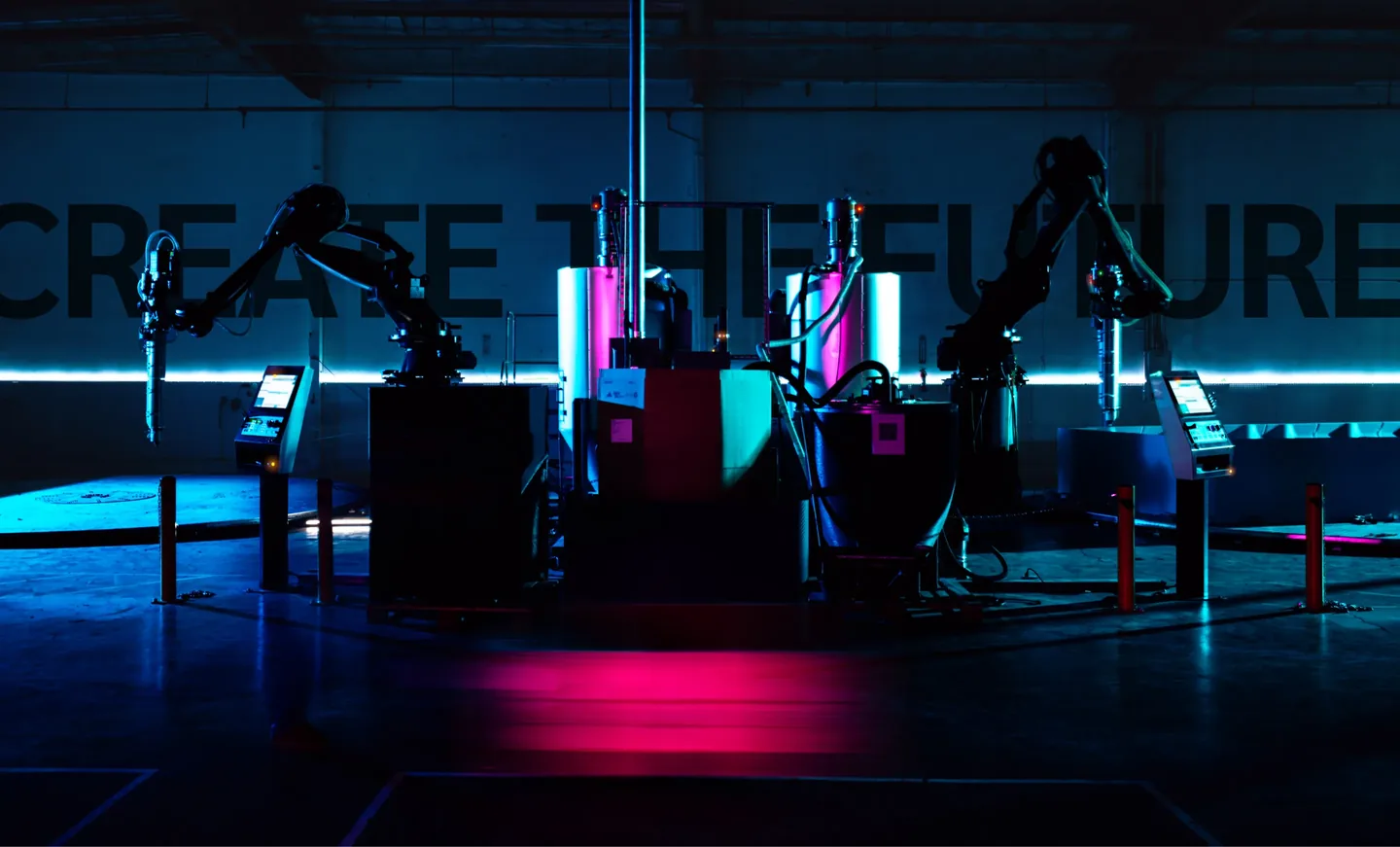
Traditional builds are priced as moving targets — labor, weather, and material swings push the final bill past the estimate. Azure homes are robotically printed from recycled polymers in about a day, then finished in the factory over 4–15 days: electrical, plumbing, and interiors are done before the home ships.
Because nearly all the work happens in one controlled facility, the price you configure is the price you pay for the home. Delivery takes 1–2 days and on-site installation 1–4 days — up to 70% faster than traditional construction, which also means months less spent on rent or construction-loan interest.
Real homes at real prices.
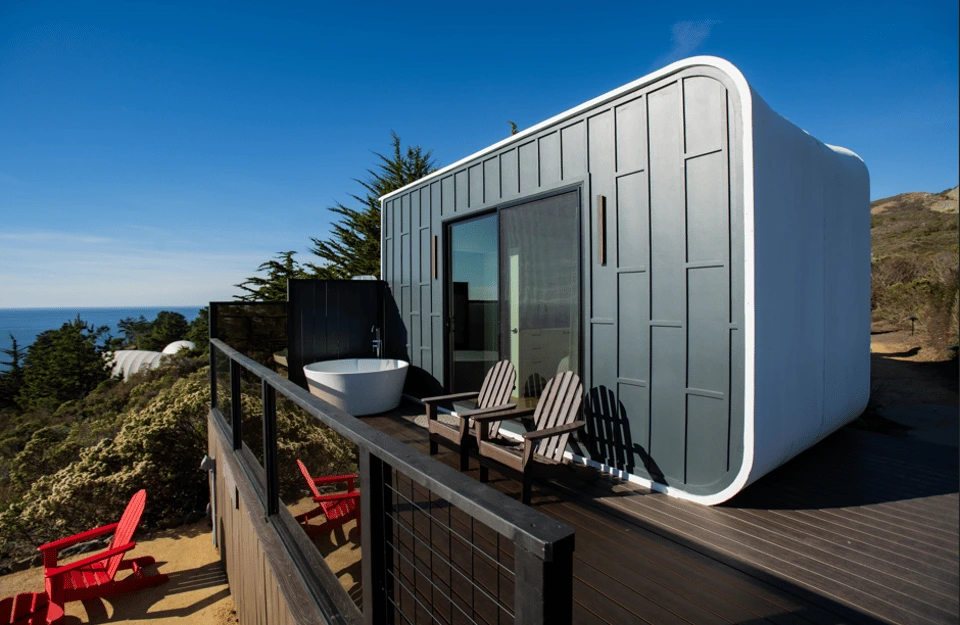
 Studios from $24,900ADUs from $89,900
 Tiny homes from $24,900
Get an exact price for your site.
Tell us your location and the model you're eyeing — we'll send fixed pricing, delivery costs, and lead times, no obligation.
How to budget for a modular home without surprises.
Compare total cost, not sticker price
A cheap base price with a bare-shell spec can end up costing more than a higher price that includes finishes. Azure homes ship with electrical, plumbing, and interiors installed, so the comparison line is "move-in ready," not "shell delivered." When comparing builders, ask each one exactly what the quoted price includes — our guide to prefab modular homes explains the different factory-built approaches and how they're priced.
Budget site costs as a separate line
Plan foundation, utilities, delivery, and permits as their own budget with a 10–15% contingency. On a simple, utility-adjacent lot these can stay in the low five figures for a small unit; complicated sites cost more regardless of which builder you choose. Smaller footprints keep every one of these line items down — one reason small modular homes deliver the lowest all-in cost per usable square foot.
Get pre-qualified before you configure
Azure offers loan pre-qualification through our financing partner Acorn Finance — you can check options without affecting your plans, then configure your unit knowing your real budget. Configuration itself takes about an hour, online or with a salesperson.
Match the model to the need, not the maximum
The fastest way to overspend is buying square footage you won't use. A 2-bedroom modular home like the Azure 900 covers most couples and small families at $219,900, while a backyard studio solves a home-office or guest-suite problem for under $30,000.
Not sure which model fits your budget?
Book a free consultation — we'll walk through models, site costs, and financing for your specific situation.
Modular home cost FAQs.
How much are modular homes on average?
As industry estimates, most U.S. modular homes run $80–$160 per square foot for the home itself and $120–$270 per square foot all-in with site work — roughly $150,000–$400,000 for a full-size family home. Azure's real starting prices are $24,900 (100 sq ft studio) to $219,900 (900 sq ft, 2 bed, 1.5 bath), factory-finished.
How much do modular homes cost per square foot?
Industry estimates put the factory-built structure at $80–$160 per square foot, with total installed cost of $120–$270 per square foot depending on region, foundation, and finish level. Azure's models work out to roughly $244–$388 per square foot at base price — but that includes finished electrical, plumbing, and interiors, and small footprints naturally carry a higher per-foot rate while keeping the total price low.
What is included in the cost of modular homes — and what's extra?
It varies by builder, which is why quotes are hard to compare. Azure's base price includes the printed structure with electrical, plumbing, and interior finishes installed in the factory. Site work, foundation, utility hookups, delivery, and permits are separate for any modular home, from any builder — budget those as their own line with a contingency.
Are modular homes cheaper than site-built homes?
Usually, yes. Factory construction cuts labor cost and waste, and industry estimates typically put modular 10–20% below comparable site-built homes. Azure's 3D-printing goes further: homes print in about a day with zero print waste and are up to 70% faster overall, which also saves months of rent or construction-loan interest while you wait.
Can I finance a modular home?
Yes. Azure offers loan pre-qualification through our financing partner Acorn Finance, so you can check your options and monthly payment before configuring a unit. Permanently installed modular homes on owned land may also qualify for conventional mortgage products through your own lender.
How much do delivery and installation add?
It depends on distance from the factory and your site access — there's no honest flat number. Azure's delivery takes 1–2 days and on-site installation with hookups takes 1–4 days, and because our units are compact single modules they avoid the multi-crane set costs of large multi-section homes. We quote delivery and installation for your exact address before you commit.
Keep researching by budget.
Want a real number, not a range?
Tell us your site and the model you're considering, and we'll send exact pricing, delivery costs, and lead times. We respond to every inquiry within one business day.
18101 S Figueroa St
Gardena, CA 90248