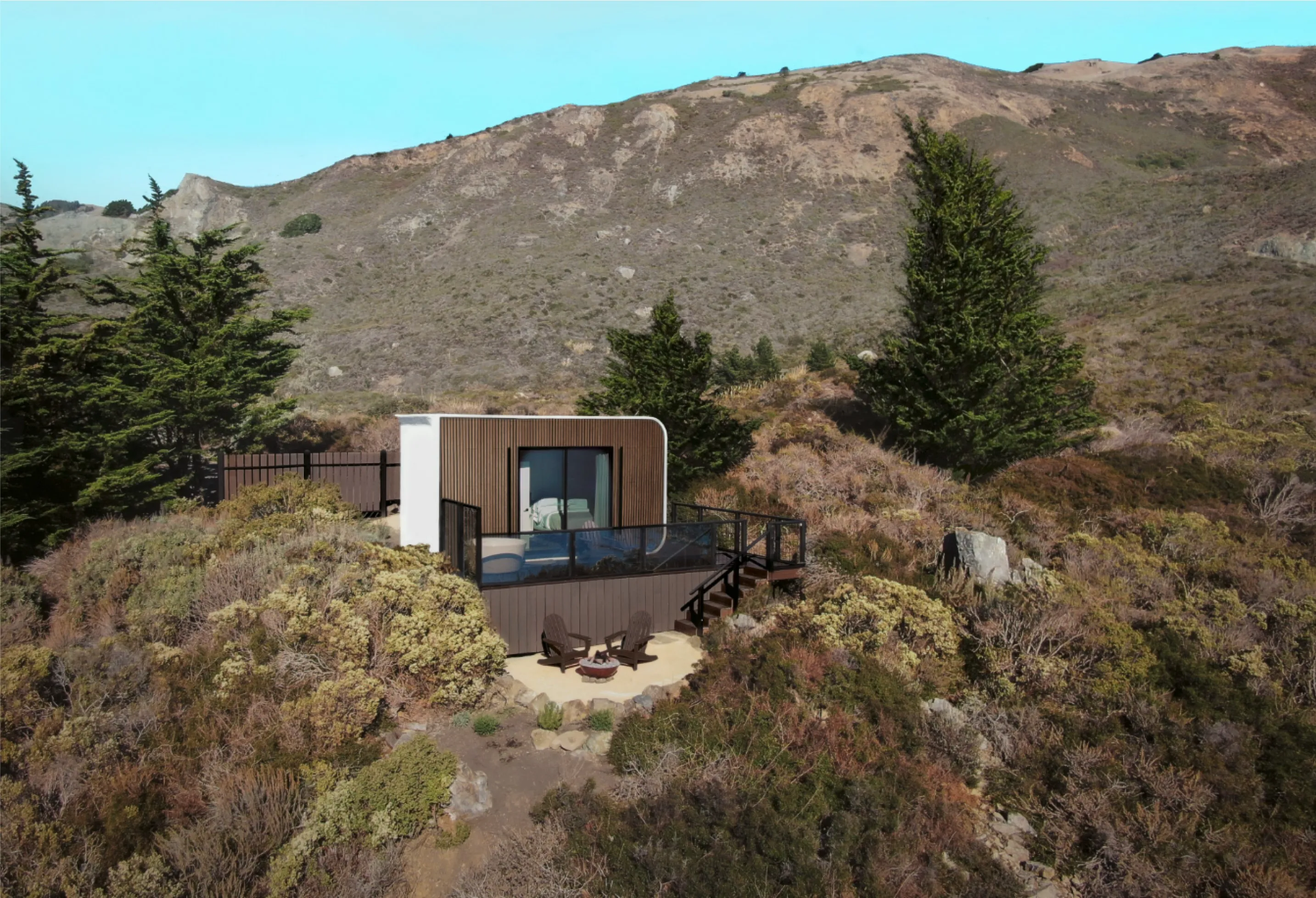
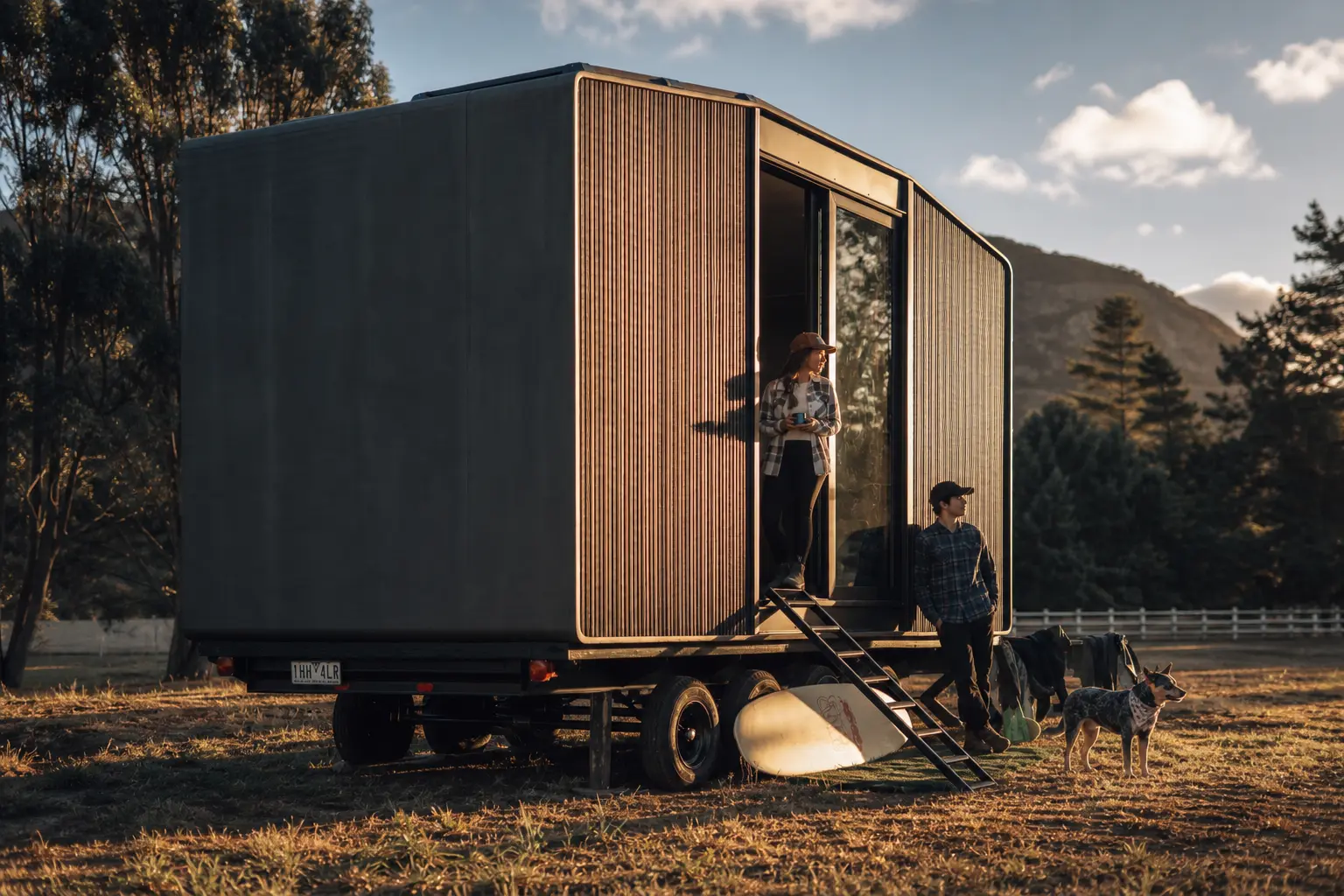
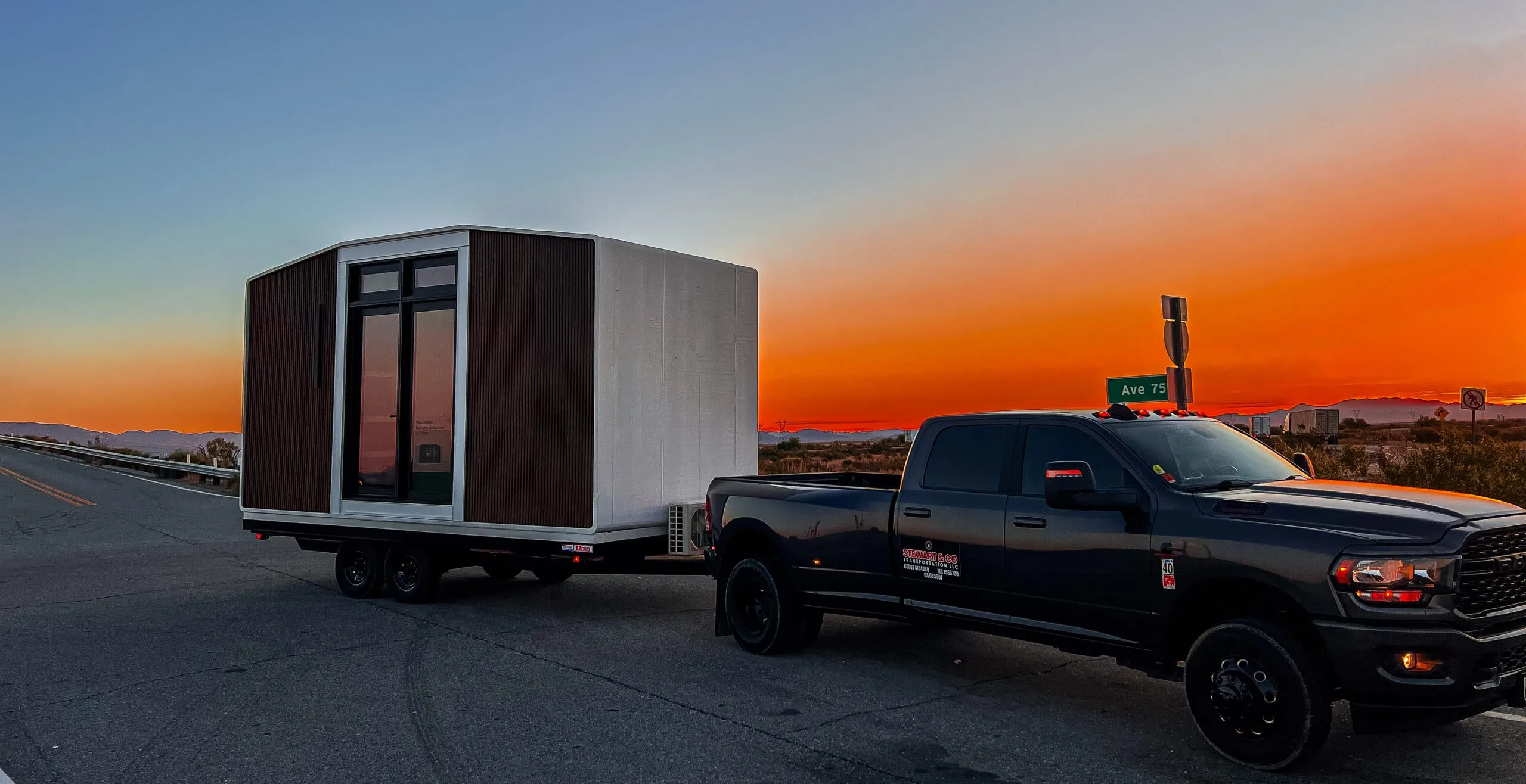
Modular homes and manufactured homes are often mentioned together, but they are not the same thing. Both are built in a factory instead of being constructed entirely on-site, but they follow different building standards, installation methods, and long-term housing categories.
The main difference is that modular homes are usually built to local or state building codes and installed on a permanent foundation, while manufactured homes are built to federal HUD standards and are often placed on a chassis. This difference affects permitting, financing, design flexibility, resale value, and how the home is classified.
At Azure Printed Homes, we create modular homes, ADUs, studios, homes on wheels, office pods, glamping units, and other factory-built spaces using 3D printing technology and recycled plastic materials. Our work fits into the modern modular housing category because the units are designed, built, finished, delivered, and installed through a controlled production process.
What Is a Modular Home?
A modular home is built in sections or complete modules inside a factory. After production, the home is transported to the site and installed on a prepared foundation or approved base. Once installed, a modular home can look and function much like a traditional site-built home.
The modular process allows several steps to happen at the same time. While the home is being produced in the factory, site preparation, foundation work, and utility planning can move forward separately. This can reduce delays and make the overall project more organized.
Modular homes can include bedrooms, bathrooms, kitchens, living areas, large windows, storage space, exterior finishes, and energy-efficient systems. They may be compact backyard units or larger residential structures depending on the model, layout, and local building requirements.
What Is a Manufactured Home?
A manufactured home is also built in a factory, but it follows a different legal and construction category. In the United States, manufactured homes are built under the federal HUD code. They are usually constructed on a permanent steel chassis and transported to the final location.
Manufactured homes are often associated with mobile home communities, private lots, or leased land. Some may be installed more permanently, but the original construction standard and chassis-based design remain important parts of the classification.
This does not mean one option is automatically better than the other. It means buyers need to understand what they are purchasing, how the home will be permitted, where it can be placed, and what rules apply in their area.
The Main Difference Between Modular and Manufactured Homes
Modular and manufactured homes can seem similar at first because both are built in a factory and delivered to a site. The important difference is that they are not usually regulated, installed, or classified in the same way. Understanding these details can help buyers compare options more clearly before choosing a home type.
Building Codes
The biggest difference between modular and manufactured homes is the building code they follow. Modular homes are generally built to state and local building codes, similar to site-built homes. Manufactured homes are built to the federal HUD code, which places them in a separate housing category.
This matters because building codes affect how the home is designed, inspected, approved, and installed. A modular home may be reviewed more like a traditional home after installation, while a manufactured home remains classified under manufactured housing rules.
Key code differences usually include:
- Modular homes: Built to local or state building codes and often reviewed like site-built homes after installation.
- Manufactured homes: Built to federal HUD standards and classified as manufactured housing.
- Site-built homes: Built entirely on-site under local and state code requirements.
Foundation and Structure
The foundation is another major difference. Modular homes are commonly placed on permanent foundations or site-specific bases. Once installed, they are often treated as fixed residential structures.
Manufactured homes are built on a chassis, which is part of their construction system. Even when they are placed on a permanent or semi-permanent site, the chassis-based design remains one of the features that separates them from modular homes.
In simple terms, the structure often differs in these ways:
- Modular homes are usually installed on a prepared foundation or approved base.
- Manufactured homes are built with a chassis as part of the structure.
- Homes on wheels are another category and should not automatically be treated as either modular or manufactured without checking the details.
Factory Construction
Both modular and manufactured homes benefit from factory construction. Building indoors helps protect materials from weather exposure, improves consistency, and allows a more controlled workflow. It can also reduce construction waste compared with many traditional building methods.
At Azure Printed Homes, we use robotic 3D printing to create modular spaces from recycled plastic materials. Our process is designed to reduce waste, improve production speed, and support flexible housing needs. Some models are compact studios, while others are larger ADUs or homes on wheels.
Delivery and Installation
After factory production, both types of homes are transported to the final site. The difference is in how they are placed and completed. Modular homes are usually installed on a prepared foundation or approved base, then connected to utilities and finished according to the project requirements.
A typical Azure project can include configuration, factory printing, interior finishing, delivery, site installation, and utility connections. This structure helps make the process clearer for homeowners, developers, hospitality operators, and organizations planning housing projects.
Types of Factory-Built Homes
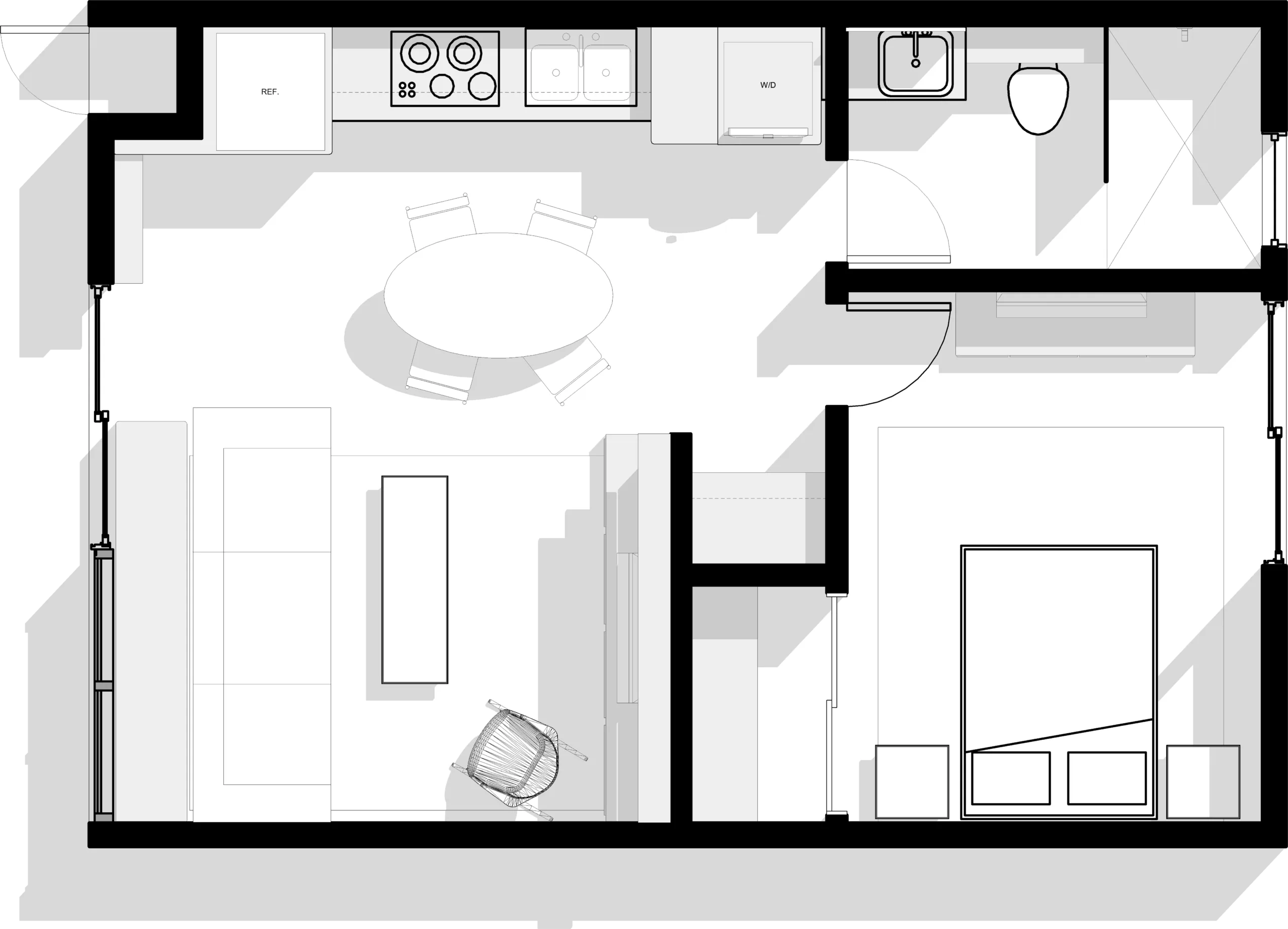
Factory-built housing is not limited to one format. Some units are designed as permanent backyard living spaces, some are compact studios, and others are built on a chassis for mobility. Because these structures can serve different purposes, the category depends on how the unit is built, installed, and used.
ADUs for Flexible Living Space
ADUs are often designed as fixed living spaces on a residential property. They may be used for family members, guests, rental income, home offices, or flexible backyard living. Modular construction can make this type of project more organized because the unit is produced in a controlled factory setting while site work can move forward separately.
We offer several ADU and home models, including A-360 at $89,900, A-540 at $134,900, A-720 at $174,900, and A-900 at $219,900. Depending on the layout, these models can include living space, bedrooms, bathrooms, and kitchens.
Studio Units for Compact Backyard Use
Studio-style units are usually smaller than full ADUs and can support many everyday uses. They may work as a backyard office, creative studio, guest space, hobby room, or private retreat. Because they use compact footprints, they can be a practical option for homeowners who need extra space without planning a full-size home addition.
Studio models start at $24,900 for A/D/C-100 and N100, while A/D/C-120 models start at $29,900. These units are part of our smaller modular options and are designed for flexible property use.
Homes on Wheels for Mobility
Homes on wheels can create confusion because they are factory-built and mobile. However, they are not always the same as manufactured homes. Their classification depends on the structure, chassis, certification, and local rules.
Our X Series homes on wheels are designed as chassis-based units for flexible living and mobility. Models include X180 at $69,900, X270 at $84,900, and X360 at $109,900. These units are different from our larger ADU-style modular homes because they are built for a wheel-based format.
Why the Category Matters
The label “factory-built home” can refer to several different structures. A modular ADU, compact studio, home on wheels, tiny home, and manufactured home may all involve factory production, but they are not automatically the same in terms of permitting, placement, foundation, or long-term use.
Before choosing a unit, buyers should look at the details that affect the project most:
- Structure type: Check whether the unit is modular, chassis-based, manufactured, or another type of factory-built structure.
- Intended use: Decide whether the space is meant for full-time living, guest use, work, rental use, or mobility.
- Installation needs: Review foundation, delivery, access, utility, and site requirements before planning the project.
- Local rules: Permits and placement rules can vary by city, county, and state.
The details matter more than the broad label. Understanding the category early can make it easier to compare options and plan the project with fewer surprises.
Common Confusion Around Modular and Manufactured Homes
People confuse modular and manufactured homes because both are built away from the final site. In everyday conversation, people may also use words like prefab, factory-built, modular, mobile, and manufactured as if they mean the same thing.
In reality, these terms describe different construction methods and housing categories. Prefab is a broad term. Modular is one type of prefab construction. Manufactured housing is another category with its own federal standards. Homes on wheels, tiny homes, pods, and backyard studios may also fall into different classifications depending on design and use.
This is why it helps to ask specific questions before comparing homes. How is the unit built? What code does it follow? Does it sit on a foundation or chassis? Does it include plumbing and electrical systems? What permits are required? How will it be delivered and installed?
Which Option Is Better?
There is no single best option for every buyer. Modular homes may be better for people who want a permanent residential structure, an ADU, or a home that aligns more closely with local building codes. Manufactured homes may be useful for buyers looking for a different type of factory-built housing with its own standards and placement options.
The right choice depends on budget, location, land conditions, zoning, financing, design goals, and how the home will be used. A backyard office has different requirements than a full-time residence. A mobile unit has different rules than a permanent ADU.
At Azure Printed Homes, we focus on modular and flexible factory-built spaces that can serve many needs, from compact studios and tiny homes to ADUs, glamping units, office pods, and developer housing solutions. Our goal is to make housing production faster, more resource-conscious, and easier to adapt to different projects.
Conclusion
Modular and manufactured homes are related, but they are not the same. Both are factory-built, but modular homes are typically built to local or state building codes and often installed on permanent foundations. Manufactured homes are built to the federal HUD code and usually include a chassis-based construction system.
For buyers, the difference matters because it can affect permits, placement, financing, design options, and long-term use. Understanding the category of the home is one of the first steps toward making the right decision.
We at Azure Printed Homes work in the modern factory-built housing space with 3D-printed modular homes, ADUs, studios, homes on wheels, office pods, tiny homes, and glamping units. By using recycled plastic materials and a controlled production process, we create flexible spaces for homeowners, developers, hospitality projects, and organizations looking for practical housing solutions.