Buying a tiny home is not quite like buying a regular house, and it is not quite like buying a product off a shelf either. It sits somewhere in the middle. You are choosing a structure, but you are also planning for land, delivery, utilities, permits, and how the space will actually be used.
That is why the best place to buy a tiny home depends on the type of project. A backyard studio, a tiny home on wheels, a park model, and an ADU-style unit may all be called “tiny homes,” but they are not bought or planned in exactly the same way.
At Azure Printed Homes, we design and build 3D-printed prefab spaces, including small tiny home formats, Studio Series backyard units, Homes on Wheels, and Homes & ADUs. Our smallest tiny home formats start from $19,900, while larger models cost more depending on size, layout, utilities, and the type of use.
The goal is not just to find a tiny home for sale. The goal is to find the right buying path for the space you actually need.
Where To Start Your Tiny Home Search
Most buyers start by looking at photos, layouts, and prices. That makes sense, but it is not the whole picture. Before choosing where to buy, it helps to decide what kind of tiny home project you are planning.
In general, buyers usually look at a few options:
- Directly from a prefab tiny home manufacturer
- From a tiny home builder or custom builder
- Through a dealer or reseller
- Through a park community or development
- Through an ADU or backyard housing provider
Each path can work, but they are not equal for every project. Buying direct from a manufacturer is often better when you want more clarity around model specs, production, delivery, and configuration. A dealer may be useful when units are already available locally. A custom builder may make sense for highly specific one-off designs, but timelines and costs can be less predictable.
For many people, the right starting point is a prefab manufacturer because it gives the project a clearer structure from the beginning.
Buying Direct From A Tiny Home Manufacturer
Buying directly from a tiny home manufacturer can make the process easier to understand. You are not only looking at a finished model. You can ask about the build method, materials, delivery process, utility connections, timeline, and what site preparation will be needed.
This matters because tiny homes are still real structures. Even a small one needs to match the property, local rules, and the way the buyer plans to use it.
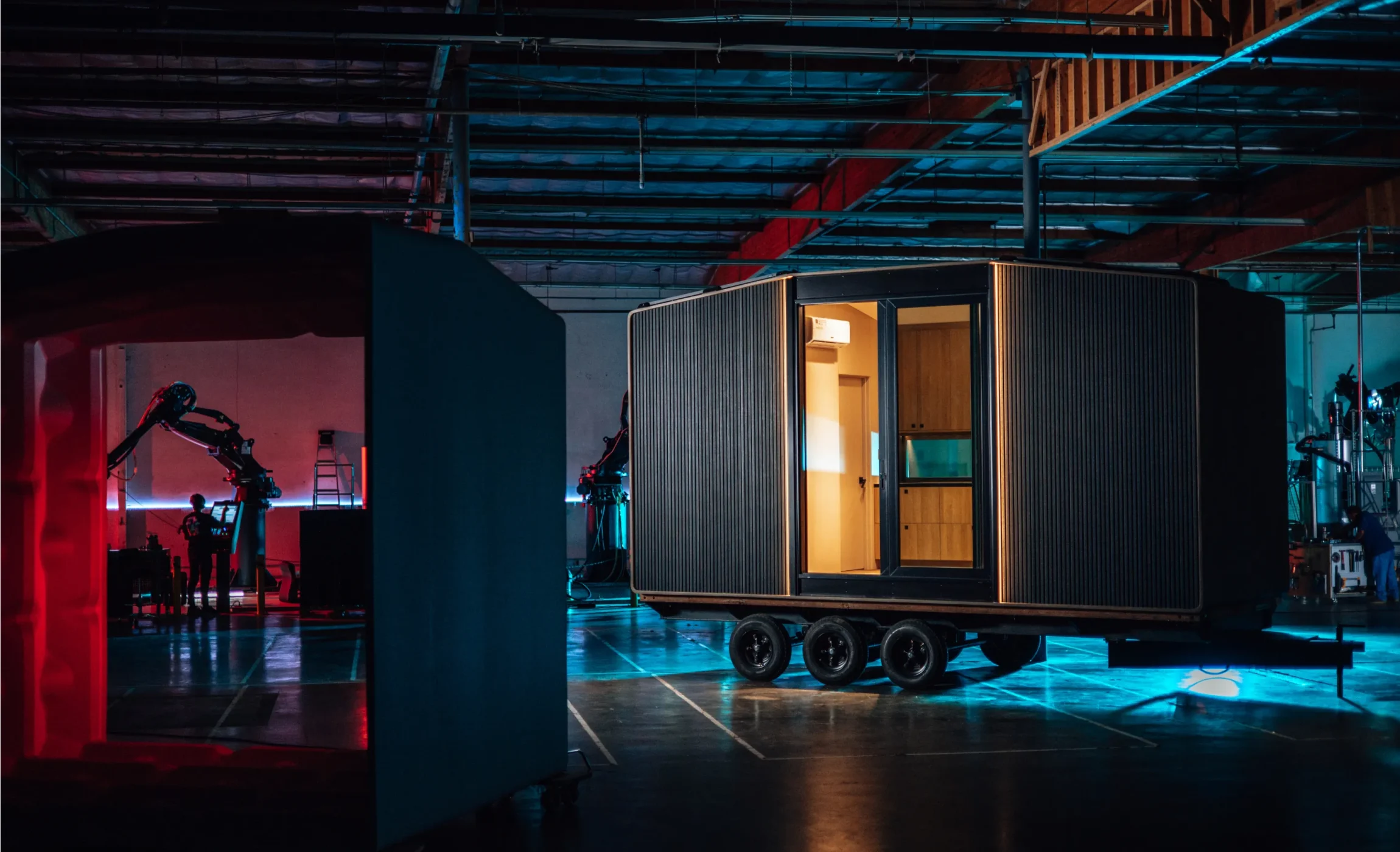
At Azure, we build our units in Los Angeles, CA. Buyers design a Backyard Studio, ADU, tiny home, or home through our online configurator, and then we print and prefabricate the structure before delivery. That kind of process can help buyers move from browsing to planning without guessing what happens next.
Buying direct also helps when comparing models. A 100 sq ft studio, a 180 sq ft home on wheels, and a 360 sq ft ADU-style unit may all look compact, but they have different systems, layouts, and site needs. Talking to the people who build the product helps make those differences clearer.
Price Ranges By Project Type
Tiny home pricing depends heavily on the type of space. A small backyard studio will usually sit in a lower range than a home on wheels with a kitchen and bathroom. A larger ADU-style unit will usually cost more again because it behaves more like a residential project.
Here is a practical way to think about Azure starting ranges:
| Type Of Tiny Home Project | Azure Starting Price Range | Best For |
| Small prefab tiny home formats | From $19,900 | Compact spaces starting around 100 sq ft |
| Studio Series | About $24,900-$29,900 | Backyard offices, studios, hobby rooms, flexible extra space |
| Homes on Wheels | About $69,900-$109,900 | Chassis-based tiny homes with kitchen, bathroom, and sleeping layouts |
| Homes & ADUs | About $89,900-$219,900 | Larger residential-style units with more room and full living features |
These are starting ranges, not full project totals. Delivery, site work, taxes, utility hookups, permits, foundation needs, and optional upgrades can all affect the final budget.
Choosing The Right Tiny Home Buying Path
After looking at the starting price ranges, the next step is to match the type of tiny home to the way the space will be used. This is where buying decisions usually become clearer. A backyard studio, a home on wheels, and a larger ADU-style unit can all be smart choices, but they solve different problems.
At Azure Printed Homes, we build several types of 3D-printed prefab spaces, so we usually suggest starting with the purpose of the project rather than only the lowest price. Some buyers need a quiet room behind the main house. Others need a more complete tiny home with a kitchen, bathroom, and sleeping area. Some need a longer-term residential setup with more square footage and utility planning.
Backyard Studios For Extra Space
A backyard studio is often the easiest place to start if the goal is extra space rather than full-time living. These units can work well as offices, creative rooms, guest-style spaces, wellness rooms, or quiet retreats close to the main home.
Our Studio Series includes the N_100, D_120, and A_120. The N_100 is a 100 sq ft model, while the D_120 and A_120 are 120 sq ft models. Current main product listings show these models starting around $24,900-$29,900, depending on the model and configuration.
This is usually a good buying path for homeowners who do not need a kitchen, bedroom, bathroom, or full residential setup. The project can still involve delivery, electrical work, site placement, and local requirements, but it is usually simpler than buying a complete tiny home.
Before buying, it is still worth checking whether the property can support the structure. Even small backyard units may need attention to setbacks, access, electrical feed, HOA rules, and local permit requirements.
Homes On Wheels For Flexible Living
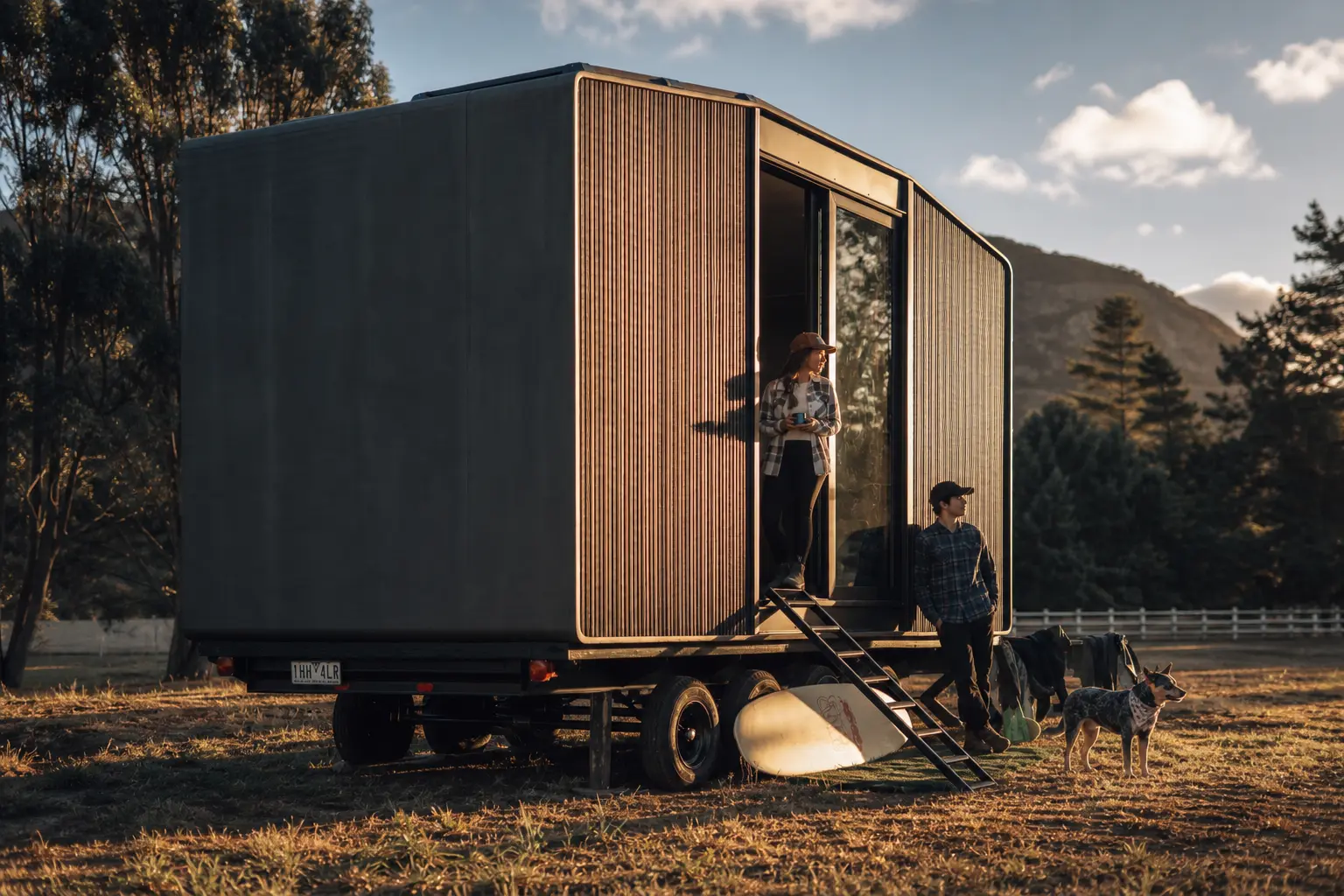
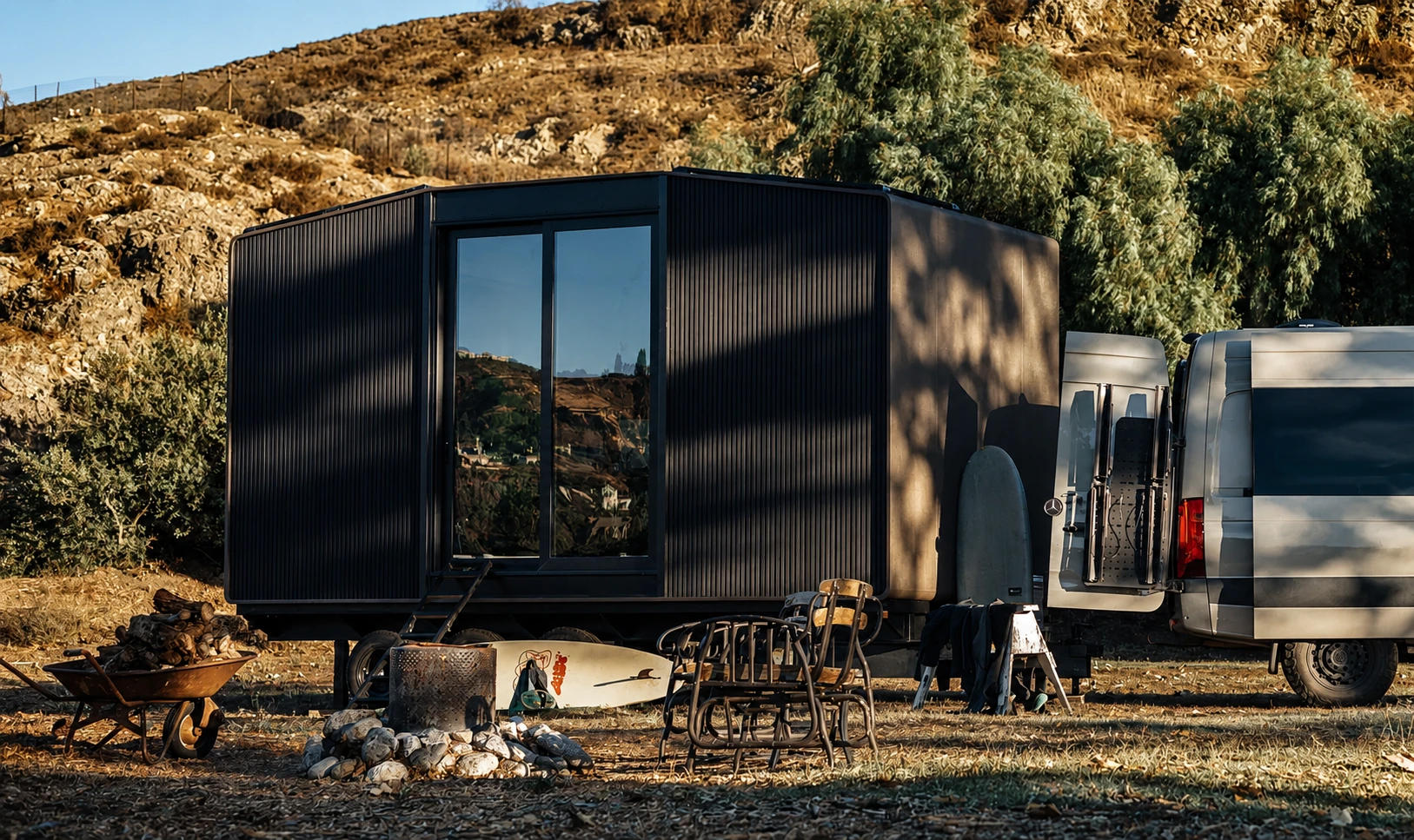
Tiny homes on wheels are a different category. They are usually more complete than backyard studios because they can include a kitchen, bathroom, sleeping area, and built-in living features.
Our X Series starts around $69,900 for the X_180, around $84,900 for the X_270, and around $109,900 for the X_360. The X_180 is designed as a studio-on-the-move, the X_270 adds a one-bedroom layout, and the X_360 includes two bedrooms, one bathroom, a kitchen, and washer/dryer space.
This kind of unit can make sense for park communities, flexible living, rental settings, and properties where a chassis-based model is allowed. The important word there is “allowed.” Before buying a home on wheels, buyers should confirm zoning rules, park model requirements, community guidelines, and placement options.
A tiny home on wheels can feel simple because it arrives as a finished unit, but the legal and site side still matters. It is better to check those details early than to choose a model first and discover later that the location is not a match.
Homes And ADUs For More Permanent Use
For buyers who need more room, more privacy, or a more residential setup, a larger home or ADU-style unit may be the better path.
Our Homes & ADUs category includes models from 360 sq ft up to 900 sq ft. Current prices start from about $89,900 to $219,900 depending on the model and layout.
This category is usually better suited for multigenerational living, rental income, guest housing, family use, or a more permanent backyard housing solution. It also needs more planning. Larger units may involve building permits, foundation work, utility connections, grading, drainage, inspections, and site-specific coordination.
The buying process should reflect that. A larger small home should not be treated like a simple online purchase. It should be planned as a compact housing project where the structure, site, utilities, and local requirements all move together.
What To Check Before You Buy
Before buying any tiny home, it helps to slow down and check the practical details. A beautiful model is only useful if it works on the property and fits the buyer’s real needs.
The first thing to check is where the unit will go. A flat, accessible site is easier than a narrow backyard, steep lot, or remote property. Delivery access matters because the unit still has to reach its final location.
The second thing to check is utility demand. A studio may only need electrical service. A tiny home with a kitchen and bathroom needs water, sewer, plumbing, and more planning. We design units larger than 120 sq ft with electricity, water, and sewer connections. Units under 120 sq ft are wired for electrical only.
The third thing to check is local approval. Some small structures may have simpler requirements, but local rules vary. Larger units and ADU-style projects usually need more formal permitting. A buyer should know this before choosing a model, not after.
Delivery, Timeline, And Site Planning
Where you buy a tiny home also affects the delivery process. A good buying path should give you clear expectations around production, shipping, site preparation, and installation timing.
Our backyard studios can usually be delivered within 30-60 days depending on location, while ADUs and homes usually take around 90-120 days. That timeline still depends on the site being ready and local requirements being handled properly.
The useful part of prefab construction is that the unit and the site can often move forward at the same time. While the structure is being produced, the property can be prepared for placement, foundation needs, and utility connections.
That is one reason buying directly from a prefab manufacturer can be helpful. The process is easier to plan when the model, production, and delivery details are connected from the beginning.
Buying For A Park, Rental, Or Community
Some buyers are not purchasing one tiny home for personal use. They may be planning a rental setup, glamping site, park community, disaster recovery housing, or a larger small-home development.
In that case, the buying decision changes. The focus is not only on the individual unit. It is also about repeatability, delivery timing, maintenance, resident comfort, utilities, and how the units work together on a site.
Our tiny home and park model formats are designed with this kind of use in mind. Smaller units can support fast deployment and flexible layouts, while larger options can serve more permanent residential needs.
For larger projects, it is especially important to think beyond the first purchase. Site layout, infrastructure, delivery schedule, permitting, and long-term use can shape the full cost and timeline.
A Simple Buying Checklist
Before choosing where to buy a tiny home, it helps to answer a few questions:
- Will the space be used as an office, guest room, rental, full-time home, or ADU?
- Does it need a kitchen, bathroom, bedroom, or full utility connections?
- Is the property ready for delivery and placement?
- Are local permits or approvals required?
- Is a home on wheels allowed in the intended location?
- Does the starting price include everything you need, or only the base unit?
- Who handles production, delivery, and project guidance?
These questions make the buying process much clearer. They also help avoid choosing the wrong type of tiny home just because the photos or starting price look attractive.
Conclusion
The best place to buy a tiny home is usually the place that can answer the practical questions, not just show you a nice model. You need clear information about size, price, layout, materials, delivery, site needs, utilities, and whether the unit fits your intended use.
For a simple backyard workspace, a Studio Series unit may be enough. For a more complete compact living setup, a home on wheels may make more sense. For long-term use, rental income, or family housing, a larger home or ADU-style unit may be the better direction.
At Azure Printed Homes, we build 3D-printed prefab spaces for people who want a more practical way to add usable space. Buying a tiny home should feel exciting, but it should also feel clear. The right choice is the one that fits the land, the budget, the timeline, and the life you want the space to support.