Corporate housing is most often paid for by an employer, either directly to the housing provider or by reimbursing the employee, as part of a relocation package, a temporary work assignment or a training program. Insurance companies also pay for furnished housing when a home is damaged and the policyholder needs somewhere to live during repairs. In other cases, the guest pays, such as when someone moves to a new city on their own or needs a flexible furnished rental between homes.
Who pays also changes how the stay is taxed.
Who Typically Pays in Each Situation
| Situation | Usual payer | How payment works |
| Employee relocation | Employer | Temporary housing included in the relocation package for a period set by company policy |
| Temporary work assignment or project | Employer or client | Billed directly to the company or reimbursed as a business travel expense |
| New hire or intern program | Employer | Company-arranged housing for the length of the program |
| Home damaged by fire, flood or other loss | Insurance company | Paid under additional living expenses coverage, up to policy limits |
| Federally declared disaster | FEMA, if eligible | Rental assistance or lodging reimbursement for displaced households |
| Personal move or stay between homes | The guest | Paid directly under a short-term lease |
When the Employer Pays
Relocation Packages
Many companies include temporary housing when they move an employee to a new city. The furnished unit gives the employee time to start work and search for a permanent home. Companies may book the housing themselves, use a relocation management company, or give the employee a lump sum to cover housing and other moving costs.
Temporary Assignments and Projects
When employees work away from home for weeks or months, such as on a construction project, a client engagement or a hospital staffing contract, the employer or client usually pays. For long assignments, a furnished apartment or home is often cheaper per night than a hotel and gives the employee a kitchen and more space.
Training and Internship Programs
Companies running training programs or summer internships often arrange furnished housing for participants, especially when many people arrive in the same city at once.

When Insurance Pays
Homeowners and renters policies often include additional living expenses, also called loss of use coverage. If your home becomes unlivable after a covered loss, such as a fire, the insurer may pay for temporary housing and other extra costs above your normal spending while the home is repaired or rebuilt. Coverage limits and time periods vary by policy, and insurers often work with corporate housing providers to place families in furnished homes.
How Taxes Work
Tax rules depend on why the housing is provided:
- Business travel: when an employee works away from their tax home on a temporary assignment, IRS rules generally allow employer-paid or reimbursed lodging to be excluded from income if it is handled under an accountable plan. An assignment is generally considered temporary if it is realistically expected to last one year or less.
- Relocation: since 2018, employer payments or reimbursements for moving expenses, including temporary housing, have generally been taxable income to employees, with an exception for active-duty members of the armed forces. Some employers add a tax gross-up to offset this.
- Insurance benefits: additional living expense payments are treated differently from wages. Ask a tax professional how they apply to your situation.
The details are tricky, so check with a tax advisor before the stay starts.
What Corporate Housing Costs Include
- Rent: usually quoted as a monthly or nightly rate.
- Furniture and housewares: beds, linens, kitchen equipment and living room furniture.
- Utilities and internet: typically bundled into the rate.
- Cleaning and maintenance: varies by provider; some include regular housekeeping.
- Fees and deposits: cleaning fees, pet fees and security deposits may apply.
When Companies Build Their Own Housing
Some employers with steady housing needs, such as remote job sites, seasonal operations, resorts, farms or rural facilities, choose to own housing instead of paying for rentals month after month. Owning units on company land can give more control over availability and long-term costs, subject to local zoning and building rules.
At Azure Printed Homes, we build factory-finished units that can serve as staff housing:
| Azure model | Layout | Starting price |
| X-180 home on wheels | Studio with bathroom and kitchen, 9 x 20 ft | $69,900 |
| X-270 home on wheels | 1 bedroom, bathroom and kitchen, 9 x 30 ft | $84,900 |
| X-360 home on wheels | 2 bedrooms, bathroom and kitchen, 9 x 40 ft | $109,900 |
| A-360 home | 1 bedroom, bathroom and kitchen on a foundation, 18 x 20 ft | $89,900 |
Our Homes on Wheels are built on an included chassis and certified at the factory as park models, so they can be relocated as needs change. For larger workforce projects, our developer building system uses pre-engineered studio, one-bedroom and two-bedroom modules that can be stacked or combined. Hospitality operators can also use our ready-to-use hospitality units for guest or staff stays.
Delivery costs $2.50 per mile for Homes on Wheels and $5 per mile for homes, and we ship across the continental U.S., Mexico and Canada. Site work, utilities and permits are separate costs.
How Employers Can Control Corporate Housing Costs
- Set a clear policy: define how many nights of temporary housing each type of move or assignment includes.
- Book longer stays: monthly rates are usually lower per night than short stays.
- Use one provider: working with a single housing provider or relocation company can simplify billing.
- Compare total costs: include parking, meals, laundry and taxes when comparing hotels and furnished rentals.
- Consider ownership: for steady, long-term needs at one location, company-owned units may cost less over time.
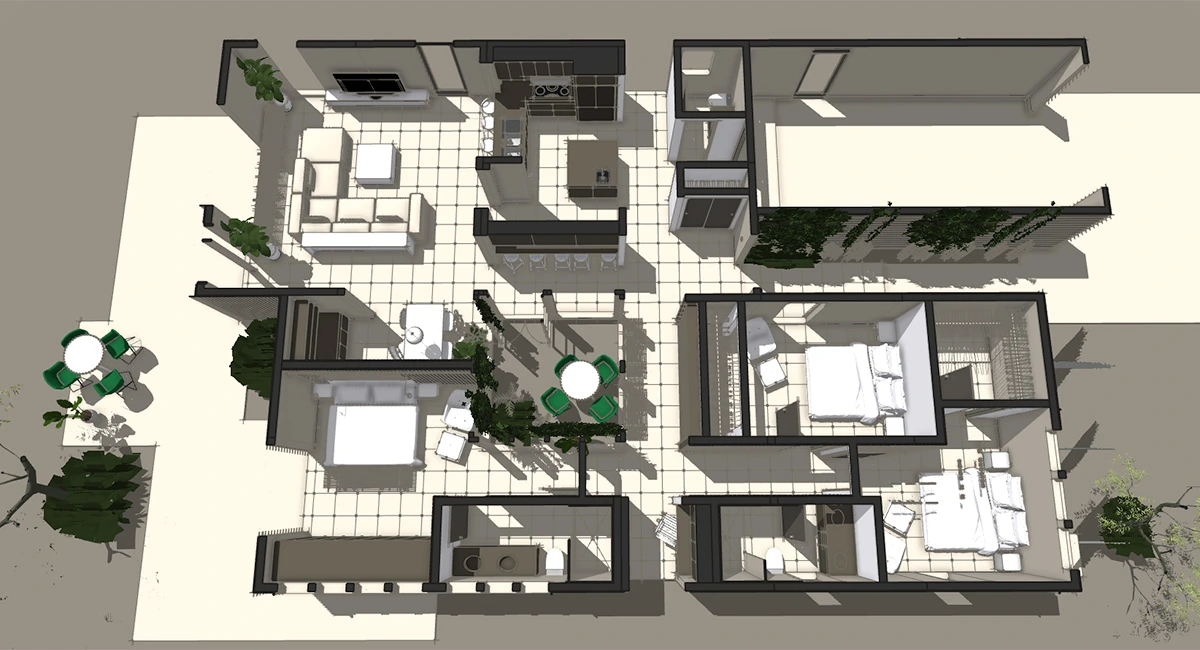
Owning Staff Housing: What to Budget
If you’re weighing rentals against owning, look past the sticker price. With our homes, the main items are:
- Unit price: from $69,900 for an X-180 home on wheels or $89,900 for an A-360 home on a foundation, including factory-completed electrical, mechanical and plumbing work and standard finishes.
- Delivery: $2.50 per mile for Homes on Wheels and $5 per mile for homes.
- Site work: grading, a pad or foundation, and utility connections for water, sewer and power.
- Heating and cooling: an additional cost, usually a mini-split system for smaller units.
- Permits: local permits for the site work, and for homes on a foundation, the building permit, which we handle for the factory-built unit.
Financing is available through our partner, Acorn Finance, which can spread the cost over time instead of paying monthly rent indefinitely. Our units also carry a ten-year warranty against defects in materials and workmanship, and they are built to be durable, watertight and pest resistant, which helps keep maintenance costs predictable.
When Insurance Pays During a Rebuild
When a home is destroyed, additional living expense coverage usually pays for temporary housing until the home is repaired or rebuilt, up to the policy’s limits. So the longer the rebuild, the more of that coverage gets used up. A faster build can get a family home before benefits run out.
For our wildfire rebuilds in Altadena and the Pacific Palisades, fabrication and installation take two to four months after permit approval, and pricing includes the foundation, utilities and complete installation. Our light-gauge steel homes are non-combustible, with walls and roofs built to a one-hour fire rating, and they are all-electric and pre-wired for solar panels and battery storage.
Conclusion
Employers pay for most corporate housing, through relocation packages, temporary assignments and training programs. Insurers pay when a covered loss makes a home unlivable, FEMA may help after declared disasters, and individuals pay for their own stays in other cases. Tax treatment depends on whether the stay is business travel or a relocation.
For companies with ongoing housing needs at one site, our homes on wheels start at $69,900. Contact us to discuss staff housing for your property.