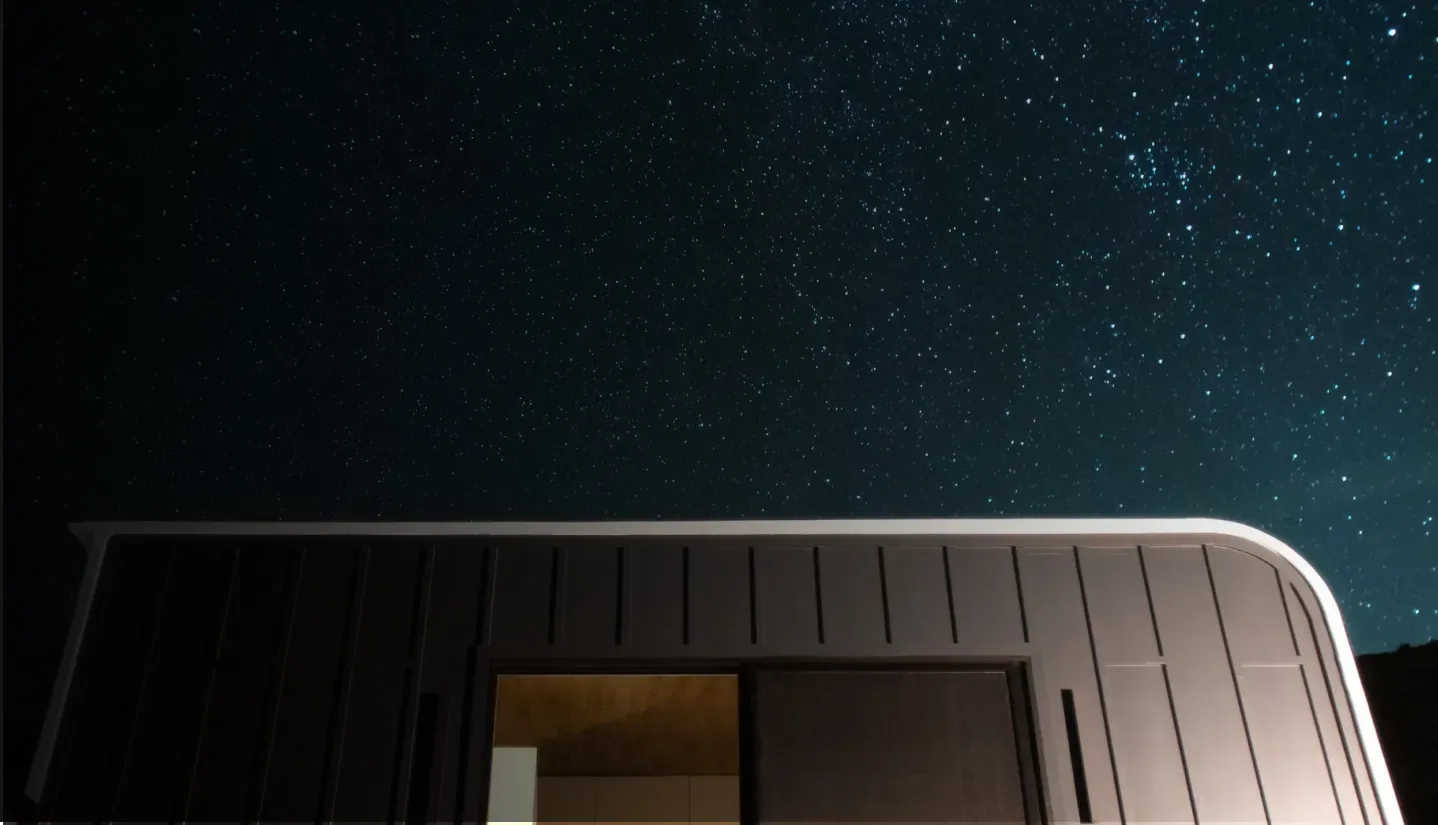
How much are tiny homes?
Tiny-home prices vary widely — by size, finish, and above all by who builds them. A DIY kit, a custom builder, and a factory-made unit can sit worlds apart on price. For a fixed, predictable figure: Azure’s 3D-printed tiny homes start at $19,900.
From $19,900 (Azure)
100+ sq ft footprints
70% faster than site-built
Financing available
There’s no single price — but here’s how to think about it.
“How much are tiny homes?” is a fair question with a frustrating answer: it depends. The single biggest factor isn’t square footage — it’s how the home is built and who builds it. A tiny home you assemble yourself from a kit sits at one end of the range. A one-off custom build from a local contractor sits much higher and can drift higher still as the project runs. A finished, factory-made unit lands somewhere you can actually plan around, because the price is set before anyone breaks ground.
On top of the build method, price moves with the things you’d expect: the size of the home, the quality of finishes and fixtures, whether it’s built on-site or in a factory, and what you spend on land, site prep, utilities, delivery, and installation. Two tiny homes with the same footprint can differ substantially once you account for a solar-and-battery off-grid setup versus a bare shell. That’s why honest guides talk in relative terms rather than pretending there’s one national sticker price.
What we can give you is a concrete anchor. Azure builds 3D-printed tiny homes in a factory and sells them at a fixed starting price of $19,900, from 100 sq ft, finished with a bathroom and kitchenette. Because the unit is printed and finished under one roof before it ships, the number you’re quoted is the number you plan around — no mid-build creep. Use that as your reference point as you weigh the options below.
Three ways to buy a tiny home, three price stories.
The approach you choose sets the price band more than anything else. Here’s how the main paths compare.
Market prices vary by region, size, and finish — the only fixed figure here is Azure’s starting price. Treat the other rows as directional, not quotes.
What drives the price of a tiny home?
Six factors do most of the work. Understanding them is the fastest way to compare quotes honestly.
Square footage
More floor area means more materials, more labor, and more to finish. Compact footprints from 100 sq ft keep costs down; every added square foot adds up.
Finishes & fixtures
Flooring, cabinetry, countertops, and bathroom and kitchen fixtures swing the total quickly. The same shell can be basic or high-end depending on what goes inside.
On-site vs. factory build
Site-built homes carry weather delays, scheduling, and variable labor. Factory-built units are made under controlled conditions, which makes pricing far more predictable.
Land & site prep
The home is only part of the bill. Buying or preparing the lot — grading, a pad or foundation, permits — is a real cost that’s easy to overlook.
Utilities & off-grid options
Connecting to power, water, and sewer adds cost, and off-grid setups — HVAC, solar panels, battery storage, custom insulation — add more but buy independence.
Delivery & installation
Getting the finished home to your site and set in place has its own price, shaped by distance, access, and how much on-site work is left to do.
Where your money lands, by ambition.
Three broad bands to orient a budget. The entry point is a fixed figure; the bands above scale with size, finish, and off-grid options.
Azure, from 100 sq ft
A compact, factory-finished unit with a bathroom and kitchenette, delivered move-in ready. The lowest fixed entry point into a genuinely finished tiny home — no surprises after the invoice.
Larger footprint & upgrades
Step up in size and finish — more square footage, upgraded interiors, and comfort options like HVAC. Where most buyers who want genuine room to live tend to land.
Solar, battery & custom finishes
The top band buys independence — solar panels, battery storage, custom insulation — alongside premium finishes throughout for a turnkey, self-sufficient home.
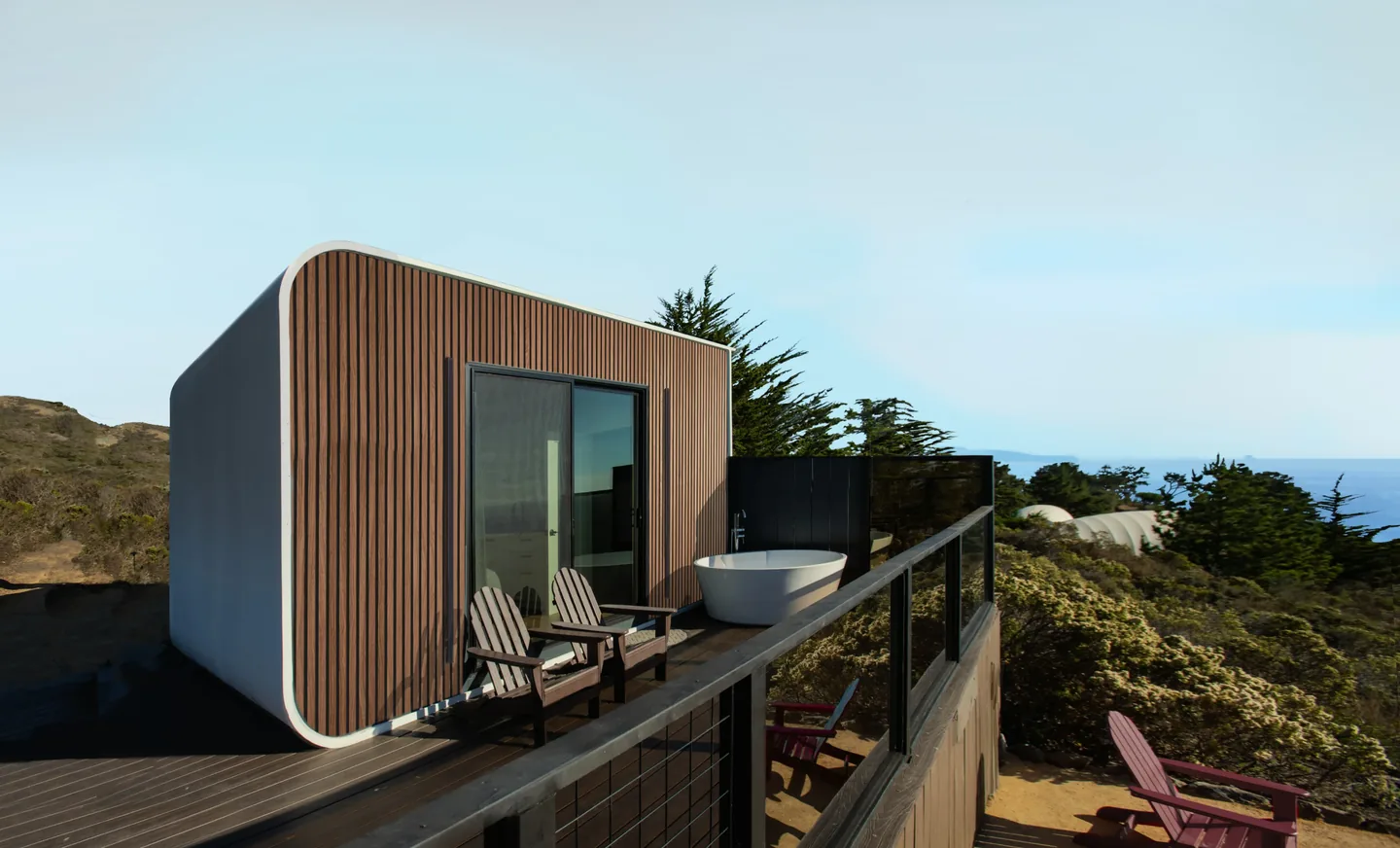
How Azure prices its tiny homes.
Because every Azure tiny home is 3D-printed and finished in the factory, the price is fixed and predictable — starting at $19,900. You know the number before delivery, not after a build runs long.
The shell is printed from fortified recycled plastic — roughly 100,000 bottles per 120 sq ft of home — with effectively zero print waste. It’s a direct answer to the fact that around 94% of recyclable plastic otherwise ends up in a landfill.
Final pricing scales with size, finishes, and options like HVAC, solar, and battery storage. And you don’t have to pay all at once — flexible financing is available through our partner Acorn Finance.
How to build a tiny-home budget you can trust.
The mistake most first-time buyers make is budgeting for the home and forgetting everything around it. Before you compare sticker prices, write down the full picture: the unit itself, plus land or a pad, site prep and utilities, delivery and installation, and any permits your jurisdiction requires. A “cheap” home on an unprepared lot can end up costing more than a finished unit delivered ready to connect.
Then separate the fixed costs from the variable ones. A factory-quoted unit gives you a firm number to anchor the plan; on-site labor, change orders, and finishing choices are where budgets tend to drift. Lock the fixed figure first, then decide how much of the variable spend — upgraded finishes, HVAC, solar — is worth it for you.
Finally, factor in how you’ll pay and how you’ll use the home. Financing spreads the cost into monthly terms rather than one lump sum, and a unit used as a short-term rental or guest suite can offset its own payments over time. Weigh the total cost of ownership, not just the day-one price — a durable, well-finished home usually wins that math.
Want a real number for your tiny home?
Tell us your size, site, and options and we’ll send fixed pricing and lead times — no obligation, no pressure.
Why factory pricing is easier to plan around.
- Fixed starting price from $19,900, set before delivery
- Built in a controlled factory — no weather-driven overruns
- Finishes and options quoted up front, not tallied mid-build
- Up to 70% faster than traditional construction
- Arrives finished with bathroom, kitchenette & utilities roughed in
- One manufacturer, one point of contact, one bill
- Costs vary widely and can climb after the estimate
- Exposed to weather, permitting, and scheduling delays
- Change orders and surprises add up as work proceeds
- Weeks to months of on-site labor
- You coordinate multiple trades, finishes, and deliveries
- Final price often clear only once the job is done
Still weighing the numbers?
Book a free consultation with an Azure specialist. We’ll walk through sizing, options, and budget so you can compare costs with real figures — not guesses.
Tiny home cost FAQs.
How much is a tiny home on average?
There isn’t one reliable “average,” because tiny-home prices depend heavily on how the home is built. A DIY kit is cheapest up front but demands your labor and land; a custom builder costs more and varies with the project; a factory-made unit lands in between with far more predictability. Rather than trust a single national number, compare the approach that fits you. As a concrete anchor, Azure’s 3D-printed tiny homes start at $19,900.
Why do tiny home prices vary so much?
Because so many variables stack up: size and square footage, the quality of finishes and fixtures, whether it’s built on-site or in a factory, land and site prep, utility connections or off-grid systems, and delivery and installation. Two homes with the same footprint can differ substantially once you add an HVAC-plus-solar setup or upgrade the interior. Build method is usually the biggest single driver of the final figure.
How much is a 3D-printed tiny home?
Azure’s 3D-printed tiny homes start at $19,900, from 100 sq ft. Final pricing depends on the model size, finishes, and options such as HVAC, solar, and battery storage. Because the unit is printed and finished in the factory, that pricing is fixed and predictable — the number you’re quoted is the number you plan around. Financing is available through Acorn Finance.
What’s the cheapest way to get a tiny home?
On raw sticker price, a DIY kit build is usually the lowest, but the low number hides the cost of your time, tools, and the land and finishing you supply yourself. If you value predictability and a finished result, a factory-built unit like Azure’s — delivered move-in ready from $19,900 — often works out to better value once you count everything a “cheap” build leaves out.
What extra costs should I budget beyond the home itself?
Plan for land or a pad, site prep and any foundation work, utility connections (or an off-grid power and water setup), delivery and installation, and local permits. These sit on top of the unit price and are easy to overlook. A factory-finished home reduces the on-site surprises, but the site-side costs still belong in your budget from day one.
Can you finance a tiny home?
Yes. Tiny homes can often be financed, though the exact options depend on the home and how it’s classified. Azure offers flexible financing through our partner Acorn Finance, so you can spread the cost rather than pay the full amount up front. We can walk you through what’s available for your situation during a quote.
Keep reading on Azure tiny homes.
Ready for a real number?
Tell us about your site and how you’ll use the unit, and we’ll send pricing, specs, and lead times. We respond to every inquiry within one business day.
18101 S Figueroa St
Gardena, CA 90248