Finding tiny homes for sale is not hard. Finding the right tiny home for your land, budget, local rules, and actual use case is the part that takes more thought.
A tiny home listing can look simple at first: a small footprint, a clean interior, a starting price, maybe a few photos. But behind that listing are bigger questions. Can it be placed where you want it? Does it need utilities? Is it a backyard studio, a home on wheels, a park model, or an ADU-style unit? Does the price include delivery, site work, permits, or only the structure?
Instead of shopping for a generic “tiny home,” it helps to first understand what kind of small space you need. In our work at Azure, that distinction matters a lot. We build 3D-printed prefab spaces in several formats – compact Studio Series backyard units, Homes on Wheels, and larger Homes & ADUs – so the right choice depends on the property, local rules, utilities, and how the space will actually be used.
Tiny Homes For Sale Are Not All The Same
The phrase “tiny home for sale” covers several different products. That is why browsing listings without a plan can get confusing fast.
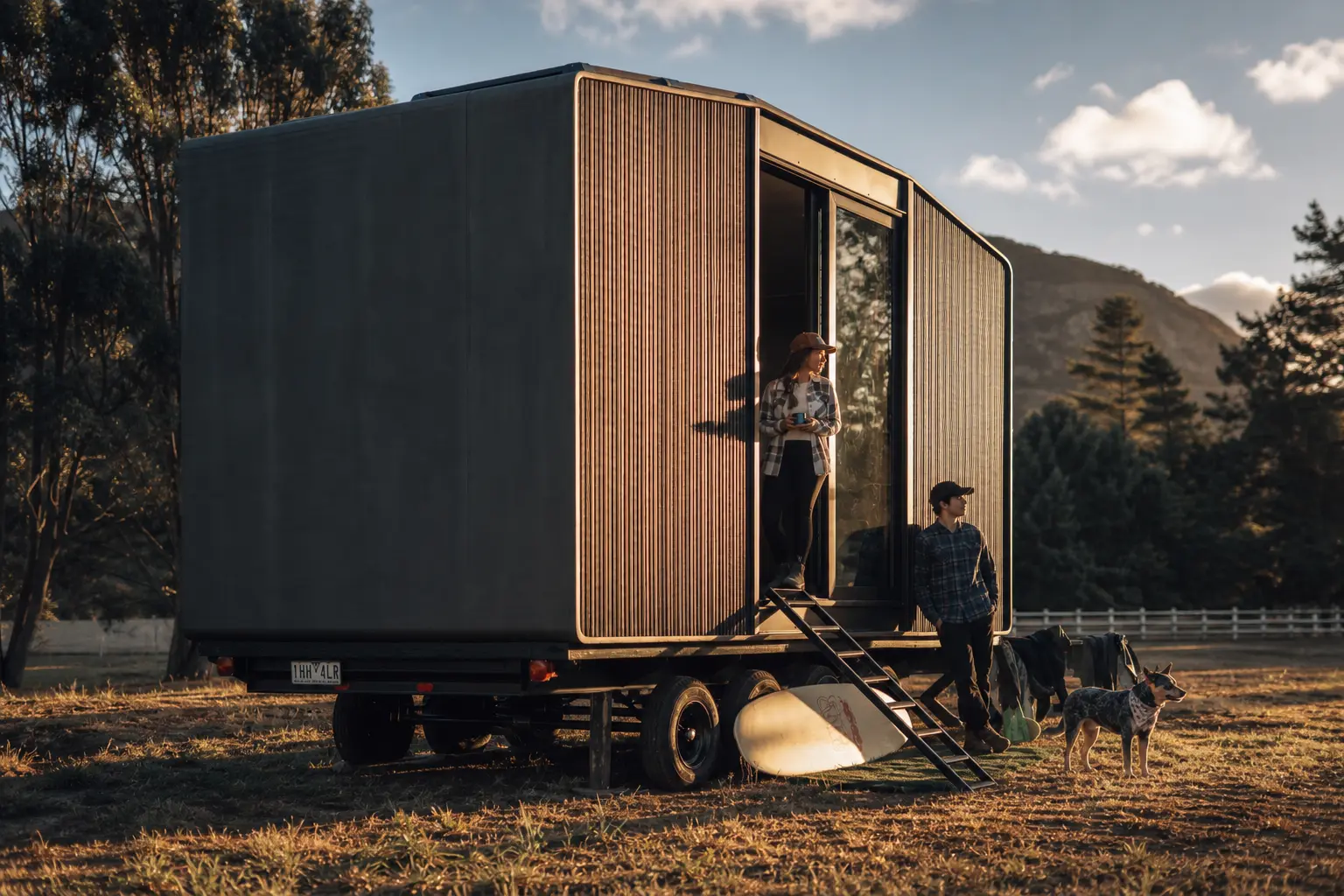
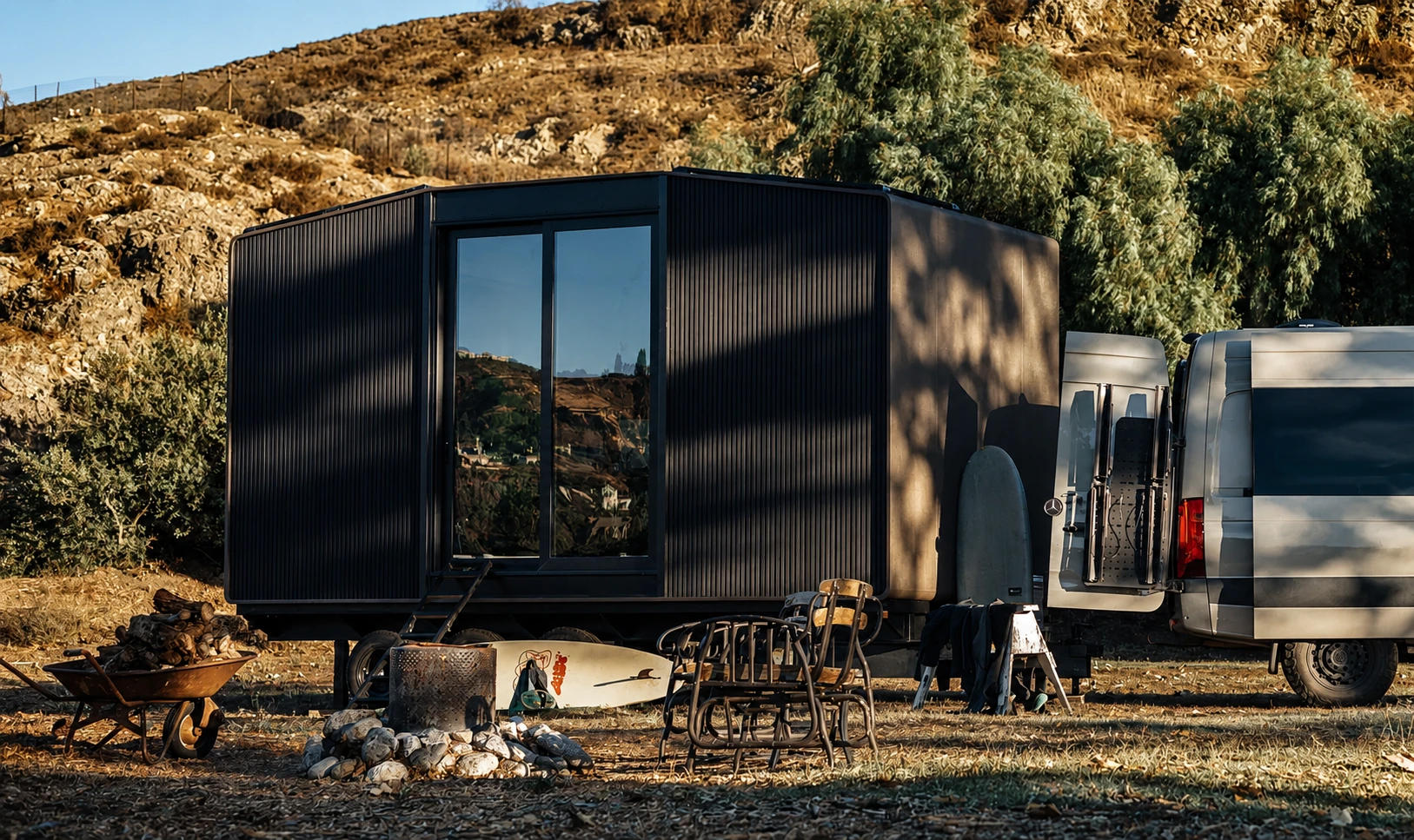
A backyard studio may be perfect for work, hobbies, guests, or extra breathing room near the main house. A home on wheels may make more sense for flexible living, park-style placement, or a compact unit that includes more residential features. A larger ADU-style home is usually better when the goal is family housing, rental use where allowed, or a more permanent residential setup.
Our own product range follows that same logic. We build small 3D-printed prefab formats starting around 100 sq ft, Studio Series backyard units from 100 to 120 sq ft, Homes on Wheels from 180 to 360 sq ft, and Homes & ADUs from 360 to 900 sq ft.
So before looking for the cheapest listing, it helps to decide what kind of tiny home you are actually trying to find.
The Main Places To Look For Tiny Homes
Tiny homes can be found through several buying paths. Each one works a little differently, and the best choice depends on whether you want a new prefab unit, a movable home, a backyard structure, or a more permanent ADU.
Direct From A Prefab Manufacturer
Buying directly from a prefab manufacturer is often the cleanest route when you want a new tiny home with clear specs, production details, and delivery planning. Instead of guessing from a listing, you can compare model sizes, layouts, utility needs, finish options, and site requirements before committing.
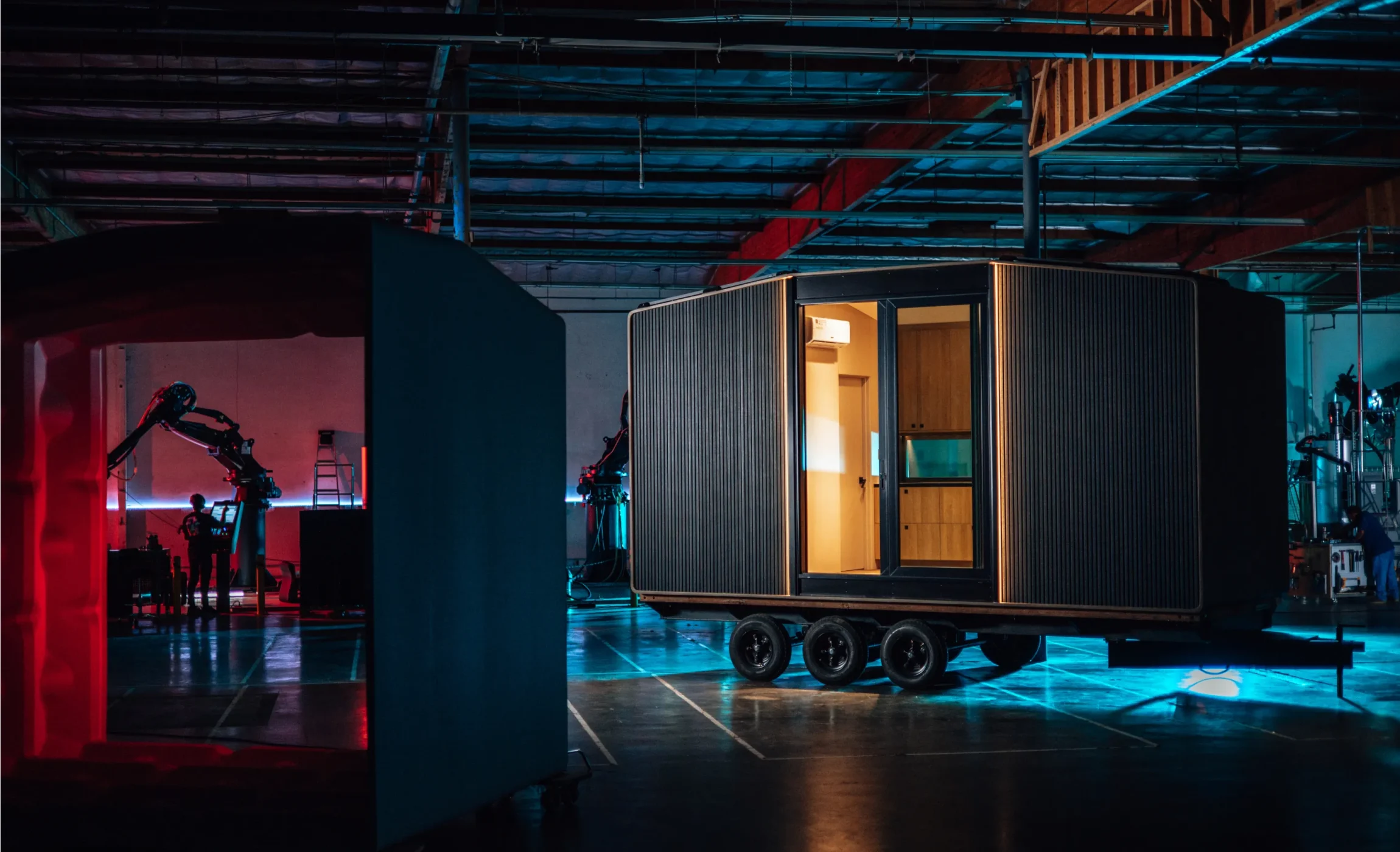
This path is especially useful when the unit still needs to be configured for your property. At Azure Printed Homes, buyers can design a Backyard Studio, ADU, tiny home, or home through an online configurator, and we manufacture our units in Los Angeles, CA.
Direct buying also helps avoid one common problem: choosing a home that looks right but does not match the site. A manufacturer can usually explain what the structure needs before delivery, which saves a lot of backtracking later.
Tiny Home And Park Communities
Some buyers are not only looking for a tiny home. They are looking for a place where that home can actually sit. That is where tiny home communities, park-style settings, and planned small-home sites can make sense.
This matters most for homes on wheels and park model-style units. A tiny home on wheels may be movable, but it still needs a location that allows that type of placement. The land, zoning, drainage, soil, parking, and access still matter.
For our wheel-based models, we always think about the site as part of the decision. The unit itself is only one half of the project. The other half is whether the property or community is set up for it.
Backyard ADU And Studio Projects
Homeowners who already have land may not need to “find” a tiny home in the traditional sense. They may need to choose a unit that works on their existing property.
This is where backyard studios and ADU-style units become useful. A small studio can add a private workspace or flexible room without becoming a full second home. A larger ADU-style unit can support family, guests, or rental potential where local rules allow it.
Our Studio Series includes the N_100, D_120, and A_120. The main product listings show the N_100 at 100 sq ft and the D_120 and A_120 at 120 sq ft, with starting prices around $24,900-$29,900.
Resale Listings
Used tiny homes can also appear in resale listings. This route can be tempting because the unit may already exist and may cost less than a new build. Still, resale buying needs extra caution.
The important questions are practical:
- What condition is the home in?
- Can it be moved?
- Does it have clear ownership documents?
- Was it built to a recognized standard?
- Are utilities safe and usable?
- Will the destination property allow it?
A low price can become less attractive if the home needs major repairs, transport is difficult, or the buyer cannot legally place it where planned. With resale listings, it is better to slow down and verify everything before paying a deposit.
A Better Way To Search: Start With The Use Case
A tiny home search works better when it starts with the reason for buying. The listing should match the problem, not the other way around.
A simple way to sort the search:
- Need a backyard office or studio? Look for compact units that do not require full residential systems.
- Need a movable tiny home? Focus on homes on wheels and confirm where the unit can be placed.
- Need guest or family space? Look at layouts with enough room, privacy, and utility connections.
- Need rental potential? Check local rules first, then choose a unit that supports that use.
- Need a long-term housing setup? Treat the search more like an ADU or small-home project.
This small step prevents a lot of wasted time. A beautiful 100 sq ft studio will not solve the same problem as a 360 sq ft home on wheels. A larger ADU may be too much for a simple workspace. The right category matters.
What We Offer For Buyers Comparing Tiny Homes
When buyers compare tiny homes for sale, it helps to look at the type of space first. A compact backyard unit, a home on wheels, and a larger ADU-style model solve different problems, so the right option depends on how the space will be used.
Our current small-space lineup includes:
- Studio Series: Compact backyard units for offices, creative rooms, hobby spaces, guest-style rooms, or flexible extra space. These are best when the goal is extra room, not a full home.
- X Series Homes On Wheels: Chassis-based tiny homes for buyers who need a more complete compact living setup. The X_180 is 9′ x 20′, the X_270 is 9′ x 30′, and the X_360 is 9′ x 40′. Current starting prices are around $69,900 for the X_180, $84,900 for the X_270, and $109,900 for the X_360.
- Homes & ADUs: Larger residential-style units for family use, guest housing, rental potential where allowed, or more permanent backyard living. This category includes 360, 540, 720, and 900 sq ft models, with current prices reaching up to $219,900 depending on the model.
These numbers are useful for comparing options, but they are not the whole project cost. Delivery, permits, utility work, foundation needs, site preparation, and optional features can all affect the final budget.
What To Check Before You Trust A Listing
A tiny home listing should answer more than “How much does it cost?” A good listing or sales process should make the next steps clear.
Look for details about size, dimensions, layout, utilities, delivery, installation, materials, warranty, and what is included in the base price. If the home has a kitchen or bathroom, utility planning becomes much more important. If it sits on wheels, the destination site needs to allow that type of unit.
That kind of detail matters because two tiny homes can look similar online but require very different site preparation.
Delivery And Timing Matter More Than People Expect
Where you find a tiny home can affect how quickly it becomes usable. A unit that is already built may still need transport, site work, permits, utility connections, and installation. A new prefab unit may take production time, but the site can often be prepared while the unit is being made.
At Azure, backyard studios can usually be delivered within 30-60 days depending on location, while ADUs and homes usually take around 90-120 days. More than 60% of our print material comes from recycled plastic, which is part of how we build durable prefab spaces with less waste.
That timeline is one reason buyers should not wait until after purchase to think about the site. The land, access, foundation, utilities, and approvals should move alongside the buying decision.
Common Mistakes When Searching For Tiny Homes For Sale
The most common mistake is shopping by price alone. A low starting price can be useful, but it does not tell you whether the home fits your property or your plans.
Another mistake is assuming every tiny home can go anywhere. Local rules vary, and a home on wheels, backyard studio, and ADU-style unit may be treated very differently. Buyers also sometimes underestimate delivery access. A unit has to physically reach the site, not just fit on paper.
It is also easy to choose too little space. A compact studio can be great for one purpose, but it will feel limited if the real need is daily living, guest stays, or rental use. On the other hand, choosing a larger residential unit for a simple workspace can add unnecessary cost and complexity.
Final Thoughts
The best place to find tiny homes for sale depends on what kind of tiny home you need. A resale listing may work for some buyers, but a direct prefab route can be better when you want clearer specs, customization, production timing, and site guidance. A tiny home community may matter more if placement is the hardest part. A backyard ADU or studio route may be the right answer when the land is already available.
At Azure Printed Homes, we think the search should start with use, not just price. A tiny home should fit the property, local rules, utility needs, and the way the space will actually be used. Once those pieces are clear, finding the right unit becomes much easier.