Portable homes are becoming a practical option for people who want more flexibility without going through a full traditional build. Some buyers want a guest house. Others want a tiny home, backyard studio, rental unit, vacation space, or a home that can move with them.
The best portable home depends on how the space will be used, where it will be placed, and what level of comfort the buyer needs. A simple studio may be enough for work or guests. A home on wheels may be better for mobility. A modular ADU may make more sense when the goal is long-term living or rental use.
At Azure Printed Homes, we create future-focused modular living spaces with robotically printed construction and recycled materials. We make it easier to configure, build, and deliver practical spaces for real homes, properties, and projects.
Qualities of a Good Portable Home
A good portable home should be more than easy to move. It should be comfortable, durable, practical, and suitable for the property or lifestyle it is meant to support.
The best options usually have a few things in common:
- A layout that matches the intended use
- Strong materials and practical finishes
- Good insulation and energy efficiency
- Space for utilities, storage, and daily needs
- A realistic delivery and installation plan
- A design that works with local rules and site conditions
Portable homes can be simple or fully equipped. Some are compact shells used as offices or studios. Others include kitchens, bathrooms, bedrooms, and living areas.
The Best Portable Homes for Different Needs
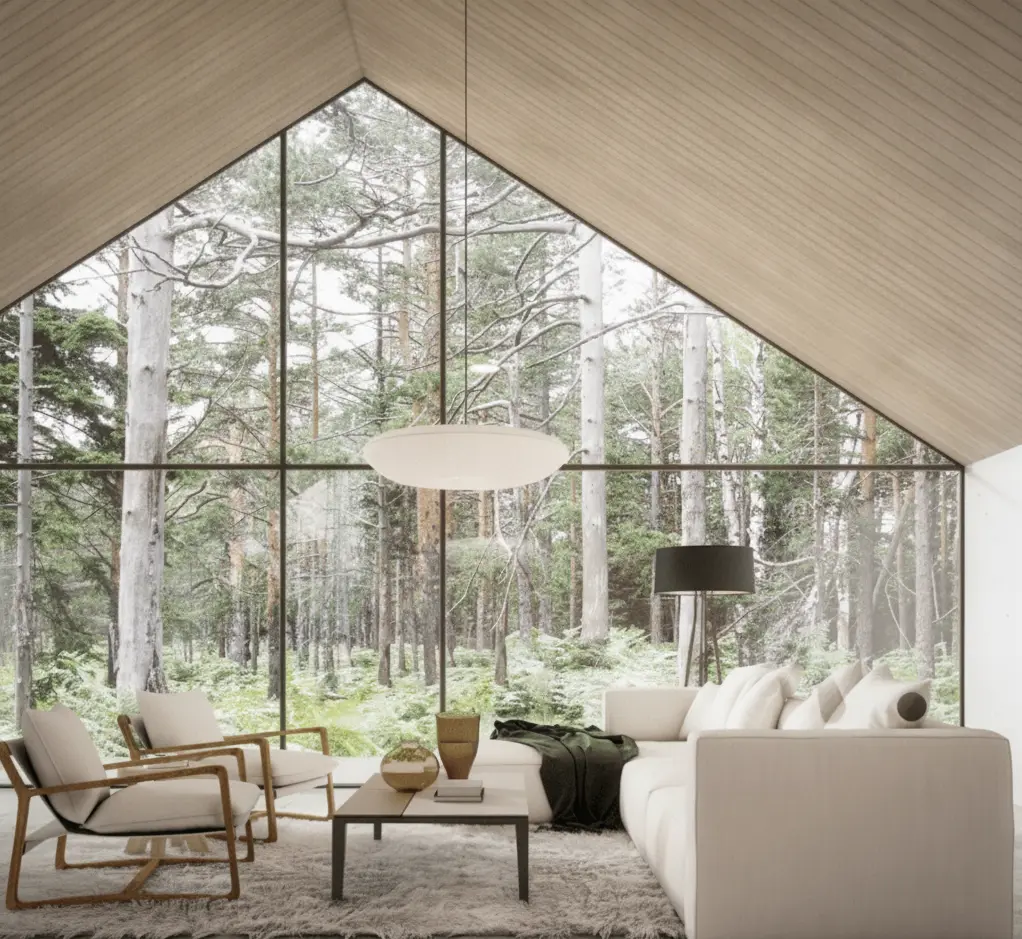
Not every portable home is designed for the same purpose. Some are built for mobility, some for backyard use, and others for longer-term living or rental potential. The best choice depends on how much space is needed, whether the unit will move, and what daily functions it needs to support.
Homes on Wheels
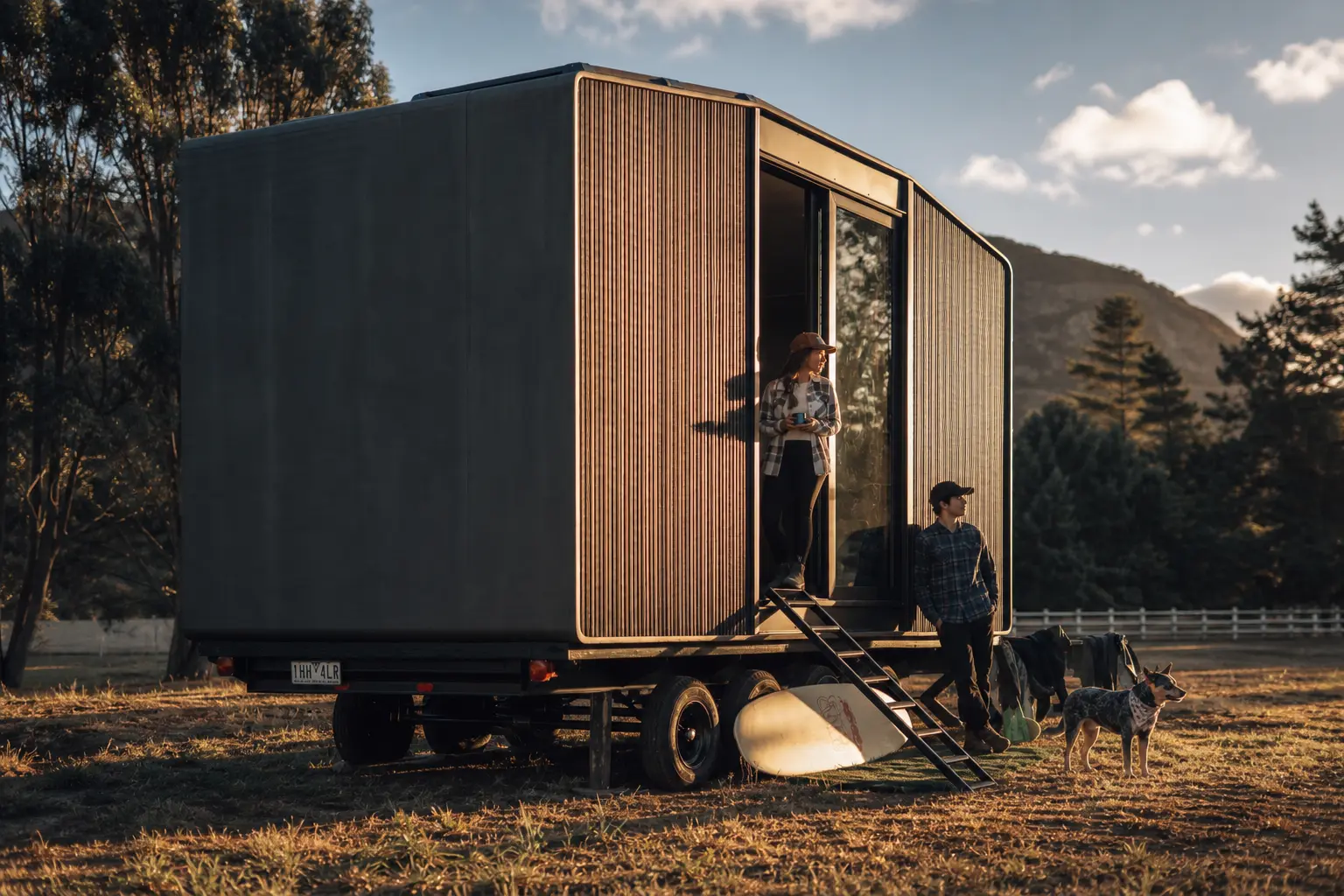
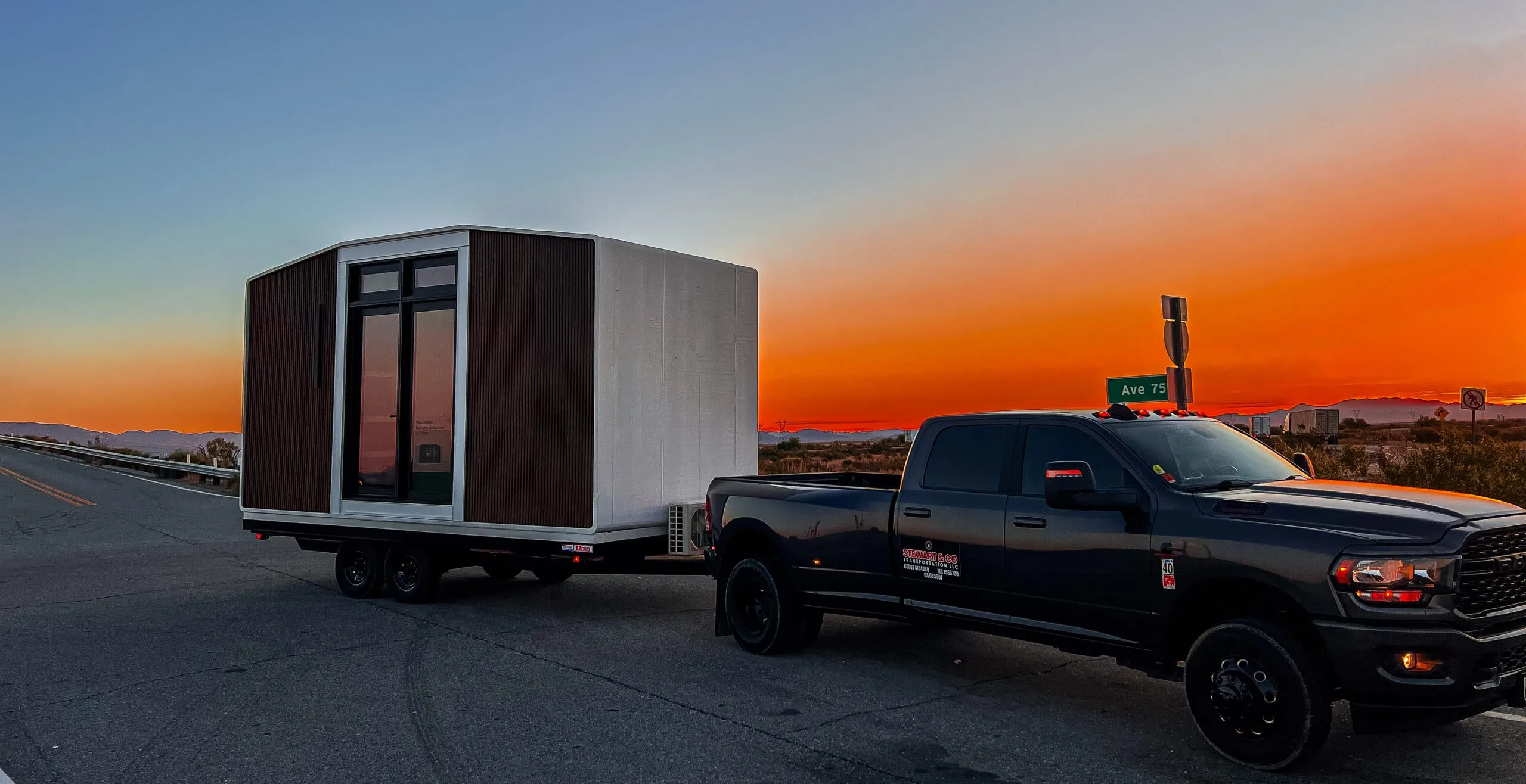
Homes on wheels are one of the most flexible portable housing options. They are built on a chassis, which makes them easier to relocate than a permanent structure. This can be useful for buyers who want compact living, travel flexibility, rental potential, or a movable guest space.
A home on wheels may work well for tiny home living, vacation properties, glamping sites, guest housing, and flexible personal use.
At Azure, our X Series homes on wheels are designed for mobility and comfort. The X180 starts at $69,900, the X270 starts at $84,900, and the X360 starts at $109,900. These models are built for buyers who want a chassis-based option with more flexibility than a permanent structure.
The X180 works well as a compact studio on wheels. The X270 adds more space for people who need a stronger separation between living and sleeping areas. The X360 offers two bedrooms, one bathroom, a kitchen, and a washer/dryer layout, making it a stronger option for longer stays or more complete living needs.
Modular Studios
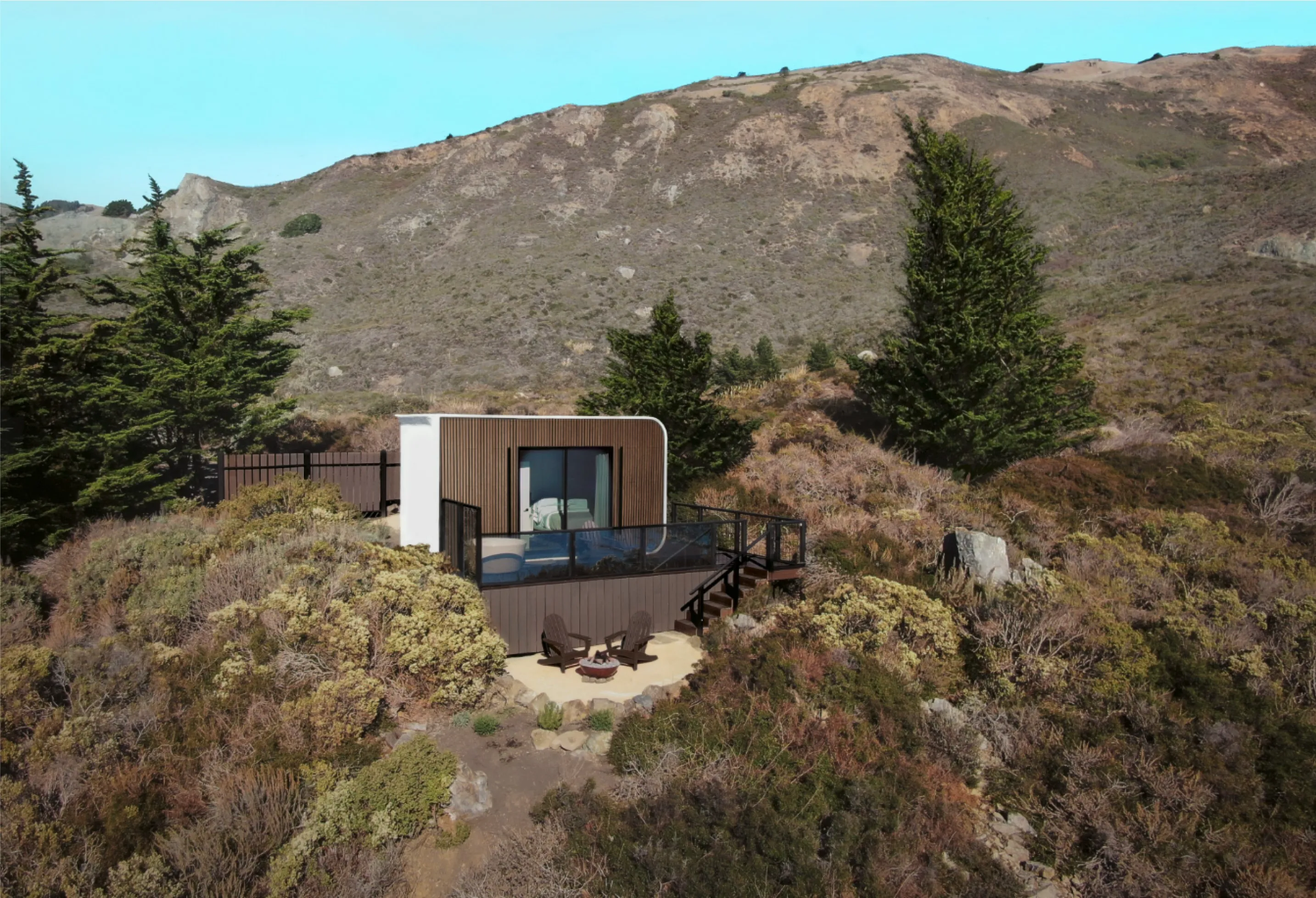
A modular studio is one of the best portable home options when the buyer does not need a full residence. These compact spaces can be used for work, hobbies, wellness, guests, creative projects, or extra personal space.
Studios are especially useful because they can add function to a property without requiring the same footprint as a full home. They are often easier to plan, easier to place, and more affordable than larger living units.
Common uses include:
- Backyard offices
- Guest rooms
- Art or music studios
- Wellness spaces
- Pool houses
- Creative rooms
- Private workspaces
At Azure, our Studio Series includes compact units such as the A/D/C-100, A/D/C-120, and N100. The A/D/C-100 and N100 start at $24,900, while the A/D/C-120 starts at $29,900. These models are designed for buyers who want a useful, efficient space without overbuilding.
Tiny Homes
Tiny homes are a strong choice for people who want a smaller living footprint. They can work well for minimal living, vacation stays, rental properties, glamping sites, or compact guest housing.
A tiny home usually needs more planning than a simple studio because it may include sleeping space, storage, a bathroom, a kitchen, and utility connections. The best tiny homes use every square foot carefully. A small layout should still feel comfortable, not cramped.
Tiny homes may be a good fit when:
- The buyer wants lower space requirements
- The property supports compact housing
- The design includes practical storage
- The home will be used for short or medium stays
- The site has a clear plan for utilities and access
Our modular living spaces can support many tiny home use cases, especially for buyers looking for factory-built units that combine efficient layouts, recycled materials, and fast production.
Portable ADUs
An ADU, or accessory dwelling unit, is usually more permanent than a home on wheels, but modular ADUs can still offer a more flexible path than traditional construction. These units can be used for family housing, rental income, guest stays, aging parents, or extra living space.
A portable or modular ADU may be the better choice when the buyer wants a complete home experience. That may include a bedroom, bathroom, kitchen, living area, storage, and utility connections.
At Azure, our larger Homes & ADUs models are designed for more complete living needs. The A-180 starts at $49,900, the A-360 starts at $89,900, the A-540 starts at $134,900, the A-720 starts at $174,900, and the A-900 starts at $219,900.
These models are useful for buyers who want more space than a studio or home on wheels can provide. They may be a better fit for long-term use, rental use, or family living where local rules allow ADUs.
Glamping Units
Glamping units are portable or modular spaces designed for outdoor hospitality. They need to feel comfortable for guests while also being durable enough for repeated use.
A good glamping unit should be easy to maintain, visually appealing, and practical for operators. It should also support the guest experience with insulation, comfort, privacy, and a layout that fits the site.
Our modular spaces can be used for glamping projects where operators want modern units with a more sustainable construction approach. Because our homes use robotically printed construction and recycled plastic, they can help create a distinctive guest experience while supporting efficient production.
Backyard Guest Homes
A backyard guest home can be one of the most useful portable home types. It gives homeowners extra space without moving, remodeling the main house, or building a large addition.
This type of unit can support visiting family, adult children, aging parents, remote work, or occasional rental use where allowed. The right model depends on how often it will be used and whether it needs a bathroom, kitchen, or sleeping area.
For simple guest use, a compact studio may be enough. For longer stays, a larger ADU-style unit may be more comfortable.
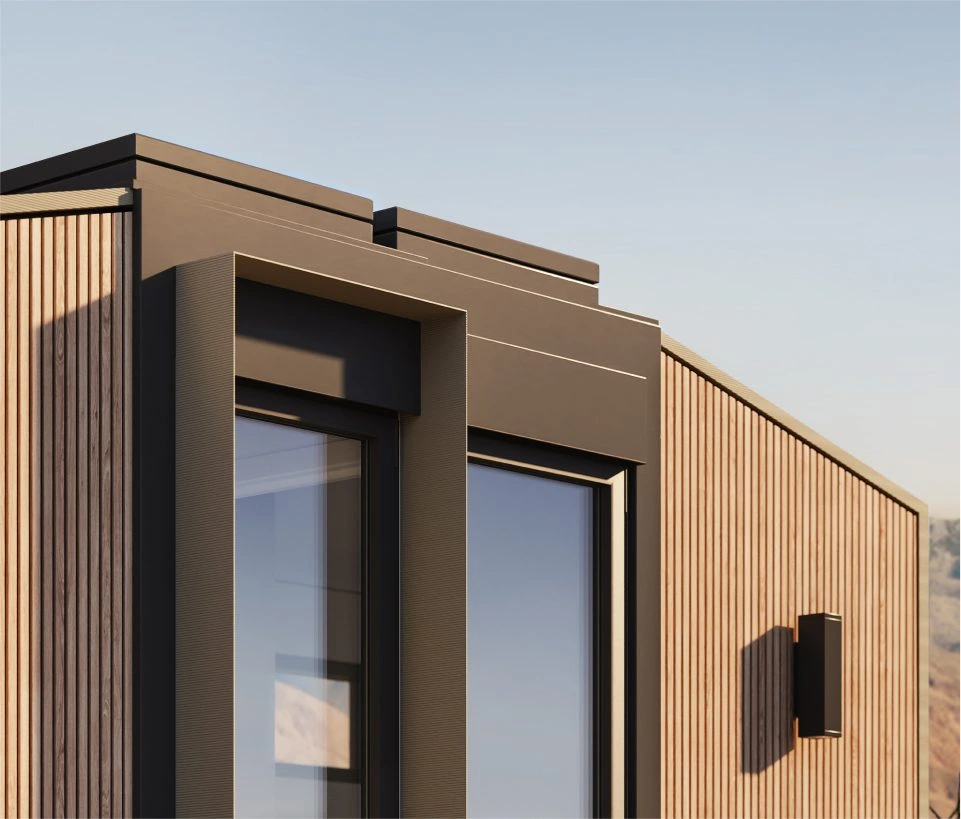
Benefits and Considerations of 3D-Printed Portable Homes
3D-printed portable homes stand out because they change how small living spaces can be built. Instead of relying only on traditional framing and construction methods, the main structure can be robotically printed with precision. This can make the process faster, more consistent, and less wasteful.
Key benefits include:
- Faster production: Robotically printed construction can help reduce build time and make the process more predictable.
- Less material waste: A controlled printing process can reduce excess waste compared with many traditional building methods.
- Use of recycled materials: At Azure, we use recycled materials in our 3D-printed construction process. A 120 sq ft unit uses about 100,000 plastic bottles in the printed material.
- Consistent quality: Robotic printing helps create repeatable results across units, which is useful for homeowners, developers, and hospitality projects.
- Flexible use cases: 3D-printed portable homes can work as studios, homes on wheels, glamping units, guest spaces, or ADUs, depending on the model and site.
There are also practical considerations. A 3D-printed portable home still needs the right site, delivery access, utility planning, and local approval where required. Buyers should also think about how the unit will be used over time, since a studio, home on wheels, glamping unit, and full ADU all have different needs.
For many projects, the pros are clear: faster production, reduced material waste, strong design consistency, modern construction, and flexible use cases. The main limitations are usually not the printed structure itself, but the planning around the project, including zoning, site preparation, transportation, and installation.
How to Choose the Best Portable Home
The best portable home is the one that fits the real use case. Buyers should not start with the model first. They should start with the purpose.
Before choosing a portable home, consider these questions:
- Will it be used full-time or part-time?
- Does it need a bathroom or kitchen?
- How many people will use it?
- Will it stay in one place or move later?
- What local approvals are required?
- Can the site support delivery and installation?
- Are utilities nearby?
- What is the full budget beyond the unit price?
These questions can prevent costly mistakes. A smaller unit may look more affordable, but it may not work if the buyer needs full-time living features. A larger unit may offer more comfort, but it may require more site planning.
Final Thoughts
The best portable homes are practical, comfortable, and built for the way people actually live. They should be easy to use, efficient to maintain, and suitable for the site where they will be placed.
Homes on wheels, modular studios, tiny homes, glamping units, backyard guest homes, and ADUs all have a place. The right choice depends on the project.
We at Azure Printed Homes create robotically printed modular living spaces for people who want a smarter way to add usable space. Whether the goal is mobility, rental potential, guest housing, outdoor hospitality, or a compact home, our products are designed to make portable living feel more realistic, more efficient, and easier to start.