Factory-built housing offers more choices than ever before, but it has become increasingly common to use terms like modular home and trailer interchangeably. While they may all arrive at a property after being built in a factory, they are not the same type of home.
The differences affect much more than appearance. Construction standards, installation methods, financing, customization, maintenance, and long-term value can all vary depending on which option you choose.
As we at Azure Printed Homes continue developing robotically printed modular homes, ADUs, studios, and homes on wheels, we often find that buyers simply want clear information before making a decision. Understanding what separates modular homes from trailers makes it much easier to choose the right solution for your property, lifestyle, and future plans.
Modular Homes and Trailers Explained
Before comparing modular homes and trailers side by side, it helps to define what each term actually means. Both can come from a factory, but they are not built with the same purpose, structure, or long-term use in mind.
What Is a Modular Home?
A modular home is built in sections inside a factory, then delivered to the property and installed as a permanent residence. The word modular describes the construction process, not a specific look or size.
That distinction matters. When we design modular homes, ADUs, and studios, the project usually starts with the site and the intended use: extra living space, a backyard rental, a primary home, or a larger residential plan. From there, the layout, finishes, utility needs, and installation approach can be shaped around the project.
A modular home may be compact, but it does not have to be temporary. It may be a 360-square-foot ADU, a larger residential home, or a custom project. The main idea is that much of the work happens in a controlled factory environment before the home is delivered and installed.
What Is a Trailer?
A trailer is built for a different purpose. It is designed around transportability, a chassis, and a more standardized housing format.
People often use the word trailer loosely, sometimes to describe mobile homes or manufactured homes. While the terminology varies, the key distinction is that trailers are designed around mobility, whereas modular homes are designed for permanent installation.
That difference changes the whole buying decision. A trailer may make sense when lower upfront cost, flexible placement, or temporary use matters most. A modular home is usually the stronger fit when the goal is a permanent structure with more design flexibility and long-term property use.
Modular Homes vs Trailers: The Biggest Differences
A modular home starts with the idea of becoming part of a property. A trailer starts with the idea of being transportable. That one difference affects the foundation, layout, financing, durability, customization, and long-term value.
Building Standards
Modular homes are built to residential building standards based on where they will be installed. These standards typically affect:
- Structure and framing
- Insulation
- Plumbing
- Electrical systems
- Energy performance
- Fire safety
- Long-term durability
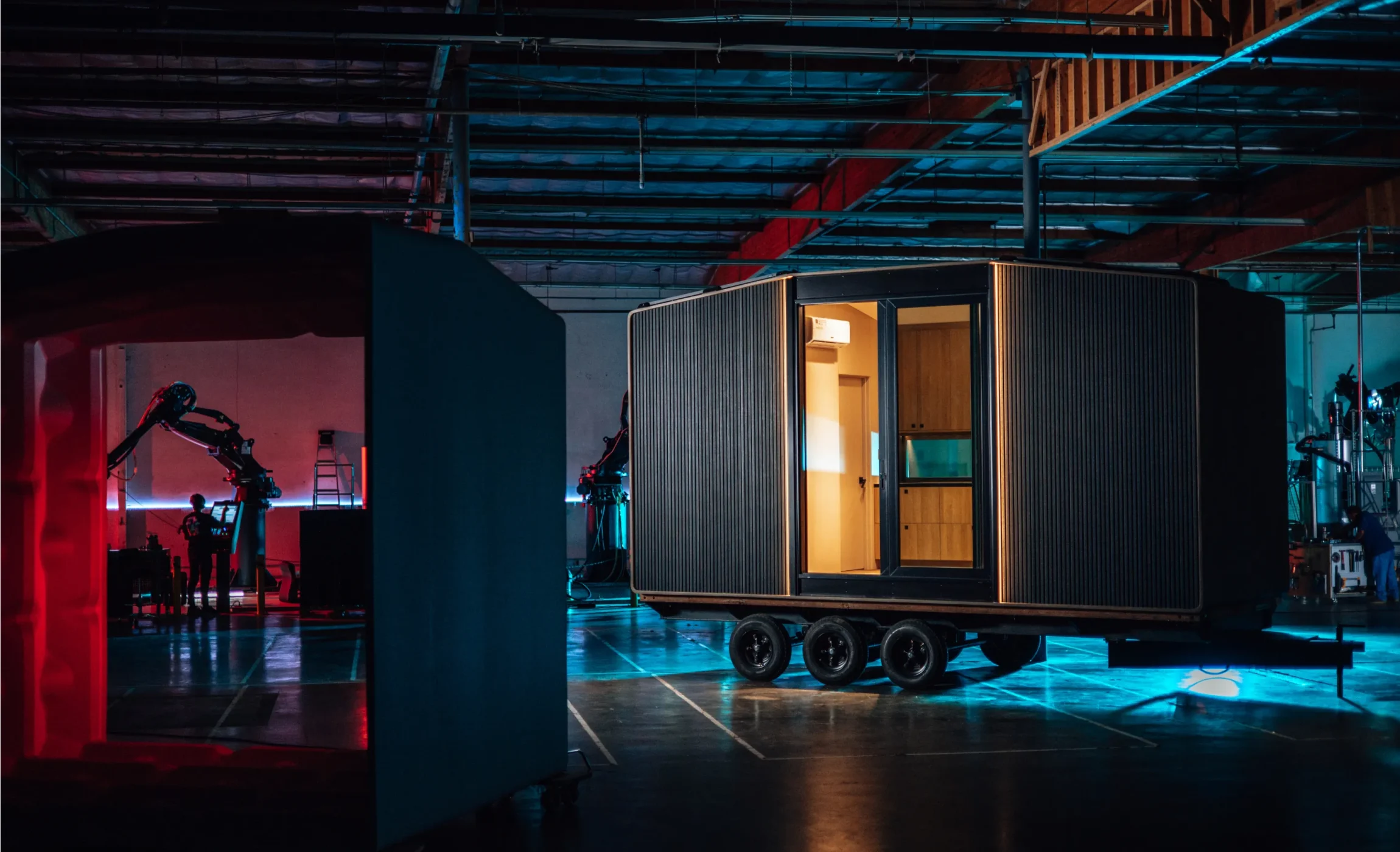
In our work at Azure, controlled factory production is a major advantage because it keeps construction more consistent. Robotic 3D printing allows us to produce repeatable forms with precision, while recycled materials can be incorporated into the building process without relying on traditional site-built methods for every stage.
Trailers follow a different construction path because they are designed around mobility and transport. That does not automatically make them bad housing. It simply means they are built for a different use case.
Foundation and Installation
A modular home is typically installed on a permanent foundation. Once set, connected, and finished, it is intended to stay in place.
That is why modular construction works well for ADUs, larger homes, and residential developments. The home can be planned around the lot, utilities, access, and long-term use.
A trailer is usually tied to a chassis and a more mobile installation method. Even when it stays in one place for years, its construction starts from a different foundation concept.
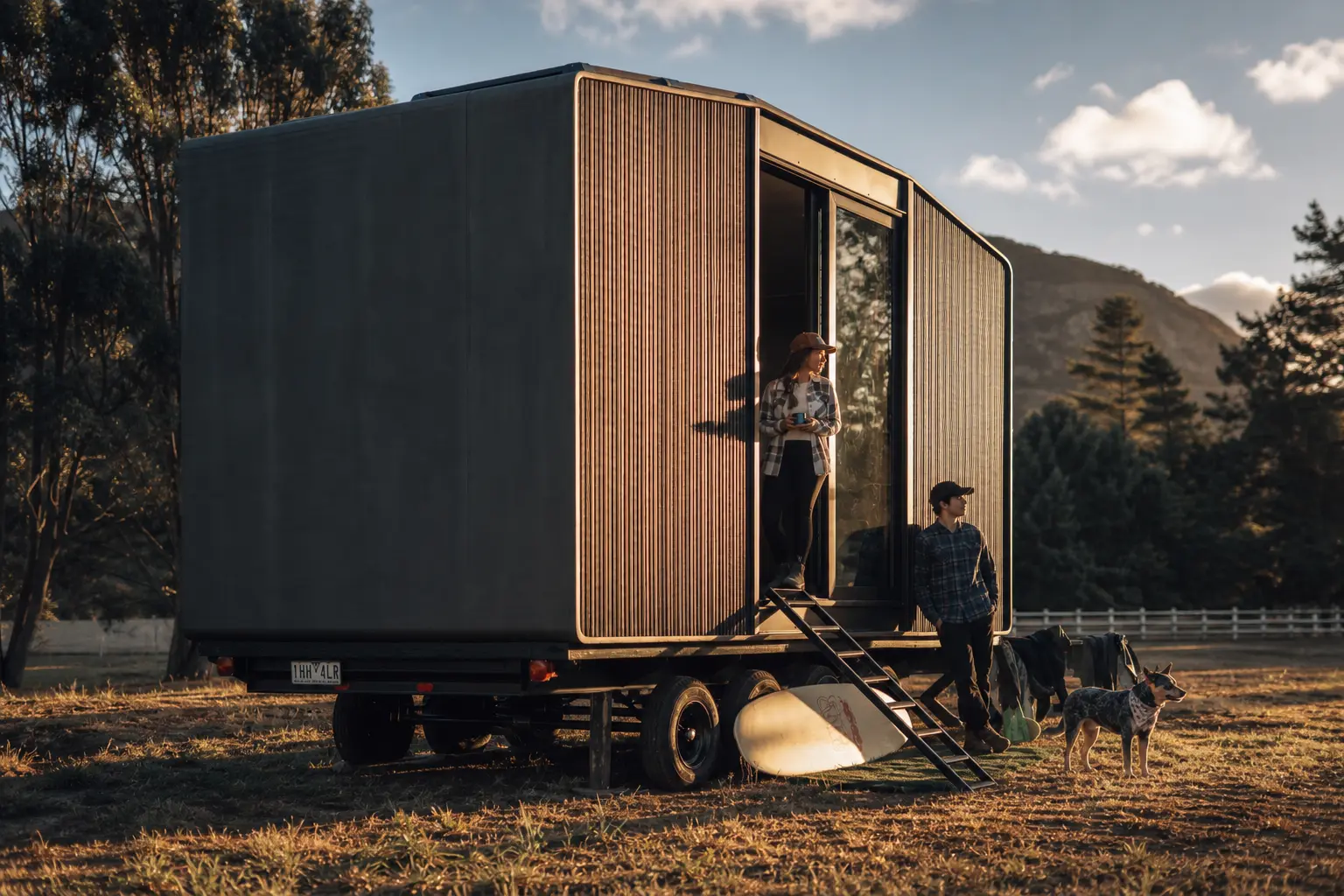
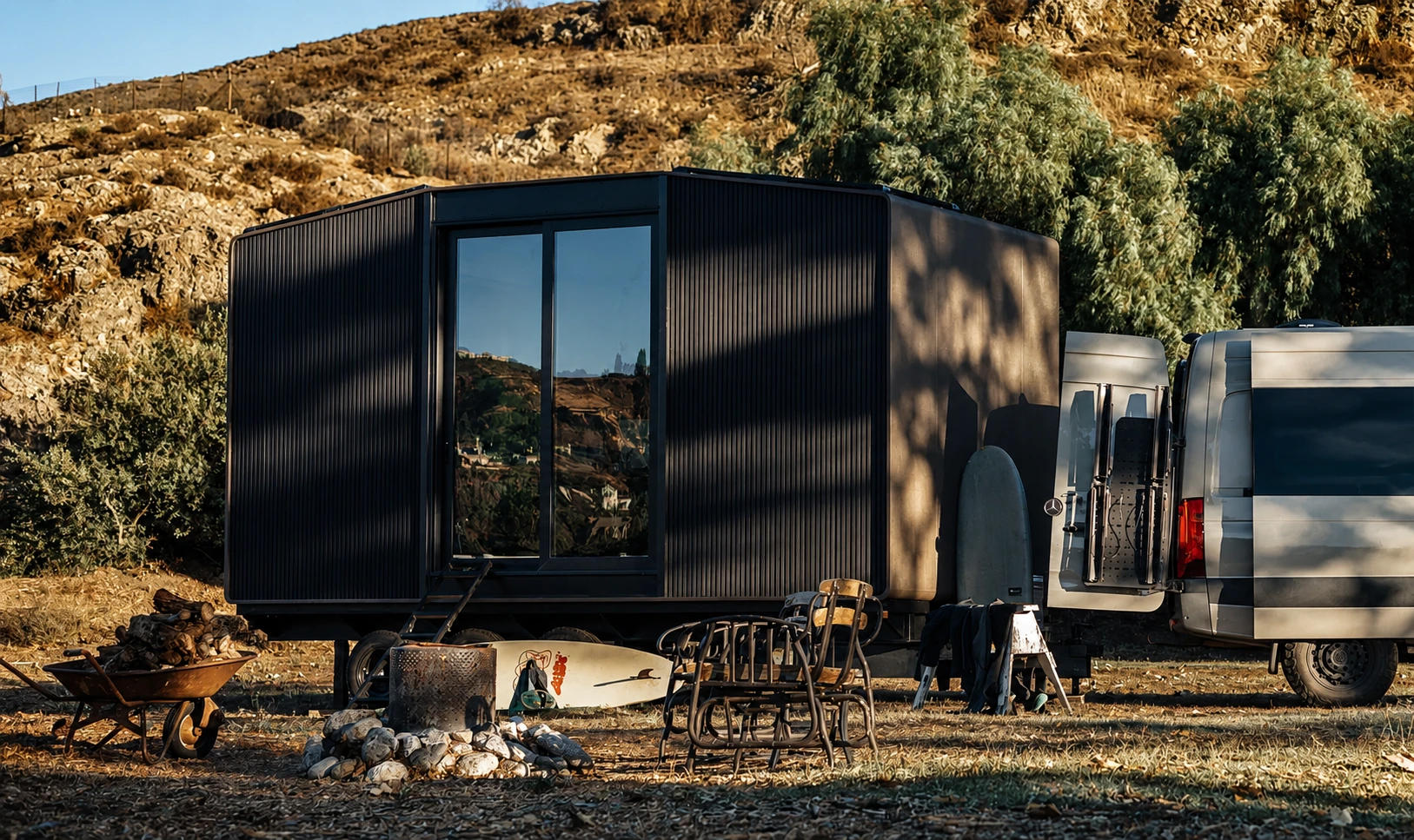
This is also where homes on wheels need a clear distinction. We build homes on wheels for buyers who want mobility, but they are not the same thing as permanent modular homes. The right choice depends on whether the buyer needs flexibility or long-term installation.
Design and Customization
Modular homes usually offer more room for design decisions because the home is being planned as a permanent structure. The layout can respond to:
- The size and shape of the property
- The intended use of the space
- Bedroom and bathroom needs
- Kitchen and storage requirements
- Exterior style
- Interior finishes
- Long-term ownership plans
That is why a modular project might be a studio for extra backyard space, an ADU for family or rental use, or a larger home with bedrooms, bathrooms, a kitchen, and custom finishes. When we design these spaces, the goal is not just to produce a unit that can be delivered. The goal is to create a home that works once it is lived in.
A trailer is usually more standardized. Buyers may still have finish options, but the overall size, shape, and floor plan are often more limited because the structure is designed around transport and chassis requirements.
Durability and Long-Term Use
A modular home is built with long-term use in mind. It is meant to sit on a prepared site, connect to utilities, and function as part of the property for years.
Factory-built construction helps here because much of the work happens in a controlled environment. With robotic printing, we can reduce many of the inconsistencies that come from building entirely outdoors. Materials, dimensions, and assemblies can be managed more precisely before the home ever leaves the factory.
A trailer can be a practical choice for short-term or lower-cost housing, but it is usually not designed with the same permanence in mind. That difference can show up later in maintenance, comfort, and resale expectations.
Financing and Property Value
Financing depends on how the home is built, installed, titled, and classified. In general, a modular home placed on a permanent foundation is more likely to be treated like real property. That can make it easier to approach the project through traditional home financing.
A trailer may be treated differently, especially if it is classified more like personal property than real estate. That can affect loan terms, insurance, and resale.
This is one reason buyers should think beyond the starting price. A lower upfront cost can look appealing, but long-term value depends on how the home performs, where it is placed, and how it fits into the property.
Energy Efficiency
Energy efficiency is another area where modular construction can have an advantage. A controlled factory setting allows key components to be installed with more consistency, including:
- Insulation
- Windows and doors
- Wall assemblies
- Mechanical systems
- Air sealing
- Interior finishes that support comfort and performance
For us, energy efficiency is part of the larger design goal. A modern modular home should be comfortable, efficient, and practical to live in. Recycled materials, insulated assemblies, and precise manufacturing all work together to support that goal.
Trailers can vary widely in efficiency, especially depending on age, materials, and installation. Some newer models perform better than older ones, but the design priorities are still different.
Maintenance
Every home needs maintenance. The real question is what kind of maintenance the owner should expect over time.
A modular home generally follows the same maintenance pattern as a traditional residence: exterior care, roof checks, HVAC service, plumbing, electrical systems, and general upkeep.
A trailer may require different attention because of the chassis, skirting, leveling, tie-downs, and other installation details. These are not always major issues, but they are part of ownership.
In our experience, the right housing solution starts with how the space will actually be used. A backyard ADU, a primary residence, and a home on wheels each serve different purposes, so defining those goals early makes it much easier to choose the option that fits both current and future needs.

Choosing Between a Modular Home and a Trailer
Neither option is universally better. The right choice depends on how the home will be used, the available property, and long-term plans.
| If your priority is… | A modular home may be a better fit | A trailer may be a better fit |
| Permanent primary residence | Yes | Sometimes |
| Backyard ADU | Yes | Less common |
| Custom floor plans | Yes | Limited |
| Modern architectural design | Yes | Limited |
| Lower upfront purchase cost | Sometimes | Yes |
| Flexible mobility | No | Yes |
| Long-term residential development | Yes | No |
When we help homeowners evaluate different housing options, we usually encourage them to think beyond the initial purchase. Questions about where the home will be placed, how long they plan to own it, and whether they expect their needs to change often have a much bigger impact on the decision than price alone.
Common Myths About Modular Homes and Trailers
Misunderstandings about factory-built housing are surprisingly common. Many of them come from outdated ideas that no longer reflect how modern modular construction works.
Myth 1: Modular Homes and Trailers Are the Same Thing
This is probably the biggest misconception. Both are built in factories, but they follow different construction standards, installation methods, and design approaches. A modular home is intended to become a permanent part of a property, while a trailer is built around a permanent chassis and a different set of construction requirements.
Myth 2: Modular Homes All Look the Same
Factory-built no longer means one standard design. One of the reasons we chose modular construction is the freedom it offers. We’ve created compact studios, backyard ADUs, homes on wheels, and larger residential homes because different projects call for different solutions. Modern modular homes can be customized in both appearance and layout, making them difficult to distinguish from many site-built homes once installed.
Myth 3: Trailers Are Only Temporary Housing
Many trailers remain in the same location for years and provide comfortable housing for their owners. The difference is not necessarily how long someone lives there, but how the home is constructed, installed, and classified. Understanding that distinction helps buyers compare housing types more accurately.
Myth 4: Factory-Built Means Lower Quality
Factory-built construction is often associated with speed, but consistency is just as important. Building indoors allows work to continue without many of the interruptions caused by weather. In our manufacturing process, robotic 3D printing helps maintain precise dimensions while reducing material waste through the use of recycled plastics and other carefully selected materials. Factory production does not replace quality; it provides another way to achieve it.
A Practical Checklist Before You Decide
Before comparing prices or floor plans, it helps to think about what the home needs to accomplish. Some buyers are planning a permanent family residence. Others need an ADU to create additional living space, generate rental income, or support multigenerational living. Some projects require mobility, while others are focused on long-term residential development.
A few factors are worth considering before making a decision:
- The intended use of the home
- Whether the home should be permanent or mobile
- Local zoning and permitting requirements
- The amount of customization desired
- The available budget
- Long-term ownership and future plans
Because every property and project is different, we approach each home by first understanding how the space will be used. That allows us to design studios, ADUs, homes on wheels, and larger residential homes that align with the site, the homeowner’s priorities, and the intended use. Different properties have different requirements, and having multiple housing options creates much more flexibility during the planning process.
Final Thoughts
Modular homes and trailers may both begin in a factory, but they are built with different goals in mind. Understanding those differences makes it much easier to choose the right housing solution.
For buyers looking for a permanent residence with greater design flexibility, modern construction methods, and long-term residential use, modular homes offer an approach that closely aligns with traditional homeownership while benefiting from factory-built efficiency.
At Azure Printed Homes, modular construction supports a wide range of projects, from backyard studios and ADUs to homes on wheels and larger residential homes. By combining robotic 3D printing, recycled materials, and customizable designs, we create more ways to build spaces that fit different properties, timelines, and housing needs.