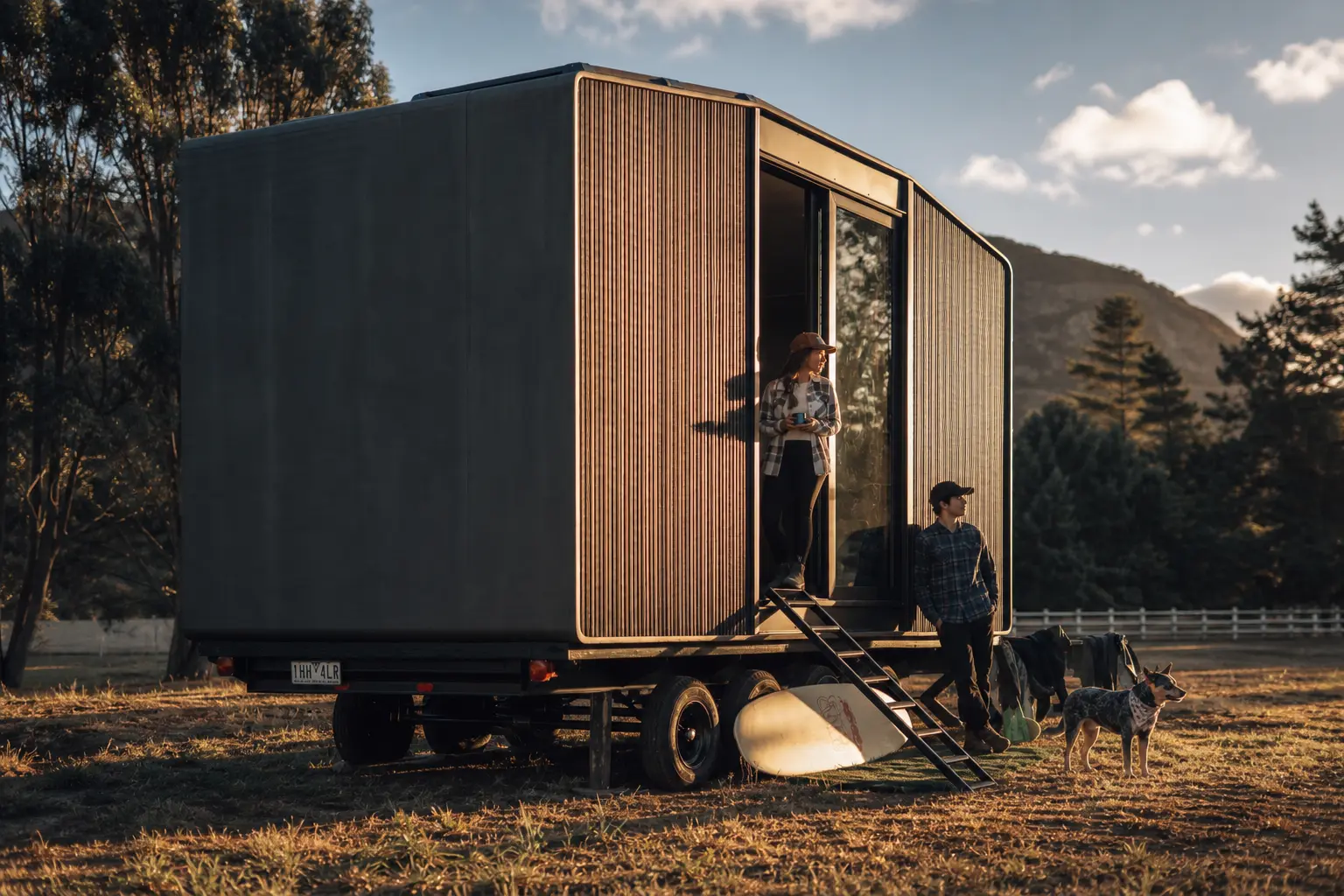
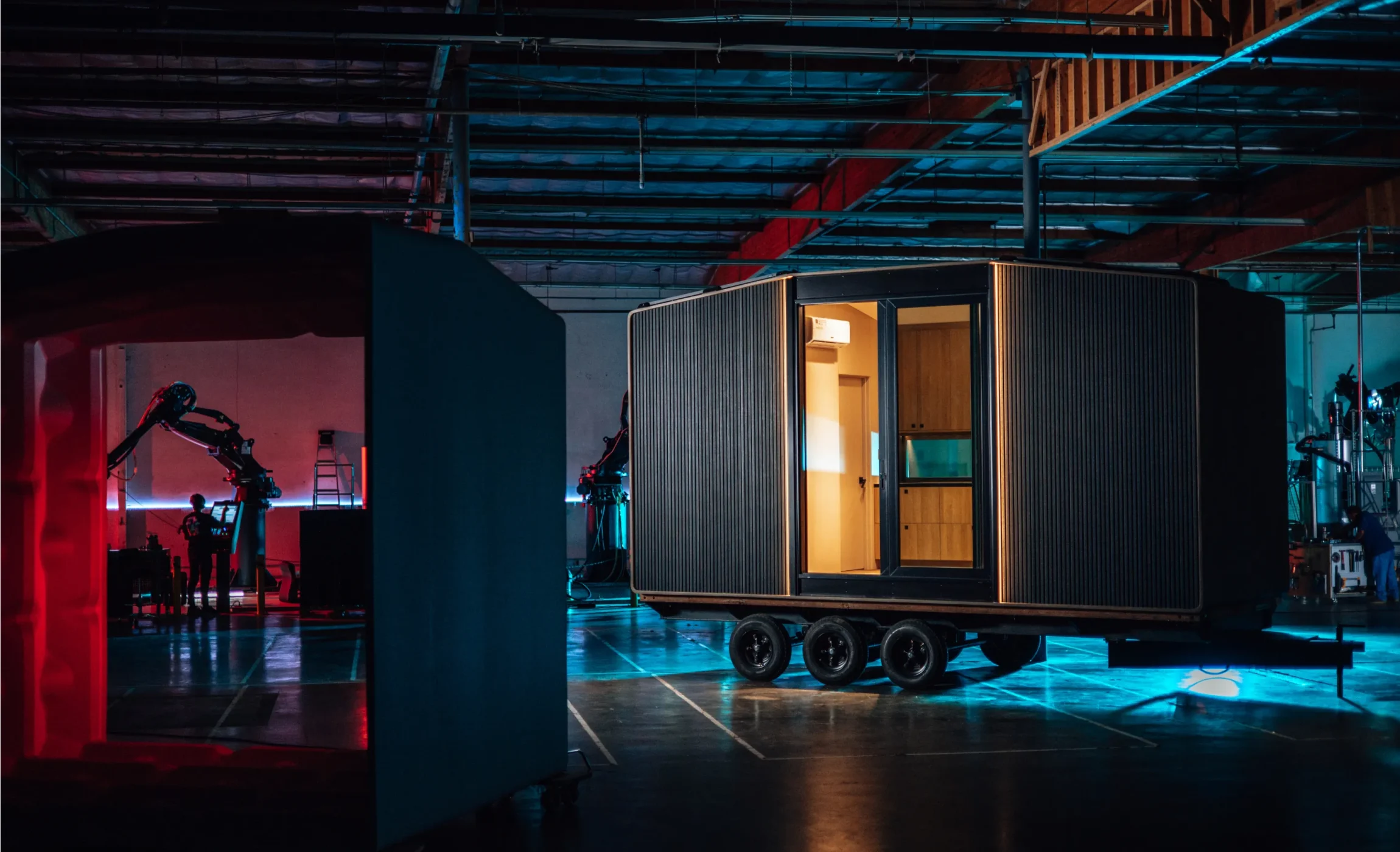
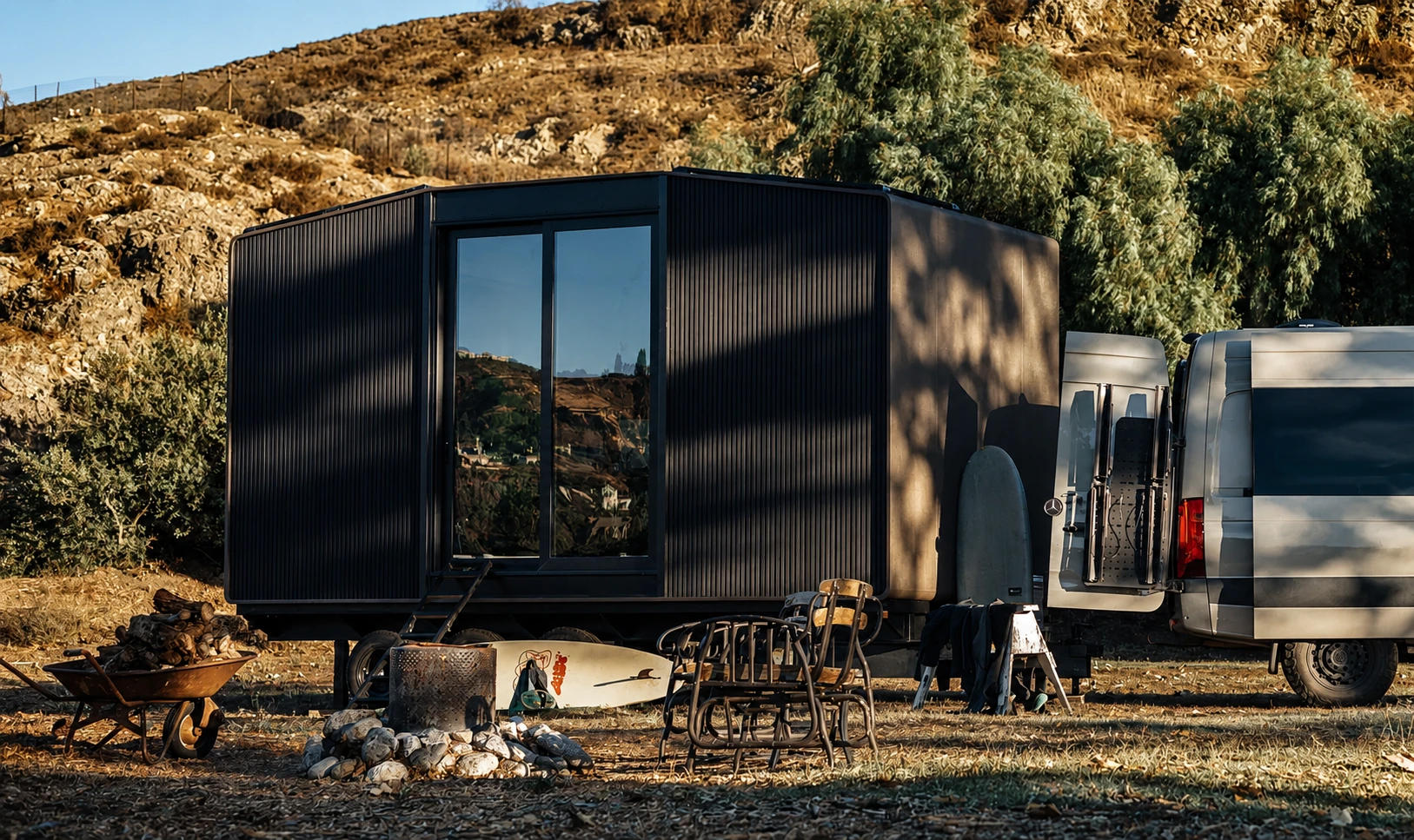
Factory-built housing includes more than one type of home, but the terminology isn’t always straightforward. Mobile homes, manufactured homes, and modular homes are often grouped together because they’re built in a factory before being delivered to their final location. While that’s true, it’s also where many of the similarities end.
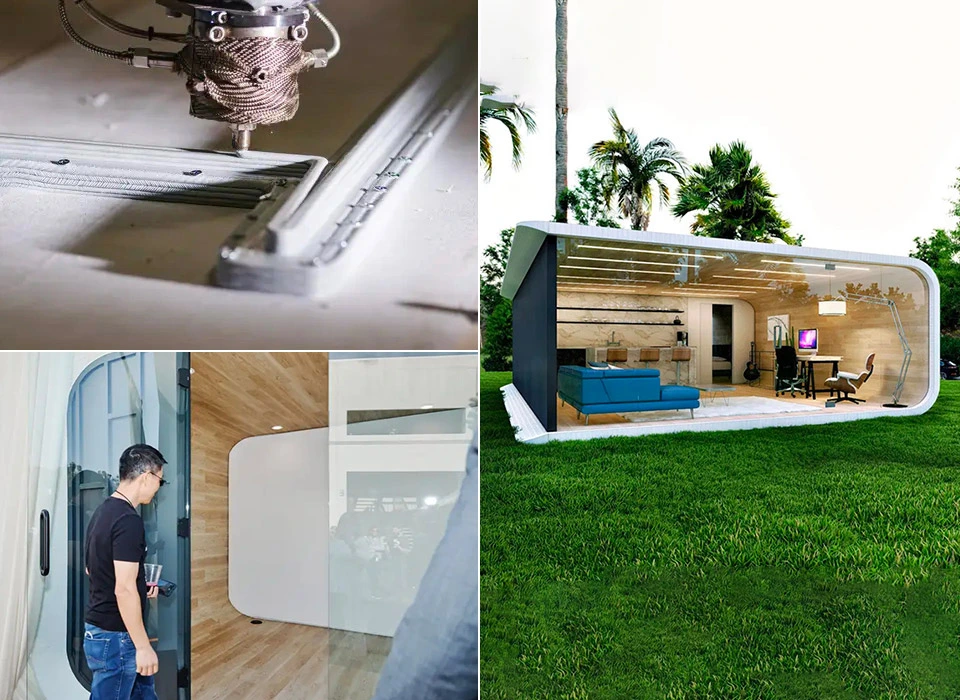
At Azure Printed Homes, we manufacture robotically printed modular studios, ADUs, and larger residential homes using recycled materials and precision factory construction, alongside chassis-based homes on wheels. Since most of what we build is modular, one of the first things we explain is how modular construction differs from manufactured and mobile housing. Although all three are factory-built, they follow different regulations and are designed for different purposes.
This guide explains what each home type is, how they compare, where they differ, and which option may be the best fit depending on your property, budget, and long-term plans.
Understanding the Three Home Types
Although mobile, manufactured, and modular homes are all built in a factory, that’s about where the similarities end. Each follows different construction standards, uses different installation methods, and is intended for different types of homeowners and projects.
Mobile Homes
A mobile home is a factory-built home constructed before June 15, 1976. That date is significant because it marks the introduction of the federal Manufactured Home Construction and Safety Standards, commonly called the HUD Code. Homes built before those standards took effect are classified as mobile homes, while homes built afterward fall into the manufactured home category.
Most mobile homes were designed to provide affordable housing and were built on a steel frame that made transportation relatively simple. Although many remain occupied today, they’re generally older homes that were constructed using standards that differ considerably from those used today.
Some common characteristics include:
- Built before June 15, 1976, when the federal HUD Code was introduced
- Constructed entirely in a factory
- Typically installed on a steel frame
- Often located in established mobile home communities
Today, the term “mobile home” is often used casually to describe many factory-built homes, but technically it only applies to homes built before the 1976 HUD standards.
Manufactured Homes
Manufactured homes replaced mobile homes after the federal HUD Code became effective in 1976. Like mobile homes, they’re built almost entirely inside a factory before being transported to their final location. However, unlike modular homes, manufactured homes are constructed according to federal HUD standards instead of the local residential building codes used for traditional houses.
One of their defining characteristics is the permanent steel chassis. Even after installation, the chassis remains part of the structure, although the wheels used during transportation are removed.
Manufactured homes can be placed on private land or within manufactured housing communities, depending on local zoning regulations and property requirements.
Some of their defining features include:
- Built under the federal HUD Code
- Permanent steel chassis
- Transported as completed sections
- Usually installed without basements
- May be subject to zoning restrictions depending on the municipality
- Often financed and insured differently from conventional homes
Modern manufactured homes have improved significantly over the years. Better insulation, updated floor plans, and improved construction techniques have made them a practical housing option for many buyers looking for an affordable place to live.
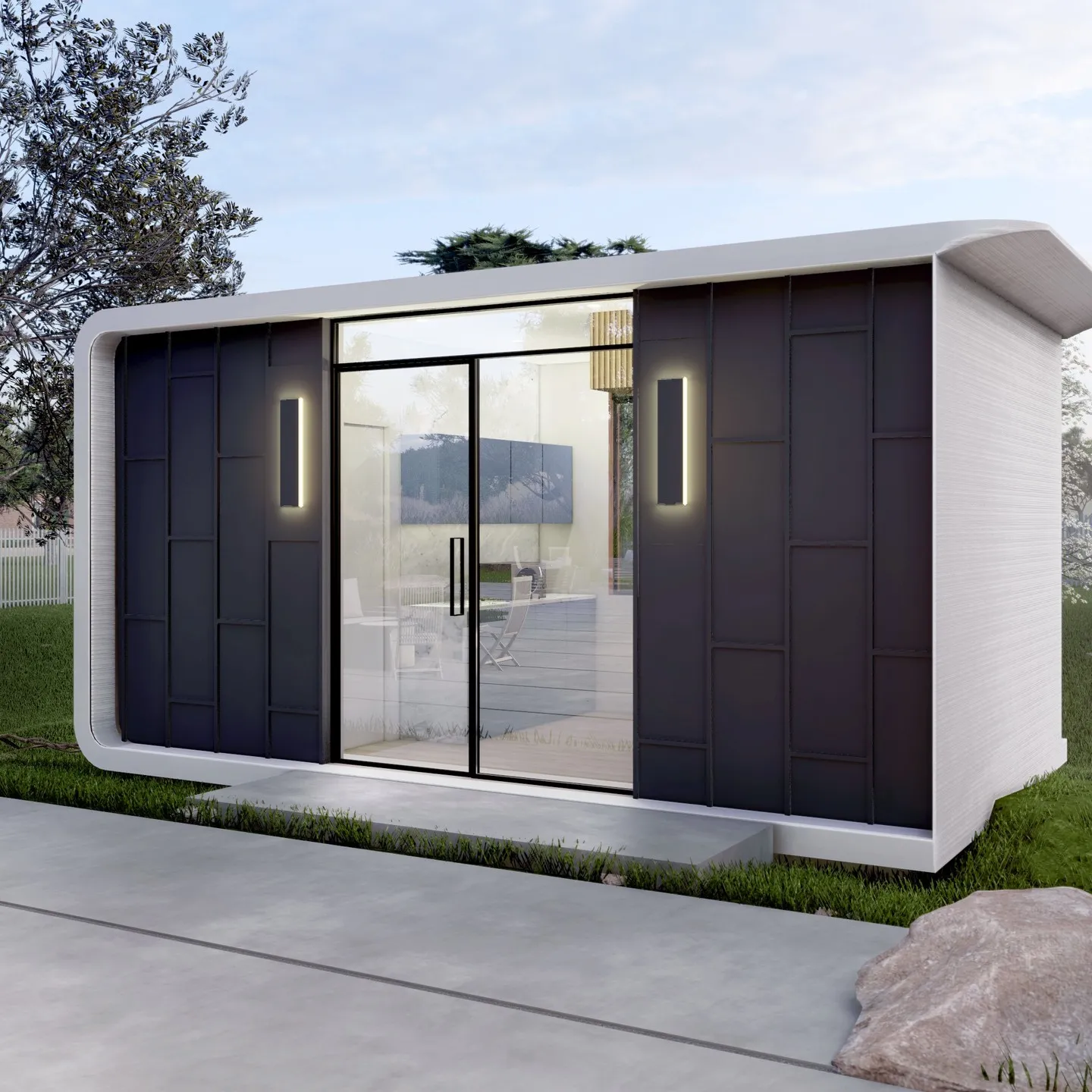
Modular Homes
Like manufactured homes, modular homes are also built inside a factory. The difference is that they’re constructed to the same local and state building codes as site-built homes, not the federal HUD Code.
Instead of arriving as a completed home on a permanent chassis, modular homes are manufactured in sections. Those sections are transported to the property, placed on a permanent foundation, and assembled into a single residence.
Once construction is complete, the finished home goes through the same inspection process required for other residential homes in that community.
This construction method offers the efficiency of factory manufacturing while allowing the finished home to function much like a traditionally built house.
This is where our work begins. At Azure Printed Homes, we robotically manufacture modular studios, ADUs, and larger residential homes using recycled materials and precision factory production. Much of each home’s structure is completed before it ever reaches the property, including electrical, plumbing, mechanical systems, insulation, and interior finishes. By completing so much of the work in a controlled environment, we’re able to reduce weather delays and maintain consistent quality throughout the building process.
Another advantage of modular construction is flexibility. A modular home isn’t limited to a handful of standard floor plans. Depending on the project, layouts, dimensions, finishes, bedrooms, bathrooms, and exterior details can all be customized.
For many buyers, one of the biggest surprises is how little a finished modular home resembles the stereotypes often associated with factory-built housing. Once installed, it typically looks and functions just like a conventional home because it’s designed to meet the same local building requirements.
The Biggest Differences Between Various Home Types
While all three home types begin in a factory, the way they’re regulated, installed, financed, and used can be very different. Looking at each difference individually makes it much easier to understand which option fits a particular project.
Building Codes
Building codes are one of the clearest distinctions between these home types. Modular homes are designed to comply with the local and state building codes where they’ll be placed, just like traditional site-built homes.
Because every Azure home is modular, each project begins with understanding where the home will be installed. We design around the applicable building requirements from the start so the finished home aligns with the regulations that apply to the property rather than relying on a single national standard.
Mobile homes were built before the federal HUD standards existed, while manufactured homes are built according to the HUD Manufactured Home Construction and Safety Standards. Those federal requirements apply nationwide regardless of where the home will eventually be installed.
Construction Process
The way these homes are built also differs. Modular homes are manufactured as individual sections that are transported to the site and permanently assembled there.
Our manufacturing process combines modular construction with robotic 3D printing and recycled materials. Producing much of the home inside a controlled facility helps improve precision, reduce material waste, and keep construction moving regardless of weather conditions.
Mobile and manufactured homes are generally completed almost entirely before leaving the factory.
Foundation
Foundation systems affect both the construction process and the finished home. Modular homes are installed on permanent foundations, which may include slab foundations, crawlspaces, or basements depending on the home’s design and local conditions. Permanent foundations also provide greater flexibility for future additions and long-term residential use.
Manufactured homes remain attached to their permanent steel chassis after installation. Depending on the project, they may be placed on different foundation systems, but the chassis stays with the home.
Customization
Design flexibility varies considerably between home types. Modular homes typically allow much greater flexibility because they are designed more like conventional residential construction.
Rather than limiting every project to a fixed catalog, we customize layouts, dimensions, architectural details, finishes, and configurations to suit the intended use of the home. Depending on the project, we can also adapt homes for backyard studios, ADUs, workforce housing, glamping accommodations, multifamily developments, and larger residential communities.
Older mobile homes generally offered limited customization. Manufactured homes provide more choices than they once did, including different layouts and finish packages.
Here’s how the three options generally compare:
- Mobile homes: Limited opportunities for structural changes or major upgrades because of their original design and construction.
- Manufactured homes: Available in a variety of layouts and exterior styles, with some options for interior finishes and features before construction.
- Modular homes: Extensive flexibility, including floor plans, room layouts, exterior finishes, roofing styles, window placement, kitchens, bathrooms, and future additions such as garages or porches.
Financing
Financing is another area where these home types begin to separate. Modular homes are generally financed much like site-built homes because they’re constructed to local building codes and permanently installed on a foundation. As with any home purchase, approval depends on factors such as the borrower’s financial profile, the property itself, and the lending program.
Because manufactured homes are built under the federal HUD Code and remain attached to a permanent steel chassis, lenders may offer financing that differs from a traditional mortgage. The available loan options often depend on whether the home is placed on owned land or leased land, as well as the lender’s own requirements.
Insurance
The type of home you choose doesn’t just affect how it’s built. It also influences the kind of insurance policy you’ll typically need.
In general, manufactured homes are covered under insurance policies designed specifically for manufactured housing, while modular homes are generally eligible for standard homeowners insurance because they’re built to local building codes and permanently installed on a foundation.
Insurance providers don’t base premiums or coverage on the home’s classification alone. They typically consider several factors, including:
- The home’s location and local weather risks
- Whether it’s a primary residence, vacation home, or rental property
- The home’s replacement value
- Safety features and building materials
- The foundation and installation method
- The amount of coverage and deductible selected
Since we build modular homes, insurance often comes up early in the planning process. Understanding how a modular home is classified before construction begins can make conversations with both lenders and insurance providers much simpler, helping you choose the right coverage with confidence.
Long-Term Value
No two properties are appreciated in exactly the same way. Location, maintenance, neighborhood growth, local housing demand, and market conditions all influence a home’s value over time.
That said, the type of construction can also play a role. Because modular homes are built to the same building standards as site-built houses and permanently installed on foundations, they’re often viewed similarly to traditional homes during appraisal and resale. Manufactured homes follow a different regulatory framework, and their long-term market performance may vary depending on the property, land ownership, and local market.
Rather than focusing only on today’s purchase price, it’s worth considering how the home will serve your needs five, ten, or even twenty years from now.
Which Home Type Fits Your Needs?
The right choice depends less on which home is “better” and more on what you’re trying to accomplish. A first-time homeowner, a family building an ADU, and a developer planning a residential community may all arrive at different answers.
We’ve designed modular solutions for projects ranging from compact backyard studios to workforce housing and larger residential developments. In many cases, modular construction provides the flexibility to meet very different goals while maintaining an efficient factory-built process.
The table below offers a general comparison.
| Situation | Recommended Option | Why |
| Looking for an affordable factory-built home | Manufactured Home | Offers a cost-effective path to homeownership while meeting modern HUD standards. |
| Building a permanent primary residence | Modular Home | Built to local building codes and permanently installed on a foundation. |
| Adding an ADU or backyard studio | Modular Home | Offers flexibility in design while meeting local residential building requirements. |
| Building a vacation or second home | Manufactured or Modular Home | The best choice depends on the property’s location, intended use, and desired level of customization. |
| Creating a highly customized home | Modular Home | Allows greater flexibility for layouts, finishes, room configurations, and future additions. |
| Planning a multifamily or workforce housing project | Modular Home | Modular construction can be scaled for larger residential developments while maintaining efficient factory production. |
| Looking for a home that closely resembles traditional construction | Modular Home | Once installed, modular homes typically look and function much like site-built homes. |
Every project has its own priorities, so this comparison should be viewed as a starting point rather than a strict rule. Local regulations, financing options, and property conditions can all influence which solution makes the most sense.
How to Choose Between Manufactured, Modular, and Mobile Homes
If you’re still deciding, asking a few practical questions can narrow the options quickly.
Choose a mobile home if you are:
- Purchasing or restoring an existing home built before June 15, 1976
- Looking at an older property that already carries this classification
- Replacing or renovating a historic mobile home
Choose a manufactured home if you:
- Want an affordable factory-built home
- Are comfortable with HUD construction standards
- Have confirmed that local zoning allows manufactured housing
- Don’t require extensive architectural customization
Choose a modular home if you:
- Plan to build a permanent residence
- Want a home built to local building codes
- Value greater design flexibility
- Are planning an ADU, vacation home, or family residence
- Want construction that closely resembles a traditional site-built home
Before choosing any construction method, we like to start with the project itself rather than the home category. A property’s location, local regulations, intended use, site conditions, and long-term goals often provide the answer long before a floor plan is selected. Understanding those details early allows us to recommend a modular solution that’s designed around the project instead of trying to make a standard design fit every situation.
Final Thoughts
Although mobile, manufactured, and modular homes all begin in a factory, they represent three distinct approaches to residential construction. The differences extend well beyond terminology and influence building standards, installation, financing, insurance, customization, and long-term ownership.
At Azure Printed Homes, we’ve chosen to focus on modular construction because it combines factory-built efficiency with the flexibility and permanence many homeowners, developers, and communities are looking for today. Through robotically printed studios, ADUs, and larger residential homes, we help bring those advantages to projects of every size while tailoring each design to its intended use.
Taking time to understand these distinctions before choosing a home can make the planning process much more straightforward. Whether you’re building a primary residence, adding living space to your property, or exploring larger housing opportunities, selecting the right type of home starts with matching the construction method to your goals, local requirements, and the way you plan to use the home for years to come.