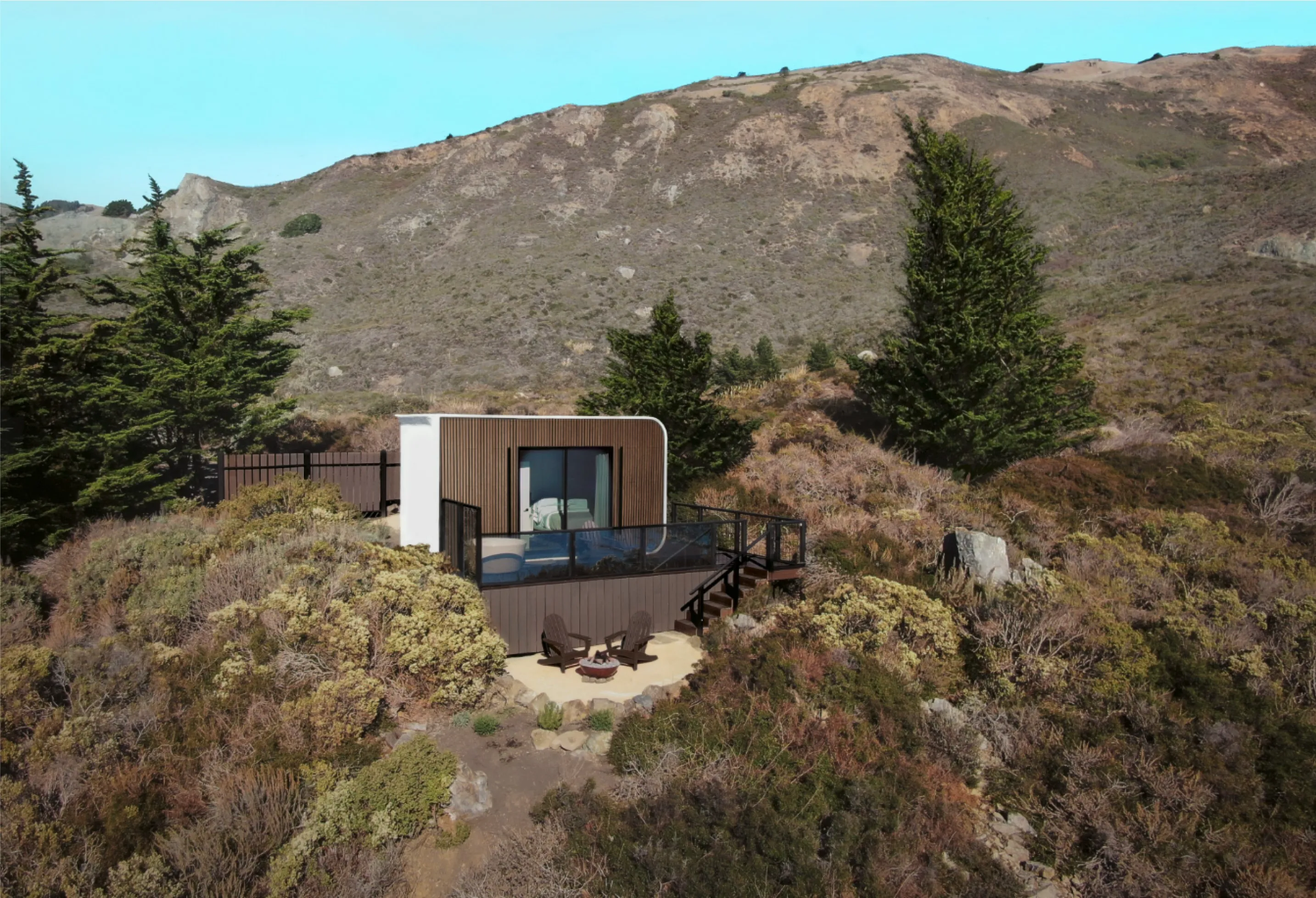
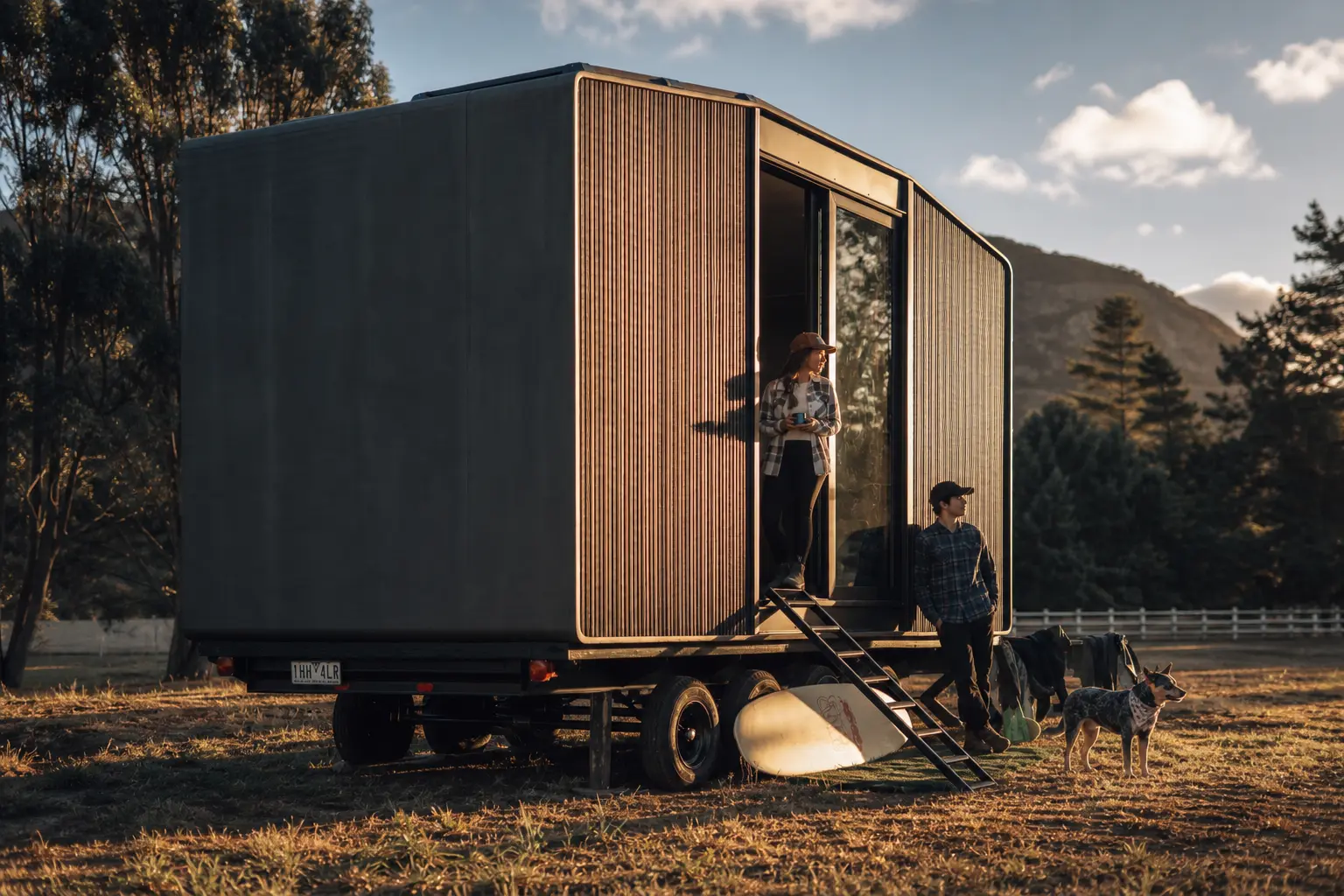
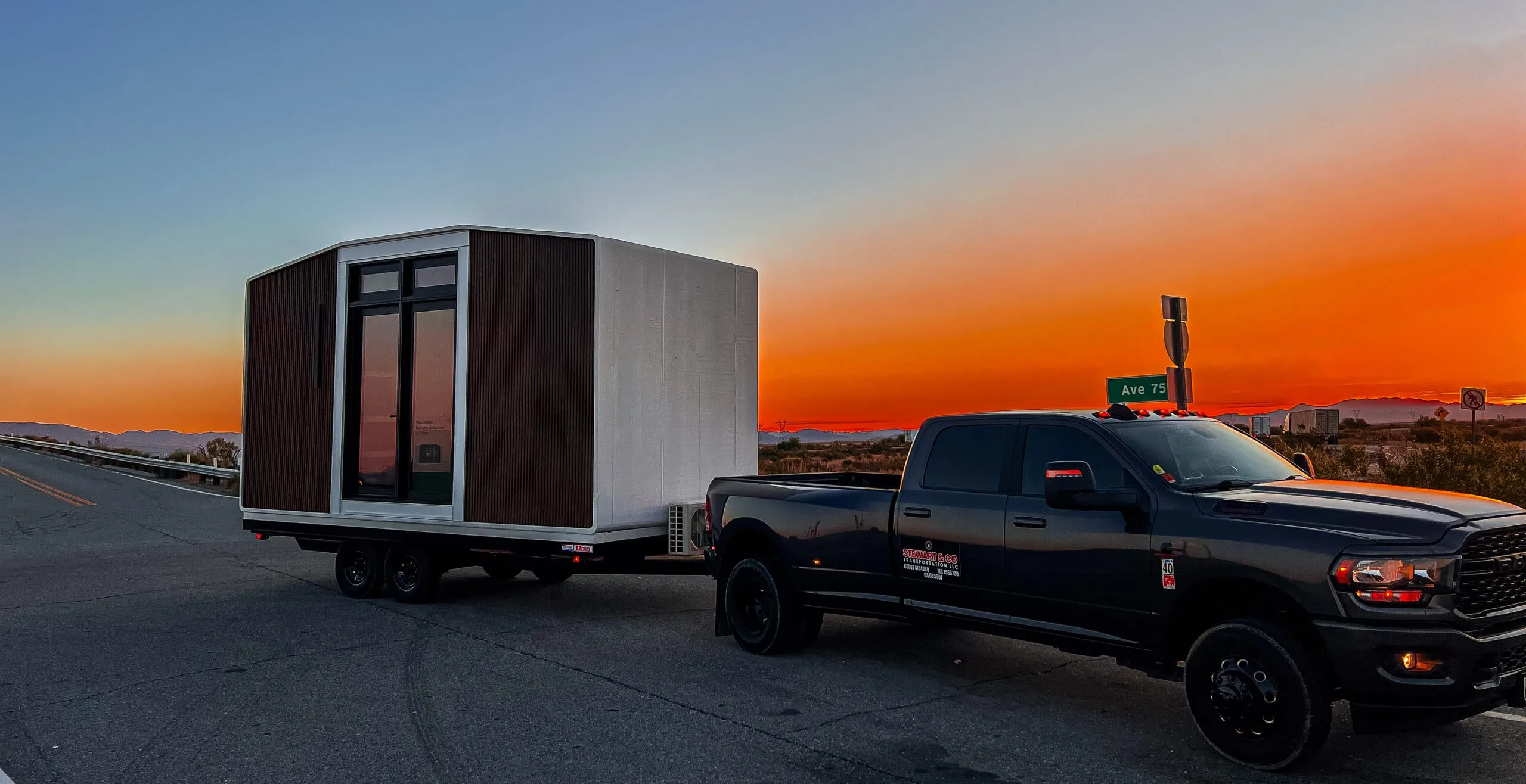
An ADU can add real value to a property, but there is no one-size-fits-all number. The value depends on the property, the local market, the ADU design, the permitted use, and how the space fits into everyday life.
For some homeowners, the value comes from rental income. For others, it comes from giving family more room, creating a private guest space, or making the property more useful without moving. Sometimes the strongest return is not only in resale value. It is in having a backyard home that solves a real problem.
For Azure Printed Homes, an ADU is more than extra space in the backyard. It should feel good to live in, but it also has to fit the property, stay within a realistic budget, and support the way the space will actually be used.
What Does “Value” Mean With an ADU?
When people ask how much value an ADU adds, they are usually thinking about resale price. That is part of the answer, but it is not the whole answer.
An ADU can add value in a few different ways. It can increase usable living space. It can create a separate place for a family member. It can support rental income where local rules allow. It can make a home more attractive to future buyers who want flexibility. It can also help a homeowner stay in place instead of moving into a larger, more expensive property.
That is why ADU value should not be judged only by square footage. A well-planned ADU is not just “more space.” It is a separate, usable, private space. That matters.
A converted room inside the main house may be useful, but it does not offer the same independence as a detached backyard unit with its own entrance, kitchen, bathroom, and living area. Buyers often understand that difference quickly. So do families who need space for a parent, an adult child, a guest, or a caregiver.
The Simple Answer: An ADU Can Add Value, But the Amount Varies
An ADU can increase a property’s value, but the exact amount depends heavily on the location and the quality of the project. A permitted ADU in an area with strong housing demand may add much more value than a poorly planned unit in a market where buyers do not care as much about extra rental or family space.
The biggest factors are usually:
- Local housing demand
- Whether the ADU is fully permitted
- Size and layout
- Build quality
- Privacy from the main home
- Rental potential where allowed
- Utility setup
- Parking and access
- How well the ADU fits the property
- Appraiser and buyer expectations in that market
That last point matters. Real estate value is not decided by the ADU alone. It is decided by how the ADU works with the entire property.
A backyard unit that feels natural on the lot, has good access, and is easy to understand will usually be more valuable than one that feels squeezed in or unfinished. The best ADUs do not feel like an afterthought. They feel like a smart second living space.
Why ADUs Can Be Valuable to Buyers
A home with an ADU can appeal to more types of buyers. That wider appeal can support value, especially in places where housing is expensive or families need more flexible living arrangements.
A future buyer may see the ADU as:
- A rental unit
- A guest house
- A private home office
- A place for aging parents
- A space for adult children
- A caregiver suite
- A creative studio
- A long-term resale advantage
This is where ADUs are different from many other home upgrades. A new kitchen may look great, but it still serves the same household in the same basic way. An ADU can change what the property can do.
It gives the home a second layer of use.
That is a big reason homeowners are paying attention to ADUs now. They are not just adding something decorative. They are adding functions.
Rental Income Can Change the Value Picture
Rental potential is one of the clearest ways an ADU can create financial value. If local rules allow the unit to be rented, the ADU may help create monthly income. That income can offset project costs over time and may make the property more attractive to future buyers.
But this is where homeowners need to stay realistic.
Rental income depends on the local market, tenant demand, rent rules, utility costs, maintenance, and whether short-term or long-term rentals are allowed. A spreadsheet can make almost any project look good if the assumptions are too optimistic.
Before treating an ADU as a rental investment, it helps to ask:
- Can the ADU legally be rented?
- Is long-term rental allowed?
- Are short-term rentals allowed or restricted?
- What rental demand exists in the area?
- Will the ADU have enough privacy?
- How will utilities be billed?
- Who will handle maintenance?
- How long will it take to recover the project cost?
For many homeowners, a long-term rental use may be more stable than relying on short-term rental income. But every market is different. The important thing is to check the rules before building, not after.
Family Use Has Value Too
Not every ADU needs to become a rental to make sense.
Many homeowners build ADUs because their family needs more room, but they do not want to move. Maybe a parent needs to live nearby. Maybe an adult child needs a more independent space. Maybe guests stay often. Maybe someone works from home and the kitchen table is no longer cutting it.
This kind of value is harder to measure, but it is real.
An ADU can help a family stay connected while still giving people privacy. It can make caregiving easier. It can give younger adults a stepping stone. It can allow homeowners to age in place with more options later.
That flexibility can matter just as much as resale value.
At Azure, our Homes & ADUs models are designed around that kind of practical living. A 360 sq ft unit can work for compact independent space. A 540 sq ft model gives more room for daily use. Larger models, including 720 sq ft and 900 sq ft layouts, can support more complete residential needs. The right size depends on the use, not only the yard.
More Square Footage Does Not Always Mean More Value
It is easy to assume that the biggest ADU will add the most value. Sometimes it might. But bigger is not always better.
A larger ADU usually costs more. It may need more site work, more utility planning, and more careful permitting. It may also take up more yard space, which can affect how the main home feels.
The better question is not “How big can we go?” It is “What size actually fits the property and the goal?”
For example, a homeowner who needs a quiet backyard office may not need a full ADU with a kitchen and bathroom. One of our Studio Series models may make more sense for that kind of use. But a homeowner planning for rental income or family housing will usually need a true residential-style unit with plumbing, kitchen space, sleeping space, and full utility connections.
That difference matters. A smaller structure can be a useful upgrade. A full ADU can be a housing asset. They are not the same project, and they should not be judged by the same value formula.
Which Model Makes Sense for Your ADU Goal?
At Azure Printed Homes, we do not treat every small structure as the same thing. A studio, a home on wheels, and a full ADU can all create value, but they do it in different ways.
Studio Series
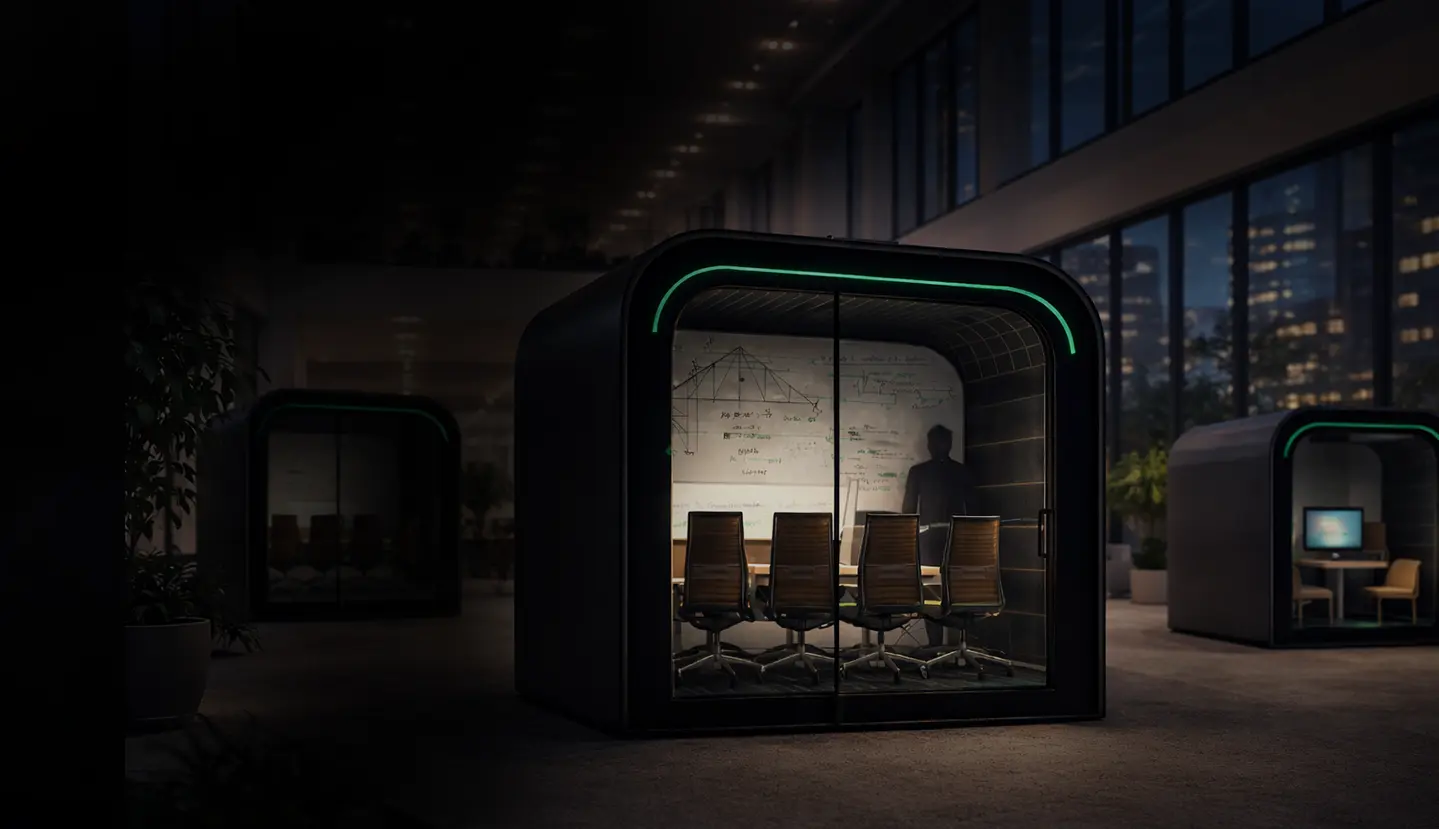
Our Studio Series includes compact models around 100 to 120 sq ft. These are not meant to replace a full home. They are better suited for extra space near the main house.
A studio can add value when the homeowner needs:
- A backyard office
- A creative room
- A hobby space
- A wellness room
- A quiet retreat
- A flexible extra room
This kind of space may not create the same resale impact as a permitted ADU, but it can make a property more useful day to day. For some homeowners, that is exactly the point.
Homes & ADUs
Our Homes & ADUs models are larger residential-style units. They range from compact 360 sq ft layouts to larger models up to 900 sq ft.
These units are better suited for:
- Family housing
- Guest living
- Rental potential where allowed
- Long-term flexible use
- More complete backyard living
- Multigenerational needs
Because these units include more residential features, they can support a stronger value case. They also require more planning. Permits, foundation, delivery access, utilities, drainage, and inspections all matter.
Homes on Wheels
Homes on wheels can offer flexibility, but placement rules need careful review. They may work well for certain properties, parks, communities, or specific use cases. But they should not be treated the same as a permitted ADU on a foundation.
For value planning, the legal placement path is just as important as the model itself.
Permits Make a Big Difference
A permitted ADU is usually much stronger from a value standpoint than an unpermitted structure.
Permits help show that the unit was reviewed under local rules and built for an approved use. This can matter for resale, insurance, financing, appraisals, and rental use. It can also help avoid problems later when the property is sold or inspected.
An unpermitted unit may seem easier at first, but it can create issues. A buyer may hesitate. A lender may question it. A city may require corrections. An appraiser may not give it the value the homeowner expected.
This does not mean every backyard structure follows the same permit path. Smaller studio spaces may have different requirements than full ADUs. But for a true residential ADU, homeowners should plan around permits from the beginning.
That includes more than the unit itself. Site work can involve foundation, grading, drainage, utilities, and local inspections.
Site Work Can Affect the Return
The ADU model price is only part of the total project cost. The land around the ADU matters too.
A flat, accessible backyard with nearby utility connections may be much easier to plan than a sloped lot with long utility runs and tight delivery access. Two homeowners may choose the same ADU model and still end up with different total costs because their properties are different.
Common site factors include:
- Foundation or support system
- Utility distance
- Electrical capacity
- Sewer or septic connection
- Water line access
- Drainage
- Grading
- Soil conditions
- Fire zone requirements
- Delivery path
- Setbacks
- Local fees
- Landscaping after installation
This is one reason we talk about ADU value in practical terms. A good project is not built on the lowest model price alone. It is built on a full picture of the unit, the land, the rules, and the final use.
Faster Construction Can Help, But It Is Not the Whole Story
One advantage of our approach is that much of the work happens in a controlled environment. The structural shell is robotically printed using recycled materials, then the unit is fabricated with selected finishes, systems, and interior details.
The printing stage can be fast. Some structures can be printed in as little as one day. But a finished ADU still involves more than printing. Electrical, plumbing, finishes, quality checks, delivery planning, site preparation, and installation all still matter.
The value here is not only speed. It is predictability.
Traditional backyard construction can bring long timelines, more site disruption, and many moving parts happening at the property. With our process, site work can often move forward while the unit is being manufactured. That can make the project feel more organized and less like the backyard has turned into a never-ending construction zone.
For homeowners thinking about value, time matters. A shorter and more predictable process can reduce stress and may help the unit become usable sooner. But the site still needs to be ready.
Sustainability Can Support Long-Term Appeal
Sustainability is not the only reason people choose an ADU, but it is becoming part of how many homeowners think about value.
Our homes use recycled materials, including recycled plastic, as part of our 3D-printed construction approach. We often explain it in simple terms: about 100,000 plastic bottles can be recycled into 120 sq ft of our printed homes.
That detail tends to stick with people because it connects the home to something real. Less waste. More reuse. A different way to build.
A sustainable ADU may appeal to buyers who care about energy efficiency, responsible materials, and smarter construction. It may also fit well in markets where homeowners are paying closer attention to long-term performance and environmental impact.
Of course, sustainability alone does not guarantee resale value. The ADU still needs to be comfortable, permitted, well placed, and useful. But when those pieces are already in place, a more efficient and less wasteful building approach can strengthen the overall story of the property.
What Appraisers May Look At
ADU valuation can be tricky because appraisers do not always treat ADUs the same way in every market. Some may compare properties with similar permitted ADUs. Some may look at rental income potential. Some may consider added living area, quality, and functional use.
This is one reason homeowners should avoid assuming that every dollar spent on an ADU will come back the same way at resale. Real estate does not work that neatly.
Appraisers may consider:
- Whether the ADU is permitted
- Size and layout
- Condition and construction quality
- Utility independence
- Rental income potential
- Comparable sales with ADUs
- Local buyer demand
- Whether the ADU is attached or detached
- How the ADU affects the main property
In strong ADU markets, buyers may place a clear premium on a property with a separate living unit. In other areas, the value may depend more on how the buyer plans to use the space.
This is why we think the safest approach is to build for real usefulness first. A truly useful ADU has more ways to hold value.
ADU Value Is Not Only About Resale
Resale matters, but many homeowners benefit from an ADU before they ever sell the property.
An ADU can help reduce the need for outside housing for family members. It can give someone a private place to live close by. It can create rental income. It can make hosting guests easier. It can give the property options as life changes.
That kind of value adds up over time.
For example, a homeowner might use the ADU as a rental for several years, then later use it for a parent. Or it might start as a guest house and become a work-from-home space. Or it might help the next buyer see the property as a better long-term fit.
Flexibility is one of the most important parts of ADU value. A good ADU does not serve only one narrow purpose. It gives the property room to adapt.
How to Think About ROI
Return on investment can come from resale value, rental income, avoided moving costs, or daily usefulness. For many homeowners, it is a mix.
A simple way to think about ADU ROI is to divide it into three layers.
Financial Return
This includes rent, future resale value, and potential buyer demand. It is the easiest layer to put into a spreadsheet, but it depends on local rules and market conditions.
Practical Return
This includes family space, guest use, privacy, and the ability to stay in the home longer. It may not show up as monthly income, but it can still be one of the main reasons the project makes sense.
Property Return
This is about making the land more useful. A backyard that was mostly unused can become a real living area. That can change how the whole property feels.
The best ADU projects usually touch all three layers in some way.
A Useful Planning Checklist
Before asking how much value an ADU will add, it helps to walk through the project in a grounded way.
Homeowners should review:
- The main reason for building the ADU
- The model size that fits that reason
- Local ADU rules and permit requirements
- Rental rules if income is part of the plan
- Site access for delivery and installation
- Foundation or support needs
- Utility connections
- Drainage and grading
- Privacy between the ADU and main home
- Total project budget
- Long-term maintenance
- Insurance and tax impact
- Resale expectations
This checklist may not be exciting, but it is useful. A well-planned ADU is easier to price, easier to permit, and easier to live with.
Final Thought: So, How Much Value Does an ADU Add?
An ADU can add meaningful value to a home, but the number depends on the whole project. A permitted, comfortable, well-placed ADU in a strong housing market can be a major asset. A poorly planned unit with unclear permits or limited use may add much less.
The real answer is this: an ADU adds the most value when it creates a usable second living space that people understand right away.
If a buyer, renter, or family member can walk in and think, “Yes, this works,” the ADU is doing its job.
For us at Azure Printed Homes, that is the practical goal. We build 3D-printed modular homes because we think housing can be smarter, faster, and less wasteful. But the ADU still needs to work as a home. It needs the right model, the right site, the right utility plan, and the right reason behind it.
A good ADU is not just extra square footage. It is extra possibility. And when it is planned well, that possibility can become real value.