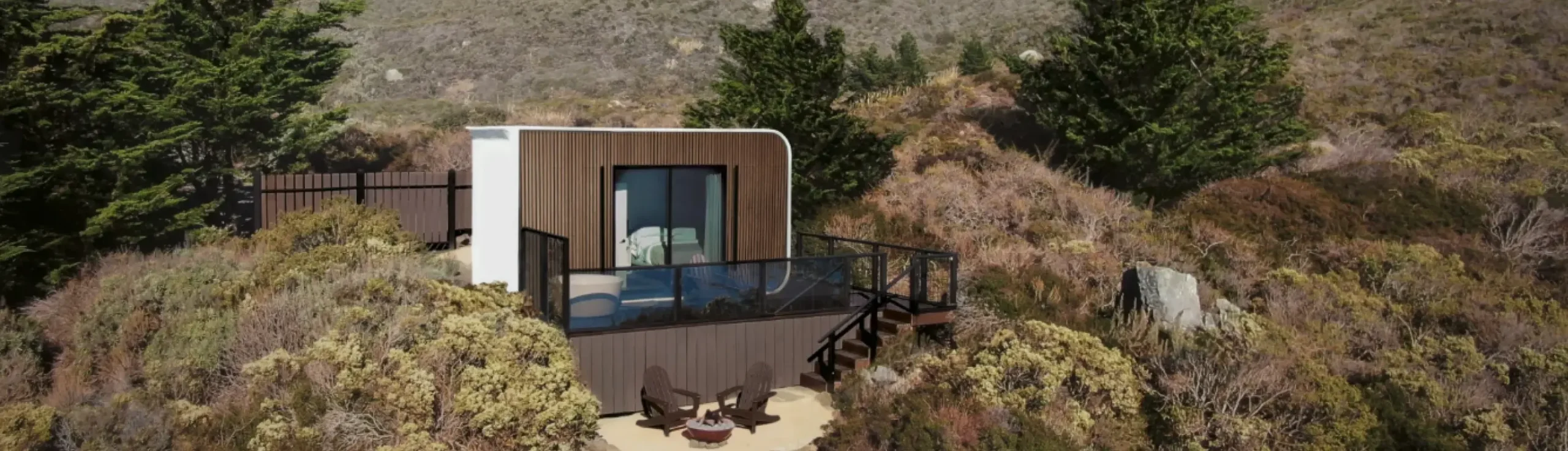
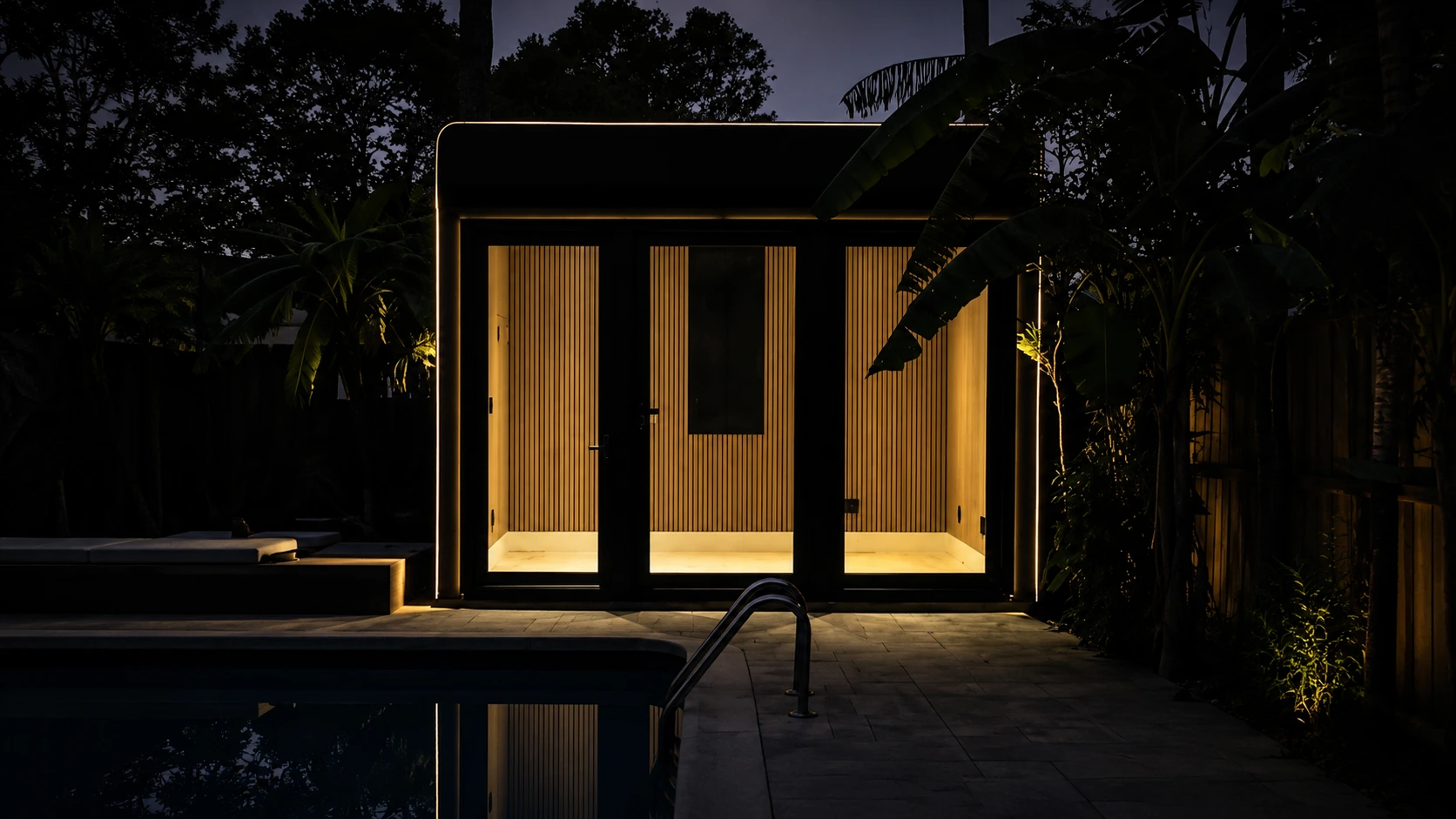
Park model homes are usually small by design, but they can still feel surprisingly complete. In many cases, they are built with a compact footprint that may include a living area, kitchenette, bathroom, sleeping space, storage, and sometimes a loft or porch.
Most park model homes are up to about 400 square feet of interior floor area. That size limit is one of the main things that separates a park model from a larger manufactured home or traditional modular home. Some models may feel larger because of smart layouts, high ceilings, outdoor decks, built-in storage, or loft areas, but the main living footprint is still compact.
At Azure Printed Homes, we build compact, modular living spaces using robotic 3D printing and recycled plastic materials. While every project has its own site needs and local rules, our work often overlaps with the same space-planning decisions people face when comparing park model homes. This article explains typical park model home sizes, common layouts, what can fit inside, and how these homes compare with other compact living options.
Standard Park Model Home Size
A park model home is commonly designed to stay within a compact size range. The most common maximum size is about 400 square feet, not including certain exterior features such as porches or decks.
That means a park model home is usually much smaller than a full-size house, but larger and more residential-feeling than many travel trailers. It is often meant to stay in one place for longer periods, such as an RV park, vacation site, glamping property, or private land where local rules allow it.
The exact size can vary by manufacturer, layout, and classification. Some units may be long and narrow. Others may use wider layouts with a more home-like interior. The important thing is not just the square footage, but how that square footage is arranged.
Common Park Model Home Dimensions
Many park model homes are built in long rectangular layouts because they need to be delivered to the site. A common width may be around 8 to 12 feet, while the length may vary depending on the model.
For example, a park model home might be close to:
- 8 feet wide by 30 feet long
- 10 feet wide by 36 feet long
- 12 feet wide by 34 feet long
- 12 feet wide by 40 feet long
These are only general examples. Actual dimensions depend on the design and the rules that apply to the unit. A few extra feet can make a noticeable difference in a small home, especially when it affects the bathroom, kitchen, bedroom, or storage layout.
What Can Fit Inside a Park Model Home?
A well-planned park model home can include many of the basic spaces people expect in a small dwelling. The layout usually has to work harder than a standard home because there is less room for wasted space.
Living Area
Most park model homes include a small living area near the entrance or in the center of the unit. This space may fit a sofa, chair, compact table, wall-mounted TV, or built-in storage.
In a smaller footprint, the living room often needs to do more than one job. It may also work as a dining area, lounge space, guest sleeping area, or workspace.
Kitchen or Kitchenette
Park model homes often include a compact kitchen or kitchenette. Depending on the size and layout, this may include cabinets, a sink, countertop space, refrigerator, cooktop, microwave, or small oven.
A full kitchen can take up a lot of room, so the best layouts keep the cooking area efficient. Open shelving, vertical storage, and smaller appliances can help the space feel less crowded.
Bathroom
Most park model homes include a bathroom with a toilet, sink, and shower. Some may have a larger shower or more storage, but every inch matters.
Bathroom placement can affect the whole layout. A bathroom near the bedroom may feel more private, while a central bathroom can be easier for guests to access.
Sleeping Space
Some park model homes have a separate bedroom. Others use a loft, built-in bed, Murphy bed, sleeper sofa, or flexible sleeping area.
A separate bedroom can make the home feel more comfortable for longer stays. A loft can help free up floor space, but it may not be the right fit for every user, especially if stairs or ladder access is difficult.
Storage
Storage is one of the biggest challenges in any small home. Park model homes may include built-in cabinets, under-bed storage, wall shelves, closets, or exterior storage.
A compact home can work well when storage is planned from the start. Without enough storage, even a nicely designed unit can start to feel tight.
Is 400 Square Feet Enough Space?
For many uses, 400 square feet can be enough. It depends on how the home will be used and how many people will use it at one time.
A park model home can work well for:
- Vacation stays
- Guest housing
- Glamping sites
- RV communities
- Seasonal living
- Compact rental units where allowed
- Private retreat spaces
- Downsized living in the right location
It may feel too small for larger families, full-time living without proper approvals, or buyers who need separate rooms for work, storage, hobbies, and long-term daily routines.
The key question is not only “How big is it?” A better question is, “What does space need to do every day?”
How Park Model Homes Compare With Tiny Homes and ADUs
Park model homes, tiny homes, and ADUs are often discussed together because they all offer compact living space. Still, they are not the same thing. The main differences usually come down to size, mobility, classification, placement rules, and how the unit is expected to be used.
Park Model Homes and Tiny Homes
Park model homes and tiny homes can look similar at first because both are built around smaller footprints. A tiny home may be built on wheels or on a foundation, and its size can vary widely. Some tiny homes are very small, while others are closer to the size of a park model home.
A park model home is usually designed for recreational, seasonal, or long-stay use in settings such as RV parks, vacation properties, or glamping sites. It may be built on a chassis for transport, but that does not always mean it is treated the same way as a tiny home on wheels. Classification and local rules matter.
At Azure, we create compact living options for different project types, from small studios to homes on wheels and larger modular ADU-style spaces. A smaller footprint can still be useful, flexible, and well-designed when the layout matches the site and the purpose.
Park Model Homes and ADUs
An ADU, or accessory dwelling unit, is usually treated differently from a park model home. ADUs are often built or placed as secondary housing units on residential properties where local rules allow them. They may be used for guest space, family housing, rental use, or added living area.
ADUs may also need to meet different building codes, foundation requirements, utility rules, and permit standards. They can be larger than park model homes and may be designed for more permanent residential use.
Park model homes are usually more limited in size and classification. They may work well in certain recreational or seasonal settings, but they are not automatically allowed on every property. For buyers comparing these options, the best choice usually depends on zoning, permits, access, foundation needs, utility connections, and intended use.
Azure Printed Homes Options by Size
We build several types of compact and modular spaces for people comparing park model homes with other small housing options.
Studio Series
Our Studio Series includes compact units such as A/D/C-100, A/D/C-120, and N100. These are designed for flexible uses like backyard studios, creative rooms, guest areas, workspaces, wellness rooms, or personal retreats.
The A/D/C-100 and N100 models prices start at $24,900. The A/D/C-120 model’s pricing starts at $29,900.
These units are smaller than many park model homes, but that can be the point. Not every project needs a full living unit with a kitchen, bathroom, and bedroom. Sometimes a compact, finished space is enough to solve the problem.
Homes on Wheels
Our X Series homes on wheels are designed for buyers who want a compact chassis-based option. They start at $69,900 and include the X180 starting at $69,900, X270 starting at $84,900, and X360 starting at $109,900.
These units can be useful for people comparing park model homes with mobile small-space options. They are compact, direct, and designed around flexible living.
Homes and ADUs
For buyers who need more room, our Homes and ADUs include larger layouts such as A-180, A-360, A-540, A-720, and A-900.
A Series pricing starts at $49,900, with models including A-180 starting at $49,900, A-360 starting at $89,900, A-540 starting at $134,900, A-720 starting at $174,900, and A-900 starting at $219,900.
These models move beyond the smaller park model size range and may be a better fit when the goal is a more complete living space, depending on local approvals and project requirements.
How Layout Affects the Feel of a Park Model Home
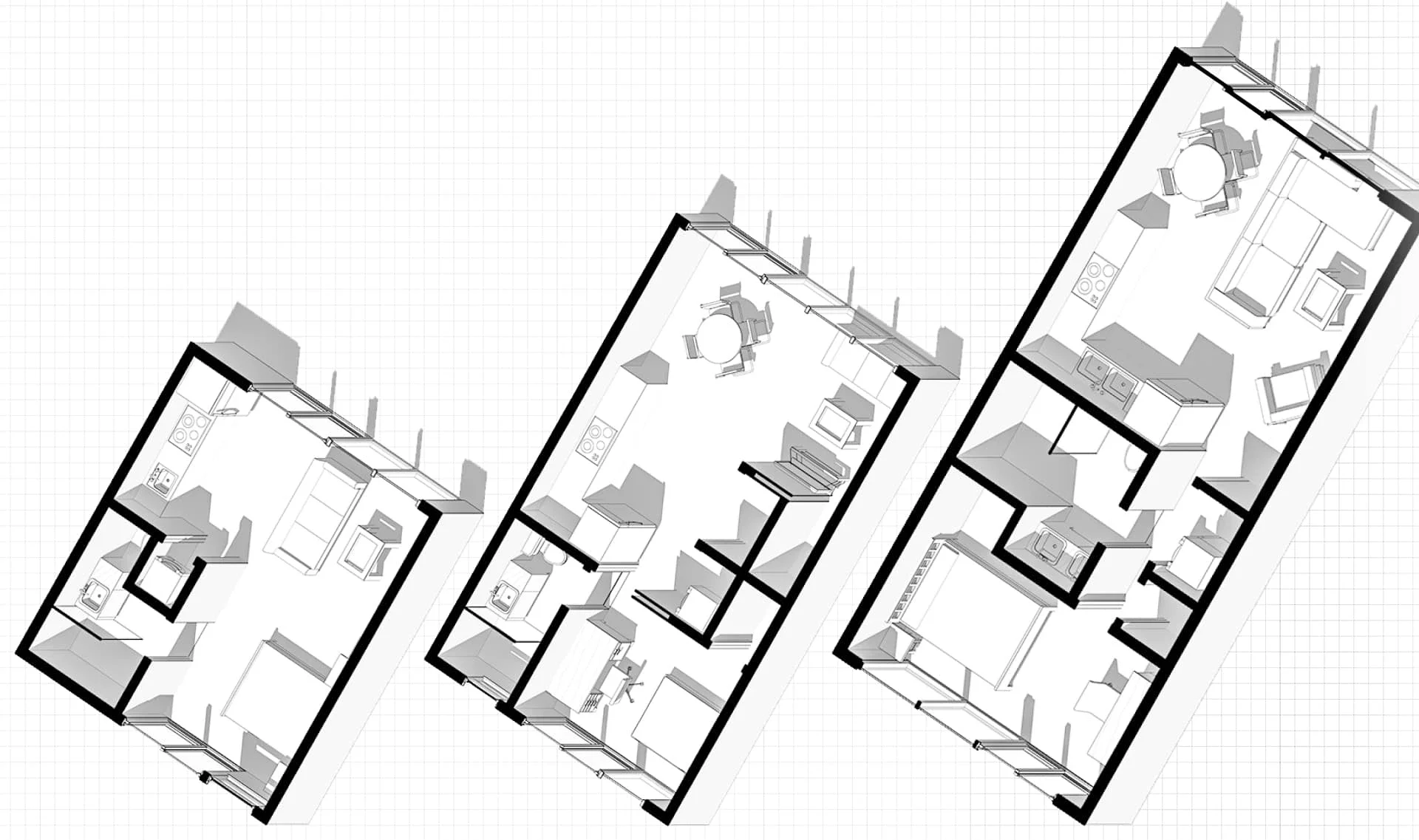
Two park model homes can have the same square footage and feel completely different. Layout matters that much.
A narrow hallway, oversized bathroom, or poorly placed kitchen can make a small home feel cramped. On the other hand, a clean layout with open sightlines, built-in storage, and good natural light can make the same footprint feel more comfortable.
Important layout choices include:
- Whether the bedroom is separate or open
- Whether the kitchen is full-size or compact
- How much storage is built in
- Whether the bathroom is central or private
- Whether outdoor space extends the living area
- How much natural light enters the unit
- Whether furniture has more than one function
In compact housing, every design choice counts. A small home does not need to feel unfinished, but it does need to be planned carefully.
Park Model Home Use Cases and Planning Limits
Park model homes can be a practical choice when the property, local rules, and intended use all support a compact living setup. They are often most useful when buyers want a finished small-space option without building a full-size house. Still, the smaller footprint comes with limits, so it is important to look at both the use case and the site conditions before choosing one.
Best-Fit Use Cases
Park model homes often work well in settings where compact living is expected and allowed. They can provide a defined living space for short stays, seasonal use, guest lodging, or small rental setups where local regulations permit them.
Common use cases include:
- RV parks and vacation communities
- Glamping properties and seasonal retreats
- Guest lodging or private getaway spaces
- Compact rental settings where permitted
- Small private land projects with supportive zoning
In these situations, the size of a park model home can be an advantage. The space is easier to maintain than a larger home, and the layout can still include the basics people need for a comfortable stay.
Practical Limits
A park model home may not be the right fit when the buyer needs more room for full-time routines, multiple people, separate bedrooms, larger storage areas, or long-term daily living. It may also create problems if the property is not approved for this type of unit.
Before moving forward, buyers should consider:
- Whether the structure is allowed on the property
- Whether the site can support delivery and installation
- How utilities will be connected
- Whether the intended use matches local rules
- Whether the layout provides enough storage and privacy
- Whether a different housing type, such as an ADU or modular home, may be required
This is why planning matters. A compact home can be a smart solution, but only when it fits the land, the rules, and the way people will actually use it.
Does a Porch Count Toward the Size?
In many park model discussions, porches and decks are treated separately from the main interior floor area. This is one reason some park model homes feel larger than their listed size.
A covered porch, deck, or patio can make the home more usable, especially in vacation, glamping, or seasonal settings. Outdoor space can become a dining area, lounge, entry zone, or place to relax.
Still, buyers should not assume that outdoor features are always excluded from local size rules. Local requirements can vary. Before choosing a unit, it is important to confirm how the property, structure, porch, foundation, and utility setup will be reviewed.
How to Choose the Right Size
The right size depends on the project. Before choosing a park model home or another compact modular option, it helps to answer a few practical questions.
Number of People Using the Space
A unit for one person can be much smaller than a unit used by a couple, family, guests, or short-term visitors. Sleeping arrangements, bathroom access, seating, and storage all depend on occupancy. Even in a compact home, the space should feel usable when everyone is inside at the same time.
Length of Stay
A weekend retreat may not need as much storage, privacy, or daily-use space. A longer-stay unit usually needs a more complete layout, better utility planning, and more comfort. The longer someone stays, the more important details like closet space, kitchen function, and bathroom layout become.
Kitchen and Bathroom Needs
Some compact units are meant to be simple studios, while others need a kitchen, bathroom, bedroom, and living area. Adding plumbing and cooking space changes the layout, installation process, and project scope. Buyers should decide early whether the unit is meant to be a flexible room or a complete living space.
Property Rules and Site Conditions
The property may decide the answer before the buyer does. Local rules can affect size, height, foundation, setbacks, utilities, occupancy, and whether a park model, ADU, tiny home, or modular unit is allowed. Site access also matters because the unit must be delivered, placed, and connected safely.
Outdoor Living Space
A deck, patio, or covered porch can make a compact home feel more complete. Outdoor space is especially useful for vacation sites, glamping properties, and mild climates. It can add room for dining, relaxing, and gathering without increasing the main interior footprint.
Final Thoughts
Park model homes are usually up to about 400 square feet, but the real answer is more practical than a number. A small home can feel comfortable when the layout is clear, the storage is planned, and the site supports the intended use.
For some buyers, a park model home is the right size for seasonal living, guest stays, vacation use, or a compact rental setting. For others, a studio, home on wheels, ADU, or larger modular home may make more sense.
At Azure Printed Homes, we build future-focused modular living spaces with robotic 3D printing and recycled materials. From compact studios to homes on wheels and larger ADU-style models, we help turn small footprints into useful spaces with a clear purpose.