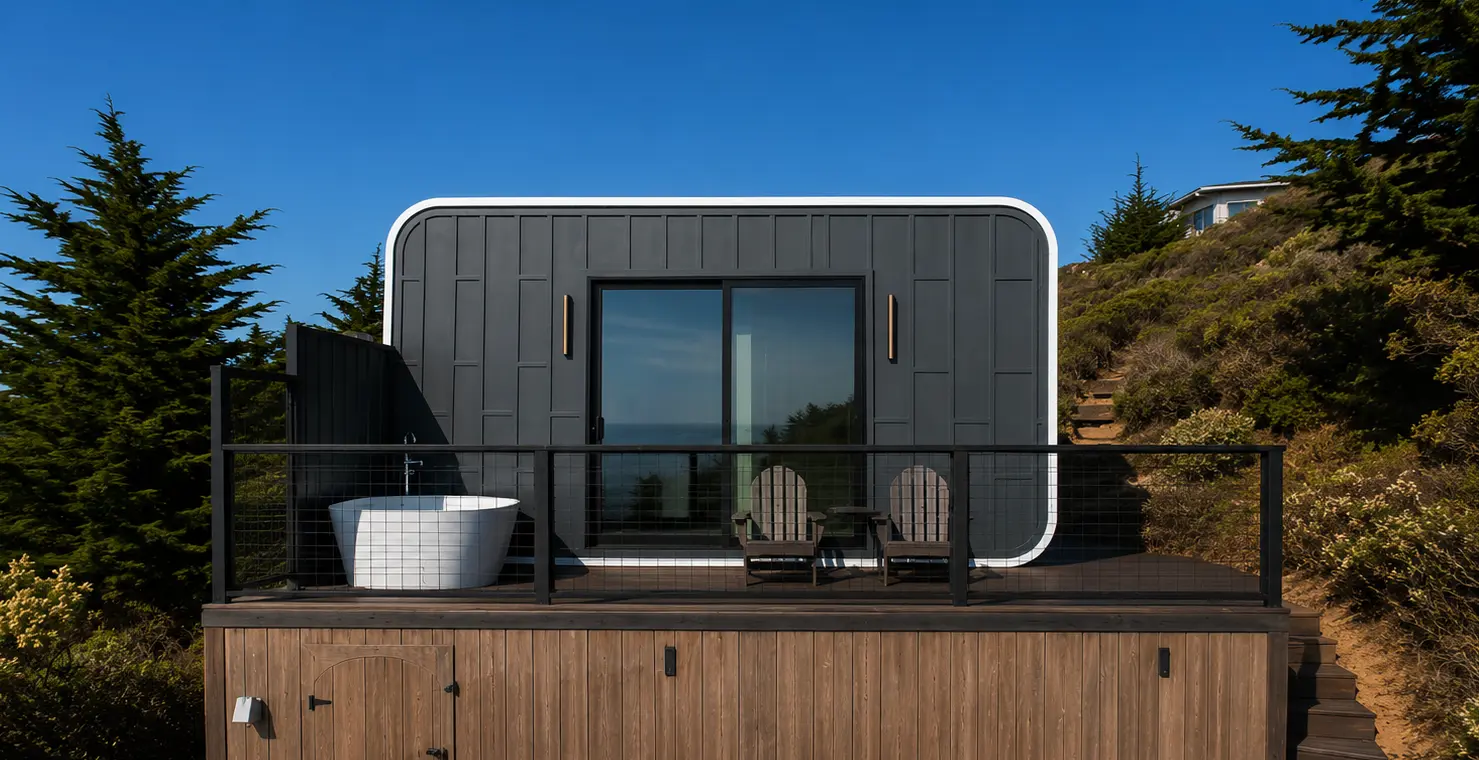
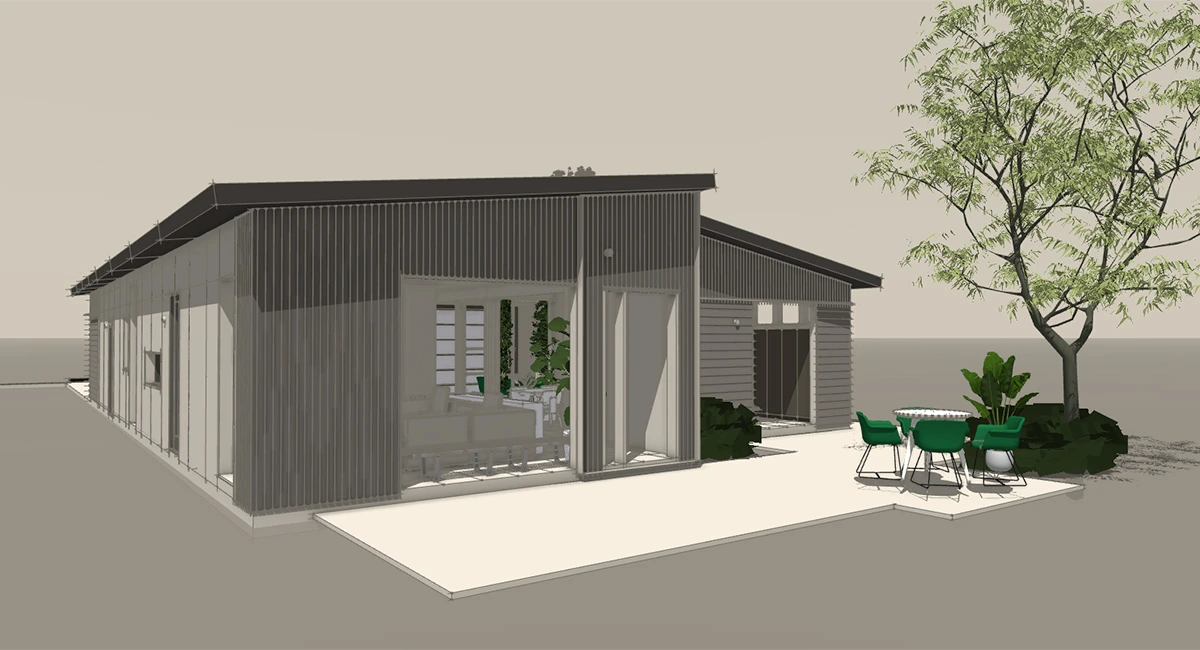
Everett-based shelter maker Pallet shut down in September 2026 after nine years of operation. The closure was announced on Pallet’s official website and reported by the Puget Sound Business Journal.
Pallet worked with cities, counties, tribes, nonprofits, and service providers across the United States and Canada. Its small shelters were generally deployed in managed villages, where private units were paired with services and shared facilities.
Over years of work, Pallet created 6,083 beds and provided shelter to an estimated 30,000+ people. Existing units remain in communities across North America, but Pallet has ceased ordinary operations and is winding down.
What Happened to Pallet?
Pallet started in 2017 with two stated goals: addressing unsheltered homelessness and creating living-wage employment opportunities for people who often faced barriers to traditional employment.
The shelter model centered on small private units grouped into villages. The structures gave residents an individual space with a locking door while local operators handled services such as case management, meals, hygiene facilities, behavioral health support, and pathways toward longer-term housing.
On its website, Pallet linked the shutdown to changes in the market and in homelessness policy. Its statement says that customer needs have become more complex and that “funding environments and political priorities have shifted.”
The closure followed a sharp decline in new village construction. Everett Post reported that Pallet built 35 villages in 2021. That fell to 18 villages in 2025 and five in 2026.
The decline in new villages came as funding and policy priorities around homelessness were shifting. These projects often rely on municipal budgets, grants, available land, permits, nonprofit operators, and ongoing funding for services, so changes in any of those areas can delay or stop new developments.

Existing Pallet Shelters Will Need Ongoing Support
Existing Pallet villages continue to operate, but maintenance and warranty support now work differently.
Pallet has left its warranty information and replacement-parts resources online for existing customers. The warranty page explains that the organization is winding down with legal and financial advisers and that support may be limited. Inspections, repairs, replacement parts, reimbursements, and other warranty services are no longer guaranteed on the same timeline as before.
For cities and shelter operators, that means more responsibility for keeping existing units in service. Routine maintenance still includes things like doors, windows, HVAC equipment, electrical components, and plumbing fixtures.
Pallet’s Village Handbook & Replacement Parts Guide remains available online and gives operators a reference for maintenance and replacement parts. The warranty page also includes instructions for submitting claims during the wind-down.
What Pallet’s Closure Means for New Projects
The shutdown also created uncertainty for shelter projects that had not yet been built.
Seattle is a good example. In 2026, the city was expanding its temporary shelter network, and Pallet units were already part of that effort. The 75-unit Bayside Enhanced Shelter in Interbay was one of the projects moving forward, while the city was also planning a separate 90-unit tiny house village in South Park.
Pallet had also shown interest in supplying additional villages in Seattle. According to Everett Post, those future projects were affected when Pallet ceased operations.
Seattle is still moving ahead with its broader shelter expansion plan. In September, Mayor Katie Wilson’s office announced a target of adding nearly 1,000 shelter beds by the end of 2027 through projects already underway and new sites planned for 2027.
For cities, nonprofits, and housing operators that had expected to buy new Pallet units, the practical issue is now finding another supplier or construction approach that fits the same project. The right replacement depends on what the site actually needs. Some projects may only need compact private rooms, while others require bathrooms, kitchens, mobility, or a more permanent residential layout.
A New Path for Projects Previously Planned With Pallet
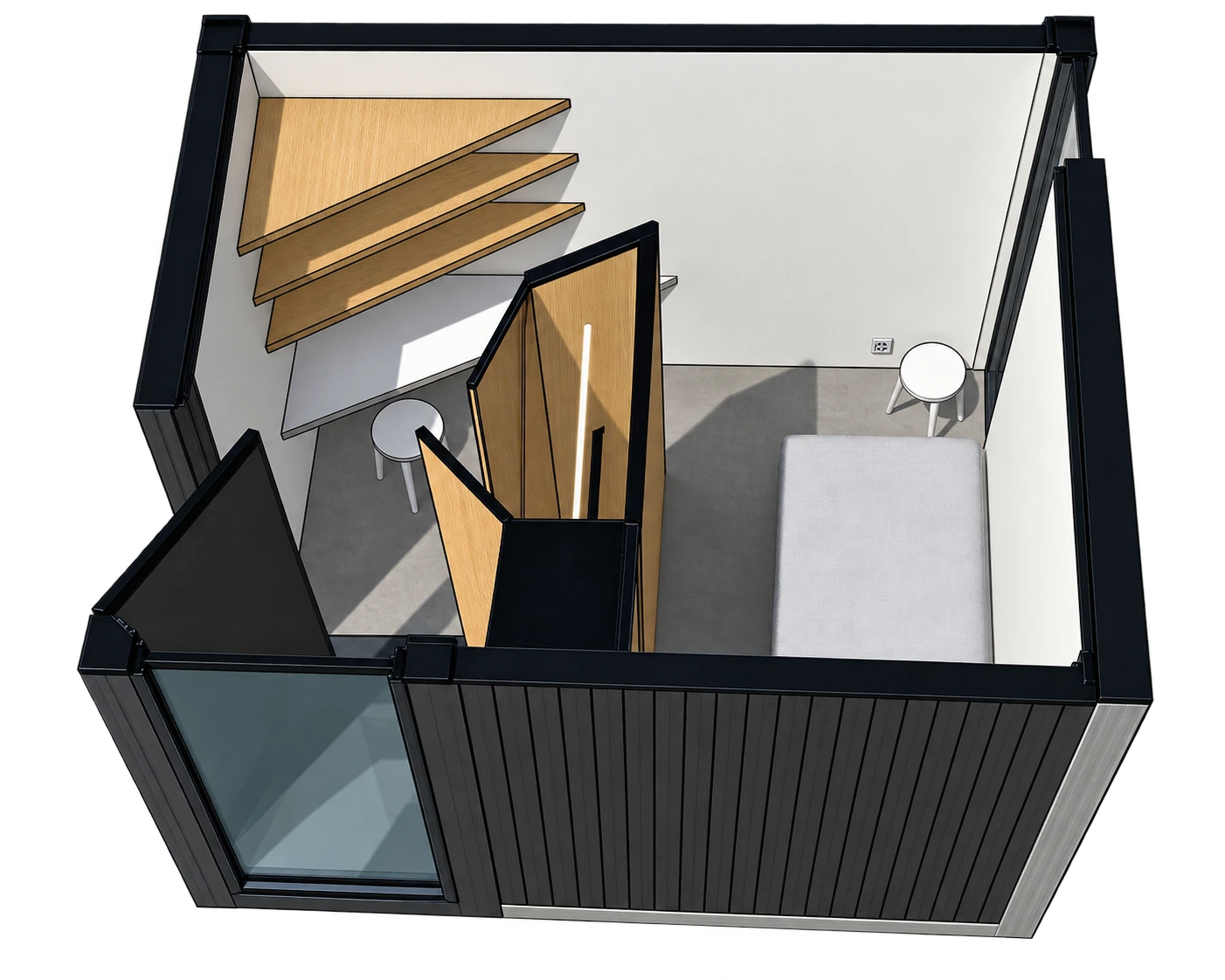
For organizations that still need compact factory-built units, we at Azure Printed Homes can cover several of those physical housing needs with a different construction system.
We manufacture modular spaces in a controlled factory environment using robotic production. For projects where the goal is to deploy several small units, our Studio Series offers compact open-layout models that start at around 100 square feet. These can work well when the priority is a small footprint and a simple enclosed space rather than a full residential layout.
For projects that need mobility or more complete living facilities, our Homes on Wheels range adds bathrooms, kitchens, and bedroom configurations on a chassis-based platform. The lineup runs from compact studio-style units to larger two-bedroom models, giving organizations more flexibility when residents need a self-contained space.
For longer-term residential use, our Homes & ADUs provide larger layouts with bedrooms, bathrooms, kitchens, and more living space. These models are better suited to projects where the goal is not just temporary shelter, but a more complete residential setup.
We can also develop custom modular projects for sites that need different dimensions, layouts, finishes, or more complex design requirements. Custom work can extend to larger structures and multi-unit projects, depending on the scope.
Modular Housing as a Practical Alternative
The appeal of pallet houses was closely tied to speed and repeatability. Those priorities remain relevant when a project needs multiple units without a long sequence of conventional construction on every building.
At Azure Printed Homes, the main advantages for these projects are straightforward:
- We can manufacture approximately 10 modules per week, with typical timelines of around 30 to 60 days for a backyard studio and 90 to 120 days for an ADU or home, depending on location and project requirements.
- Electrical, mechanical, plumbing, and standard finishes are completed in the factory, reducing the amount of finishing work required after delivery.
- More than 60% of our print material comes from recycled plastic, with roughly 100,000 plastic bottles used for every 120 square feet. For larger residential projects and high fire hazard severity zones, we offer light-gauge steel at the same product cost.
- The structure can be produced while site preparation moves ahead separately, rather than waiting for every stage of the building itself to happen on location.
The factory process also allows dimensions and orientation to be adjusted for individual sites. Larger layouts can accommodate changes to bedrooms and bathrooms, and available upgrades include solar panels, heated floors, and alternative finishes. More complex custom projects can include multiple stories, balconies, and elevators.
Conclusion
Pallet’s September shutdown leaves thousands of existing shelters in service and removes a familiar supplier from the market for new shelter villages. Organizations that had planned a Pallet project can still evaluate compact modular construction, but the building specifications should be matched to the site, occupancy, and local requirements.
We at Azure Printed Homes can work with cities, nonprofits, operators, and developers that need multiple compact units, mobile housing, ADUs, or custom modular structures. Contact us to discuss the site, number of units, and intended use before selecting a model.