Finding an affordable home in New Jersey can feel overwhelming, especially for first-time applicants. Between income limits, different housing programs, and waiting lists, many people are unsure where to begin. The good news is that affordable housing is available for a wide range of households, from working families and seniors to veterans and people with disabilities.
This guide explains who qualifies for affordable housing in New Jersey, how income limits work, and what housing programs are available.
What Is Affordable Housing in New Jersey?
Affordable housing in New Jersey refers to homes offered for rent or sale at prices intended for households that meet specific income requirements. These homes may be supported, funded, or regulated through federal, state, or local housing programs.
The New Jersey Department of Community Affairs organizes affordable housing listings by county and municipality. Each entry may include the development name, address, whether the property is for rent or sale, the housing type, a contact, and the program connected to the development.
Affordable housing can serve different groups. Some properties are open to individuals and families that meet the income rules. Others are designed for seniors, people with disabilities, veterans, or residents with special housing needs. Because each development can have its own requirements, applicants should review the eligibility details for every property they consider.
Who Can Qualify for Affordable Housing in NJ?
Qualification depends mainly on household income, but several other factors may also affect eligibility. Applicants generally need to:
- Meet the income limit for the county where the housing is located
- Match the household size requirements
- Use the home as their primary residence
- Complete the application and verification process
- Meet any age, disability, or program-specific rules
Affordable housing is not only for people who are unemployed. Working individuals, couples, and families may qualify if their total household income falls within the required range.
Some developments are open to any household that meets the income requirements. Others are reserved for specific groups, such as residents age 55 or older, residents age 62 or older, people with disabilities, veterans, or households that need supportive housing.
Applicants should also keep in mind that meeting the eligibility rules does not guarantee immediate placement. Many developments have waiting lists because the number of applicants is often higher than the number of available homes.
Income Limits Explained
Income is one of the main factors used to determine affordable housing eligibility in New Jersey. Programs generally compare a household’s income with the Median Family Income, or MFI, for the county where the housing is located.
Income limits vary by:
- County
- Household size
- Housing program
- Income category assigned to the unit
Many affordable housing programs serve households earning up to 80% of the county’s MFI. Some programs are intended for lower-income households earning between 30% and 50% of MFI, while others serve very low-income households earning at or below 30% of MFI.
Housing providers usually review total household income rather than only one person’s earnings. Applicants may need to provide documents such as pay stubs, tax returns, benefit statements, or other records that confirm income.
Because income limits can change, applicants should check the latest HUD or New Jersey income standards for the correct county and household size before applying.
Affordable Housing Programs in New Jersey
Several housing programs help create affordable homes throughout the state.
Public Housing
Public housing is owned and operated by local Public Housing Authorities (PHAs). These communities receive funding through the U.S. Department of Housing and Urban Development (HUD) and provide income-restricted housing for eligible residents. Because demand often exceeds supply, waiting lists are common. Some housing authorities give preference to current local residents and households experiencing urgent housing needs.
Section 8 Housing Assistance
Section 8 includes two primary forms of assistance. Project-based assistance provides rental subsidies tied to specific affordable housing developments. Housing Choice Vouchers are portable, meaning households can generally use them with eligible private landlords that accept vouchers.
Section 221 and Section 236 Programs
These programs provide mortgage subsidies that support affordable multifamily apartment developments. While applicants may not always recognize these program names, many affordable apartment communities throughout New Jersey were developed using these financing programs.
Section 202 and Section 811
These programs focus on specialized housing. Section 202 provides affordable housing for seniors aged 62 and older, while Section 811 supports housing for individuals with disabilities. Both programs are administered through HUD and help create income-restricted homes for people who may need age-appropriate, accessible, or supportive housing. Eligibility and availability depend on the specific development, so applicants should contact the property or managing agency directly.
Low-Income Housing Tax Credit (LIHTC)
The Low-Income Housing Tax Credit program encourages the construction of affordable rental housing through federal tax incentives. Under program requirements:
- At least 20% of units are affordable to households at or below 50% of county median income, or
- At least 40% of units are affordable to households at or below 60% of county median income.
USDA Rural Housing
In rural parts of New Jersey, USDA programs help finance affordable housing developments serving eligible households. This assistance supports the construction and operation of income-restricted housing in communities where affordable rental options may be limited. Applicants must meet the income and location requirements connected to the specific USDA-funded property.
New Jersey HMFA Programs
The New Jersey Housing and Mortgage Finance Agency (HMFA) administers numerous affordable housing programs for renters and homebuyers. HMFA supports affordable housing development through:
- Bond financing
- Federal tax credits
- Rental assistance programs
- Homeownership initiatives
The agency also operates the New Jersey Housing Resource Center, which helps applicants search for available affordable housing.
Mount Laurel Housing
Mount Laurel housing is unique to New Jersey. These affordable homes exist throughout every county and were created to satisfy New Jersey Supreme Court decisions requiring municipalities to provide their fair share of affordable housing.
Mount Laurel developments may offer rental homes and homes for sale. Income limits generally define low-income households as earning at or below 50% of county MFI and moderate-income households as earning between 50% and 80% of county MFI.
Why More Housing Supply Matters
Affordable housing programs help eligible households access homes at below-market rents or prices, but those programs can only work when enough homes are available. In many New Jersey communities, demand remains higher than supply, which can lead to long waiting lists and fewer choices for applicants. Expanding the number of available homes is therefore an important part of the wider affordable housing picture.
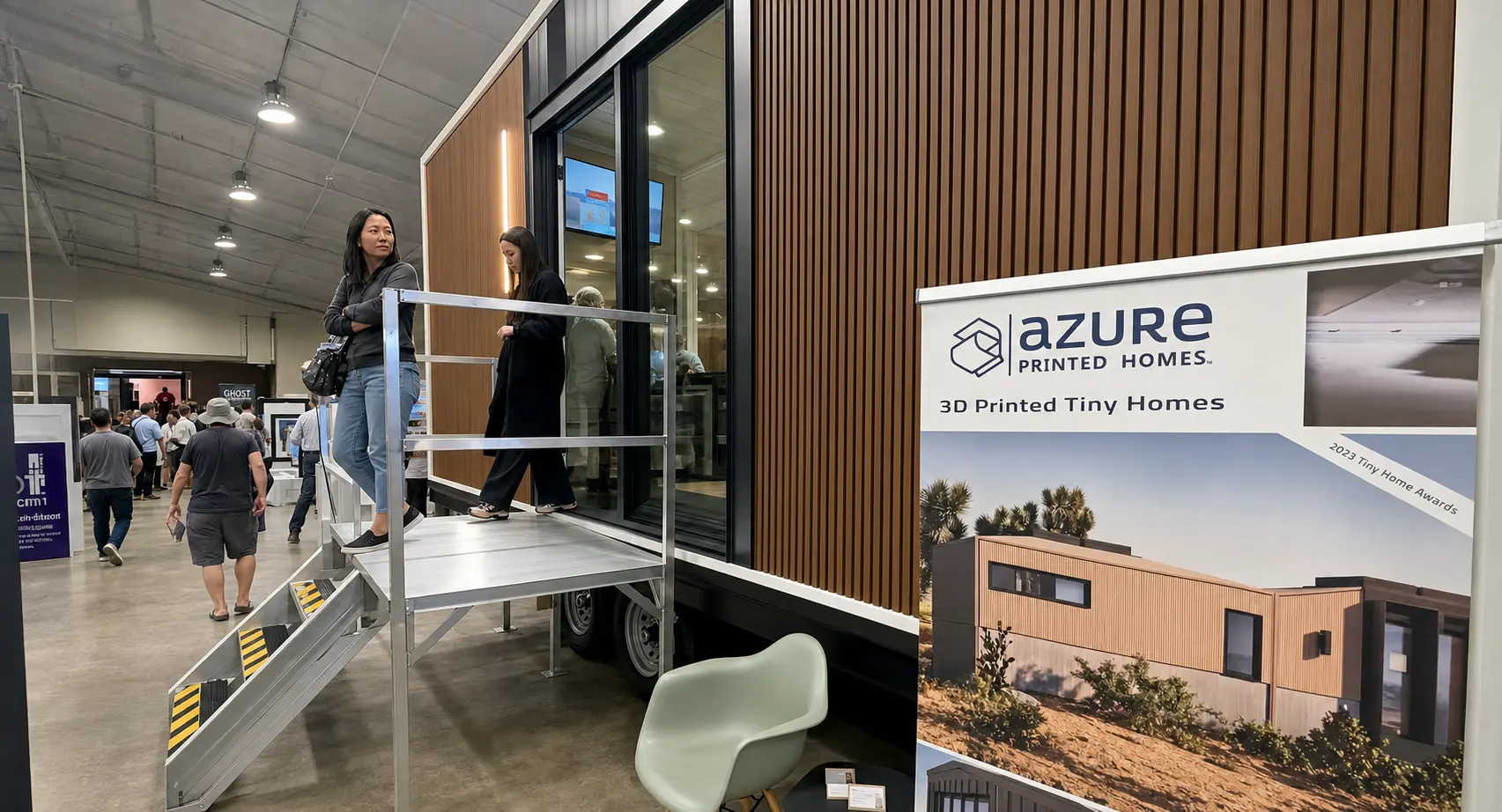
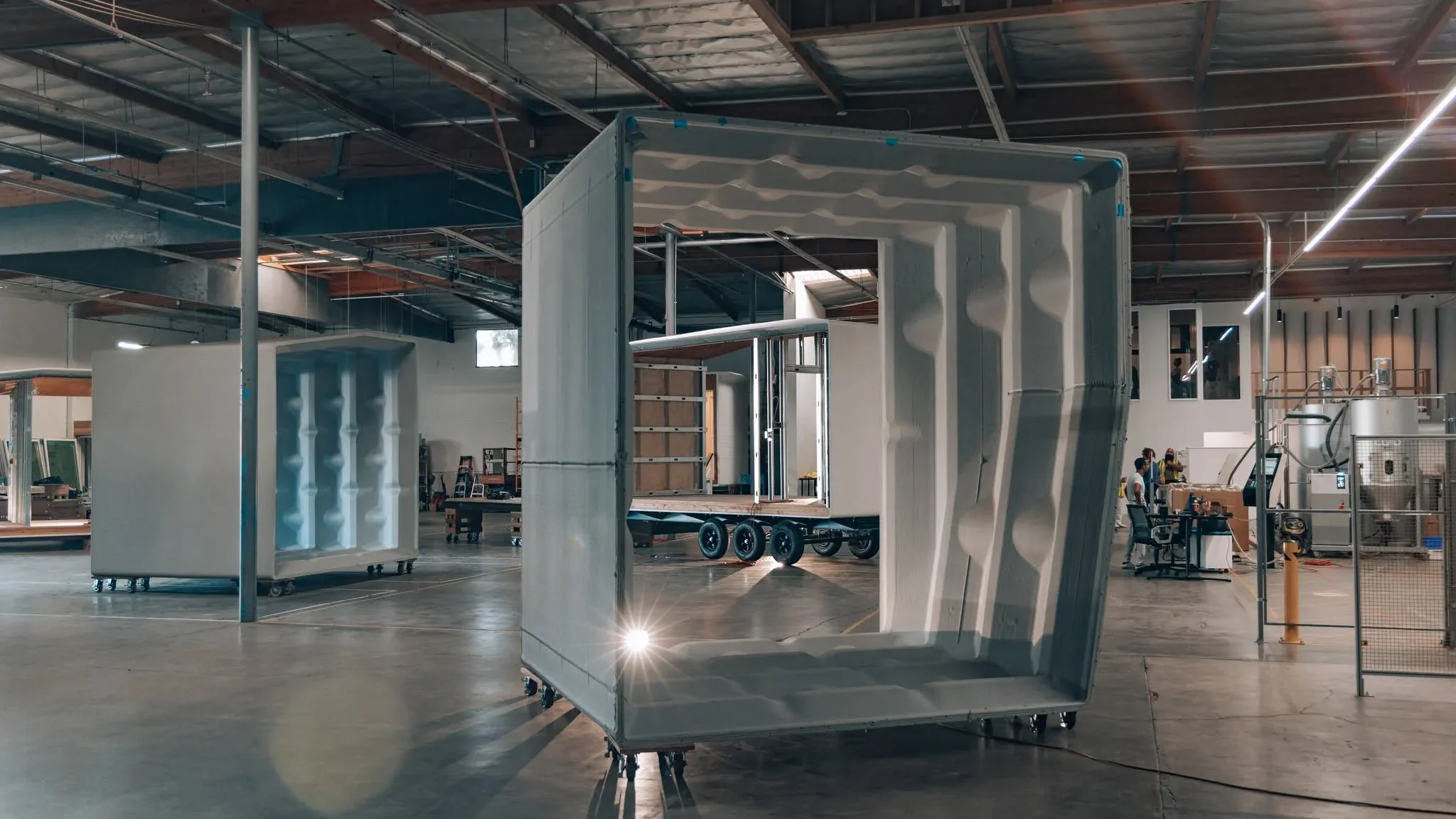
This is where modular construction can play a practical role. By completing more of the building process in a controlled factory setting, projects can move through design, fabrication, delivery, and installation with greater consistency. At Azure Printed Homes, we create future-focused modular living spaces using robotically printed construction, recycled materials, customizable designs, and factory-installed electrical, plumbing, and interior finishes.
Our process begins with configuring the unit, then printing the structure, installing the finishes, delivering the completed module, and connecting it on-site. For developers, municipalities, and organizations planning new housing, this approach can support faster project delivery while also offering energy-efficient designs and flexible layouts. Modular construction does not replace affordable housing programs, but it can help those programs go further by making it easier to add more homes where they are needed.
Modular Construction Options That Support Affordable Housing Goals
Increasing the number of affordable homes is about more than determining who qualifies. Communities also need practical ways to build more housing that meets local demand. As cities, developers, and housing organizations look for solutions, modular construction has become an increasingly important part of the conversation.
Unlike traditional construction, modular homes are manufactured in a controlled factory environment before being delivered and installed on-site. This approach can improve quality control, reduce weather-related delays, and shorten overall project timelines. For affordable housing developments, where efficiency and consistency are often priorities, modular construction offers an alternative way to bring new homes to market.
At Azure, we build future-focused modular living spaces using robotically printed construction and recycled materials. Our homes are designed to simplify the building process without sacrificing quality or flexibility. Every project follows the same streamlined workflow, from configuring the design to robotic printing, factory installation of electrical, plumbing, insulation, and interior finishes, followed by delivery and on-site installation.
Studio Series for Smaller Housing Projects
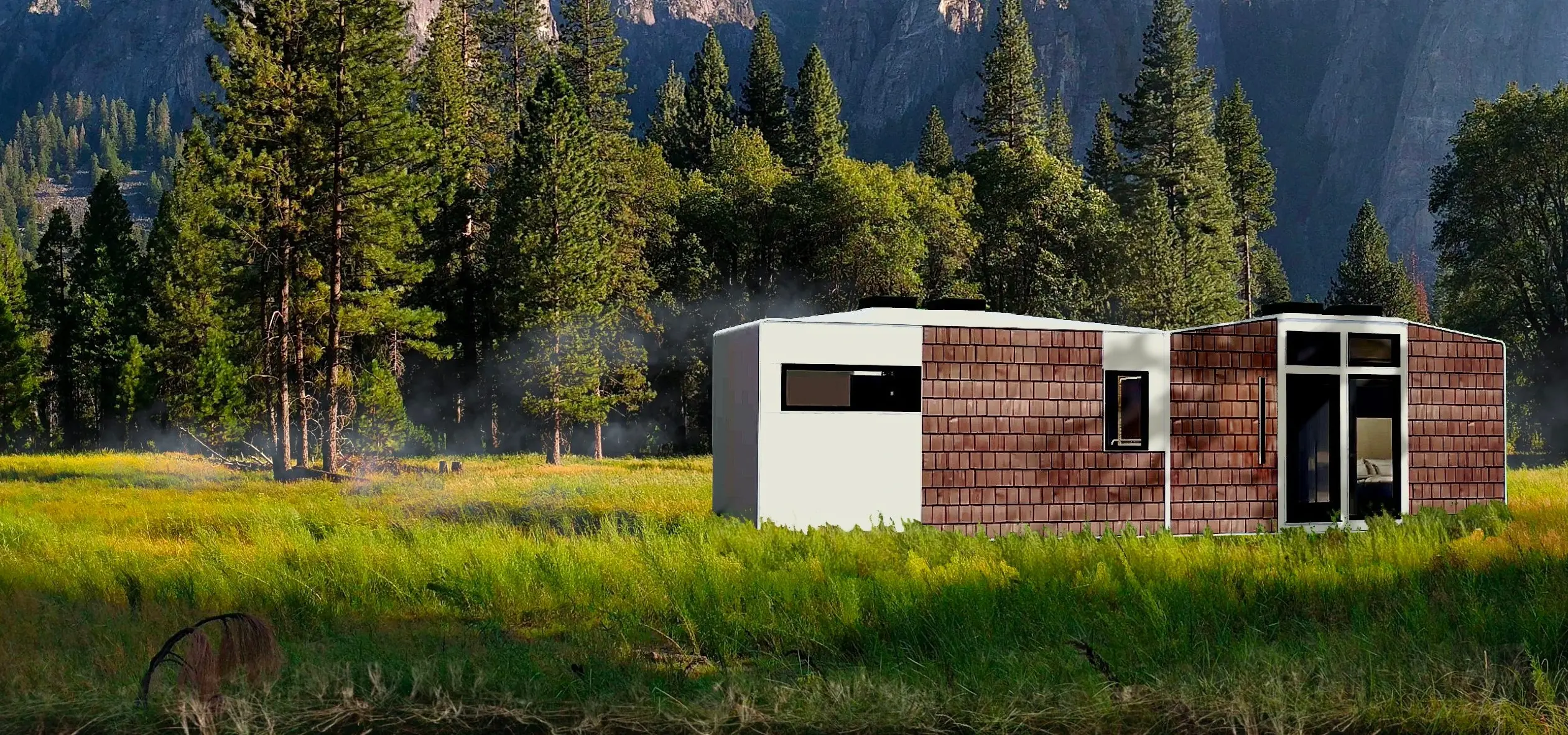
For projects where compact living spaces make the most sense, our Studio Series offers flexible solutions. Models such as the N-100, A/D/C-100, and A/D/C-120 are designed with efficient layouts while maintaining the same robotically printed construction process used across our product lineup.
These studios are suitable for a variety of residential applications depending on local zoning and project requirements. Their compact size also allows communities and property owners to maximize available space while benefiting from factory-built quality and energy-efficient construction.
Homes and ADUs for Long-Term Residential Living
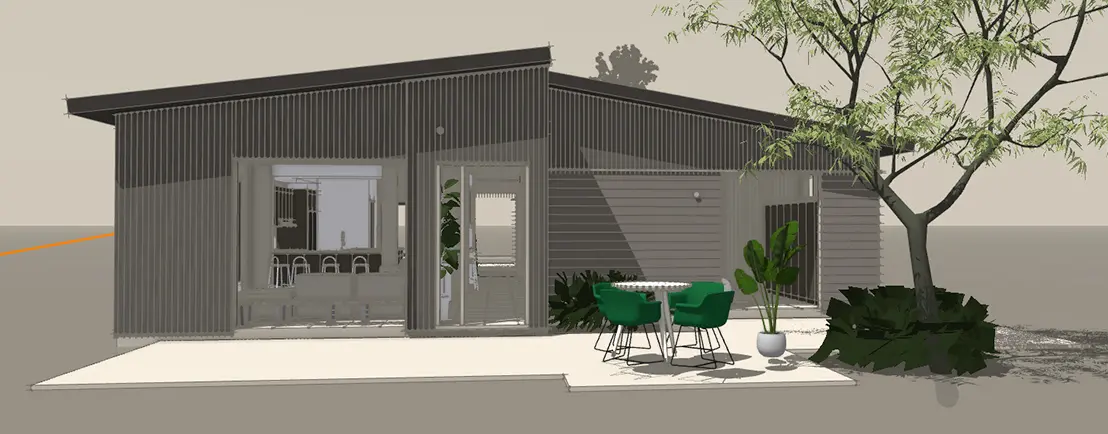
For larger residential projects, our homes and ADUs provide a range of floor plans from the A-180 through the A-900. These homes include thoughtfully designed living spaces with kitchens, bathrooms, bedrooms, and modern interior finishes, making them suitable for permanent occupancy.
Because every home is built using recycled materials and completed with factory-installed electrical, plumbing, and interior systems, much of the construction work is completed before the unit reaches the site. Combined with customizable layouts and finish selections, this helps create durable, move-in-ready homes that can support a wide variety of residential developments.
Custom Solutions for Larger Housing Projects
Not every housing project fits a standard floor plan. Multifamily developments, workforce housing, community housing initiatives, and specialized residential projects often require layouts designed around specific site conditions, occupancy needs, or local requirements.
We also offer custom modular solutions for projects that need something beyond our standard models. Our team works with developers, municipalities, nonprofits, and organizations to create future-focused modular living spaces tailored to their goals. Customization may include changes to floor plans, dimensions, room configurations, exterior finishes, and selected interior features, allowing projects to balance functionality, efficiency, and long-term value.
Benefits of Modular Construction for Housing Projects
Modular construction offers a different approach to residential building by moving much of the construction process into a controlled factory environment. Instead of completing every stage on-site, major structural components and interior systems are manufactured before the home is delivered for installation. This can improve consistency, simplify project coordination, and reduce the amount of work required at the final site.
For housing projects where timelines, quality, and scalability are important, modular construction can provide several advantages. While the exact benefits vary by manufacturer and project, our approach demonstrates how modern modular building can help streamline residential development.
We offer:
- Robotically printed construction that delivers precise, repeatable manufacturing.
- Recycled materials that help reduce plastic waste while creating durable building components.
- Customizable designs with options to tailor layouts, finishes, and selected features to project requirements.
- Factory-installed systems, including electrical, plumbing, insulation, cabinetry, flooring, fixtures, and interior finishes.
- A streamlined process that takes projects from design configuration through printing, fabrication, delivery, and on-site installation.
- Energy-efficient homes designed with long-term performance and sustainability in mind.
- Solutions for a variety of housing needs, from compact studio models to larger ADUs and fully custom residential projects.
- Professional project support, with our team guiding customers from the initial planning stage through installation.
By combining these advantages, modular construction can help developers, municipalities, housing organizations, and property owners add high-quality housing more efficiently while maintaining flexibility for different types of residential projects.
Can Modular Homes Be Delivered to New Jersey?
Delivery is an important part of planning a modular housing project because the home is built off-site and then transported to the property. Before selecting a model, the project team needs to confirm that the manufacturer serves the area and that the site can accommodate the delivery process.
Our units can be shipped anywhere within the Continental United States, including New Jersey, using a flatbed truck. This means New Jersey projects are within the company’s stated delivery area, even though the homes are manufactured outside the state.
The ability to ship a unit to New Jersey does not mean every property will be suitable. Site access, road width, overhead clearances, turning space, and the location of the foundation may affect delivery. These details should be reviewed before production begins so the unit can reach the site without avoidable delays.
Delivery must also be coordinated with local permitting, foundation preparation, utility connections, and installation. Since requirements can vary by municipality, property owners and developers should confirm the local rules and prepare the site before the unit arrives. Early planning helps connect the factory-built process with the work that still needs to happen in New Jersey.
Conclusion
Affordable housing eligibility in New Jersey is shaped by more than income alone. Household size, location, housing type, and program-specific rules all influence whether an applicant qualifies. Since limits and availability vary, the most useful next step is to review current listings, confirm the requirements for each development, and prepare the requested documentation before applying.
Expanding access also depends on creating more housing options. Modular construction can support that effort by offering a more controlled and repeatable building process for studios, ADUs, and custom residential projects. At Azure, we provide robotically printed modular solutions that can be delivered to New Jersey, while local permitting, site preparation, utilities, and installation remain essential parts of each project.