If you’ve been researching housing options, you’ve probably noticed that the terms low-income housing and affordable housing are often used interchangeably. While they’re closely connected, they don’t actually mean the same thing.
Understanding the difference is useful whether you’re a homeowner, developer, investor, policymaker, or simply trying to make sense of today’s housing market. It also helps explain why solving housing affordability isn’t just about creating one type of home. Different households have different needs, and communities benefit from a variety of housing options.
At Azure Printed Homes, we design and build housing solutions for many different applications. From compact backyard studios and ADUs to larger residential homes and community developments, every project supports the broader goal of creating more housing opportunities.
Affordable Housing Explained
Affordable housing is the broader of the two terms. In general, housing is considered affordable when a household spends no more than about 30% of its gross income on housing costs. This guideline is widely used because it helps families maintain enough income for other everyday expenses such as transportation, healthcare, groceries, education, and savings.
Affordable housing isn’t limited to one income group. Depending on the community and the development, it may serve:
- Extremely low-income households
- Very low-income households
- Low-income households
- Moderate-income households
- Workforce housing residents
- Essential workers
Affordable housing can be developed through public funding, private investment, tax incentives, employer-supported initiatives, or market-driven projects. The common goal is creating homes that better match the incomes of the people who live in them.
Increasing the overall housing supply is an important part of that effort. In many communities, adding more housing choices, including modular homes, ADUs, backyard studios, and mixed-income developments, helps create opportunities for households across a wide range of income levels.
At Azure Printed Homes, we build robotically manufactured studios, ADUs, homes on wheels, and larger residential homes that can support many of these housing strategies. By completing much of the construction in a controlled factory environment, we help create a more predictable building process while offering flexible housing options for different types of residential projects.
Low-Income Housing Explained
Low-income housing is one specific type of affordable housing. Rather than serving a broad range of households, low-income housing is designed for residents whose income falls below established limits. Eligibility is typically determined using Area Median Income (AMI), along with factors such as household size and the requirements of a particular housing program.
Many developments reserve homes for households earning percentages such as:
- 30% of AMI
- 50% of AMI
- 60% of AMI
- 80% of AMI
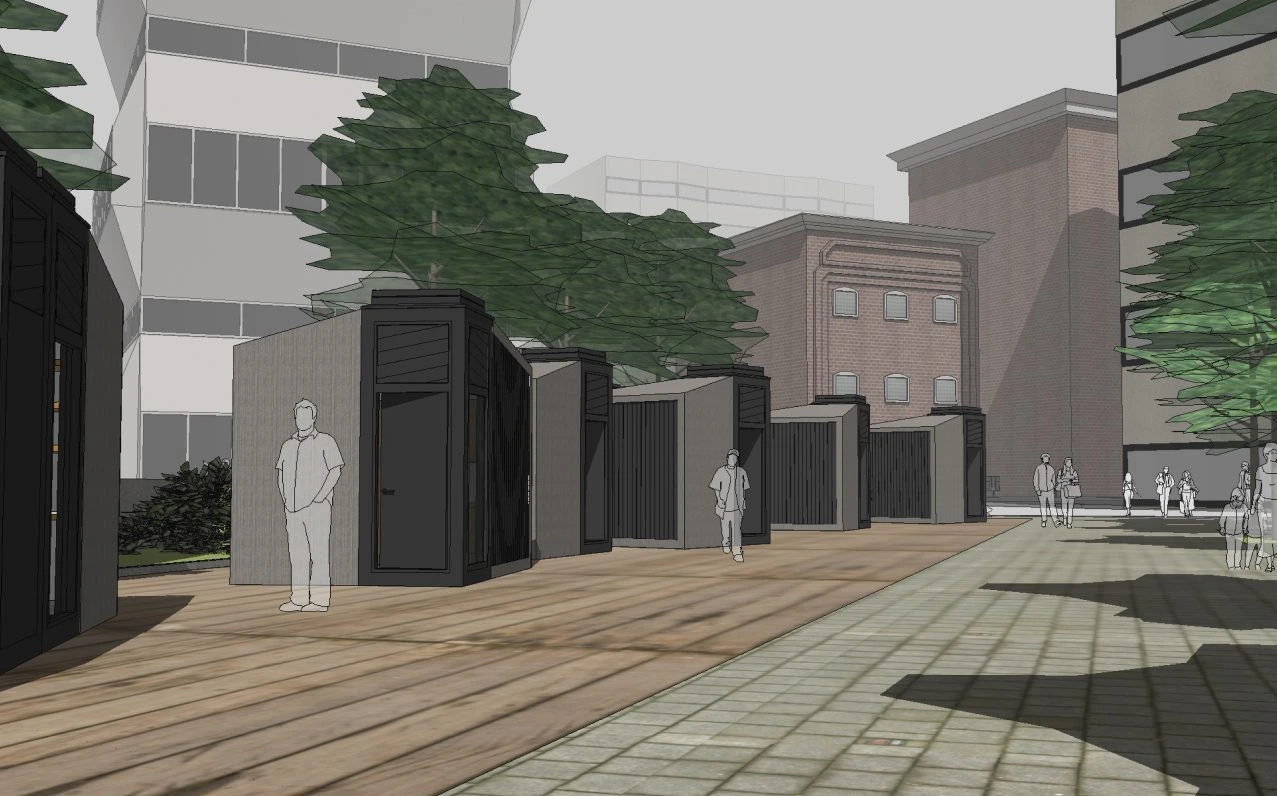
These income limits vary by location and are updated regularly, so qualification depends on where a person lives. Low-income housing can take many forms. Apartment communities are common, but they are far from the only option. Depending on local planning, funding, and project goals, housing may include single-family homes, townhomes, duplexes, modular neighborhoods, or accessory dwelling units.
This flexibility allows communities to choose housing solutions that fit local needs instead of relying on a single development model.
Low-Income vs Affordable Housing: Key Differences
Although the two terms are closely related, they describe different concepts. The easiest way to remember the difference is: all low-income housing is affordable housing, but not all affordable housing is low-income housing.
| Affordable Housing | Low-Income Housing |
| Broad housing category | One type of affordable housing |
| May serve low, moderate, and workforce incomes | Primarily serves households below specific income limits |
| Can be publicly or privately developed | Often follows income-restricted housing programs |
| May include market-rate affordable developments | Requires income verification for eligibility |
| Includes many housing types | Often tied to long-term affordability requirements |
Thinking of affordable housing as the umbrella category makes the relationship much easier to understand. Low-income housing simply represents one segment within that larger housing system.
Qualifying for Affordable and Low-Income Housing
Eligibility depends on the type of housing program and how a particular development is managed. Affordable housing can serve a broad range of households. Depending on the community, it may be available to:
- Low-income households
- Moderate-income households
- Workforce housing residents
- Essential workers
- Seniors
- People with disabilities
Some affordable housing developments have income limits, while others focus on offering homes at prices that are more attainable than the local market. Low-income housing has more specific eligibility requirements. Applicants typically need to qualify based on factors such as:
- Household income
- Household size
- Area Median Income (AMI)
- Program guidelines
Many low-income housing developments verify income before residents move in and may require periodic recertification to ensure households continue to meet program requirements.
As communities work to meet the needs of different income groups, expanding the overall housing supply remains an important part of the solution. At Azure Printed Homes, we build modular studios, ADUs, homes on wheels, and larger residential homes that can support a wide range of residential projects, giving developers and communities more flexible options for creating new housing.
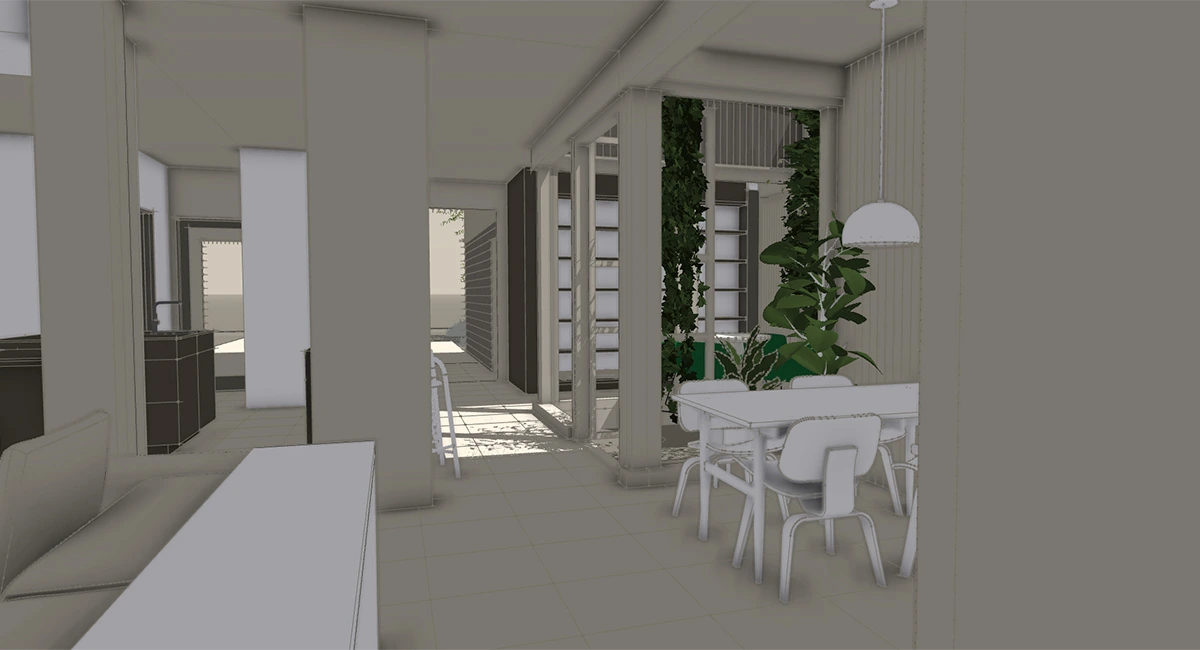
Common Housing Solutions That Improve Affordability
Expanding affordable housing is not only about funding programs and income qualifications. It is equally important to increase the number and variety of homes available within a community.
Modern modular construction provides another way to help meet growing housing demand. Because much of the construction takes place in a controlled factory environment, projects can move forward with greater consistency while reducing many of the delays associated with traditional site-built construction. Different modular housing types can support homeowners, developers, local governments, and housing providers depending on the goals of the project.
At Azure, we build robotically manufactured modular housing solutions using recycled materials and automated production. Our portfolio includes backyard studios, ADUs, homes on wheels, and larger residential homes, giving communities more flexibility when planning housing projects of different sizes.
ADUs and Backyard Studios
Accessory dwelling units (ADUs) and backyard studios have become increasingly popular because they allow homeowners to add living space without purchasing additional land. They can help increase housing density while preserving the character of existing neighborhoods.
Depending on local zoning regulations and the homeowner’s needs, these spaces may be used for:
- Long-term rental housing
- Housing for family members
- Guest accommodations
- Independent living for aging parents
- Home offices
- Creative studios
We manufacture modular studios and ADUs in a factory before delivering them to the property for final installation. Electrical, plumbing, and interior finishes are completed during production, helping simplify on-site work while giving homeowners the flexibility to customize layouts and finishes that fit their project.
Tiny Homes and Homes on Wheels
Smaller homes continue to play an important role in expanding housing choices. By using a compact footprint more efficiently, they can create comfortable living spaces while requiring fewer materials and less land than larger homes.
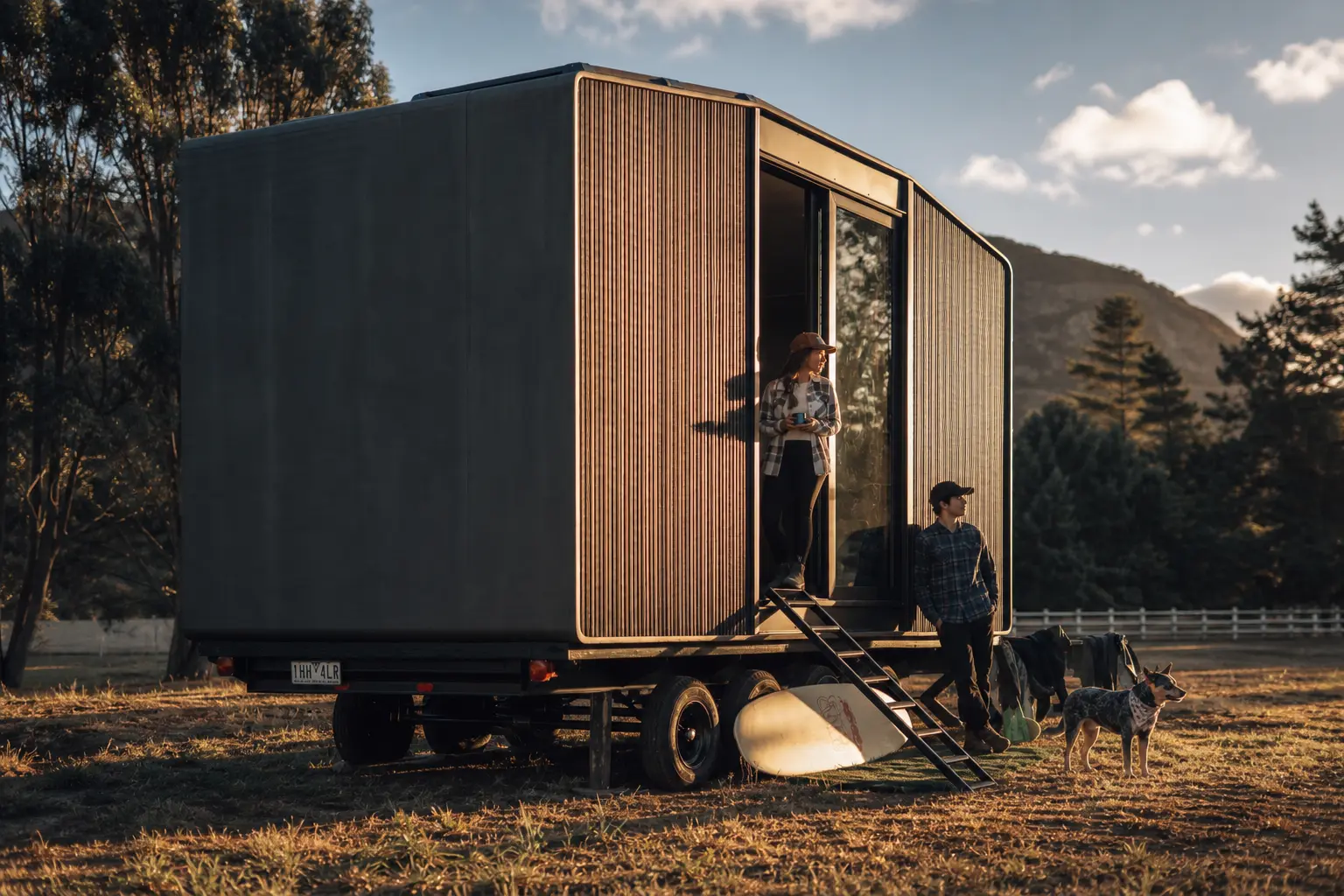
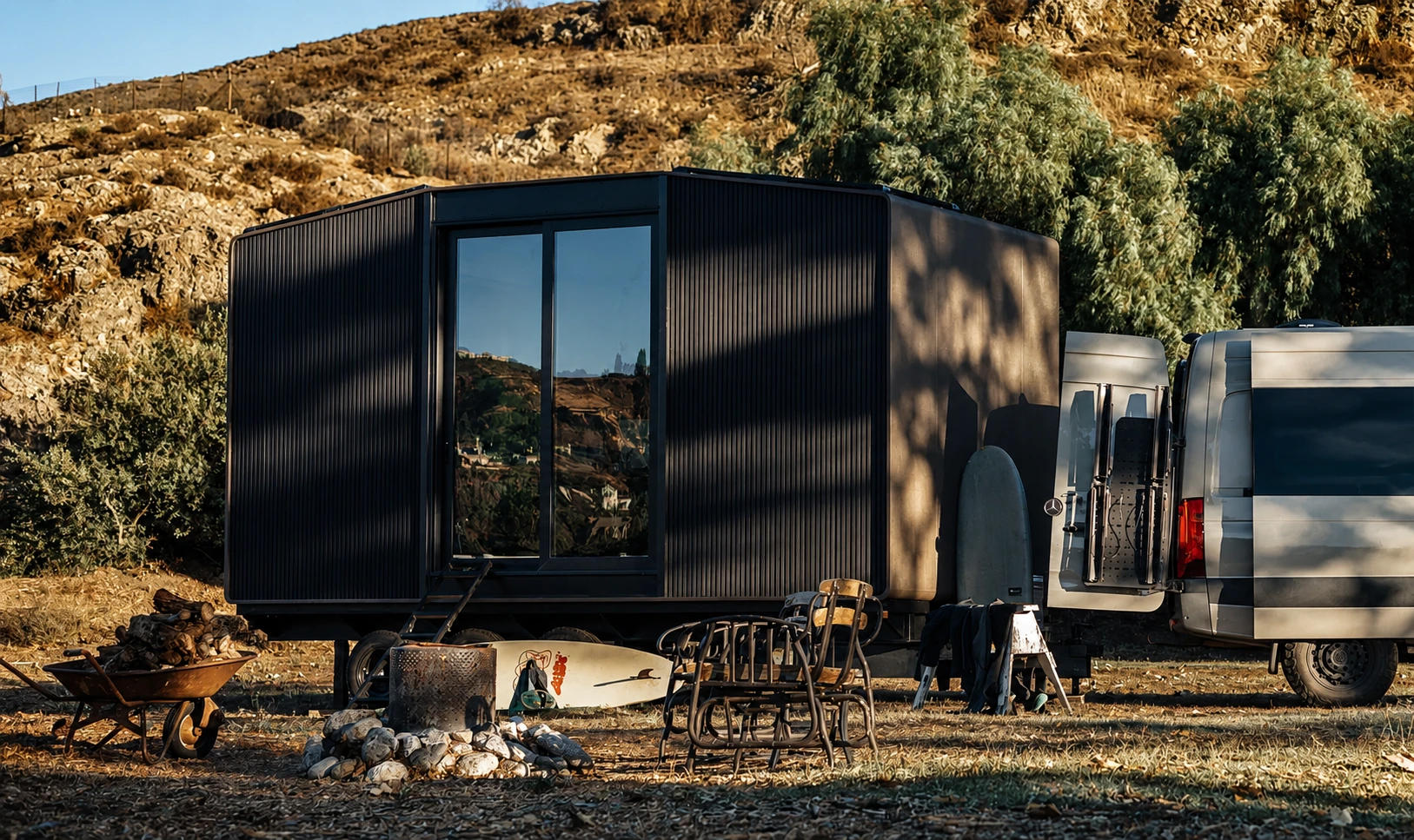
Homes on wheels add another level of flexibility because they combine permanent residential features with mobility. Depending on the project, they may support temporary housing, guest accommodations, workforce housing, hospitality developments, or private residential use.
Our homes on wheels are available in multiple floor plans, ranging from compact studio-style layouts to larger models with full kitchens, bedrooms, and bathrooms. Like our other modular homes, they are manufactured using robotic construction and recycled materials while allowing buyers to personalize finishes and design details.
Larger Modular Homes
Larger modular homes can support a wide variety of residential projects, from primary residences to workforce housing developments and mixed-income communities. As communities look for ways to expand housing supply, factory-built homes provide another option alongside traditional construction.
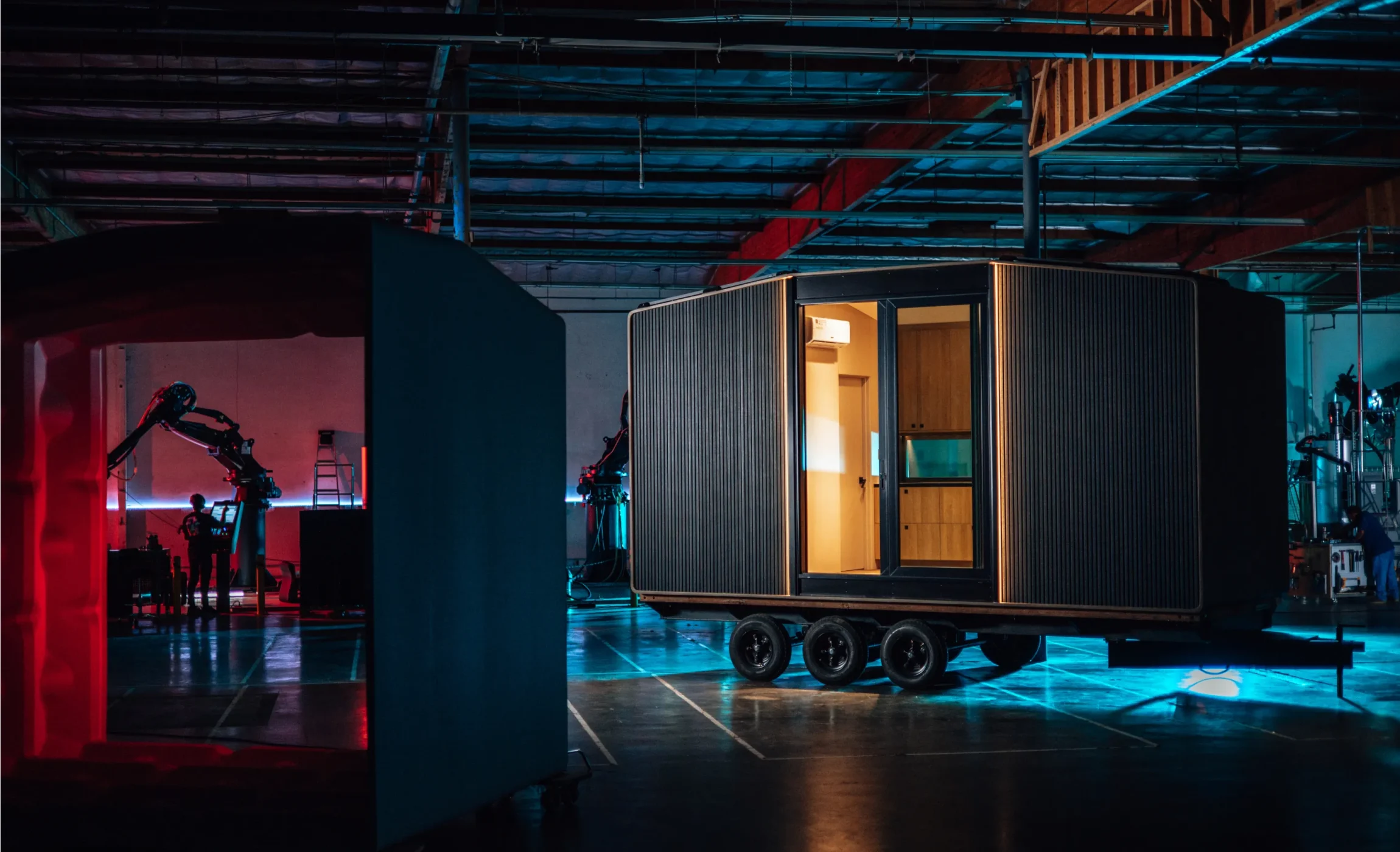
We build modular homes in a controlled manufacturing environment where robotic production, precision fabrication, and quality control help create a more predictable construction process. After fabrication is complete, the home is delivered to the site for installation and utility connections.
Our larger modular homes can be configured for different residential needs, including single-family living, backyard ADUs, residential developments, and community housing projects. Flexible floor plans, customizable interiors, and energy-efficient construction allow each project to be adapted to the intended use rather than following a one-size-fits-all approach.
No single housing format can solve today’s affordability challenges on its own. However, expanding the range of housing options available, from compact studios and ADUs to larger modular homes, gives communities more tools to address changing housing needs while increasing the overall supply of quality homes.
Common Myths About Low-Income and Affordable Housing
Because the terms low-income housing and affordable housing are often used interchangeably, several misconceptions have developed over time. Some relate to who qualifies, while others involve how these homes are built, funded, or managed. Clearing up these misunderstandings makes it easier to understand the role different housing solutions play in expanding access to quality housing.
Myth 1: Low-Income Housing and Affordable Housing Are the Same
They are closely related, but they are not identical. Affordable housing includes many housing options across multiple income levels, while low-income housing specifically serves households that meet established income requirements.
Myth 2: Affordable Housing Is Always Government Housing
Not necessarily. Many affordable housing developments are privately owned or built through partnerships involving developers, investors, employers, and local governments. Some projects receive public support, while others focus on creating attainable housing through efficient construction and thoughtful planning.
Myth 3: Affordable Housing Only Means Apartment Buildings
Affordable housing can include many different home types, including:
- Single-family homes
- Duplexes
- Townhomes
- ADUs
- Tiny homes
- Mixed-income residential communities
Providing a wider variety of housing options allows communities to better respond to local housing needs.
Myth 4: Factory-Built Homes Cannot Support Affordable Housing
Modern modular construction is playing an increasingly important role in expanding housing supply. At Azure Printed Homes, we combine robotic manufacturing, modular construction, and recycled materials to build homes that can support workforce housing, backyard ADUs, residential communities, and many other housing initiatives. Faster, factory-based production is not a replacement for every traditional building method, but it provides another practical way to deliver high-quality homes more efficiently.
Choosing the Right Housing Solution
The right housing solution depends on the people it is intended to serve and the goals of the project. A development designed for low-income households may have different priorities than one focused on workforce housing, multigenerational living, or expanding the housing supply within an existing neighborhood.
Before selecting a housing solution, it is helpful to consider:
- Income served: Whether the project is intended for low-income households, workforce housing, moderate-income residents, or a mix of income levels.
- Available land: The size and characteristics of the property, along with how much space is available for new construction.
- Project size: Whether the goal is a single backyard unit, a small residential development, or a larger community.
- Community goals: Whether the priority is creating rental opportunities, increasing housing supply, supporting local workers, or providing housing for families and seniors.
- Local zoning and permitting: Regulations that determine which housing types can be built and how they may be used.
Different projects call for different housing formats. A compact studio may be enough when the goal is extra usable space, guest accommodations, or a quiet place to work. An ADU can create a more complete independent living space for family members, renters, or multigenerational households. Homes on wheels offer more flexibility for projects where mobility matters, while larger modular homes can support primary residences, workforce housing, mixed-income developments, and residential communities.
Final Thoughts
Low-income housing and affordable housing are closely connected, but they are not interchangeable. Affordable housing is the broader concept of creating homes that remain financially attainable for a range of households, while low-income housing focuses on residents who meet specific income qualifications.
Meeting today’s housing demand will require multiple solutions working together. Public programs remain important, but increasing the overall housing supply through innovative construction methods, diverse housing types, and flexible residential development can create more opportunities for families, workers, and communities alike.
At Azure Printed Homes, we are helping expand those opportunities through robotically manufactured studios, ADUs, homes on wheels, and larger residential homes. By combining modular construction, sustainable materials, and flexible design, we build housing solutions that adapt to the changing needs of homeowners, developers, and growing communities.