Trying to get emergency housing help can feel like stepping into a system that already expects you to know the rules. There are agencies, referrals, documents, waitlists, phone numbers, and forms that do not always explain themselves clearly.
At Azure Printed Homes, we build future-focused modular living spaces, but safe housing often starts before anyone chooses a home. It starts with knowing where to ask for help, what to prepare, and how to stay organized when the process gets messy.
An emergency housing voucher may help eligible people pay for rental housing when they are homeless, at risk of homelessness, leaving an unsafe situation, or trying to stay housed after a crisis. The process is usually local, and that is where people often get lost.
This guide keeps things simple. We will look at where the voucher process starts, what documents may help, what to ask along the way, and how emergency building solutions fit into the bigger housing picture.
The Voucher Is Only One Part of the Housing Path
An Emergency Housing Voucher, often called an EHV, is a type of rental assistance connected to the Housing Choice Voucher program. If a person qualifies, the voucher helps cover part of the rent so stable housing becomes more possible.
But the voucher itself is not the whole process.
In many areas, people do not apply by simply filling out one form online. They may need to be referred through a local homeless services system, shelter, outreach team, case manager, or victim service provider. That means the real starting point is often not the voucher office. It is the local housing support network.
That small difference matters. If you start in the wrong place, you can lose time calling agencies that cannot directly add you to the list.
The Right First Door Is Usually Local
Your local public housing agency, sometimes called a housing authority, is still one of the best places to begin. This agency usually manages rental assistance programs, including Housing Choice Vouchers and sometimes Emergency Housing Vouchers.
When you call, keep the question clear and practical.
Ask:
- Are Emergency Housing Voucher referrals currently open
- Who handles referrals for this program in this area
- Is Coordinated Entry required before I can be considered
- If EHV is closed, what other emergency housing programs are open
- Is there another voucher waitlist I should join
Try to write down the answer, the date, and the name of the person you spoke with. It sounds basic, but it helps. Housing systems can involve several agencies, and notes make it easier to follow the thread.

Where the Referral Often Happens
In many communities, emergency housing support runs through something called Coordinated Entry. The name is not very warm, but the purpose is useful. It helps local providers understand who needs housing help and what type of support may fit.
Places That May Point You in the Right Direction
You may find Coordinated Entry through a housing authority, 211 or a local social services hotline, a shelter, a homeless outreach team, a county human services office, a local Continuum of Care agency, or a victim service provider if safety is involved.
Why the Questions Can Feel Personal
This is often where your situation gets assessed. You may be asked where you are staying, whether you have children, whether you are leaving harm, whether you have income, and what housing risks you are facing right now.
It can feel personal, because it is. But those details help determine which program may be available.
Who Emergency Help Is Usually Built For
Emergency housing vouchers were designed for people and families dealing with serious housing instability. Exact rules can vary by location, but the program has generally focused on people who are experiencing homelessness, at risk of becoming homeless, leaving unsafe situations, or recently homeless and still at high risk of losing housing again.
This may include someone staying outside, in a car, in a shelter, temporarily with another person, in a motel they cannot keep paying for, or in a home they may soon lose. It may also include people trying to leave domestic violence, dating violence, sexual assault, stalking, human trafficking, or another unsafe living situation.
You do not need to know every program definition before asking for help. The agency or service provider should help determine whether you fit the local criteria. What matters is being clear about your situation, because those details help agencies understand urgency and connect you to the right kind of support.
Paperwork Can Slow Everything Down
Even when someone qualifies, missing documents can slow the process. It is not always fair, but it is common.
Start collecting what you can as early as possible. You may not need every document, but having them ready can help when an agency asks for them.
Common documents may include:
- Photo ID
- Birth certificates for household members
- Social Security cards or numbers, if applicable
- Proof of income
- Benefit letters
- Eviction notice or lease termination letter
- Shelter verification or homelessness documentation
- Contact information for a case manager or service provider
- Disability documentation, if relevant
- Immigration or residency documents, if requested
- Safety-related documents, if safe to provide
If you are missing documents, still reach out. Many people in housing emergencies do not have everything in order. Agencies may be able to help verify your situation or guide you on replacements.
What to Say When You Call
It helps to be direct. Not dramatic. Not polished. Just clear.
Instead of saying, “I need housing,” explain what is actually happening.
For example:
- “I have to leave where I am staying this week”
- “I am sleeping in my car”
- “I am staying with someone temporarily, but I cannot stay there much longer”
- “I received an eviction notice”
- “I am leaving an unsafe situation and need confidential housing help”
- “My family does not have a stable place to stay”
Clear information helps the agency decide whether to screen you for emergency housing, shelter, rapid rehousing, rental assistance, or another local program.
When the Voucher List Is Closed
This is frustrating, but it happens. Emergency Housing Vouchers may not be available in every community right now. Some agencies may have already used their allocation. Others may not be issuing new vouchers.
A closed EHV list does not mean every door is closed. Ask whether the Housing Choice Voucher waitlist is open, and check if rapid rehousing, emergency rental assistance, shelter diversion, transitional housing, permanent supportive housing, or local nonprofit housing programs are available. County or city housing funds may also be an option, and legal aid can sometimes help if the issue is eviction prevention.
The goal is not to chase one exact program name. The goal is to get connected to the housing support that is actually available where you live.
The Search Does Not End With the Voucher
If you are referred and approved for a voucher, there is still more to do. You may need to attend a briefing, complete forms, provide documents, and search for a rental unit.
The unit usually has to meet program rules. The rent has to be within the allowed range. The landlord may need to complete paperwork. The home may also need an inspection before the lease is approved.
Good questions to ask early include:
- How long do I have to find a unit
- What rent amount can I search within
- Does the landlord need to complete special paperwork
- Does the unit need an inspection
- What happens if I cannot find a place in time
- Are there landlord lists or housing search resources
A voucher can be a huge step forward, but it is not the final step. The housing still has to work on paper and in real life.
Emergency Building Has to Be Part of the Conversation
Vouchers help people access existing rental housing. That matters. But in many places, the bigger problem is that there is not enough housing available in the first place.
That is where emergency building becomes part of the conversation.
Crisis Housing Needs a Faster Path
Communities need ways to create safe, practical housing faster. Not years later. Not after costs have climbed again. Faster housing can support people leaving shelters, families recovering from displacement, workers priced out of local markets, and cities trying to respond to urgent housing needs.
Emergency building does not mean careless building. It means building with a clearer path, a faster timeline, and less waste. It means thinking about housing as something that needs to be delivered with both speed and dignity.
Where Faster Building Can Make a Difference
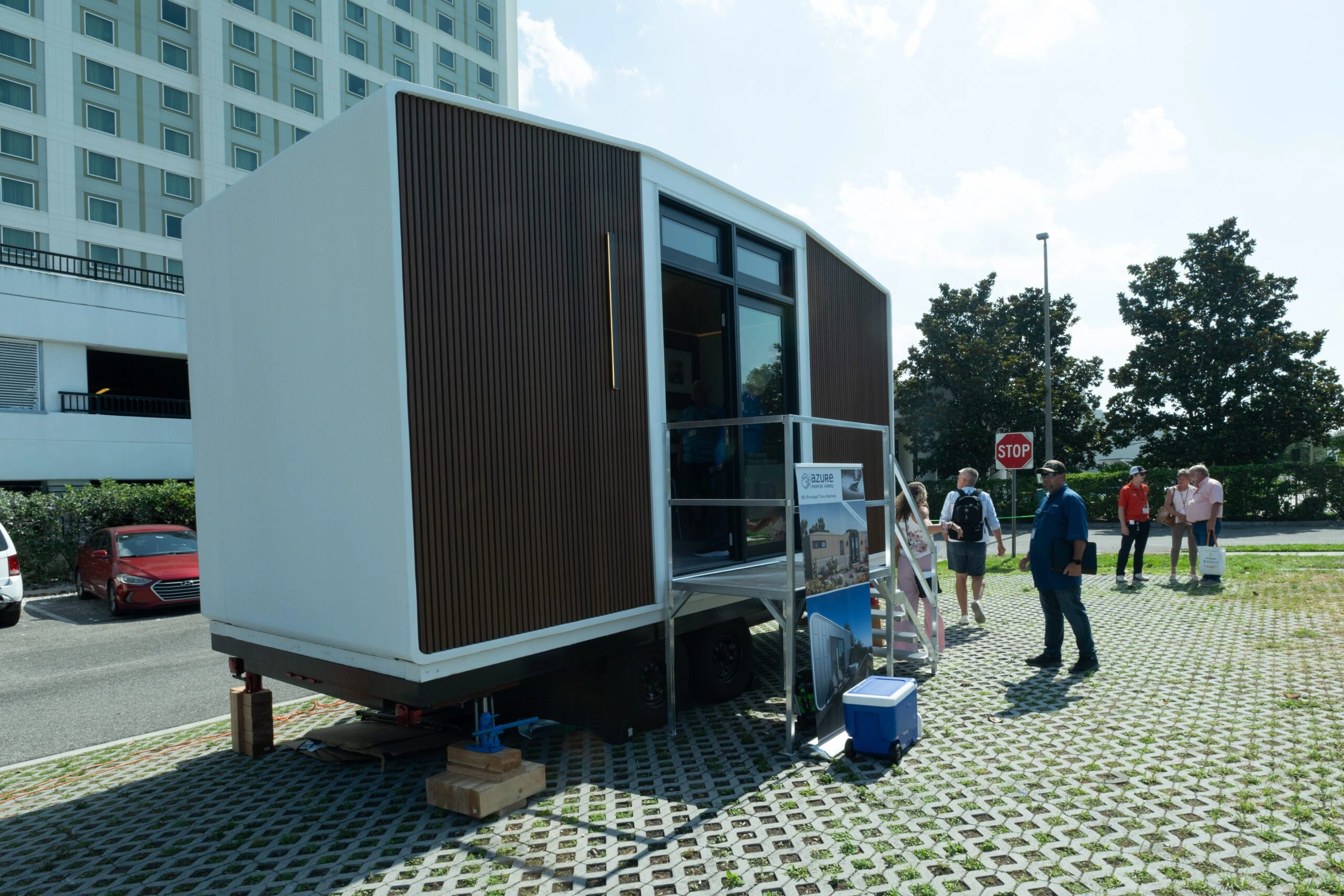
At Azure Printed Homes, we use robotically 3D-printed construction, recycled materials, and controlled factory fabrication to make building more predictable. Our approach is designed to reduce waste, shorten timelines, and create future-focused modular living spaces that can serve different needs.
That may mean a backyard ADU for a family member. It may mean a compact studio for flexible space. It may mean homes on wheels where local placement rules allow them. For larger projects, it may mean building systems for developers, architects, cities, and general contractors who need repeatable housing at scale.
Housing That Can Move Faster Still Needs a Plan
Fast building does not remove the need for planning. A home still needs the right site, legal approval, utility access, delivery access, and a clear use case.
This is true for emergency housing, ADUs, interim housing, and larger community projects. A building system can help reduce construction time, but the project still has to fit the land and local rules.
The practical questions are usually the same:
- Who will live there
- Is the use allowed on the site
- What permits are needed
- How will water, sewer, and electrical connections work
- Can the unit be delivered and installed safely
- Who will operate or maintain the housing
- What timeline is actually realistic
These questions may not sound exciting, but they are what keep housing projects from getting stuck.
Why Interim Housing Matters
Interim housing is not meant to be the final answer for every person. But it can be a needed bridge.
For someone waiting on a voucher, permanent housing placement, supportive services, or family reunification, a safe temporary place can make a real difference. It can also help cities respond to urgent housing needs while longer-term projects are being planned.
The best interim housing is not just a bed. It should be safe, dignified, durable, and practical to operate. People need privacy, basic comfort, reliable utilities, and access to services. Communities need systems that can be delivered faster without creating more chaos on site.
Emergency building should be smarter, not just faster. Speed matters, but so does quality.
A Simple Way to Stay on Track
Getting help can feel scattered, so keep the process as organized as possible.
Start with these steps:
- Call your local housing authority
- Ask who handles Emergency Housing Voucher referrals
- Contact Coordinated Entry or the local homeless services access point
- Gather documents as early as possible
- Be clear about where you are staying and why housing is urgent
- Ask about other programs if EHV is closed
- Keep notes after every call or appointment
- Follow up when someone gives you a next step
None of this makes the situation easy. But it can make the process less confusing.
Final Thoughts
Getting an emergency housing voucher is not always a straight line. You may need to contact more than one agency, go through a local referral system, collect documents, and follow up more than once.
Start with the local housing authority. Find the Coordinated Entry system. Ask whether EHV referrals are open. If they are not, ask what emergency housing programs are available right now. Keep notes. Gather what paperwork you can. Be honest about the urgency of your situation.
And while vouchers help people access housing today, we also need more housing built for tomorrow. Emergency support and emergency building are not separate conversations. They are both part of the same need: more safe, stable, practical places for people to live.
That is the bigger picture we care about. Housing should not take forever to understand, access, or build.