When housing becomes urgent, clear thinking gets harder. Maybe a home is no longer safe. Maybe rent has fallen behind. Maybe a wildfire, flood, storm, job loss, family emergency, or eviction notice changed everything faster than expected.
In that moment, people do not need a perfect long-term plan. They need a safe next step.
Emergency housing assistance can mean different things depending on the situation. For one person, it may be a shelter bed tonight. For another, it may be rent help, a hotel after a disaster, legal support before eviction, or a temporary housing program while repairs are made.
At Azure Printed Homes, we build future-focused modular living spaces using 3D-printed construction, recycled materials, controlled factory fabrication, and faster building methods. But when someone is in a housing crisis, the first question is usually much simpler: where can I go, who do I call, and what do I need to have ready?
This guide walks through the process in plain language. Start with safety. Find the right local contact. Ask for the right type of help. Keep your documents close. Then start looking at the next housing step, not just the emergency one.
First, Name the Problem Clearly
Emergency housing systems can feel confusing because they are not one single program. The right path depends on what is happening right now.
Someone who needs a place to sleep tonight will need a different first step than someone who has an eviction hearing next week. A family displaced by a fire or flood may need disaster housing support. A person leaving an unsafe home may need confidential shelter. A renter behind on payments may need emergency rental assistance before they lose housing.
Before calling agencies, try to put the situation into one clear sentence.
Examples:
- “I need a safe place to stay tonight.”
- “I received an eviction notice and need help staying housed.”
- “My home was damaged and I cannot live there.”
- “I need shelter for myself and my children.”
- “I need help with rent, utilities, or a security deposit.”
- “I am looking for temporary housing after a disaster.”
That simple sentence helps people route you faster. It also helps you stay focused when every part of the situation feels urgent.
Start With Local Help
For many people in the U.S., 211 is one of the easiest places to start. It connects people with local resources, including emergency shelter, rent help, utility assistance, food, disaster support, and other social services.
This matters because housing help is local. A national search can give general information, but the real answer usually depends on the city, county, household size, income, available funding, and the type of emergency.
A good way to start the call is:
“I need emergency housing assistance and I am not sure which program fits my situation. Can you help me find the fastest local option?”
If you cannot get through right away, try again. Local systems can be overloaded, especially during extreme weather, disasters, or periods when many people are behind on rent.
You can also use HUD’s Find Shelter tool to look for local shelter, food, health, and housing resources. Do not stop at the first phone number. Emergency availability changes quickly. A shelter may be full, but the person answering the phone may know another place to call.
Ask for the Right Type of Assistance
The phrase “emergency housing assistance” can cover several types of help. Knowing the difference can save time.
Immediate Shelter
This is for people who need a safe place to stay right away. It may include overnight shelter, family shelter, youth shelter, domestic violence shelter, warming centers, cooling centers, or emergency hotel placement in some areas.
Eviction Prevention
If you are still housed but at risk of losing your home, ask about eviction prevention first. This may include emergency rent help, legal aid, mediation, payment plans, or utility assistance.
This step matters. It is often easier to help someone stay housed than to help them find new housing after they have already lost it.
Disaster Housing
If a fire, flood, storm, earthquake, or other disaster made the home unsafe, look for official disaster recovery resources. FEMA, local emergency management, disaster recovery centers, and relief organizations may offer temporary housing help depending on the situation and location.
Transitional or Rapid Rehousing
These programs are usually for people who need more than one night of help. Transitional housing may offer temporary stability while someone works toward permanent housing. Rapid rehousing may help people move into rental housing with short-term support.
Not every program is available everywhere, and eligibility can vary. That is frustrating, but it is also why the first call should focus on local routing, not guessing.
If You Are Facing Eviction, Do Not Wait
Eviction is one of those situations where waiting can make the problem harder. People often delay because they are embarrassed, overwhelmed, or hoping something changes. That is human. But if a notice or court date is involved, time matters.
If you receive an eviction notice, warning letter, court paper, or rent demand, contact local help as soon as possible. Ask about legal aid, tenant support, rental assistance, mediation, and utility help.
Do not assume every notice means you must leave immediately. Also, do not ignore it. The date on the paper matters, and local rules matter too.
When calling, say exactly what you received and when. For example:
“I received an eviction notice dated June 10. The deadline listed is June 20. I need help understanding my options and applying for emergency rental assistance.”
That gives the agency something concrete to work with.
If a Disaster Made the Home Unsafe
Disaster housing has its own process. A home may become unsafe because of visible damage, smoke, flooding, power loss, water issues, sewage problems, fire damage, blocked access, or local evacuation orders.
If there is an active emergency, follow local safety instructions first. After that, look for official disaster assistance through local emergency management, FEMA resources, disaster recovery centers, or local relief organizations.
Keep records as soon as it is safe. Take photos of damage. Save hotel receipts. Keep insurance information. Write down the dates you could not access the home. If you speak with an agency, insurance company, landlord, inspector, or relief group, note the name and date.
It does not need to be perfect. A phone note is better than nothing.
What to Track After a Disaster
- Photos of damage
- Insurance claim details
- Hotel or temporary stay receipts
- Repair estimates
- Utility shutoff notices
- Local evacuation notices
- Agency names and case numbers
- Dates when the home was not safe to occupy
Disasters already bring enough confusion. A small record of what happened can make the recovery process less messy.
Gather Documents, But Call First
Many people wait to ask for help because they do not have every document ready. Do not wait. Call first and ask what the program needs.
Still, documents can help once you reach the right place. Try to gather the basics if you have them.
Useful documents may include:
- Photo ID
- Proof of address
- Lease or rental agreement
- Eviction notice or court papers
- Utility bills or shutoff notices
- Proof of income or unemployment
- Insurance information after a disaster
- Birth certificates or school records for children
- Photos or records of unsafe housing conditions
If documents were lost, left behind, or damaged, say that clearly. Many housing and disaster programs are used to working with people who do not have everything in hand.
A simple question can help:
“What can I use instead if I do not have that document right now?”
Ask About Coordinated Entry
In many communities, people experiencing homelessness or serious housing instability use a system called coordinated entry. The name sounds more complicated than it is. It is basically a local process that helps connect people to shelter, housing programs, and support based on need.
If you call a shelter, housing office, or 211, ask:
“Is there a coordinated entry process here, and how do I get assessed?”
The assessment may ask about where you are staying, household members, income, health, safety, and other needs. It can feel personal, but it may be the step that connects you with programs you cannot access by calling one shelter directly.
Ask where to go, whether phone assessment is possible, what time to arrive, and what to bring.
Be Clear About Who Needs Housing
Emergency housing is not one-size-fits-all. A single adult, a parent with children, an older person, a person with a disability, a veteran, a young adult, or someone leaving an unsafe home may need different support.
Say who needs housing with you. Include children, a partner, older relatives, caregivers, pets, service animals, or anyone else who is part of the household. Also mention mobility needs, medical equipment, medication storage, pregnancy, school needs, transportation issues, or safety concerns.
This is not oversharing. It is planning.
A shelter across town may not work for a parent whose child needs to stay near school. A building without elevator access may not work for someone with mobility needs. A person with a service animal may need a different placement than someone with a pet.
The better the fit, the more useful the referral.
How Faster Building Supports Emergency Housing
Emergency housing assistance helps people right now. But there is a bigger issue behind it: many communities simply do not have enough housing that can respond quickly.
After a disaster, people may need temporary homes while repairs or rebuilding happen. After a wildfire, flood, or storm, entire neighborhoods may need faster recovery options. Cities may need interim housing for people without shelter. Families may need a small, separate living space for a relative. Local governments may need repeatable housing that can be delivered with less delay and less site disruption.
This is where emergency building becomes part of the conversation.
Emergency building is not about rushing unsafe structures into place. It is about using smarter construction methods so communities can respond faster without losing quality, durability, or basic comfort.
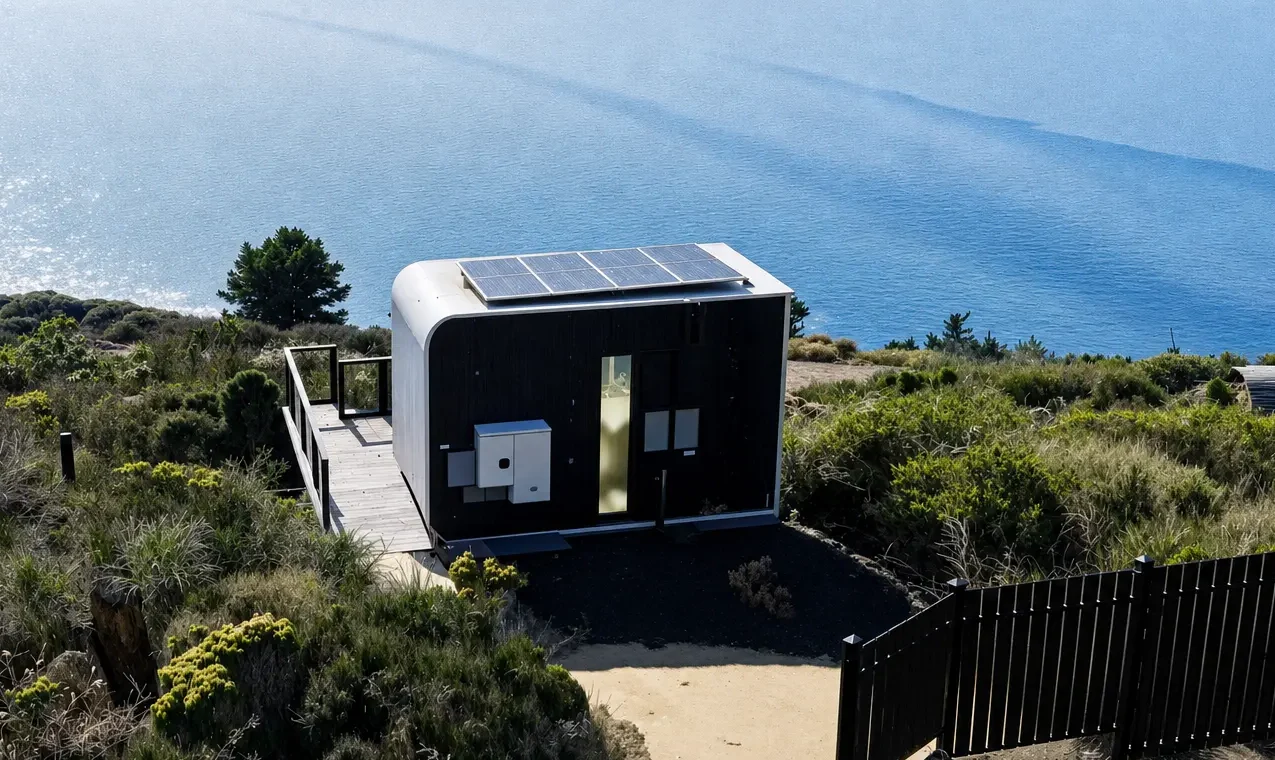
At Azure Printed Homes, we use robotic 3D printing, recycled plastic waste, off-site fabrication, and modular systems to make building more predictable. Our printed shells can be produced quickly in a controlled factory setting, with finishes installed before delivery. That means more of the work happens away from the site, where weather delays, labor coordination, and material waste can be harder to control.
For emergency and recovery planning, that can matter.
How Faster Building Can Help
Faster modular building can support:
- Disaster recovery housing
- Interim housing for people without shelter
- ADU-style units for family support
- Small homes for rebuilding or relocation
- Repeatable units for public agencies and housing partners
- Flexible structures for community support spaces
No building method solves every housing crisis by itself. But when communities need safe, durable spaces faster, factory-built modular housing can be part of the answer.

Matching the Right Space to the Emergency Need
Different housing needs call for different structures. A backyard studio, a home on wheels, an ADU-style home, and a larger building system all solve different problems. Emergency housing should not depend on one format only. The right answer depends on the site, the timeline, the local rules, and how the space will actually be used.
Compact Support Spaces
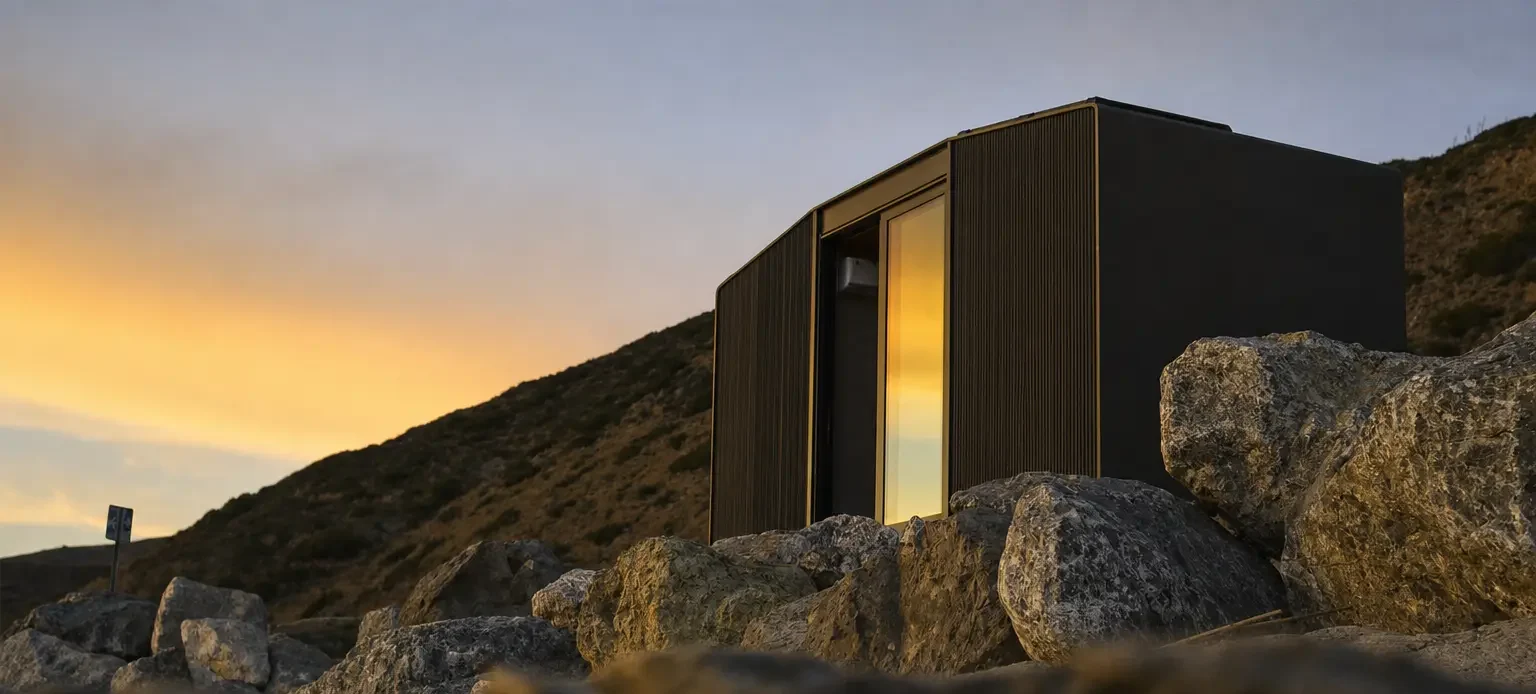
Our Studio Series includes compact structures like the N_100, D_120, and A_120. These are not full homes, but they can support flexible space needs when communities are trying to respond quickly.
In a recovery setting, small structures like these may be useful for work areas, storage, wellness support, staff space, intake areas, or temporary community functions where local rules allow. Sometimes the first need is not a full living unit. Sometimes it is a clean, separate, usable space that helps people and teams get organized.
Mobile Housing Options
Our X Series homes on wheels are built for mobility and comfort. Models like the X_180, X_270, and X_360 include compact layouts with residential features, depending on the model.
These may be relevant in places where chassis-based or park model-style placement is allowed. They can be useful when flexibility matters, but the placement still needs to make sense. A movable home still needs the right site, access, utilities, drainage, and local approval.
ADU-Style Recovery Housing
Our Homes & ADUs range from smaller residential layouts to larger units that can support family space, guest housing, or rental potential where local rules allow.
For long-term recovery, ADU-style housing can be especially useful when families need to stay close, rebuild after disruption, or make better use of property they already have. These units are not just extra space. Planned well, they can become part of a more stable housing path.
Larger Community Response
For larger partners, our professional building systems are designed for repeatable projects. Light-gauge steel, high-performance panels, 3D-printed facades, and off-site fabrication can support multifamily, infill, wildfire-prone areas, mountain communities, and interim housing projects.
This matters when the need is bigger than one household. Cities, developers, architects, general contractors, and public partners may need housing that can be planned, repeated, delivered, and scaled with more confidence.
One Crisis, Many Housing Needs
The point is simple: emergency housing cannot depend on only one format. Communities need shelter, temporary housing, ADUs, small homes, multifamily units, and faster ways to rebuild.
A good response meets the moment. A better one also thinks about what comes next.
Think in Stages, Not One Big Fix
When housing is urgent, it can feel like everything needs to be solved today. Usually, it helps to think in stages.
- The first stage is safety. Where can you stay tonight? Is anyone in danger? Are children, older adults, pets, or medical needs covered?
- The second stage is stabilization. Can you get shelter, rent help, legal aid, disaster assistance, or a case manager? Can utilities stay on? Can you avoid losing the housing you still have?
- The third stage is the next housing plan. This may mean affordable housing applications, rapid rehousing, a new rental, family support, repairs, rebuilding, an ADU, or another more stable option.
- The fourth stage is prevention. What needs to change so the same emergency does not happen again? That could mean safer housing, a different living arrangement, budgeting support, benefits, repairs, or a more flexible home setup.
This approach is not fancy. It just makes the problem easier to handle.
Simple Questions to Ask Every Agency
Before you hang up or leave an office, ask a few direct questions:
- What help is available right now?
- Do I qualify for this program?
- What documents do I need?
- Is there a waitlist?
- Is there another agency I should call?
- Can you give me the referral process?
- What should I do next if this option does not work?
That last question matters. One “no” does not always mean there is no help. It may mean that program is full, not the right fit, or not the right entry point.
Conclusion
Getting emergency housing assistance can feel confusing because the system is not one straight path. Shelter, rent help, disaster support, legal aid, coordinated entry, and longer-term housing programs all work differently.
The best first step is to name the urgent problem clearly and contact a local entry point like 211, HUD Find Shelter, a local shelter hotline, a housing office, or disaster recovery resource. From there, ask direct questions, keep notes, gather documents, and ask for the next referral when one option does not work.
Emergency help is about safety first. But the bigger goal is stability.
At Azure Printed Homes, we focus on housing that can be built faster, adapted more easily, and used in real-life situations. Emergency assistance helps people get through the immediate crisis. Better building systems help communities prepare for the next step.
Both matter. Because when someone needs a place to land, the process should not feel impossible to find.