Emergency housing is a safe place to stay when someone cannot remain in their current home. It may be needed after a wildfire, flood, storm, evacuation, building damage, housing loss, or another urgent situation that leaves people without stable shelter.
The idea sounds simple, but the work behind it is not. Emergency housing has to move fast. It also has to be safe, usable, and realistic for the site where it will be placed. People do not only need a roof. They need privacy, rest, basic utilities, and a place that helps life feel a little more steady again.
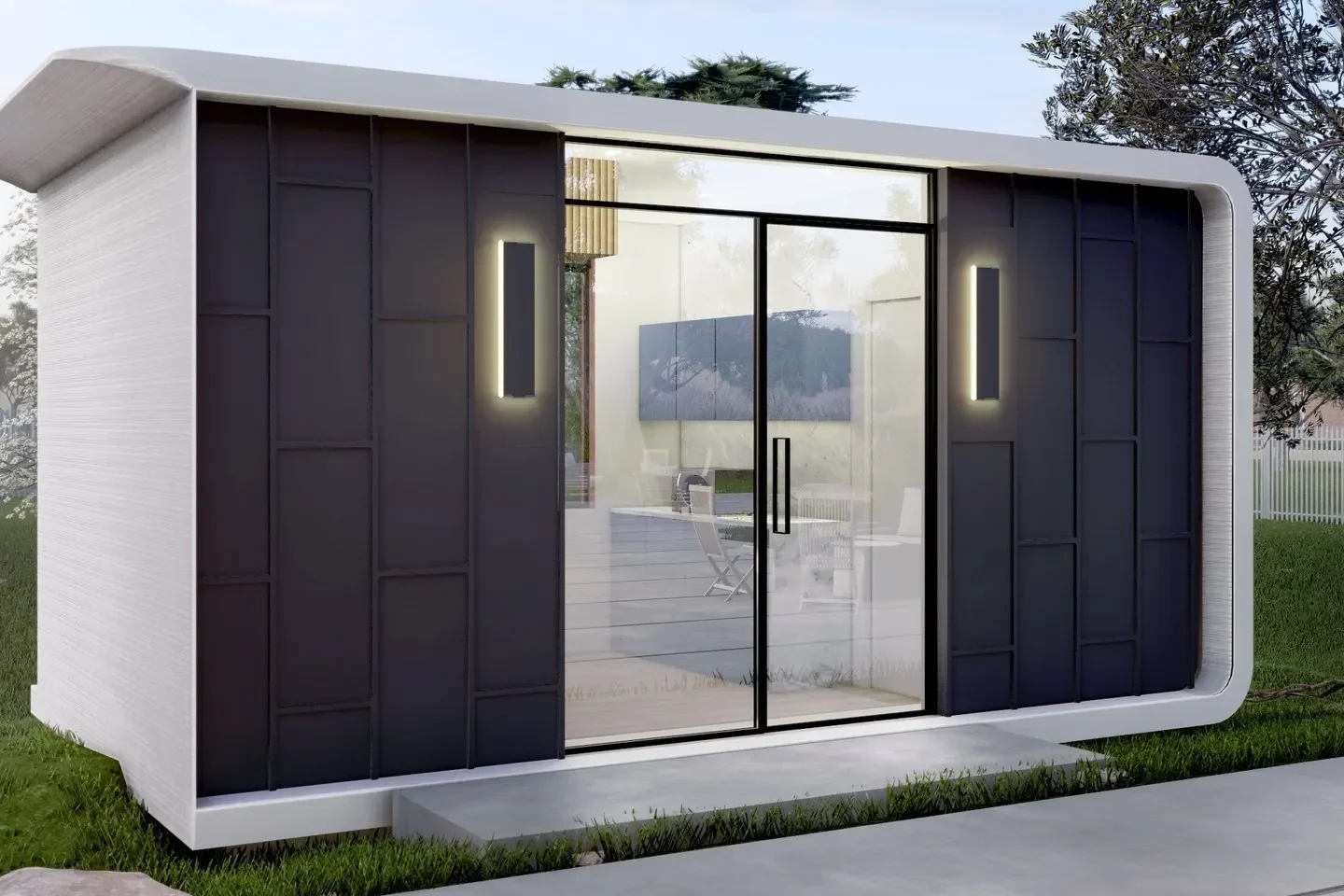
At Azure Printed Homes, we approach emergency housing as a faster, more practical way to create safe space when people need it most. Our work is built around 3D-printed modular spaces, recycled materials, controlled factory fabrication, and repeatable building systems. For emergency housing, that kind of process matters because every delay affects real people.
What Emergency Housing Means
Emergency housing is short-term or temporary housing created for people who need shelter right away. It often fills the gap between a crisis and a longer-term housing plan.
That gap can look different depending on the situation. A family may need a place to stay while their home is repaired after a fire. A city may need interim housing for unhoused residents. A community may need fast housing after a natural disaster. A property owner may need a separate space for a family member during a difficult transition.
Emergency housing can include:
- Temporary shelters
- Modular housing units
- Interim housing communities
- Small homes or ADU-style units
- Homes on wheels where placement is allowed
- Converted buildings
- Rapidly deployable housing systems
Some emergency housing is very basic. Some includes a bathroom, kitchen, sleeping area, heating, cooling, and utility connections. The right format depends on how long people will stay, who will use the space, and what the site can support.
Emergency Housing Is More Than Shelter
A fast shelter is helpful. A livable space is better.
When someone is displaced, small daily tasks become harder. They need somewhere to sleep, wash, store belongings, charge a phone, prepare food, and take a breath without feeling exposed. That is why emergency housing should be planned around dignity and daily use, not only speed.
A good emergency housing unit should consider:
- Sleeping space
- Bathroom access
- Heating and cooling
- Electrical service
- Water and sewer where needed
- Safe entry and exit
- Weather protection
- Basic storage
- Privacy
- Maintenance access
These details may sound ordinary, but ordinary matters during a crisis. People need fewer problems to solve, not more.
When Emergency Housing Is Needed
Emergency housing is often connected to disasters, but it is not only for disasters.
After Natural Disasters
Wildfires, floods, storms, earthquakes, and other events can damage homes quickly. In those cases, families may need temporary housing while repairs, insurance, permitting, and rebuilding move forward.
During Personal or Family Crises
Emergency housing can also help after building fires, unsafe living conditions, family changes, housing instability, or medical and caregiving situations. Sometimes the need is not community-wide. Sometimes one household simply needs a safe, separate place to land.
For Community Housing Response
Cities, counties, nonprofits, and developers may also need emergency housing for larger response efforts. That can include interim housing for unhoused residents, workforce housing during urgent projects, replacement housing after unsafe conditions, or fast support during local housing shortages.
Common emergency housing situations include:
- Disaster recovery after fire, flood, storm, or other damage
- Temporary relocation during rebuilding
- Interim housing for unhoused residents
- Workforce housing during urgent community projects
- Family housing during medical, financial, or caregiving transitions
- Replacement housing after unsafe living conditions
- Rapid response during local housing shortages
The need may start suddenly, but the housing still needs thoughtful planning. A fast decision can help. A rushed decision can create another problem.
Emergency, Temporary, and Permanent Housing
These terms are often used together, but they are not exactly the same.
Emergency housing is the first response. It gives people a safe place to stay quickly.
Temporary housing usually lasts longer. It may support people for weeks or months while repairs, rebuilding, permitting, or permanent placement happens.
Permanent housing is the long-term solution. It is built or approved for lasting occupancy and usually requires a more complete planning and permitting process.
The lines can overlap. A modular unit may begin as emergency housing, then continue as temporary housing. An ADU-style unit may support a family during a crisis and later become guest space, family housing, or rental housing where local rules allow.
That flexibility can be useful. But the intended use should be clear early because it affects layout, permits, utilities, site work, and cost.
Why Speed Matters
In emergency housing, time is not just a schedule detail. It affects people’s lives.
Every delay can mean more nights in a hotel, shelter, car, borrowed room, or unsafe situation. For communities, delays can also increase costs and put more pressure on local services.
Traditional construction can be difficult to match to urgent housing needs. Site work, labor coordination, weather, inspections, material delays, and long build timelines can slow everything down.
That is where modular and factory-built approaches can help. When more of the work happens in a controlled environment, the process becomes more predictable. Site preparation and unit fabrication can also happen at the same time, which can shorten the path from planning to placement.
Our 3D-printed construction process supports that kind of approach. The structural shell can be robotically printed in about one day. After that, finishes, systems, delivery, and installation are completed in stages. It is still real construction, but it does not depend on building every part from scratch on site.
How Modular and 3D-Printed Building Helps
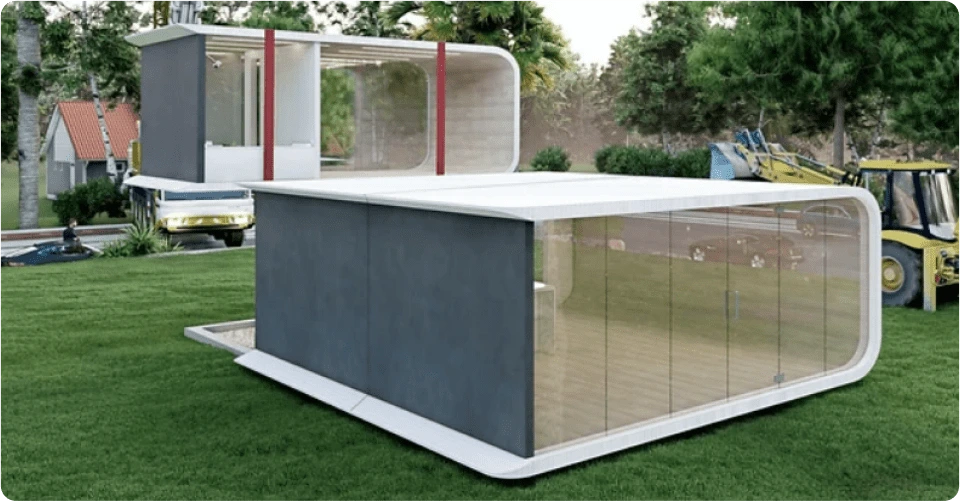
Modular building can be useful for emergency housing because much of the construction work happens off site. The unit or major components are fabricated in a controlled setting, then delivered for installation.
That does not remove the need for planning, permits, utilities, or site work. But it can make the building process more predictable, which matters when people need housing quickly.
A More Predictable Build Schedule
Factory work is less exposed to weather, job-site disruption, and long chains of on-site coordination. That can help shorten the path from planning to placement.
For emergency housing, predictability is a big deal. The goal is not only to build faster. The goal is to reduce the number of unknowns.
Less Disruption on Site
Modular building can also reduce mess on site. That matters in neighborhoods, recovery zones, tight lots, and communities already dealing with stress.
Instead of turning the site into a long construction zone, more of the work happens before the unit arrives. The site still needs preparation, but the process can feel more organized.
Repeatable Housing for Larger Needs
If a city, nonprofit, developer, or agency needs multiple units, a modular system can help keep layouts, quality, delivery steps, and utility planning more consistent.
That is especially useful for interim housing, disaster recovery, workforce housing, and other emergency response projects where one unit is not enough.
Where 3D-Printed Housing Fits
3D-printed housing is part of a larger shift toward industrialized construction. Instead of relying only on conventional on-site building, the structural shell can be printed using robotic technology and durable materials.
At Azure Printed Homes, our approach uses recycled plastic waste as part of the printed structure. For every 120 sq ft of our 3D-printed homes, the equivalent of about 100,000 plastic bottles is used. That matters to us because emergency housing should not solve one problem by creating unnecessary waste somewhere else.
Faster Fabrication, With Real Site Planning
The printed shell is not the whole project. A finished unit still needs systems, interiors, delivery, installation, and site connections.
But printing the shell quickly and consistently can support a more reliable building process. For emergency housing, 3D-printed modular construction can be useful when communities need structures that are:
- Faster to fabricate
- Durable
- Repeatable
- Easier to plan
- Lower waste than many conventional approaches
- Flexible across different housing needs
- More predictable to scale
It is not a shortcut around planning. It is a better way to organize part of the build.
Matching the Housing Type to the Need
Not every emergency housing need calls for the same unit. A small studio may help in one case. A larger ADU-style unit may be better in another. A home on wheels may work where placement rules allow it.
Our product categories serve different kinds of emergency housing projects.
Studio Series
Our Studio Series includes compact models such as the N_100, D_120, and A_120. These are smaller spaces, starting around 100 to 120 sq ft. They are best suited for flexible extra room, not full residential living.
In an emergency context, this kind of unit may work as a support space, small office, recovery room, or ancillary structure near existing facilities.
X Series Homes on Wheels
Our X Series homes on wheels are chassis-based models designed for mobility and comfort. They include the X_180, X_270, and X_360, with layouts that can include bathrooms, kitchens, and sleeping areas depending on the model.
This category can be useful when a movable housing format is allowed and the site can support it. The key detail is placement. A home on wheels still needs a legal, safe, and practical place to sit.
Homes & ADUs
Our Homes & ADUs are larger residential-style units, with models ranging from 360 sq ft up to 900 sq ft. These are better suited for situations where people need more complete living space.
For emergency housing, this category can support family needs, temporary rebuilding situations, guest housing, or more stable interim use where local approvals and site conditions allow.
Professional Building Systems
For larger emergency housing efforts, our professional building systems may be the better fit. These systems combine light-gauge steel, high-performance envelopes, 3D-printed facades, and off-site fabrication.
This can support multifamily projects, infill housing, wildfire recovery, mountain or WUI residential needs, and interim housing for the unhoused. Larger projects need more coordination, but they also need systems that can scale.
The Site Can Make or Break the Project
A modular unit is only useful if it can be delivered, placed, connected, and maintained. That is why the site should be reviewed early, not after the unit has already been chosen.
Access roads, slopes, drainage, utility locations, overhead lines, trees, fences, fire access, local zoning, permit requirements, and maintenance access can all affect the project. A flat open lot may still need grading. A backyard may look simple but become complicated if the delivery path is narrow or utilities are far from the placement area.
The unit is only one part of the work. The site is the other half.
Utilities and Permits Still Matter
Emergency housing may be urgent, but utilities and local rules do not disappear.
A small support structure may only need electrical service. A full housing unit with a bathroom and kitchen needs water, sewer, power, HVAC, and more careful site planning. Larger projects may need shared infrastructure, utility coordination, inspections, and ongoing maintenance plans.
Permits also depend on the location, unit type, intended use, and local authority. Some communities may offer faster review after emergencies. Others still require standard approvals.
The safest approach is to define the project before moving too far:
- Is it emergency, temporary, interim, or permanent housing?
- Who will live there?
- How long will it be used?
- What utilities are required?
- What local approvals apply?
- Who handles site work?
- What happens when the emergency use ends?
Clear answers early can save time later.
What Emergency Housing Should Avoid
Emergency housing often happens under pressure, so mistakes are easy to make.
One common mistake is choosing the fastest unit without checking the site. Another is assuming that temporary housing does not need serious planning. A third is treating every small structure like a full dwelling, or every full dwelling like a simple shed.
Problems can happen when there is:
- No clear use case
- No utility plan
- Poor drainage
- No delivery access
- Local rules checked too late
- A unit that is too small for the household
- No maintenance plan
- No plan for removal, reuse, or long-term placement
Emergency housing should reduce stress. It should not create a second crisis.
Conclusion
Emergency housing is housing for the moment when people cannot wait. It gives individuals, families, and communities a safer place to land after a crisis or during a difficult transition.
But good emergency housing is more than quick shelter. It needs to be livable, safe, properly placed, and matched to the real situation. A small studio, a home on wheels, a larger ADU-style unit, and a scalable building system can all play different roles. The key is choosing the right one for the site, the people, the timeline, and the local rules.
At Azure Printed Homes, emergency building move quickly without becoming careless. Our 3D-printed modular approach is built around recycled materials, controlled fabrication, and practical housing formats that can support urgent needs with more predictability.
When a community needs housing quickly, every step matters. The unit matters. The site matters. The utilities matter. The people matter most.