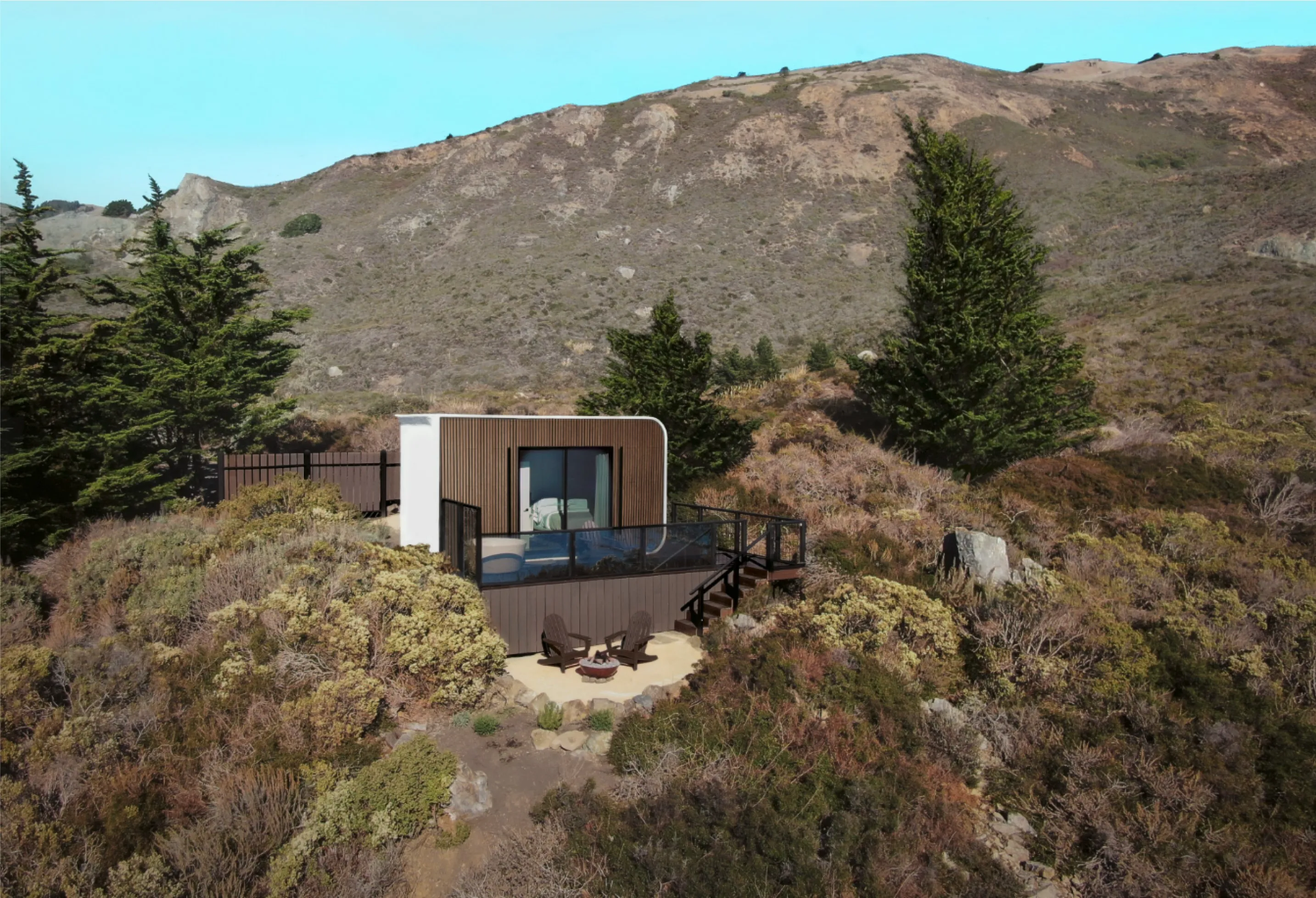
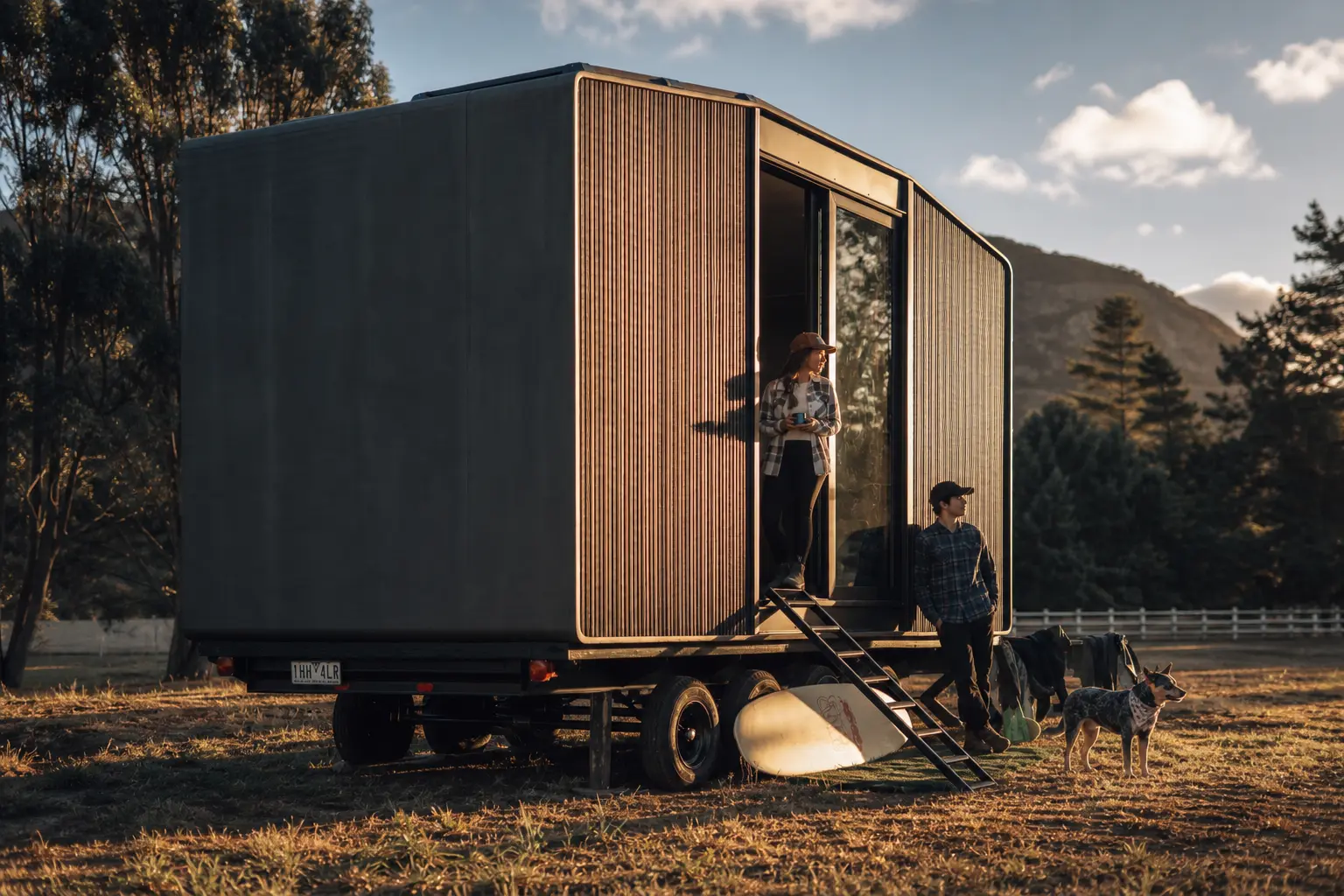
If you have extra space on your lot, it is natural to ask: can I build an ADU on my property?
For many homeowners, the answer may be yes. But an ADU is not just a product you place in the backyard. It has to work with your local rules, your site, your utilities, your budget, and the way you plan to use the space.
At Azure Printed Homes, we build 3D-printed modular Homes & ADUs using recycled plastic and a more controlled prefab process. Our ADU models range from 360 sq ft to 900 sq ft, with kitchens, bathrooms, bedrooms, and layouts made for real living. But before choosing a model, the first step is checking whether your property is ready for one.
What Counts as an ADU?
An ADU, or accessory dwelling unit, is a smaller second home on the same property as a main house. It may be called a backyard home, guest house, granny flat, in-law suite, or secondary unit.
A full ADU is usually designed for independent living. That means it typically includes:
- A sleeping area
- A bathroom
- A kitchen or kitchenette
- Utilities
- Heating and cooling
- A separate or private entrance
- A layout that supports daily use
This is different from a simple backyard studio. A small office or hobby room can be useful, but it is not always an ADU. The difference matters because a full ADU usually needs more permits, more utility planning, and a stronger site review.
Start With the Property, Not the Floor Plan
It is easy to look at ADU models first. That part is more fun. But the better starting point is the land.
A property is more likely to work for an ADU when it has enough usable space, clear access, manageable utility connections, and local rules that allow the type of unit being planned.
Before getting too attached to a layout, homeowners should check:
- Whether ADUs are allowed on the property
- How much usable space is available
- Required setbacks from property lines
- Utility access for water, sewer, and electricity
- Site slope, drainage, and foundation needs
- Delivery and installation access
- HOA rules, if they apply
- Fire, flood, hillside, or coastal restrictions
A large yard does not automatically mean an easy ADU project. A smaller yard may still work well if the space is flat, clear, and properly located.
Local Rules Decide What Is Possible
ADU rules can change by city, county, and property type. Even when state rules support ADU development, local building departments still review the details that decide whether a project can move forward. That usually includes permits, setbacks, utility plans, fire access, inspections, and the way the unit will be used.
That is why two similar homes in nearby neighborhoods may have different answers. One property may have a clear path for a detached ADU, while another may need extra review because of easements, slope issues, fire zone rules, parking limits, or utility capacity.
What Local Rules May Affect
Local rules can shape the size, height, and placement of the ADU. They may decide how close the unit can sit to side and rear property lines, how far it needs to be from the main house, and whether parking is required. They can also affect rental use, utility connections, exterior design, permit steps, and inspection requirements.
This part may not be the most exciting part of planning, but it protects the project. A good ADU plan should fit the rules before it moves into design.
Lot Size Matters, But Usable Space Matters More
A lot can look big on paper and still be hard to build on. Trees, pools, slopes, easements, fences, tight side yards, and drainage problems can all reduce the space that is actually usable.
For an ADU, you need room for more than the unit itself. You also need space for installation, maintenance access, utility connections, drainage, and safe movement around the structure.
The best ADU size is not always the largest one. It is the one that fits the site cleanly.
A compact 360 sq ft ADU may work well for a smaller backyard or a simple guest unit. A 540 sq ft unit gives more breathing room for one person or a couple. A 720 sq ft model can support more flexibility. A 900 sq ft model gives the most space, but it also needs a property that can handle the larger footprint.

Azure Homes & ADUs: Model Options and Starting Prices
Our Homes & ADUs line is built for homeowners who need more than a backyard room. These are residential-style units with kitchens, bathrooms, and layouts designed for daily living.
| Model | Size | Layout | Starting Price |
| 360 | 360 sq ft | Kitchen, 1 bedroom, 1 bathroom | $89,900 |
| 540 | 540 sq ft | Kitchen, 1 bedroom, 1 bathroom | $134,900 |
| 720 | 720 sq ft | Kitchen, 1 bathroom, 1-bedroom or 2 junior bedroom option | $174,900 |
| 900 | 900 sq ft | Kitchen, 2 bedrooms, 1.5 bathrooms | $219,900 |
These prices are useful for early planning, but they are not the full project cost. A complete ADU budget may also include delivery, site work, foundation, permits, utility connections, drainage, HVAC, solar or battery options, upgrades, and local fees.
Setbacks, Utilities, and Access Can Shape the Whole ADU Plan
An ADU has to fit more than the yard. It has to fit the buildable area, the utility plan, and the delivery path. These three details often decide whether a project feels simple or starts getting complicated.
Setbacks Decide Where the ADU Can Sit
Setbacks are the required distances between the ADU and property lines, the main house, or other site features. They can make a big difference in how much of the yard is actually usable.
This is one of the most common surprises in ADU planning. A backyard may look open at first, but once setback rules are applied, the buildable area can shrink.
Setbacks may apply to:
- Side property lines
- Rear property lines
- The main house
- Garages or other structures
- Easements
- Utility lines
- Fire access areas
- Slopes or drainage zones
Sometimes a smaller ADU creates a better project because it fits the legal building area without awkward placement or expensive site changes.
Utilities Turn the Unit Into a Real Home
A full ADU needs more than walls and a roof. It needs the systems that make the space comfortable, safe, and ready for daily living.
Utility planning usually includes:
- Electrical service
- Water connection
- Sewer or septic connection
- Heating and cooling
- Drainage
- Internet or low-voltage planning
- Possible solar or battery requirements
A small backyard studio may only need electrical service. A full ADU with a kitchen and bathroom needs more planning. That difference affects the cost, permits, site work, and installation.
Our larger ADU-style units are designed for residential use. Interior plumbing and electrical work can be completed before delivery, with exterior connections prepared for site hookup. That helps make the process more controlled, but the property still needs the right utility plan.
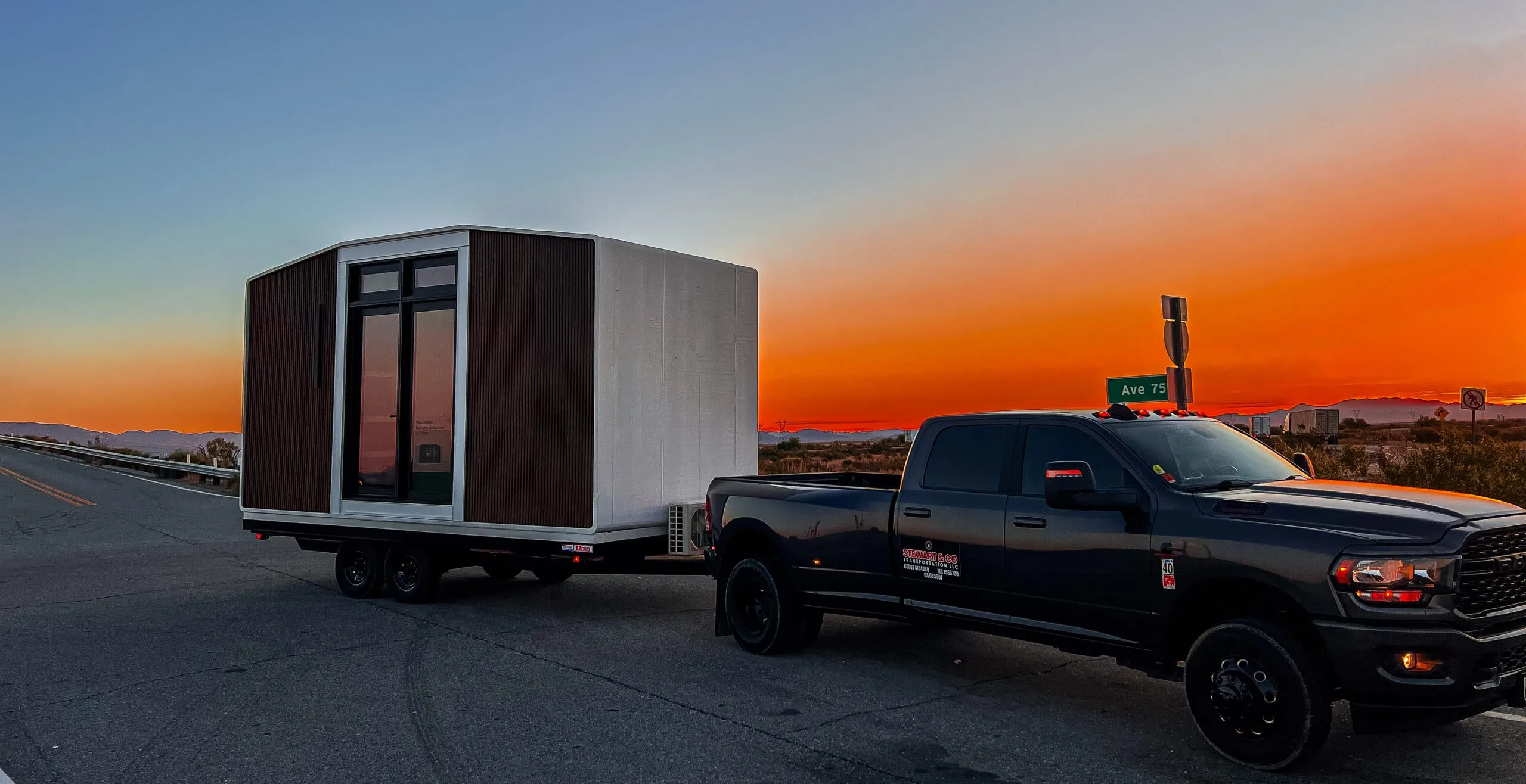
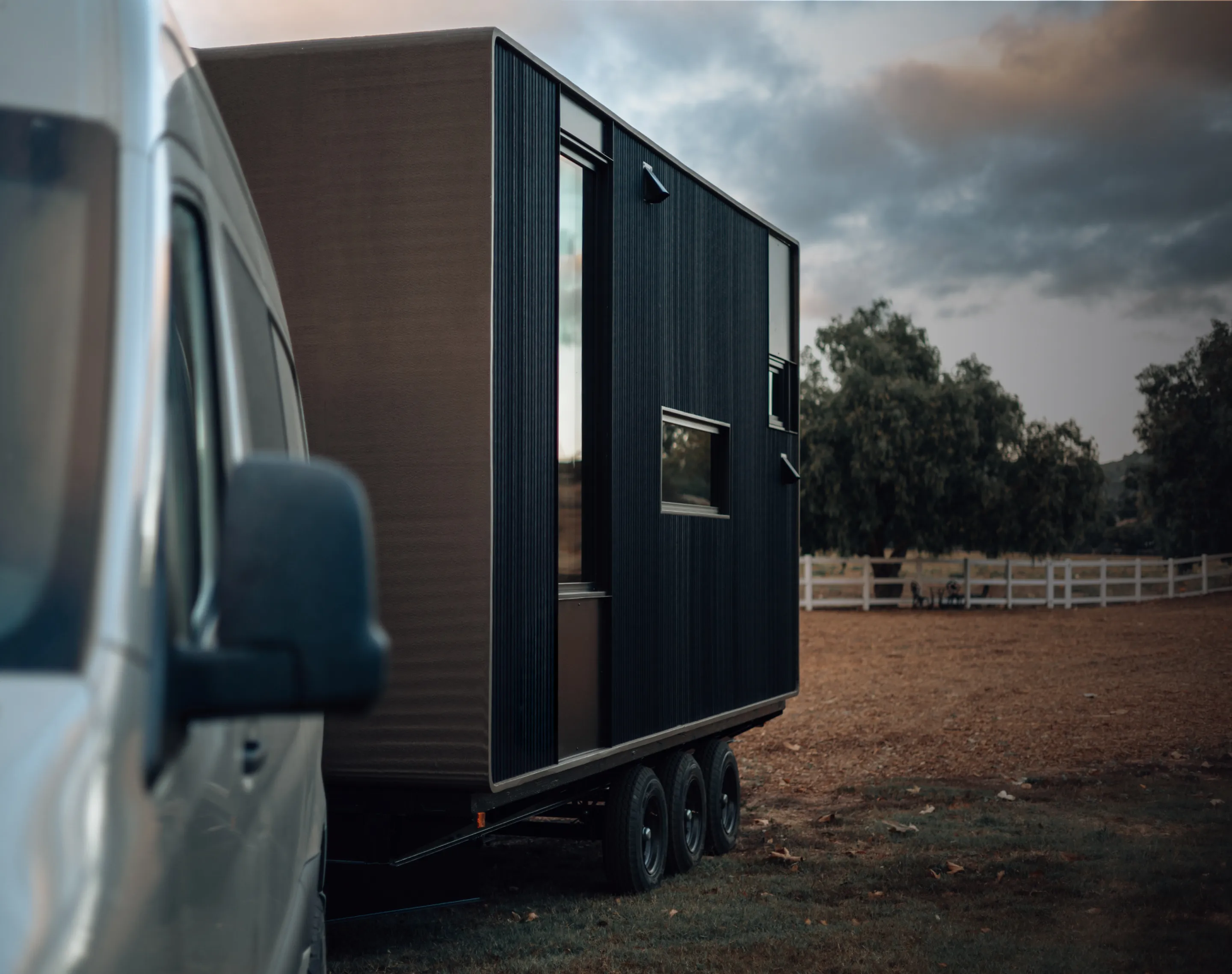
Delivery Access Matters With Prefab ADUs
With prefab construction, access is not only about how someone enters the ADU after it is installed. It is also about whether the unit can be delivered and placed safely.
A site may need review for:
- Street width
- Driveway access
- Side yard clearance
- Fences, gates, or walls
- Trees and low branches
- Overhead wires
- Space for installation equipment
- Safe access for utility work
A beautiful ADU design still needs a realistic path onto the property. If access is tight, the project may need extra planning before the model is finalized.
Think About How the ADU Will Be Used
The purpose of the ADU should guide the whole plan.
Some homeowners want space for parents or relatives. Others want a place for adult children, guests, a caregiver, or rental income where local rules allow it. Each use has different needs.
A unit for an older parent may need easy entry, strong lighting, a simple layout, and a comfortable bathroom. A rental unit may need privacy, separation from the main house, and clear utility planning. A guest space may not need the largest layout, but it still needs to feel complete.
The strongest projects usually start with a real use case, not just a general idea of adding space.
ADU or Backyard Studio?
Not every small backyard structure should become a full ADU.
Our Studio Series is better suited for homeowners who want a compact backyard office, creative room, hobby space, wellness room, or quiet retreat. Models like the N_100, A_120, and D_120 are useful extra spaces, but they do not include a kitchen, bedroom, or bathroom.
When a Studio Makes More Sense
A studio may be right if you need:
- A backyard office
- A creative or hobby room
- A quiet space outside the main house
- A smaller non-residential structure
When an ADU Makes More Sense
An ADU may be right if you need:
- A kitchen
- A bathroom
- A bedroom or sleeping area
- Family housing
- Guest housing
- Rental potential where allowed
- A more permanent residential setup
Both can be practical. They just solve different problems.
Permits Are Part of the Process
Most full ADUs need permits. This is normal and should be part of the plan from the start.
Permits may cover the ADU itself, foundation, electrical work, plumbing, water, sewer, HVAC, grading, drainage, and inspections. Some properties may also need fire review, utility approval, or special local review.
A permitted ADU is usually easier to use, finance, insure, rent where allowed, and explain later if the property is sold. It also gives the homeowner a clearer path from idea to finished space.
Budget Beyond the Model Price
The model price is only one part of the project. It gives you a starting point, but the final cost depends on the site, the local requirements, and the choices made along the way.
The Unit Is Not the Whole Budget
An ADU still needs to be placed, connected, and approved. That means homeowners should plan for more than the model itself. Delivery, site preparation, foundation work, utility connections, permits, drainage, HVAC, upgrades, and local fees can all affect the total cost.
What Can Increase the Final Cost
Costs can increase when there are long utility runs, electrical panel upgrades, sloped yards, drainage issues, tight delivery access, special foundation needs, fire zone requirements, flood, coastal, or hillside rules, local fees, inspections, or late design changes.
Why Early Planning Helps
A realistic budget is not meant to scare homeowners away. It simply makes the project easier to plan. ADUs work best when the numbers include both the home and the land around it.
Why 3D-Printed Prefab Can Help
Traditional backyard construction can be slow, messy, and hard to predict. Weather, labor schedules, material delays, and on-site coordination can stretch out the process.
We take a different approach.
At Azure Printed Homes, we use robotic 3D-printing and prefab manufacturing to build modular living spaces with recycled plastic. The largest of our ADU models can be printed in about one day, and much of the work happens before the unit reaches the property.
The site still needs permits, preparation, utility connections, and installation. But the building process itself can be more controlled than starting everything from scratch in the backyard.
For homeowners, that can make the idea of building an ADU feel less overwhelming.
Conclusion
The most successful ADU projects start with a few simple questions. Does the property allow it? Is there enough usable space? Can utilities be connected? Does the unit fit the way you actually plan to live?
We always encourage homeowners to think about the purpose before the floor plan. Building an ADU for a parent, creating space for adult children, adding a guest home, or planning for future flexibility will all lead to slightly different decisions.
At Azure Printed Homes, we build everything from compact backyard studios to larger Homes & ADUs because we know every property solves a different problem. Sometimes a 360 sq ft home is exactly what a family needs. Sometimes a larger 900 sq ft model makes more sense. The goal is not to build the biggest unit possible. It is to build the right one.
Our approach is simple. Start with the property, understand the local rules, choose a realistic budget, and then select a space that fits your life today and can still be useful years from now.
An ADU is not just extra square footage. When planned well, it becomes a smarter way to use the land you already own.