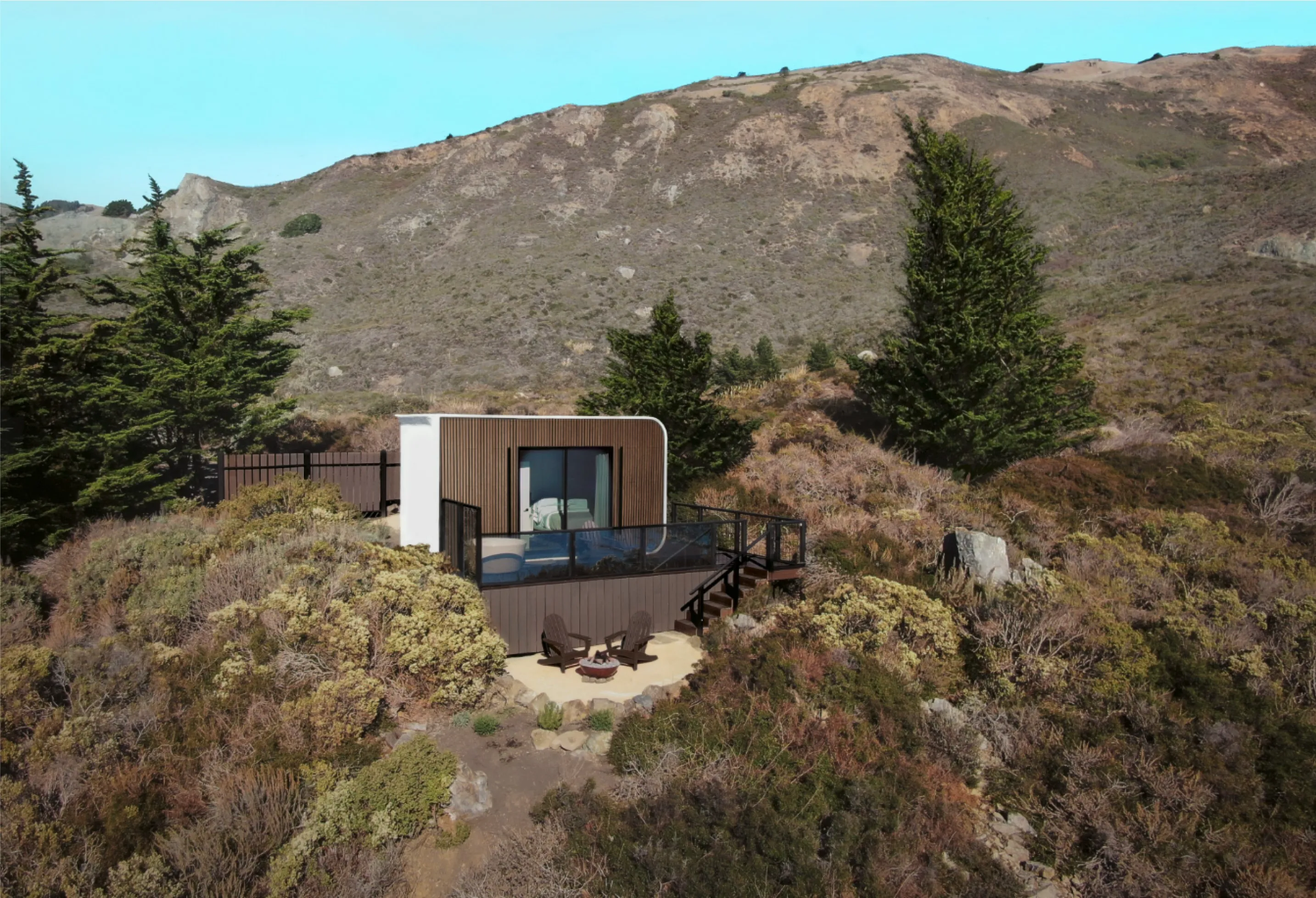
Portable homes can cost anywhere from the mid-$20,000 range to well over $200,000, depending on size, design, mobility, finishes, utilities, site needs, and how the home will be used. A simple studio-style unit will usually cost less than a larger ADU-style home with bedrooms, bathrooms, kitchen space, and more complete living features.
At Azure Printed Homes, we create future-focused modular living spaces using 3D-printed construction, recycled materials, customizable designs, and energy-efficient features. Our portable homes pricing varies, depending on the model, size, and type of unit.
Average Cost of a Portable Home
The average cost of a portable home can vary widely. At Azure, portable homes start from $24,900 to $219,900, depending on the model and type of unit. Compact studios are usually the most affordable option, while larger ADU-style homes and homes on wheels cost more because they offer more space, built-in features, and full living functionality.
| Size Range | Typical Use | Azure Starting Price Range |
| Under 120 sq ft | Studio, office, flexible backyard space | From $24,900 |
| 120-300 sq ft | Larger studio, guest space, compact living unit | From $29,900-$69,900 |
| 300-700 sq ft | ADU, rental unit, home on wheels | From $84,900-$134,900 |
| 700+ sq ft | Larger ADU or full living space | From $174,900-$219,900 |
Portable Home Price Ranges by Type
Portable homes are not all priced the same because they are not all built for the same purpose. A small studio has a very different cost structure than a full ADU or a home on wheels.
Compact Studios
Compact studio units are usually the most affordable portable home option. They are often used as workspaces, creative rooms, wellness rooms, backyard offices, or flexible guest spaces.
At Azure, our A/D/C-100 and N100 models start at $24,900. Our A/D/C-120 models start at $29,900. These smaller units can be a practical option for buyers who want extra usable space without the cost of a larger dwelling.
ADU-Style Portable Homes
ADU-style homes are larger and more complete. They may include bedroom space, bathroom space, kitchen areas, living space, storage, and utility planning. Because of that, they usually cost more than compact studio models.
Our ADU-style models start at $49,900 for A-180 and go up to $219,900 for A-900. These homes are designed for buyers who need more than a simple backyard room. They can support guest housing, rental use, family space, or more complete long-term living needs.
Homes on Wheels
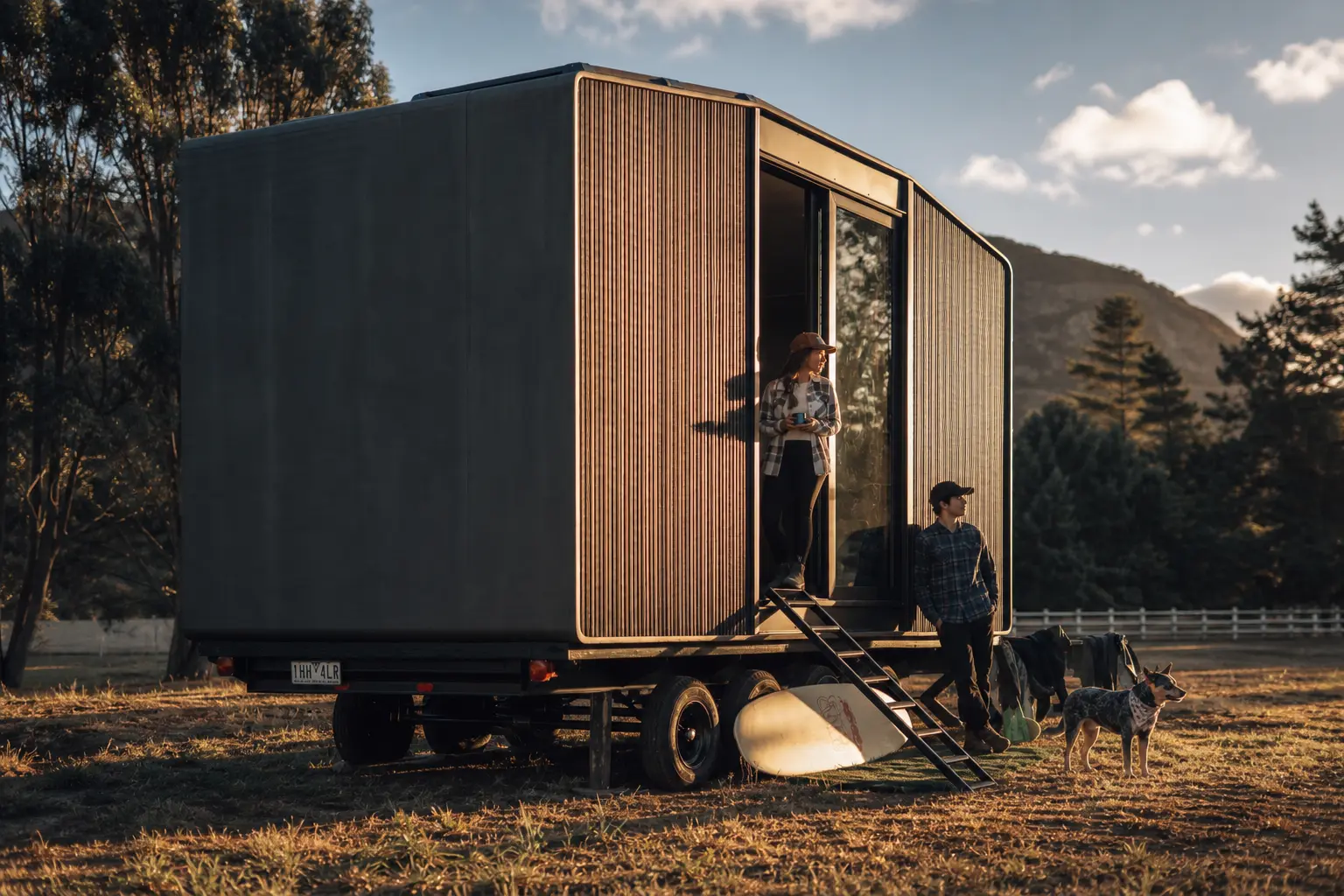
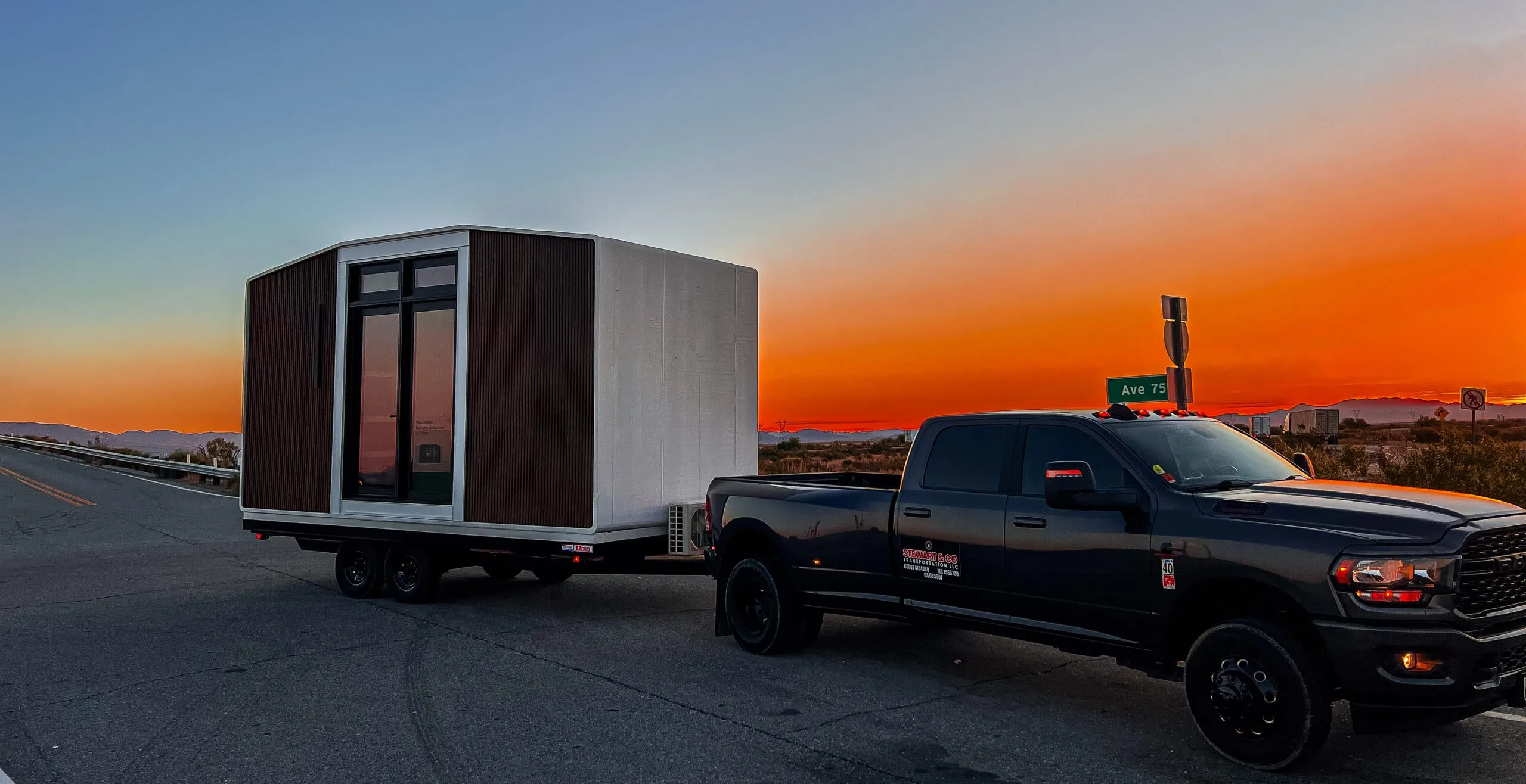
Homes on wheels are built for buyers who want mobility along with compact living. These units usually cost more than basic studios because they are designed with road-ready structure, compact layouts, and built-in living features.
Our X Series homes on wheels are designed for buyers who want a flexible living option that is not tied to one permanent site like a fixed ADU. Starting prices include:
- X180: from $69,900
- X270: from $84,900
- X360: from $109,900
These starting prices help buyers compare the size and type of unit that may fit their project. A smaller studio may be enough for a quiet workspace or guest room. A larger ADU may be a better fit for a more complete living setup.
What Affects the Cost of a Portable Home?
The starting price is important, but it does not tell the whole story. Portable home costs can change based on several practical details.
Size and Layout
Size is one of the biggest cost factors. Larger homes need more materials, more interior work, more systems, and more planning. A studio layout is usually simpler than a home with a bedroom, bathroom, kitchen, and living area.
Layout matters too. Two homes with similar square footage can have different costs if one has more plumbing, built-in storage, windows, or interior finishes.
Level of Finish
A basic unit will cost less than a unit with upgraded finishes, more built-in features, or a more complete interior package. Flooring, cabinetry, fixtures, lighting, appliances, bathroom features, and kitchen details can all affect the final price.
This is why buyers should think carefully about how the space will actually be used. A backyard office may not need the same level of finish as a guest house or rental unit.
Mobility Requirements
A home on wheels has different requirements than a unit designed for a fixed site. The structure, chassis, weight balance, and layout all matter. These features can affect pricing because the home has to function as both a living space and a movable structure.
For buyers who value flexibility, that added mobility can be worth it. For buyers who want a permanent backyard ADU, a fixed modular unit may make more sense.
Site Preparation
Even a portable home needs a prepared place to land. Site work may include grading, drainage, access planning, foundation or support requirements, utility routes, and space for delivery equipment.
A flat, accessible site with nearby utilities is usually easier and less expensive to prepare. A difficult site can add cost before the unit is even installed.
Delivery and Installation
Delivery distance, site access, and installation requirements can affect total project cost. Some properties are simple to reach. Others may need additional planning because of narrow streets, slopes, gates, trees, overhead lines, or limited equipment access.
Installation may also include connecting utilities and making sure the unit is ready for use. These details should be planned early so there are fewer surprises later.
Permits and Local Rules
Portable home rules vary by city, county, and property type. Some units may be treated as ADUs. Some may fall under tiny home or park model rules. Homes on wheels may have separate requirements.
Permits, inspections, zoning, setbacks, utility rules, and occupancy limits can all affect the project. Buyers should always check local requirements before choosing a model or preparing a site.
Portable Homes vs Traditional Construction Costs
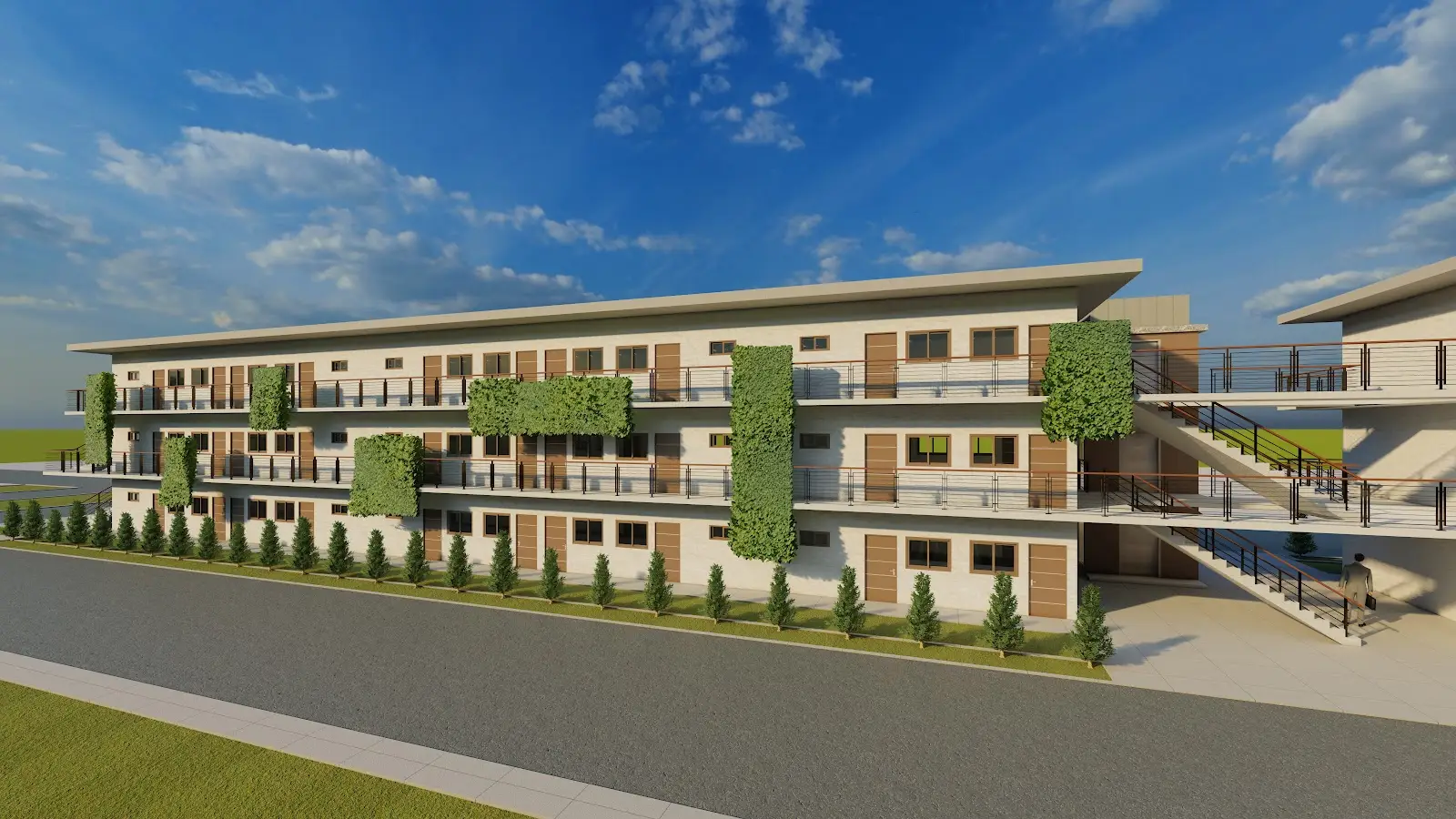
Portable homes and traditional construction can both create useful living space, but the cost structure is often very different. With traditional construction, buyers usually pay for a longer building process, more on-site labor, more scheduling variables, and a project that depends heavily on local crews and site conditions.
Construction Timeline
Traditional construction can take months, especially when the project involves custom design, local contractors, inspections, weather delays, and multiple trades working on-site. Delays can also add indirect costs, such as temporary housing, storage, or lost rental income.
Portable homes are often faster because the unit is produced in a more controlled setting and then delivered to the property. At Azure, our process is built around configuration, 3D printing, finish installation, delivery, and on-site installation, which helps simplify the path from idea to usable space.
A shorter construction timeline may help buyers:
- Start using the space sooner
- Reduce the chance of weather-related delays
- Limit long-term disruption on the property
- Plan rental, guest, or personal use with more confidence
Labor Costs
Traditional construction usually requires more on-site labor. Framing, plumbing, electrical work, finishing, roofing, inspections, and repairs may all involve different crews. Labor costs can change depending on location, contractor availability, and project complexity.
Portable homes can reduce some of that pressure because more of the work is completed before delivery. A more streamlined production process can help limit the amount of time and labor needed on the property itself.
Site Disruption
A traditional build can turn a property into a construction zone for weeks or months. Noise, dust, equipment, material storage, parking issues, and daily crew access can all affect the homeowner and neighbors.
Portable homes usually require less on-site disruption because the structure arrives largely complete. Site preparation and utility connections still matter, but the property may not need to support a long construction schedule.
Customization
Traditional construction can offer a high level of customization, but custom choices often come with higher design, labor, and material costs. The more complex the plan becomes, the more room there is for budget changes.
Portable homes can still offer customization, but usually within a more defined model system. At Azure, buyers can choose and configure designs to fit different needs, which helps balance personalization with a more efficient production process.
Overall Project Budget
Traditional construction costs can be harder to predict because the final price depends on site conditions, labor rates, material changes, contractor schedules, and local requirements. Even a small project can become more expensive if the site is difficult or the scope changes.
Portable homes can make the budget easier to understand because the model price is clearer from the start. Buyers still need to plan for delivery, installation, permits, site preparation, and utilities, but having a defined unit price can make the overall project feel more manageable.
When comparing budgets, buyers should look at:
- The starting price of the unit
- Delivery and installation costs
- Permit and inspection fees
- Utility connection needs
- Site preparation requirements
- Interior upgrades or custom features
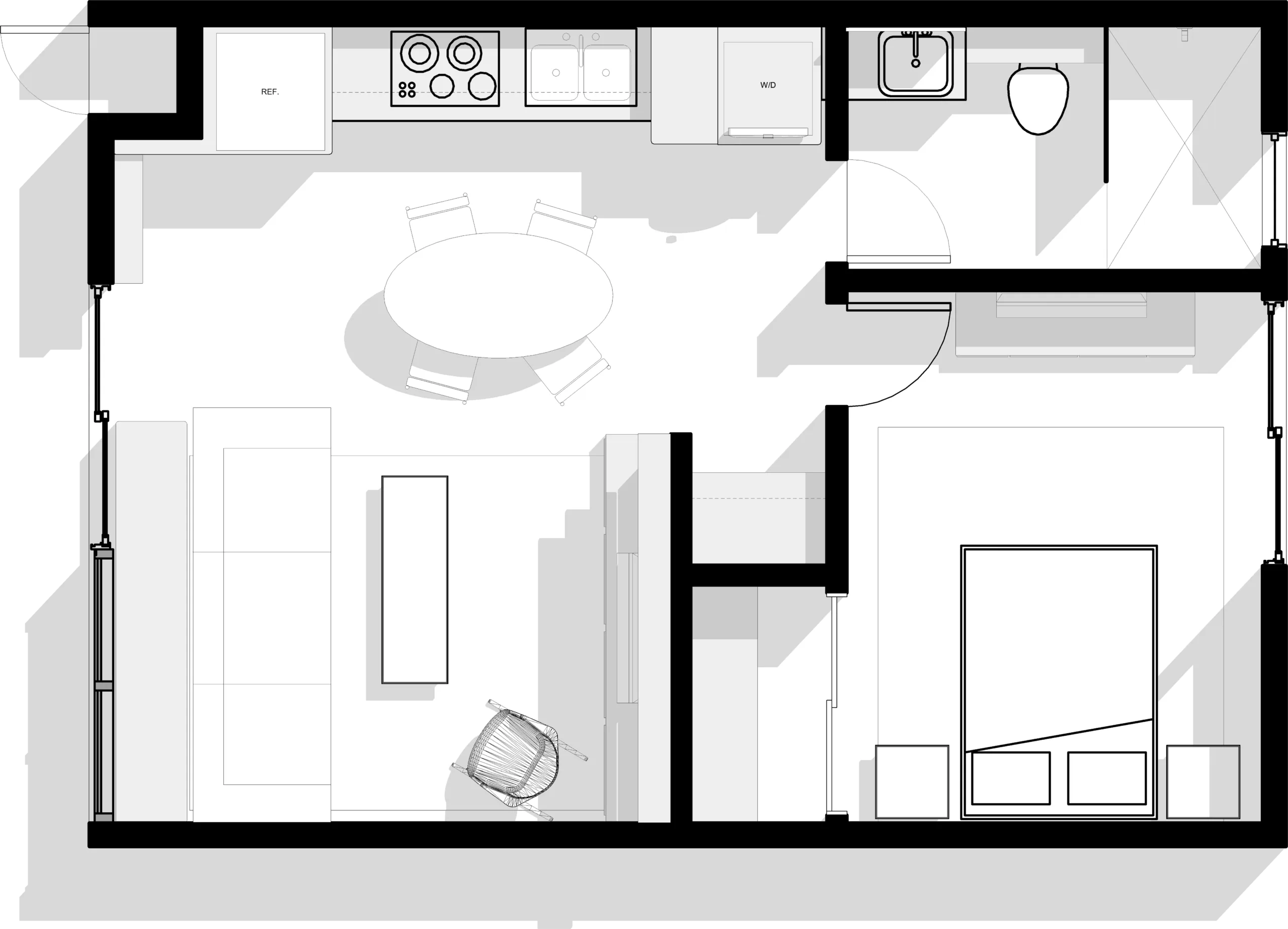
Choosing the Right Portable Home for Your Budget
Choosing a portable home is not just about finding the lowest starting price. A better approach is to match the model to the way the space will actually be used. That way, the buyer is not paying for features they do not need or choosing a unit that feels too limited later.
1. Define the Primary Use
Start with the purpose of the home. A backyard office, guest suite, rental unit, glamping space, ADU, and home on wheels all have different requirements.
A simple studio may only need comfortable open space, insulation, lighting, and power. A full living unit may need a kitchen, bathroom, bedroom, storage, privacy, and utility connections.
2. Set a Realistic Budget
The model price is only one part of the total cost. Buyers should also budget for delivery, site preparation, installation, permits, utility connections, upgrades, and any exterior improvements needed around the unit.
It is also smart to leave room for unexpected expenses. A slightly higher planning budget can help prevent stress later if the property needs extra preparation or local requirements add steps to the project.
3. Evaluate the Property
The property can affect both cost and timeline. A flat, open, accessible site with nearby utilities is usually easier to work with than a sloped, tight, or hard-to-reach property.
Before choosing a model, buyers should think about delivery access, grading, drainage, utility routes, foundation needs, setbacks, and local zoning rules. A good unit still needs the right site conditions to perform well.
4. Compare Models
Once the use case and property are clear, buyers can compare models more accurately. A compact studio may be the right fit for a workspace or creative room, while a larger ADU-style model may be better for guests, family use, or rental income.
Homes on wheels may be worth considering when mobility matters. At Azure, our Studio Series, ADU-style models, and X Series homes on wheels give buyers different ways to match the budget to the purpose of the space.
5. Plan for Future Needs
A portable home should work now, but it should also make sense a few years from now. A buyer may start with a guest room and later want to use it as an office, rental space, or family living area.
Thinking ahead can help buyers choose a layout with better long-term value. Storage, privacy, bathroom access, energy efficiency, and flexible open space can all make a portable home more useful over time.
Final Thoughts
So, how much do portable homes cost? A compact model can start around $24,900, while larger ADU-style homes and homes on wheels can range from about $49,900 to more than $200,000 depending on the model and use case.
The smartest way to compare prices is to look beyond the starting number. Think about size, layout, finishes, delivery, installation, site work, utilities, and local rules. A portable home is not just a product. It is a project, and the best results come from planning it carefully.
At Azure Printed Homes, we build modular living spaces for people who want flexible, modern, and more sustainable options. Whether the goal is a backyard studio, an ADU, a tiny home, a glamping unit, or a home on wheels, the right model starts with one simple question: what do you need the space to do?