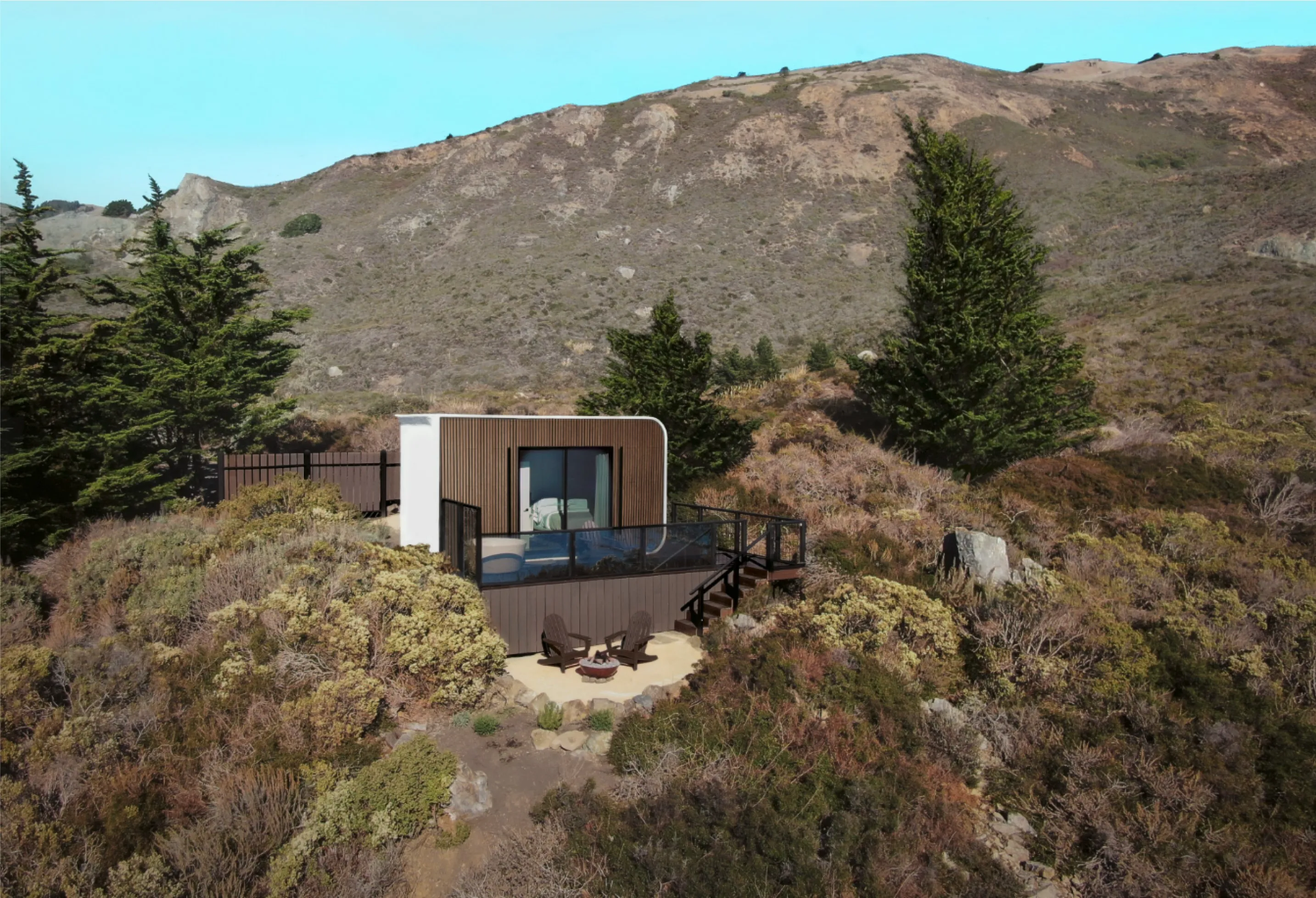
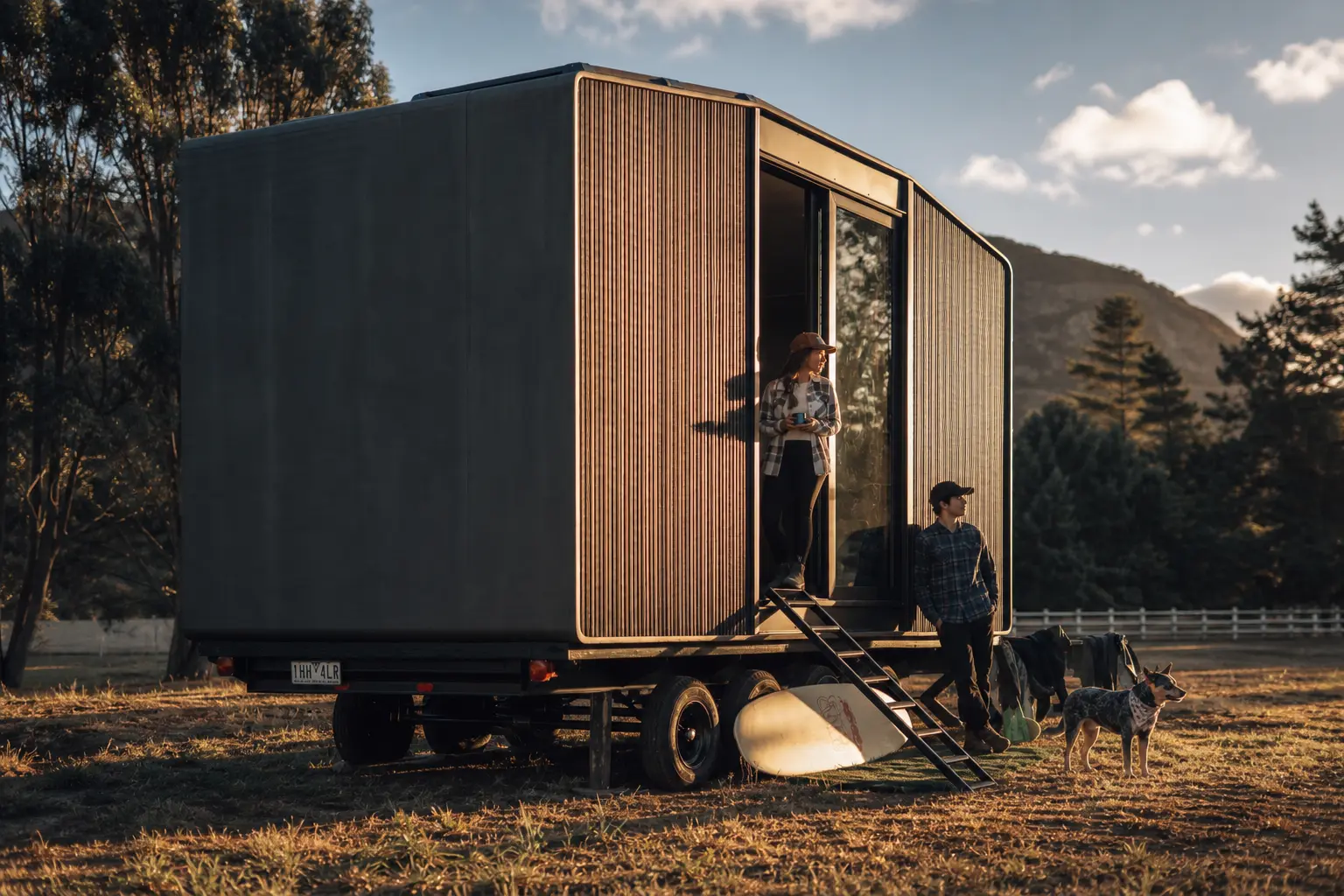
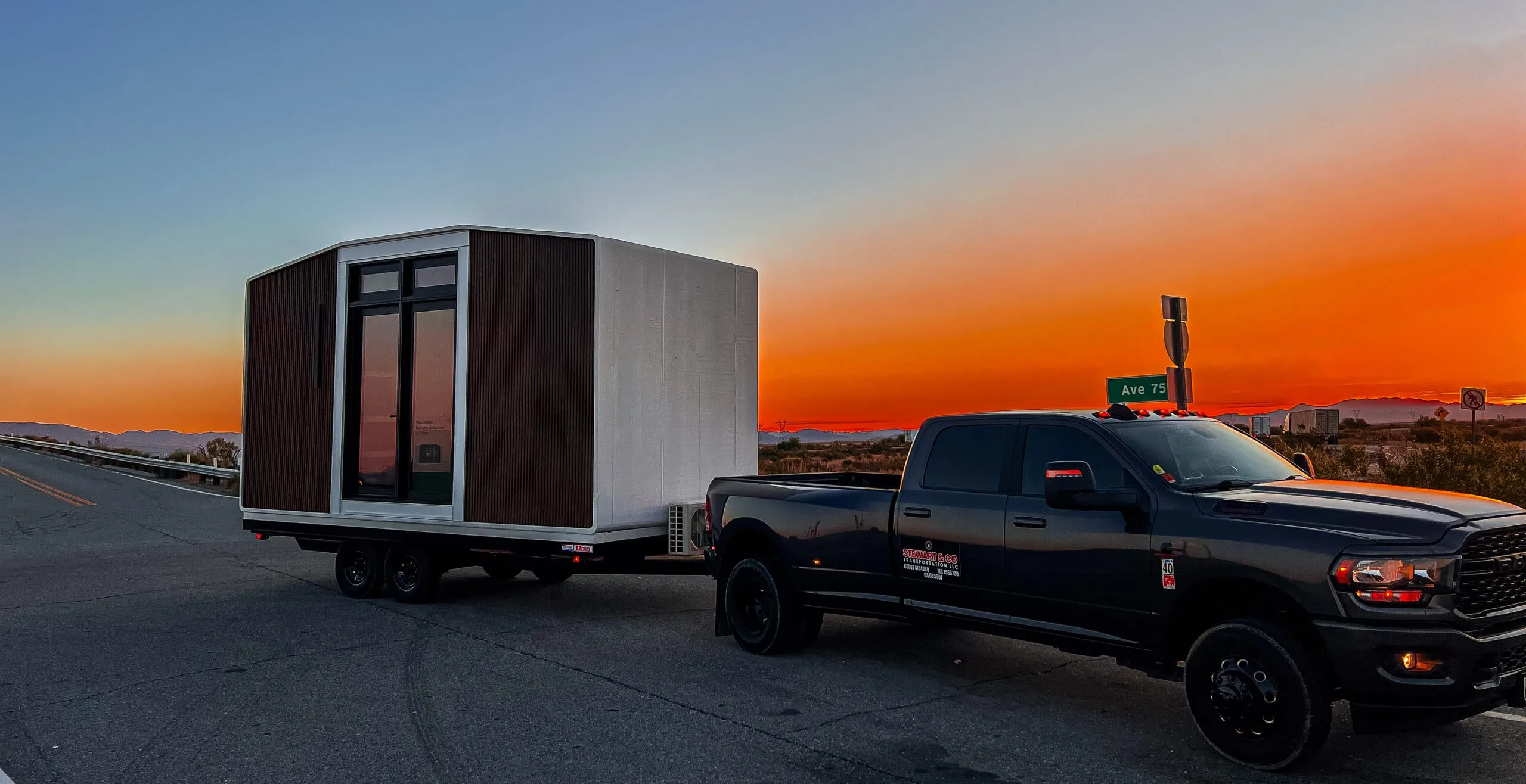
An ADU sounds like a technical real estate term, but the idea is very simple. An ADU, or accessory dwelling unit, is a smaller home built on the same property as a main house.
It may sit in the backyard. It may be attached to the main home. It may be created from a garage or another existing space. The form can change, but the purpose is usually the same: an ADU gives a property one more useful place to live.
People also call ADUs granny flats, backyard homes, in-law suites, guest houses, casitas, or secondary units. Some names are casual. Some are used more often in certain areas. In real estate, ADU is the term you will see most often.
For us at Azure Printed Homes, ADUs are one of the clearest examples of how housing can work a little smarter. Many homeowners do not need a larger property. They need the land they already own to do more.
What “ADU” Really Means in Real Estate
ADU stands for accessory dwelling unit.
“Accessory” means the unit is secondary to the main home. It is not the primary house on the property. “Dwelling unit” means it is designed as a place where someone can live.
A true ADU usually includes the basics of a small home:
- A sleeping area
- A bathroom
- A kitchen or kitchenette
- A living area
- A private entrance or clear access
- Utility connections for daily use
That is what makes an ADU different from a shed, office pod, storage room, or spare bedroom. An ADU is not just extra square footage. It is a separate living space.
The exact rules depend on the city or county, but the basic real estate idea is consistent. Someone should be able to live in the ADU without relying on the main house for everyday needs.
An ADU Is a Home, Not Just Extra Space
This is an important distinction.
A backyard room can be useful. A studio can be useful. A finished garage can be useful. But an ADU is usually treated as housing. That means it needs to be planned with more care.
It should feel comfortable, safe, private, and practical. The layout needs to support real daily life, not just look good in a photo. A small unit can work beautifully when every part of it has a purpose. A larger unit can still feel awkward if the layout is poor.
A good ADU has enough room to move around, store things, cook, rest, and live with some privacy. That sounds basic, but in small spaces, basics matter a lot.
Why ADUs Are Getting So Much Attention
ADUs have become popular because they solve real problems.
Housing is expensive. Families are changing. More people are working from home. Older parents may want to stay close to family without giving up independence. Adult children may need a more affordable place to live. Homeowners may want rental income or more flexible space.
An ADU can help with all of that.
It uses land that is already part of a residential property. It can create a new living space without buying a second lot. It can also give homeowners options as their needs change.
That flexibility is the real appeal. An ADU might start as a rental unit. Later, it might become a place for a parent. After that, it could become a guest space or a home office. A well-planned ADU can keep being useful for years.
The Main Types of ADUs Homeowners Should Know
Not all ADUs are built the same way. Some are built from scratch in the backyard. Some are attached to the main house. Others are created by converting a garage, basement, or existing room.
For us at Azure Printed Homes, the main focus is on detached, prefab ADU-style homes. These are separate units designed to give homeowners more usable living space without turning the main house into a construction zone for months.
Detached ADUs: The Backyard Home Option
A detached ADU is a separate structure on the same property as the main house. This is what many people picture when they think of a backyard home.
It usually offers the most privacy. The person living in the ADU has their own space, and the main household keeps more separation too. That can make a detached unit a strong choice for family housing, guests, long-term rental use where local rules allow it, or downsizing while staying on the same property.
This is where Azure’s Homes & ADUs are built to fit real residential needs. Our larger models include layouts with kitchens, bathrooms, bedrooms, and everyday living space. For example, our 360 sq ft model includes a kitchen, one bedroom, and one bathroom. Larger options, including 540 sq ft, 720 sq ft, and 900 sq ft models, are designed for homeowners who need more room for family, rental potential, or a more complete backyard living setup.
Prefab ADUs: Less Mess, More Control
Traditional detached ADUs can take time because so much work happens on-site. That often means noise, dust, weather delays, and a lot of people moving through the property.
Our approach is different. Azure units are robotically 3D-printed and finished through a more controlled process before delivery and installation. The largest ADU models can be printed in just one day, while finishes, electrical, plumbing, and interior details are completed based on the selected configuration.
That does not remove the need for permits, site prep, utility connections, or installation. Those parts still matter. But it can make the build feel more organized and less like open-ended backyard construction.
Attached ADUs: Connected, But Less Private
An attached ADU is connected to the main house but functions as its own living unit. It may be built onto the side or back of the home, or created from part of the existing structure.
This can work when a property does not have enough room for a detached unit. It can also help families who want to stay close while keeping some private space.
The tradeoff is privacy. Entrances, sound, windows, and outdoor access all need careful planning. For homeowners who want a clearer sense of separation, a detached prefab ADU may feel more comfortable.
Garage and Interior Conversions: Useful, But Not Always Simple
Some ADUs are created by converting existing space, such as a garage, basement, or part of a larger home.
This can be a smart option in the right situation, but it is not always as easy as it looks. Garages and basements were not always built for full-time living. They may need insulation, windows, plumbing, electrical upgrades, flooring, heating, cooling, and other improvements before they can work as legal housing.
That is why many homeowners compare conversions with a purpose-built detached unit. A conversion uses space that already exists. A prefab ADU creates a separate home designed for that purpose from the start.
Small Studios vs Full ADUs
It is also worth separating small backyard studios from full ADUs.
Azure’s Studio Series includes compact models like the N_100, D_120, and A_120. These can work well for offices, creative rooms, hobby spaces, or flexible backyard use. They are smaller and simpler than full residential ADUs.
Homes & ADUs are the stronger fit when the goal is actual living space with a kitchen, bathroom, bedroom, and more daily comfort. These are the models homeowners usually look at when they want space for family, guests, or rental potential where allowed.
The right choice depends on the goal. A quiet backyard office does not need the same setup as a one-bedroom ADU. A family living unit needs more planning than a studio. The best project starts with the real use, then matches the model to that need.

ADU, Guest House, and Tiny Home: What Is the Difference?
These terms often get mixed together, but they do not always mean the same thing.
An ADU is usually a legally recognized secondary dwelling unit on a property with a main home. It is designed for independent living and must follow local rules.
A guest house may or may not be an ADU. Some guest houses do not have a full kitchen. Some are only meant for temporary guests. Some cannot legally be rented.
A tiny home describes size more than legal use. A tiny home can sometimes be used as an ADU if it meets local requirements, has the right living features, and is properly permitted. But not every tiny home automatically qualifies as an ADU.
This difference matters when selling, renting, financing, or insuring a property. A permitted ADU is much clearer from a real estate point of view than an informal backyard structure.
What Homeowners Use ADUs For
ADUs are useful because they are not locked into one purpose. The same space can serve different needs over time.
Common uses include:
- Housing a parent or relative nearby
- Creating a place for adult children
- Adding a long-term rental unit where local rules allow it
- Hosting guests with more privacy
- Making room for a caregiver
- Creating a separate office, studio, or retreat
- Supporting downsizing while staying on the same property
- Adding more useful living space without moving
One of the strongest uses is family housing. An ADU can help relatives stay close without sharing every room in the main house. That can make daily life feel more comfortable for everyone.
Rental income is another reason people consider ADUs. A well-planned unit can create income where local rules allow rental use. But the rules matter. Some cities limit short-term rentals, require permits, or set specific lease terms.
Before building an ADU for income, it is worth checking what is actually allowed.
Can an ADU Add Property Value?
A permitted ADU can make a property more attractive because it adds useful living space and more options.
A future buyer might see it as a rental unit, family space, guest house, or work studio. In areas where housing is tight, a legal second unit can be a strong selling point.
But an ADU does not add value automatically. The details matter.
A strong ADU usually has:
- Proper permits
- A good layout
- Quality construction
- Privacy from the main home
- Clear access
- Useful size
- Proper utilities
- Good placement on the lot
A poorly planned or unpermitted unit can create questions instead of value. A well-planned ADU can make a property feel more complete and more flexible.
Rules, Permits, and Site Prep Matter
This is the part people often want to skip, but it shapes the whole project. A good ADU plan is not only about choosing the right model. It also depends on what the property allows, how the unit will be installed, and whether the site is ready for everyday use.
Local ADU Rules Come First
ADU rules are local. Your city or county may set limits for size, height, setbacks, parking, utility connections, fire access, rental use, and design.
Some properties are simple. Others have extra conditions because of slope, lot size, wildfire zones, coastal rules, historic districts, or other site factors. That is why it is worth checking the rules before getting too attached to one layout.
Permits Protect the Project
Permits are not the fun part, but they matter. They help confirm that the unit is safe, legal, and built to the right standards.
They also protect the long-term value of the property. If the home is sold, refinanced, insured, or rented later, a properly permitted ADU is much easier to explain than an informal backyard structure.
Site Prep Can Change the Whole Plan
Site prep is just as important as the unit itself. A good ADU needs the right location, drainage, foundation or support, delivery access, and utility planning.
A model may look perfect on paper, but the property still has to support it. Water needs to drain away from the unit. Utilities need a realistic connection path. Delivery and installation need enough access. Privacy from the main home should also be considered early, not after the unit is already placed.
Before choosing a model, homeowners should ask:
- Is an ADU allowed on this property?
- Where can it legally sit?
- What size is allowed?
- How will utilities connect?
- Is there access for delivery and installation?
- Will water drain away from the unit?
- What permits and inspections are needed?
- Will the unit have enough privacy?
These questions are not the exciting part, but they help avoid expensive surprises later.
Size Is Important, But Use Matters More
It is easy to start with square footage. That makes sense, but size alone does not tell you whether an ADU will work.
A compact studio may be enough for one person, guests, or a quiet backyard retreat. A larger unit may be better for full-time living, family housing, or rental use. The right choice depends on what the space needs to do.
A small ADU with a smart layout can feel comfortable. A larger ADU with poor planning can still feel awkward.
Before thinking only about size, it helps to ask a simple question: who will use this space, and how will they live in it?
What Makes a Good ADU Layout?
Small homes need smart layouts. Every foot matters.
A good ADU should have natural light, useful storage, a comfortable bathroom, and a kitchen that works for real daily use. It should also have privacy from the main house.
Windows should not look straight into the main home. The entrance should feel natural. The person living in the ADU should not feel like they are walking through someone else’s private space every time they come home.
A good ADU does not have to be huge. It has to be thoughtful.
How Modern Prefab and 3D Printing Can Help
Traditional backyard construction can be messy. It often brings long timelines, many trades on-site, weather delays, noise, dust, and changing costs.
Modern prefab construction can make the process more controlled. More of the work happens before the unit reaches the property, which can reduce on-site disruption and make planning easier.
At Azure Printed Homes, we build robotically 3D-printed modular spaces using recycled materials. Our process is built around a clear path: configure the unit, print the structure, install finishes, deliver it, and complete installation on-site.
Our homes are designed for comfort, performance, and sustainability. We use recycled materials, including the equivalent of 100,000 plastic bottles per 120 sq ft. For us, that matters. Housing should create useful space while reducing waste where possible.
A Simple ADU Check Before You Start
Before starting an ADU project, it helps to get clear on the basics.
Ask yourself:
- What will the ADU be used for?
- Is the property allowed to have one?
- What size and layout make sense?
- What is the full budget beyond the unit price?
- How will utilities, access, and drainage work?
- Could the space still be useful if your needs change later?
The best ADU projects usually begin with a clear purpose. The unit, site, budget, and local rules all need to work together.
Final Thoughts: An ADU Should Make the Property Work Better
An ADU is a secondary home on the same property as a main house. That is the simple definition. But in real life, it can do a lot more.
It can give a parent independence. It can help an adult child stay close while building their own routine. It can create rental income where allowed. It can offer guest space, work space, or a future downsizing option.
For us at Azure Printed Homes, the best ADUs are not just small houses in the backyard. They are practical spaces that help a property adapt to real life.
Not every homeowner needs more land. Sometimes, the smarter move is making better use of the land they already have.