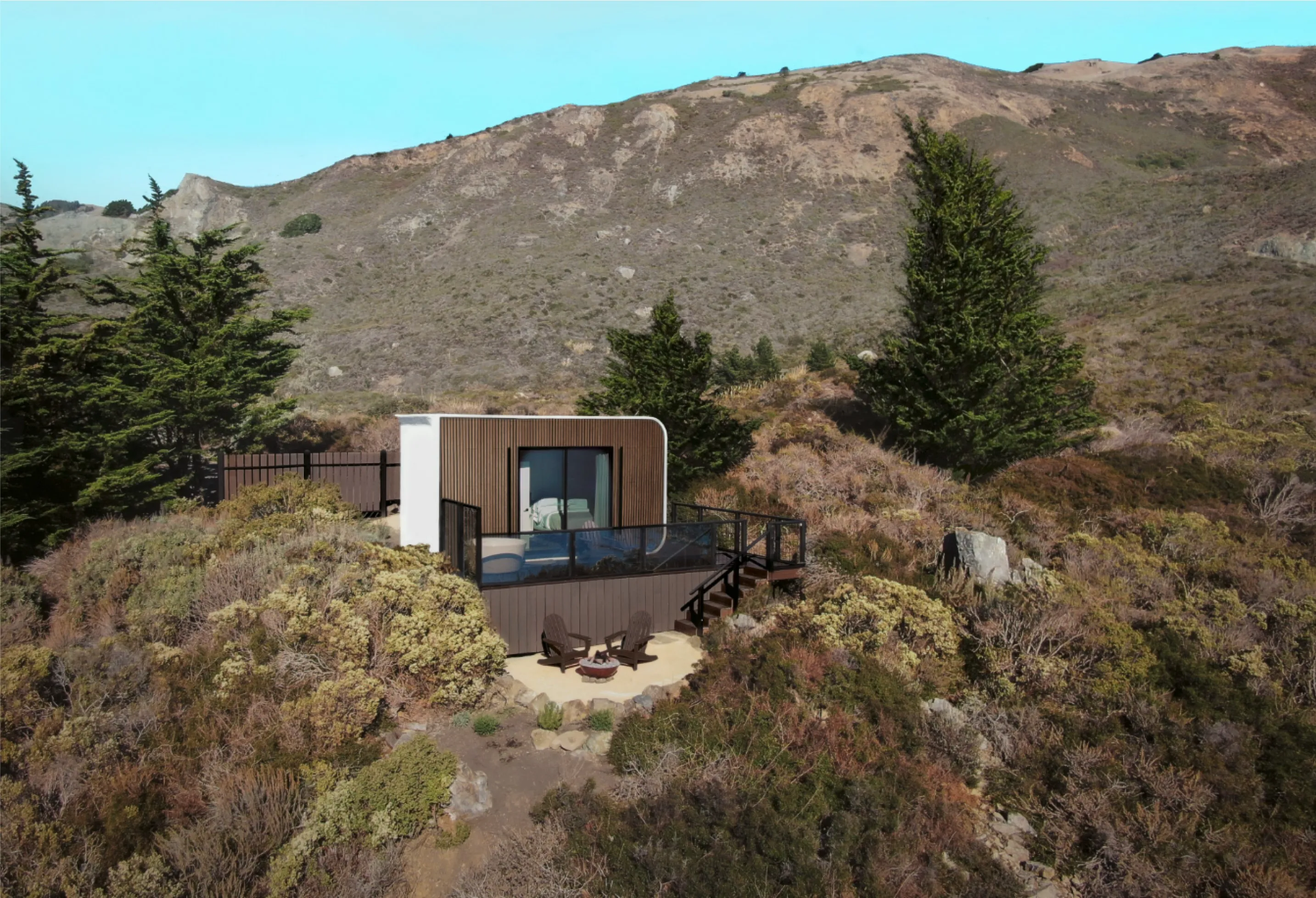
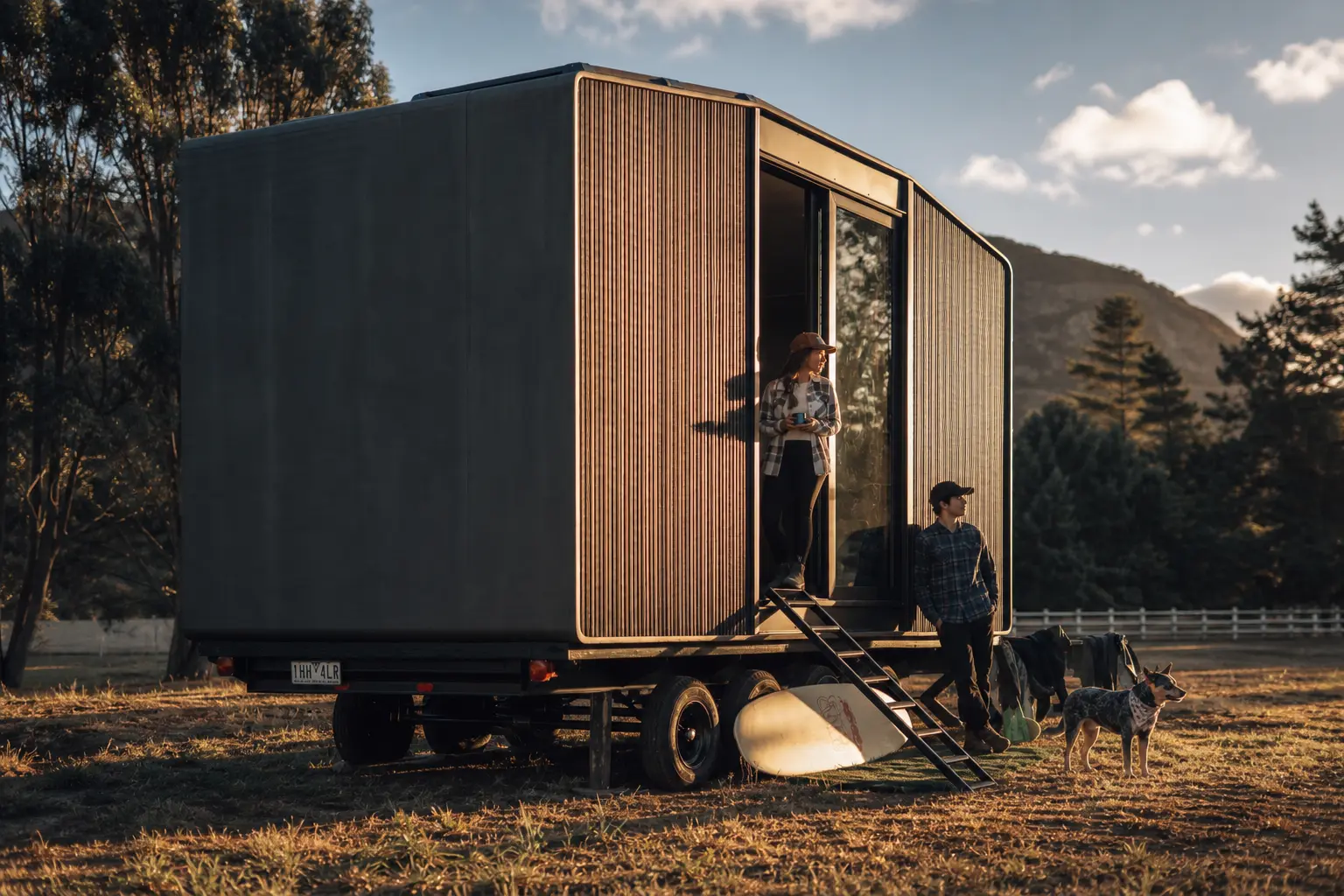
Park model homes usually cost around $50,000 to $150,000, but the final number depends on what you choose and what the site needs. A smaller, simpler model may stay closer to the lower end, while a larger unit with more finishes, delivery, utility hookups, permits, and setup can cost more.
At Azure Printed Homes, we create compact and modular spaces using 3D printing technology and recycled plastic materials, including studios, ADUs, tiny homes, glamping units, homes on wheels, and other flexible housing options. In this article, we will break down common park model home costs, what affects the final price, and which extra expenses buyers should expect.
Park Model Home Explanation and Average Cost
A park model home is a compact living unit often designed for placement in RV parks, vacation communities, glamping sites, private land, or small-home settings. These homes are usually built in a factory and delivered to the property after production.
Park model homes often start around $50,000 to $100,000 for basic or moderately finished models. Larger units, upgraded finishes, custom layouts, delivery, site work, decks, utility hookups, and permits can increase the total cost.
A more complete project can reach $100,000 to $200,000 or more depending on location and setup. In some cases, the home itself may be affordable, but the land preparation and installation costs can change the final number.
Common cost ranges include:
- Entry-level units: Often priced in the lower tens of thousands, especially with simpler finishes and fewer upgrades.
- Mid-range units: Often between $70,000 and $130,000, depending on size, layout, appliances, and interior options.
- Higher-end units: Can exceed $150,000 when custom features, premium finishes, larger footprints, decks, and site work are included.
These numbers are general. The exact cost depends on the model, builder, property, delivery distance, and what must happen before the unit can be used.
What Affects the Cost of a Park Model Home?
No two park model home projects cost exactly the same. While the size of the home plays a major role, factors such as interior finishes, delivery distance, site preparation, utility connections, and local requirements can significantly influence the final budget.
Size and Layout
Size is one of the biggest pricing factors. A smaller studio-style unit usually costs less than a larger model with separate bedrooms, a full kitchen, more storage, and a larger bathroom.
Layout also matters. A simple open-plan unit is usually easier to build than a design with multiple rooms, built-in features, and more complex plumbing or electrical work. Even within the same square footage, the layout can affect cost.
Interior Finishes
Interior finishes can change the price quickly. Flooring, cabinetry, countertops, fixtures, appliances, lighting, bathroom finishes, and built-in storage all affect the budget.
A basic finish package may be enough for a vacation unit or short-term rental. A more residential finish may make sense for longer stays or full-time use. Buyers should compare what is included in the listed price before assuming one model is less expensive than another.
Delivery and Transportation
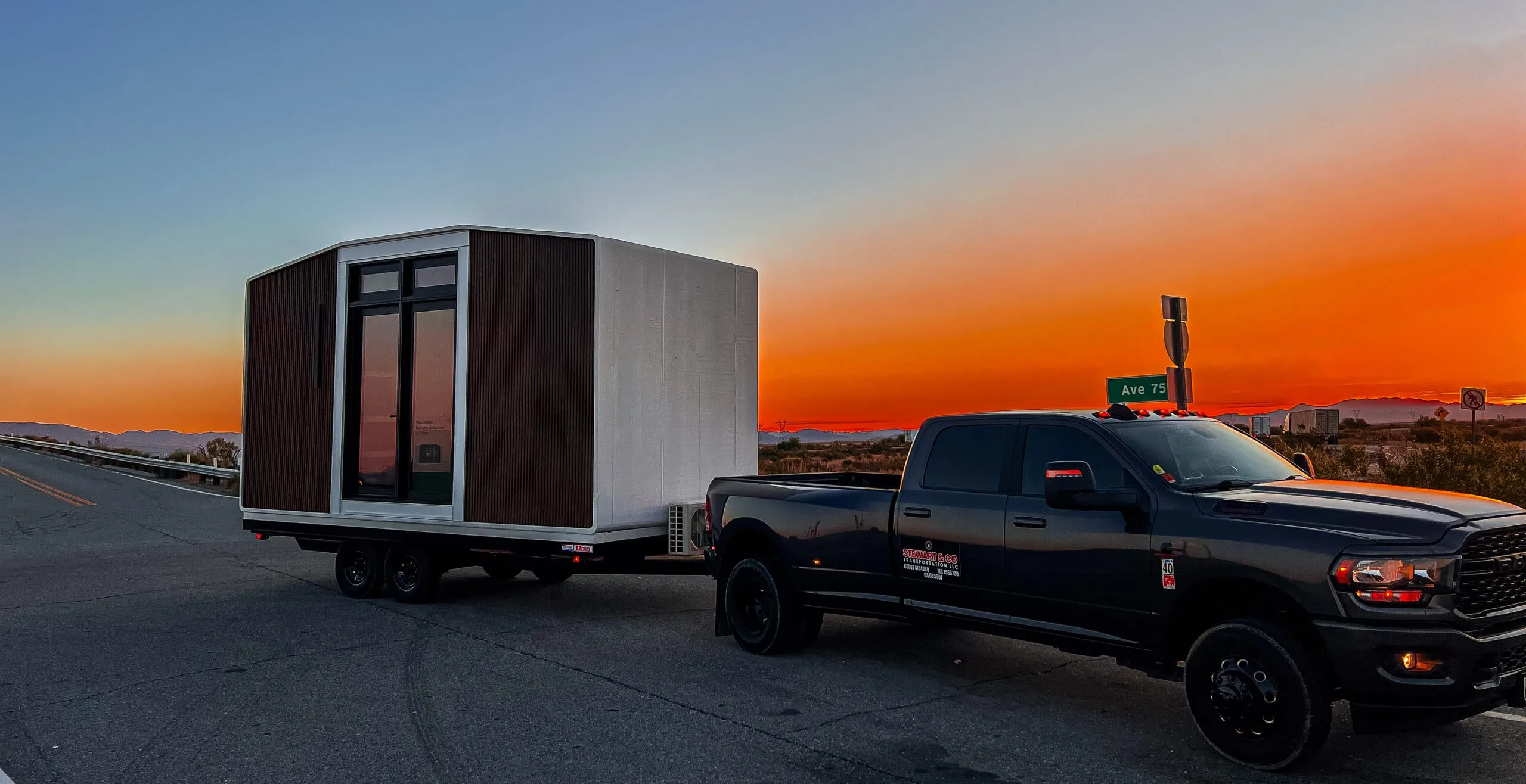
Park model homes are usually delivered after factory production. Transportation costs depend on distance, route, size, permits, and whether special equipment is needed.
A property that is easy to access will usually be simpler to plan for. A narrow road, steep driveway, remote location, or difficult turning area can add more coordination and cost.
Site Preparation
The home is only one part of the project. The property may need grading, foundation or pad preparation, drainage work, access improvements, utility trenching, or other site work before the unit arrives.
This is where many buyers underestimate the budget. A clear, flat, accessible site is usually easier to prepare. A property with slope, poor soil, limited access, or unclear utility locations can require more work.
Utility Connections
Park model homes often need connections for electricity, water, sewer or septic, and sometimes propane or internet. Costs depend on what already exists on the property and how far the unit will be placed from service lines.
If utilities are already nearby, the process may be more straightforward. If new lines, panels, septic upgrades, or trenching are needed, the cost can increase.
Permits and Local Rules
Permits can affect both the cost and timeline. Some areas may allow park model homes only in specific zones or communities. Others may treat them as RVs, temporary structures, tiny homes, accessory units, or something else.
This is why buyers should speak with the local planning or building department before purchasing. The same type of unit may be allowed in one place and restricted in another.
Park Model Home Price vs Full Project Cost
The listed price of a park model home is not always the full project cost. It may cover the structure itself, but not every expense needed to place and use the unit.
A complete budget may include:
- Home or unit price
- Design selections
- Delivery
- Site preparation
- Foundation, pad, or support system
- Utility hookups
- Permits and inspections
- Stairs, skirting, ramps, decks, or exterior access
- Furniture and appliances, if not included
- Landscaping or access improvements
For a more realistic estimate, buyers should separate the home price from the total installed cost. This makes it easier to compare options.
Are Park Model Homes Cheaper Than Modular Homes?
Park model homes can be cheaper than larger modular homes because they are smaller and often designed with a more compact scope. However, that does not always mean the full project will be cheaper.
A small park model home on a difficult property may cost more to install than expected. A modular studio on a prepared site may be more predictable. A larger ADU may cost more upfront but provide more long-term function.
The better comparison is based on use. A park model home may be suitable for seasonal stays, vacation use, small rentals, or compact living communities. A modular home or ADU may be better for a more permanent residential setup, depending on local rules.
Azure Printed Homes Options for Park Model Home Buyers
Buyers looking at park model homes often compare them with tiny homes, modular homes, homes on wheels, studios, glamping units, and ADUs. These options are not always the same legally or structurally, but they can serve similar needs.
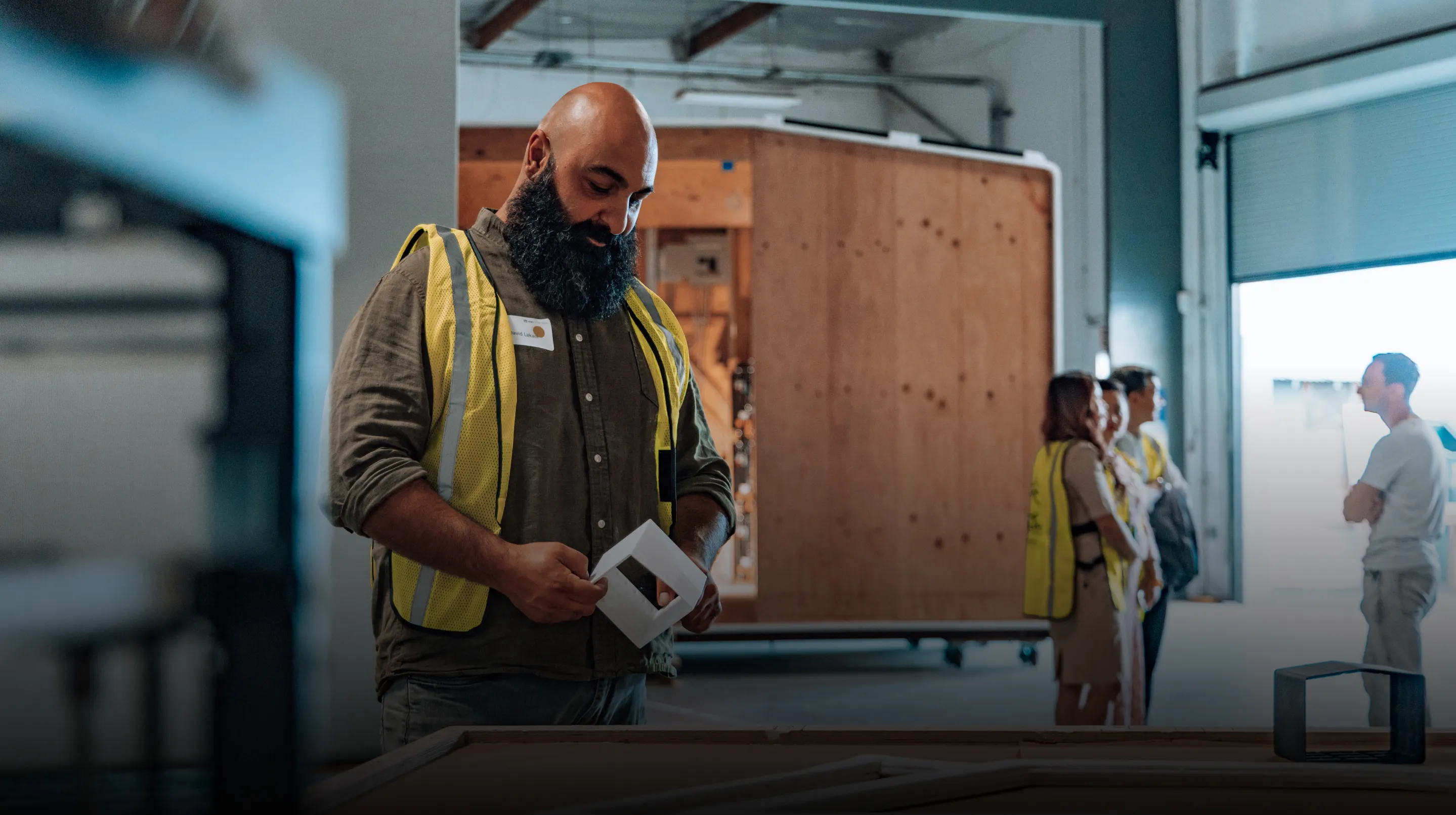
At Azure Printed Homes, we build several compact and modular living spaces that may fit different small-space goals. Our work focuses on robotically printed structures, recycled materials, customizable designs, and efficient factory production.
Homes on Wheels
Our X Series homes on wheels are designed for buyers who want a chassis-based option with more flexibility. These units may be useful for compact living, guest use, rental settings, mobile-friendly projects, or properties where a wheeled unit makes sense.
| Model | Starting Price |
| X180 | $69,900 |
| X270 | $84,900 |
| X360 | $109,900 |
These models give buyers a clear starting point when comparing park model homes with other compact living options.
Studio Series
Our Studio Series includes smaller units that can work well for backyard use, creative spaces, guest areas, wellness rooms, workspaces, or flexible personal use.
| Model | Starting Price |
| A/D/C-100 | $24,900 |
| N100 | $24,900 |
| A/D/C-120 | $29,900 |
These are not the same as full park model homes, but they are useful for buyers who want a compact, lower-footprint structure for nontraditional living or lifestyle needs.
Homes and ADUs
For buyers who need more space, our larger Homes and ADUs offer a modular path toward residential-style layouts.
| Model | Starting Price |
| A-180 | $49,900 |
| A-360 | $89,900 |
| A-540 | $134,900 |
| A-720 | $174,900 |
| A-900 | $219,900 |
These models may be more relevant for buyers comparing park model homes with ADUs, tiny homes, or compact modular homes.
Choosing the Right Housing Solution
A park model home can be a smart choice in the right setting, but it is not the best fit for every property or every buyer. Before choosing one, it helps to look at both the use case and the local requirements.
Best Use Cases for Park Model Homes
A park model home may work well when the buyer wants a compact living space without building a full-size house. It can make sense for vacation properties, glamping sites, RV parks, backyard guest use where allowed, or small living communities.
It may also be a practical option when the property already has good access, nearby utilities, and supportive zoning. The easier the site is to prepare, the easier it is to estimate the full project budget.
When to Consider Other Housing Options
A park model home may not be the best choice if local rules do not allow that type of structure or limit how it can be used. Some areas have strict requirements for placement, occupancy, foundations, utilities, and long-term use.
It may also be a poor fit for buyers who need a larger permanent residence, multiple bedrooms, more storage, or a traditional home classification for financing. In those cases, a modular ADU, tiny home, studio, or home on wheels may be a better match, depending on the property, intended use, budget, and approvals required.
How to Estimate Your Total Cost
The best way to estimate the cost of a park model home is to build the budget in layers. Start with the model price, then add everything needed to place, connect, and use the unit.
A practical budget should include:
- The unit price
- Delivery and placement
- Site work
- Utility connections
- Permits
- Exterior access
- Furnishings and appliances
- Any required inspections
- A contingency for unexpected costs
Buyers should also ask what is included in the base price. Some homes may include more finishes and systems than others. A lower starting price does not always mean a lower final cost.
Final Thoughts
Park model homes can offer an affordable path into compact living, but the final cost depends on more than the home itself. Size, finishes, delivery, site work, utilities, permits, and setup all shape the total budget.
For many buyers, the smartest move is to compare several compact housing options before choosing one. A park model home may be the right fit for one property, while a studio, tiny home, ADU, glamping unit, or home on wheels may be better for another.
At Azure Printed Homes, we build future-focused modular living spaces using 3D printing technology and recycled plastic materials. From compact studios starting at $24,900 to homes on wheels and larger ADU-style models, our goal is to make small-space living more practical, more efficient, and easier to plan from the start.