Tiny homes can weigh a few thousand pounds or well over ten thousand pounds, depending on how they are built. Size matters, but it is not the only factor. Materials, framing, trailer type, finishes, appliances, water systems, batteries, furniture, and whether the unit is built on wheels all change the final weight.
That is why tiny home weight is not just a random technical detail. It affects transportation, delivery access, trailer rating, towing needs, foundation planning, placement, and sometimes permits. A small backyard studio has a different weight profile than a home on wheels or a larger ADU-style unit.
At Azure Printed Homes, we build 3D-printed prefab spaces across several small-space categories, including Tiny Homes, Studio Series units, Homes on Wheels, and Homes & ADUs. Weight matters in our process because the unit has to be manufactured, transported, placed, supported, and connected correctly once it reaches the site.
The Short Answer
Tiny homes vary widely in weight. Many tiny homes on wheels fall somewhere around 8,000 to 14,000 pounds, though larger or heavier models can go beyond that range. Some builders estimate finished tiny houses at roughly 500 to 550 pounds per linear foot of trailer length, which means a longer unit can become heavy quickly.
That number is useful for understanding compact backyard units, but it should not be used for every tiny home. A home on wheels with a kitchen and bathroom, or a larger ADU-style unit, can weigh more because the structure, systems, finishes, and support needs are different.
Why Tiny Home Weight Varies So Much
Tiny homes are not all built the same way. A 100 sq ft studio, a 180 sq ft home on wheels, and a 900 sq ft ADU-style unit all sit in the small-space world, but they do not weigh the same.
A tiny home’s weight can change based on:
- Overall length and width
- Framing and shell material
- Trailer or chassis weight
- Roofing and exterior finishes
- Windows and doors
- Insulation
- Interior wall and ceiling finishes
- Cabinets and built-ins
- Kitchen and bathroom fixtures
- Appliances
- HVAC system
- Solar panels and batteries
- Water tanks or off-grid systems
- Furniture and personal belongings
This is why weight should be checked by model, not guessed from square footage alone. Two tiny homes with the same footprint can weigh very different amounts if one has a full kitchen, bathroom, heavy cabinetry, batteries, and off-grid systems.
Dry Weight, Loaded Weight, And GVWR
When people talk about tiny home weight, they are often mixing together different numbers. The most important ones are dry weight, loaded weight, and GVWR.
Dry Weight
Dry weight usually means the weight of the tiny home before people, personal belongings, water, and movable items are added. It may include the structure, trailer, built-in systems, finishes, and fixed appliances, depending on how the builder defines it.
Dry weight is useful, but it is not the whole picture. A tiny home can become much heavier once it is loaded for real use.
Loaded Weight
Loaded weight includes the home plus the things added later: furniture, clothes, dishes, water, tools, equipment, batteries, and anything else carried inside.
This matters most for tiny homes on wheels. Water alone can add meaningful weight. Solar batteries, storage, and personal items can add more. A home that seems manageable when empty may become too heavy if the trailer, axles, or tow vehicle were chosen without enough margin.
GVWR
GVWR stands for Gross Vehicle Weight Rating. It is the maximum weight the trailer is rated to safely carry, including the trailer, home, and everything loaded into it. Trailer capacity should exceed the expected finished and loaded weight, not just match the empty structure.
For buyers, this is one of the most important numbers to understand. If a tiny home is built on wheels, weight is not only about delivery. It is about safety on the road and stability during placement.
How Tiny Home Weight Changes By Type
Tiny home weight depends heavily on the type of unit. A home on wheels, a backyard studio, and an ADU-style tiny home may all be part of the same small-space category, but they are not built, moved, or supported in the same way.
A chassis-based home has to account for the trailer, axles, kitchen, bathroom, and towing setup. A backyard studio may be simpler, but it still needs enough support for delivery and placement. A larger ADU-style unit brings more residential systems into the picture, so its weight should be planned around the specific model and site.
Tiny Homes On Wheels
Tiny homes on wheels are often heavier than people expect because the trailer, frame, interior finishes, kitchen, bathroom, appliances, and built-in storage all add up.
A common estimate is that tiny homes on wheels weigh about 500 to 550 pounds per linear foot of trailer length. By that estimate, a 30-foot tiny home can land around 15,000 to 17,000 pounds, depending on width, layout, and materials.
Other tiny home weight guides place many homes on wheels around 8,000 to 14,000 pounds, with larger units moving higher. That is why trailer rating, axle capacity, tongue weight, and towing setup need to be planned before the home is moved.
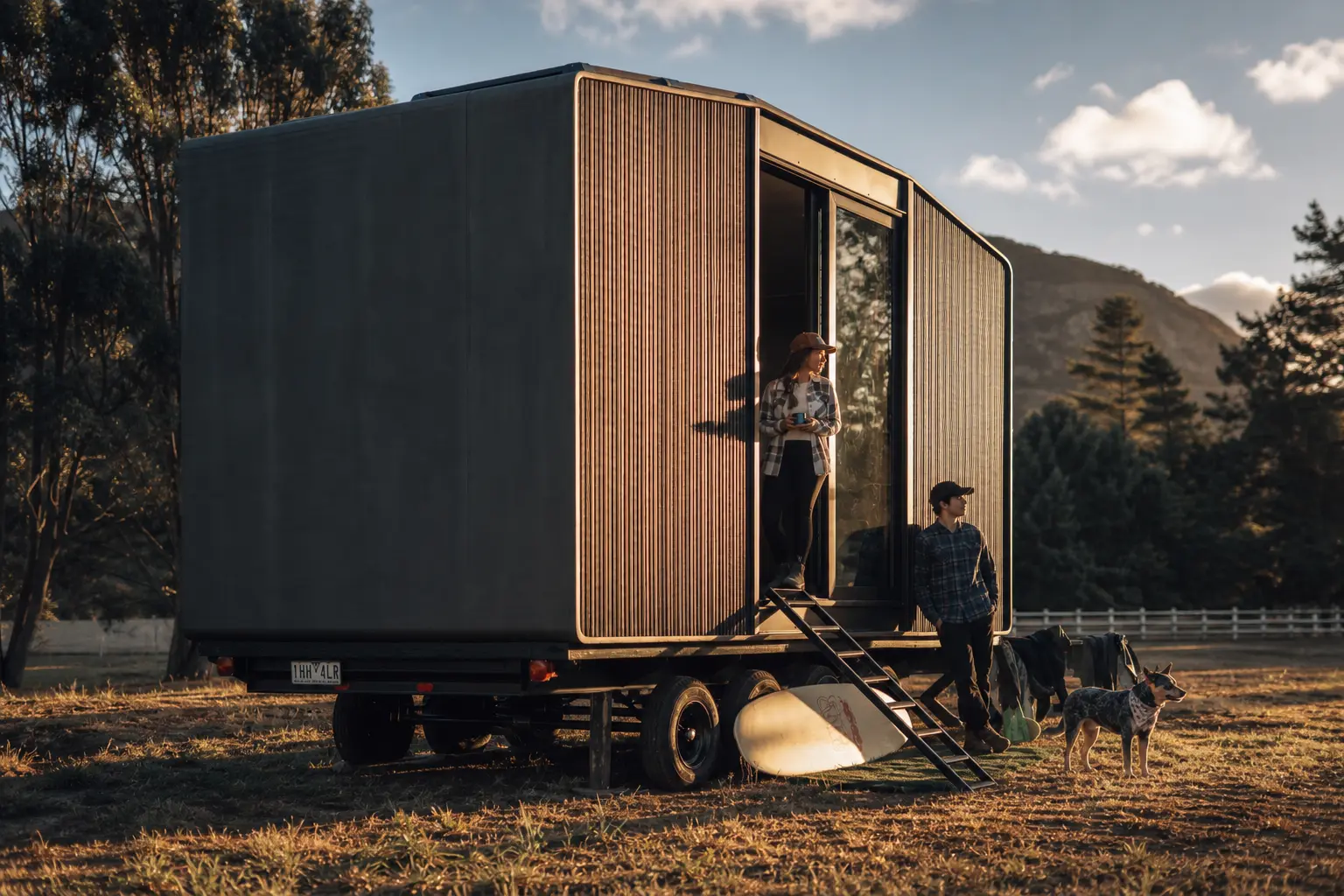
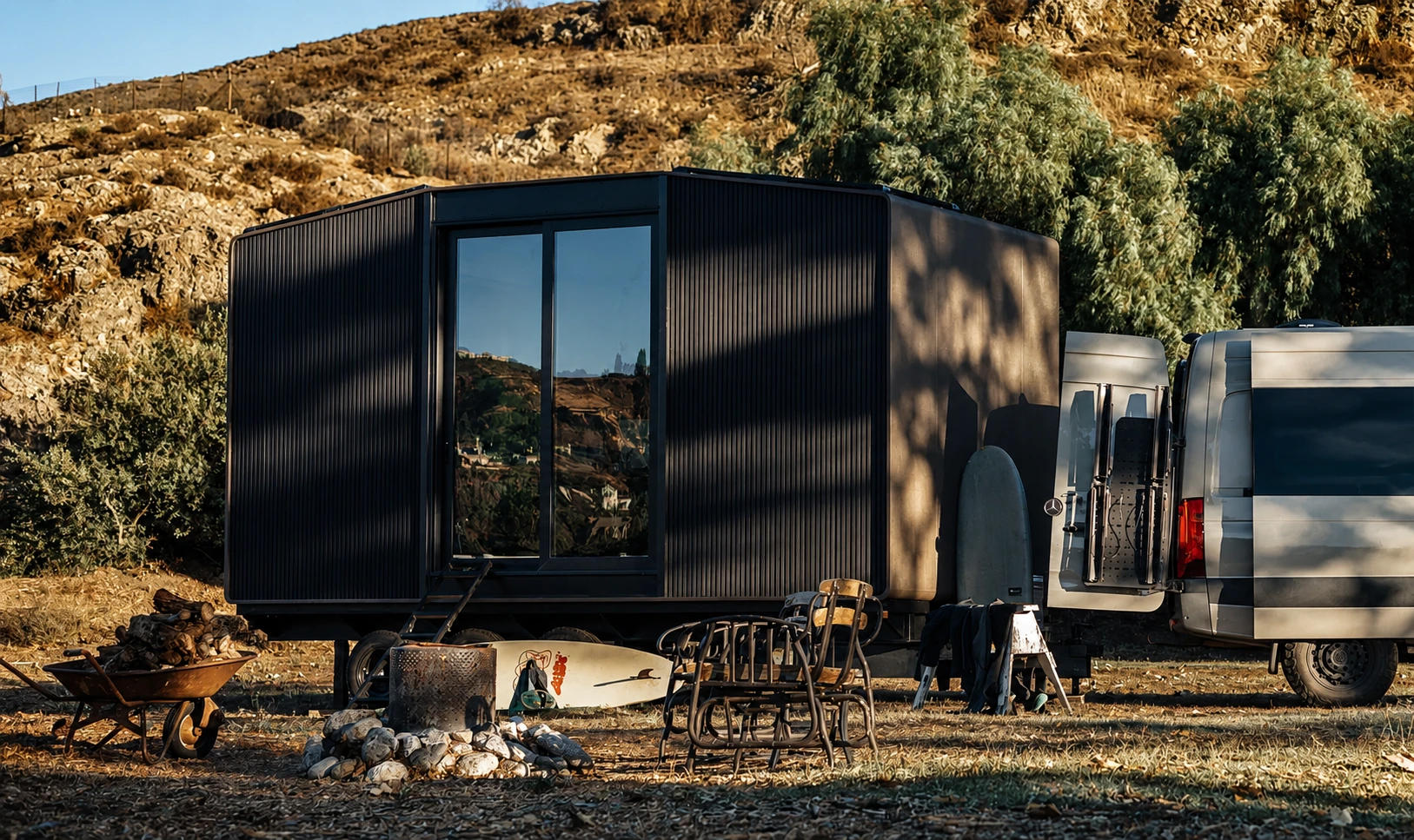
Our X Series Homes on Wheels are chassis-based compact homes. The X_180 is 9′ x 20′, the X_270 is 9′ x 30′, and the X_360 is 9′ x 40′. These models include kitchen and bathroom layouts, with the larger models adding dedicated bedroom space. Because these are fuller living units, their weight should be reviewed by model and configuration, not assumed from the Studio Series weight.
Backyard Studios
Backyard studios are usually simpler than full tiny homes because they are not built around complete residential systems. They may still be heavy, but the weight profile is different from a home on wheels or an ADU-style unit.
Our Studio Series gives a clear example. The N_100 is 11′ front-facing, 9′ deep, and 10′ high. The D_120 and A_120 Backyard Studios are 13.3′ front-facing, 9′ deep, and 10′ high. These units weigh approximately 6,000 pounds.
That weight matters for delivery and foundation planning. A compact studio still needs a prepared location, proper access, and a support system that can handle the load. Smaller does not mean weight can be ignored.
ADU-Style Tiny Homes
ADU-style tiny homes are usually heavier than small studios because they are larger and more residential in use. They may include bedrooms, kitchens, bathrooms, plumbing, HVAC, cabinetry, appliances, and more substantial utility connections.
For our Homes & ADUs, the outside footprint dimensions are based on modules measuring 20′ x 9′ each, not including overhangs. Larger layouts combine more living area and more systems, so weight planning becomes part of delivery, foundation, site access, and installation.
For these larger units, buyers should not rely on a generic online weight estimate. The better approach is to confirm the model-specific weight and plan the site around that number. Foundation, grading, drainage, access, and equipment for placement can all depend on it.
What Makes A Tiny Home Heavier?
A tiny home gains weight in places buyers do not always notice. The shell is only one part of the total.
Size And Length
Longer homes usually weigh more because they use more framing, flooring, roofing, insulation, windows, and finishes. For homes on wheels, trailer length also matters because the trailer itself contributes to total weight.
Materials
Wood, steel, composite materials, 3D-printed shells, roofing types, siding, insulation, and interior finishes all affect weight. A lightweight shell can still become heavy once cabinets, appliances, flooring, and fixtures are added.
Kitchen And Bathroom Systems
Kitchens and bathrooms add weight through cabinetry, countertops, sinks, toilets, shower systems, plumbing, tile or wall panels, appliances, and water-related equipment. A simple studio and a tiny home with a full bathroom are not in the same weight category.
Off-Grid Features
Solar panels, batteries, water tanks, wastewater systems, and backup systems can add a lot of weight. They may be useful, especially for remote sites, but they need to be planned into the total load.
Furniture And Personal Belongings
Furniture, clothes, tools, books, dishes, storage items, and personal equipment can quietly add hundreds or thousands of pounds. For homes on wheels, these items matter because they affect towing weight and balance.
Why Weight Matters Before Delivery
Weight affects how the tiny home gets to the property and how it is placed once it arrives. It can influence the transport method, route planning, offloading equipment, site access, foundation, and utility coordination.
A tight driveway, narrow street, soft soil, steep slope, or limited crane access can all make weight more important. A unit that is easy to place on one property may be more difficult on another.
For prefab projects, this is one reason site planning should happen early. The unit and the property need to make sense together. A tiny home should not be chosen only by layout or price if the site cannot safely support delivery and placement.
Why Azure Is A Practical Option For Weight Planning
Tiny home weight is easier to plan when the unit is manufactured in a controlled process and the site is prepared around known requirements.
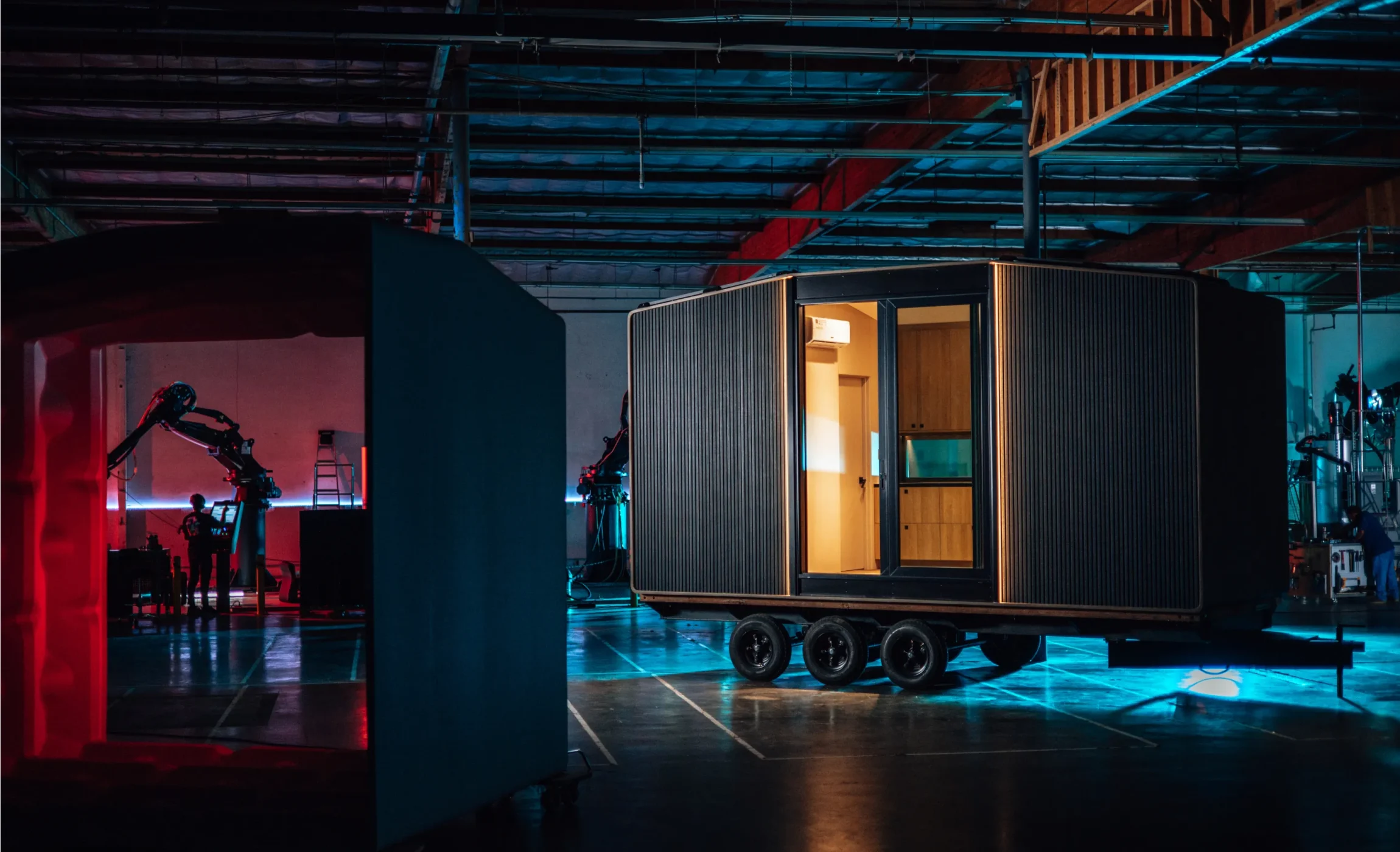
At Azure Printed Homes, we build 3D-printed prefab spaces with delivery, placement, foundation, and utility planning in mind. Our Studio Series has a clear approximate weight of 6,000 pounds, and our larger units are planned by model and configuration. We also separate factory work from site work, so buyers can think about the unit and the property as connected parts of the same project.
That helps avoid a common tiny home problem: choosing a good-looking model first, then realizing later that the site, foundation, delivery route, or support system was not planned for the actual weight.
Final Thoughts
Tiny homes can weigh a few thousand pounds or much more, depending on the type of unit, size, materials, trailer, systems, finishes, and what is loaded inside. Many tiny homes on wheels fall around 8,000 to 14,000 pounds, while some larger or more heavily equipped models can exceed that.
The best way to think about weight is simple: it affects how the tiny home moves, where it can be placed, what support it needs, and how safely it can be used over time. A tiny home may be small, but it still needs serious planning underneath it.