Tiny homes can be legal in California, but not as one simple, universal category. A tiny home on a foundation, a backyard studio, a home on wheels, and an ADU-style unit can all be treated differently by state rules, local zoning, building departments, and property-specific requirements.
That is why the better question is not only “Are tiny homes legal in California?” It is also “What kind of tiny home are we talking about, and where will it be placed?”
Because we at Azure manufacture our units in Los Angeles, CA, this is a question we think about in a very practical way. A small backyard studio, a chassis-based X Series home on wheels, and a larger Homes & ADUs model do not follow the same planning path. The structure matters, but the property, local authority, utilities, access, and intended use matter just as much.
California Allows Tiny Homes, But the Category Matters
California does not treat every small structure the same way. A tiny home may be legal if it fits into the right category and follows the rules for that category.
In practice, a tiny home may be reviewed as:
- A code-compliant small dwelling
- A factory-built housing unit
- An ADU or JADU
- A park model or RV-style unit
- A backyard accessory structure
- A site-built residential structure
California HCD has stated that tiny homes not classified as manufactured housing, factory-built housing, recreational vehicles, park trailers, or commercial coaches must comply with the California Building Standards Code, Title 24. The 2022 California Residential Code also includes Appendix AQ for tiny houses, which applies special provisions to houses of 400 square feet or less.
So yes, tiny homes can be legal in California. But the legal path depends on what the unit is and how it will be used.
The Main Legal Paths for Tiny Homes in California
A tiny home becomes much easier to understand when it is separated by type. This is also where buyers can avoid a lot of confusion.
Foundation-Based Tiny Homes
A tiny home on a foundation is usually treated more like a small dwelling. It may need to comply with the California Building Standards Code, local zoning, setbacks, utility rules, energy requirements, and building permit review.
This path can work, but it is not the same as parking a movable unit in a backyard. A foundation-based tiny home needs to be planned as a building, not just a product.
The local building department will usually care about things like:
- Floor area and ceiling height
- Fire and life safety
- Foundation and anchoring
- Utility connections
- Energy compliance
- Drainage and site conditions
- Setbacks and lot coverage
This can be a good route when the goal is permanent housing, but it needs proper permitting.
ADUs And Factory-Built Housing
ADUs are one of the clearest legal paths for small housing in California. State law has made ADUs more common, and HCD keeps an updated ADU Handbook for homeowners, builders, and local governments. The March 2026 HCD ADU Handbook notes that state law requires approval of permits for ADUs up to 800 square feet under specific conditions.
Factory-built housing is another important category. HCD regulates the manufacturing of factory-built housing and building components made for sale in California. That matters because a prefab unit can be built off-site, but it still has to fit into the correct state and local approval process.
For our Homes & ADUs, this is the more relevant path. Our larger residential-style models range from 360 sq ft up to 900 sq ft, and they are designed for more complete housing uses such as family space, guest housing, rental potential where allowed, or a more permanent backyard living setup. For any unit over 120 sq ft, a building permit with the local authority is required, and the site still needs permits for foundation, grading, drainage, and utilities.
Homes on Wheels And Park Models
Tiny homes on wheels are where people often get the most confused. A home on wheels may look like housing, but local rules may treat it differently from a foundation-based dwelling or ADU.
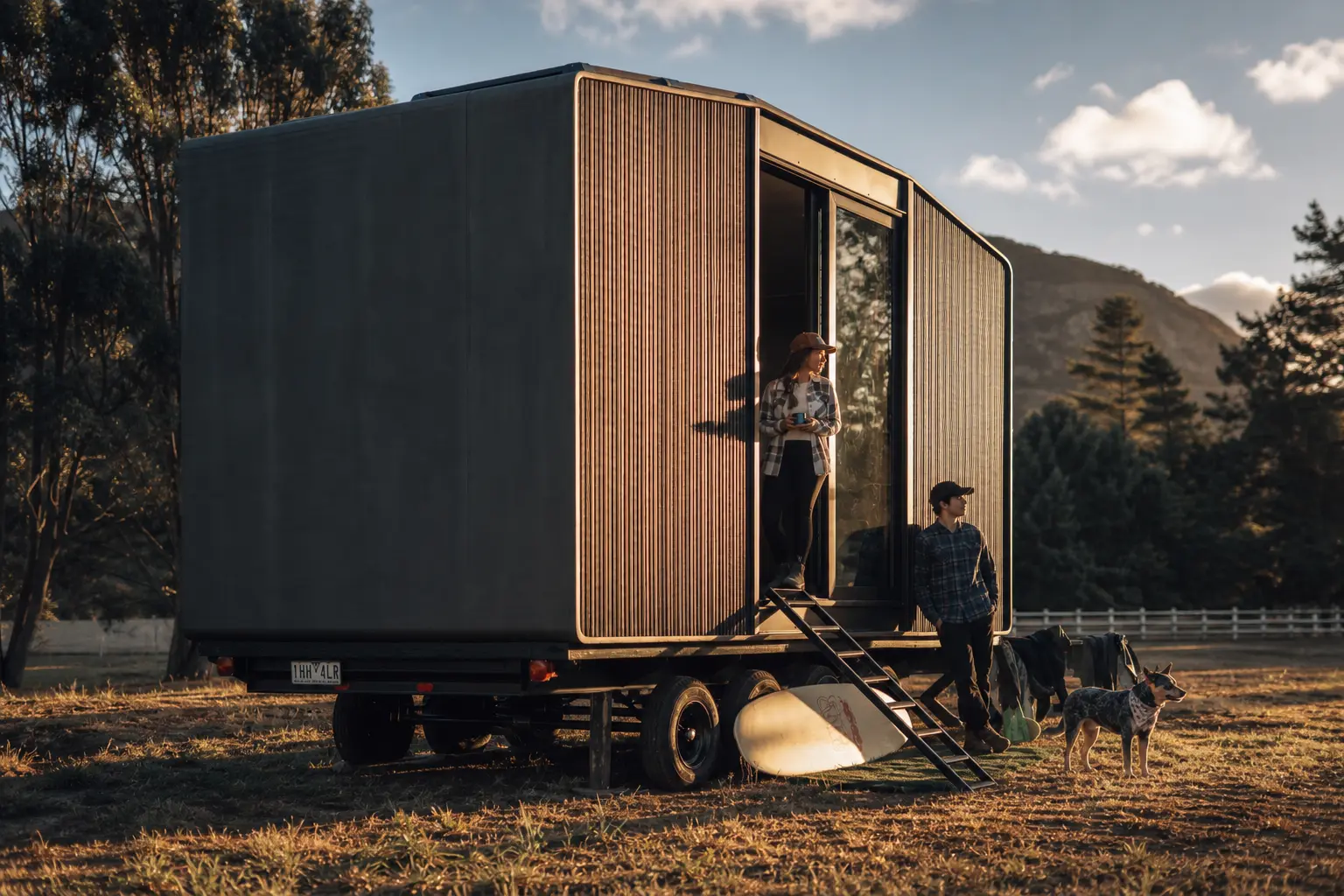
Our X Series Homes on Wheels includes the X_180, X_270, and X_360. These are chassis-based models, with sizes from 180 to 360 sq ft. The X_180 is 9′ x 20′, the X_270 is 9′ x 30′, and the X_360 is 9′ x 40′.
For this category, the important question is not only whether the unit can move. It is whether the property allows a park model-style installation. Our wheel-based tiny homes are ANSI-certified at the factory, and the site has to be properly graded and sloped for storm drainage. The area beneath the unit also needs to be graded so water does not collect under it.
A home on wheels can be a good fit for certain properties, parks, and communities, but it should never be assumed legal everywhere in California. Placement rules are local.
Backyard Studios And Small Accessory Structures
Small backyard studios can be simpler than ADUs or homes on wheels, but they are still not rule-free.
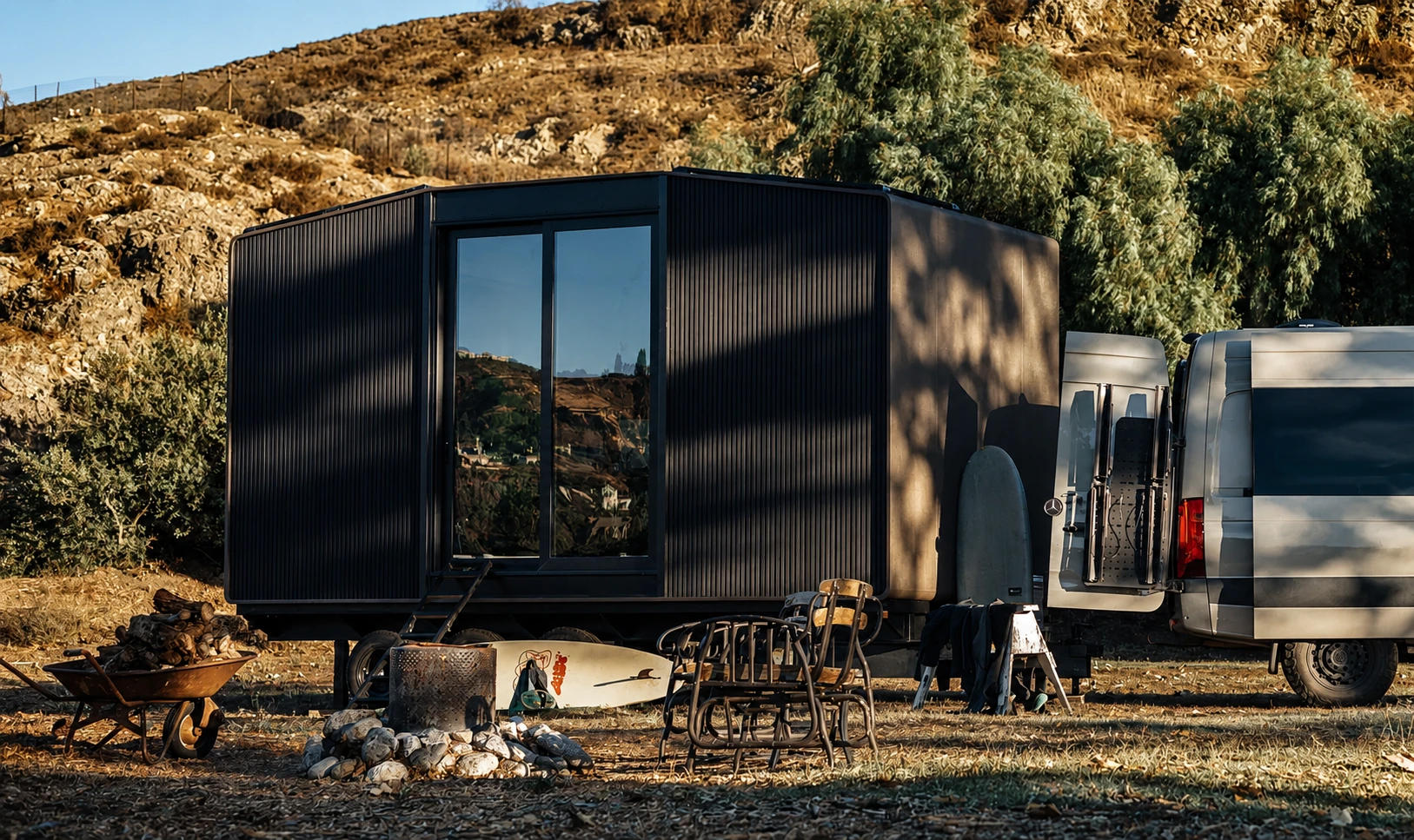
Our Studio Series includes the N_100, D_120, and A_120. The N_100 is 100 sq ft, while the D_120 and A_120 are 120 sq ft models. These are best understood as flexible backyard spaces for work, hobbies, creative use, guest-style space, wellness, or extra room near the main house.
Many municipalities do not require a building permit for structures of 120 sq ft and under, but this has to be verified with the local county before ordering. Electrical feed or HVAC installation may still require a separate permit.
That detail is important. A small studio may be easier to place, but local rules, HOA requirements, setbacks, electrical work, and site access can still affect the project.
How We Think About California Projects
California tiny home projects work best when the unit type is clear early. We do not look at a 100 sq ft studio the same way we look at a 360 sq ft home on wheels or a 900 sq ft ADU-style unit.
Our product categories line up with different planning paths:
- Studio Series: Compact 100-120 sq ft backyard structures for extra space, usually simpler than a full residential unit.
- X Series Homes on Wheels: Chassis-based tiny homes from 180 to 360 sq ft, where placement approval and park model-style rules matter.
- Homes & ADUs: Larger 360-900 sq ft residential-style units that need more formal site planning, permits, utilities, and local review.
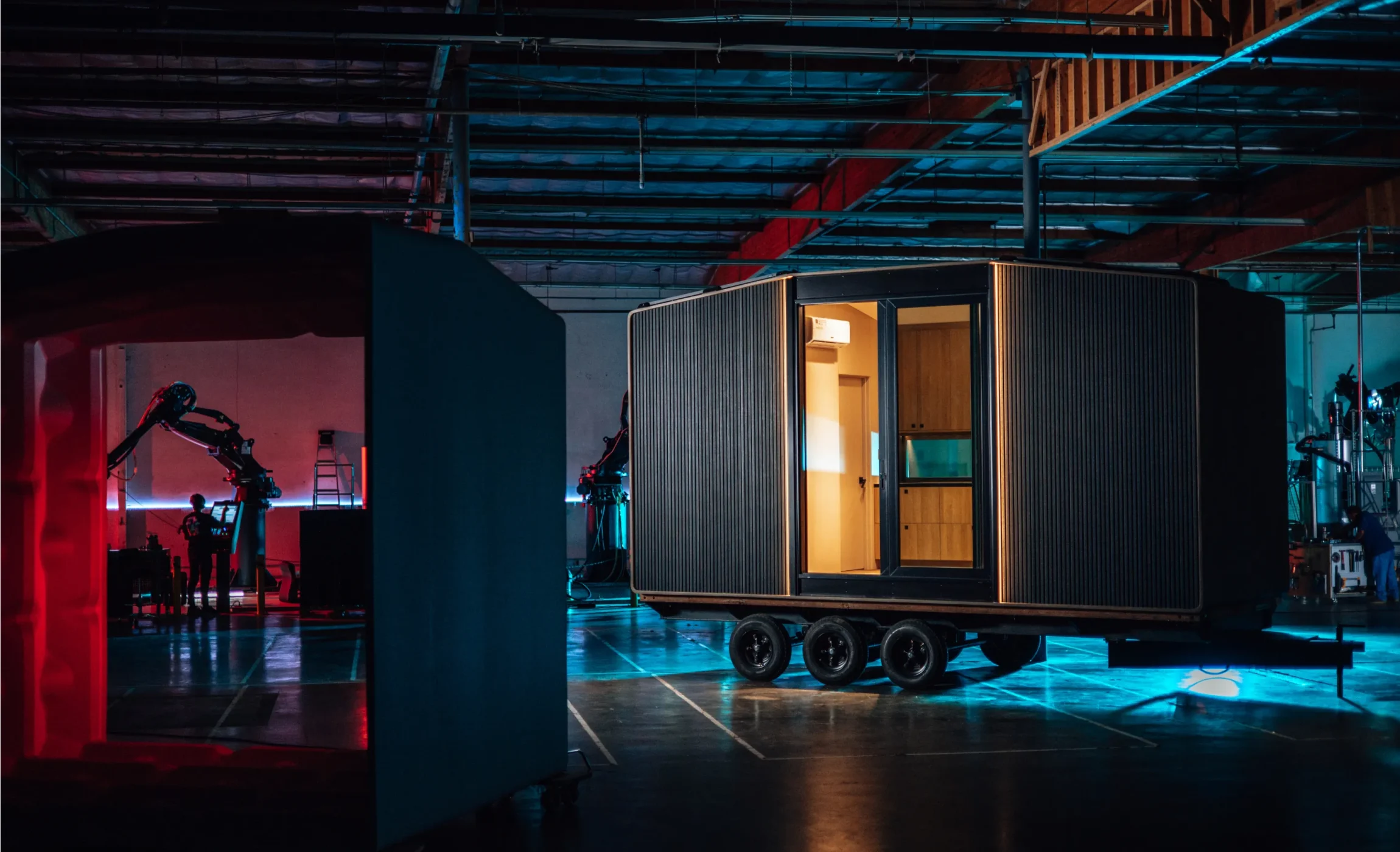
We at Azure manufacture our units in Los Angeles, CA. Buyers can design a Backyard Studio, ADU, tiny home, or home through our online configurator, then we print and prefabricate the structure before delivery. Backyard studios can usually be delivered within 30-60 days depending on location, while ADUs and homes usually take around 90-120 days.
That factory process can make the build more predictable, but the site still has to be ready and legally appropriate.
What Usually Decides Whether a Tiny Home Is Legal
A tiny home can be beautifully built and still run into problems if the property does not support it. In California, the legal answer usually depends on a few practical details.
The biggest questions are:
- What is the unit classified as?
- Is it on wheels, on a foundation, or factory-built for installation?
- Is it being used as a dwelling, office, studio, rental, guest space, or ADU?
- Does the local zoning allow that type of structure?
- Does it need a building permit?
- Are water, sewer, electrical, grading, or drainage permits required?
- Are there HOA rules or community restrictions?
- Can the unit be delivered and placed safely?
This is where many buyers get stuck. They search for “tiny homes legal in California” and expect one statewide yes or no. But California has state-level building and ADU rules, while cities and counties still handle many local zoning, placement, and site conditions.
Utilities And Site Work Are Part of the Legal Picture
Utilities often decide whether a project stays simple or becomes more involved.
A small backyard studio may only need electrical service. A home with a kitchen and bathroom needs water, sewer, plumbing, and more careful site planning. We design units larger than 120 sq ft with electricity, water, and sewer connections. Units under 120 sq ft are wired for electrical only. Plumbing and electrical work is completed inside the unit before delivery, with exterior connections prepared for site hookup.
Foundation and drainage matter too. A slab is not always necessary for our units, but a perimeter concrete or CMU foundation is advisable. We also advise that each unit be bolted down to a foundation with hold-down bolts, similar to traditional structures.
For California buyers, this means the legal question is not only about the unit. It is also about how the unit connects to the land.
Tiny Homes in California: A Simple Planning Checklist
Before choosing a tiny home in California, it helps to check the project in this order:
- Start with the use: Office, guest space, rental where allowed, home on wheels, or ADU?
- Match the category: Studio, park model-style unit, factory-built ADU, or code-compliant dwelling?
- Check local rules: City, county, HOA, zoning, setbacks, and permitted use.
- Plan utilities early: Electrical only, or water and sewer too?
- Review the site: Access, grading, drainage, foundation, and delivery path.
- Confirm permits: Building, electrical, HVAC, foundation, drainage, and utility permits may all matter.
This keeps the process grounded. A tiny home is much easier to plan when the legal category comes before the floor plan.
Common Misunderstandings
One common mistake is assuming that a tiny home on wheels can go anywhere because it is movable. That is not how California placement rules usually work. A movable unit still needs a legal place to sit.
Another mistake is assuming that a small structure needs no permits at all. Some small backyard structures may be exempt from a building permit in many areas, but electrical, HVAC, local zoning, and HOA rules can still apply.
A third mistake is treating every tiny home as an ADU. Some tiny homes can be planned as ADUs, especially larger residential-style units, but not every tiny home automatically qualifies as one.
The safest approach is to define the unit first, then check the property.
Conclusion
Tiny homes can be legal in California, but the details matter. A backyard studio, a home on wheels, and an ADU-style unit can all follow different rules. The same structure may be simple in one location and more complicated in another because zoning, site conditions, utilities, and local approvals vary.
For us, the practical path is to start with the use case. A compact Studio Series unit may be right for extra backyard space. An X Series home on wheels may work where park model-style placement is allowed. A Homes & ADUs model may be the better fit for more permanent residential use.
The right tiny home is not just the one that fits the yard. It is the one that fits the legal category, the property, the utility plan, and the way the space will actually be used.