You can apply for affordable housing through your local public housing agency (PHA) for public housing and Housing Choice Vouchers, directly at privately owned apartment buildings that receive government subsidies, and at income-restricted apartments built with Low-Income Housing Tax Credits. The U.S. Department of Housing and Urban Development (HUD) funds most of these programs, but applications are handled locally, so the first step is finding the agencies and properties that serve your area.
Most programs have income limits and waiting lists, so apply to several at once.
The Main Types of Affordable Housing
| Program | Where to apply | How it works |
| Public housing | Local public housing agency | Rental units owned and managed by the housing agency |
| Housing Choice Voucher (Section 8) | Local public housing agency | A voucher pays part of the rent for a private apartment you choose, if it meets program standards |
| Privately owned subsidized housing | The management office of each property | Private landlords receive HUD subsidies and offer reduced rents to eligible tenants |
| Low-Income Housing Tax Credit apartments | The management office of each property | Apartments with rents set for households under specific income limits |
| State and local programs | State housing finance agencies and city housing departments | Programs such as below-market-rate units, rental assistance and first-time buyer help |
In public housing and voucher programs, tenants generally pay about 30% of their adjusted household income toward rent, and the program covers the rest, up to set limits.
Who Qualifies
Eligibility is based mainly on household income compared with the area median income (AMI), which HUD publishes each year for every county and metro area. HUD uses three main categories:
- Low income: household income at or below 80% of the area median.
- Very low income: at or below 50% of the area median.
- Extremely low income: at or below 30% of the area median.
For Housing Choice Vouchers, federal rules require that most new vouchers go to extremely low-income households. Housing agencies also look at household size, citizenship or eligible immigration status, rental history and background checks. Many agencies give preference to certain groups, such as older adults, people with disabilities, veterans, families with children or people who are homeless.

Where to Apply: Step by Step
1. Find Your Local Public Housing Agency
Every area is served by a public housing agency, and some regions have several. HUD’s website lists housing agency contacts by state. The agency will tell you whether its public housing and voucher waiting lists are open and how to submit an application.
2. Search for Subsidized and Tax Credit Apartments
HUD also maintains a search tool for privately owned subsidized apartments. Tax credit properties are usually listed by your state housing finance agency. For both, you apply directly at each property, and each one keeps its own waiting list.
3. Contact 211 and Local Nonprofits
Dialing 211 connects you with local information on housing programs, emergency assistance and nonprofit counselors. HUD-approved housing counseling agencies can also help you understand your options and prepare applications at no cost or low cost.
4. Gather Your Documents
Applications usually ask for identification for every household member, Social Security numbers, proof of income such as pay stubs or benefit letters, bank statements and current housing information. Waiting lists sometimes open for a short window, so keep copies ready.
5. Keep Your Information Current
Waiting lists can be long, and agencies may close lists when demand is high. Update your address and phone number with every agency and property where you applied, since missing a letter can remove you from a list.
Why Waiting Lists Are So Long
There simply aren’t enough affordable homes. In California alone, the Department of Housing and Community Development estimates that the state needs 2.5 million new homes by 2030, including one million for lower-income households. Closing that gap means building more homes, faster and for less.
How Factory-Built Homes Are Expanding Affordable Housing
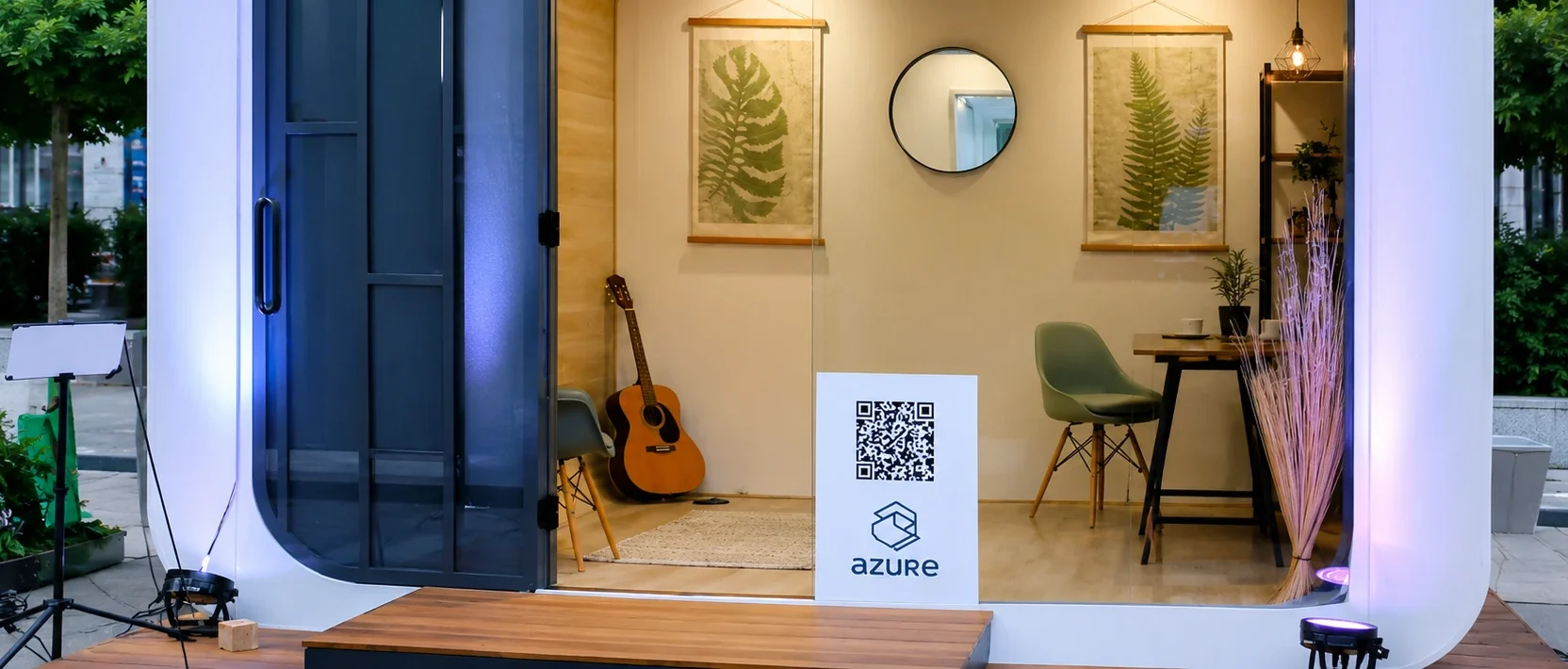
Cities, counties and nonprofits are increasingly using factory-built units to add housing faster. At Azure Printed Homes, we work with government agencies and nonprofits on housing for unhoused and displaced communities, as well as permanent homes.
- Fast deployment: our printing facilities can be set up in weeks, and units are finished in the factory while the site is prepared.
- Interim and supportive housing: through our developer program, we offer rapidly deployable, code-compliant systems for interim and supportive housing.
- Recycled materials: our printed units use a material that is more than 60% recycled plastic, about 100,000 plastic bottles for every 120 square feet.
- Standard unit sizes: pre-engineered studio, one-bedroom and two-bedroom modules can be stacked, mirrored or combined for multifamily projects.
For individual homeowners, a backyard unit can also provide lower-cost housing for a family member or a tenant. Our permanent Homes & ADUs start with the A-360, a one-bedroom home of 360 square feet, at $89,900. Site work, foundations, permits and delivery are separate costs.
Other Ways to Lower Housing Costs
- State rental assistance: many states and cities run their own rental assistance programs alongside federal ones.
- Down payment assistance: state housing finance agencies often help first-time buyers with down payments and lower-rate mortgages.
- Shared housing: renting a room or sharing a home can reduce costs while you wait for an affordable unit.
- Accessory dwelling units: where local rules allow, ADUs add smaller, lower-cost homes on existing residential lots.
Adding an Affordable Rental on Your Own Lot
Homeowners can help add affordable housing by building an accessory dwelling unit and renting it to a family member, a local worker or a tenant with a housing voucher. In many areas, ADUs are one of the fastest legal ways to add homes on existing residential land.
California has some of the most supportive ADU laws in the country. State law requires local agencies to review ADU applications within 60 days, allows ADUs by right in single-family zones and has removed owner-occupancy requirements. Many cities, from Los Angeles to Sacramento, also run pre-approved plan programs, and our models are designed to qualify.
Our smallest self-contained homes are a practical fit for an affordable rental:
- A-360: one bedroom, one bathroom and a kitchen in 360 square feet, from $89,900.
- A-540: one bedroom, one bathroom and a kitchen in 540 square feet, from $134,900.
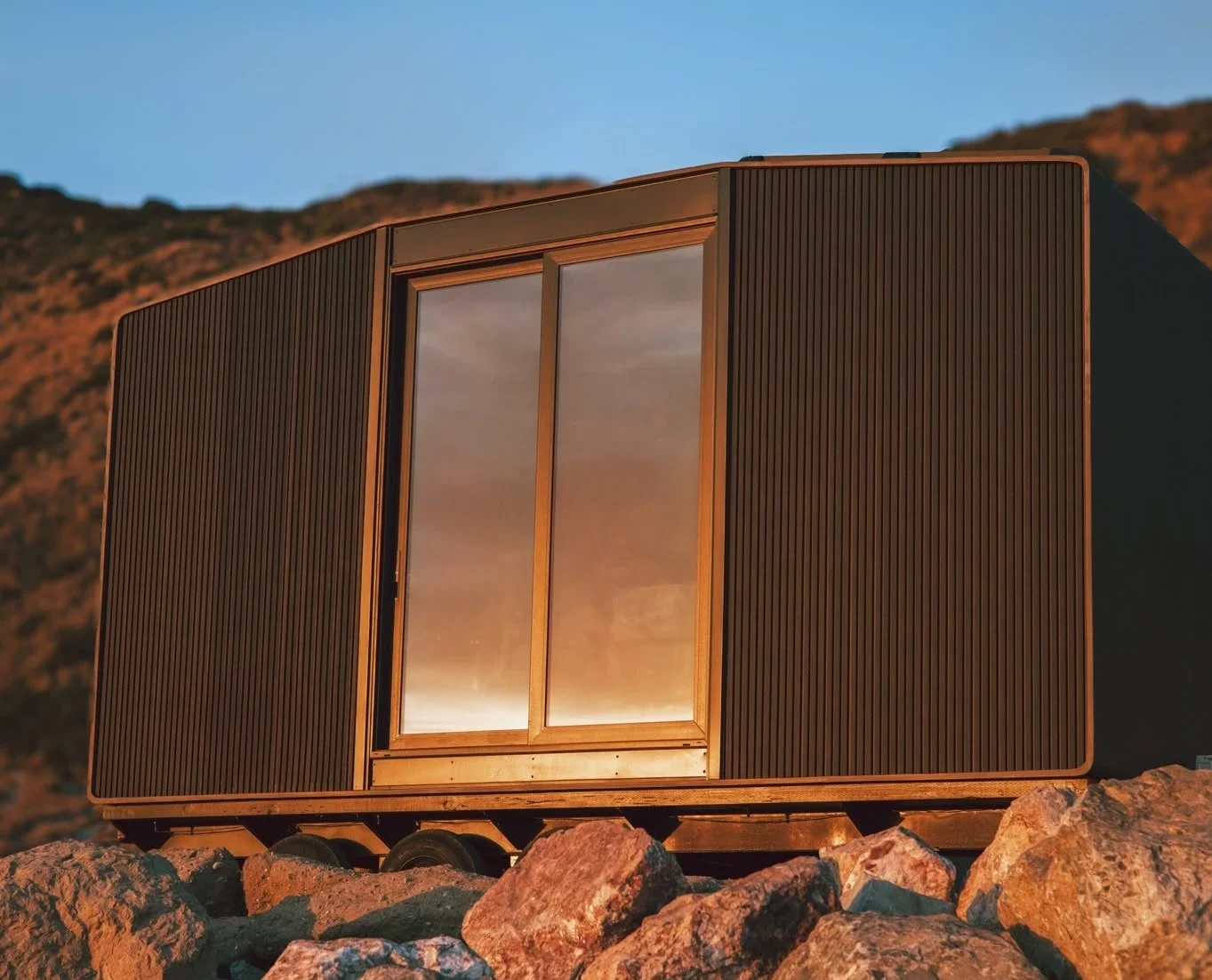
- X-270: a one-bedroom home on wheels with a bathroom and kitchen, from $84,900, where local rules allow it.
For permanent units, we take care of the building permit for the factory-built home, while the owner handles permits for the foundation, grading, drainage and utilities. If you plan to rent to a voucher holder, the unit will also need to pass the housing agency’s inspection.
What Agencies and Developers Should Know About Factory-Built Housing
Agencies and nonprofit developers usually ask three things: what it costs, how long it takes and whether it will get through plan review. Our developer building system combines digitally prefabricated light-gauge steel framing, structural insulated panels and optional 3D-printed recycled composite facades. According to our developer program, this approach can compress construction schedules by up to 70% and deliver up to 30% cost savings compared with conventional construction.
- Technical data: fire ratings, thermal values, acoustic performance and structural load capacities are available for design development and permitting.
- Coordination: we work with your architect of record, engineers and general contractor on system coordination and detailing.
- Delivery model: components are fabricated off-site and shipped for efficient assembly by your general contractor.
The same system supports multifamily apartments, duplexes to fourplexes, and interim and supportive housing for people experiencing homelessness.
Conclusion
To apply for affordable housing, start with your local public housing agency for public housing and Housing Choice Vouchers, then apply directly at subsidized and tax credit apartments in your area. Eligibility depends mainly on income compared with the area median, and most programs have waiting lists, so applying to several programs and keeping your contact details current gives you the best chance.
For agencies, nonprofits and developers working to add affordable homes, contact us to discuss factory-built housing for your project.