Finding affordable housing has become more challenging in many parts of the United States. Rising home prices, higher construction costs, and limited housing inventory have made it harder for many people to buy a home. Affordable housing loans are one of the tools designed to help address this challenge by making homeownership or affordable housing development more accessible.
An affordable housing loan is not one single loan product. Instead, it refers to a range of financing programs created to support eligible homebuyers, developers, nonprofit organizations, and public agencies. Some programs help individuals purchase a primary residence, while others finance larger affordable housing developments.
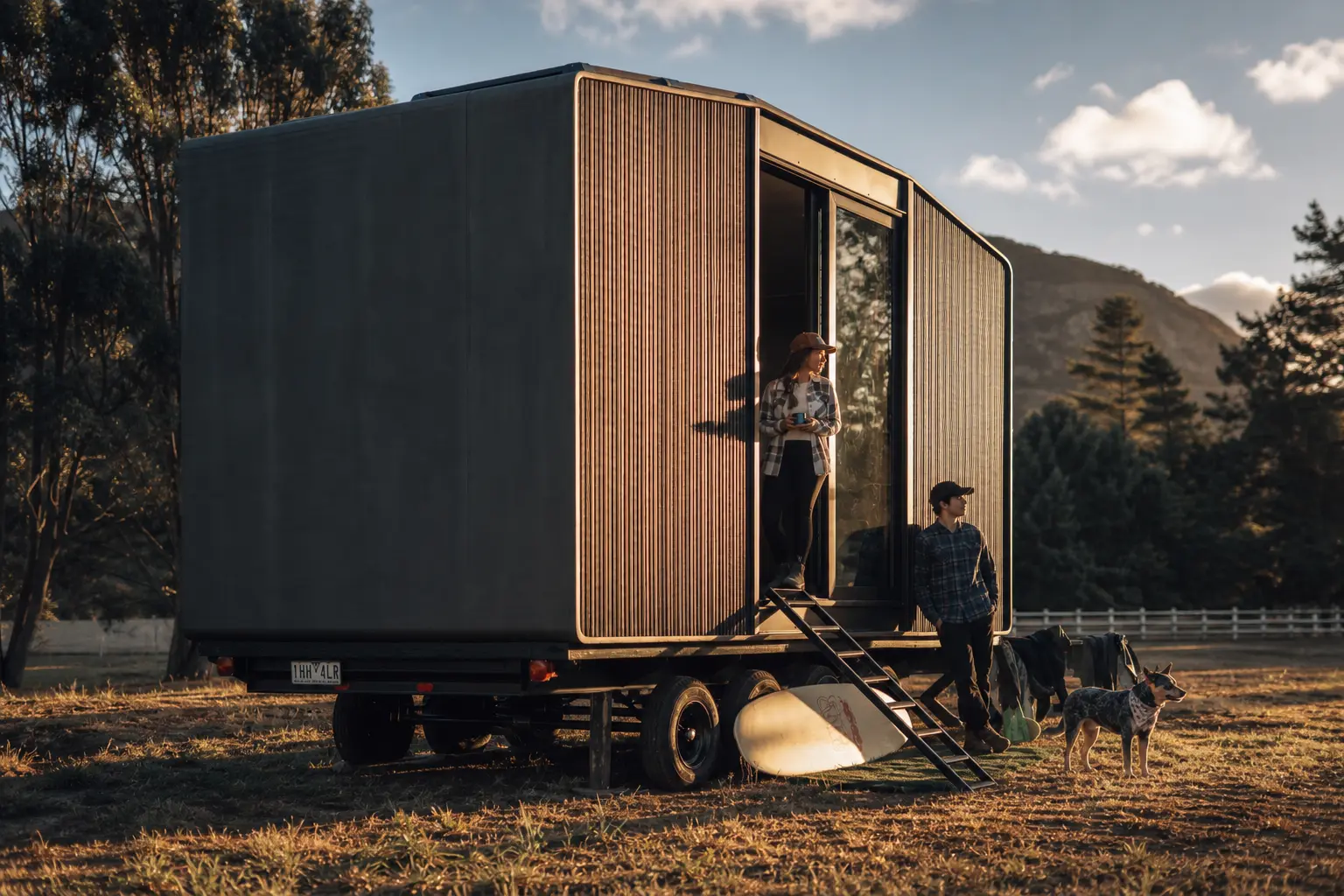
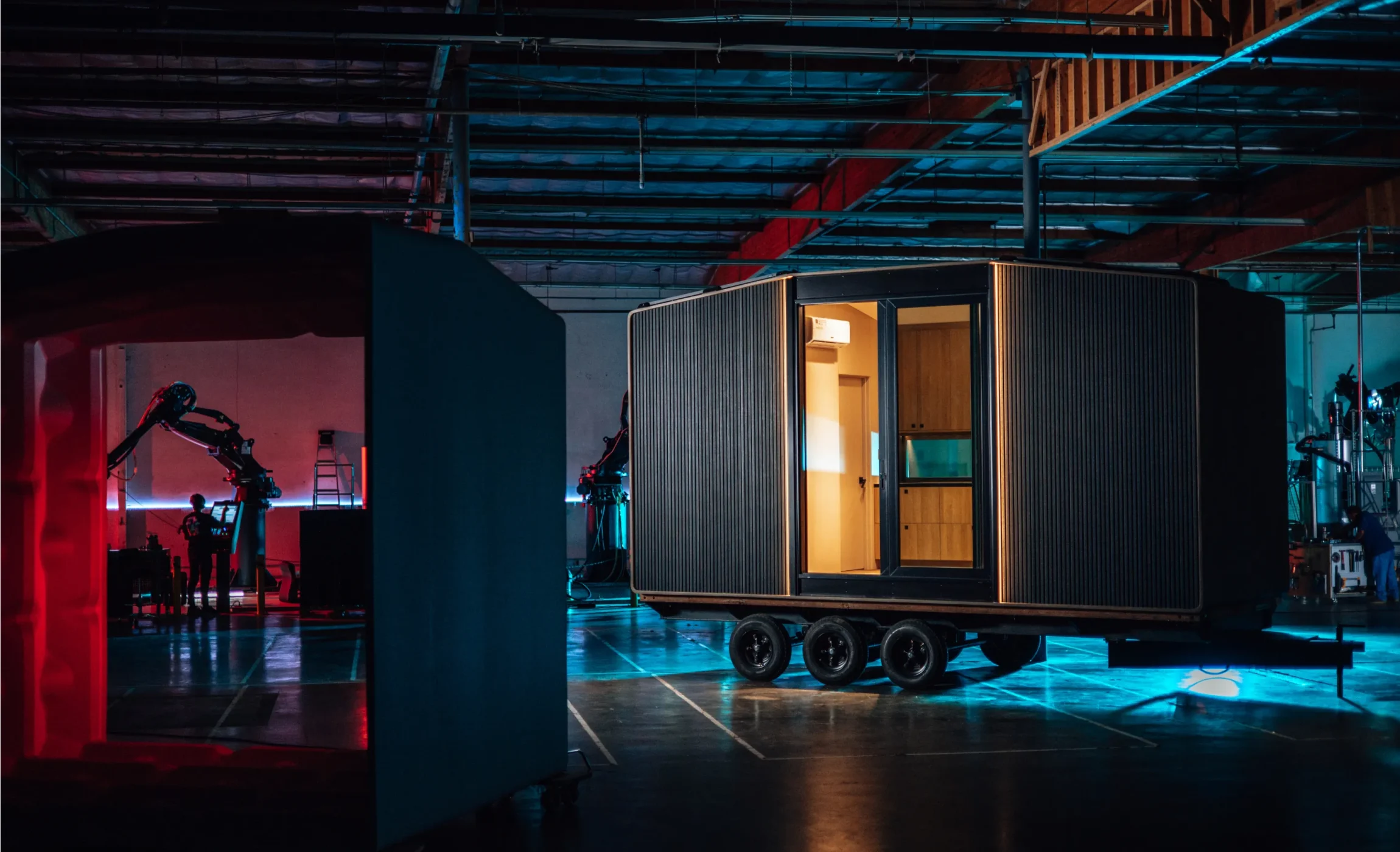
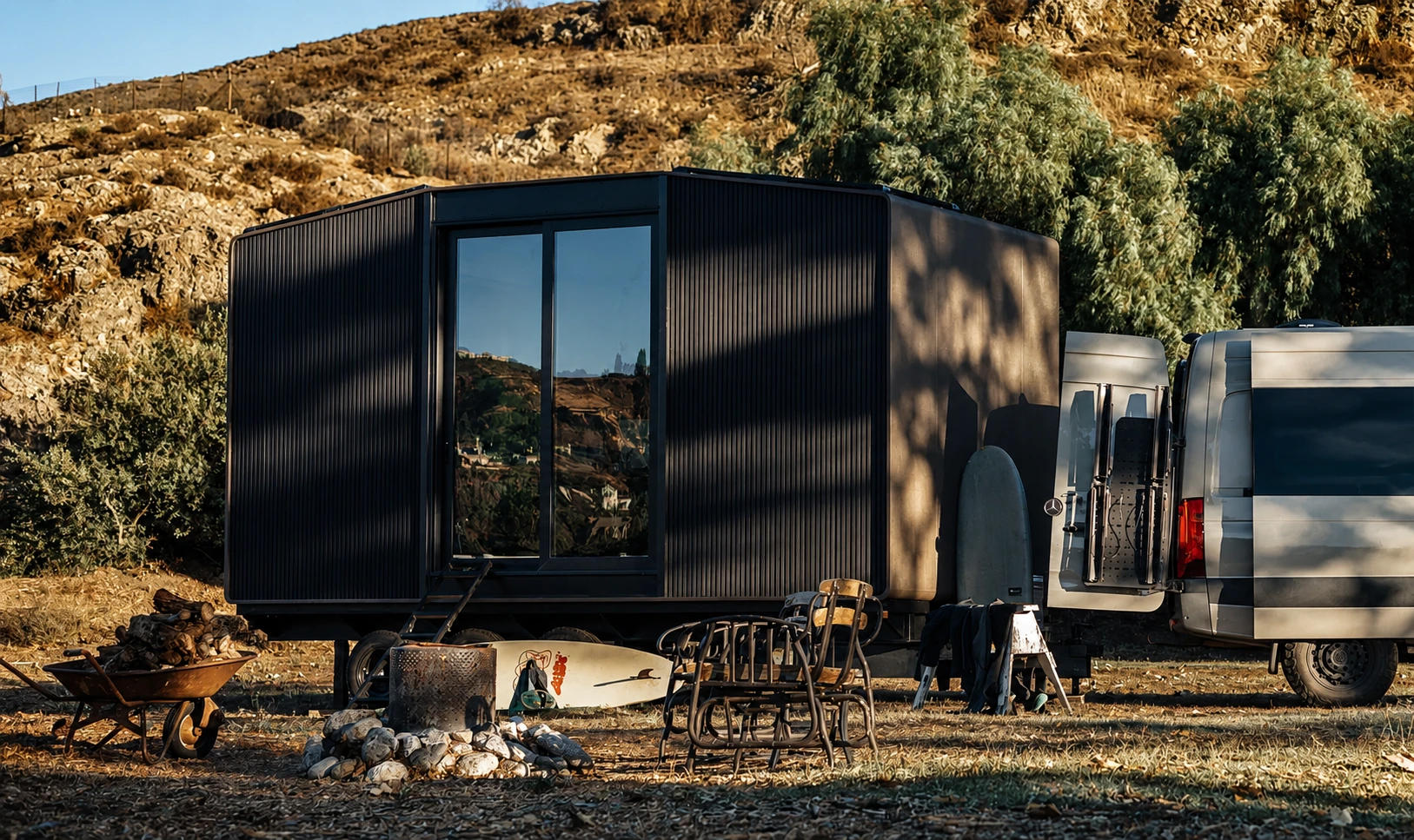
For projects that involve modular construction, financing also works alongside the building process. At Azure Printed Homes, we manufacture robotically printed modular homes, ADUs, studio spaces, and larger residential buildings in our factory before delivering them to the site. Electrical, plumbing, mechanical systems, and interior finishes are completed during factory production, while site work moves forward independently. That approach gives project teams a clearer understanding of what is included in the home itself and what remains part of the overall development budget.
Affordable Housing Loan Explained
An affordable housing loan is financing intended to support the purchase, construction, renovation, or preservation of housing that serves households meeting certain income requirements or affordability standards.
Depending on the program, these loans may be available to:
- First-time homebuyers
- Low- and moderate-income households
- Affordable housing developers
- Nonprofit housing organizations
- Local governments
- Public housing agencies
Some loans are backed by the federal government, while others are offered through state housing finance agencies, local governments, or specialized lenders. Every program has its own eligibility rules, property requirements, income limits, and financing structure.
Rather than replacing a standard mortgage, affordable housing loans often provide more accessible financing through lower down payment requirements, favorable terms, or additional financial assistance.
How Affordable Housing Loans Work and Who Can Qualify
Although every program operates differently, most affordable housing loans follow a similar process.
The borrower first applies through an approved lender or housing agency. The lender reviews factors such as:
- Household income
- Credit history
- Employment
- Existing debts
- Property eligibility
- Intended occupancy
If approved, the loan can be used according to the specific program rules. Some loans finance the purchase of an existing home, while others support new construction or rehabilitation.
For larger housing developments, financing is often combined with multiple funding sources. Affordable housing projects may include construction financing, tax incentives, grants, bonds, private investment, and permanent loans that work together throughout the project.
Qualification depends on the specific program and its requirements. Lenders and housing agencies usually consider household income, family size, location, property type, credit history, and whether the home will be used as a primary residence.
One detail many buyers miss is that “low income” does not have one national definition. Income limits are often tied to local housing costs and area median income, so a household may qualify in one city or county but not in another.
Property and occupancy rules also vary. Some affordable housing programs are limited to owner-occupied homes, while others are designed for multifamily housing, workforce housing, or larger development projects.
Common Affordable Housing Loan Programs
Several financing programs are commonly used to make homeownership more accessible. Each option has its own eligibility rules, property requirements, and costs, so borrowers should compare them carefully before applying.
| Program | Whom it may help | Main features | Important requirements |
| FHA loan | First-time buyers and borrowers who may not qualify for a conventional mortgage | May allow a lower down payment and more flexible credit requirements | Borrowers must meet FHA rules, pay closing costs, and carry mortgage insurance when required. Loan limits vary by county. |
| USDA Section 502 Guaranteed Loan | Eligible low- and moderate-income buyers purchasing in qualifying rural areas | May offer no down payment and can support the purchase, construction, rehabilitation, improvement, or relocation of a home | The property must be in an eligible area, household income limits apply, and the home generally must be the borrower’s primary residence. |
| VA loan | Eligible veterans, active-duty service members, and certain surviving spouses | May require no down payment, does not require monthly mortgage insurance, and may offer competitive terms | Eligibility depends on military service history and other VA requirements. |
| State and local housing programs | Buyers who meet local income, location, or first-time homebuyer requirements | May include down payment assistance, forgivable loans, low-interest mortgages, grants, or help with closing costs | Program rules vary by state and municipality. Eligibility may depend on income, property type, available funding, and occupancy requirements. |
These programs can reduce some of the financial barriers to buying a home, but they do not remove every cost. Borrowers may still need to budget for closing costs, insurance, inspections, taxes, repairs, and other property-related expenses. Approval also depends on the specific lender and program, so the next step is usually to review local requirements and confirm that both the borrower and the property qualify.
Affordable Housing Loans for Developers and Modular Projects
Affordable housing financing is not limited to individual buyers. Developers, nonprofit organizations, and public agencies may use specialized loans and other funding sources to create apartment communities, workforce housing, permanent supportive housing, transitional housing, senior housing, or mixed-income developments.
Larger projects rarely depend on one loan alone. Their financing may combine construction loans, grants, public funding, tax incentives, and long-term financing. The final structure depends on the cost of the development, affordability requirements, expected operating expenses, and how the property will be used over time.
Because these projects often work within tight budgets and funding deadlines, the construction method can influence the financing plan. Delays can increase carrying costs, complicate draw schedules, and make it harder to keep the project aligned with approved budgets. Modular construction can help by allowing site preparation and factory production to move forward at the same time.
At Azure Printed Homes, we approach affordable housing projects by starting with the needs of the site and the people the development is meant to serve. A project can combine repeatable unit types for consistency with selected layout changes where the lot, density target, or resident profile calls for something different. That can be especially useful for developers planning a mix of smaller and larger homes within the same community.
Factory production may also reduce exposure to weather-related delays and support more consistent construction across multiple units. That does not remove the need for permits, foundations, utility connections, delivery, or local installation, but it can create a more organized path from financing and design to production and occupancy.
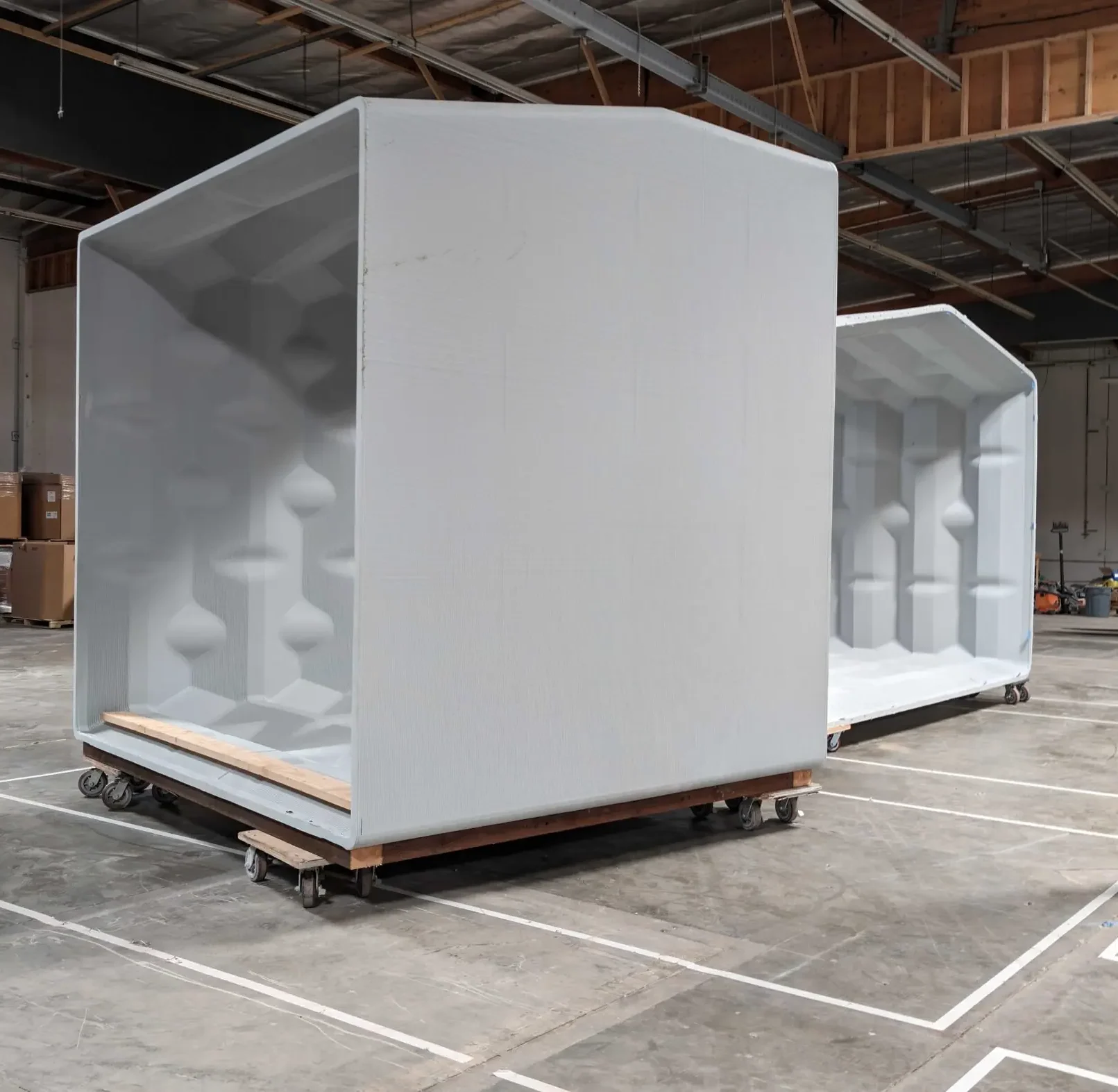
Modular Solutions for Affordable Housing Developments
Affordable housing developments rarely follow one fixed model. The right mix depends on available land, local density rules, resident needs, project funding, and the type of housing being created. We offer several modular options that can be used individually or combined across a larger site.
Homes and ADUs
Our homes and ADUs are designed for permanent residential use and are available in several standard sizes:
- 360 model: 18 x 20 feet, with 1 bedroom, 1 bathroom, and 1 kitchen, starting at $89,900
- 540 model: 18 x 30 feet, with 1 bedroom, 1 bathroom, and 1 kitchen, starting at $134,900
- 720.1 or 720.2 model: 18 x 40 feet, with 1 or 2 bedrooms, 1 bathroom, and 1 kitchen, starting at $174,900
- 900 model: 18 x 50 feet, with 2 bedrooms, 1.5 bathrooms, and 1 kitchen, starting at $219,900
These models give developers a practical starting point for planning one-bedroom and two-bedroom units across a site. A project may use one repeated layout for consistency or combine several sizes to serve different households.
For developments that need a different footprint, we also create custom modular homes up to approximately 3,000 square feet. Custom projects are priced at approximately $400 per square foot, depending on design and project requirements.
Studio Models
Compact studio units can support the residential part of a development without being used as full homes. They may work as offices, management spaces, shared work areas, amenity rooms, wellness spaces, or other supporting buildings.
Our studio options include:
- N-100: 9 x 11 feet, starting at $24,900
- A-120: 9 x 13 feet, starting at $29,900
- D-120: 9 x 13 feet, starting at $29,900
- D-180: 9 x 20 feet, starting at $39,900
Their smaller footprints can make them easier to place in areas where a full residential unit would not be necessary.
Custom Development Options
Some affordable housing projects need more than a standard model. We work with project teams to adjust layouts, dimensions, finishes, and building orientation where the site and approvals allow. Larger custom projects may also include multiple stories, balconies, elevators, and other development-specific features.
The process begins with a client assessment and site review. From there, architectural, structural, mechanical, electrical, plumbing, and energy plans are developed. Once the required approvals are in place, factory production can move forward while foundations, utilities, and other site work are prepared. Delivery, installation, and final utility connections follow after the modules are complete.
What the Model Price Includes
Understanding the difference between factory pricing and total project cost is important when planning a home or larger development. At Azure, the model price covers the work completed as part of factory production, while site-specific expenses are calculated separately because they depend on the property, location, and local requirements.
| Included in the model price | Usually priced separately |
| Electrical systems | Site preparation |
| Plumbing systems | Foundations |
| Mechanical systems | Permit fees |
| Interior finishes | Utility connections |
| Chassis for homes on wheels | Delivery |
| Standard factory-installed components | Local installation work outside the factory scope |
Keeping these costs separate gives buyers and project teams a more accurate view of the full budget. It also makes it easier to distinguish the price of the completed unit from the work required to prepare the site and connect the home after delivery.
Benefits of Modular Construction for Affordable Housing
Modular construction can help affordable housing projects move through production with fewer interruptions. Factory manufacturing improves consistency, allows site preparation to progress alongside building production, and reduces exposure to weather-related delays. It also gives developers more flexibility when selecting unit sizes and layouts that fit different housing needs.
We support these advantages by offering:
- Robotic manufacturing: Automation helps produce modular components with greater consistency in a controlled factory environment.
- A broad model range: Homes and ADUs are available from 360 to 900 square feet, with studio models and custom buildings up to approximately 3,000 square feet.
- Flexible design choices: Layouts, dimensions, finishes, and orientation can be adjusted to suit the site and project goals.
- Recycled materials: Selected product lines use recycled plastic as part of a more sustainable construction approach.
- Light-gauge steel construction: This option is available for larger homes, ADUs, and projects in high fire hazard severity zones.
- Factory-completed systems: Electrical, plumbing, mechanical systems, and interior finishes are installed before delivery.
- A coordinated workflow: Module production can move forward while foundations, utilities, and other site work are completed separately.
Together, these capabilities provide developers with flexible building options that can support a wide range of affordable housing projects, from small infill developments to larger residential communities.
What to Consider Before Applying
Before applying for an affordable housing loan, it helps to understand the program requirements in detail. Questions worth asking include:
- Does the property qualify?
- Is there an income limit?
- Is the home required to be owner-occupied?
- What down payment is required?
- Are mortgage insurance premiums required?
- Are there occupancy restrictions?
- What closing costs are the borrower’s responsibility?
- Can local grants or down payment assistance be combined with the loan?
For developers, additional considerations may include construction schedules, long-term affordability requirements, financing timelines, and coordination between lenders and contractors.
Conclusion
Affordable housing loans make homeownership and housing development more accessible by offering financing programs designed for a variety of needs. While eligibility and loan terms vary, these programs can support both individual buyers and organizations working to expand affordable housing.
Construction is only one part of the process, but it plays an important role in overall project planning. At Azure Printed Homes, we combine robotic manufacturing, modular construction, and factory-completed interiors to help simplify project delivery. By offering homes, ADUs, studio spaces, and custom modular buildings in a range of sizes, we support affordable housing projects with flexible solutions that can adapt to different communities and development goals.