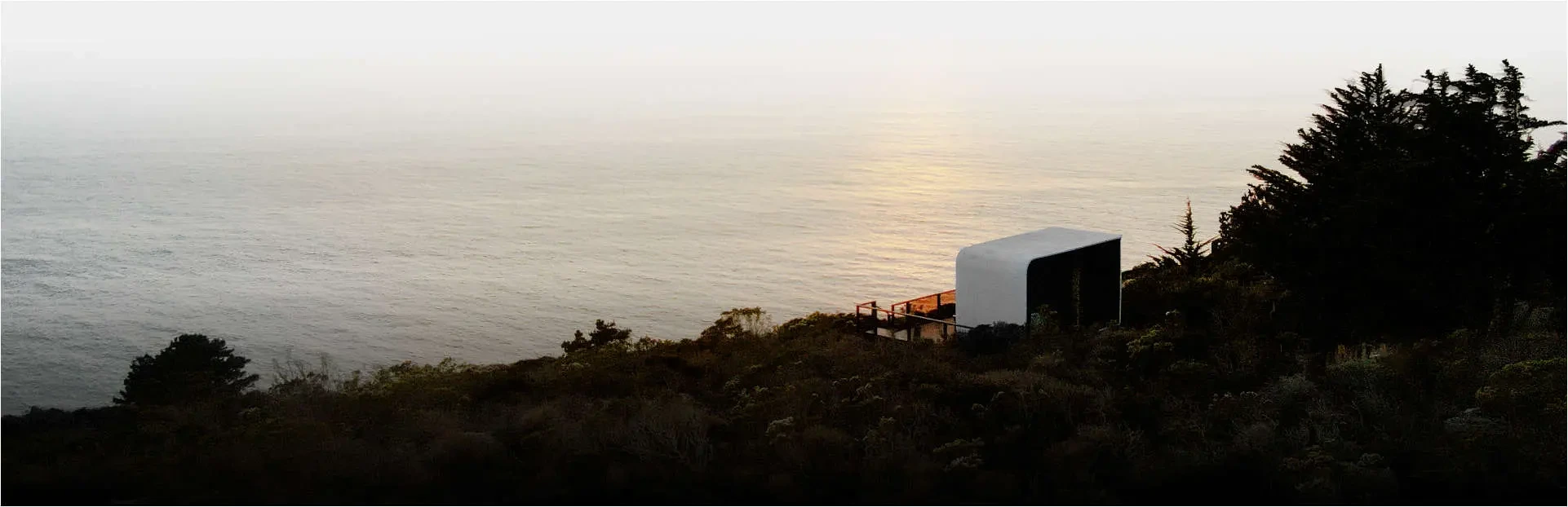
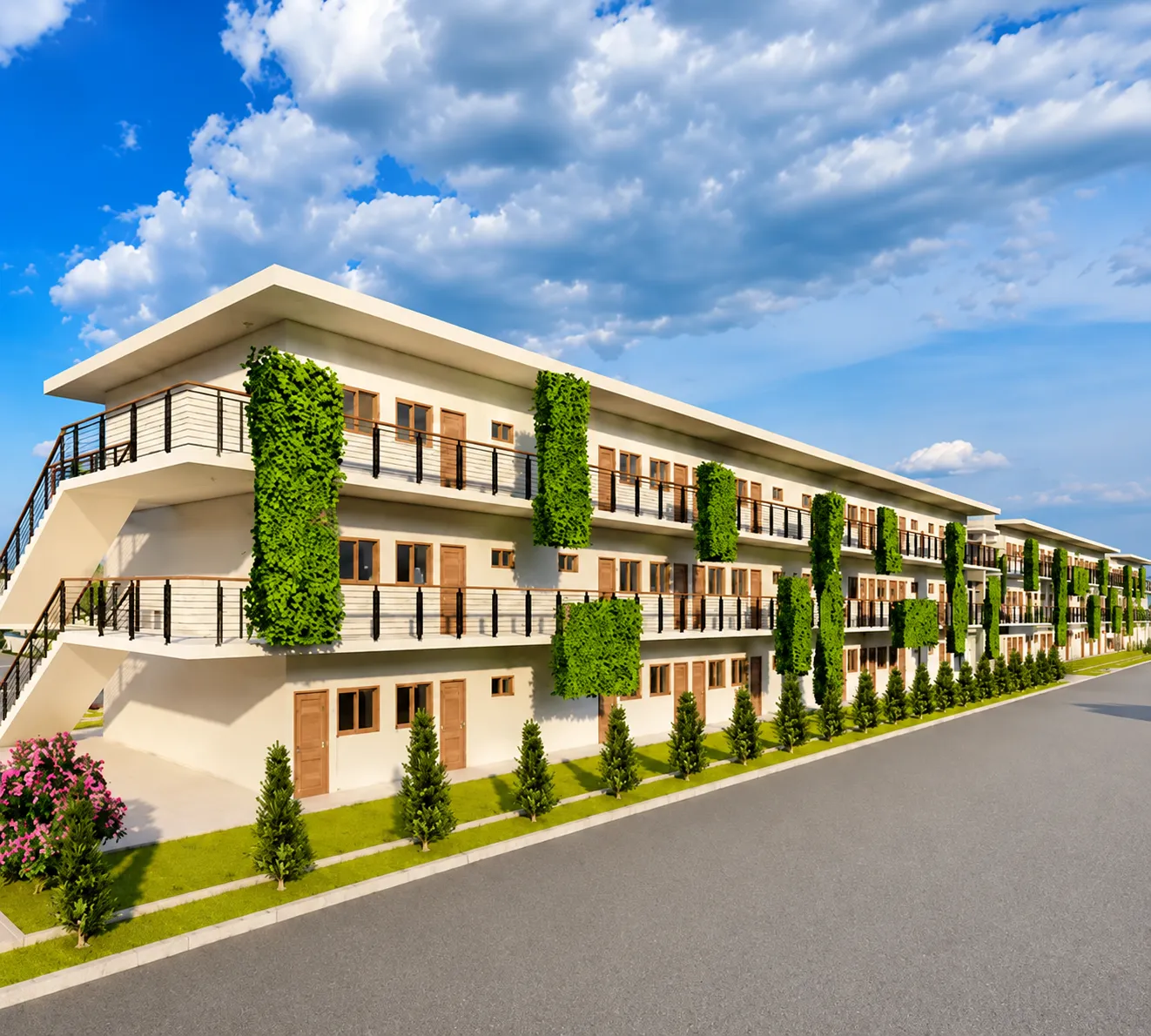
Sustainable housing is about creating homes that use resources wisely, reduce waste, and support a better way of living over time. It is not just about adding solar panels or using one eco-friendly material. A truly sustainable home looks at the full picture: how the home is built, what it is made from, how much energy it uses, how long it lasts, and how well it fits the needs of the people who live in it.
For many people, sustainable housing also means building smarter. Instead of using more land, more materials, and more energy than necessary, it focuses on thoughtful design and efficient construction. That can include compact homes, ADUs, backyard studios, tiny homes, glamping units, and modular living spaces that serve a clear purpose without unnecessary waste.
At Azure Printed Homes, we see sustainable housing as the next dimension of living. We create future-focused modular spaces using robotic 3D-printed construction and recycled materials, including plastic waste. Our goal is to make homes that are practical, customizable, energy efficient, and better aligned with how people actually want to live.
What Sustainable Housing Really Means
Sustainable housing means designing and building homes in a way that reduces environmental impact while still providing comfort, safety, and long-term value. A sustainable home should not feel like a compromise. It should feel useful, efficient, and well planned.
This can include several important ideas:
- Using recycled or responsibly sourced materials
- Reducing construction waste
- Improving energy efficiency
- Designing smaller, smarter layouts
- Supporting long-term durability
- Making better use of existing land
- Creating homes that can adapt to different needs
A sustainable home is not defined by one feature alone. It is the result of many choices working together.
Why Sustainable Housing Matters
Housing has a major effect on the environment. Traditional construction can require large amounts of raw materials, generate waste, and take months to complete. Larger homes can also use more energy for heating, cooling, lighting, and everyday operation.
Sustainable housing offers another path. By focusing on efficient layouts, smarter materials, and more controlled construction methods, homeowners and property owners can reduce waste while creating spaces that still feel comfortable and complete.
There is also a practical side. A more efficient home can often mean lower energy use, simpler maintenance, and better use of space. For property owners, it can also open the door to additional housing, rental opportunities, guest accommodations, or flexible workspaces without always needing a large traditional build.
Key Features of Sustainable Housing
While every project is different, most sustainable homes share several common characteristics. These features help support lower environmental impact while also improving everyday comfort, functionality, and long-term value for homeowners and property owners alike.
Efficient Use of Materials
One of the most important parts of sustainable housing is material efficiency. Traditional construction can create significant waste, especially when materials are cut, adjusted, discarded, or replaced on-site.
3D-printed construction offers a different approach. Robotic printing can create building components with precision, which can help reduce unnecessary waste during production.
At Azure Printed Homes, we use recycled materials in our 3D-printed construction process. For a 120 sq ft unit, about 100,000 plastic bottles are used in the printed material. That gives plastic waste a new purpose while helping create modern modular living spaces.
Energy Efficiency
Energy efficiency is another major part of sustainable housing. A home that uses less energy for heating, cooling, and daily operation can reduce long-term costs and environmental impact.
Efficient housing may include insulation, thoughtful window placement, compact layouts, efficient systems, and design choices that reduce wasted space. Smaller homes can also be easier to heat and cool when they are designed properly.
At Azure, energy efficiency is part of how we think about modern living. Our modular spaces are designed to be practical, comfortable, and efficient for everyday use.
Smart Space Planning
Sustainable housing does not always mean building less. It means building with more intention.
A well-planned compact home should consider:
- Smart storage that keeps the space useful and organized
- Windows and natural light that help the home feel open
- Privacy for sleeping, working, relaxing, or hosting guests
- Ceiling height and layout choices that improve comfort
- Bathroom and kitchen access based on how the space will be used
- Clear movement through the home without wasted space
- Flexible design that supports daily living, guests, rental use, or work
With the right layout, a smaller footprint can still support a full lifestyle. This is especially important for ADUs, studios, tiny homes, homes on wheels, and guest units.
Reduced Construction Disruption
Traditional construction can involve long timelines, multiple crews, weather delays, and heavy on-site disruption. Modular and factory-based production can help simplify the process.
At Azure, our process includes configuring the unit, robotically printing the structure, installing finishes, delivering the unit, and completing on-site installation. This approach helps make the path from idea to usable space more direct.
A more controlled production process can also support repeatable quality and reduce many of the delays that come with building entirely on-site.
Examples of Sustainable Housing
Today, sustainable housing can support everything from remote work and multigenerational living to rental income, travel, hospitality, and full-time residence. The following examples show how different housing types can contribute to a more thoughtful and efficient approach to living.
Backyard Studios
A backyard studio can create useful extra space without requiring a large addition to the main home. It can be used as an office, creative space, wellness room, guest area, or quiet retreat.
This is a practical example of sustainability because it uses existing property more effectively. Instead of moving, expanding a home, or renting outside space, a backyard studio can support everyday needs on land that is already available.
ADUs
Accessory dwelling units, or ADUs, are one of the most useful forms of sustainable housing. They can help property owners add living space without building a full-size new home.
ADUs can be used for:
- Family members who need nearby but independent living space
- Guests staying for short or extended visits
- Caregivers who need private accommodations
- Rental income opportunities
- Multigenerational living
- Backyard housing on an existing property
- More flexible use of land and utilities
We offer ADU-style modular homes in different sizes, giving property owners options for compact living, larger layouts, and more complete residential use.
Tiny Homes
Tiny homes support sustainable living by reducing the amount of space, materials, and energy needed for daily life. A well-designed tiny home can include the essentials while avoiding the excess that often comes with larger housing.
Tiny homes can be used for full-time living, guest stays, rentals, or communities focused on smaller-footprint housing.
Homes on Wheels
Homes on wheels add flexibility to sustainable housing. They can support travel, mobile living, temporary housing, or flexible property use.
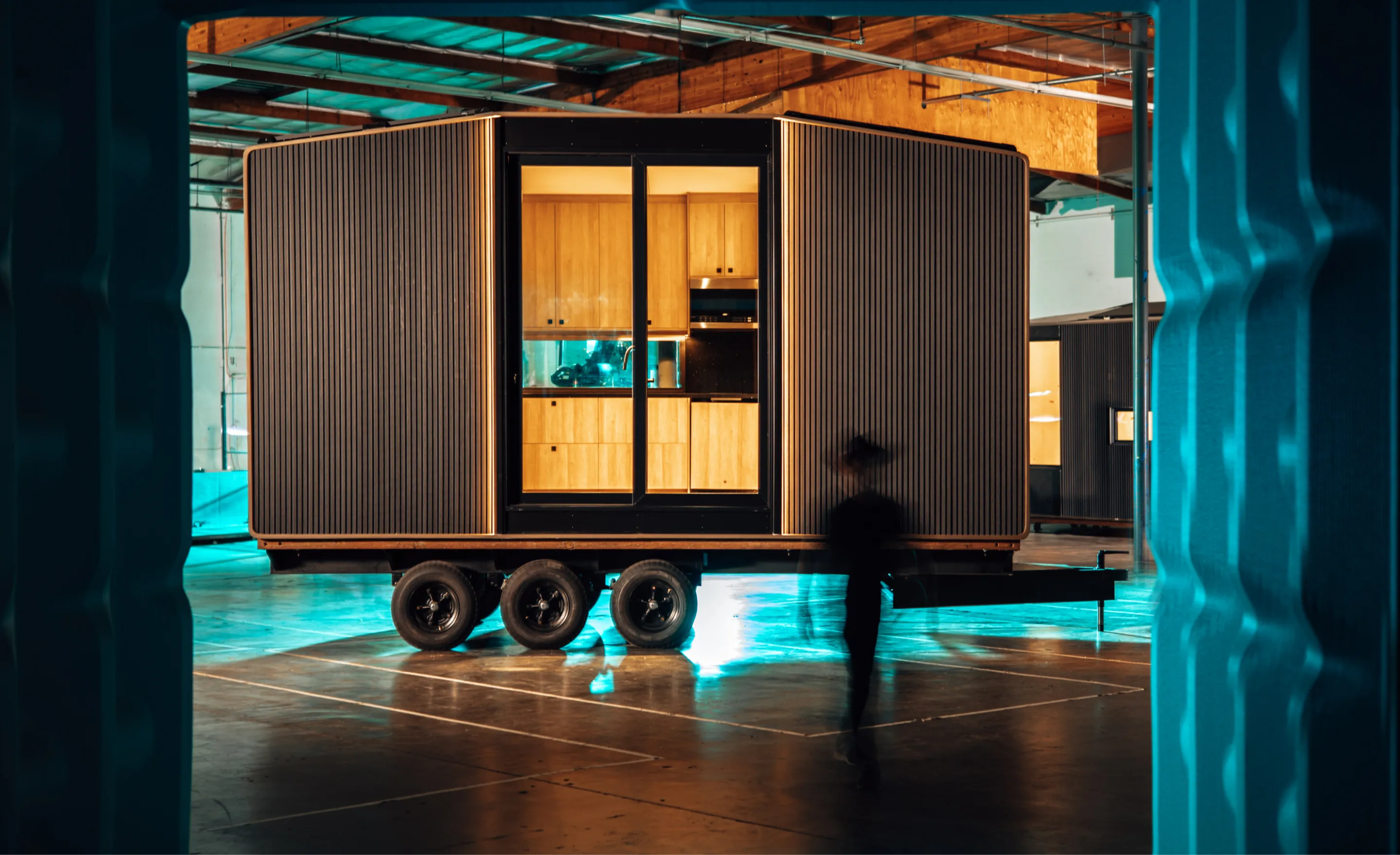
Our X Series homes on wheels are designed for people who want a modern living space with mobility. These units bring together compact layouts, useful amenities, and the freedom to move.
Glamping Units
Sustainable housing can also support hospitality. Glamping units give property owners a way to create comfortable guest experiences with a smaller footprint than many traditional lodging structures.
For resorts, retreat properties, and landowners, modular glamping units can help turn underused land into a thoughtful guest destination.

Planning a Sustainable Housing Project
Before starting a sustainable housing project, it helps to think beyond size alone. The best home is not always the biggest one. It is the one that fits the purpose, the property, and the way the space will actually be used.
Important planning factors include:
- The main purpose of the space
- Who will use the home and how often
- Whether it will be used for living, working, hosting, renting, or travel
- Where the unit will be placed on the property
- Sun exposure, views, privacy, and access
- Utility needs, including power, water, wastewater, heating, cooling, and internet
- Whether the layout needs a kitchen, bathroom, sleeping area, or storage
- Local zoning, permits, setbacks, and site requirements
- Delivery access and installation conditions
- Long-term maintenance and durability
- Energy performance and everyday comfort
- Whether the space may need to serve more than one purpose over time
These choices affect the size, layout, budget, installation, and long-term value of the project.
Future Trends in Sustainable Housing
Sustainable housing is moving toward homes that are more flexible, efficient, and easier to adapt to different lifestyles. Instead of focusing only on size, future housing will place more value on smarter layouts, lower waste, and better use of existing land.
More Flexible Living Spaces
Homeowners are looking for spaces that can serve more than one purpose. A backyard studio may become an office, guest room, or creative space. An ADU may support family, rental income, or long-term independent living.
Smaller Footprints With Better Function
Future homes do not need to be oversized to feel complete. Compact layouts, smart storage, efficient systems, and thoughtful design can make smaller spaces more practical and comfortable.
Faster, Smarter Construction
Sustainable housing is also moving toward cleaner and more efficient building methods. At Azure Printed Homes, we support that future with robotically printed modular homes made with recycled materials, including studios, ADUs, homes on wheels, tiny homes, and glamping units.
Conclusion
So, what does sustainable housing mean? It means creating homes that use materials, energy, land, and space more responsibly. It means thinking beyond the structure itself and looking at the full life of the home, from construction to everyday use.
Sustainable housing can be compact, modern, flexible, and comfortable. It can support families, property owners, renters, travelers, and developers. Most importantly, it can help people create spaces that are better matched to real life.
At Azure Printed Homes, we believe sustainable housing should feel exciting, useful, and within reach. By combining recycled materials, 3D-printed construction, customizable designs, and modular living, we are helping shape a smarter way to build for the future.