Choosing the right temporary living arrangement can be challenging, especially when work, relocation, or extended projects require more than a short hotel stay. Terms like professional housing and corporate housing are often used interchangeably, but they can describe different approaches to temporary accommodation.
Both options are designed for people who need a place to live for a limited period, but the ideal choice depends on the purpose of the stay, the length of the assignment, and the level of flexibility required. Professionals working on projects, companies relocating employees, and organizations managing temporary teams often need housing that feels practical, comfortable, and easy to arrange.
Understanding the difference between professional housing and corporate housing helps individuals and businesses choose a solution that matches their specific needs. Modern housing options, including flexible modular spaces, are creating new possibilities for temporary living by combining comfort, efficiency, and adaptable design.
Understanding Professional Housing
Professional housing is a broad term used for temporary accommodations designed around the needs of working professionals. It typically supports individuals who need housing because of their job, but who are not looking for a permanent residence.
This type of housing can serve a wide range of situations, including:
- Temporary work assignments
- Construction projects
- Traveling professionals
- Workforce deployments
- Relocation periods
- Seasonal employment
- Business-related stays
The main purpose of professional housing is to provide a practical living environment that allows people to focus on their work without dealing with the challenges of finding a traditional rental.
Unlike short hotel stays, professional housing is usually designed for longer periods. Workers may need a full kitchen, comfortable sleeping areas, workspace, laundry access, and a setup that feels closer to home.
For companies managing teams, professional housing can simplify logistics by creating a consistent accommodation solution. Instead of arranging separate options for each employee or project, organizations can plan housing around the actual needs of their workforce.
A Closer Look at Corporate Housing
Corporate housing is a type of furnished temporary housing created specifically for business-related stays. It is commonly used when employees, contractors, or professionals need accommodation for weeks or months rather than just a few nights.
Corporate housing typically includes fully furnished living spaces, kitchen facilities, utilities, Internet access, flexible rental periods, and move-in-ready accommodations. The goal is to provide a smoother transition for people who are temporarily living away from their usual home.
Corporate housing is often chosen when a company needs to relocate employees, support workers during extended assignments, or provide accommodation during a project. It creates a more residential experience than a traditional short-term stay while avoiding the commitment of a long-term lease.
The difference between corporate housing and other temporary housing options is usually the business connection. The arrangement is often coordinated around an employee, project, or company requirement.
When Investing in Your Own Housing Solution Makes Sense
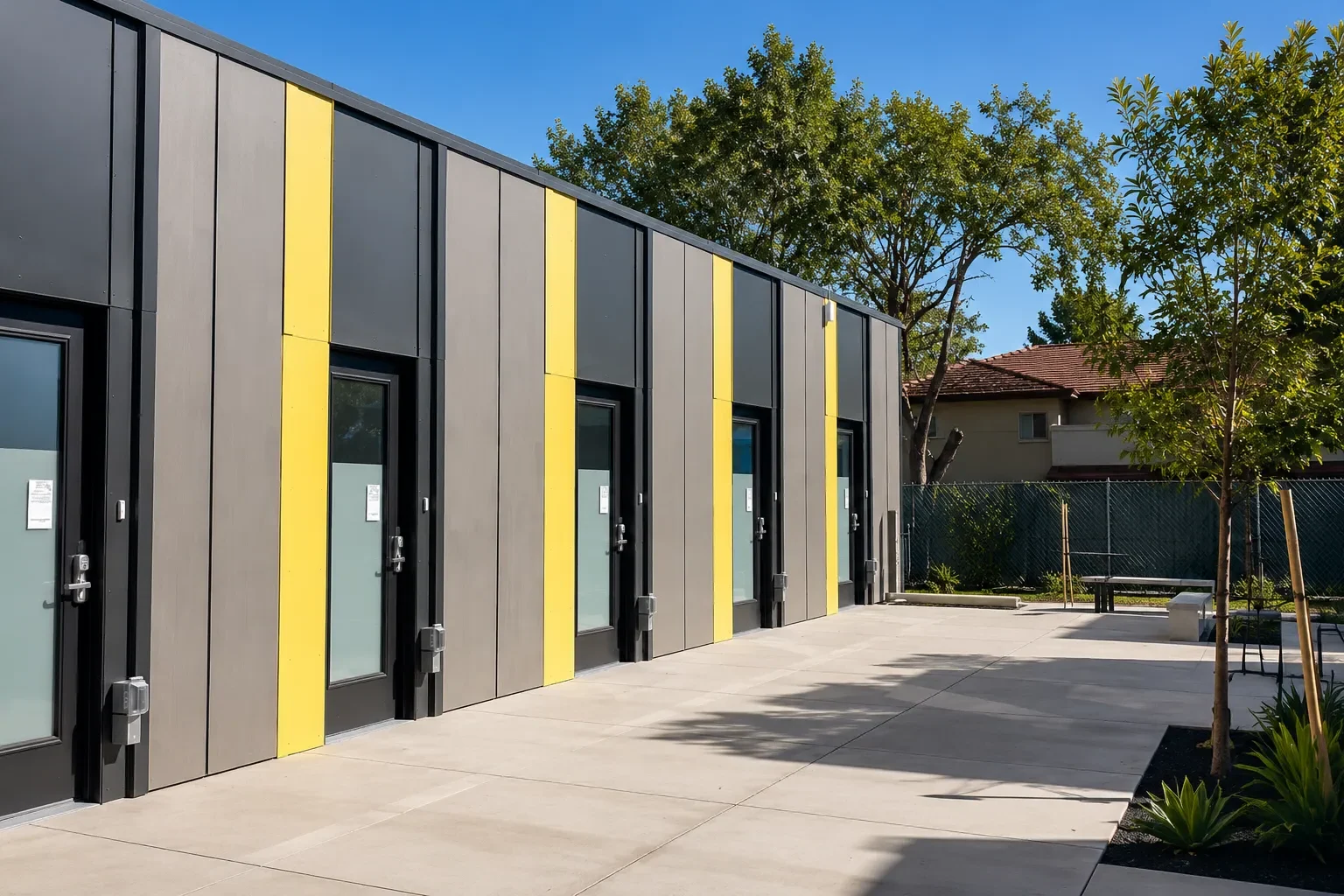
For companies, developers, and organizations that regularly need temporary accommodation for employees, contractors, or entire teams, renting housing repeatedly may not always be the most practical long-term solution.
When housing needs become ongoing, owning dedicated modular housing can provide greater control, flexibility, and value over time. Instead of depending entirely on rental availability, organizations can create their own living infrastructure designed around specific workforce requirements.
Investing in modular or 3D-printed housing can help organizations:
- Reduce long-term accommodation costs compared with continuous rental expenses
- Maintain greater control over design, quality, and living conditions
- Scale housing capacity quickly as project needs change
- Use units for both temporary assignments and long-term housing solutions
- Relocate certain housing assets when flexibility is required
- Provide modern, energy-efficient spaces for workers and residents
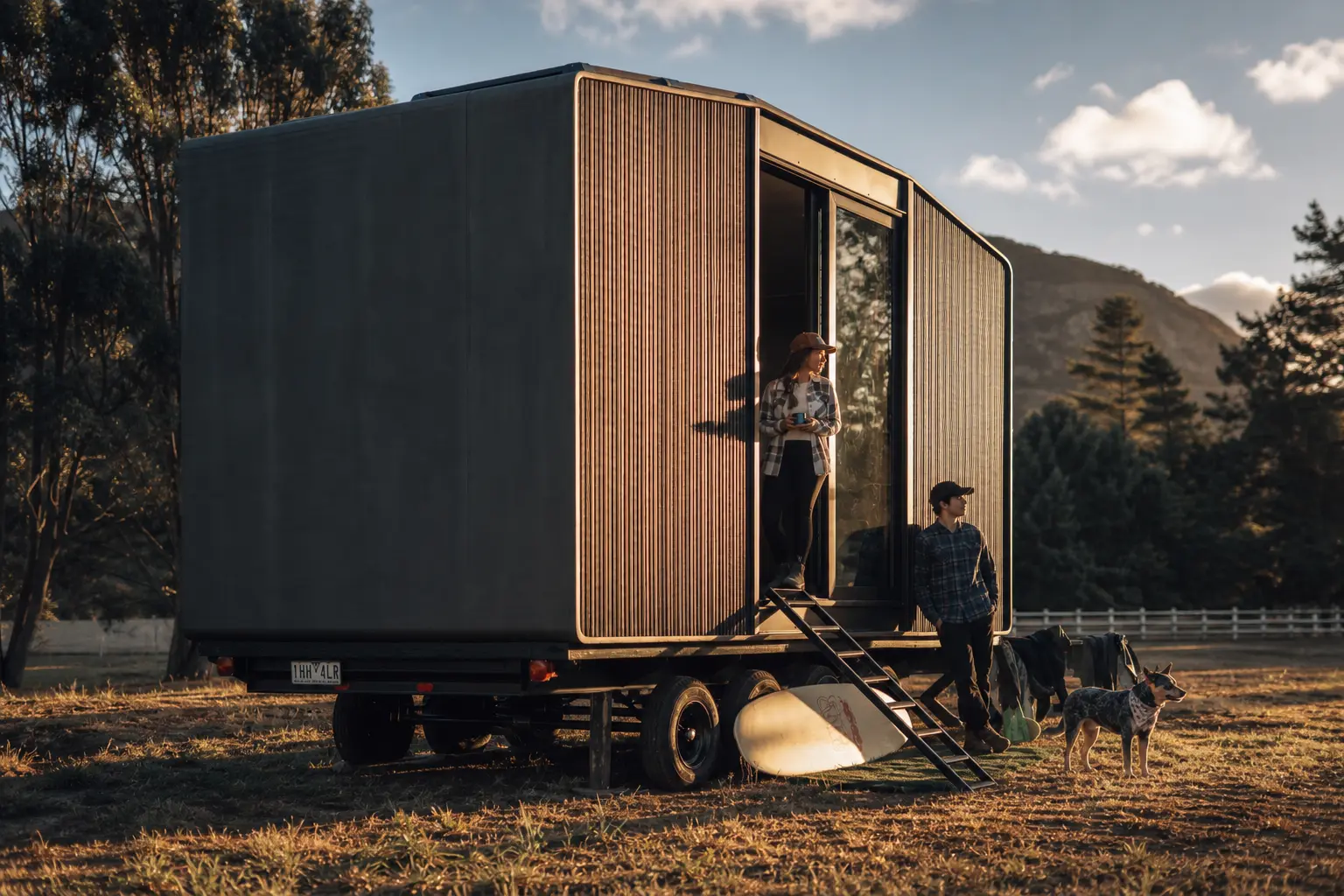
At Azure Printed Homes, we create robotically 3D-printed homes, modular living spaces, and ADU solutions designed for applications such as workforce housing, corporate communities, temporary housing projects, and rotational living environments. Our approach combines advanced manufacturing, customizable designs, and sustainable materials to help organizations create efficient housing solutions that adapt to changing needs.
Professional vs Corporate vs Owned Modular Housing
When comparing temporary housing options, the biggest difference is not only where people stay, but how organizations approach their housing needs. Professional housing and corporate housing are often practical choices for short-term assignments, relocations, and temporary projects. However, companies with recurring workforce accommodation needs may benefit from owning dedicated housing solutions.
Each option serves a different purpose:
| Option | Professional Housing | Corporate Housing | Owned Modular Housing |
| Main purpose | Provides temporary living spaces for working professionals | Offers furnished accommodations for employees and business assignments | Creates a long-term housing asset for organizations |
| Best suited for | Temporary workers, contractors, project teams, and traveling professionals | Employee relocations, extended business stays, and company assignments | Workforce housing, corporate communities, and large-scale accommodation needs |
| Ownership | Usually rented or arranged through a housing provider | Usually rented for a specific period | Owned and controlled by the organization |
| Flexibility | Depends on available housing options | Flexible for changing employee timelines | High flexibility in design, location, and future use |
| Cost approach | Ongoing accommodation expense | Recurring rental expense based on business needs | Long-term investment with potential cost savings over time |
| Customization | Limited by available properties | Limited by existing furnished spaces | Designed around specific operational requirements |
| Scalability | Depends on availability in each location | Depends on rental supply | Units can be planned and expanded based on demand |
For companies with occasional housing needs, professional housing or corporate housing may provide a convenient solution without requiring property ownership. They allow businesses to quickly arrange accommodation when employees need to work away from home.
However, when organizations regularly need housing for teams, contractors, or large groups of workers, owning purpose-built housing can create additional advantages. Dedicated modular housing gives companies more control over the space, design, and long-term use of their accommodation assets.
Benefits of Modular Housing for Corporate Accommodation
As organizations search for more reliable housing solutions, modular construction is becoming an increasingly practical option for workforce and corporate accommodation needs. Instead of relying only on available rental properties, companies can create purpose-built living spaces designed around their operational requirements.
Modular housing provides more control over how accommodation is designed, delivered, and used. It can support everything from temporary workforce assignments to long-term housing strategies by offering adaptable layouts, faster production, and the ability to scale as demand changes.
At Azure, we focus on making this process more efficient through advanced manufacturing and customizable modular solutions. Our homes are designed to combine modern comfort, flexible layouts, and sustainable construction methods while supporting a wide range of housing applications.
Key benefits of our modular housing solutions include:
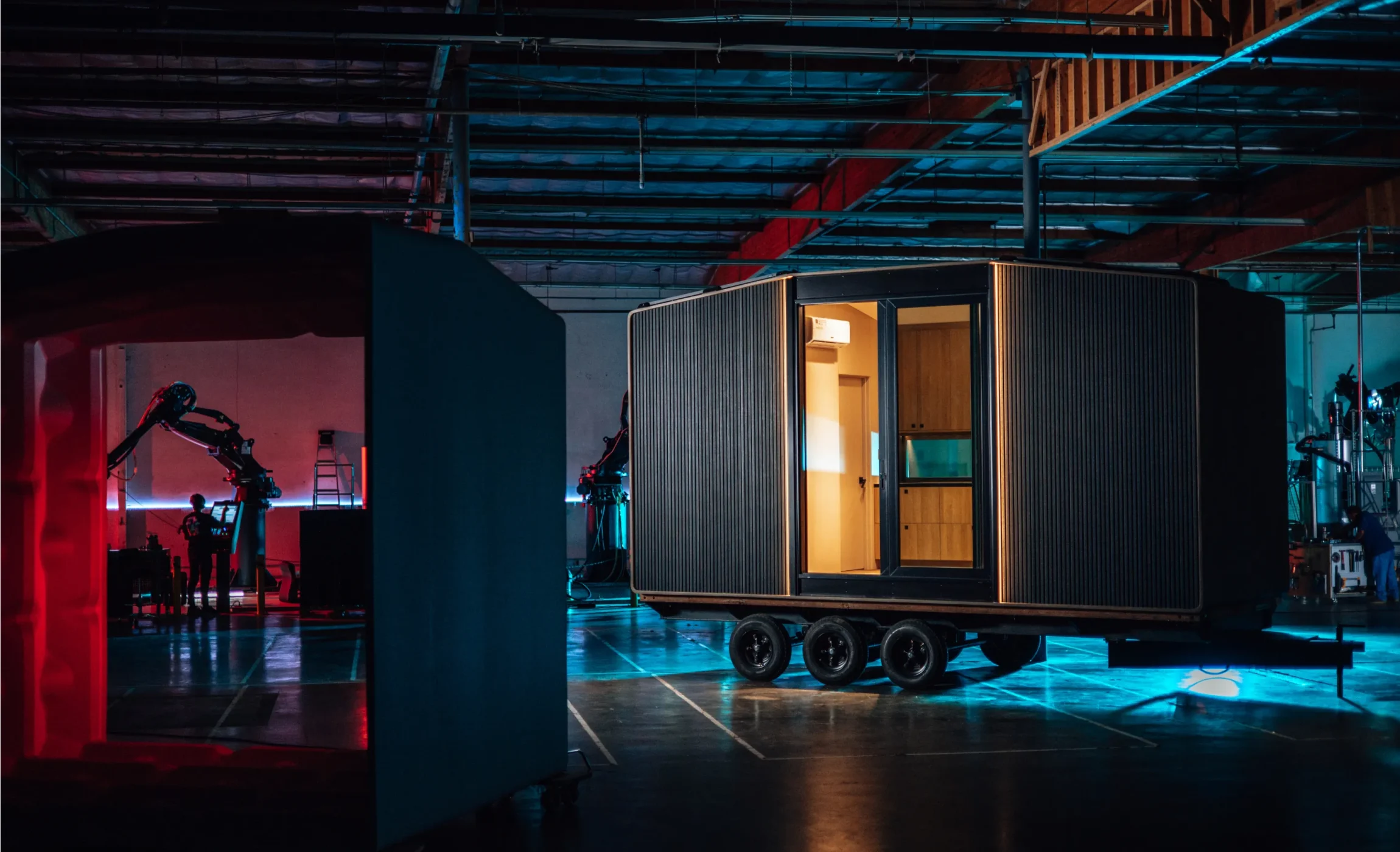
- Faster construction and deployment: We use robotic 3D-printing technology to streamline the building process, allowing homes and living spaces to be produced more efficiently compared with traditional construction methods.
- Customizable designs for different needs: We create spaces that can be adapted to specific project requirements, including different layouts, finishes, and functional features.
- Scalable housing capacity: Our modular approach allows organizations to expand housing solutions as their needs grow. Whether a project requires additional units or a larger development, modular construction provides flexibility for future expansion.
- Improved control over quality and living conditions: Our factory-controlled construction process helps maintain consistent standards while allowing greater control over materials, design details, and final finishes.
- Energy-efficient and comfortable living spaces: We design our homes with insulation, efficient systems, and modern materials to create comfortable environments for residents while supporting long-term energy efficiency.
- Sustainable construction approach: We use recycled materials in our 3D-printing process, helping transform plastic waste into functional living spaces. Our recycled plastic printing material includes more than 60% recycled contenе.
- Flexible use over time: Our modular homes can support different applications throughout their lifecycle, from workforce housing and temporary accommodations to ADUs, guest spaces, and other residential uses.
- Professional project support from concept to installation: We guide projects through design, planning, approvals, manufacturing, delivery, and installation to help organizations create housing solutions that match their goals.
For organizations looking for more adaptable housing options, modular construction offers a practical approach that combines flexibility, efficiency, and the ability to respond to changing needs.
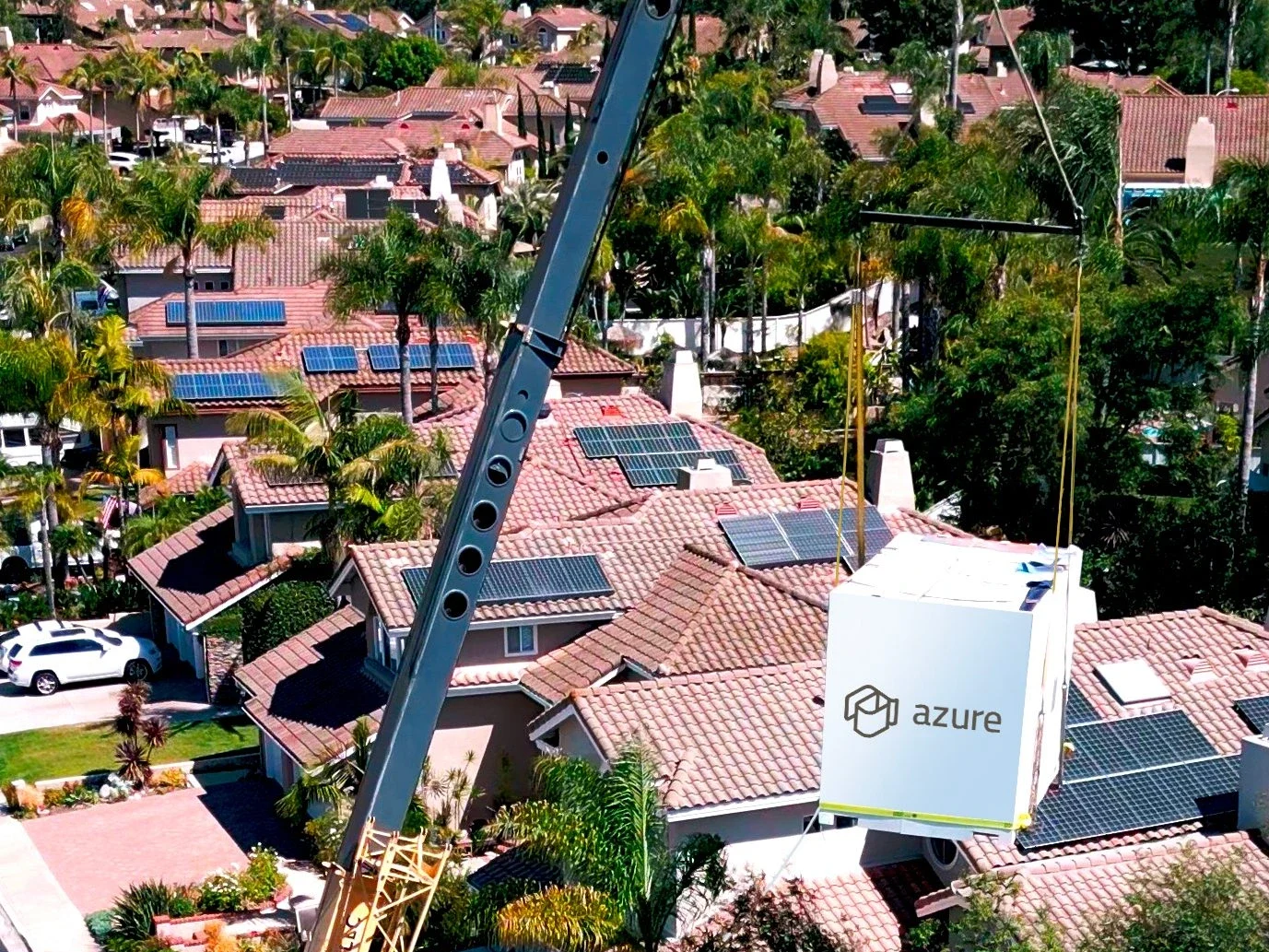
Modular Housing Options for Workforce and Corporate Needs
Different organizations have different accommodation needs. A small team working on a short-term project may require compact private spaces, while larger workforce housing projects may need fully equipped residential units with more room for daily living.
Modular housing allows companies and organizations to create spaces that are designed around their specific requirements instead of adapting to existing properties. Depending on the project goals, modular solutions can support individual workers, larger teams, temporary communities, and long-term housing strategies.
We offer several modular housing options that can be adapted for different applications, from compact studios to full residential-style homes and custom developments.
Studio Series
Studio units provide an efficient option for organizations that need compact, functional living spaces without unnecessary complexity. They can support a variety of applications, including private accommodations for professionals, guest spaces, offices, additional living areas, and smaller workforce housing projects.
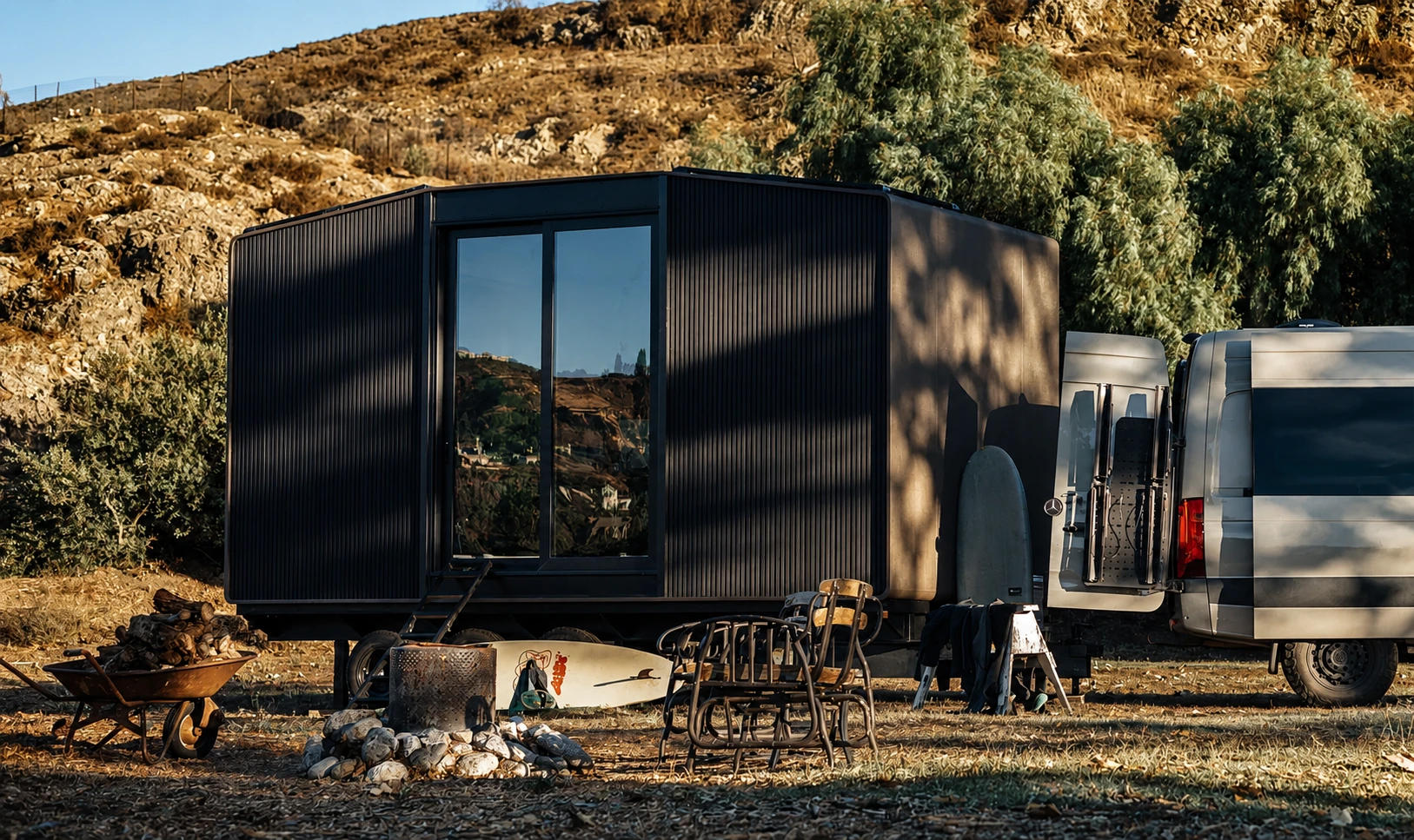
Our studios include several compact modular options designed for different space requirements. The N-100 offers approximately 100 square feet of flexible space, making it suitable for smaller living needs, offices, guest areas, or additional units where efficiency is a priority. The A-120 and D-120 provide approximately 120 square feet of space and can be customized with different layouts and finishes depending on project goals. For organizations looking for a slightly larger studio-style solution, the D-180 provides approximately 180 square feet with additional interior space while maintaining an efficient footprint.
These units are created using advanced robotic 3D-printing technology and can include essential systems and finishes to provide functional, ready-to-use spaces for different accommodation needs.
Homes & ADUs
For organizations that require a more traditional residential experience, our homes and ADUs provide larger layouts with dedicated bedrooms, kitchens, bathrooms, and living areas. These solutions are designed for projects where residents need more comfort and functionality, including workforce accommodation, temporary housing communities, and additional residential capacity.
A-360 Modular Home
The A-360 offers approximately 360 square feet of living space with one bedroom, one bathroom, one kitchen, and a dedicated living area. This model provides an efficient private living solution for individuals who need a comfortable residential-style space with essential features for everyday living.
A-540 Modular Home
The A-540 expands the living area to approximately 540 square feet while maintaining an efficient one-bedroom layout. It includes one bedroom, one bathroom, one kitchen, and a larger living area, making it a suitable option for longer stays where residents need additional comfort and space.
A-720 Modular Home
The A-720 offers approximately 720 square feet and is available in two configurations. The A-720.1 includes one bedroom, one bathroom, and one kitchen, while the A-720.2 provides two bedrooms, one bathroom, and one kitchen.
With additional sleeping capacity and flexible layouts, the A-720 can support a wider range of accommodation needs, from individual professionals to multiple residents sharing a housing solution.
A-900 Modular Home
The A-900 is the largest standard Homes & ADUs model, offering approximately 900 square feet of living space. It includes two bedrooms, one and a half bathrooms, one kitchen, and expanded living areas.
This model is designed for projects that require a more spacious residential solution, including family accommodation, shared living arrangements, or organizations looking to provide a more home-like environment.
Custom Modular Solutions
Some projects require housing solutions that go beyond standard models. Large workforce developments, corporate communities, and specialized accommodation projects may need unique layouts, multiple units, or specific design requirements.
We create custom modular solutions that can be adapted to project goals. Our customization process can include changes to dimensions, layouts, finishes, and additional features to create spaces designed around specific needs.
Custom projects can include:
- Larger residential developments
- Multi-unit housing concepts
- Unique site requirements
- Specialized layouts
- Additional design features
Our teams work through the process from initial planning and design to manufacturing, delivery, and installation, helping organizations develop modular housing solutions that match their long-term objectives.
How to Choose the Housing Solution for Your Organization
Choosing the right housing solution depends on the purpose of the project, the number of residents, how long the accommodation will be needed, and whether the organization is looking for a temporary arrangement or a long-term solution.
Professional housing, corporate housing, and modular housing can all support different situations. However, for organizations with ongoing accommodation needs, modular solutions can provide additional flexibility through greater control over design, scalability, and future use.
Key factors to consider include:
- Number of residents: Choose a solution that matches the size of your workforce or group.
- Length of use: Consider whether housing is needed for a short assignment or long-term accommodation.
- Customization needs: Evaluate whether standard layouts are enough or if the project requires tailored designs.
- Scalability: Think about future growth and the ability to add more units when needed.
- Location requirements: Review site conditions, available space, utilities, and local regulations.
By considering these factors, organizations can select a housing solution that not only meets immediate accommodation needs but can continue providing value as requirements evolve.
Final Thoughts
Professional housing and corporate housing can provide practical solutions for temporary accommodation needs, but organizations with ongoing housing requirements may benefit from a more flexible and scalable approach.
Modular construction creates new opportunities to develop comfortable, efficient spaces that can support changing workforce and business needs. From compact studios to larger residential-style homes, modular solutions allow organizations to create housing that is designed around their goals.
At Azure Printed Homes, we combine robotic 3D-printing technology, customizable designs, and recycled materials to create modern modular living spaces. We help organizations develop adaptable housing solutions for workforce accommodation, corporate communities, and other projects where efficient, future-focused living spaces are needed.