Building a home starts with one major choice: how it will be built. For many buyers, that means comparing modular construction with a fully custom home built on-site.
The right answer depends on the project. Budget, property conditions, timeline, design goals, and local regulations all influence the decision. Modern modular homes can offer far more flexibility than many people expect thanks to advances in manufacturing, materials, and design.
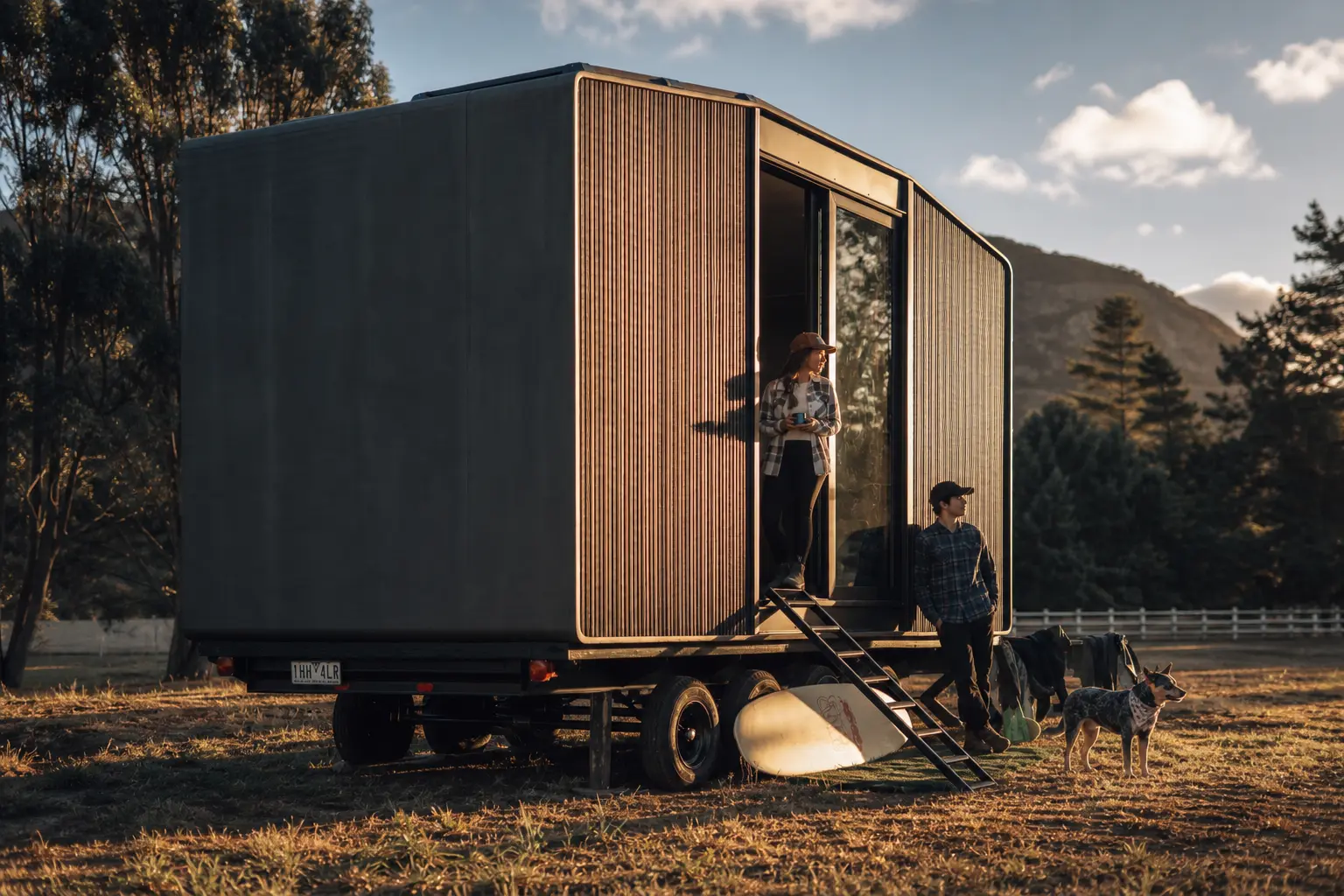
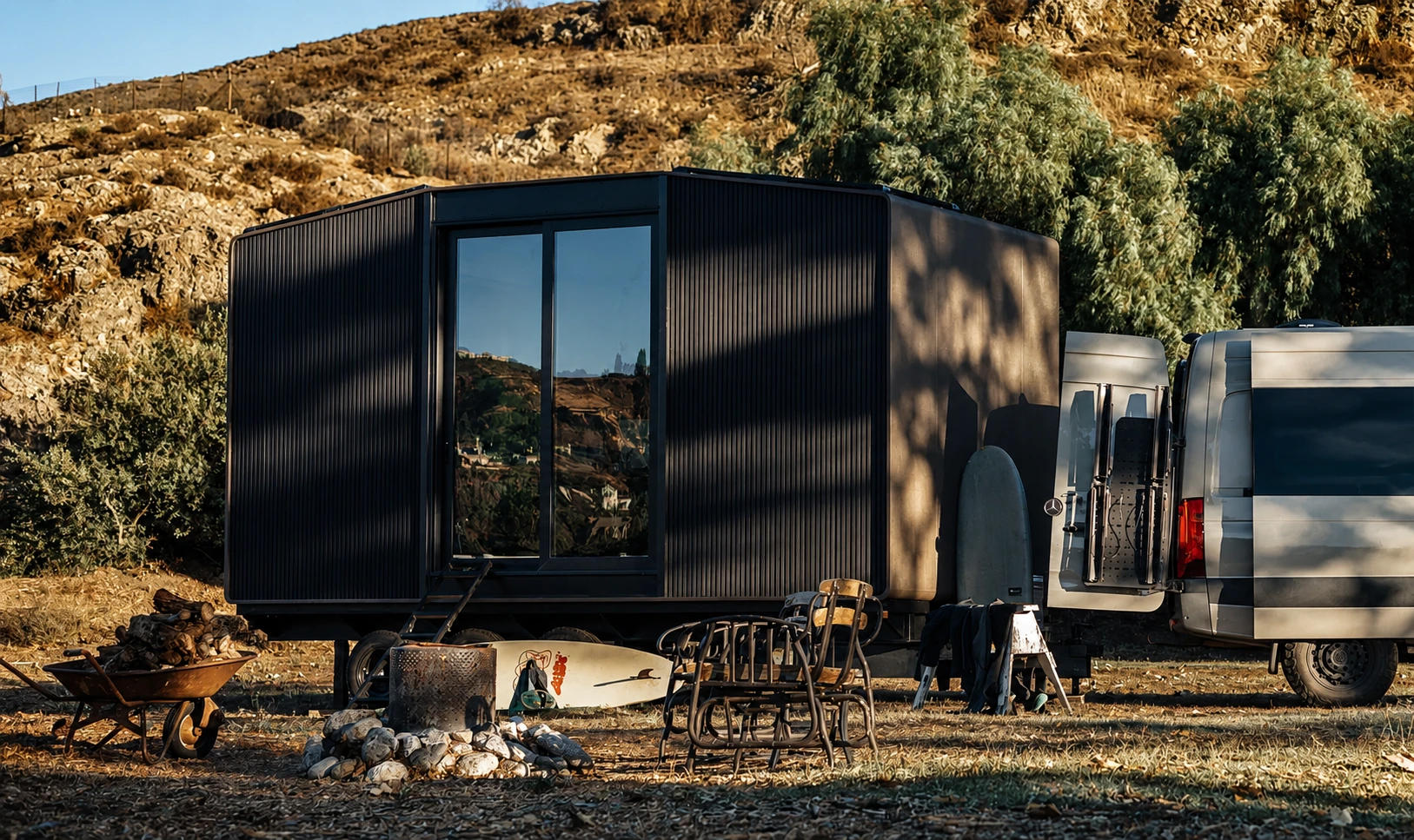
At Azure Printed Homes, we combine robotic manufacturing, recycled materials, and flexible design to build backyard studios, ADUs, homes on wheels, and larger residential homes. We see every project as an opportunity to make construction more efficient without limiting customization. This guide compares modular and custom homes across the factors that matter most when planning a new home.
What Are Modular and Custom Homes?
Although they are built differently, modular and custom homes have the same ultimate goal: creating a permanent home designed for the people who will live in it.
A modular home is manufactured in sections inside a controlled production facility before being transported to the building site for installation. Once delivered, the modules are assembled on a permanent foundation and completed with the remaining site work and utility connections.
We approach modular construction as a coordinated process rather than a series of independent construction stages. While site work moves forward, the home itself is already being manufactured, allowing both phases to come together during installation.
A custom home is built entirely on the property where it will remain. Every stage of construction, from framing to interior finishes, takes place on-site according to the homeowner’s design and the project’s specific requirements.
Despite the different construction methods, both types of homes can meet the same building codes, serve as primary residences, appreciate over time, and offer long-term value. The biggest difference is not the finished home itself but the process used to create it.
Modular vs Custom Homes: Side-by-Side Comparison
At first glance, modular and custom homes can appear very similar once construction is complete. Both can provide comfortable, permanent living spaces with modern layouts, attractive finishes, and durable construction. The differences become much clearer when you look at how each project is planned, built, and delivered.
The table below provides a general comparison before exploring each topic in more detail.
| Consideration | Modular Home | Custom Home |
| Construction location | Manufactured in sections, then installed on-site | Built entirely on-site |
| Construction schedule | Often more predictable | Depends more on site conditions and construction progress |
| Weather exposure | Limited during manufacturing | Greater exposure throughout construction |
| Design flexibility | Wide range of layouts and customization options | Virtually unlimited |
| Site disruption | Reduced because much of the work happens off-site | Higher due to continuous on-site construction |
| Material waste | Can be reduced through factory production | Varies by project and builder |
| Permanent residence | Yes | Yes |
| Building codes | Built to applicable local and state requirements | Built to applicable local and state requirements |
Choosing between modular and custom construction involves much more than comparing features. Every project has its own priorities, and understanding those details often makes the decision much clearer.
Property Conditions and Project Requirements
The property itself can influence the decision just as much as the home design. A custom home is built entirely on-site, making it well suited for unusual lots, steep grades, or projects with highly specialized requirements. Modular construction requires more planning before production begins, but much of the work is completed before the home reaches the property.
Before choosing either approach, it helps to evaluate:
- Site access and delivery
- Foundation and utility requirements
- Zoning, permits, and local regulations
We review these details before manufacturing starts because they help determine not only whether a modular home is the right fit, but also which construction system makes the most sense. Depending on the project, we manufacture our studios, ADUs, homes on wheels, and larger residential homes using recycled polymer or light gauge steel, allowing us to match the structure to the site and local requirements.
Sustainability and Long-Term Performance
Both modular and custom homes can be built with sustainability in mind, but they achieve it differently. Factory-built construction brings more control to the process. Manufacturing in a controlled environment helps reduce unnecessary waste, protects materials from the weather, and improves consistency throughout production.
That is the approach we take at Azure Printed Homes. Our recycled polymer homes use approximately 100,000 recycled plastic bottles for every 120 square feet of printed living space. Combined with precision robotic manufacturing, insulated assemblies, and energy-efficient design, we build homes that are designed to perform well long after installation, not just during construction.
A custom home’s environmental impact depends largely on the builder, material selection, and how efficiently construction is managed on-site. Material waste, weather exposure, and multiple deliveries can all influence the overall footprint.
Construction Methods and Manufacturing Process
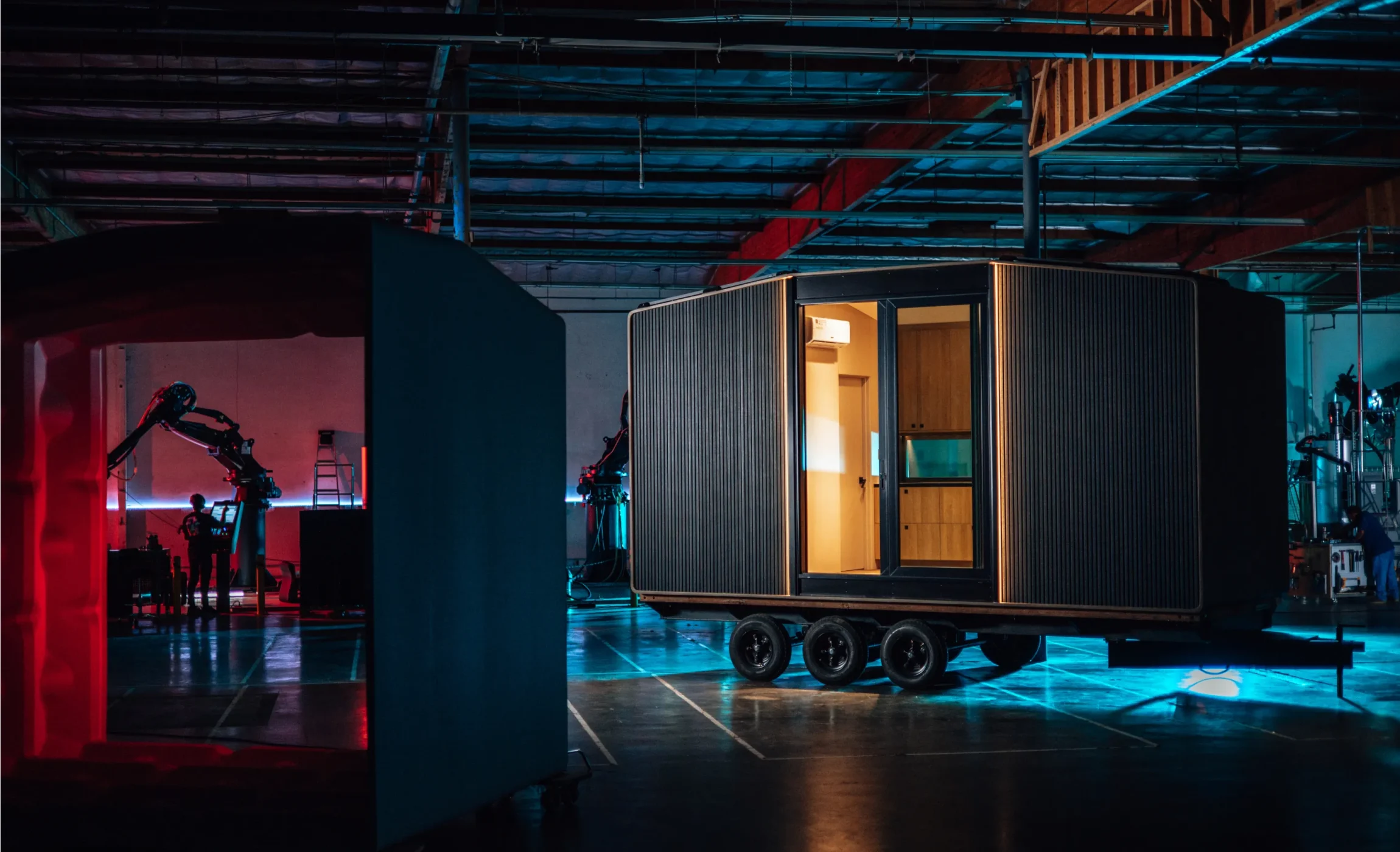
The biggest difference between modular and custom homes is how they are built. Modular construction changes that sequence. While foundations and site preparation move forward, the home itself is already being manufactured. We use robotic printing and factory production to complete much of the structure, insulation, windows, plumbing, electrical systems, and interior finishes before delivery.
By the time one of our studios, ADUs, homes on wheels, or larger residential homes reaches the property, the remaining work is focused on installation, utility connections, inspections, and final details rather than building the home from the ground up.
A custom home is constructed almost entirely on the property. Framing, roofing, plumbing, electrical work, insulation, drywall, and interior finishes happen one stage at a time as different trades move through the project. This approach offers exceptional flexibility but also leaves construction more exposed to weather, scheduling conflicts, and material delays.
Design Flexibility and Customization Options
One of the biggest misconceptions about modular homes is that every design looks the same. While custom homes still offer the greatest architectural freedom, modern modular construction provides far more flexibility than many buyers expect.
Depending on the project, customization may include:
- Floor plan adjustments
- Interior and exterior finishes
- Window and door placement
- Bedroom and bathroom configurations
- Dimensional modifications
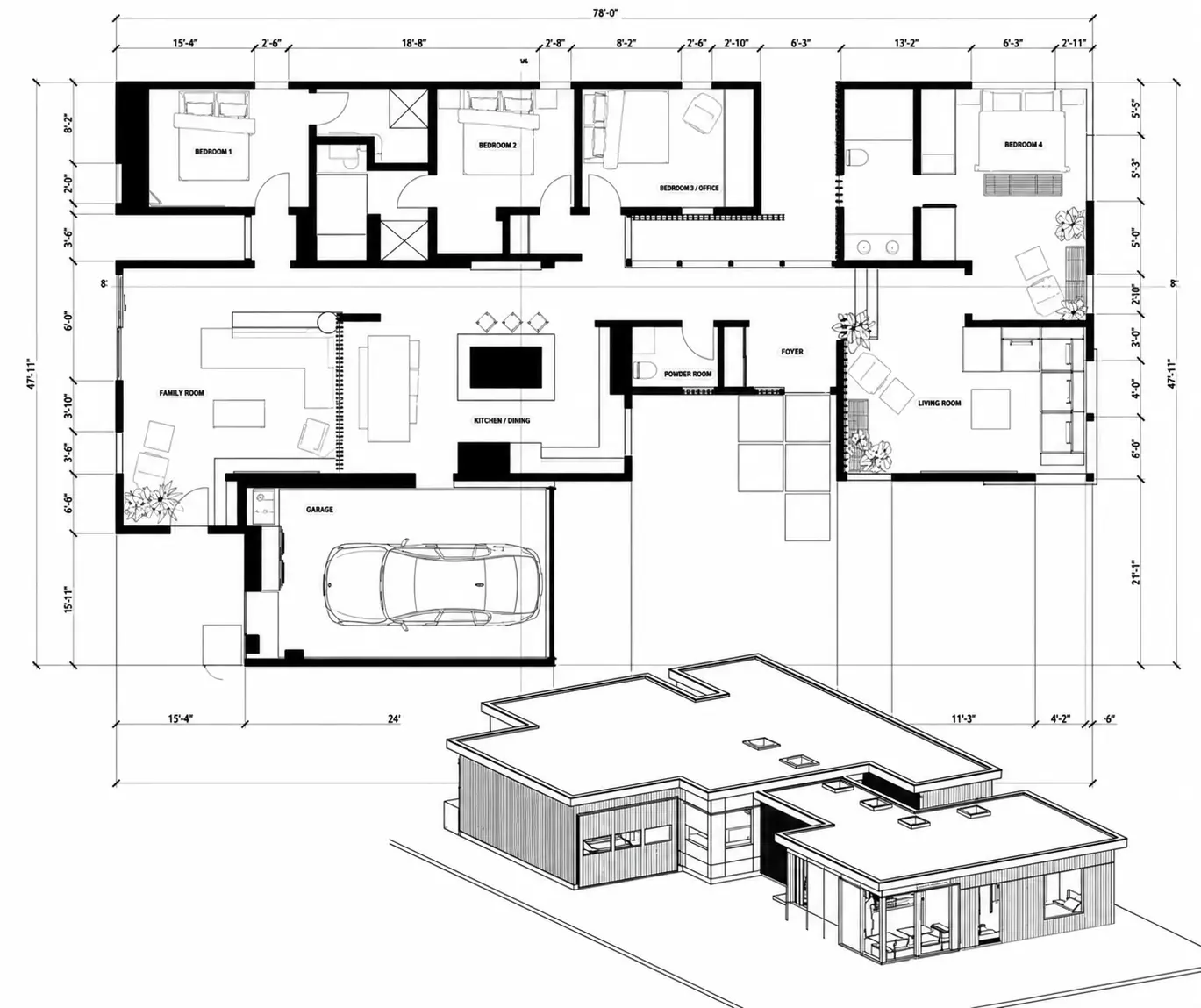
Rather than treating our models as fixed floor plans, we use them as starting points. Some homeowners choose one of our studios or ADUs with only a few finish upgrades, while others customize layouts, dimensions, or architectural details. We also develop fully custom residential projects when a standard model is not the right solution. The goal is not to limit design choices but to make the design process more efficient.
Construction Timelines and Project Planning
Every home follows its own schedule, whether it is modular or custom. Design, engineering, permitting, foundations, utility work, and inspections are part of both construction methods.
The difference is how those phases are organized. Our modular process allows manufacturing and site preparation to happen simultaneously. Once the design is finalized, the project moves through five clear stages: configure, print, install finishes, deliver, and install. Organizing construction this way reduces the amount of work left for the job site while giving homeowners a clearer picture of how the project is progressing.
A custom home usually progresses one stage after another, with each trade depending on the previous one. Weather delays can affect framing, exterior work, and finishing schedules, extending the overall timeline.
Cost Factors and Overall Project Value
Comparing modular and custom homes based only on price rarely tells the whole story. Regardless of the construction method, the final investment depends on several factors, including:
- Home size and design complexity
- Customization and finish selections
- Foundation and site preparation
- Utility connections, transportation, and permitting
Custom homes often have a wider cost range because nearly every aspect of the design can be developed from scratch. Modular homes typically provide a more structured planning process, making it easier to understand how design decisions affect the overall budget.
We build everything from compact studios and backyard ADUs to homes on wheels, larger residential homes, and fully custom projects because every homeowner has different priorities. A backyard office, a rental ADU, and a full-time family home all require different solutions. Looking beyond the initial construction cost and considering energy efficiency, durability, maintenance, and long-term value often leads to a more informed decision.
The Biggest Misconceptions Buyers Have
Choosing between modular and custom construction is often more difficult because of outdated information than because of the homes themselves. Modern building methods have changed significantly, yet many misconceptions continue to shape how people compare the two.
Misconception 1: Modular Homes Are Temporary
One of the most common misunderstandings is that modular homes are temporary structures. In reality, most modular homes are permanent residences installed on permanent foundations. Once completed, they function much like traditionally built homes and are designed for long-term occupancy. The distinction lies in where the home is built, not how long it lasts.
Misconception 2: Modular Homes All Look the Same
Years ago, factory-built housing often offered limited layouts and exterior styles. That is no longer the case. Today’s modular homes can include contemporary, traditional, farmhouse, or modern architectural styles, along with a wide variety of floor plans and finishes. Depending on the manufacturer, buyers may customize kitchens, bathrooms, windows, exterior materials, roofing, storage, and many other features.
Misconception 3: Factory-Built Means Lower Quality
Building indoors does not automatically make a home better or worse. Quality depends on engineering, materials, workmanship, and quality control throughout the project. A controlled manufacturing environment offers several practical advantages. Materials remain protected from weather during production, construction follows consistent processes, and manufacturing equipment can achieve a high level of precision from one home to the next.
Misconception 4: Custom Homes Are Always More Personalized
Custom homes certainly offer tremendous design freedom, but that does not mean modular homes cannot be personalized. Many modular manufacturers now provide extensive customization options, allowing buyers to modify layouts, finishes, dimensions, and architectural details to better suit their needs.
Our approach reflects that flexibility. While our product lineup provides proven starting points for studios, ADUs, homes on wheels, and larger residential homes, we regularly work with homeowners to adapt designs and develop custom solutions for unique projects.
Misconception 5: Faster Construction Means Cutting Corners
A shorter construction schedule does not necessarily mean lower quality. Factory-built construction often reduces the overall timeline because manufacturing and site preparation happen simultaneously rather than one after the other. Robotic production, controlled workflows, and organized scheduling can improve efficiency without changing the engineering or performance of the finished home.
For many homeowners, the real advantage is predictability. A more organized manufacturing process can reduce uncertainty while still delivering a home designed for long-term living.
Where Each Approach Works Best
Neither modular nor custom construction is the right answer for every project. Each method has strengths, and the best choice depends on how the home will be used, the characteristics of the property, and the homeowner’s priorities.
| Project Type | Modular Home | Custom Home |
| Backyard studio | Excellent fit | Good fit |
| ADU | Excellent fit | Excellent fit |
| Guest house | Excellent fit | Excellent fit |
| Rental property | Excellent fit | Good fit |
| Primary residence | Excellent fit | Excellent fit |
| Vacation home | Excellent fit | Excellent fit |
| Homes on wheels | Excellent fit | Not applicable |
| Workforce or community housing | Excellent fit | Possible, depending on project |
| Highly customized luxury residence | Possible, depending on design | Excellent fit |
| Architecturally unique home | Possible, depending on engineering | Excellent fit |
For many homeowners, modular construction is especially attractive when efficiency, predictable manufacturing, and reduced on-site disruption are important. Backyard studios, ADUs, rental units, guest accommodations, vacation homes, and even full-size primary residences can all benefit from factory-built production.
That is why we build a broad range of modular solutions instead of focusing on a single product category. Our lineup includes compact studios, accessory dwelling units, homes on wheels, and larger residential homes because different properties and homeowners have different needs. Some projects call for a simple backyard workspace, while others require a full-time residence or a completely custom design.
Custom homes continue to be an excellent choice for projects that involve highly specialized architecture, unusual building sites, or one-of-a-kind design features that are difficult to manufacture in transportable sections. When maximum architectural freedom is the highest priority, traditional site-built construction remains an important part of the residential building industry.
Final Thoughts
The conversation around modular versus custom homes has changed considerably over the last decade. Modern manufacturing has expanded what modular construction can achieve, giving homeowners more flexibility, better design options, and a more predictable building process than many people expect.
At the same time, custom homes continue to offer unmatched freedom for projects with highly specific architectural or site requirements. Rather than competing with one another, the two construction methods solve different challenges and often appeal to different types of projects.
At Azure Printed Homes, we combine robotic manufacturing, recycled materials, and thoughtful design to build studios, ADUs, homes on wheels, larger residential homes, and custom projects that respond to the way people live today. By bringing more of the construction process into a controlled manufacturing environment while maintaining flexibility in design, we help homeowners explore a modern approach to residential construction that balances efficiency, sustainability, and long-term performance.