Learning how to invest in affordable housing starts with understanding that there is no single investment model. Some investors purchase rental properties, others develop new housing, while some focus on accessory dwelling units (ADUs), modular homes, or multifamily projects.
At Azure Printed Homes, we support many of these approaches by manufacturing factory-built modular homes, ADUs, studios, and larger building systems that can help reduce construction timelines while giving developers and property owners more flexibility.
This guide explains the main investment strategies, the costs involved, financing considerations, and what to evaluate before starting an affordable housing project.
What Affordable Housing Means
Affordable housing generally refers to homes where occupants spend no more than 30% of their gross household income on housing costs, including utilities. While this benchmark is commonly used, affordable housing itself covers many different housing types and ownership models.
Depending on the project, affordable housing may include:
- Single-family homes
- Accessory dwelling units (ADUs)
- Multifamily apartment buildings
- Workforce housing
- Senior housing
- Transitional housing
- Mixed-income developments
- Supportive housing
Not every affordable housing project receives government funding or subsidies. Many private investors build housing that naturally falls into an affordable price range simply by controlling construction costs, using efficient building methods, or developing smaller homes.
Different Ways to Invest in Affordable Housing
Affordable housing investments can take several forms depending on available capital, land, and long-term goals.
Purchase Existing Rental Properties
Buying an existing property and offering it as below-market or workforce housing is one of the most familiar ways to enter the affordable housing market. The property may already have tenants, or it may require repairs before it can produce income.
This route often involves inspections, renovation work, maintenance planning, tenant management, and compliance with local rental rules. The main advantage is speed. Once the property is ready and occupied, rental income may begin sooner than it would with a ground-up development. The trade-off is that older buildings can bring hidden repair costs, outdated systems, and less control over the final layout.
Build New Affordable Homes
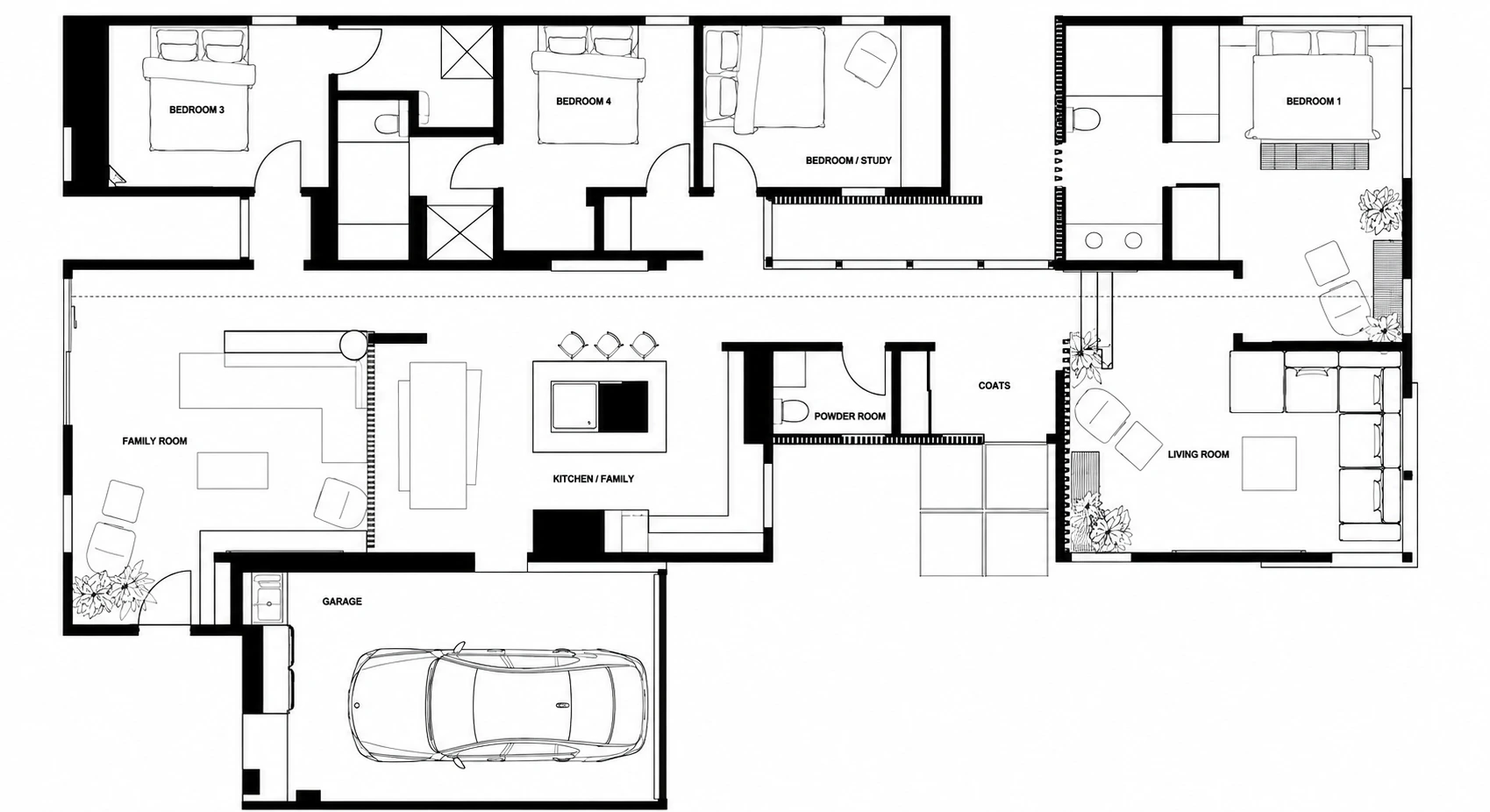
New construction gives investors more control over the size, layout, energy performance, and long-term maintenance needs of the property. It can work for single-family homes, duplexes, townhomes, small subdivisions, or larger residential developments.
Construction costs are usually one of the biggest parts of the budget, so the building method matters. We offer homes and ADUs ranging from compact one-bedroom layouts to larger two-bedroom homes, along with custom designs for more complex projects. Our modular process allows factory production to move forward while foundations, utilities, and other site work are prepared separately. That overlap can reduce delays and make the overall schedule easier to manage.
Add an ADU
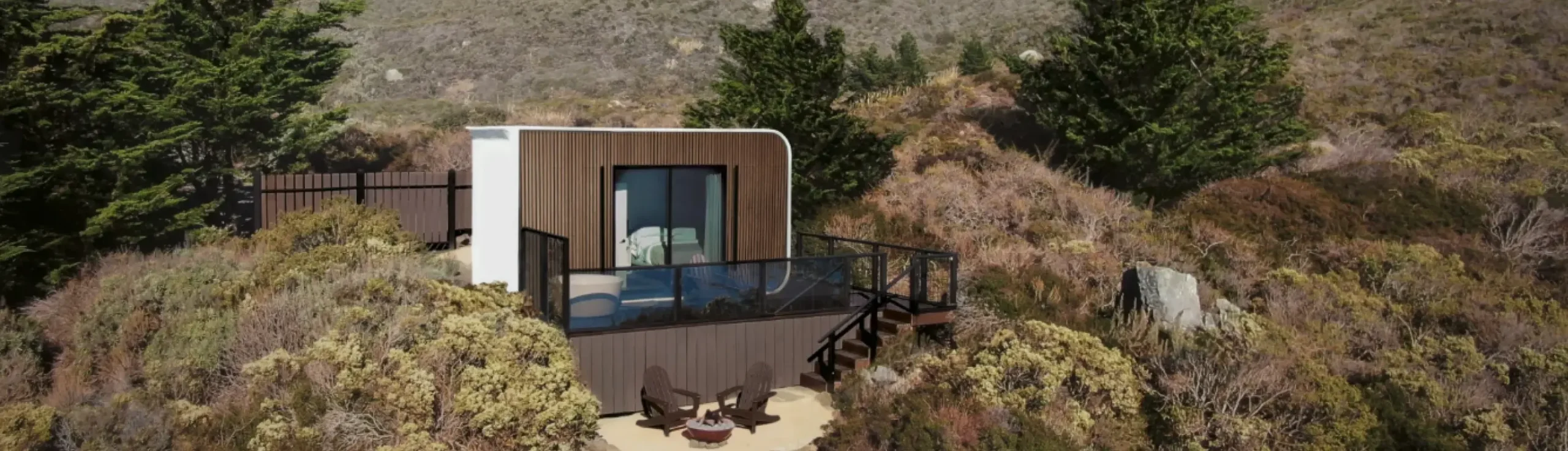
An accessory dwelling unit can be a practical way to create an additional rental without buying a second property. It may be used for long-term tenants, relatives, older family members, or local workers who need smaller housing near jobs and services.
We manufacture several ADU layouts for different lot sizes and housing needs:
- 360: 18 by 20 feet, with one bedroom, one bathroom, and one kitchen, starting at $89,900
- 540: 18 by 30 feet, with one bedroom, one bathroom, and one kitchen, starting at $134,900
- 720: 18 by 40 feet, with one or two bedrooms, one bathroom, and one kitchen, starting at $174,900
- 900: 18 by 50 feet, with two bedrooms, one-and-a-half bathrooms, and one kitchen, starting at $219,900
Factory construction includes electrical, plumbing, mechanical systems, and standard finishes. Site preparation, foundations, permits, delivery, installation, and utility connections are separate because they depend on the property and local requirements. For an investor, that distinction is important. The model price is only one part of the full project cost, but building on land that is already owned may still reduce the amount of capital needed compared with acquiring another property.
Develop Multifamily Housing
Multifamily development requires more planning, financing, and coordination, but it can create several income-producing units within one project. Common formats include apartments, duplexes, triplexes, fourplexes, townhomes, and mixed-income communities.
For larger developments, we provide an industrialized building system that combines digitally prefabricated light-gauge steel framing, Structural Insulated Panels, optional 3D-printed recycled composite facades, and off-site fabrication. The system is designed for repeatable housing, single-family and multifamily projects, and custom multi-story construction.
Components are manufactured off-site and shipped for assembly by the project’s general contractor. We also coordinate with the Architect of Record, engineers, and construction team by providing system details, technical performance information, and fabrication support. This approach can reduce onsite complexity while preserving flexibility in unit layouts, density, and exterior design.
How to Start Investing in Affordable Housing
Every affordable housing project begins with a plan. Whether the goal is adding a single rental unit or developing a larger community, taking time to evaluate the property, budget, and local regulations can prevent expensive surprises later.
A practical approach is to move through the project one step at a time instead of making decisions only after construction begins.
Step 1: Define Your Investment Goal
The first decision is not what to build, but why to build it. Some investors want long-term rental income, while others focus on increasing property value or developing multiple homes for sale. The right strategy depends on available capital, land ownership, local housing demand, and the amount of time available to manage the project.
For example, someone who already owns residential land may find that adding an ADU is a simpler first investment than purchasing another property. Larger investors may instead focus on developing several homes or multifamily housing where economies of scale become more important.
Step 2: Research Local Regulations
Affordable housing projects must comply with local zoning, building codes, setback requirements, utility regulations, and permitting processes. These rules often determine what can be built before construction even begins.
Some municipalities encourage ADUs or higher-density housing, while others place limits on lot coverage, building height, parking, or occupancy. Understanding these requirements early helps investors avoid redesigns and unexpected delays.
We begin every project with a site assessment to understand what the property allows. Our team reviews the site together with the owner’s goals before moving into design development, helping create a solution that fits both the land and local requirements.
Step 3: Build a Complete Project Budget
Many first-time investors focus only on construction costs. In reality, the total investment includes much more.
Besides the building itself, the budget may include permits, engineering, foundations, grading, utility connections, delivery, landscaping, financing, insurance, and contingency funds.
We clearly separate factory pricing from site-specific costs because every project is different. Our homes include factory-installed electrical, plumbing, mechanical systems, and standard interior finishes. Additional project costs are planned separately and may include:
- Site preparation and grading
- Foundations
- Permit fees
- Delivery
- Installation
- Utility connections
This distinction helps investors understand where their budget is being allocated and build more accurate financial projections before construction begins.
Step 4: Choose the Right Housing Solution
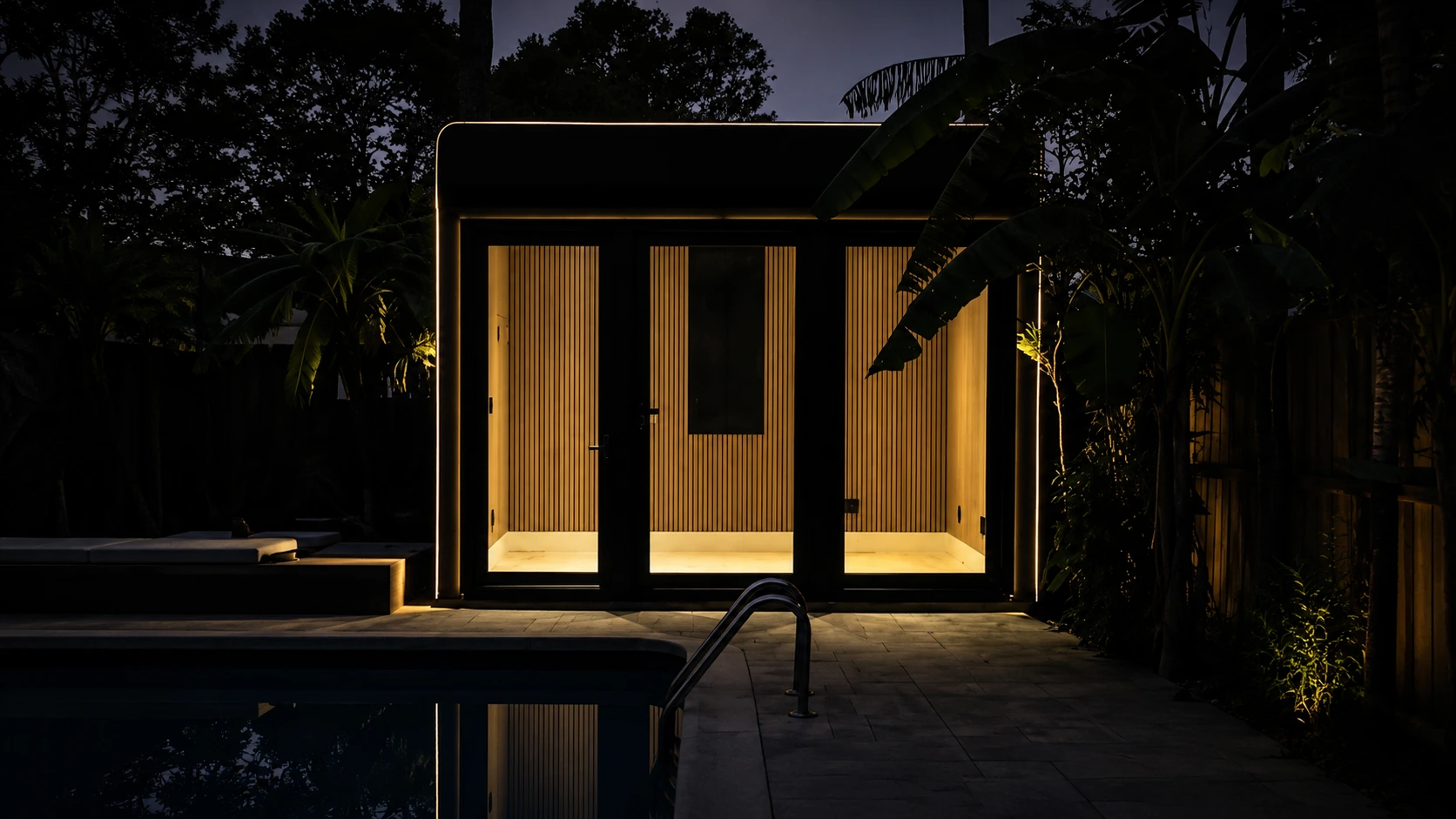
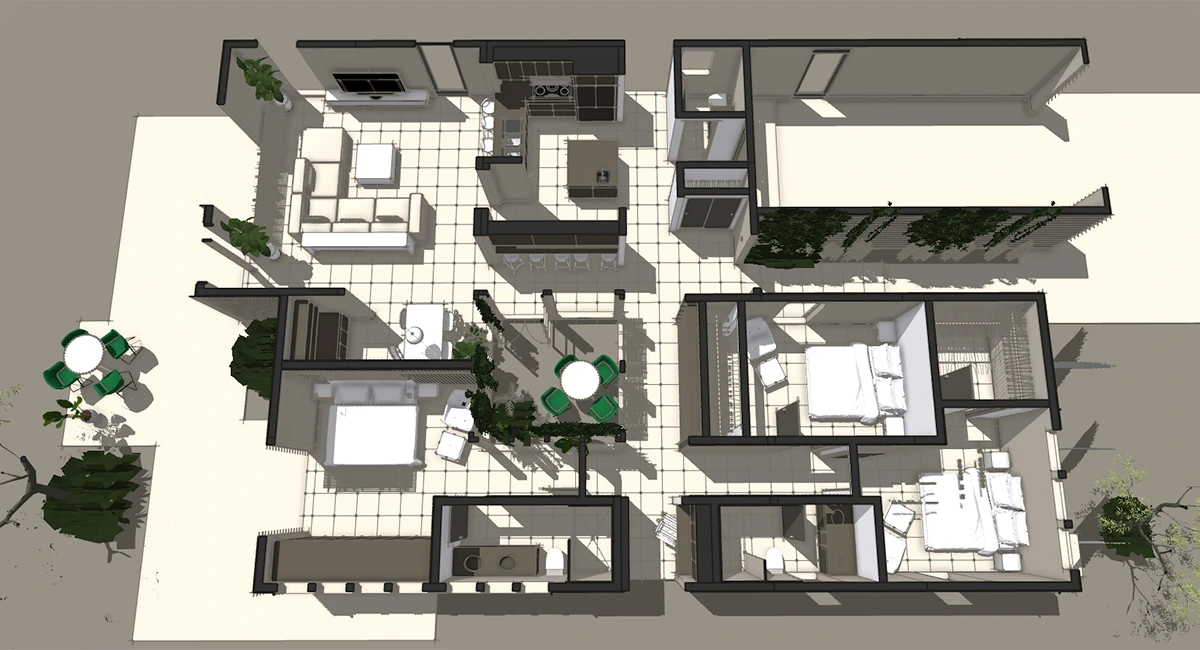
Not every affordable housing project requires the same type of home. A compact studio may work well for a backyard office or flexible living space, while a one-bedroom ADU can create a rental unit on an existing property. Larger developments may require multiple homes or modular systems that can be repeated across a site.
Rather than choosing the biggest model available, investors should select a design that matches local demand, the available land, and long-term operating costs.
We offer backyard studios, homes, ADUs, fully custom homes, and professional building systems for larger developments. Because every project starts with different goals, our design team can customize layouts, finishes, dimensions, and configurations instead of limiting owners to a small set of standard floor plans.
Step 5: Plan the Construction Timeline
Construction schedules affect financing costs, carrying expenses, and when rental income can begin.
Factory-built construction allows many activities to happen simultaneously. While foundations and utilities are prepared on-site, the home itself can already be under construction in the factory.
Our process moves through client consultation, site assessment, design development, permitting, factory construction, and final delivery and installation. Working in parallel instead of waiting for each phase to finish can help keep projects moving more efficiently.
Step 6: Think Beyond the First Investment
A successful affordable housing investment is often the beginning of a larger strategy rather than a one-time project.
Investors who start with an ADU may later expand into multiple rental units. Developers may begin with a small residential project before moving into multifamily housing. Building methods that are repeatable and scalable can make future growth easier.
Choosing systems that can adapt to different property sizes, layouts, and housing needs also provides more flexibility as investment goals evolve.
Understanding Costs and Financing
A realistic budget is the foundation of any affordable housing investment. Construction is only one part of the total project cost, and investors should account for both the building itself and the work needed to prepare, finance, and operate the property.
Factory pricing should not be treated as the complete project budget. We complete the home in our factory with its core systems and standard interior finishes already in place. Because every site has different conditions and local requirements, expenses related to preparing the property and completing installation are calculated separately.
| Cost or financing category | What it may include |
| Property and planning | Land, surveys, architectural plans, engineering, and feasibility studies |
| Approvals | Permit fees, plan review, inspections, and local development requirements |
| Site work | Grading, foundations, drainage, access, and landscaping |
| Utilities and installation | Water, sewer or septic, electricity, delivery, placement, installation, and final utility connections |
| Project financing | Conventional mortgages, construction loans, commercial real estate loans, private capital, and development funds |
| Public support | Government-backed financing, tax credits, grants, local incentives, and public-private partnerships where available |
| Ownership and operations | Insurance, marketing, leasing, maintenance, and property management |
Financing should match the type of project. A single ADU on an existing property may be financed differently from a multifamily development or a group of homes intended for sale. Construction loans may suit ground-up projects, while commercial financing or private investment may be more appropriate for larger developments.
Some affordable housing projects may qualify for tax credits, grants, or local incentives, but eligibility depends on the location, ownership structure, income restrictions, and project type. Investors should verify those requirements early rather than including unconfirmed incentives in the financial model.
Separating factory costs from land, approvals, site work, and financing creates a more accurate picture of the total investment. It also makes it easier to compare housing options and estimate when the project may begin producing income.
How Modular Construction Helps Create Long-Term Value
Affordable housing investments depend on more than the initial building price. Construction time, financing costs, energy use, maintenance, and material performance all affect the final return.
Our modular approach advantages include:
- Faster timelines: Factory construction can move forward while foundations and utilities are prepared on-site. This can reduce carrying costs and bring rental income closer.
- Less on-site work: Robotic manufacturing and off-site production reduce the amount of labor and coordination needed at the property.
- More consistent quality: Factory conditions support precise construction and more controlled installation of systems and finishes.
- Better scalability: Our professional building system uses light-gauge steel, Structural Insulated Panels, and optional 3D-printed facades. It works well for repeatable and multifamily projects.
- Energy efficiency: High-performance insulation and air sealing can help reduce heating and cooling demand.
- Less material waste: Our recycled composite system uses more than 60% recycled plastic. Around 100,000 plastic bottles are reused for every 120 square feet, with no print waste.
Modular construction still requires careful budgeting, site review, and permitting. Its main advantage is a more coordinated path from design to delivery.
What to Consider Before Investing
Affordable housing can be a rewarding long-term investment, but success depends on careful planning rather than simply choosing the lowest construction cost.
Before moving forward, investors should evaluate:
- Local housing demand
- Land availability
- Zoning requirements
- Utility access
- Construction timelines
- Financing options
- Long-term maintenance
- Expected operating costs
- Exit strategy
- The construction partner’s ability to deliver consistently
Looking at the complete project, rather than one individual cost, usually leads to better investment outcomes.
Conclusion
Learning how to invest in affordable housing means balancing financial goals with practical construction decisions. Every project has unique requirements, whether it involves a rental property, an ADU, a multifamily development, or a custom residential community.
Construction methods have become an increasingly important part of that equation. Factory-built modular housing can improve scheduling, provide predictable manufacturing conditions, and support a wide range of project types.
We combine robotic manufacturing, modular construction, customizable designs, recycled materials, and professional project coordination to help homeowners, developers, and housing providers bring affordable housing projects to life more efficiently. Whether the goal is adding a single ADU or planning a larger residential development, we focus on practical solutions that make the building process simpler from design through installation.