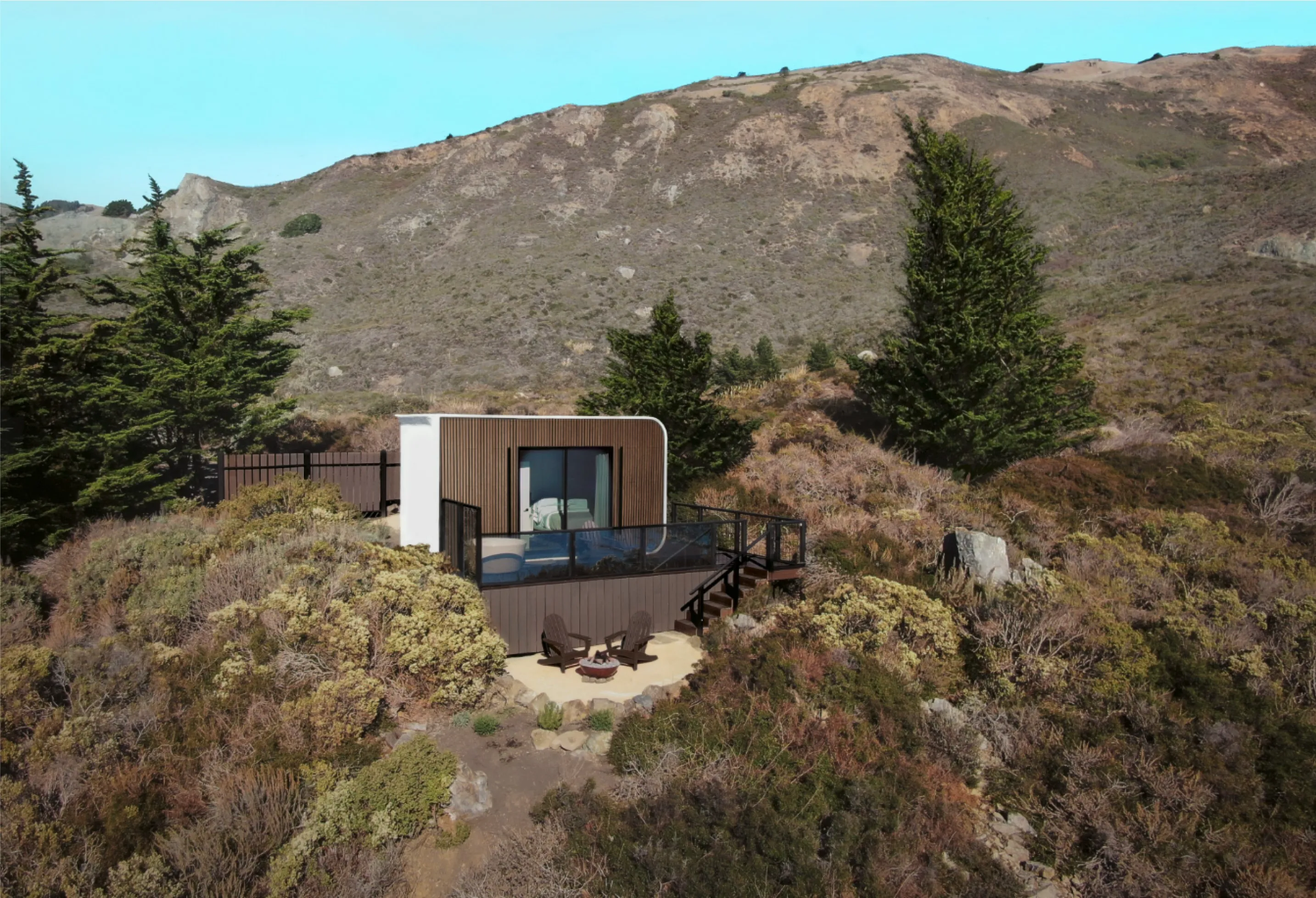
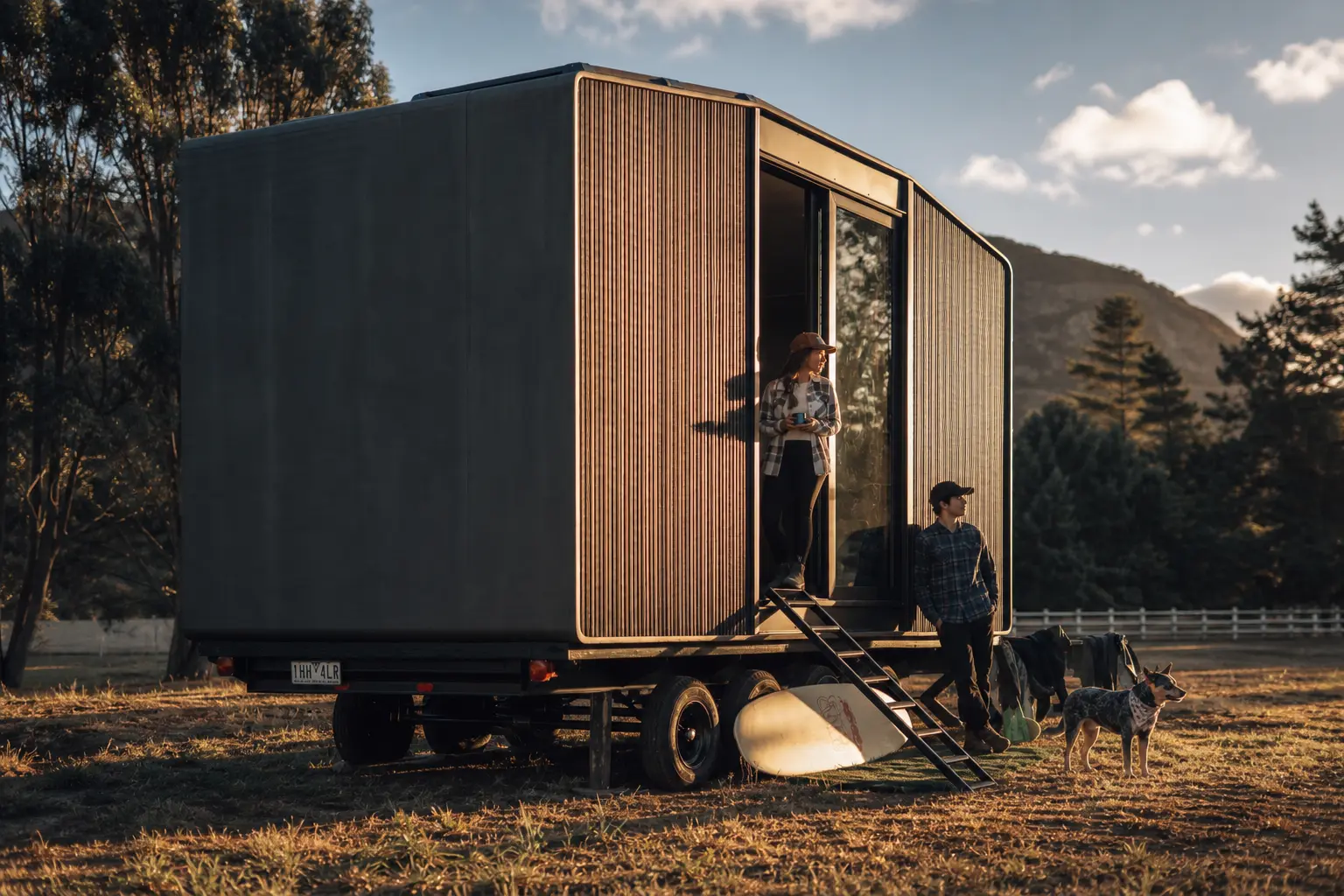
A backyard studio apartment can cost anywhere from $24,900 for a compact studio to $49,900 and up for an ADU-style unit, before site work, permits, delivery, installation, and utility connections. The final price depends on the size, layout, bathroom or kitchen needs, foundation, and local building requirements.
For homeowners comparing options, the biggest question is not only the cost of the unit. A complete backyard studio apartment budget should also account for plumbing, electrical work, site preparation, permits, and any upgrades needed to make the space comfortable year-round.
What a Backyard Studio Apartment Is and How Much It Costs
A backyard studio apartment is a compact living space built on the same property as a main home. Unlike a basic backyard office or shed, a studio apartment usually includes features that support longer stays or independent use.
The cost to build a backyard studio apartment can vary widely. A compact studio shell or office-style unit may start in the lower five figures, while a fully finished ADU-style studio with plumbing, bathroom, kitchen, permits, delivery, foundation, and utility work can cost much more.
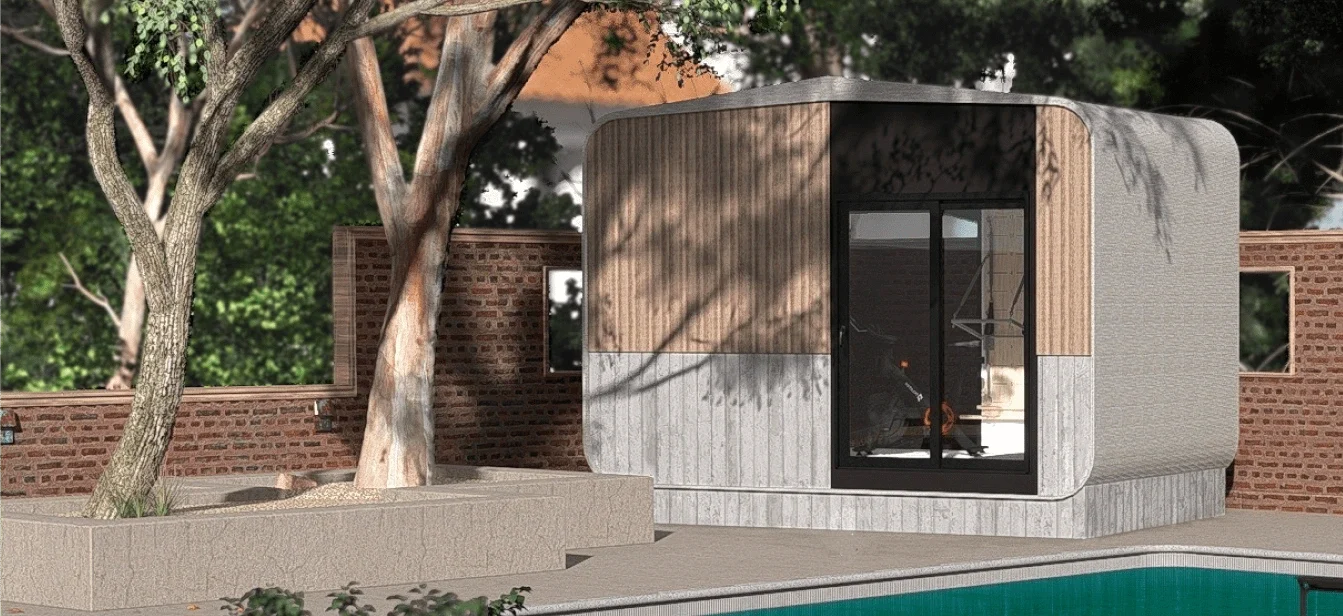
We at Azure Printed Homes, offer backyard studio models from $24,900 to $29,900, while our ADU-style models start at $49,900 and increase with size and features.
Here is a general way to think about starting prices:
| Space Type | Typical Use | Azure Starting Price |
| Compact backyard studio | Office, creative space, guest room | From $24,900 |
| Larger studio unit | Flexible backyard space | From $29,900 |
| Small ADU-style unit | Studio apartment, guest suite, rental use | From $49,900 |
| Larger ADU-style home | Full living space | From $89,900 |
These prices help with early planning, but the final project budget should also include site preparation, permits, delivery, installation, foundation needs, utility connections, and any selected upgrades.
Key Factors That Affect Backyard Studio Apartment Cost
Before choosing a model or estimating the full budget, it helps to understand what actually moves the price up or down. A backyard studio apartment is not only a structure. The total cost also depends on how the space will be used, what features it needs, and what work must happen on the property before installation.
Size of the Unit
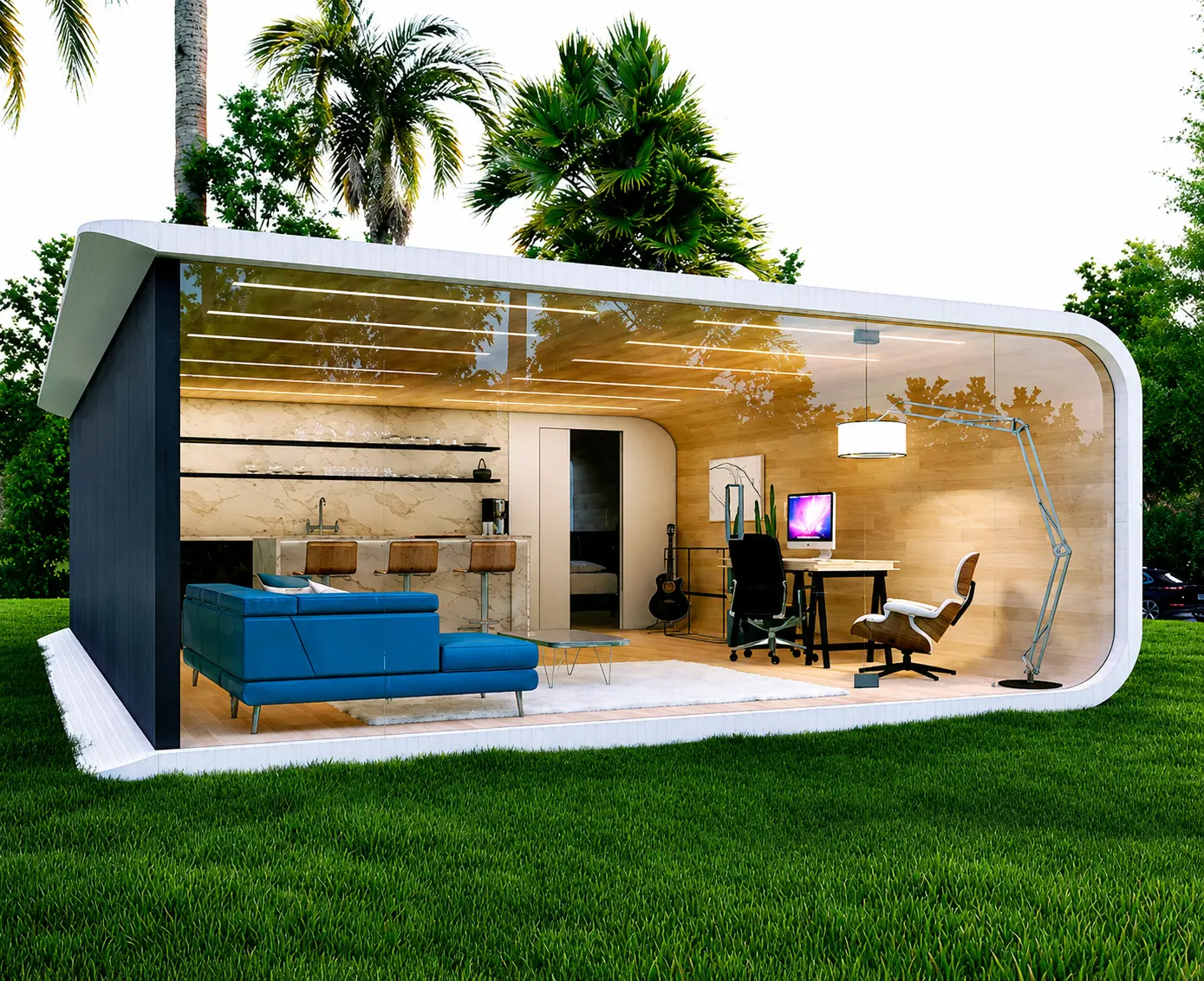
Size is one of the biggest cost factors. A 100 sq ft studio used as a quiet workspace will usually cost less than a larger studio apartment with a bathroom and kitchen. More square footage means more materials, more finishing work, and often more site requirements.
A smaller unit can still be useful if the layout is planned well. Large windows, built-in storage, and efficient floor plans can make a compact space feel more open and comfortable.
Bathroom and Kitchen Needs
Adding a bathroom or kitchen changes the project budget. Plumbing, fixtures, ventilation, cabinets, appliances, and utility connections all add cost. A simple backyard office may only need electricity and climate control, while a studio apartment designed for overnight stays usually needs more complete systems.
This is why the intended use matters. A space for remote work may not need the same features as a rental unit or guest suite.
Site Preparation
The backyard itself can affect the total cost. A flat, accessible site is usually easier to prepare than a sloped or tight space. The project may require grading, clearing, drainage work, foundation preparation, or access planning for delivery and installation.
Before choosing a model, homeowners should think about where the unit will sit, how people will access it, and how utilities will reach the structure.
Permits and Local Rules
Permits can affect both cost and timeline. Backyard studio apartments and ADUs are regulated differently depending on the city, county, and property type. Some areas may have rules about size, setbacks, parking, height, rental use, and utility connections.
Planning early can help avoid delays. It is also useful to understand whether the project is being treated as a studio, ADU, guest house, home office, or another type of structure.
Utilities and Connections
A backyard studio apartment may need electricity, water, wastewater, heating, cooling, and internet. The farther the unit is from existing connections, the more complex the work may become.
Utility planning should happen early. It can affect the location of the unit, the layout, the installation process, and the final budget.
Backyard Studio Apartments Cost by Use
The intended use has a big impact on the budget. A quiet workspace may only need electricity, insulation, climate control, and internet, while a guest suite or rental studio may need plumbing, a bathroom, a kitchenette, and more storage. Defining the use first makes it easier to choose the right size, layout, and features.
Home Office or Creative Studio
A backyard office or creative studio is often one of the simplest uses. It may need insulation, electrical outlets, lighting, heating and cooling, internet, and good natural light. It may not need plumbing, which can help reduce the total project cost.
This type of space works well for remote work, art, fitness, music, content creation, or a quiet retreat away from the main house.
Guest Suite
A guest suite usually needs more comfort. Homeowners may want space for a bed, storage, a bathroom, heating and cooling, and enough privacy for visitors. Some guest suites may also include a small kitchenette or coffee station.
The cost depends on how independent the space needs to be. A simple guest room is different from a fully self-contained apartment.
Rental Studio or ADU
A rental studio or ADU often needs a more complete layout. That may include a bathroom, kitchen, sleeping area, living space, storage, and separate utility planning. Local rules may also affect whether the unit can be rented and what features it must include.
For homeowners thinking about rental income, the budget should include more than the starting price of the unit. Site work, permits, utility connections, and long-term maintenance all matter.
Family Housing
Many homeowners build backyard studio apartments for parents, adult children, or extended family. In this case, comfort and long-term use become more important. A slightly larger layout, better storage, durable finishes, and reliable heating and cooling can make the space easier to live in every day.
How to Choose the Right Size
The right size depends on how the backyard studio apartment will be used. Before choosing a unit, consider:
- Main purpose: A compact studio may be enough for a home office, workout room, or creative space.
- Overnight use: If someone will sleep there regularly, a larger layout may feel more comfortable.
- Kitchen needs: A simple studio may not need a kitchen, while a guest suite or rental unit may need one.
- Privacy: Long-term living or guest use usually requires more separation from the main house.
- Storage: More daily use usually means more space for clothing, supplies, furniture, or equipment.
- Year-round comfort: If the space will be used in every season, insulation, heating, cooling, and layout matter more.
A smaller studio can still feel comfortable when the layout is efficient. A larger ADU-style unit may be worth the investment when the goal is independent living, rental use, or extended guest stays.
Backyard Studio Apartment Building Duration
The timeline for building a backyard studio apartment depends on the model, finishes, site readiness, permits, delivery access, and installation needs. A simple studio used as an office or creative space is usually easier to plan than a fully equipped studio apartment with plumbing, bathroom features, utility connections, and more detailed interior finishes.
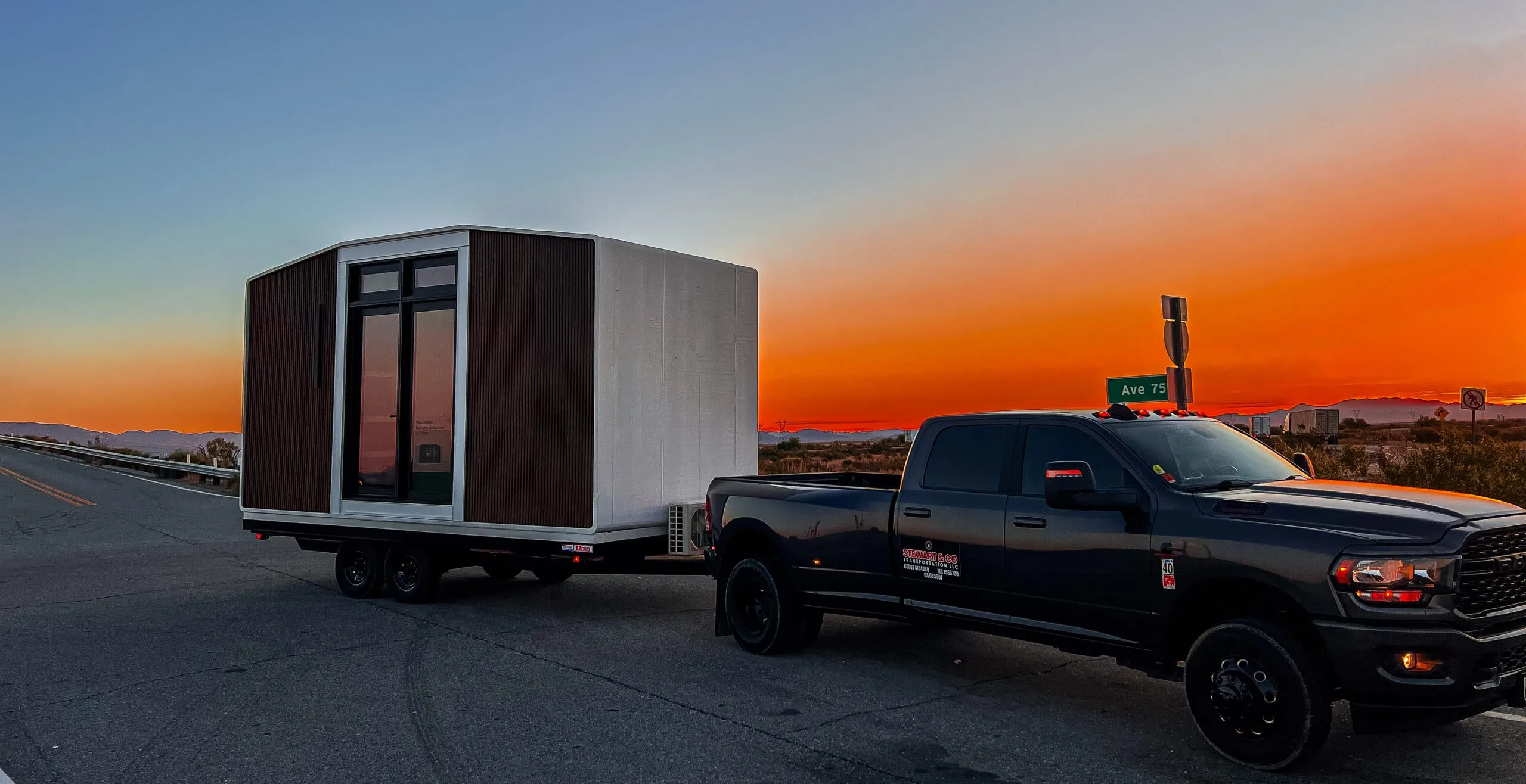
Our Azure’s process is built around speed and efficiency. Configuration can take over an hour, robotic printing may take about a day, finish installation may take 4-15 days, delivery may take 1-2 days, and on-site installation may take 1-4 days.
Still, the full project timeline is not only about production. Permits, site preparation, foundation work, utility planning, financing, inspections, and scheduling can add time before the unit is ready to use. A backyard with easy access and prepared utility connections may move faster, while a property that needs grading, trenching, drainage work, or permit revisions may take longer.
Modular production can help reduce some of the delays common in traditional construction because much of the work happens in a more controlled process. For homeowners, the best way to keep the project moving is to plan the site early, understand local requirements, and decide on key features before production begins.
How to Plan the Budget the Right Way
A good budget should include the unit and the full project around it. Many homeowners focus only on the structure, then later realize they also need to account for preparation and installation costs.
A more complete budget may include:
- Unit price
- Selected model and size
- Interior finishes
- Bathroom or kitchen features
- Delivery
- On-site installation
- Foundation or pad preparation
- Utility connections
- Permits and inspections
- Site access
- Landscaping or walkways
- Furniture and appliances
- Long-term maintenance
It is also smart to leave room for unexpected costs. Backyard projects can uncover issues with drainage, access, underground utilities, or local requirements.
Final Thoughts
The cost to build a studio apartment in a backyard depends on more than square footage. Size, layout, plumbing, utilities, permits, site work, delivery, and installation all shape the final budget.
For a compact backyard studio, our Azure models start at $24,900. For a small ADU-style studio apartment, starting prices begin at $49,900 and increase with size and features. The best approach is to define the purpose of the space first, then choose the model and layout that fit the property and the budget.
A backyard studio apartment should make life easier. With thoughtful planning and the right construction method, unused backyard space can become a modern, efficient, and useful place to live, work, host, or create.