Emergency housing in Indiana can mean different things depending on the situation. A person may need a safe place tonight, help avoiding eviction, a temporary shelter bed, rental support, or a more stable housing option after a crisis.
Emergency housing is not only about one person finding one open bed. It is also about how communities create enough safe, practical places for people to recover, regroup, and move toward stability. That is where new building methods, including printed modular construction, can become part of the conversation.
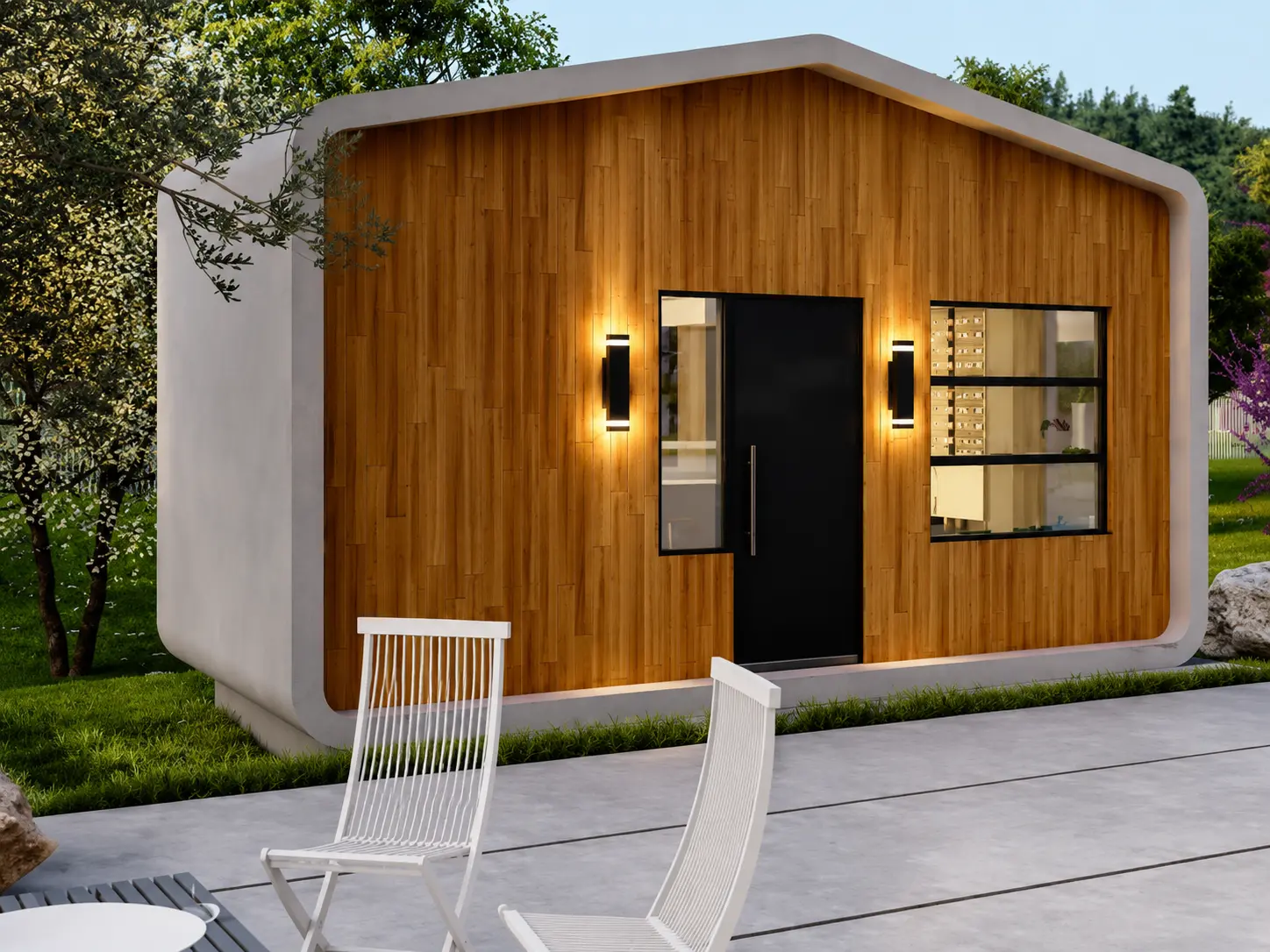
At Azure Printed Homes, we build future-focused modular living spaces with robotic 3D printing and recycled materials. For emergency housing providers, local governments, property owners, and organizations, printed modular units can offer another way to add housing capacity when traditional construction is too slow, too costly, or too difficult to scale.
Emergency Housing Options in Indiana
A housing emergency can happen quickly. A missed paycheck, eviction notice, family conflict, disaster, unsafe living situation, or sudden loss of housing can leave someone needing help right away. Indiana has several possible paths, but the best option depends on urgency, location, household size, eligibility, and what resources are available nearby.
Calling Indiana 2-1-1
Indiana 2-1-1 is often the first place to start. It can connect people with shelter and housing resources in their area, along with other essential services. Indiana Housing Now also points residents to Indiana 2-1-1 for temporary or emergency shelter information.
This option is useful when someone does not know which agency to call first. A 2-1-1 navigator may ask about the current living situation, income, household members, and immediate safety needs so they can point the person toward local resources.
Emergency Shelters
Emergency shelters can help with:
- A safe place to stay during an immediate housing crisis
- Short-term support for adults, families, veterans, youth, or people leaving unsafe situations
- Referrals to local housing programs, rental assistance, or case management
- Help creating a longer-term housing plan
- Connections to other services when available
Shelter availability can change quickly, so it is best to call early, check more than one resource, and ask what options may be available that day.
Rental Assistance and Eviction Prevention
Not every housing emergency starts with homelessness. Some people still have a place to live but are at risk of losing it. Rental help, utility help, mediation, payment plans, or legal referrals may help a household stay housed.
Indiana’s housing resources include Indiana Housing Now, Housing Choice Vouchers, energy assistance, and weatherization assistance through IHCDA’s homeowner and renter resources.
Supportive Housing and Voucher Programs
Some households may qualify for programs that combine rental assistance with support services. HUD explains that Emergency Housing Vouchers were created to assist people who are homeless, at risk of homelessness, fleeing certain unsafe situations, or recently homeless and at high risk of housing instability.
In Indiana, IHCDA notes that EHV households are referred through the local Continuum of Care Coordinated Entry system.
Modular Emergency Housing
Modular housing can help communities address:
- The shortage of physical housing units
- Limited shelter capacity
- The need for private rooms or compact living spaces
- Transitional housing after an emergency
- Flexible housing for different household sizes
- Faster project planning compared with fully on-site construction
It does not replace shelters, vouchers, rental support, or case management. Instead, it adds another layer to the housing response by creating more places where people can stay.
Printed modular construction can be used for private rooms, studio units, ADU-style homes, or small housing communities. At Azure Printed Homes, we build these spaces with robotic printing, recycled materials, customizable designs, delivery, and installation support.
Printed Modular Constructions vs Short-Term Shelters
Short-term shelter matters. It gives people a place to sleep, breathe, and get connected to help. But Indiana communities also need practical ways to move from emergency response to stable housing.
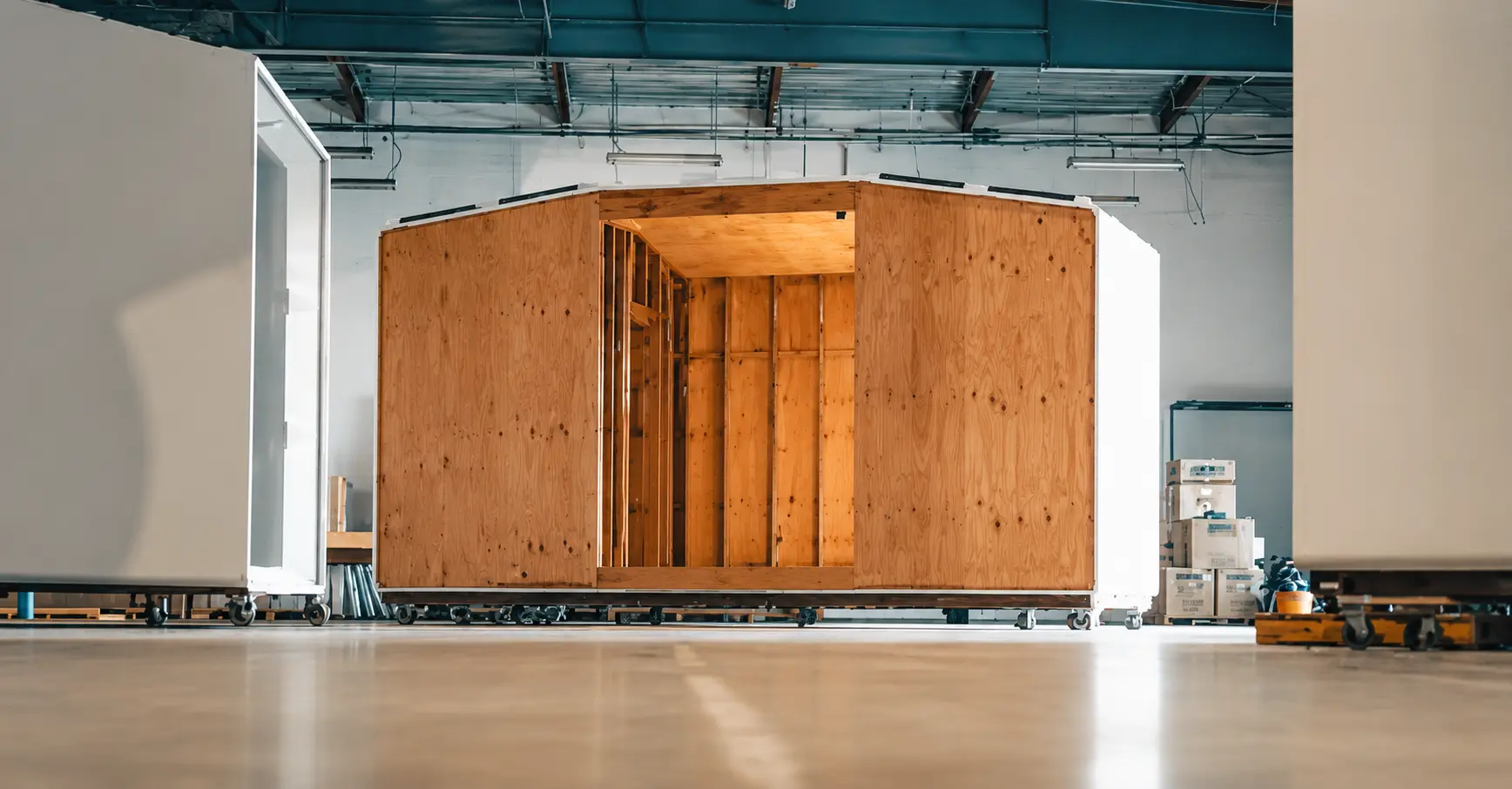
However, printed modular construction changes the way housing can be planned and delivered. Instead of building every part of a unit from scratch on-site, more of the work can happen through a controlled production process.
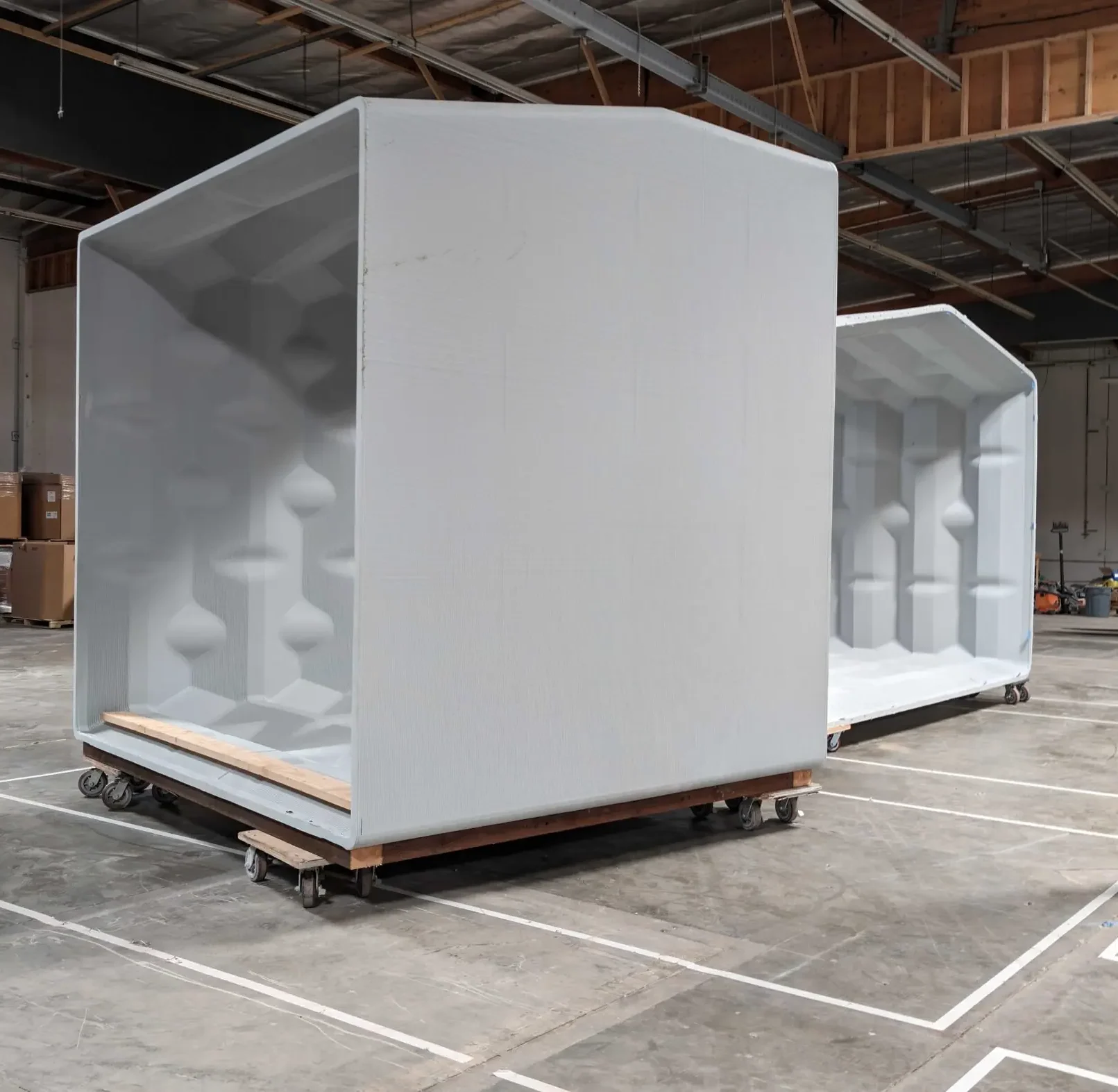
At Azure Printed Homes, we use robotic 3D printing and recycled materials to create modular living spaces. Our process is designed for customization, speed, precision, and practical installation. That makes it useful for homeowners, developers, organizations, and public-sector housing projects.
Faster Unit Production
Emergency housing needs speed. Traditional construction can take time because of labor schedules, weather, site delays, and long build cycles. Modular construction can reduce the amount of work that must happen on-site.
Our process includes configuration, printing, finishes, delivery, and installation. A unit can be robotically printed in about one day, with finishes, delivery, and installation handled in later steps.
Flexible Housing Sizes
Not every housing need requires the same unit. Some people need a private sleeping space. Others need a studio with a bathroom and small living area. Some projects need larger homes for families or longer-term residents.
Printed modular construction gives communities more flexibility. A site can include compact units, larger ADU-style homes, or homes on wheels depending on the project goal.
Recycled Materials
Sustainability matters, even during a housing emergency. We print homes with recycled materials, including recycled plastic waste. A 120 sq ft Azure home can use the equivalent of about 100,000 recycled plastic bottles. That gives housing providers a way to think about shelter, speed, and environmental responsibility at the same time.
Predictable Planning
Emergency housing projects can become difficult when costs, labor, and timelines are hard to predict. Modular construction can make planning easier because the process is more defined.
Site work, utilities, permitting, delivery, and installation still matter. But when the unit itself is produced through a controlled method, the overall project can become easier to organize.
Modular Housing Options for Various Needs
We at Azure offer several model types that can support different housing needs. Some are compact and simple. Others are larger and better suited for independent living, family use, or long-term housing.
Studio Series
Studio models are compact units that can work well as private rooms, backyard spaces, offices, guest units, or small housing support units. In an emergency housing context, they may be useful for projects that need private, efficient spaces without building large homes.
Studio options include:
| Model | Approx. Size | Starting Price | Best Fit |
| A/D/C-100 | 100 sq ft | $24,900 | Private room, compact shelter support, backyard space |
| A/D/C-120 | 120 sq ft | $29,900 | Small studio, guest space, support unit |
| N100 | 100 sq ft | $24,900 | Compact flexible space, private room, small-site projects |
ADU-Style Homes
ADU-style homes are larger and better suited for independent living. These models can support long-term housing, family housing, transitional units, or residential projects that need more complete living space.
ADU-style options include:
| Model | Approx. Size | Starting Price | Best Fit |
| A-180 | 180 sq ft | $49,900 | Compact independent living, guest housing, small ADU |
| A-360 | 360 sq ft | $89,900 | Studio-style home, transitional housing, rental unit |
| A-540 | 540 sq ft | $134,900 | Larger ADU, couple housing, longer-term living |
| A-720 | 720 sq ft | $174,900 | Small family housing, more complete residential use |
| A-900 | 900 sq ft | $219,900 | Larger home, family use, expanded living space |
Homes on Wheels
Homes on wheels can be useful when flexibility matters. These units may support projects that need movable housing, temporary placement, or a different installation approach.
Wheel-based options include:
| Model | Approx. Size | Starting Price | Best Fit |
| X180 | 180 sq ft | $69,900 | Compact mobile living, flexible housing |
| X270 | 270 sq ft | $84,900 | Larger mobile unit, temporary housing, guest use |
| X360 | 360 sq ft | $109,900 | Fuller mobile living space, flexible residential use |
How the Modular Housing Process Works
Our process at Azure is designed to make modular housing easier to understand from the first conversation to installation.
Configure the Unit
The project begins with choosing and customizing a design. This step helps match the unit to the intended use, whether that is a private room, backyard studio, ADU, home on wheels, or multi-unit housing plan.
For emergency housing projects, configuration may include thinking through privacy, sleeping arrangements, bathrooms, heating and cooling, accessibility, durability, storage, and how the unit will connect to the larger site.
Print the Home
After the design is selected, the unit is robotically printed with recycled materials. Azure’s homepage describes the printing step as taking about one day.
This is one of the reasons printed modular construction can be useful for urgent housing needs. The production process can move faster than many fully on-site building methods.
Install Finishes
After printing, the unit receives ordered finishes. This may include electrical, plumbing, interior finishes, and other details depending on the model and configuration.
Finishes matter because emergency housing should still feel safe, usable, and dignified. A fast unit is not enough if it does not function well for daily life.
Deliver the Unit
Once the unit is complete, it is delivered to the project site. Delivery planning depends on access, site layout, distance, equipment needs, and local conditions.
Install the Building
The final step is on-site installation. This includes placing the unit and connecting necessary services so the space can be ready for use.
For larger housing projects, installation planning should happen early. Roads, pads, utility lines, drainage, spacing, and local code requirements can all affect the final timeline.
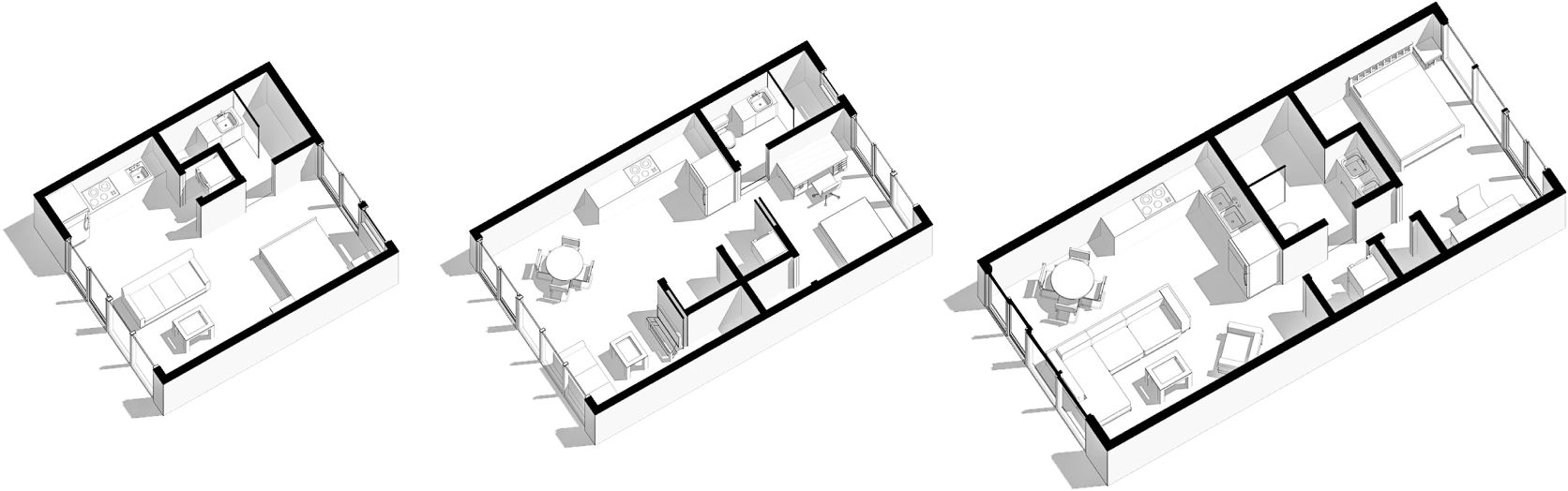
What May Be Needed for a Modular Housing Project?
A modular unit is the main structure, but a complete housing project needs more than the unit itself. This is especially true for emergency housing sites, where safety, access, and daily operations matter.
A project may need:
- Land or an approved placement site
- Local permits and zoning approval
- Utility connections
- Foundation, pad, or chassis placement planning
- Water, sewer, or alternative systems
- Electrical service
- Walkways, lighting, and exterior access
- Parking or drop-off areas
- Fire safety planning
- Accessibility considerations
- Site management and maintenance plans
The right setup depends on the site and the intended use. A backyard unit, a small shelter expansion, and a multi-unit emergency housing village will all have different requirements.
Timeline for Printed Modular Housing
Timeline depends on the model, configuration, finishes, site readiness, permits, delivery distance, and installation needs. Our process typically includes:
- Configuring your unit: Nearly 1 hour
- Printing your home: About 1 day
- Installing finishes: 4 to 15 days
- Delivery: 1 to 2 days
- Final installation: 1 to 4 days
These estimates describe the unit process, not every outside requirement. Site work, permitting, utility coordination, inspections, and project approvals can add time. For emergency housing projects, early planning can make a major difference.
Reasons to Choose Modular Construction for Emergency Housing
Emergency housing in Indiana needs both immediate action and long-term thinking. Shelters, rental assistance, vouchers, and housing programs all matter. But when there are not enough physical units, communities need more ways to build.
Printed modular construction can help fill that gap. It is not meant to replace public assistance or social services. It is a way to add safe, flexible housing capacity when speed and practical planning matter.
At Azure Printed Homes, we build modular living spaces for real-world use. Our work combines robotic 3D printing, recycled materials, customizable models, delivery, and installation. For emergency housing providers and community planners, that means another path forward: faster units, flexible layouts, and housing that can be planned around actual site needs.
Final Thoughts
Getting emergency housing in Indiana often starts with Indiana 2-1-1, local shelters, rental assistance, or housing programs. Those resources can help people take the first step during a crisis.
But the larger housing challenge needs more than referrals. Indiana communities also need more places for people to live. Printed modular construction gives housing providers, developers, local governments, and property owners a practical way to think beyond the shortage.