When someone needs emergency housing in Alabama, the first step is usually not a building. It is a safe place to stay tonight.
That may mean calling 211, reaching out to a local shelter, checking county emergency resources, or applying for disaster assistance if a storm, fire, flood, or other emergency has damaged your home. Those steps matter because they connect people with the fastest help available right now.
But emergency housing is also a building problem. Alabama communities need safe, practical spaces that can be delivered faster, work in real weather, and give people a little stability while the next step is figured out. That is where modular housing can help.
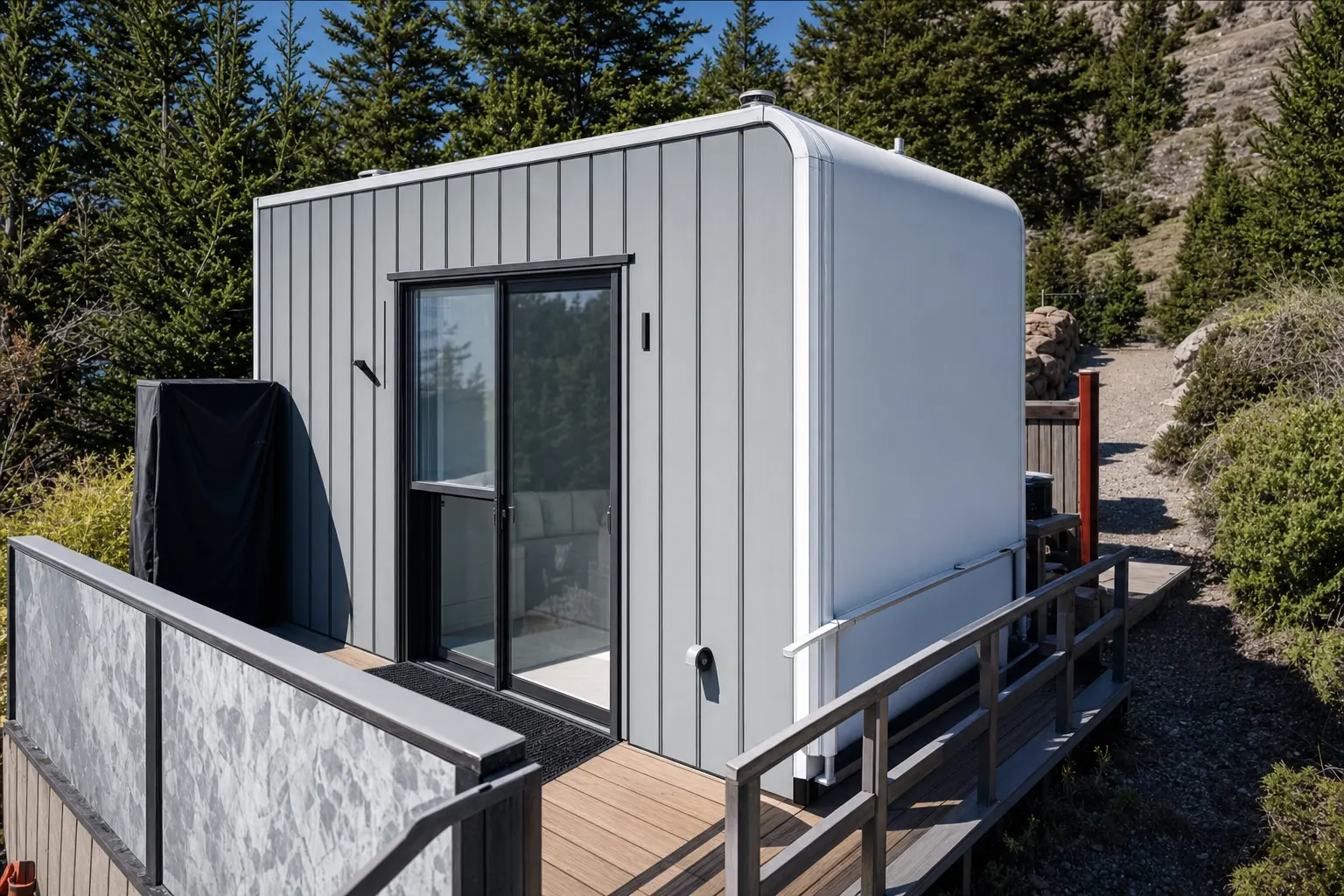
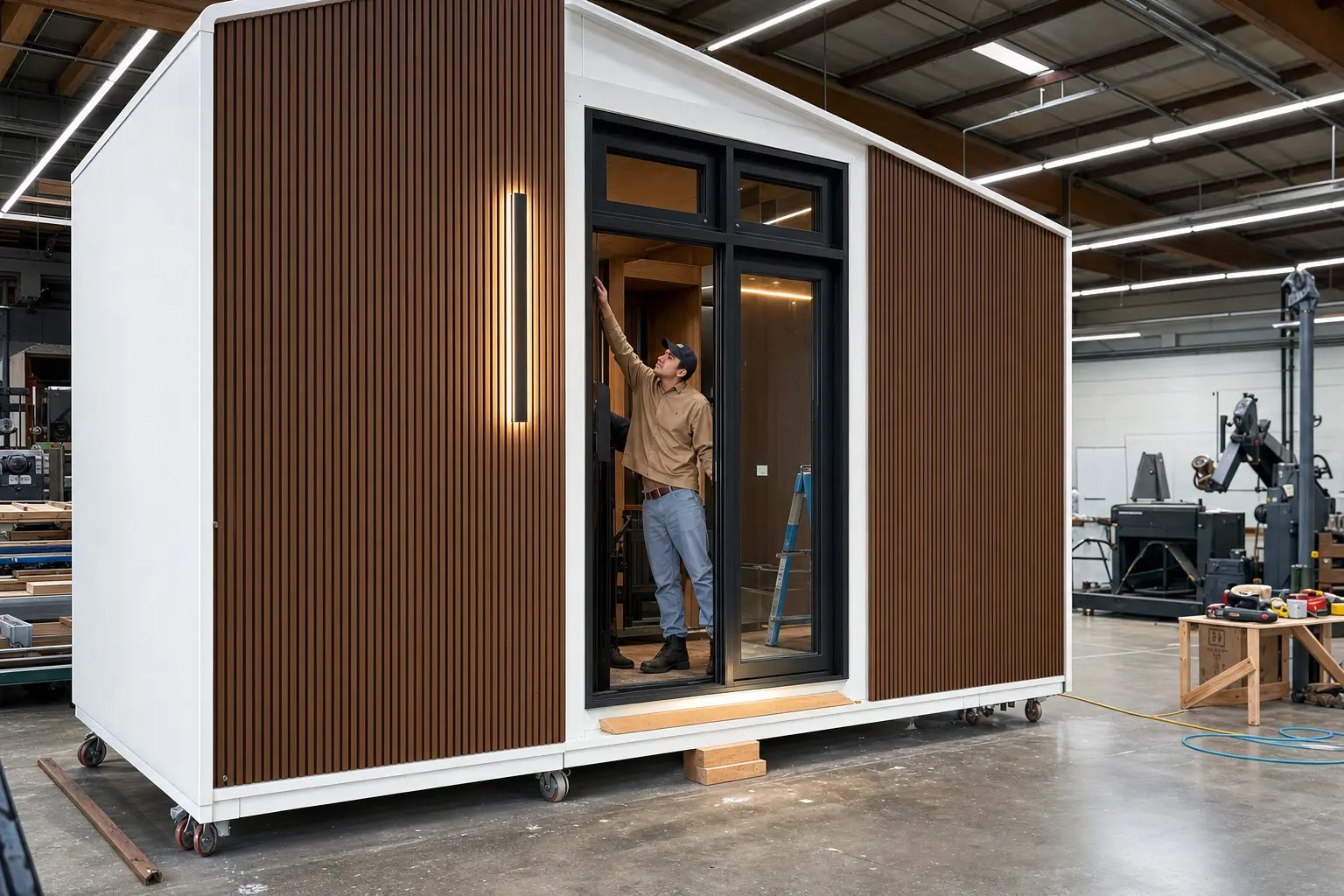
At Azure Printed Homes, we build future-focused modular living spaces using robotic 3D-printed construction and recycled materials. Our work is centered on speed, less waste, and homes that feel like actual places to live – not just temporary boxes dropped on a site. For emergency housing, that kind of approach can make a real difference.
Start With Immediate Housing Help
If you need emergency housing in Alabama right now, start with 211. You can call 211 and ask for housing or shelter resources in your area. In Alabama, 211 can help connect people with local support for shelter, rent, utilities, food, and other urgent needs.
Be clear about what is happening. You do not need to explain it perfectly. Just say what you need and where you are.
Useful things to mention include:
- Your city and county
- Whether you need a place tonight
- How many people need housing
- Whether children, seniors, or disabled family members are with you
- Whether you have pets
- Whether your home was damaged by a disaster
- Whether you are facing eviction or already without housing
- Whether you have transportation
If 211 cannot place you directly, ask for the local homeless service provider or Continuum of Care contact for your county. Emergency housing is often handled through local networks, so the right contact in Mobile may not be the same as the right contact in Huntsville, Birmingham, Montgomery, Tuscaloosa, or a rural county.
This first step is not glamorous. It is phone calls, waiting, referrals, and sometimes calling more than one place. Still, it is the fastest route into the system.
Keep Your Paper Trail Simple and Ready
Emergency housing moves faster when your basic information is ready. It does not have to be fancy. A folder, a phone note, or photos saved in one album can help.
Try to keep these items together:
- Photo ID, if you have one
- Birth certificates or school records for children, if available
- Lease, eviction notice, or landlord messages
- Utility bills or proof of address
- Insurance documents
- Medical or disability documentation, if relevant
- Pay stubs, benefits letters, or income records
- Any disaster claim numbers or case numbers
If you are missing documents, still ask for help. People lose paperwork during fires, storms, moves, and family emergencies all the time. Service providers know that. The point is to bring what you can and keep a record of who you spoke with.
Now, that covers the immediate side. It gets people into the help system. But it does not answer the bigger question Alabama communities keep facing: what happens when there simply are not enough safe places to put people?
That is where emergency building comes in.
Emergency Housing Needs More Than Empty Rooms
Emergency housing is often talked about like a placement issue. Find a shelter bed. Find a hotel room. Find a temporary unit. Move people somewhere.
Those steps matter, but they only work when enough housing exists. When a storm hits, a building burns, rents climb, or a community already has a housing shortage, the gap becomes obvious fast. You cannot refer people into units that do not exist.
That is why we believe emergency housing should also be planned as emergency building.
Alabama needs housing responses that can work for:
- Families displaced by storms
- People waiting for home repairs
- Seniors who cannot safely return home
- Workers who lose housing near job sites
- Communities rebuilding after fire or flood damage
- People moving out of unsafe or unstable living conditions
- Local governments trying to reduce shelter pressure
- Nonprofits that need small, livable units for transitional support
A shelter may solve one night. A hotel may solve a week. But after that, the question becomes harder: where can people live with a door, a bathroom, a place to sleep, and enough privacy to feel human again?
Emergency building is about answering that question sooner.
Modular Housing Makes Emergency Response Easier to Plan
Emergency housing works best when it is planned before the emergency is already at the door.
That is one of the strongest reasons to use modular systems. A city, county, nonprofit, or development partner can think in repeatable units instead of starting from zero every time. The same basic housing model can be used in different layouts, with different site plans, for different groups.
For example, a small emergency housing site may need compact units for individuals. A family recovery site may need one-bedroom or two-bedroom layouts. A disaster response project may need a mix of private sleeping areas, bathrooms, shared service space, and accessible paths.
With modular planning, the questions become more manageable:
- How many people need housing?
- How long will the housing be used?
- Does each unit need a kitchen?
- Should bathrooms be private or shared?
- What utilities are already available?
- Can the site support delivery and installation?
- Will the units stay, move, or be reused later?
This is a much better conversation than “What can we throw together right now?”
At Azure Printed Homes, our product categories are built around different needs. Studio Series units support compact extra space. X Series homes on wheels support mobility and small living. Homes & ADUs provide larger residential-style layouts. Our professional building systems support bigger repeatable development, including multifamily and interim housing.
For emergency building, that range matters. A single emergency site may not need only one type of structure.
Matching the Unit to the Emergency
A good emergency housing plan starts with the use case. That sounds obvious, but it is where a lot of projects get messy.
Not every emergency calls for a full home. Not every person can be served well by a small room. Not every site can handle the same utility load. The right unit depends on the person, the timeline, the land, and the support services around it.
Studio Series for Support Space
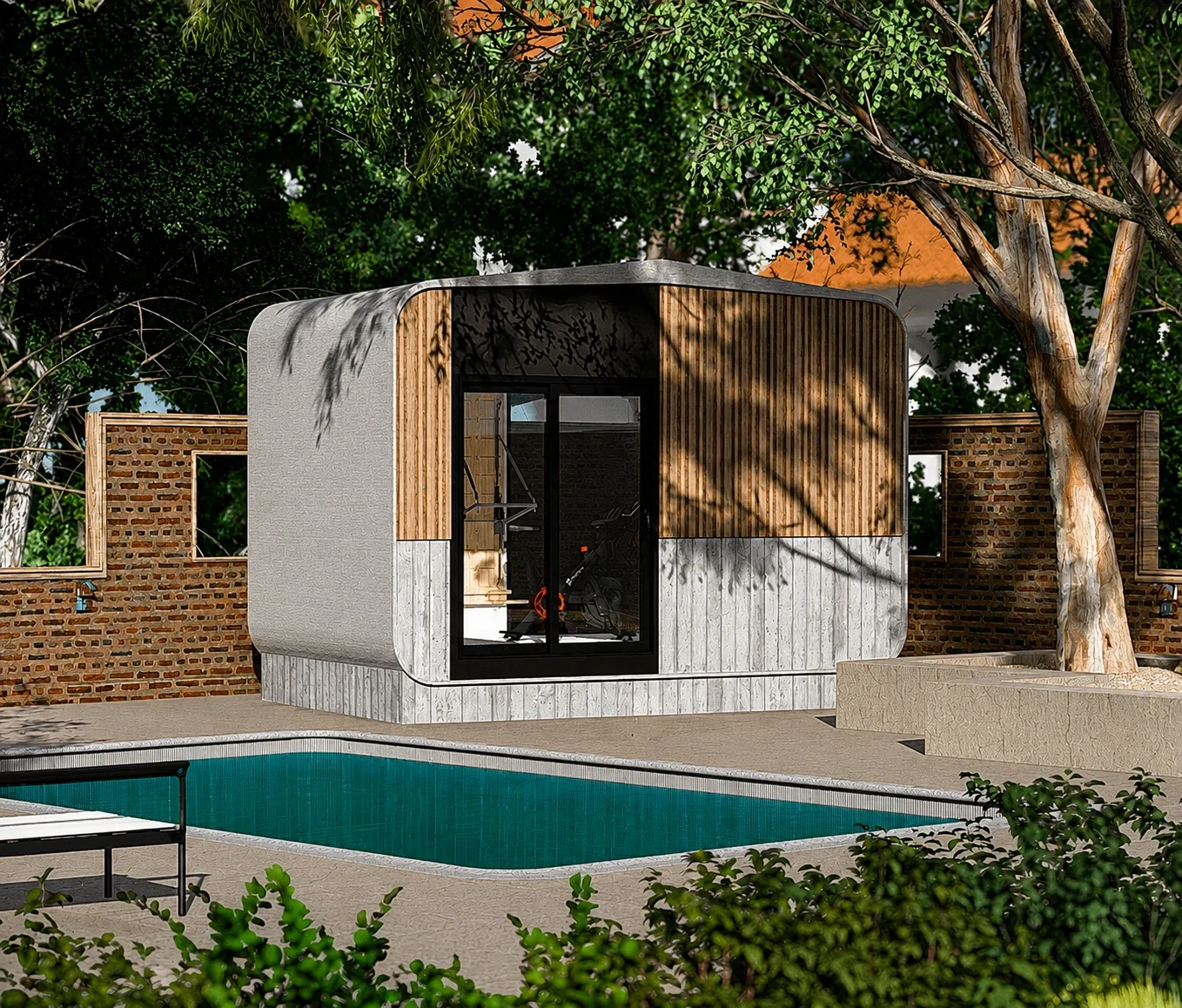
Our Studio Series includes compact models that can work well as support structures. In an emergency housing setting, these may be useful for administrative offices, intake rooms, counseling spaces, staff areas, supply rooms, or quiet private rooms on a larger site.
Emergency housing is not only sleeping units. A functioning site needs operations. People need to check in, meet with case workers, receive supplies, charge phones, ask questions, and get help without standing outside in the weather.
Small structures can make those services easier to deliver.
X Series Homes on Wheels for Flexible Placement
Our X Series homes on wheels are chassis-based models designed for mobility and comfort. They can be useful where flexible placement is allowed and where a smaller living unit fits the emergency need.
These units are not a magic shortcut around local rules. Placement still has to be legal. The site still has to work. Utilities, access, drainage, and approvals still matter.
But when the right site is available, mobility can help. A home on wheels can support temporary placement, phased deployment, or emergency housing that may need to move as recovery changes.
Homes & ADUs for More Complete Living
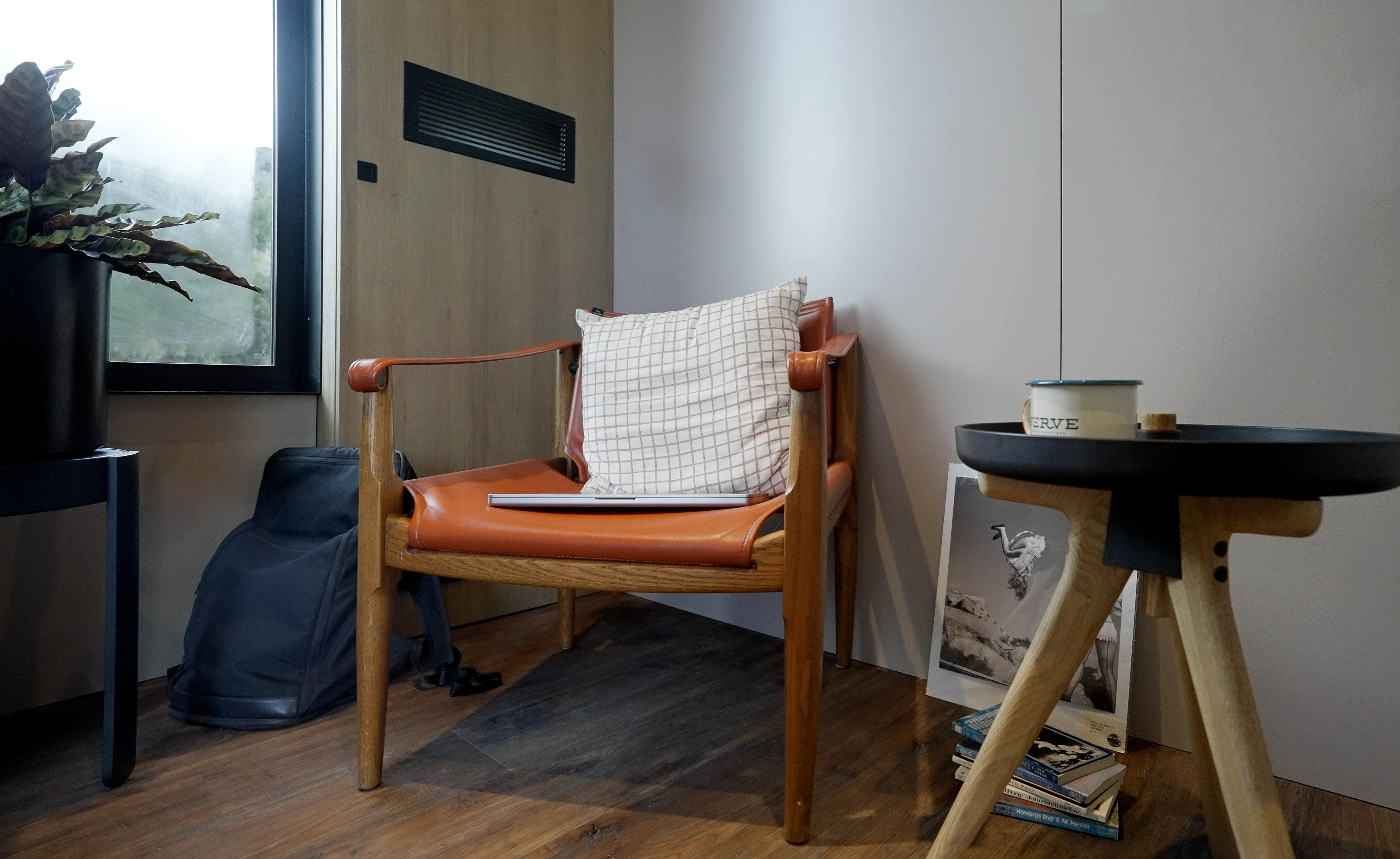
For longer recovery periods, families, caregivers, or people who need more stability, larger Homes & ADUs may be the better fit. These units can include more complete residential features, making them more suitable when emergency housing needs to feel closer to normal life.
That matters. People recovering from a housing crisis need more than a roof. They need room to cook, sleep, shower, store belongings, and rebuild a routine.
In Alabama, this could support local recovery after disasters, family displacement, rural housing gaps, or temporary housing on properties where permitted. A larger unit takes more planning, but it can also support a more realistic path back to stability.
The Site Is Half the Project
With emergency building, the unit is only one part of the answer. The site can make or break the whole plan.
A modular unit still needs a place to go. It needs access for delivery. It needs proper grading. It needs drainage. It needs utility connections. It may need a foundation, anchoring, permits, inspections, fire access, parking, lighting, and safe paths for residents.
This is where emergency housing projects should slow down just enough to avoid expensive mistakes.
Before choosing units, a project team should ask:
- Is the land publicly or privately owned?
- Is emergency housing allowed there?
- How many units can the site safely support?
- Can trucks access the site for delivery?
- Is there water, sewer, and electrical capacity?
- Does the land drain well after heavy rain?
- Is the site close to schools, clinics, transit, jobs, or services?
- Can emergency vehicles reach the units?
- Are there floodplain, stormwater, or fire safety concerns?
- Will the units be temporary, permanent, or reusable elsewhere?
Alabama has a mix of urban, suburban, rural, coastal, and storm-prone areas. A site in Birmingham is not the same as a site near Mobile Bay or a rural property in north Alabama. Soil, access, weather, infrastructure, and local rules all matter.
The faster way to build is not to ignore these details. The faster way is to plan them early.
Emergency Building Should Be Durable
Temporary does not have to mean flimsy.
One of the biggest shifts needed in emergency housing is moving away from the idea that temporary housing only has to be “good enough.” People who need emergency housing are already dealing with disruption and uncertainty. The space itself should not add more stress. It should be safe, comfortable, functional, and built around everyday needs.
Emergency housing should be built for real use. Alabama weather can bring heat, humidity, heavy rain, high winds, and storm risk. Units need to handle daily life, not just look good in a rendering.
At Azure Printed Homes, performance is part of the reason we use advanced manufacturing. Controlled fabrication helps us build with consistency. 3D-printed recycled composite materials help reduce waste. Professional building systems can include high-performance envelopes, light-gauge steel, SIPs, and durable exterior systems depending on the project type.
For emergency housing, durability means fewer maintenance problems, better comfort for residents, safer long-term use, and more value if the units are reused after the immediate emergency ends. It also means public money can go further because the structure is not treated as disposable from day one.
Emergency building should not create tomorrow’s disposal problem. If a unit can be reused, relocated, expanded, or folded into a longer housing plan, the community gets more from the investment.
Where Emergency Modular Housing Can Help in Alabama
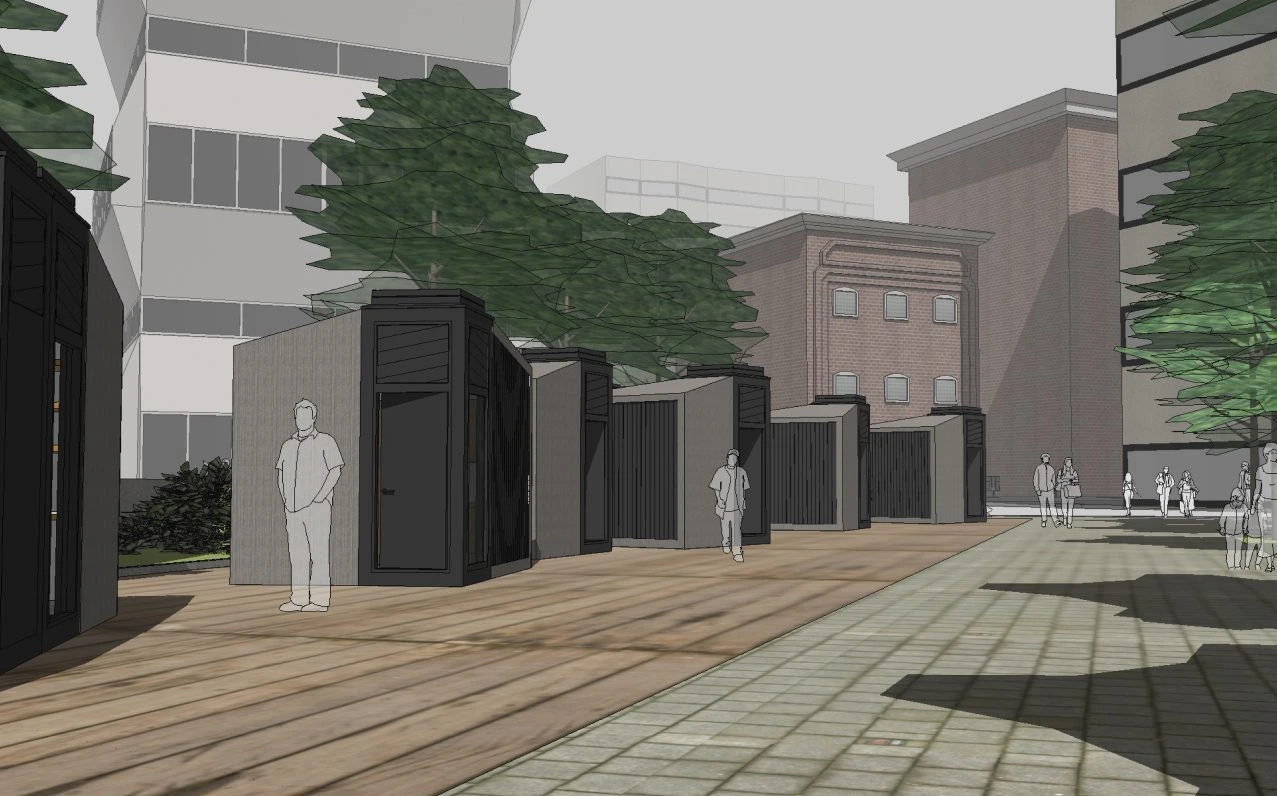
Emergency building can support more than one type of housing need. In Alabama, it may be especially useful where housing shortages, disaster recovery, rural access, and fast deployment overlap.
Disaster Recovery Housing
After storms, tornadoes, floods, or fires, some homes can be repaired quickly. Others cannot. People may need safe housing for weeks or months while insurance, repairs, inspections, and rebuilding move along.
Modular units can help create temporary recovery housing on approved sites, near affected communities, or in planned response areas. This can keep people closer to schools, work, family, and familiar services instead of pushing them far away.
Interim Housing for the Unhoused
Interim housing gives people a place to stabilize while they work toward permanent housing. It is not the full answer, but it can be an important bridge.
A modular emergency housing site can include sleeping units, case management space, hygiene access, and support services. This is where repeatable units and planned site layouts can help local governments and nonprofit partners move faster.
Family Displacement and Caregiver Housing
Sometimes the emergency is personal. A family member needs a safe place after a home becomes unlivable. A caregiver needs to live nearby. A parent, grandparent, or adult child needs temporary housing while the main home is repaired or replaced.
Where local rules allow it, a modular ADU-style unit can provide practical space on or near a property. It can keep families together without forcing everyone into one crowded house.
Workforce and Community Recovery
After a major event, workers may be needed in the same area where housing was damaged. Contractors, medical staff, public workers, utility crews, and local employees all need places to stay.
Emergency building can support temporary workforce housing tied to recovery, rebuilding, or public service needs. The point is not only to house people who lost homes, but also to support the people helping a community get back on its feet.
A Practical Emergency Building Checklist
For cities, counties, nonprofits, churches, developers, and recovery partners, emergency building works best when the plan is simple enough to act on.
A useful early checklist looks like this:
- Define the emergency housing need
- Estimate the number of people or households
- Separate short-term shelter needs from longer recovery needs
- Identify possible sites before units are selected
- Check zoning, permits, utilities, drainage, and access
- Decide which unit types fit the use case
- Plan support services, not just housing units
- Include accessibility and family needs early
- Choose durable materials and low-waste construction
- Build a reuse plan for after the emergency
The last point matters. Emergency housing should not be a dead-end purchase. If the units can later serve as workforce housing, supportive housing, family housing, backyard housing, or part of a larger development plan, the community gets more value.
That is how emergency building becomes more than a reaction. It becomes part of a housing strategy.
Final Thoughts
The question “How do I get emergency housing in Alabama?” starts with immediate help. Call 211. Contact local providers. Apply for disaster assistance when it applies. Keep your documents together. Take the first safe option available.
But for communities, the better question is bigger:
How do we make sure emergency housing exists before the next crisis?
Fast modular building will not replace shelters, social workers, disaster recovery teams, local agencies, or permanent affordable housing. It should not try to. But it can support them by creating the physical spaces they need to do their work.
When the building process is faster and more predictable, people can move from waiting to recovering. Families can get more privacy. Communities can reduce pressure on shelters and hotels. Local partners can plan with real units instead of hoping something opens up.
Emergency housing should be safe enough for tonight and smart enough for what comes next. In Alabama, that means combining immediate support with better ways to build. Ready when you are should not just be a phrase. In emergency housing, it should be the goal.