If you are asking how to get emergency housing in NY, there is probably an immediate problem in front of you. Maybe you need shelter tonight. Maybe a family member has nowhere safe to go. Maybe a fire, flood, eviction, unsafe home, or sudden income loss has made housing urgent.
The first step is getting connected to local help. In New York City, that usually starts with 311, shelter intake, or Homebase if the goal is to prevent homelessness. Outside NYC, the local Department of Social Services is usually the place to start.
But there is a bigger question behind this one: why is emergency housing so hard to access when people need it most?
That is where emergency building becomes part of the answer. At Azure Printed Homes, we manufacture modular housing units for communities that need more places for people to stay. Our units are built with robotically 3D-printed construction, recycled materials, and controlled factory fabrication. That helps reduce on-site work, shorten build timelines, and make delivery more predictable.
When a city needs housing quickly, the process should not depend on long, messy construction from the ground up. It needs units that can be produced, delivered, installed, and connected with a clearer plan.delivery.
Communities need housing that can be produced more predictably, placed more efficiently, and still feel safe, durable, and dignified. Emergency housing is not only about services, paperwork, or available beds.
First, What Should Someone Do Right Now?
Let’s keep the immediate answer clear.
If someone needs emergency housing in New York City and has nowhere safe to stay tonight, they should contact 311 and ask about emergency shelter assistance. Depending on the household, they may be directed to a specific intake location or process.
If the person is at risk of becoming homeless but still has housing right now, Homebase may be the better first step. Homebase can help with housing instability, eviction risk, benefits, rental assistance referrals, and other prevention support.
Outside NYC, people should contact their local Department of Social Services and ask about emergency housing or temporary assistance.
A few things can help move the process along:
- Photo ID, if available
- Eviction notices or court papers
- Lease or rent documents
- Proof of income or benefits
- Birth certificates for children, if relevant
- Medical or disability documents, if accommodations are needed
- Any paperwork connected to the emergency
That is the short version. It will not make the process easy, but it gives people a starting point.
Now let’s talk about the part that does not get enough attention: New York needs more places ready before people are in crisis.
Emergency Housing Needs Emergency Building
Emergency housing often gets discussed as a placement problem. Where can this person go tonight? Which shelter has room? What program applies? Who qualifies?
Those questions matter. They are urgent.
But they do not fix the deeper issue. A system cannot place people into housing that does not exist.
That is why emergency building matters. If a city, county, nonprofit, or public agency needs more shelter capacity, temporary housing, disaster response units, or supportive housing, the construction approach has to move at the speed of the problem.
Traditional construction is not always built for that kind of urgency. It can involve long timelines, unpredictable costs, weather delays, labor coordination, material waste, and site disruption. For regular projects, that is already difficult. For emergency housing, it can be a serious barrier.
Emergency building asks a more practical question:
How can we create safe, useful housing faster without treating people like the space is temporary, cheap, or disposable?
That balance matters. Speed is important. So is dignity.
What Emergency Building Actually Means
Emergency building is not just putting a structure somewhere quickly.
A good emergency building plan needs to create housing that works in real life. That means people can sleep, shower, cook or access meals, stay warm, stay cool, charge a phone, store belongings, and feel some privacy.
It also means the project has to make sense for the people operating it. A city or nonprofit needs to think about utilities, maintenance, code requirements, staffing, safety, accessibility, and long-term costs.
Emergency building may include:
- Interim housing for people experiencing homelessness
- Transitional housing after displacement
- Temporary housing after fires, floods, or storms
- Supportive housing connected to services
- Rapidly deployable small homes or modular units
- Repeatable housing for public or nonprofit sites
- ADU-style housing where local rules allow it
- Multi-unit developments designed for faster delivery
The form can change. The goal stays the same: get people into safer spaces faster.
Why New York Needs Faster Housing Options
New York’s housing pressure is not one simple issue. Rent, land costs, shelter demand, zoning, construction timelines, severe weather, income instability, and local capacity all play a role.
A person can lose housing in a day. A building can take years.
That mismatch is one of the biggest problems in emergency response. Even when funding exists, construction can move slowly. Even when land is identified, the site may need utility work. Even when a design is approved, labor and material schedules can stretch the timeline.
Emergency building does not remove every barrier. Permits still matter. Site work still matters. Local review still matters. But a smarter building method can reduce some of the delays that make emergency housing feel impossible to scale.
This is where off-site construction, modular systems, and repeatable designs can help. More work can happen in a controlled environment while the site is being prepared. Units or components can be made with more consistency. Costs can be easier to estimate. Timelines can be easier to plan.
That kind of predictability is not glamorous. It is just useful.
What Good Emergency Building Should Solve
A strong emergency building plan should solve more than one issue at once. It should help with speed, but it should also help with safety, comfort, durability, and operations.
The best projects usually consider:
- How quickly units can be manufactured or delivered
- Whether the design can be repeated on more than one site
- How utilities will connect
- What level of privacy residents need
- How the building performs in heat, cold, rain, and wind
- Whether the structure can meet local code requirements
- How easy it is to maintain
- Whether the layout supports families, individuals, or service providers
- What happens after the emergency period ends
That last point matters. Emergency housing should not be planned as a dead end. A good unit, site, or building system should have a second life if the first need changes.
A temporary shelter site might later become transitional housing. A small unit might be moved, reused, or repurposed. A repeatable design might support more than one public project.
Smarter building gives communities more options.
Where Modular Construction Fits
Modular construction can be a good fit for emergency housing because it changes where and how the work happens.
Instead of doing nearly everything on-site, more of the building is completed in a factory or controlled production setting. That can help reduce weather delays, improve consistency, and shorten the time spent disrupting the site.
For emergency housing, modular construction can be useful when communities need:
- Repeatable small units
- Faster project timelines
- More predictable budgets
- Less on-site construction mess
- A cleaner installation process
- Scalable housing across multiple locations
- Durable structures that can serve different uses over time
It is not a shortcut around planning. The site still has to work. Local approvals still matter. Utilities still need to be handled correctly.
But modular building can take some uncertainty out of the process. In emergency housing, that is a big deal.
How Azure Printed Homes Builds for Emergency Housing Needs
Emergency building works best when the construction process is clear from the start. At Azure Printed Homes, we build future-focused modular living spaces using robotic 3D printing, recycled materials, precision manufacturing, and off-site fabrication. That may sound technical, but the idea is simple: build smarter so housing can move faster.
Our process is designed around controlled production. We print structural shells with recycled materials, fabricate units off-site, install finishes, and prepare spaces for delivery and installation. This factory-based approach helps reduce waste, limit delays, and make the build more predictable than a fully traditional construction process.
For emergency building, that matters. A city may need interim housing. A nonprofit may need flexible spaces for people moving out of crisis. A developer or public partner may need a larger repeatable system for supportive or affordable housing. The project details may change, but the need is familiar: create more usable space without waiting years for it.
The Right Unit Depends on the Emergency
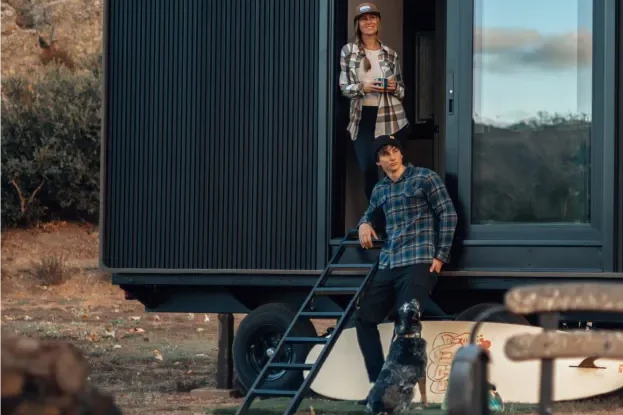
Each emergency housing project needs the right unit type. A 120 sq ft studio, a home on wheels, an ADU-style unit, and a larger professional building system all have different uses, site requirements, utility needs, and approval paths.
That is why the first questions should always be practical:
- Who will use the space?
- How long will they stay?
- What services are needed nearby?
- Does each unit need a bathroom or kitchen?
- What utilities are available on-site?
- Is this a temporary site or a permanent housing plan?
The answers shape the building. Emergency housing should not be one-size-fits-all. The structure should match the site, the timeline, and the people it is meant to support.
Small Units Can Move Quickly
Emergency housing does not always need to be large to be useful. Sometimes the priority is a compact, private, safe space that helps someone get through a hard stretch.
Small units can work well when speed, simple layouts, and flexible site planning matter most. They can support disaster response, temporary shelter, workforce housing, community-based housing programs, or recovery sites where land is limited.
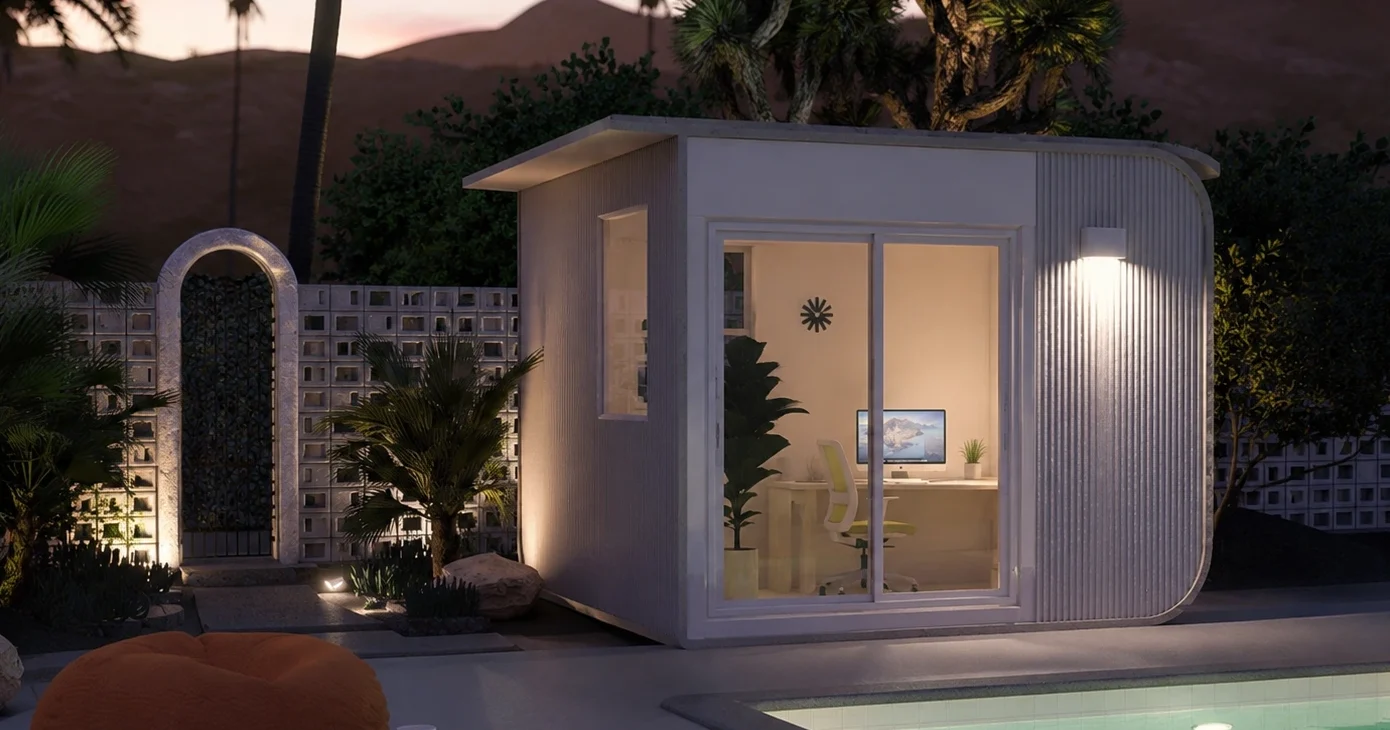
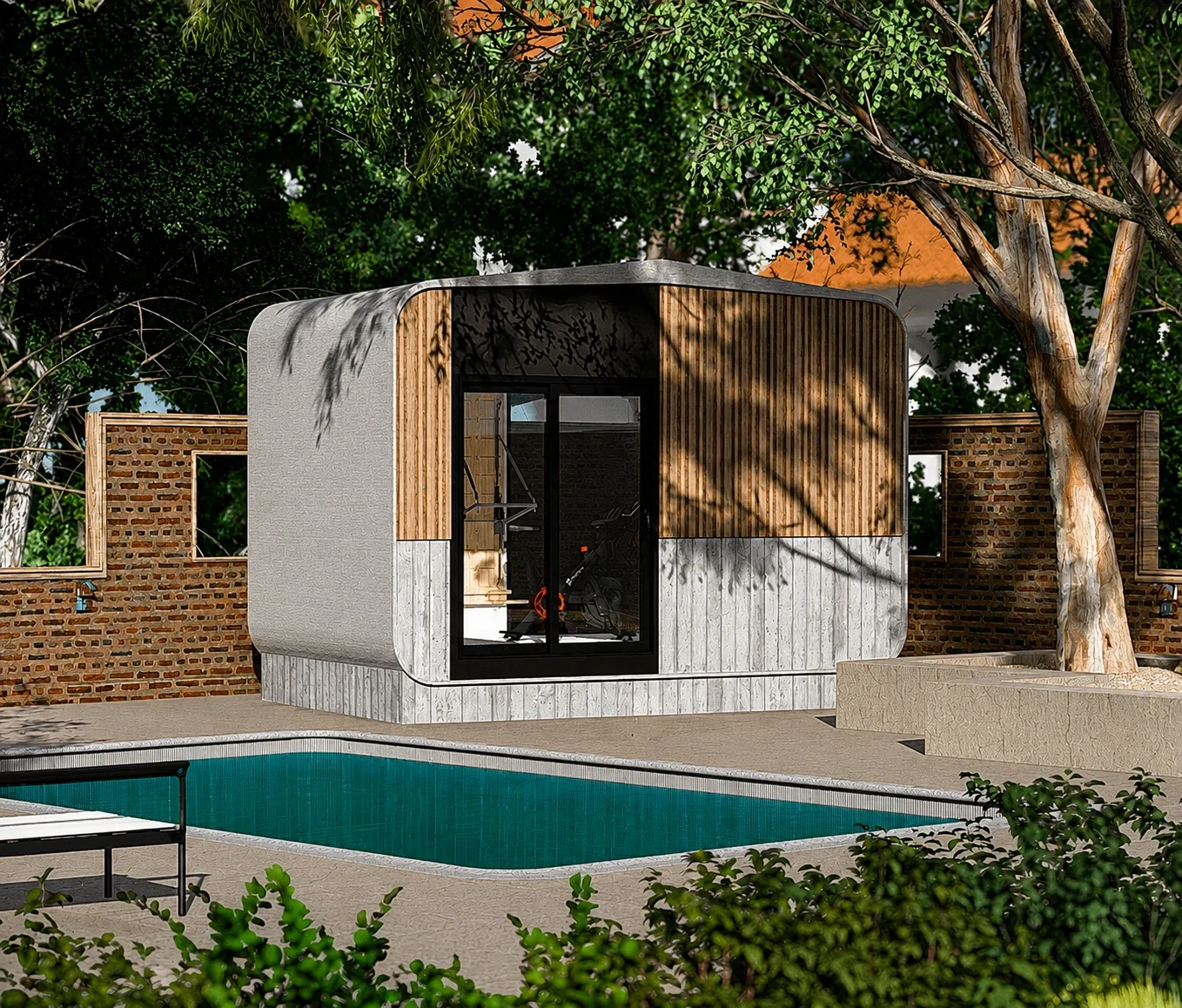
Our Studio Series is built for compact use. These units are not the same as full homes, but they show how a smaller footprint can create usable space quickly. In emergency building, that kind of efficiency can make a real difference, especially when a site needs several units and every square foot counts.
Larger Needs Require a Building System
Small units can help in a local crisis, but larger emergency housing needs require a more complete system. New York’s housing pressure cannot be solved one unit at a time.
Larger projects need repeatable designs, reliable materials, clear site standards, coordinated utilities, and a construction process that can scale. Without that, every project starts from zero. Every site becomes a new puzzle. Every timeline stretches.
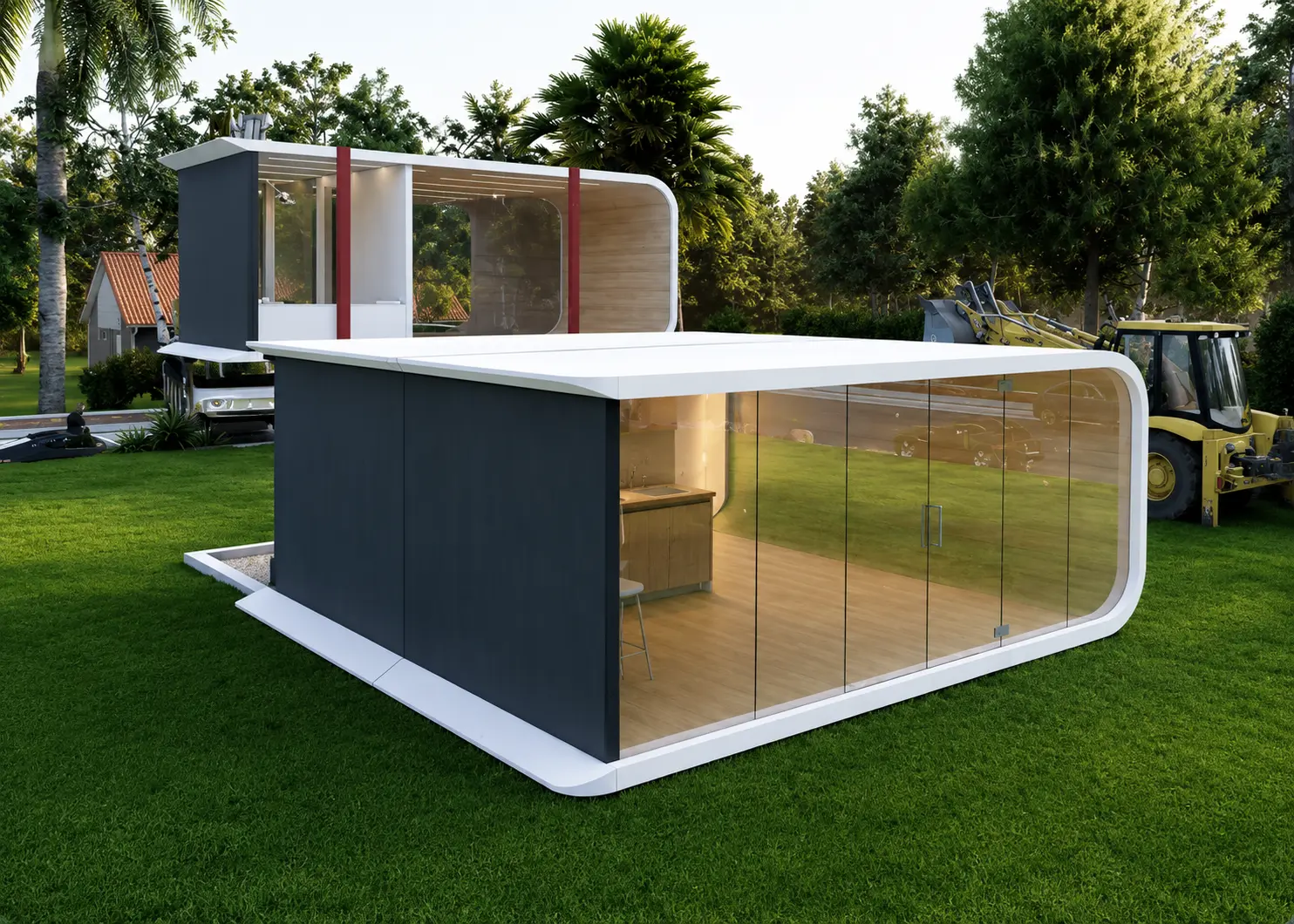
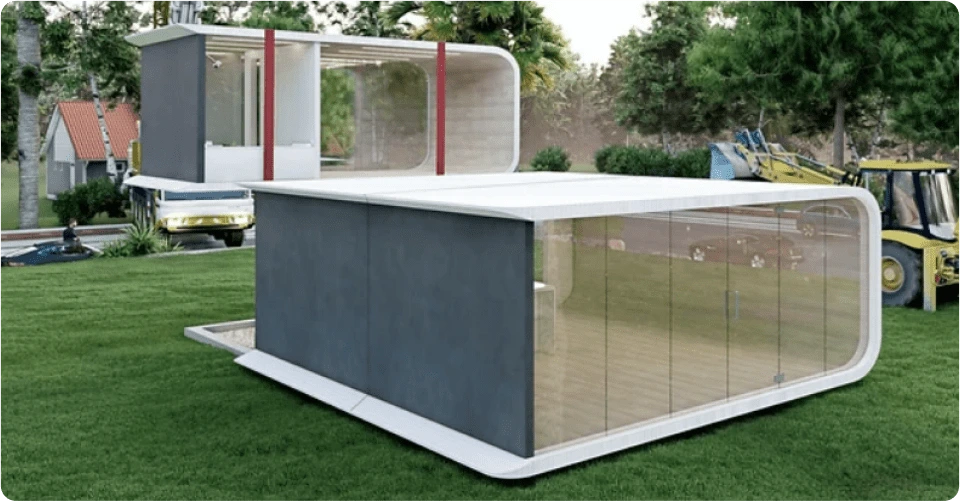
Our professional building system is built for that bigger conversation. It can combine light-gauge steel, high-performance building envelopes, advanced fabrication, and optional 3D-printed recycled composite facades. For multifamily, infill, missing middle, supportive, or interim housing projects, that kind of system can help reduce uncertainty.
This is especially important for public agencies, architects, developers, and general contractors. Emergency building is not only about placing units quickly. It is about creating a repeatable process that can move faster without losing quality.
When a city needs housing fast, it should not have to invent the whole system from scratch every time.
Site Readiness Is Half the Battle
A unit can be printed, built, or fabricated quickly. That does not mean the site is ready.
This is where many emergency housing projects slow down. The building method may be efficient, but the land still needs answers.
Before any emergency building project moves forward, the site should be reviewed for:
- Ownership or site control
- Zoning and allowed use
- Utility access
- Water and sewer connections
- Electrical capacity
- Drainage and grading
- Fire access
- Delivery access
- Foundation or anchoring needs
- Flood, storm, or environmental risks
- Proximity to services and transportation
These details are not exciting, but they decide whether a project works.
In emergency building, speed comes from preparation. A ready site plus a repeatable building system can move much faster than a site that still needs every basic question answered.
Emergency Housing Should Be Built Around People
It is easy to talk about units, costs, timelines, and systems. But housing is still about people.
A person entering emergency housing may be tired, scared, embarrassed, angry, or just completely worn out. A parent may be trying to keep a child calm. Someone may have lost belongings. Someone may be starting over after a fire, eviction, medical crisis, or unsafe home.
The building should reduce stress where it can.
That means practical details matter:
- A lockable door
- Good lighting
- Heating and cooling
- A clean bathroom plan
- Space for basic belongings
- Clear paths around the site
- Privacy between units
- Durable materials
- Easy maintenance
- A layout that does not feel like an afterthought
Emergency housing does not need to be fancy. But it should be humane.
Faster building and better living conditions can belong in the same sentence.
Final Thoughts
So, how do you get emergency housing in NY?
If the need is immediate, start with the local emergency housing system. In NYC, that usually means 311, shelter intake, or Homebase for prevention. Outside NYC, it usually means the local Department of Social Services.
The better question is this: how can New York have more emergency housing ready before people need it?
That answer depends partly on emergency building. Communities need housing that can be delivered faster, planned more clearly, and built well enough for real use. They need prepared sites, scalable systems, and structures that provide more than a temporary fix.
This is a practical construction challenge: create safe, usable housing faster when people cannot wait. Emergency housing does not need to feel futuristic. It needs to be durable, livable, and realistic to deliver.
Faster. Smarter. More practical.
Ready when it matters.