New York City has long been a place of contrasts. Historic brownstones stand beside sleek glass towers, neighborhood apartment buildings share blocks with luxury condominiums, and discussions about housing almost always come back to one question: how can the city create enough homes for everyone?
The conversation around affordable housing vs. luxury development in NYC often paints the two as opposing forces. In reality, they serve different purposes within the housing market, and both influence how neighborhoods evolve over time. Affordable housing focuses on expanding access for households with lower or moderate incomes, while luxury development responds to demand for premium residences offering elevated amenities, services, and design.
As construction methods continue to evolve, another part of the conversation has emerged. Faster, more efficient building technologies, modular construction, and sustainable manufacturing are giving developers, municipalities, and homeowners additional options that may help address housing challenges without compromising quality.
NYC: Two Sides of the Same Housing Market
New York City does not have a simple housing market. It has rent-stabilized apartments, public housing, luxury towers, older walk-ups, co-ops, condos, nonprofit developments, and new mixed-income buildings all existing within the same neighborhoods. That is why the comparison between affordable housing and luxury development is not just about price. It is about access, land use, public policy, construction costs, and how the city makes room for different kinds of residents.
What Makes New York City Different?
New York is different because demand rarely slows down. People move there for work, culture, education, opportunity, and lifestyle, while available land remains limited and expensive. Every project has to deal with high land costs, strict approvals, dense neighborhoods, infrastructure pressure, and strong community opinions.
That makes housing more complicated than in many other cities. A single building may involve private financing, public incentives, income restrictions, zoning rules, preservation concerns, and long-term affordability requirements. At the same time, luxury buyers expect more than a nice apartment. They expect service, security, wellness features, technology, and a building that feels carefully operated every day.
What Is Affordable Housing?
Affordable housing is generally defined as housing that costs no more than 30% of a household’s income. While that definition sounds straightforward, affordable housing in New York City exists in many different forms.
Some affordable housing is naturally occurring, meaning older buildings offer rents below current market rates without participating in a formal government program. Other developments are built through public programs, nonprofit initiatives, or partnerships between government agencies and private developers.
Eligibility often depends on household income, household size, and local affordability guidelines. Some developments serve very low-income residents, while others are intended for middle-income households or workforce housing. The common goal remains the same: providing stable, long-term housing opportunities that remain financially accessible.
What Defines Luxury Development?
Luxury residential development serves a very different market. Rather than focusing primarily on affordability, luxury buildings compete by delivering an elevated living experience through architecture, finishes, technology, amenities, and increasingly, hospitality-inspired services.
Today’s luxury developments commonly include:
- Premium interior finishes
- Concierge services
- Wellness amenities
- Fitness facilities
- Smart home technology
- Private outdoor spaces
- Enhanced security
- High-end shared amenities
Modern luxury has become about much more than expensive materials. Buyers increasingly value convenience, personalized service, operational excellence, and buildings that create a seamless day-to-day living experience.
The Biggest Differences
| Affordable Housing | Luxury Development |
| Focuses on housing accessibility | Focuses on premium living experiences |
| Often supported through public programs or subsidies | Primarily funded through private investment |
| Income eligibility may apply | No income restrictions |
| Cost is designed to remain within affordability guidelines | Prices reflect market demand and premium features |
| Prioritizes long-term housing availability | Prioritizes amenities, finishes, and resident experience |
Although these categories differ, they increasingly share one important objective: creating durable, efficient homes that remain valuable for decades.
Why Both Types of Housing Matter
Affordable housing and luxury development are often discussed as though one must replace the other. In practice, both address different segments of the housing market.
Affordable housing helps communities remain accessible to teachers, healthcare workers, first responders, service employees, retirees, and many others who keep cities functioning every day.
Luxury developments attract investment, accommodate higher-income buyers, and often contribute to neighborhood redevelopment through new construction and infrastructure improvements.
A healthy housing market typically includes a diverse mix of housing options rather than relying on a single development model.
Can One Construction Method Support Both Housing Options?
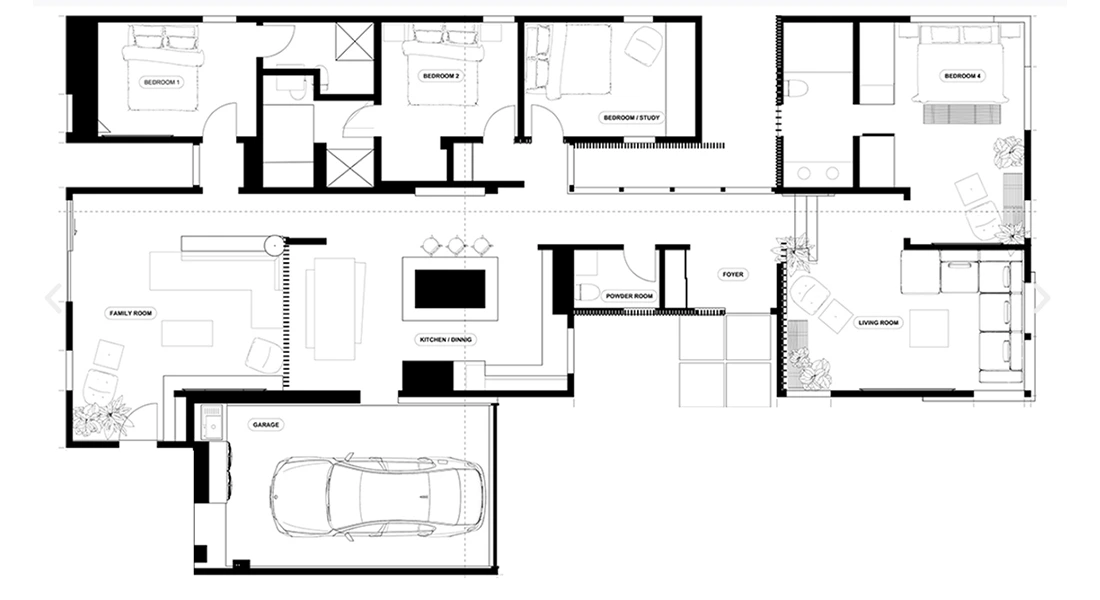
At first glance, affordable housing and luxury residential developments seem to have very little in common. One prioritizes accessibility, while the other focuses on premium living experiences. However, once construction begins, developers often face many of the same challenges regardless of the project’s target market.
Both affordable and luxury developments must balance construction costs, maintain quality, meet project timelines, comply with local regulations, and deliver homes that remain durable for decades. In New York City, where land is expensive, approvals can be complex, and delays quickly affect project budgets, the construction method itself becomes a major strategic decision.
This is where the conversation starts to shift. Affordable housing does not only need lower rents or public support. It needs building systems that can help produce more homes with fewer delays and more predictable costs. Luxury development, meanwhile, does not only need premium finishes or amenities. It needs construction quality, design flexibility, energy performance, and a finished product that supports long-term value.
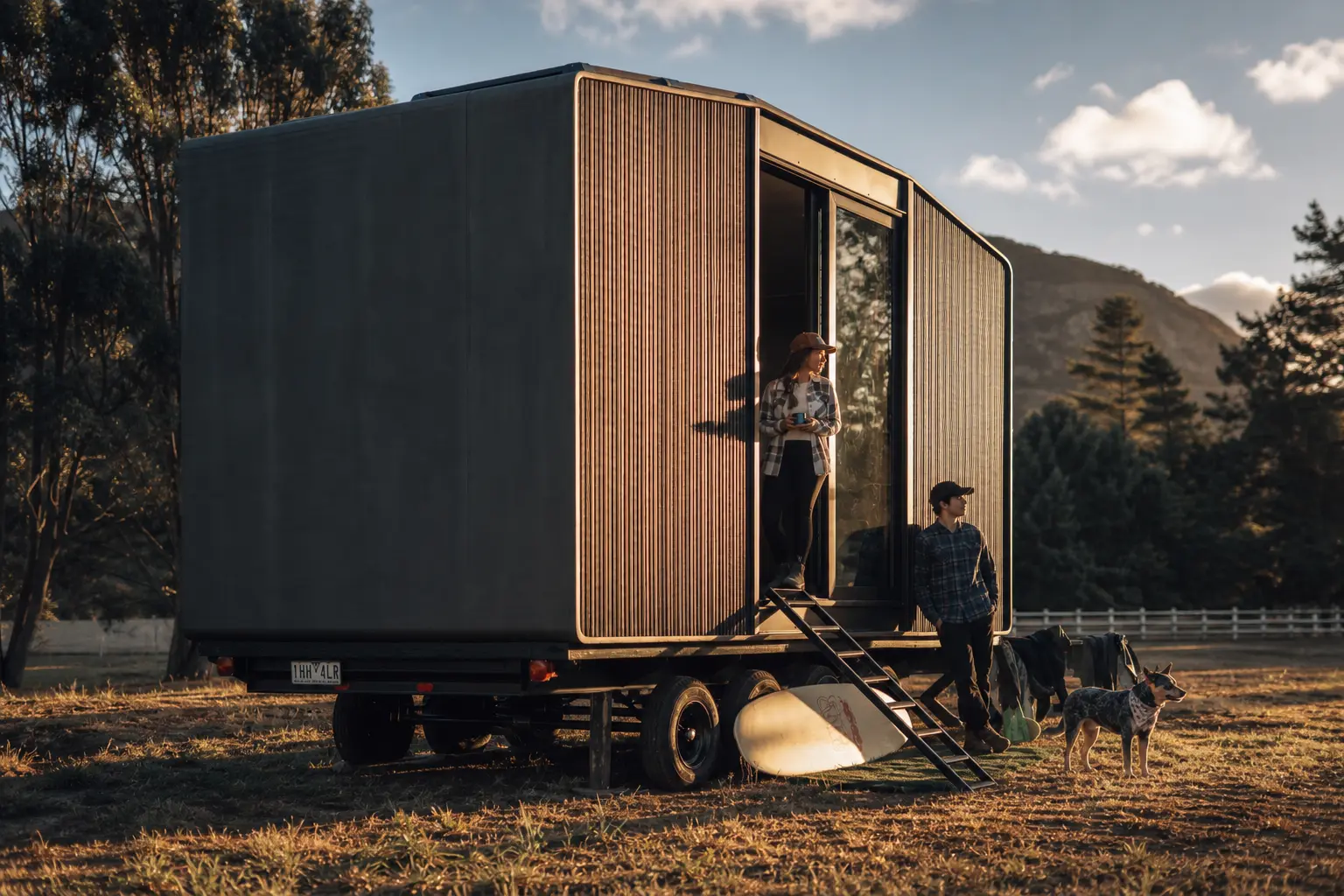
At Azure Printed Homes, we approach modular construction as a flexible building platform rather than a single housing category. We manufacture modular homes, ADUs, backyard studios, and custom residential spaces using robotic production, recycled materials, and factory-controlled processes. That means the same core method can support different goals: a compact unit for a housing program, an ADU for an existing property, or a customized residence designed around a specific lifestyle.
For developers, that flexibility matters. A project serving middle-income households may require repeatable layouts and efficient production. A higher-end residential project may require more customization, better finishes, and a more tailored living experience. Those outcomes are different, but the need for precision, schedule control, and durable construction is shared.
Key Benefits of Modular Construction Beyond Traditional One
Traditional construction still works, but it often gives developers less control over time, labor, waste, and cost. Site-built projects depend heavily on weather, subcontractor availability, material coordination, and step-by-step scheduling. When one phase is delayed, the whole project can slow down.
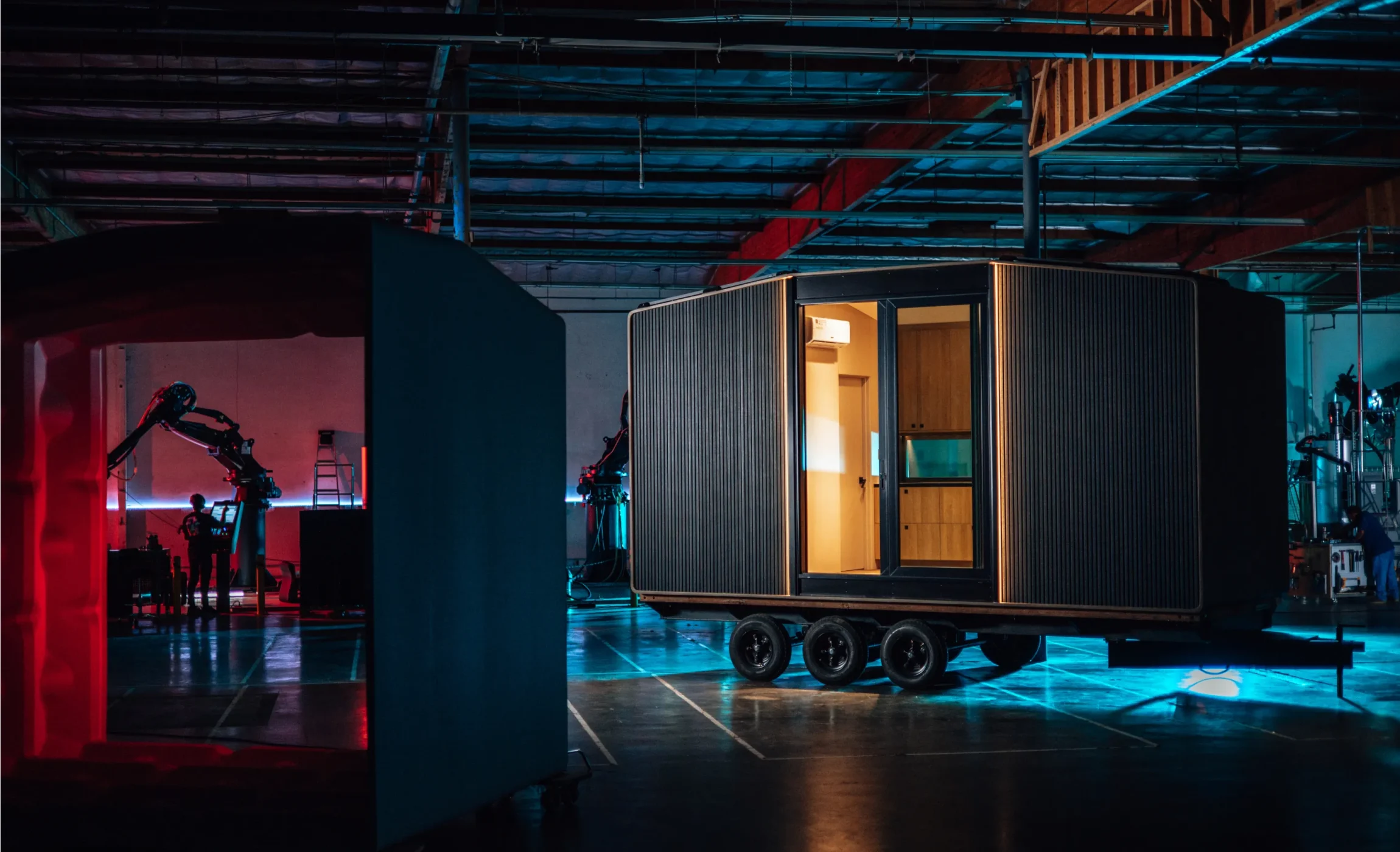
Modular construction gives developers a more controlled alternative. Much of the building is completed in a factory while site preparation can move forward separately. That means fewer weather-related delays, more consistent quality, reduced waste, and a clearer production schedule.
At Azure, we build on those advantages with robotic manufacturing, customizable modular designs, and recycled materials. Our process is designed to help developers, municipalities, and organizations build faster while keeping projects flexible.
Our key benefits include:
- Faster construction: We manufacture modules in a factory setting, helping reduce the delays common in traditional site-built projects.
- More predictable timelines: Our process moves through configuration, robotic printing, factory finishes, delivery, and installation.
- Less material waste: We use automated production and recycled materials, including recycled plastic in many printed building systems.
- Factory-built quality: Electrical, plumbing, mechanical systems, insulation, and interior finishes can be completed before delivery.
- Flexible project types: We build ADUs, homes, backyard studios, and custom projects.
- Customization without starting from zero: Developers can work with standard models or adapt layouts, finishes, dimensions, and features.
- Durable building systems: We offer recycled plastic and light-gauge steel options depending on the project and location.
- Energy-efficient design: Our units include insulated floors, walls, and ceilings for year-round comfort.
- Scalable production: Our process can support repeatable units for larger housing programs while still allowing design flexibility.
Rather than replacing architectural creativity, modern modular construction gives project teams another tool for delivering residential communities more efficiently across a variety of housing types.
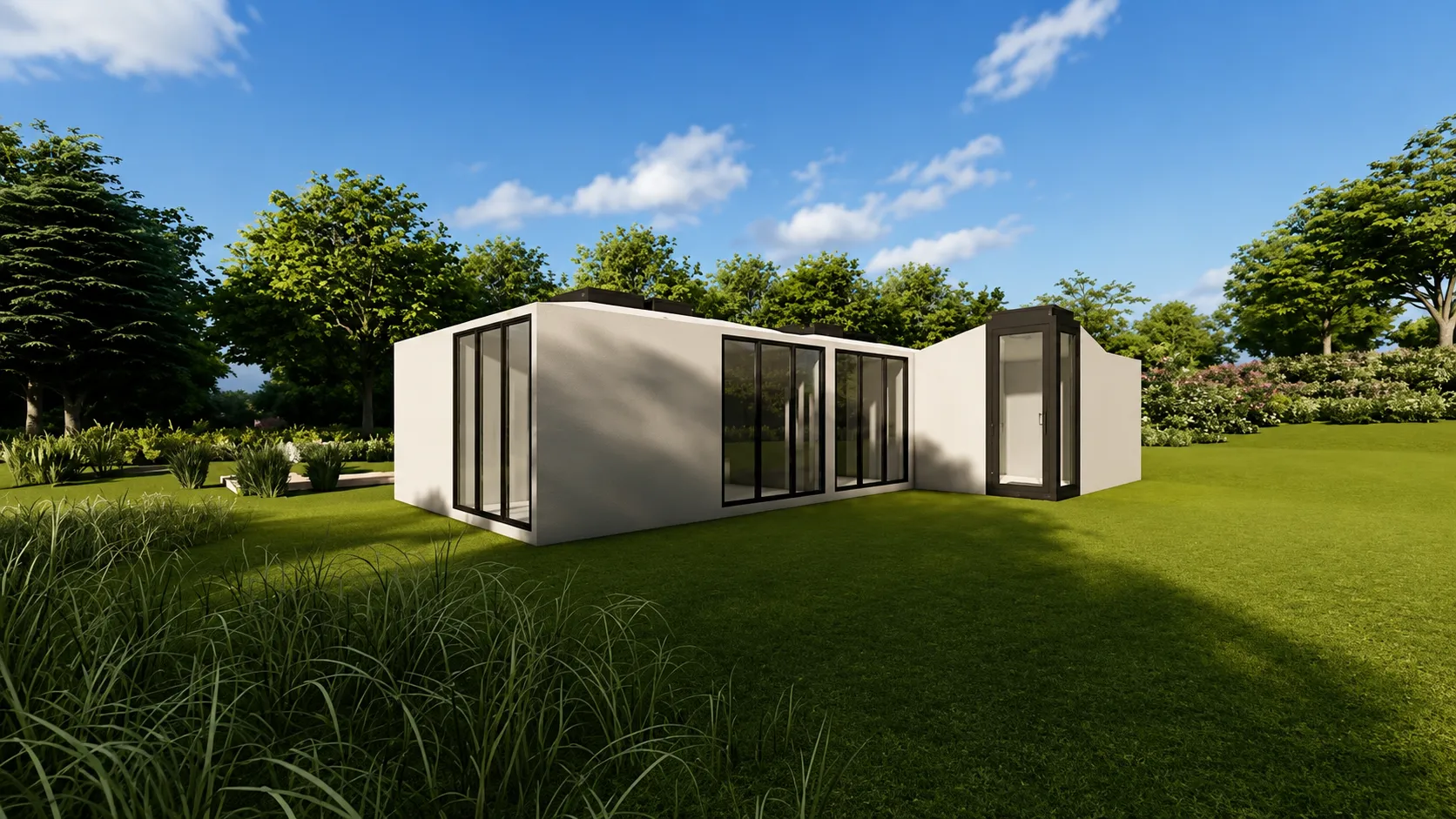
Modular Construction for Different Housing Goals
One of the biggest advantages of modular construction is its flexibility. The same manufacturing approach can support everything from compact residential spaces to larger family homes and community developments. Instead of designing every project from scratch, developers and homeowners can choose from proven layouts or customize them to meet specific requirements.
We offer several modular product lines that serve different housing needs while following the same principles of robotic manufacturing, factory-built quality, and customizable design.
Homes & ADUs
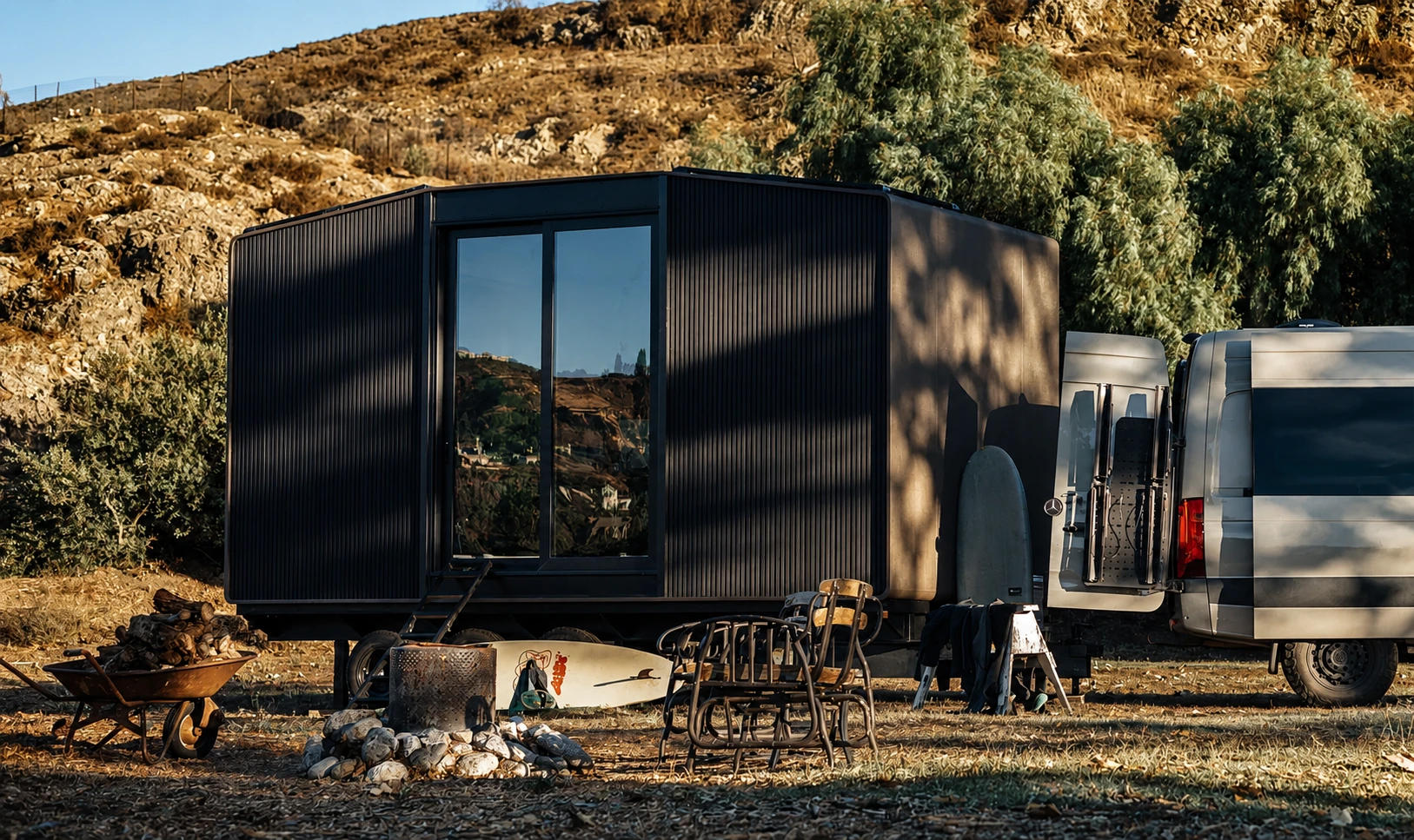
Homes and accessory dwelling units are among the most versatile modular housing options. They can serve as primary residences, backyard homes, rental units, multigenerational housing, or part of a larger residential development.
Our Homes & ADU collection includes models ranging from the 360, an 18 × 20-foot home with one bedroom, one bathroom, and a full kitchen, to the 900, an 18 × 50-foot layout with two bedrooms, one and a half bathrooms, and a full kitchen. Between those options are the 540 and two 720 layouts, giving developers and homeowners the flexibility to choose a floor plan that matches the available space and intended use.
Studio Series
Not every project requires a full-size home. Compact modular buildings can create valuable living or working space while making better use of existing properties.
Our studios include the N100, A120, D120, and D180, with floor plans ranging from 100 to 180 square feet. These spaces can be used as backyard offices, creative studios, guest accommodations, fitness rooms, or other flexible residential spaces while benefiting from the same factory-built construction process as our larger models.
Custom Projects
Some developments require solutions that go beyond standard floor plans. Site conditions, community requirements, or architectural goals may call for a completely customized design.
Our custom program gives developers and homeowners the flexibility to adapt layouts, dimensions, finishes, and living spaces while continuing to benefit from robotic manufacturing and factory-controlled production. This approach combines design freedom with the consistency and efficiency that modular construction offers.
The Future of Housing in NYC
New York City’s housing needs will continue to evolve as the city grows, neighborhoods change, and demand remains high across multiple income levels. Affordable housing, market-rate development, ADUs, and thoughtfully planned residential communities will all continue to play an important role in expanding housing options.
Construction methods are evolving alongside those needs. Faster manufacturing, improved quality control, sustainable materials, and greater design flexibility are becoming practical advantages rather than experimental ideas.
We develop modular living spaces that reflect this shift, combining robotic manufacturing, customizable designs, and efficient production to support homeowners, developers, government agencies, and organizations working across a wide range of residential projects.
Final Thoughts
Affordable housing and luxury development are often presented as competing priorities, yet both rely on thoughtful planning, efficient construction, and homes that will serve residents for years to come. As New York City continues to balance growth with accessibility, construction innovation is becoming an increasingly important part of the conversation.
We build modular homes, ADUs, backyard studios, and multifamily solutions using robotic manufacturing and advanced factory production to help simplify residential construction while maintaining flexibility for different housing goals. Whether a project is designed to increase housing supply, support a growing community, or create a custom residence, modern modular construction offers another path toward building more efficiently without compromising quality.