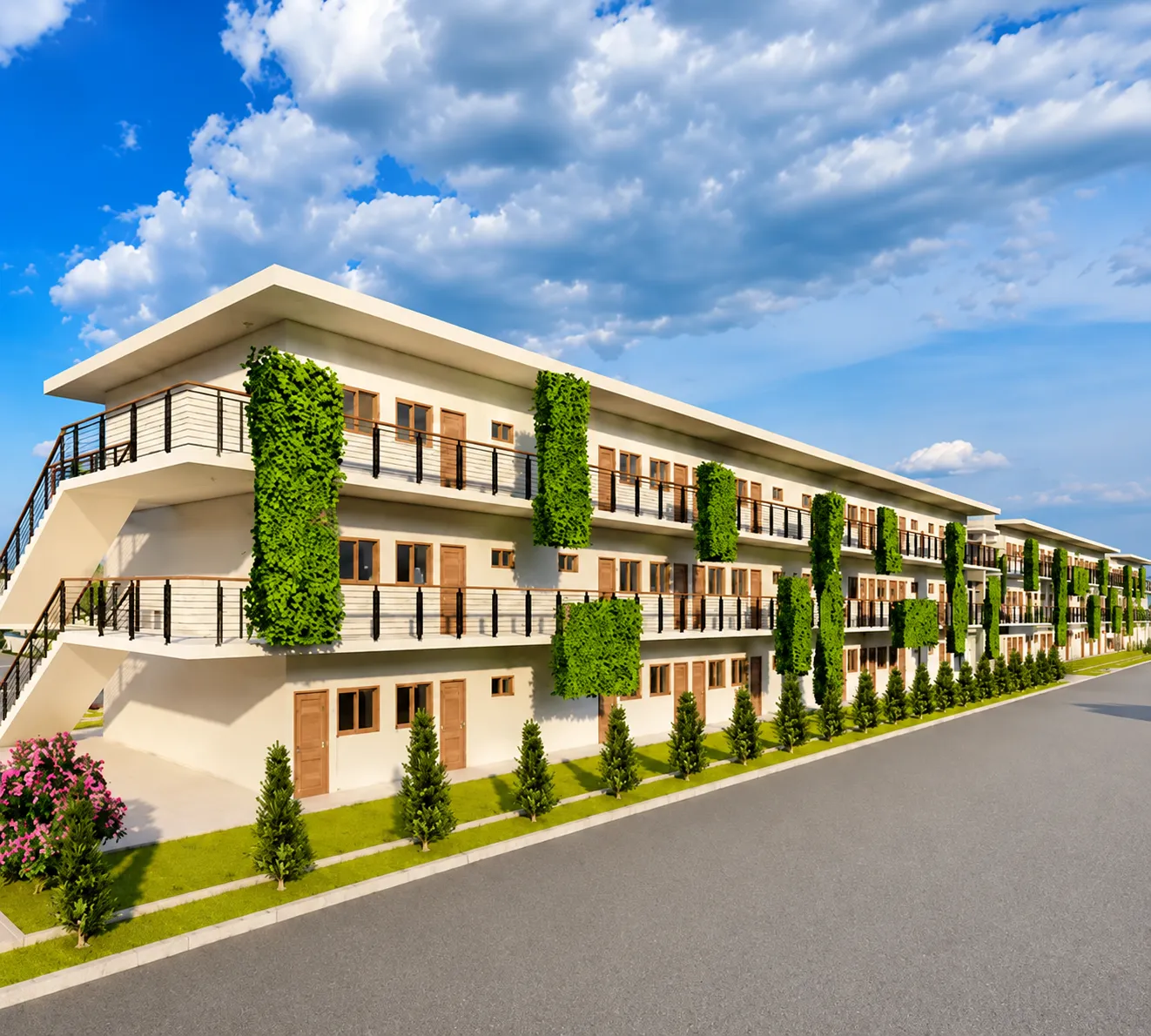
Corporate housing can be hard to find because it sits between two familiar options. It is more flexible than a traditional lease, but it is usually designed for a longer and more comfortable stay than a hotel. The search becomes even more complicated in cities where furnished rentals are limited, short-term demand is high, or employers need several units at once.
The good news is that corporate housing is available through several channels, from specialized providers and furnished apartment communities to relocation services, employers, and local property managers. Knowing where to look, what to ask, and why availability changes from one market to another can make the process much faster. This guide explains the main places to find corporate housing rentals and explores how modern modular construction can help create more flexible housing where inventory is tight.
Corporate Housing Explained
Corporate housing refers to fully furnished residential accommodations that are rented for temporary stays, typically lasting from several weeks to several months. Unlike hotels, corporate housing provides a home-like environment with separate living areas, kitchens, bedrooms, bathrooms, and essential household furnishings.
Many corporate housing rentals include:
- Fully furnished living spaces
- Equipped kitchens
- Utilities
- Internet service
- Laundry facilities
- Parking, depending on the property
- Flexible lease terms
Although originally intended for business travelers, corporate housing now serves a much wider audience. Temporary housing is commonly used during relocations, construction projects, insurance claims, military assignments, internships, medical treatments, and long-term business travel.
The biggest advantage is convenience. Instead of moving furniture or signing a lengthy lease, residents can move into a space that is already prepared for everyday living.
Who Typically Needs Corporate Housing?
Corporate housing serves many different situations where temporary accommodations make more sense than a traditional apartment or hotel.
Common users include:
- Relocating employees: Companies often arrange furnished housing while employees search for permanent homes after moving to a new city.
- Traveling professionals: Consultants, engineers, executives, and project managers frequently work away from home for several months at a time.
- Healthcare professionals: Travel nurses, physicians, therapists, and medical specialists often accept temporary assignments that require housing close to hospitals or healthcare facilities.
- Construction and infrastructure crews: Large construction projects may bring workers to an area for months before the project is completed.
- Insurance displacement: Families whose homes are being repaired after fires, floods, or other unexpected events may need temporary housing.
- Government and military personnel: Government agencies and military organizations regularly use furnished accommodations for temporary assignments.
Although their reasons for needing temporary accommodations differ, all of these groups benefit from furnished housing that offers flexibility, comfort, and the convenience of moving in without the commitments of a traditional long-term lease.
Where to Find Corporate Housing Rentals
There are several ways to locate corporate housing. The right option depends on the location, budget, length of stay, and who is arranging the housing.
Corporate Housing Providers
Specialized corporate housing providers focus exclusively on furnished short-term rentals. These companies typically offer apartments, condominiums, and houses that are already equipped for immediate occupancy. Their properties often include furniture, kitchen supplies, utilities, internet service, and housekeeping options.
Many providers also help businesses manage multiple employee stays across different locations. Availability, however, can vary significantly depending on local housing markets. In high-demand areas, inventory may become limited during busy seasons.
Apartment Communities With Furnished Units
Some apartment communities reserve a portion of their units for furnished, flexible-term rentals. This option works well for individuals who expect to stay for several months but want access to amenities such as:
- Fitness centers
- Swimming pools
- Business centers
- Package services
- Community gathering spaces
Lease flexibility differs by property, so minimum stay requirements may apply.
Relocation Companies
Businesses relocating employees often partner with relocation specialists that coordinate every aspect of the move, including temporary housing. These companies help match employees with furnished accommodations based on budget, family size, commute preferences, school districts, desired lease length.
This simplifies the transition while employees settle into a new community.
Employer-Arranged Housing
Many employers negotiate housing directly for employees. Large corporations, healthcare systems, construction firms, universities, and government agencies often maintain relationships with housing providers that simplify the booking process.
In these cases, employees typically receive accommodations that meet company policies regarding cost, location, and duration.
Extended-Stay Apartments
Extended-stay apartment rentals combine features of apartments and hotels. These accommodations are often fully furnished and may include:
- Weekly housekeeping
- Utilities
- Wi-Fi
- On-site laundry
- Kitchen facilities
They can be an attractive option for professionals who need flexible accommodations without signing a traditional residential lease.
Local Property Management Companies
Property management companies sometimes offer furnished homes or apartments that owners make available for temporary rentals. This approach may uncover options that are not widely advertised through larger corporate housing networks.
Local managers also tend to have detailed knowledge of neighborhood availability, rental requirements, and seasonal demand.
Why Corporate Housing May Be Difficult to Find
Corporate housing can be harder to secure than a traditional rental because availability is often limited and demand can change quickly. The main challenges include:
- Limited furnished inventory: Most apartments and homes are intended for long-term tenants and are not equipped for temporary, move-in-ready stays.
- Growing demand: Business travel, employee relocation, healthcare assignments, remote work, and project-based employment can increase demand in major cities and fast-growing regions.
- High housing costs: In competitive rental markets, property owners may prefer long-term leases because they offer more predictable occupancy and fewer turnovers.
- Location constraints: Corporate renters often need housing close to offices, hospitals, construction sites, or transportation routes, which narrows the number of suitable options.
- Flexible lease requirements: Many renters need housing for only a few weeks or months, but some properties require longer minimum stays.
- Slow construction timelines: Traditional housing projects can take many months or years to complete, making it difficult to add inventory quickly when demand rises.
These pressures have encouraged developers, employers, and housing operators to explore faster and more flexible ways to expand temporary housing inventory.
How Modular Housing Can Help Expand Corporate Housing Inventory
Modular construction offers a practical way to increase the supply of housing that can support corporate rentals.
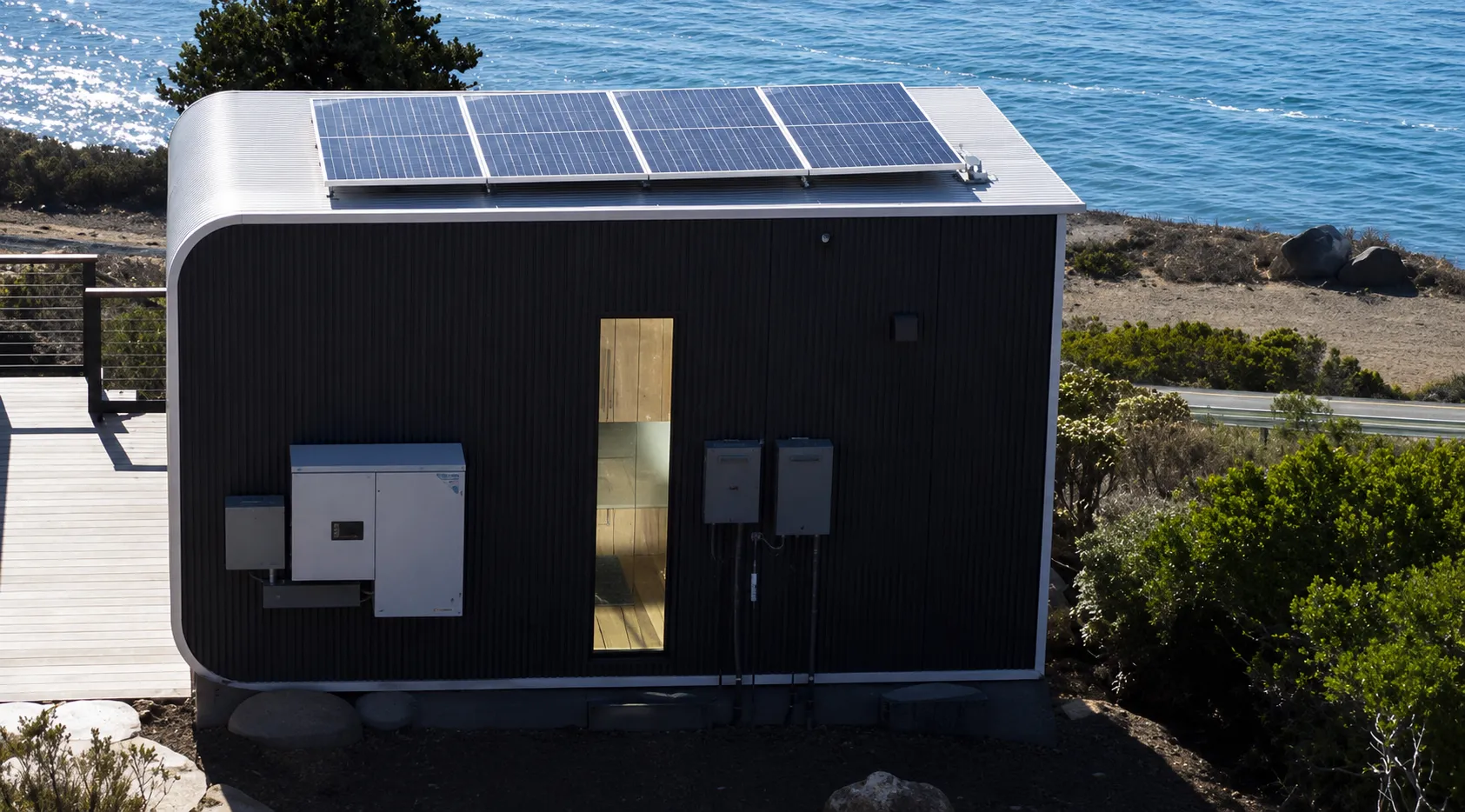
Rather than building every home entirely on-site, modular homes are manufactured in controlled factory environments before being transported and installed at their final location. This approach can reduce weather delays, improve production consistency, and shorten project timelines.
At Azure Printed Homes, we manufacture modular living spaces using advanced robotic production methods that combine factory efficiency with design flexibility. Depending on the product, robotic printing can be completed in as little as one day, while interiors are finished in approximately 4 to 15 days before delivery and installation. These streamlined processes help projects move from planning to occupancy more efficiently than many traditional construction methods.
Because modular homes can be deployed across many different property types, they provide developers, employers, and housing operators with additional options when expanding temporary housing capacity.
Why Modern Modular Construction Is a Smarter Way to Build
Modern modular construction offers more than faster production. It creates a more controlled, efficient, and flexible building process from the start. Because much of the work happens in a factory environment, projects are less exposed to weather delays, material damage, and the scheduling problems that often slow down traditional construction. The result is a more predictable path from design to delivery.
This approach also makes it easier to repeat successful designs, scale production, and maintain consistency across multiple units. For corporate housing, workforce accommodations, ADUs, and residential developments, that can make a major difference. Builders and property owners can add housing more quickly while still choosing layouts, finishes, and features that match the intended use.
Consistent Factory-Controlled Quality
A controlled manufacturing environment makes it easier to monitor each stage of production. Materials can be stored properly, construction steps can be repeated with greater consistency, and quality checks can happen throughout the process instead of only at the end.
We fabricate our modular living spaces in a factory setting where the structure, electrical systems, mechanical components, plumbing, and interior finishes are completed before delivery. This reduces the amount of work required on-site and helps each unit arrive prepared for the final installation steps.
Greater Design Flexibility
Modular construction no longer means choosing from a small set of fixed layouts. Modern systems can support a wide range of floor plans, sizes, finishes, and configurations, making them suitable for both compact temporary housing and larger permanent residences.
We offer standard layouts that can be customized, along with custom design options for projects with specific requirements. Dimensions, room arrangements, finishes, bedroom and bathroom layouts, and site orientation can all be adjusted depending on the model and project scope.
More Sustainable Material Use
Factory construction can reduce waste by improving material planning and using precise manufacturing methods. It also creates opportunities to incorporate recycled materials in ways that are difficult to achieve through conventional building processes.
More than 60% of the print material used in our printed structures comes from recycled plastic. Approximately 100,000 plastic bottles are incorporated into every 120 square feet of printed construction. This gives plastic waste a practical second life as part of a durable building system.
Energy-Efficient Living Spaces
Energy efficiency begins with the building envelope. Well-insulated floors, walls, ceilings, and windows help regulate indoor temperatures and reduce unnecessary energy loss.
We design our modular homes with insulation throughout the floor, walls, and ceiling, along with standard double-pane windows. The integrated structure also helps limit gaps and weak points that can affect comfort and energy performance.
Durable Construction for Different Environments
Modern modular systems can be adapted to suit different climates, site conditions, and safety requirements. The choice of material and structural system plays an important role in determining where and how a unit can be used.
We provide both robotically printed structures made with recycled plastic materials and robotically formed light-gauge steel construction. Printed models are well suited for backyard studios, while light-gauge steel is recommended for larger homes, ADUs, and projects in high fire hazard severity zones.
A Wide Range of Modular Housing Solutions
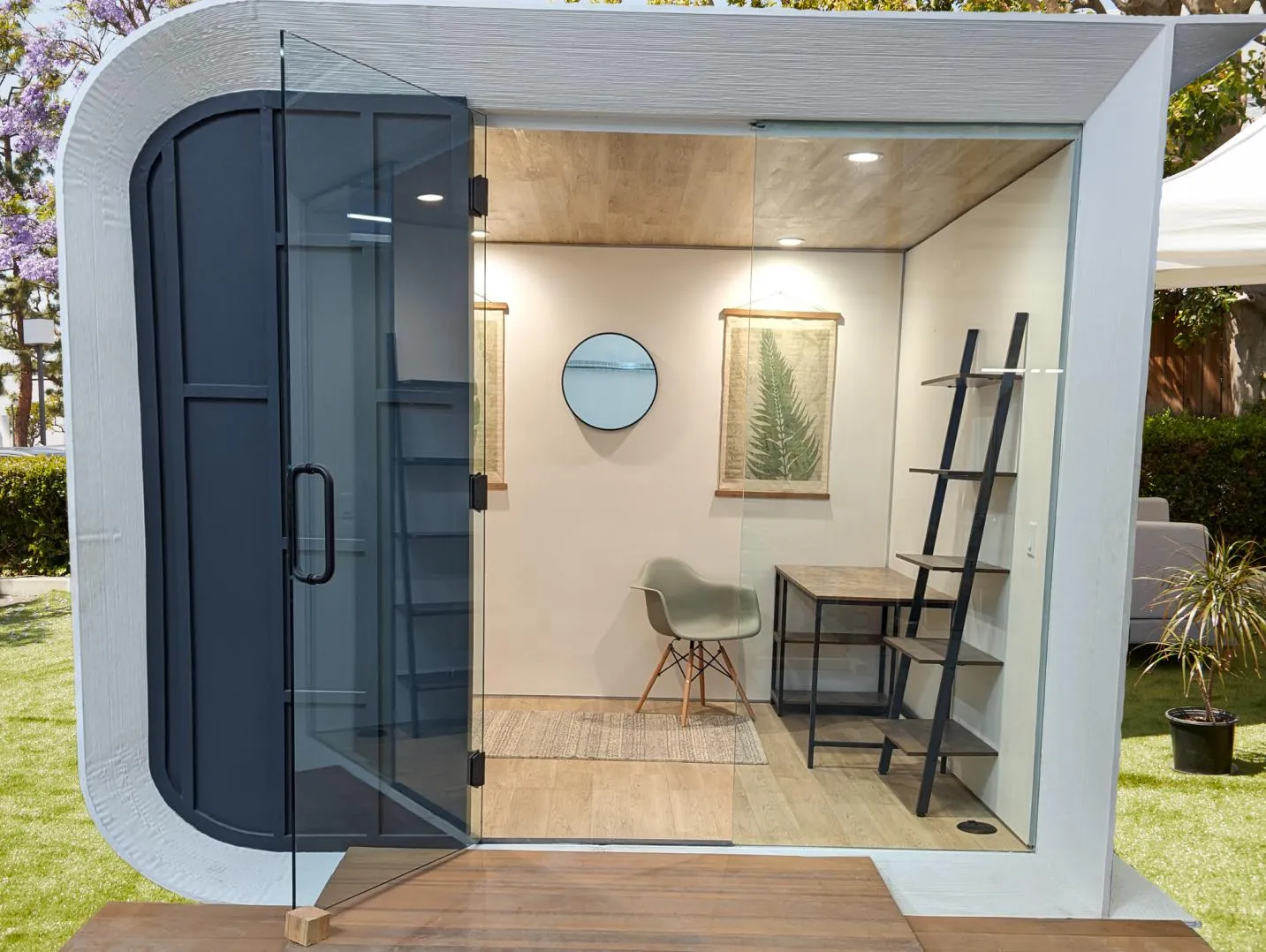
Modular construction can support many types of temporary and permanent housing. A compact studio may work well for one employee on assignment, while a larger one- or two-bedroom unit may be better suited to a relocating family, healthcare professional, or project team.
The right option depends on several factors, including the number of occupants, expected length of stay, available land, utility access, local permitting, and whether the housing needs to remain in one location. For corporate housing operators and developers, having multiple sizes and layouts available makes it easier to match the unit to the intended use instead of forcing every resident into the same type of accommodation.
We offer studio models, larger homes and ADUs, and custom modular projects. Our lineup ranges from compact 100-square-foot spaces to multi-bedroom homes, giving buyers and organizations more flexibility when planning individual units or larger housing communities.
| Category | Model | Size | Layout | Starting Price |
|---|---|---|---|---|
| Studio Series | N100 | 100 sq. ft. | Compact studio | $24,900 |
| Studio Series | A120 | 120 sq. ft. | Compact studio | $29,900 |
| Studio Series | D120 | 120 sq. ft. | Compact studio | $29,900 |
| Homes & ADUs | A-360 | 360 sq. ft. | Larger residential layout | $89,900 |
| Homes & ADUs | A-540 | 540 sq. ft. | Larger residential layout | $134,900 |
| Homes & ADUs | A-720 | 720 sq. ft. | Larger residential layout | $174,900 |
| Homes & ADUs | A-900 | 900 sq. ft. | Larger residential layout | $219,900 |
| Custom Homes | Custom | Based on project | Custom floor plan and finishes | Approximately $400 per sq. ft. |
This range gives employers, developers, and housing operators more freedom to create a corporate housing project around actual occupancy needs. A site can use compact studios for individual professionals, larger units for families, or a combination of models to serve different assignment lengths and resident profiles.
Conclusion
Corporate housing rentals can be found through specialized providers, furnished apartment communities, relocation companies, employers, extended-stay apartments, and local property managers. However, limited inventory continues to make temporary housing difficult to secure in many locations.
As housing demand grows, modular construction offers an additional way to increase available inventory without relying solely on traditional building methods. Faster factory production, flexible designs, and scalable construction make modular homes well suited for a variety of temporary housing applications.
At Azure Printed Homes, we combine robotic manufacturing, customizable modular designs, recycled materials, and efficient factory construction to create future-focused living spaces that support everything from compact studios to larger homes and ADUs. As organizations look for new ways to expand corporate housing options, modular construction provides an increasingly practical path toward delivering high-quality, move-in-ready accommodations more efficiently.