Finding affordable housing in Irvine can feel challenging, especially in one of California’s most desirable cities. Strong job growth, highly rated schools, and a high quality of life continue to attract new residents, creating significant demand for both rental and homeownership opportunities. As a result, affordable housing programs have become an important resource for individuals and families looking to live in the area without stretching their budgets beyond what they can comfortably afford.
This guide explains how affordable housing works in Irvine, how to apply, and why modular construction is becoming an increasingly relevant part of California’s housing future.
Affordable Housing Explained
Affordable housing refers to homes that are priced so households spend a reasonable portion of their income on housing costs. These homes are typically supported through government programs, local housing policies, or partnerships with developers that reserve a portion of new communities for income-qualified residents.
Affordable housing may include:
- Rental apartments
- Affordable condominiums
- Affordable single-family homes
- Accessory dwelling units (ADUs)
- Housing designed for seniors, veterans, or other qualifying groups
Eligibility is generally based on factors such as household income, household size, residency requirements, and program-specific qualifications. Each development may have its own application process, income limits, and occupancy requirements.
Why Affordable Housing Matters in Irvine
Affordable housing plays an important role in Irvine because the city continues to attract residents for its employment opportunities, schools, planned communities, and access to services. At the same time, housing costs can make it difficult for some households to remain in the city or move closer to work, education, and family. Affordable housing programs help create options for income-qualified renters and buyers who may not be able to access market-rate housing.
Irvine does not rely on one single affordable housing program. Instead, the City provides information about several types of assistance and housing opportunities through its Affordable Housing portal, including:
- Affordable rental housing
- Affordable homeownership opportunities
- Housing Choice Voucher resources
- Community Preference Policy
- Existing and future affordable housing developments
- Eligibility and application guidance
What makes the process in Irvine different is that applicants usually do not submit one general application for every affordable property in the city. Individual communities may have their own income limits, occupancy rules, waiting lists, interest lists, and enrollment periods. A person may qualify for one development but not another, depending on household size, income, and the requirements of that specific property.
Availability can also change throughout the year. New developments may begin accepting applications, existing waiting lists may reopen, and temporary interest lists may be announced for particular communities. For that reason, applicants should review the City’s current housing information regularly and follow the instructions provided for each property or program.
Step-by-Step Application for Affordable Housing in Irvine
Although every affordable housing community has its own requirements, the overall process follows a similar pattern.
1. Review Eligibility Requirements
Before applying, confirm that the household meets the income and occupancy requirements for the specific property. Eligibility may depend on total household income, the number of people who will live in the unit, and any employment, residency, or property-specific conditions. Meeting the income limits does not guarantee housing, but it determines whether the application can move forward.
2. Search Available Communities
Affordable housing opportunities in Irvine may include both existing properties and future developments. Availability can depend on current vacancies, newly completed housing, open waiting lists, and scheduled application periods. Some communities accept applications throughout the year, while others only open enrollment for a limited time.
3. Join Interest Lists or Waiting Lists
Many affordable housing developments use interest lists or waiting lists to manage demand. Joining an interest list can help applicants receive notice when applications become available. Because openings may attract many applicants, it is important to respond promptly when a list opens.
4. Gather Required Documentation
Applicants are often asked to provide documents that verify household and financial information. These may include proof of income, tax returns, identification, employment verification, and details about everyone who will live in the home. Preparing these documents in advance can make the application process smoother.
5. Complete the Application
The application should be completed carefully and accurately. Missing information, inconsistent details, or incomplete documentation can delay the review process and may require additional follow-up before eligibility can be confirmed.
6. Wait for Review
After submission, the application is reviewed according to the procedures of the individual property or program. Depending on demand and availability, an applicant may receive an offer, be placed on a waiting list, be asked for more documentation, or be contacted when a suitable unit becomes available. In a high-demand city like Irvine, the review and waiting period may take time.
How Affordable Housing Is Evolving in Irvine
Affordable housing programs remain essential in Irvine, but they are only one part of a much larger housing conversation. As demand grows, the challenge is no longer just helping people qualify for available units. It is also finding practical ways to create more homes, use land more efficiently, and shorten the time between planning and occupancy.
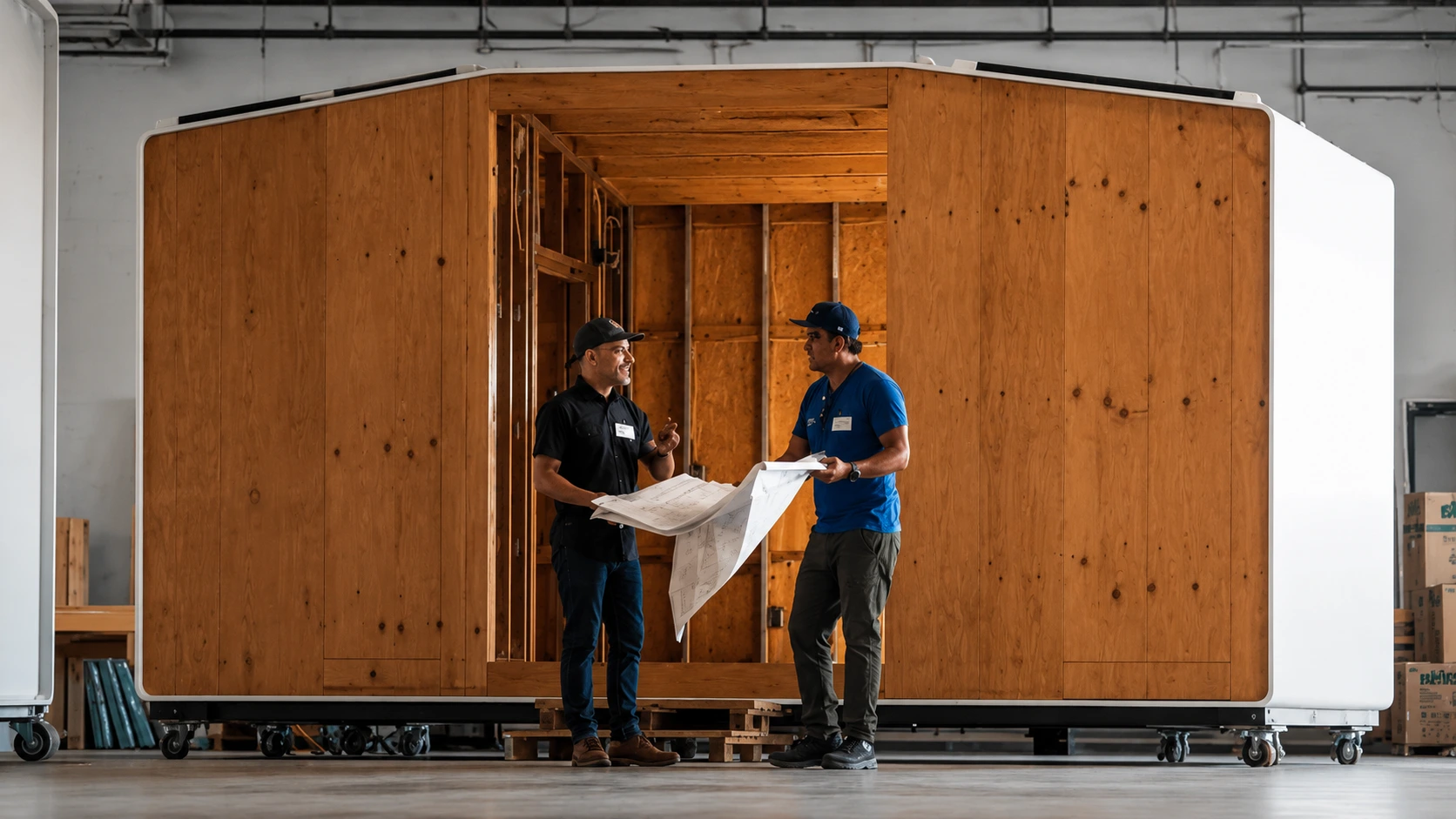
That is where newer construction methods are becoming increasingly relevant. Modular construction shifts much of the building process into a controlled factory environment, where sections of a home can be completed before they are transported to the property. This approach can reduce weather-related delays, improve production consistency, and make project timelines easier to manage.
For Irvine homeowners, property owners, and developers, that shift creates new possibilities. Modular ADUs, backyard studios, and compact homes can add useful living space to existing lots without relying entirely on a long traditional building process. At Azure Printed Homes, we manufacture our modular units nearby in California, complete much of the electrical, plumbing, and interior work in the factory, and then coordinate delivery to the site. That makes our approach especially relevant for Southern California projects where speed, efficient land use, and simpler logistics matter.
This does not replace affordable housing programs, but this can support the same broader goal: increasing the number of practical housing choices available in and around Irvine.
The Benefits of Modular Construction for Today’s Housing Needs
Modern modular homes have evolved well beyond the prefabricated buildings many people imagine. Today’s modular construction combines factory precision with customizable layouts, quality materials, and energy-efficient building practices. Some of the biggest advantages include:
Faster Construction
Traditional projects often slow down when weather, subcontractor schedules, and on-site sequencing do not line up. Modular construction moves much of that work into a controlled production environment, where several stages can be managed more efficiently.
We can robotically print a studio series shell in about one day, while final completion may take around two weeks, depending on the model, materials, and production schedule. For larger homes and ADUs, typical delivery timelines are approximately 90-120 days, depending on customization, location, and current lead times. This gives Irvine property owners a clearer and potentially shorter path from design to installation.
Sustainable Building Practices
Sustainability has become increasingly important in California construction. We utilize recycled plastic as one of our primary construction materials, with approximately 100,000 recycled plastic bottles incorporated into every 120 square feet of printed building material. For projects in high fire hazard severity zones or larger residential developments, we also offer light gauge steel construction.
Flexible Design Options
Modular construction is no longer limited to one or two standard floor plans. Many homeowners want homes that match their property and lifestyle rather than forcing their needs into a fixed design.
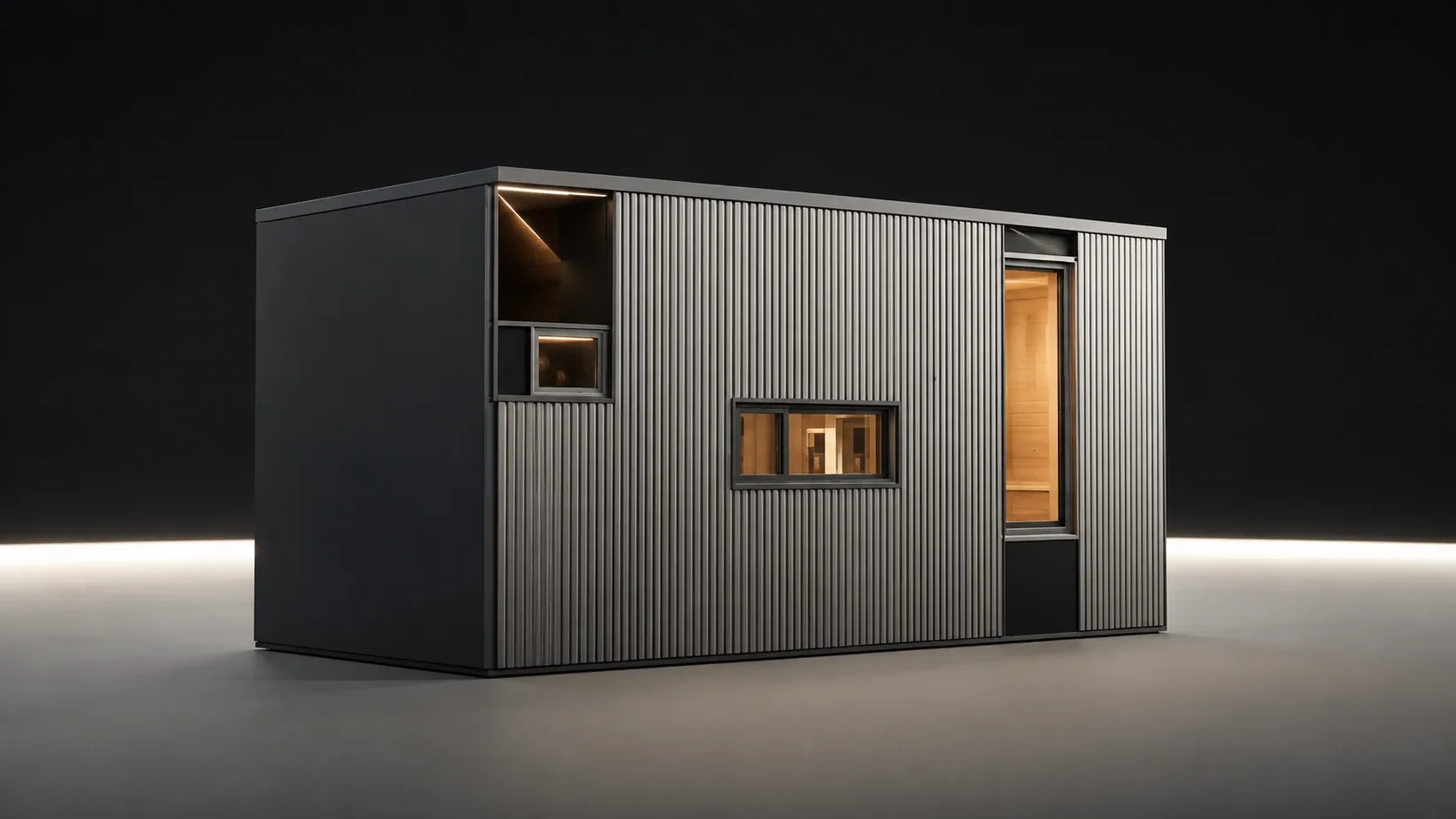
We offer a range of configurable homes, ADUs, and studio models. Buyers can personalize finishes, adjust layouts where appropriate, modify dimensions, and choose optional upgrades such as solar panels, heated floors, and premium interior finishes.
Modular Housing Options for Irvine Homeowners
Depending on the property, local zoning requirements, and the owner’s goals, modular construction can support several types of residential projects. Our lineup ranges from compact backyard studios to complete homes and ADUs, giving Irvine property owners options for different lot sizes, household needs, and budgets.
Accessory Dwelling Units
ADUs can create independent living space on an existing residential property. They may be used for family members, long-term guests, caregivers, or rental housing, subject to local rules.
We offer several homes and ADUs models:
- A360: 360 sq ft, starting at $89,900
- A540: 540 sq ft, starting at $134,900
- A720: 720 sq ft, starting at $174,900
- A900: 900 sq ft, starting at $219,900
These models include compact one-bedroom and larger multi-bedroom configurations. We also offer custom homes for projects that need different dimensions, room counts, orientations, or finishes.
Backyard Studios
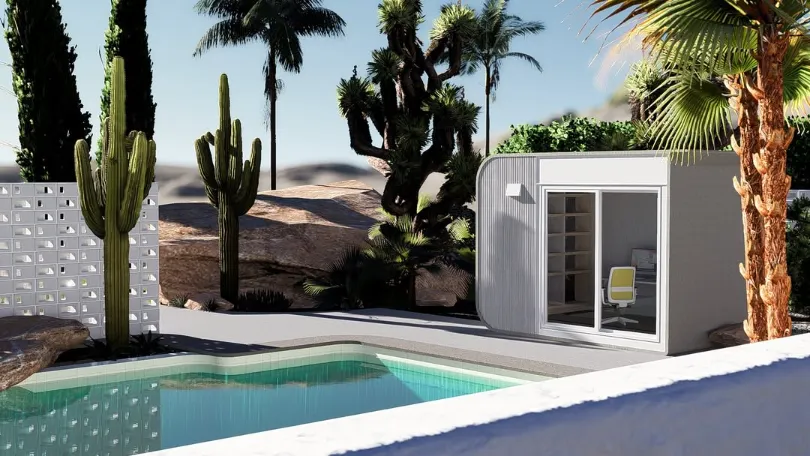
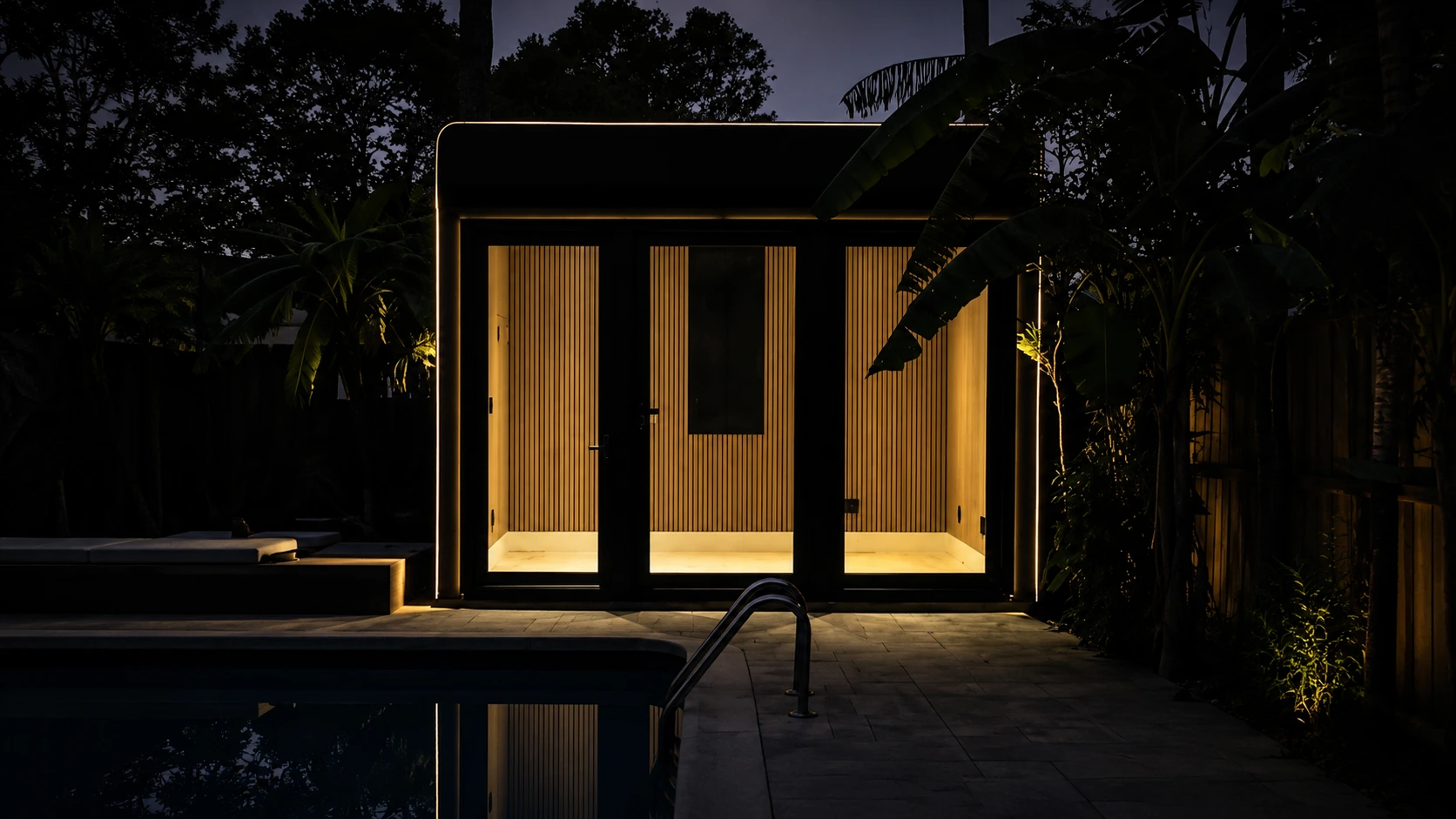
A backyard studio can add useful space without requiring the footprint of a full-size home. Depending on the property and intended use, it may work as a home office, guest room, creative studio, private retreat, or flexible living space.
Our studio series includes:
- N100: 100 sq ft, starting at $24,900
- A/D/C-100: 100 sq ft, starting at $24,900
- A/D/C-120: 120 sq ft, starting at $29,900
We can customize selected finishes and design details, with options such as premium materials, heated floors, solar panels, and layout adjustments where the model and site allow.
Primary Homes
Modular construction can also be used for a complete primary residence. We manufacture our homes in California and complete much of the electrical, plumbing, mechanical, insulation, window, door, and interior finish work before delivery.
For projects that go beyond the standard lineup, we offer custom homes at approximately $400 per sq ft. Customization may include changes to the floor plan, dimensions, and orientation, additional bedrooms or bathrooms where feasible, solar panels, heated floors, and premium interior features.
This gives Irvine homeowners a wider range of choices, from a compact studio to a full-size home, while keeping manufacturing, delivery, and project coordination close to Southern California.
What to Consider Before Choosing a Housing Solution
Affordable housing programs can be an excellent option for eligible households, but they are not the only path to creating or finding a home in Irvine. Every situation is different, and the right solution often depends on individual goals, property ownership, budget, and timeline.
Before deciding on a housing option, it helps to consider:
- Whether the household qualifies for an affordable housing program
- How quickly housing is needed
- Whether there is an existing property that could accommodate an ADU or backyard studio
- The amount of living space required now and in the future
- The level of customization and long-term flexibility desired
Taking these factors into account can help homeowners and future buyers compare different housing options with greater confidence. For some, applying for an affordable housing program will be the best fit. For others, building a modular ADU, backyard studio, or primary home may offer a practical way to create additional living space while meeting changing household needs.
Conclusion
Applying for affordable housing in Irvine starts with understanding the available programs, meeting the eligibility requirements, and following the application process for each individual community. While affordable housing creates valuable opportunities for qualifying households, availability is often limited, making it important to stay informed about new developments, interest lists, and application periods.
As Irvine continues to address growing housing demand, modular construction is becoming an increasingly practical way to add new homes and living spaces. We manufacture our robotically printed homes in California and coordinate delivery throughout the US, offering customizable ADUs, backyard studios, and primary homes designed for modern living. By combining efficient manufacturing, recycled materials, and flexible designs, we help homeowners create additional housing while supporting the region’s evolving needs.