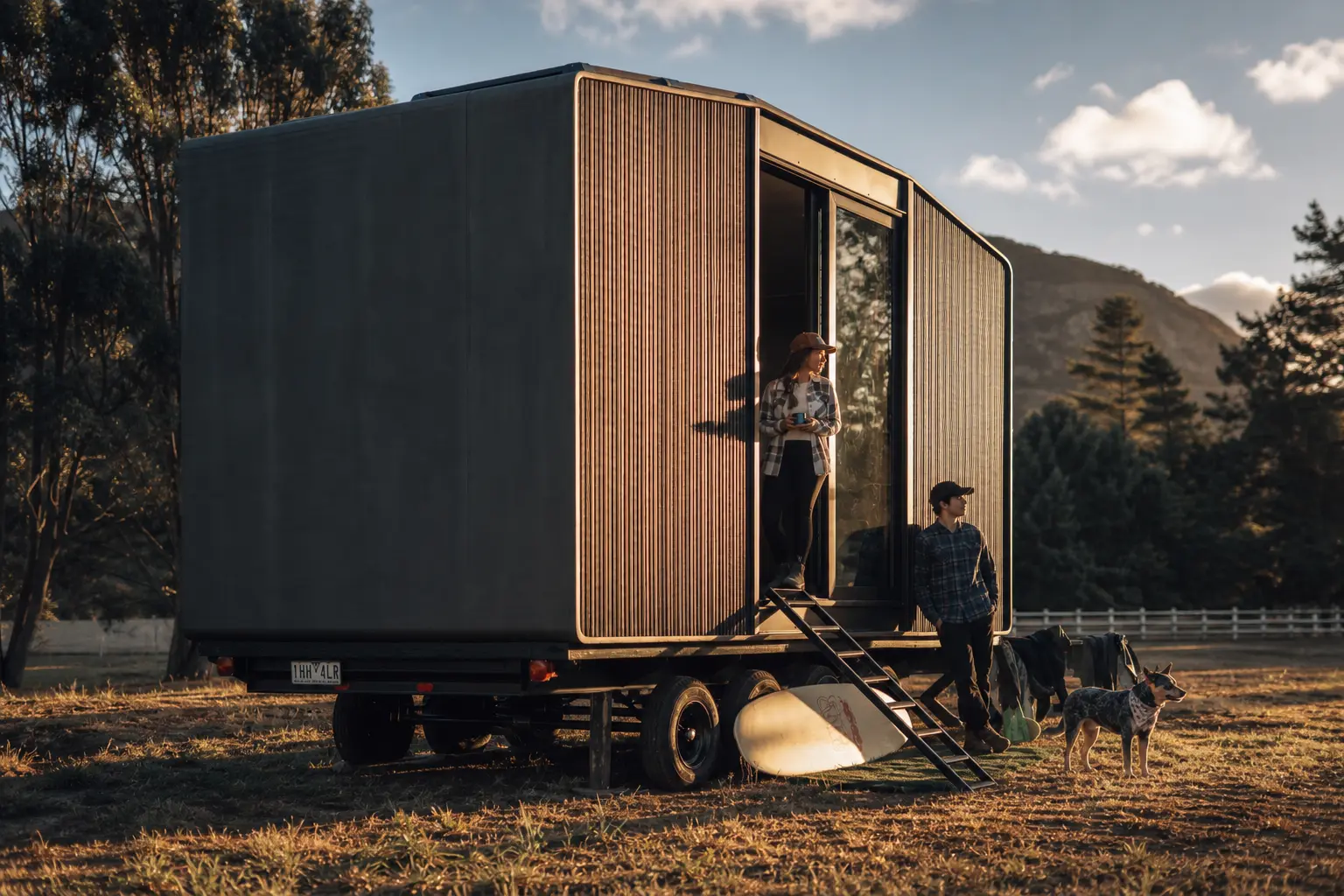
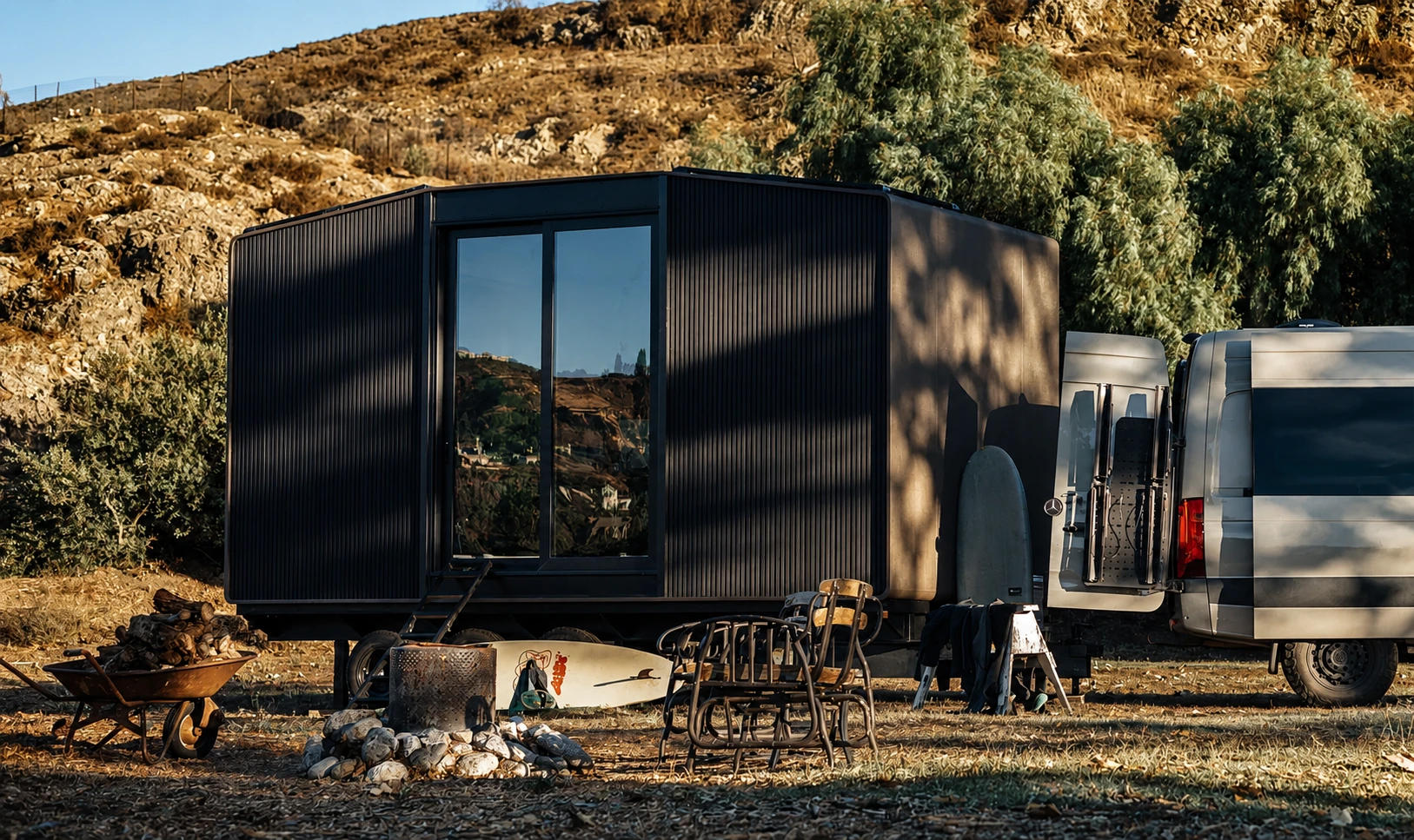
Factory-built housing has changed dramatically over the past few decades. What was once seen as a niche alternative is now a practical option for homeowners looking for faster construction, predictable costs, and modern design. Still, one question comes up again and again: should you choose a manufactured home or a modular home?
Although the two are often grouped together, they are built under different standards, installed differently, and offer distinct advantages depending on your goals. Understanding those differences can help you avoid confusion and choose a home that fits your lifestyle, budget, and property.
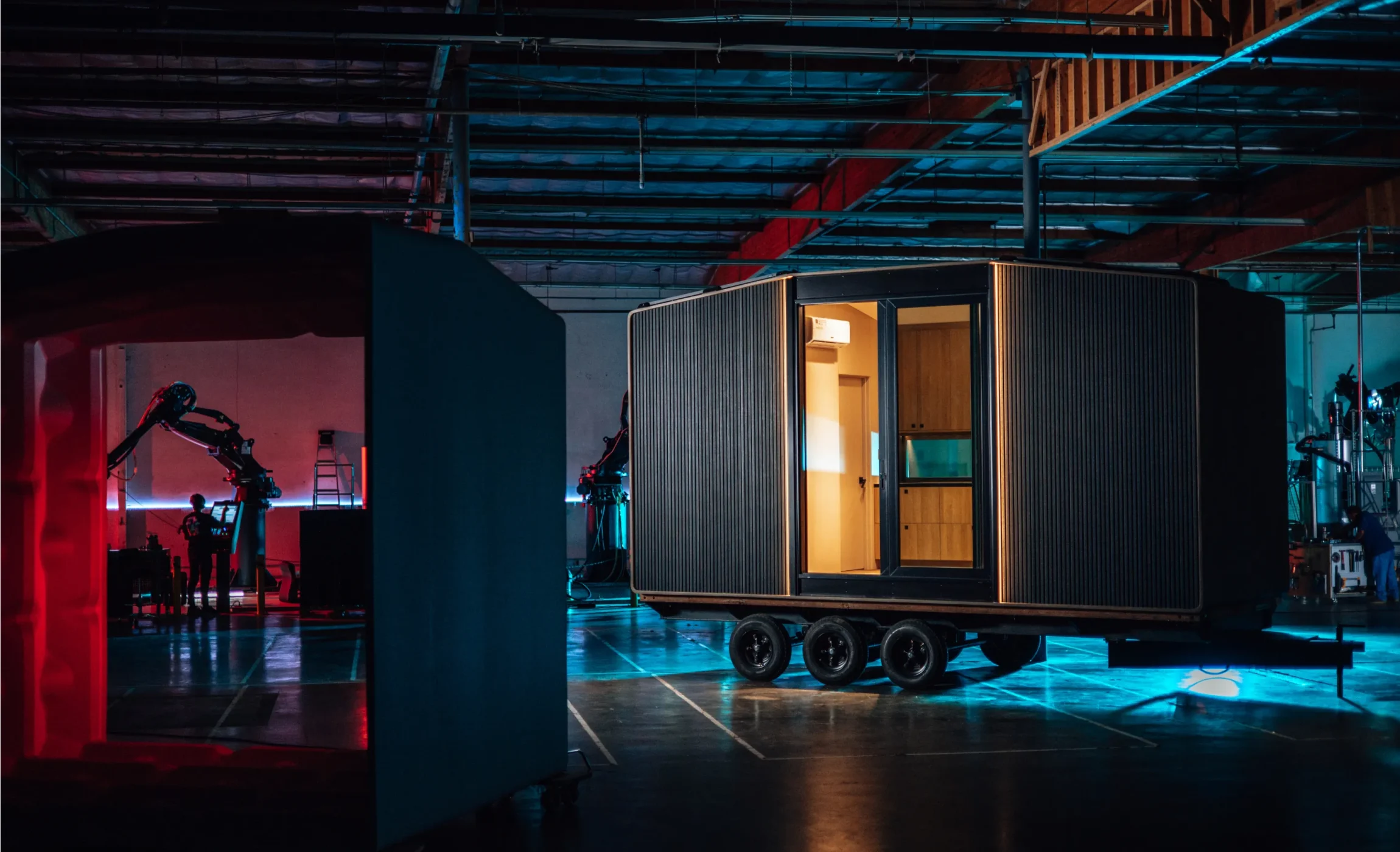
At Azure Printed Homes, we design and manufacture modular homes, ADUs, studio spaces, and larger residential projects using advanced robotic manufacturing, automation, and sustainable materials. Our homes are built for permanent living while giving homeowners flexibility to personalize layouts, finishes, and features to match their needs.
What Is a Manufactured Home?
A manufactured home is a factory-built home constructed under the federal HUD Code. The entire home is built on a permanent steel chassis and transported to its final location after construction.
Manufactured homes may be placed in dedicated communities or on privately owned land, depending on local regulations. While they can provide an affordable housing solution, their construction standards, installation methods, and financing options differ from those of modular homes.
Pros of Manufactured Homes:
- Lower purchase price in many cases
- Factory-controlled construction process
- Faster completion than many site-built homes
- Available in a variety of floor plans
- Can be installed in manufactured home communities
Cons of Manufactured Homes:
- Built under HUD standards rather than local building codes
- Permanent steel chassis remains part of the structure
- Financing options may differ from conventional mortgages
- Resale value depends heavily on location and land ownership
- Design flexibility is often more limited than modular construction
What Is a Modular Home?
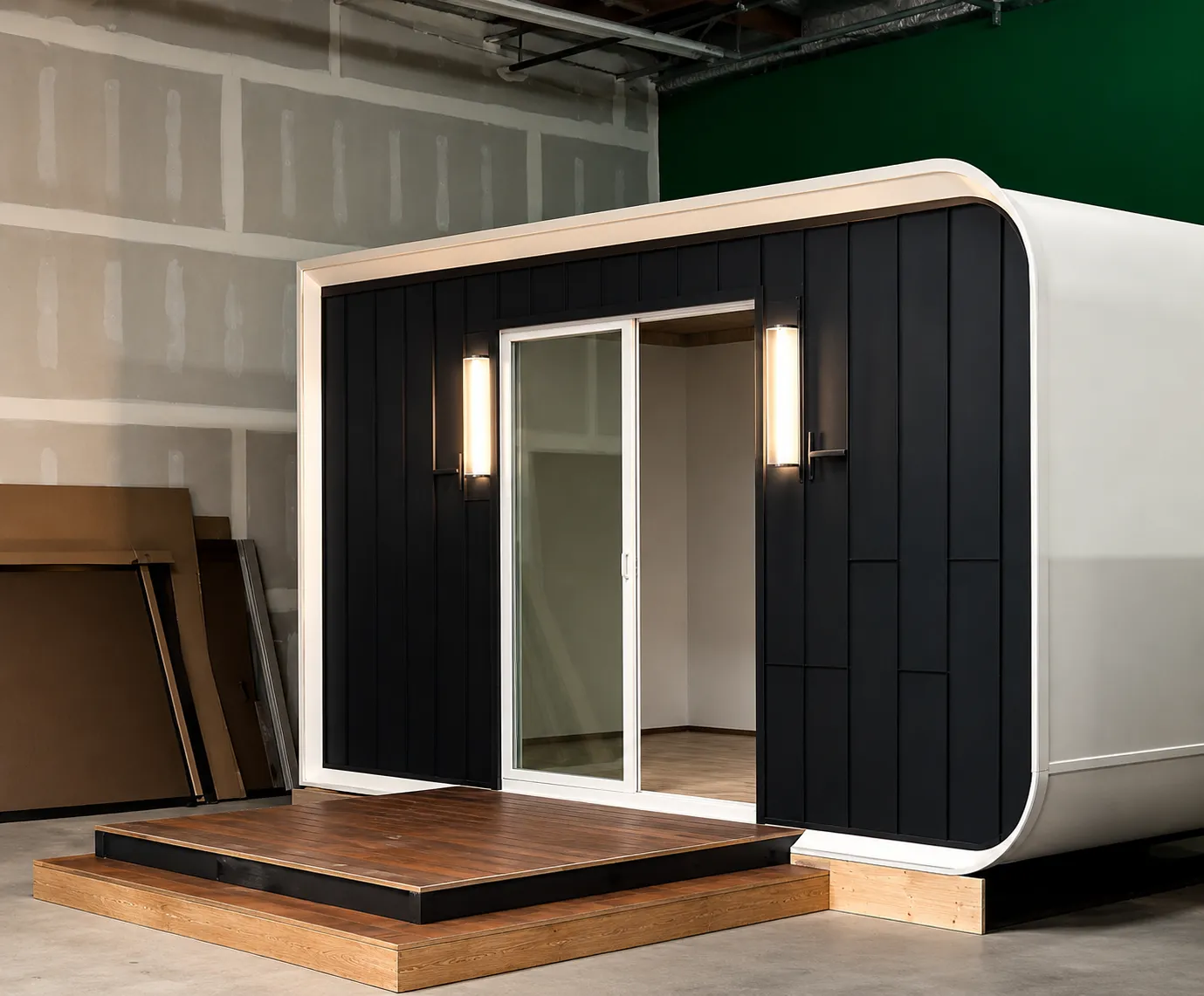
A modular home is built in sections inside a factory and transported to the building site, where the modules are assembled on a permanent foundation. Unlike manufactured homes, modular homes are built to the same state and local building codes as traditional site-built homes.
Modern modular construction combines factory precision with permanent residential construction. Because much of the work happens indoors, projects are less affected by weather delays while maintaining consistent quality throughout the build.
Pros of Modular Homes:
- Built to local and state building codes
- Installed on permanent foundations
- Often financed similarly to site-built homes
- Greater design flexibility
- Strong long-term resale potential
- Faster construction timelines thanks to factory production
- Consistent quality through controlled manufacturing
Cons of Modular Homes:
- Site preparation and foundation work are still required
- Transportation and crane installation must be planned
- Local permitting timelines vary by jurisdiction
- Initial investment may be higher than some manufactured homes
Key Differences Between Manufactured and Modular Homes
Manufactured and modular homes can look similar at first glance because both are built in a factory. That is where much of the confusion starts. The real differences show up in building codes, foundations, financing, customization, and long-term value.
For buyers, these details matter. A home is not just a structure. It is a place to live, an investment, and often a long-term part of the property. Here is how manufactured and modular homes compare in the areas that usually matter most.
Quick Comparison
| Feature | Manufactured Home | Modular Home |
| Building standard | Federal HUD Code | State and local building codes |
| Foundation | Steel chassis | Permanent foundation |
| Construction | Entire home built in factory | Factory-built modules assembled on site |
| Financing | May use specialized financing | Often eligible for conventional financing |
| Customization | Moderate | Extensive |
| Long-term value | Varies by property and location | Similar to traditional homes |
| Permanent residence | Yes | Yes |
Construction Quality and Durability
Both home types are built in factory environments, which helps improve consistency compared to building entirely outdoors. Materials stay protected from weather, and repeatable manufacturing processes can reduce waste and improve quality control.
The biggest difference comes after construction. Modular homes become permanent structures once installed on their foundations. Because they follow local building requirements, they are designed to perform alongside conventional homes in the same area.
At Azure, our manufacturing process combines robotic precision with factory production to create highly consistent building components. Depending on the project, we manufacture using recycled polymer materials or light gauge steel, allowing us to match the structure to the project’s needs while maintaining durability and energy efficiency.
Design Flexibility
One common misconception about factory-built housing is that every home looks the same. Modern modular construction offers far more flexibility than many people expect.
Floor plans, exterior finishes, window placement, kitchens, bathrooms, and interior materials can all be customized to fit both the property and the homeowner’s preferences.
We regularly work with homeowners who want more than a standard floor plan. Depending on the project, layouts can be adjusted, dimensions modified, finishes personalized, and optional upgrades such as solar panels, heated floors, or premium materials incorporated into the design.
Manufactured homes often offer several floor plans and finish packages, but structural customization is typically more limited.
Energy Efficiency
Energy performance matters for comfort, monthly utility costs, and long-term ownership. Factory-built homes generally benefit from precise construction methods that reduce gaps and improve insulation performance. However, the final level of efficiency depends on the materials, insulation package, windows, HVAC system, and overall building design.
Our modular homes are designed with insulated walls, roofs, and floors to improve year-round comfort while helping reduce heating and cooling demands. Standard double-pane windows and carefully manufactured building envelopes contribute to long-term energy performance.
Cost Considerations
Purchase price is only one part of the overall investment. When comparing manufactured and modular homes, it is important to consider site preparation, foundation costs, utility connections, delivery, permitting, customization, long-term maintenance, financing options, and future resale value.
A manufactured home may have a lower initial purchase price, making it attractive for buyers with limited budgets or those placing a home in an established manufactured home community. A modular home may require a larger upfront investment, but many buyers view it as a long-term property improvement because it becomes part of the real estate.
We at Azure offer several factory-built options across different sizes and use cases:
- Studio models: starting from $24,900 to $39,900
- Homes on Wheels: starting from $69,900 to $109,900
- Homes and ADUs: starting from $89,900 to $219,900
- Custom homes: typically around $400 per sq ft, depending on design, size, finishes, and project requirements
These prices cover the factory-built structure and selected finishes, but buyers should still plan for project-specific costs such as delivery, site work, foundation, permitting, and utility connections.
Common Myths About Manufactured and Modular Homes
Factory-built housing has come a long way, but many buyers still rely on outdated information. Here are some of the most common misconceptions and the facts behind them.
Myth 1: Manufactured and Modular Homes Are the Same
Although both are built in a factory, they are not the same type of home. Manufactured homes are built under the federal HUD Code and transported on a permanent steel chassis. Modular homes are built in sections and assembled on a permanent foundation while following the same state and local building codes as many site-built homes.
Myth 2: Factory-Built Homes Are Lower Quality
Building a home in a factory does not mean sacrificing quality. In fact, factory construction often provides greater consistency because materials are protected from weather and manufacturing takes place in a controlled environment with repeatable processes and quality checks. At Azure, we combine robotic manufacturing with factory production to create precise building components while reducing material waste and improving efficiency.
Myth 3: Modular Homes All Look the Same
Early factory-built homes often had limited design options, but modern modular homes are far more flexible. Homeowners can choose different layouts, exterior finishes, windows, kitchens, bathrooms, and interior materials to create a home that fits their property and personal style. We design everything from compact studios and ADUs to larger family homes and custom residential projects, giving homeowners the flexibility to build spaces that match their needs.
Myth 4: Factory-Built Homes Are Only Temporary
Many people assume every factory-built home is temporary or mobile. While manufactured homes are built on a steel chassis, modular homes are permanent structures installed on foundations and designed for long-term residential use.
Myth 5: Factory-Built Homes Are Not Energy Efficient
Energy efficiency depends on the home’s design, materials, insulation, windows, and mechanical systems rather than where it is built. Modern modular homes can offer excellent thermal performance and year-round comfort when designed with energy efficiency in mind.
At Azure, our homes are built with insulated walls, roofs, and floors, along with quality windows and carefully manufactured building envelopes to help improve energy performance and everyday comfort.
Choosing the Right Home for Your Needs
The best choice depends on how the home will be used, where it will be placed, and what matters most for the long term. A manufactured home can make sense for buyers who want a lower upfront purchase price or plan to place the home in a manufactured home community.
For homeowners planning an ADU, backyard studio, guest house, rental unit, or long-term property improvement, modular construction is often the stronger fit. Modular homes are built for permanent placement, offer more design flexibility, and can be configured around the property, local requirements, and intended use.
| Your goal | Better Choice | Why |
| Keep the upfront purchase price as low as possible | Manufactured home | Often offers a lower initial purchase price. |
| Build a permanent primary residence | Modular home | Built to state and local building codes on a permanent foundation. |
| Add an ADU to your property | Modular home | Well suited for permanent backyard living spaces and long-term property improvements. |
| Customize the floor plan and finishes | Modular home | Offers greater flexibility for layouts, materials, windows, and upgrades. |
| Increase long-term property value | Modular home | Typically becomes part of the real estate once installed. |
| Place a home in a manufactured home community | Manufactured home | Designed for this type of installation. |
| Create a guest house, rental unit, or home office | Modular home | Easier to tailor the design to the intended use and property layout. |
| Build a home designed around your lot | Modular home | Can be configured to fit site conditions, local requirements, and homeowner preferences. |
At Azure, we build compact studios, larger ADUs, Homes on Wheels, and full residential units for different lot sizes and lifestyles. That flexibility makes modular construction especially useful when the goal is not just to add space, but to create a durable, comfortable, and thoughtfully designed living area.
Before choosing, it helps to look at the full picture: budget, permitting, site work, foundation, delivery, utility connections, customization, financing, and future resale plans. Once those details are clear, the right option usually becomes much easier to see.
Final Takeaway
Manufactured and modular homes both offer advantages over traditional site-built construction, but they are designed for different priorities.
Manufactured homes can provide an accessible path to homeownership with lower upfront costs and efficient factory production. Modular homes offer permanent construction, greater customization, and the long-term benefits many homeowners expect from a traditional residence.
At Azure, we focus on modern modular construction that makes quality housing faster, more flexible, and more sustainable. From compact studios and ADUs to larger residential units and custom homes, our goal is to help homeowners create spaces that fit their property, lifestyle, and long-term plans.
Understanding how each home type is built, installed, financed, and used makes it easier to choose the option that aligns with your budget and future goals. As factory-built housing continues to evolve, modular construction is playing an important role in delivering high-quality homes with faster timelines and greater design flexibility.