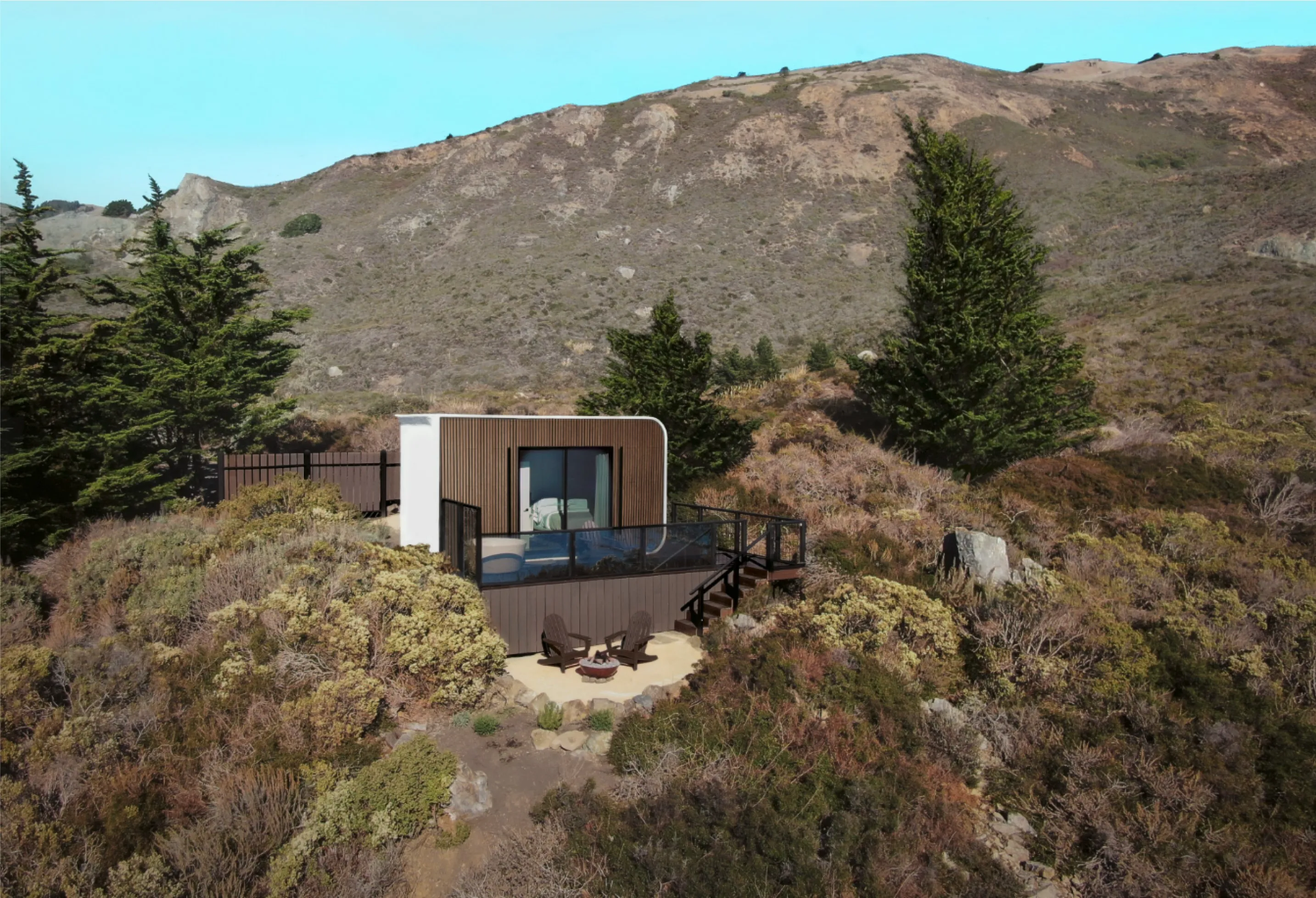
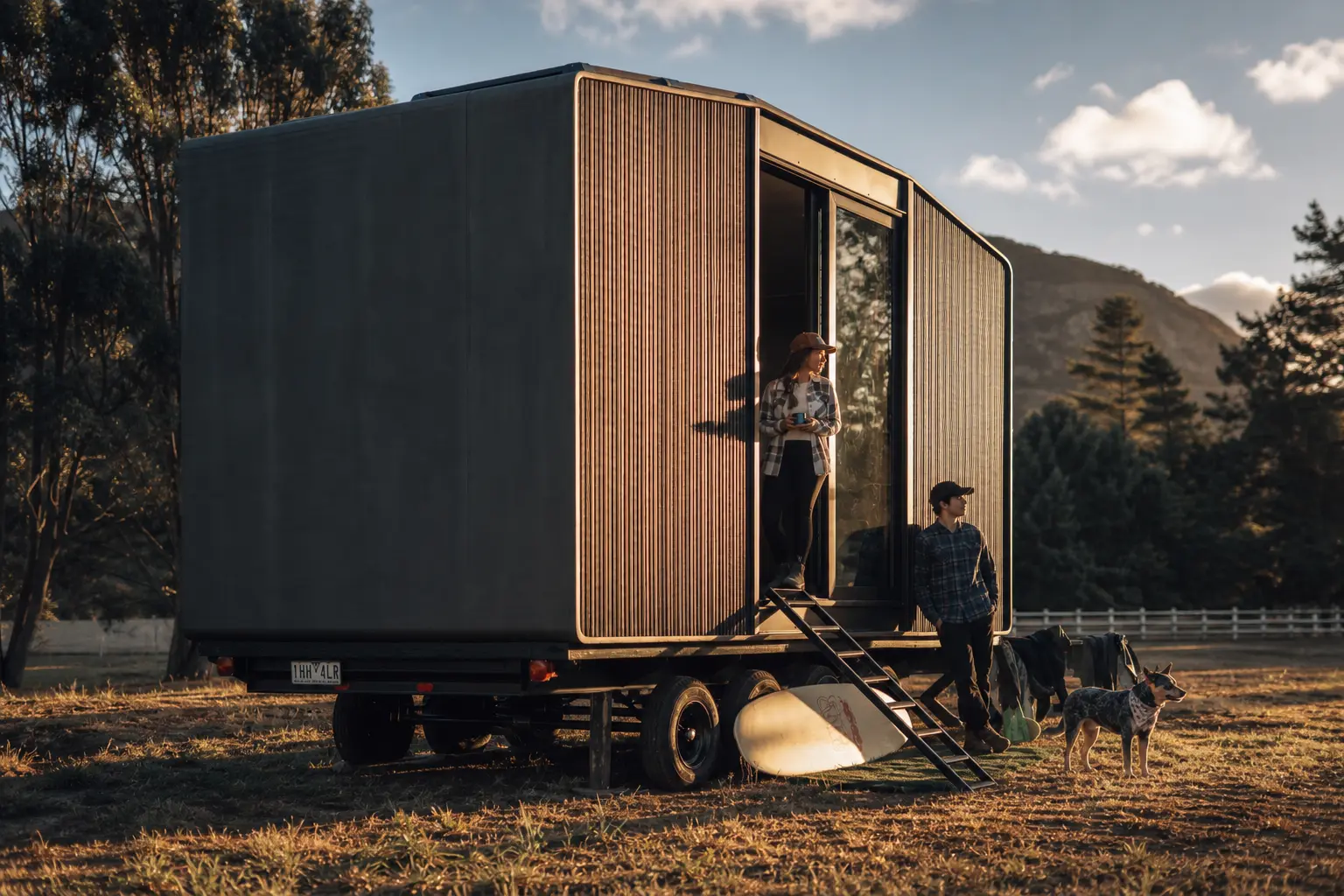
An ADU unit is a smaller living space built on the same property as a main home. ADU stands for Accessory Dwelling Unit, but most people use simpler names in real life. Backyard home. Guest house. Granny flat. In-law suite. Secondary unit.
The wording changes, but the idea is the same. An ADU gives a property another place to live.
For us at Azure Printed Homes, ADUs are not just extra square footage. They are a way to make a home work harder without turning the backyard into a long construction project. A good ADU can give family more privacy, create a comfortable guest space, support rental use where local rules allow, or give homeowners more flexibility as life changes.
Our Homes & ADUs are 3D-printed with recycled plastic and built as real residential-style units, with kitchens, bathrooms, bedrooms, and layouts made for everyday use. So when we talk about ADUs, we are talking about actual living spaces, not just a nice room at the back of the lot.
An ADU Is Extra Housing, Not Just Extra Space
The easiest way to understand an ADU is this: it is a second, smaller home on a property that already has a main home.
That is what makes it different from a basic shed, home office, or studio. A backyard office may be useful, but it is not usually a dwelling unit. An ADU is designed around living. That means it usually includes the things someone needs to stay there comfortably, not just work there for a few hours.
A typical ADU may include:
- A sleeping area
- A bathroom
- A kitchen or kitchenette
- Living space
- Utility connections
- A separate entrance
- Heating and cooling
- Storage
The exact setup depends on the model, property, local rules, and intended use. But the main point is simple. If someone is going to live there, even part-time, the space has to be planned like a home.
The Name Can Change From City To City
One reason ADUs confuse people is that they go by a lot of names. A homeowner might search for an ADU and see several different terms that sound like separate products.
Common names include:
- Accessory dwelling unit
- Backyard home
- Granny flat
- In-law suite
- Guest house
- Secondary dwelling
- Casita
- Garage apartment
Some of these terms are casual. Some may have specific legal meaning depending on the city or county. That is why it helps to separate the everyday name from the approval process.
A homeowner may call it a backyard home, but the local building department may review it as an ADU. That matters because local rules can affect size, placement, parking, utilities, setbacks, and permits.
ADUs Are Not All Built The Same Way
Not every ADU sits in the backyard as a separate structure. That is a common image, and it is often the cleanest option, but it is not the only one.
Detached ADUs
A detached ADU is separate from the main home. This is the classic backyard home setup. It usually offers the most privacy because the person using the ADU has their own space, and the main household keeps more separation too.
This type of ADU usually needs enough lot space, clear access, utility planning, and a suitable location for delivery or construction.
Attached ADUs
An attached ADU is connected to the main house. It may be built onto the side or back of the home. This can work when the lot does not have enough room for a separate unit, but privacy and access need to be planned carefully.
The unit may still function independently, but it shares more of its daily life with the main house. That can be a benefit for some families and a drawback for others.
Garage Conversions And Internal ADUs
A garage conversion turns an existing garage into a living space. This can sound simple, but garages often need major upgrades before they can work as housing. Insulation, windows, plumbing, electrical work, ventilation, and code requirements can all change the project.
An internal ADU is created inside the main home. A basement apartment is a common example. This can be practical when the house already has extra space, but layout, light, ceiling height, privacy, and entrance access matter.
For Azure, our Homes & ADUs are focused on the detached, residential-style approach. They are built as separate living spaces, which can make sense for homeowners who want more privacy and a clearer separation from the main house.
What Homeowners Use ADUs For
An ADU works best when the purpose is clear before choosing the model. That may sound obvious, but it is easy to get excited about floor plans before thinking through daily use.
A family member staying long-term needs a different setup than a weekend guest. A rental unit where allowed needs a different level of privacy than a backyard retreat. A couple may need more storage and living space than one person.
Homeowners often use ADUs for:
- Aging parents who want to stay close but independent
- Adult children who need private living space
- Guest housing
- Long-term rental use where allowed
- Short-term rental use where local rules allow
- Caregiver housing
- Downsizing on the same property
- Extra flexibility for changing family needs
The best ADU projects usually start with a real problem. “We need a private place for my mom” is a much stronger starting point than “We might do something in the backyard.”
The clearer the use, the easier it is to choose the right size, layout, utility setup, and budget.
ADU Or Backyard Studio? There Is A Difference
A backyard studio can be a great space, but it is not always an ADU.
Our Studio Series includes compact 100-120 sq ft models like the N_100, D_120, and A_120. These are flexible spaces that can work well as an office, hobby room, creative space, wellness room, or quiet place away from the main house.
That is different from a full ADU.
A studio is usually about extra usable space. An ADU is about extra living space. Once a unit includes residential features like a kitchen, bathroom, sleeping space, water, sewer, and long-term occupancy, the planning path becomes more involved.
This is why we separate our product lines. A Studio Series unit, a Home on Wheels, and a Homes & ADUs model can all be useful, but they do not solve the same problem.
Azure Homes & ADUs: What The Models Look Like
Our Homes & ADUs line is built for people who need more than a simple backyard room. These are larger residential-style units designed for real living.
Current model options include:
| Model | Layout | Dimensions | Starting Price |
| A-360 | Kitchen, 1 bedroom, 1 bathroom | 18′ x 20′ | $89,900 |
| A-540 | Kitchen, 1 bedroom, 1 bathroom | 18′ x 30′ | $134,900 |
| A-720 | 1-bedroom or 2 junior bedroom option, kitchen, 1 bathroom | 18′ x 40′ | $174,900 |
| A-900 | Kitchen, 2 bedrooms, 1.5 bathrooms | 18′ x 50′ | $219,900 |
Smaller ADU Layouts
The 360 sq ft model can work for a compact living setup, guest space, or smaller rental use where allowed. It is a good fit when the goal is independent living without taking over too much of the property.
The 540 sq ft model gives a little more breathing room while still staying efficient. It can feel more comfortable for longer stays, especially when the ADU needs to function as more than a quick guest room.
Larger ADU Layouts
The 720 sq ft model is a useful middle ground for homeowners who want more flexibility. With 1-bedroom and 2 junior bedroom options, it can support different living arrangements without moving into a full-size home footprint.
The 900 sq ft model is the largest ADU option, with 2 bedrooms and 1.5 bathrooms for people who need a more complete small-home layout. It may make sense for families, longer-term living, or homeowners who want more future flexibility.
Bigger is not always better. The right model is the one that matches the property, the rules, and the way the space will actually be used.
How Our 3D-Printed ADU Process Works
Traditional backyard construction can be a lot. Materials, crews, noise, delays, weather, and weeks of disruption can make the idea feel bigger than the home itself.
We take a different approach.
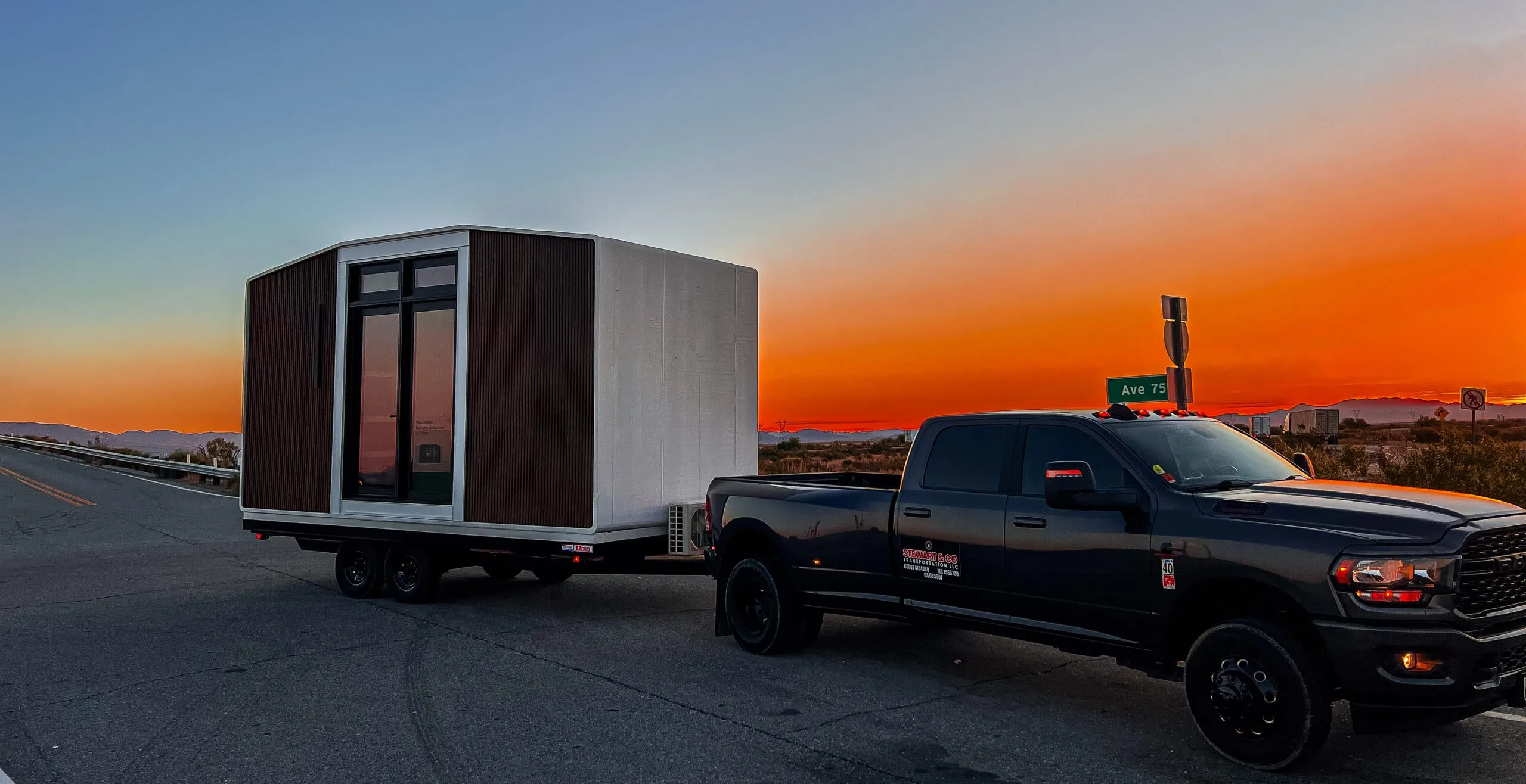
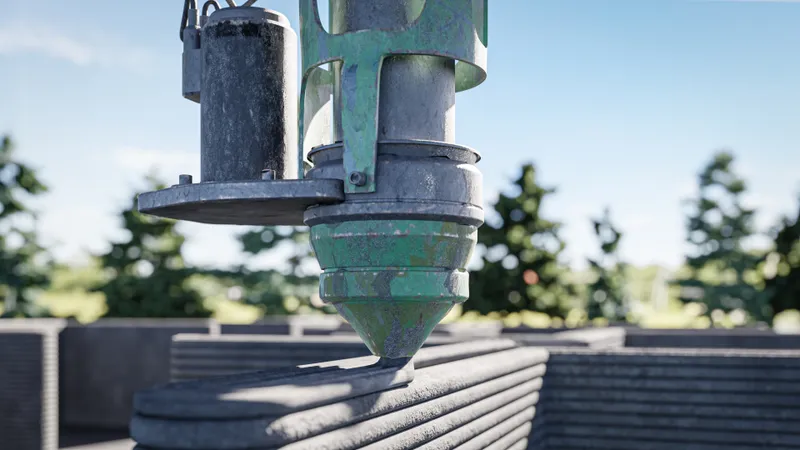
Our units are robotically 3D-printed using recycled plastic, then finished and delivered to the site. The largest of our ADU models can be printed in about one day. The full project still includes finishes, delivery, site work, installation, permits, and utility connections, but off-site fabrication helps make the process more predictable.
The basic path looks like this:
- Configure the unit
- Print the home
- Install finishes
- Deliver the unit
- Install it on-site and connect services
That is the part many homeowners care about. They do not want a mystery project. They want to understand what happens next, what has to be prepared, and how the ADU gets from idea to real space.
Why Recycled Materials Are Part Of The Story
ADUs are often discussed as a housing solution, but how they are built matters too.
Our homes use recycled plastic waste as part of the printing process. For every 120 sq ft of our sustainable 3D-printed homes, we use the equivalent of 100,000 recycled plastic bottles.
That is one of the reasons we are excited about this kind of construction. It gives plastic waste a more useful second life, while helping create durable spaces that are built for modern living.
For homeowners, sustainability should not mean giving up comfort. An ADU still has to feel good to live in. It still needs to perform in real weather, support daily use, and fit into the property in a practical way.
The Site Still Has A Say
An ADU is not only about the unit. The property matters just as much.
A beautiful ADU can become complicated if the site is difficult. A tight lot, poor drainage, limited access, long utility runs, or unclear local rules can all affect the project.
Space, Access, And Placement
Before choosing a model, homeowners need to understand where the ADU can actually sit. It is not only about whether the backyard looks large enough. The unit still needs room for setbacks, access, delivery, installation, and daily use.
Privacy matters too. A good ADU placement should make sense for both the person living in the unit and the people in the main home.
Utilities And Ground Conditions
The site also needs to support water, sewer, electricity, drainage, and foundation planning. These details are easy to overlook early, but they can shape the budget and timeline.
A property with simple access and nearby utilities may be easier to plan. A sloped, tight, or complicated lot may still work, but it needs more review before the project moves forward.
Permits And Utilities Are Not Small Details
Most ADU projects need permits. The exact requirements depend on the city, county, state, and property. That can include building permits, utility permits, grading, drainage, foundation, electrical, plumbing, and other local approvals.
Utilities also change the project. A small studio may only need electrical service. A true ADU with a kitchen and bathroom needs more planning. Water, sewer, electrical connections, drainage, and foundation work all need to be thought through early.
This is where homeowners should avoid making assumptions. Local rules decide what can be built, where it can go, and how it can be used. Rental use, in particular, should always be checked before building the budget around it.
An ADU can be a smart move, but it should be planned like real housing, not treated like furniture for the backyard.
A Simple ADU Planning Checklist
Before getting too attached to a model, it helps to answer a few basic questions.
Start here:
- What will the ADU be used for?
- Who will live there or stay there?
- Is the goal family use, guest use, rental use, or flexibility?
- Does the property have enough space?
- Do local rules allow this type of ADU?
- What size makes sense for the use?
- How will utilities connect?
- What site work may be needed?
- What is the full project budget, not just the unit price?
- How will the ADU be used 5 or 10 years from now?
That last question is important. A good ADU should not only solve today’s problem. It should still make sense when the household changes again.
Final Thoughts On ADU Units
An ADU unit is a secondary living space built on the same property as a main home. Simple enough. But the real value comes from how well it fits the people, the property, and the plan.
For one homeowner, an ADU may mean a private place for a parent. For another, it may mean guest space. For someone else, it may support rental use where local rules allow. The structure is only part of the decision. The use case, site, permits, utilities, and long-term plan matter too.
At Azure Printed Homes, we build ADUs for homeowners who want a smarter way to add real living space. Our 3D-printed Homes & ADUs use recycled plastic, offer residential-style layouts from 360 to 900 sq ft, and are designed to make backyard housing feel more practical, less messy, and more future-ready.
The best ADU is not just the one that fits in the yard. It is the one that fits real life.