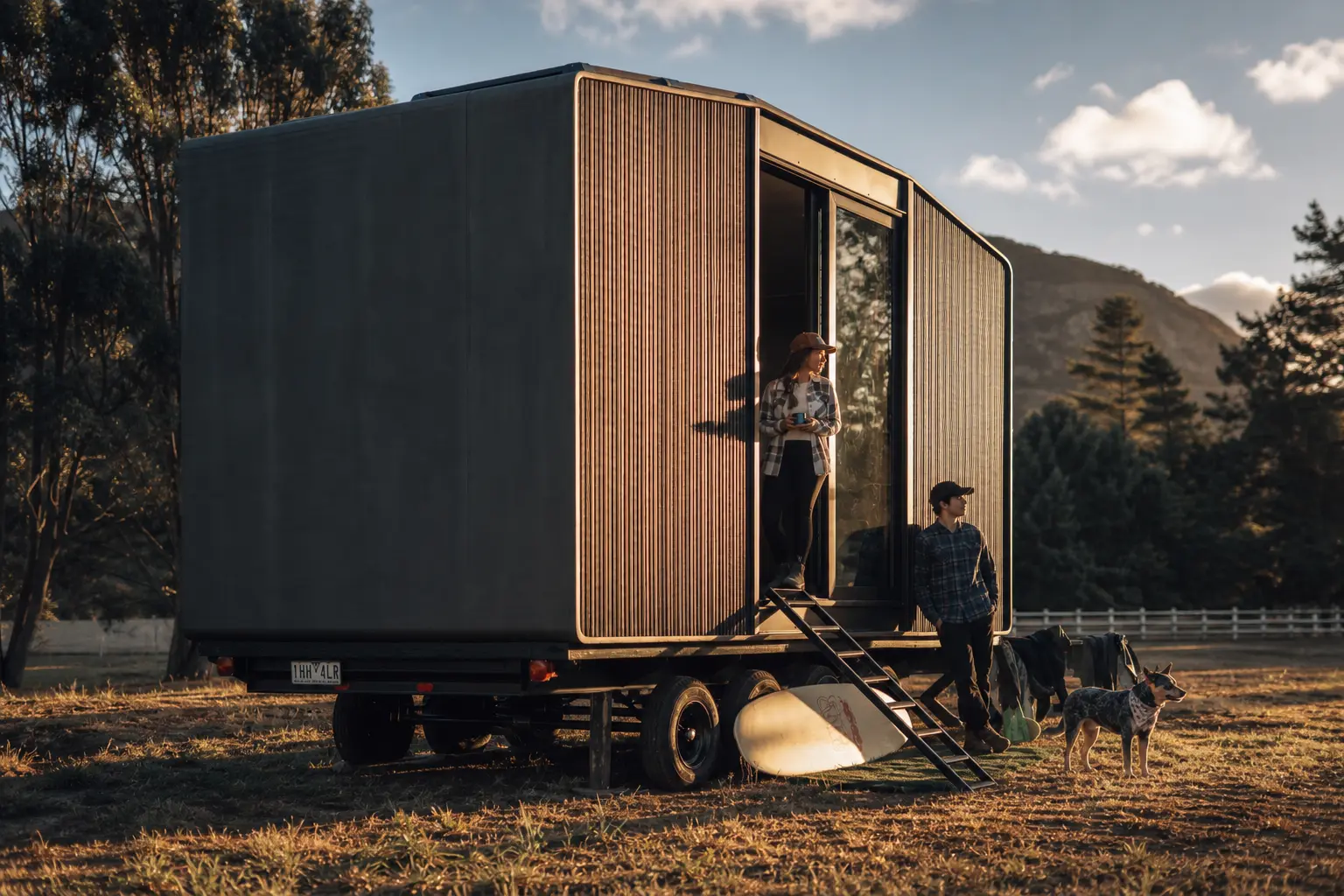
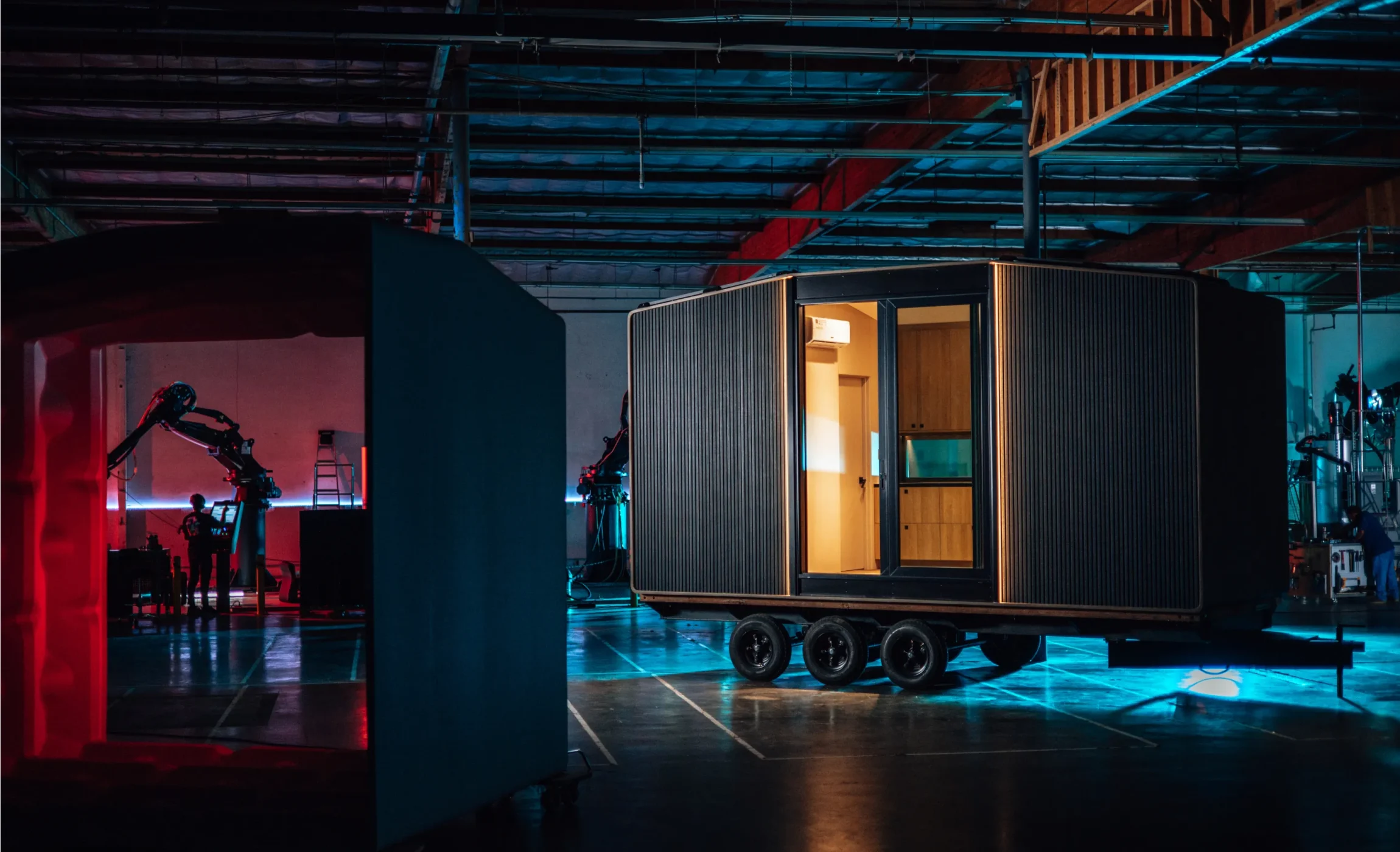
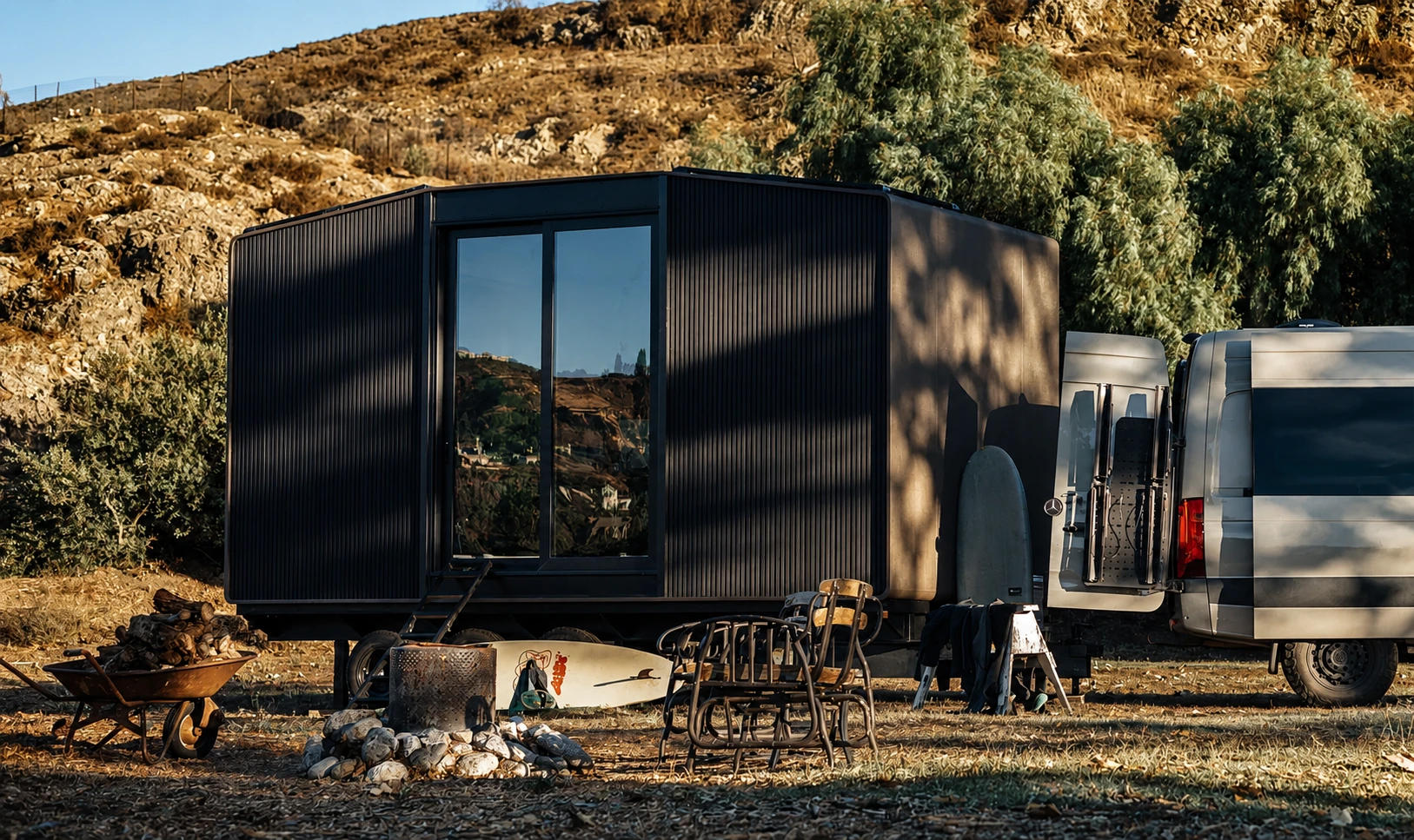
A modular home can last for decades when it is designed well, installed correctly, and maintained like a permanent structure. Building off-site does not make a home temporary. It simply changes where much of the construction work happens before the home reaches the property.
The real lifespan depends on the same things that affect any home: structure, foundation, weather exposure, water control, utilities, maintenance, and whether the home is used the way it was designed to be used.
For the 3D-printed prefab units we build at Azure Printed Homes, durability starts with the shell, the material, and the site plan. More than 60% of our print material comes from recycled plastic, and our structures are designed for long-term wear, extreme temperature, seismic activity, water resistance, insulation, and pest resistance.
HUD describes modular homes as factory-built homes made from sections that are assembled on-site. Unlike HUD Code manufactured homes, factory-built homes such as modular homes generally follow local building codes, which is one reason modular homes should be understood as permanent housing when they are installed and approved properly.
Lifespan Starts Before the Home Arrives
A modular home’s lifespan is not decided only in the factory. Factory production can help with consistency, but the home still has to land on a prepared site, connect to utilities, handle local climate, and stay protected from moisture over time.
That is where a lot of the real durability work happens. A strong module placed on poor drainage or an unstable support system can still run into problems. A simpler structure placed on a dry, stable, well-planned site may perform much better over the long term.
A longer-lasting modular home usually has a few things working together: a durable structure, a proper foundation, good drainage, correct utility connections, exterior protection, and a realistic maintenance plan.
What Usually Affects How Long Modular Homes Last
There is no single number that applies to every modular home. A small backyard studio, a larger ADU, and a multifamily modular system do not age in exactly the same way. Still, the main durability factors are fairly consistent.
Structure and Materials
The structure has to be built for real use, not just fast production. Framing, panels, exterior surfaces, insulation, windows, doors, seals, and connection points all affect how well the home performs over time.
For larger development work, we use digitally prefabricated light-gauge steel framing, high-performance Structural Insulated Panels, and optional 3D-printed recycled composite facades. That is a different system than our smaller prefab units, but the design goal is similar: build a structure that can support long-term performance, not just quick assembly.
Foundation and Support
A modular home needs a stable, dry, properly prepared place to sit. Foundation problems can shorten the life of almost any structure, whether it was built on-site or off-site.
For our units, a slab is not always necessary, but a perimeter concrete or CMU foundation is advisable. We also advise that each unit be bolted down to the foundation with hold-down bolts, similar to traditional structures. Standard foundation details can work for a flat lot with good, compacted soil, while more specific designs may be needed for sites that do not meet those conditions.
This part is not glamorous, but it matters. A well-built modular home still needs the land underneath it to behave.
Moisture and Drainage
Water is one of the main things that shortens a home’s life. It can come from poor grading, roof runoff, standing water, plumbing leaks, condensation, or exterior maintenance that gets delayed too long.
Good drainage helps protect the foundation, shell, utility connections, and interior finishes. The area around the home should move water away from the structure, not trap it underneath or against it.
For our printed shell, each structure has an external UV protection layer. We recommend recoating that layer every 15 years to help protect the printed shell, and the coating carries a 15-year UV and color warranty.
Utilities and Systems
The more complete the home becomes, the more systems there are to maintain. A small studio with electrical service only has a different lifespan profile than a residential unit with plumbing, water, sewer, HVAC, a kitchen, and a bathroom.
We design units larger than 120 sq ft with electricity, water, and sewer connections. Units under 120 sq ft are wired for electrical only. Plumbing and electrical work is completed inside the unit before delivery, with exterior connections prepared for site hookup.
This matters because utility planning is part of durability. A good connection protects the home. A poor connection can create problems that have nothing to do with the factory build itself.
Different Modular Formats Age Differently
A modular home’s lifespan also depends on how it is used. A structure used lightly as a backyard workspace will not age the same way as a full-time residential unit.
Compact Backyard Studios
A compact studio usually has a simpler job. It may serve as an office, creative room, hobby space, wellness space, guest-style room, or flexible extra room near the main house.
Because the use is focused, maintenance is often more straightforward. The biggest concerns are usually exterior protection, site drainage, electrical service, HVAC if added, and keeping the structure clean and dry.
A studio can last a long time when it is placed well and used for the purpose it was designed to serve. Problems usually start when a simple space is pushed into a full residential role without the systems to support that use.
Homes and ADUs
Homes and ADUs need a more complete durability plan. They may include kitchens, bathrooms, bedrooms, HVAC, full utility connections, and daily use. That does not make them weaker. It just means there is more to care for.
For this category, maintenance should look more like home maintenance than accessory-space maintenance. Plumbing, ventilation, drainage, foundation, exterior protection, interior wear, and utility connections all become part of the long-term picture.
Developer and Multifamily Systems
Larger modular systems need to perform at another scale. The structure has to handle repeated use, local code requirements, climate exposure, long-term operations, and coordination across many units.
For these projects, durability is not only about one module. It is about how the full building system works: framing, envelope, panels, facades, assembly details, fire ratings, acoustic performance, thermal performance, and structural loads. Our developer system is designed around that kind of technical coordination.
Maintenance Helps Protect the Lifespan
A modular home does not need unusual maintenance just because it was built off-site. It needs steady, practical care.
A simple rhythm can work well:
- After installation: Check drainage, foundation support, utility hookups, exterior sealing, and site access.
- Seasonally: Look at doors, windows, exterior surfaces, roof edges, runoff paths, and any signs of standing water.
- Yearly: Review HVAC performance, plumbing areas where applicable, electrical access points, seals, and exterior condition.
- Around 15 years: Plan for recoating the exterior UV protection layer on our printed shell.
- After severe weather: Check for water intrusion, blocked drainage, debris, movement, or visible damage.
The exact maintenance schedule depends on the climate and use. A unit in a dry inland area will not face the same wear as one in a snowy, coastal, humid, or high-heat location.
What Can Shorten a Modular Home’s Life
Most lifespan problems come from site issues, water, poor connections, or delayed maintenance. The modular method itself is usually not the weak point.
A modular home may age faster when:
- Drainage is ignored: Water sitting near or under the home can create long-term damage.
- The site is not prepared well: Poor soil, bad grading, or uneven support can stress the structure.
- Utility work is rushed: Incorrect electrical, plumbing, or sewer connections can create avoidable issues.
- Exterior care is skipped: Coatings, seals, and surfaces need attention over time.
- The use does not match the model: A small studio should not be treated like a full residential unit without the right systems.
- Repairs are delayed: Small problems become larger when they are left alone.
A modular home lasts longer when the owner treats maintenance as part of ownership from the beginning, not as something to think about only after a problem appears.
Warranty Is Different From Lifespan
Warranty and lifespan are connected, but they are not the same thing.
We provide a 10-year warranty to the original purchaser for Backyard Studios and ADUs against defects in material and workmanship under normal residential use. That warranty gives a defined protection period, but it does not define the full useful life of the structure.
A home can perform well beyond its warranty period when the site is prepared correctly, the structure is maintained, and the systems are serviced properly. Lifespan is shaped by years of use, climate, upkeep, water control, and site conditions.
How to Plan for a Longer Lifespan
The best time to protect a modular home’s lifespan is before delivery.
Start with the land. Look at drainage, slope, access, soil, utility locations, setbacks, and where water will go during storms. Then look at the model. The unit should match the use case instead of stretching a smaller structure into a job it was not meant to do.
A practical pre-build check should include:
- Site fit: Make sure the property can support the structure, foundation, delivery, and drainage.
- Utility fit: Match electrical, water, sewer, HVAC, and plumbing needs to the intended use.
- Climate fit: Think about heat, cold, wind, moisture, snow, fire risk, or coastal exposure.
- Maintenance fit: Choose systems and finishes that can realistically be cared for over time.
- Permit fit: Make sure the home and site work can be reviewed and approved properly.
A modular home lasts longer when the design and site are working together rather than fighting each other.
Final Thoughts on Modular Home Lifespan
Modular homes can last for decades when they are designed, installed, and maintained properly. Their lifespan is not limited by the fact that they are built off-site. The bigger factors are structure, foundation, moisture control, utility planning, exterior protection, maintenance, and whether the home is used the way it was designed to be used.
For our 3D-printed prefab units, long-term performance starts with recycled plastic-based print material, exterior UV protection, site-ready utility planning, and a foundation approach that supports the unit properly. For larger building systems, durability comes from coordinated structure, envelope, fabrication, and assembly details.
The simplest way to think about it is this: a modular home lasts longer when the unit, the land, the foundation, the utilities, and the maintenance plan all work together.