Tiny homes and mobile homes get mixed together all the time. It is easy to see why. Both can be smaller than traditional houses, both may be built off-site, and some tiny homes can be moved. But that does not mean every tiny home is considered a mobile home.
The real answer depends on how the home is built, whether it sits on wheels or a foundation, how it is certified, and how local rules classify it. A tiny home on wheels may be treated very differently from a backyard studio, an ADU, or a small home placed on a foundation.
At Azure Printed Homes, we design and build 3D-printed prefab spaces across several categories, including Studio Series backyard units, Homes on Wheels, and Homes & ADUs. Because each format is used differently, the classification also depends on the project type, the property, and the local approval process.
The Simple Answer: Not Always
A tiny home is not automatically a mobile home. Some tiny homes are mobile or chassis-based. Some are designed for foundations. Some are accessory structures. Some are ADU-style residential units. The label depends on the build type and the rules that apply where the unit will be placed.
In the United States, the term “manufactured home” has a specific federal meaning. HUD describes manufactured homes as homes built to HUD standards after June 15, 1976, with a permanent chassis and at least 320 square feet in size. Federal regulations also define a manufactured home as a transportable structure built on a permanent chassis and designed as a dwelling, with required systems such as plumbing, heating, air conditioning, and electrical systems included.
That is different from the way people casually use “mobile home.” In everyday conversation, someone may call any small movable home a mobile home. In zoning, insurance, financing, permitting, and code conversations, the words matter much more.
Why Tiny Homes And Mobile Homes Get Confused
Tiny homes and mobile homes are often confused because they share a few surface-level similarities. They can be compact. They can be built in a factory. They can be delivered to a site instead of built fully from scratch on the property. Some tiny homes also sit on a chassis or wheels.
But the differences matter.
A mobile or manufactured home is tied to specific construction standards and legal definitions. A tiny home is more of a size and lifestyle category unless a local code or building standard defines it more narrowly. The International Residential Code’s Appendix Q, for example, defines a tiny house as a dwelling of 400 square feet or less in floor area, excluding lofts.
So a tiny home can overlap with other categories, but it does not automatically become one of them. A tiny home might be treated as a park model, an RV-type unit, an ADU, a modular structure, an accessory building, or a small dwelling depending on the design and jurisdiction.
How Classification Usually Changes By Unit Type
Before asking whether a tiny home is a mobile home, it helps to separate the main types. A tiny home on wheels, a backyard studio, and a larger ADU-style unit can all serve small-space needs, but they are usually handled differently.
Tiny Homes On Wheels
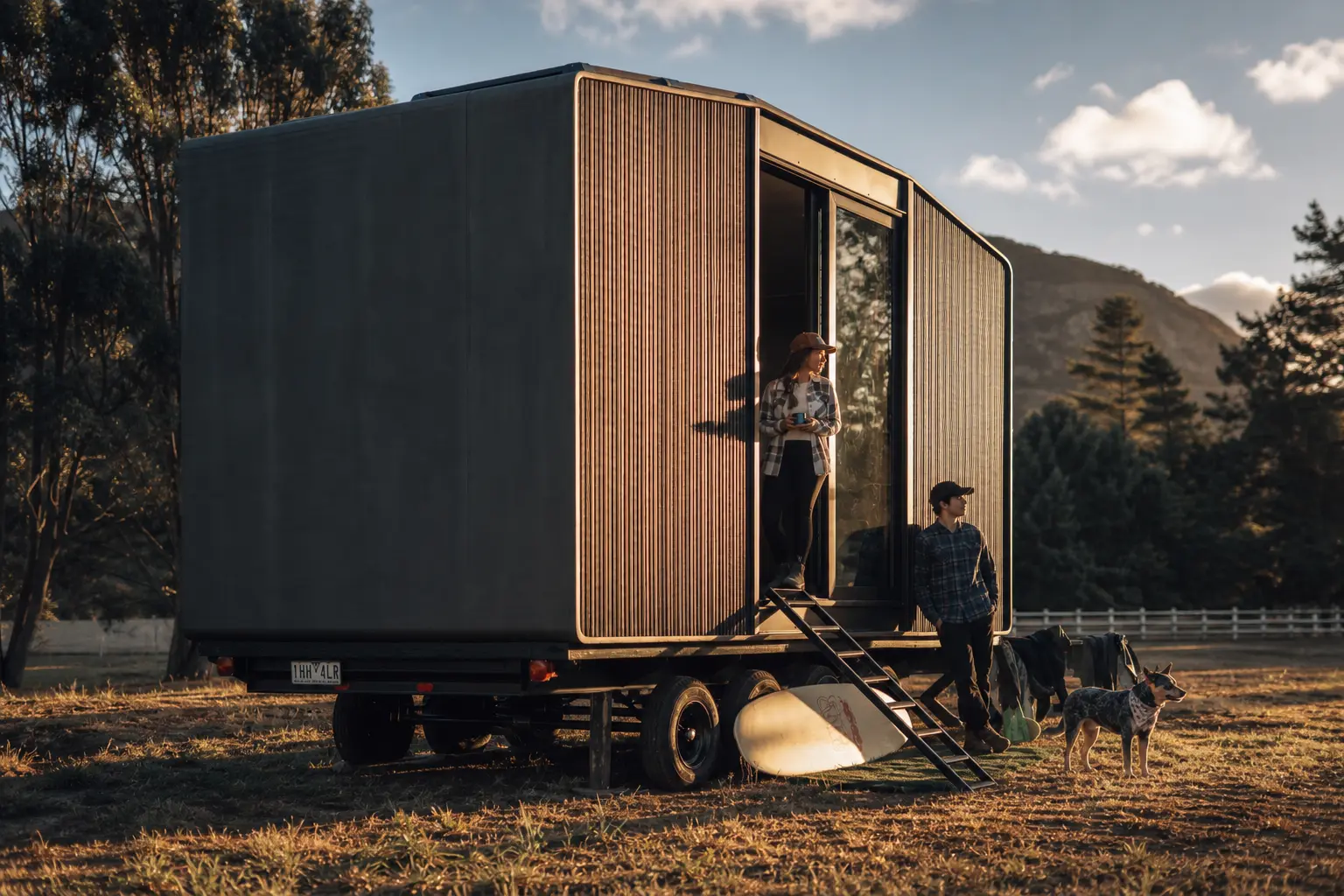
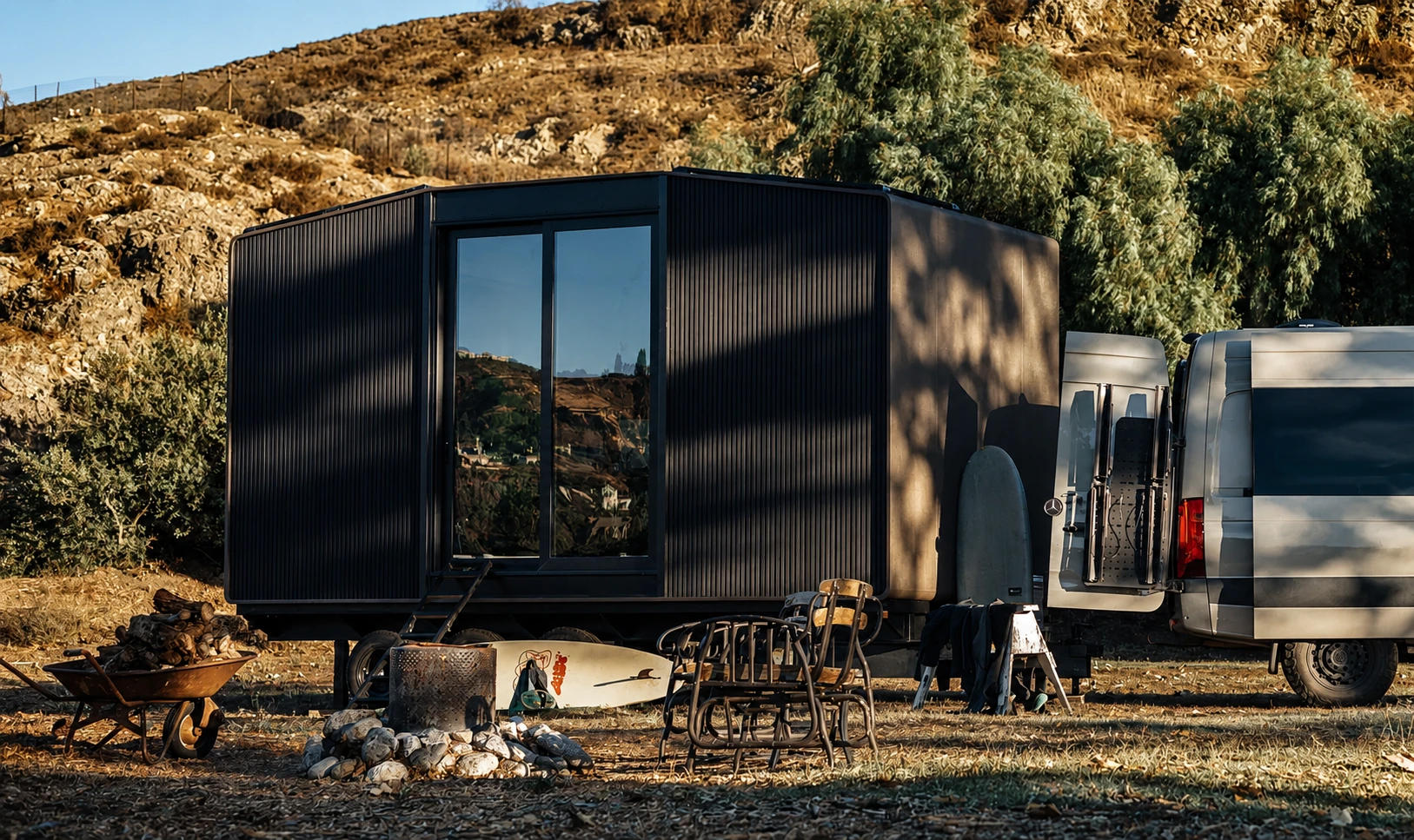
Tiny homes on wheels are the closest category to what many people picture when they hear “mobile tiny home.” These units are built for mobility or flexible placement, so they may be treated differently from permanent housing.
Our Homes on Wheels are part of the X Series. The X_180 is 9′ x 20′, the X_270 is 9′ x 30′, and the X_360 is 9′ x 40′. These are chassis-based models with more complete living features, including kitchens and bathrooms, and the larger models add dedicated bedroom space.
For this category, the key question is not only whether the unit can move. The bigger question is whether the property allows it. We treat our wheel-based tiny homes as park model-style units, and the site still needs proper grading, drainage, soil conditions, and placement planning. The property also has to allow park model installation.
That is why a home on wheels should not be assumed to work anywhere. It may be movable, but local zoning and placement rules still decide whether it can be used on a specific property.
Backyard Studios
Backyard studios are a different type of small-space project. They may be compact and prefab, but they are not the same as mobile homes.
Our Studio Series includes the N_100, D_120, and A_120. The N_100 is a 100 sq ft model, while the D_120 and A_120 are 120 sq ft models. These units are designed as flexible spaces, not full homes with bedrooms, kitchens, and bathrooms.
A backyard studio can work well as an office, creative room, hobby space, guest-style room, or quiet retreat. Since these units are small and simpler than full residential homes, the approval process may also be different. Many municipalities do not require a building permit for structures that are 120 sq ft and under, but local rules vary, and electrical feed or HVAC work may still need separate approval.
So a backyard studio is usually better understood as an accessory structure or flexible extra space, not a mobile home.
Homes And ADUs
Homes and ADU-style units usually sit closer to permanent housing. They are larger, more residential, and more likely to involve building permits, foundation work, utility connections, and inspections.
Our Homes & ADUs category includes models from 360 sq ft up to 900 sq ft. The main listings include layouts such as the 360, 540, A_720.2, and 900, with kitchens, bathrooms, bedrooms, and larger residential footprints depending on the model.
These units are not usually treated like mobile homes just because they are prefabricated. A factory-built unit can still be planned as a permanent or semi-permanent residential structure depending on local requirements.
For ADUs and larger homes, adding any unit over 120 sq ft generally requires a building permit with the local authority. We handle the building permit side as a factory-built unit, while the property owner still needs to account for foundation, grading, drainage, and utility permits on the site.
Mobile Does Not Always Mean “Mobile Home”
This is an important distinction. A structure can be movable without being classified as a mobile home.
Some units can be transported to a site. Some can be relocated later. Some sit on chassis. Some are delivered by truck. But legal classification depends on standards, size, certification, chassis, intended use, and local rules.
For example, we design our modules so they can be unbolted from the foundation and moved after initial occupancy. That makes future relocation possible, but it does not automatically mean every unit should be treated as a mobile home.
In practical terms, buyers should think in three separate layers:
- Can the unit physically move?
- Is the unit legally allowed on the property?
- What does the local authority classify it as?
Those questions often matter more than the casual label.
What Buyers Should Check Before Choosing A Tiny Home
The safest approach is to check classification early, before choosing a model or planning the site. This is especially important if the property has zoning restrictions, HOA rules, rental plans, park model requirements, or ADU limits.
A few things usually decide how the unit will be treated:
- Whether it is on wheels, a chassis, piers, or a foundation
- Whether it is intended for temporary, seasonal, or permanent living
- Whether it includes a kitchen, bathroom, sleeping area, and utilities
- Whether it is under or over key local size thresholds
- Whether the property allows park models, ADUs, or accessory structures
- Whether local permits are required for the unit, foundation, utilities, or site work
The same tiny home can be viewed differently from one location to another. That is why local approval matters so much. A model that works well in one park, county, or backyard may need a different process somewhere else.
Utilities Can Also Affect Classification
Utilities do not decide everything, but they do affect how a tiny home is used and reviewed.
A small studio with electrical service only is usually a simpler project than a unit with water, sewer, kitchen, bathroom, and long-term living features. Once a tiny home is designed for daily residential use, the permitting and site planning usually become more involved.
We design units larger than 120 sq ft with electricity, water, and sewer connections. Units under 120 sq ft are wired for electrical only. Plumbing and electrical work is completed inside the unit before delivery, with exterior connections prepared for site hookup.
That difference helps explain why a 100 sq ft backyard studio should not be grouped with a 360 sq ft home on wheels or a 900 sq ft ADU. They may all be small, but they are not the same kind of project.
A Practical Way To Think About The Difference
A tiny home is a broad idea. A mobile home, manufactured home, park model, ADU, backyard studio, and modular unit are more specific categories. The right category depends on how the structure is built and how it will be used.
A simple way to think about it:
- A tiny home on wheels may be mobile, but it is not automatically a manufactured home.
- A backyard studio may be small and prefab, but it is usually not a mobile home.
- An ADU-style tiny home may be compact, but it is usually planned more like residential housing.
- A manufactured home has specific HUD requirements and certification rules.
That is why the classification should be checked before purchase, not guessed from appearance.
How We Help Buyers Avoid The Confusion
At Azure Printed Homes, we separate small-space options by use case because that makes the planning clearer.
Someone who wants a quiet backyard workspace may not need a home on wheels. Someone who wants flexible living may need to look at the X Series. Someone planning family housing or rental use where allowed may need a Homes & ADUs layout with more site and permit planning.
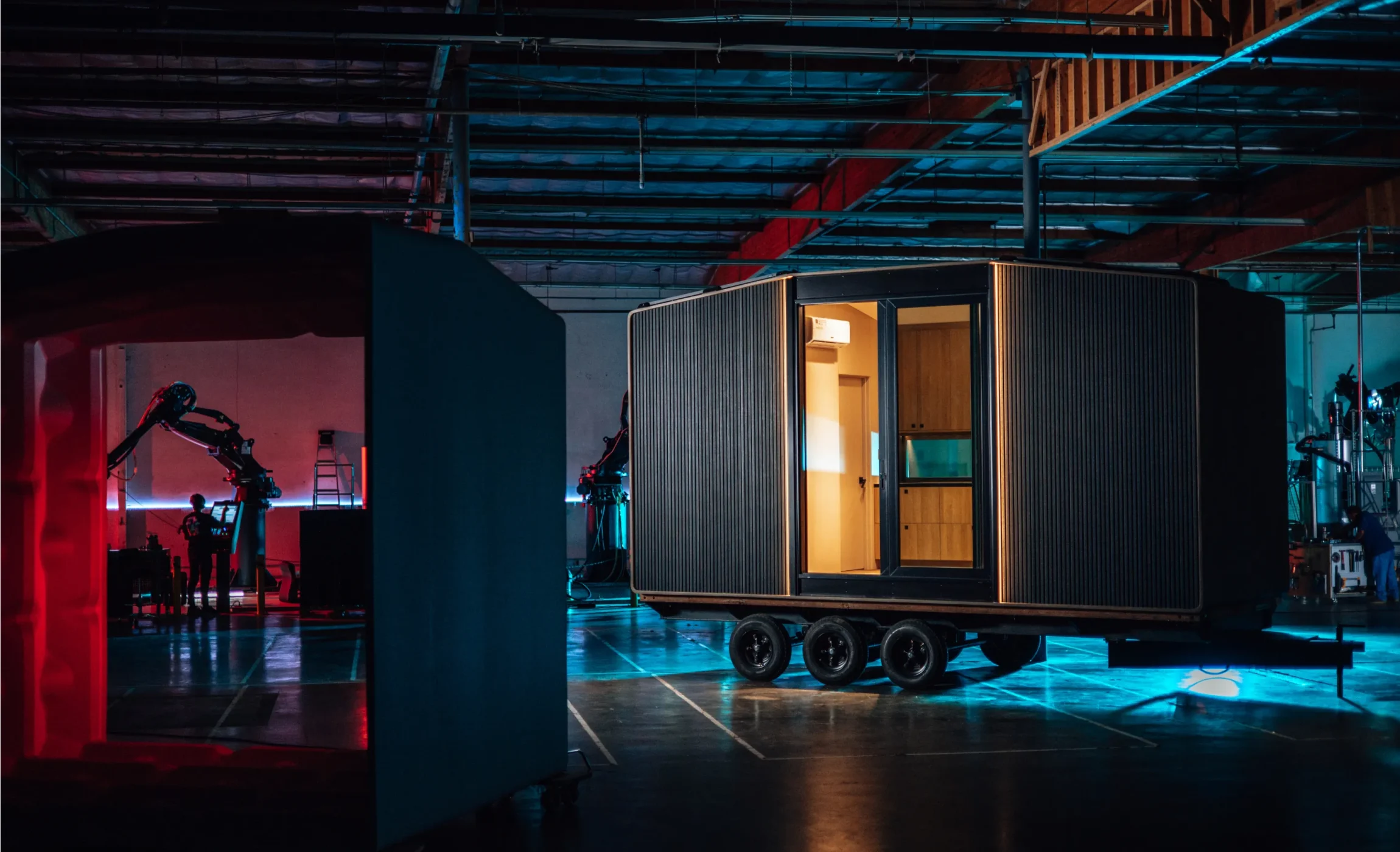
We also build through a prefab process, with units manufactured in Los Angeles, CA. Backyard studios can usually be delivered within 30-60 days depending on location, while ADUs and homes usually take around 90-120 days. More than 60% of our print material comes from recycled plastic, which supports our goal of building durable prefab spaces with less waste.
The main point is that the right product category should match the property and the rules. A tiny home is only useful when it can be placed, connected, permitted, and used the way the buyer intends.
Final Thoughts
Tiny homes are not automatically considered mobile homes. Some are mobile. Some are foundation-based. Some are backyard studios. Some are ADU-style residential units. The classification depends on the build type, chassis or foundation, utilities, certification, local zoning, and intended use.
For buyers, the best first step is to avoid relying on the label alone. A tiny home on wheels needs different planning than a backyard studio. A larger ADU-style unit needs a different process again. The more clearly the unit type matches the site and local rules, the easier the project becomes.
At Azure Printed Homes, we think about tiny homes as practical spaces first. The goal is not just to choose something small or movable. The goal is to choose a space that fits the land, follows the rules, and works for the way it will actually be used.