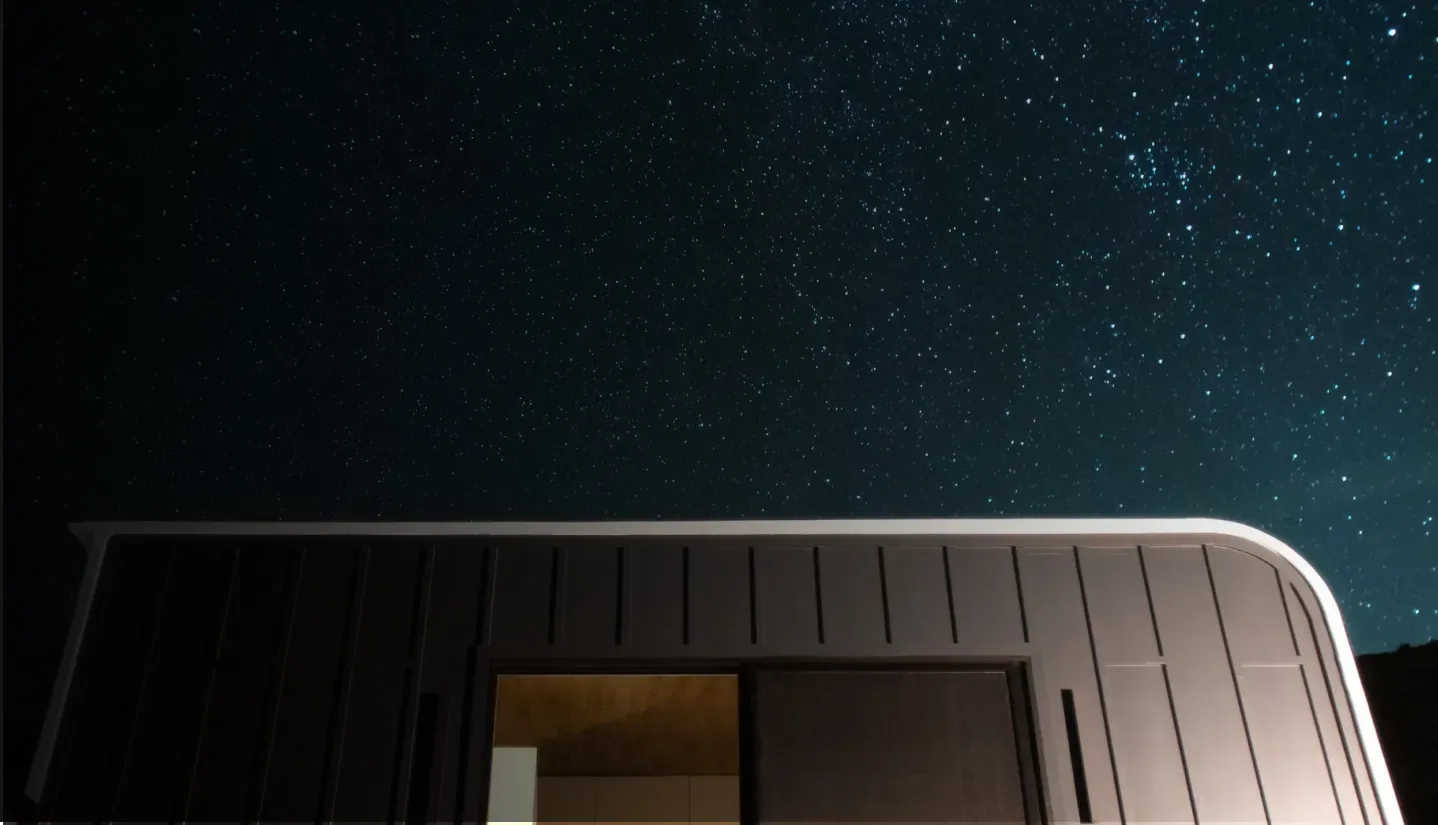
Prefabricated tiny homes,
built in the factory, not on your lot.
A prefab tiny home is finished off-site and delivered move-in ready. Azure goes one step further — we 3D-print the shell from recycled plastic, fit it out in the factory, and set it down complete. From $19,900, up to 70% faster than a site-built home.
Factory-built off-site
From $19,900
70% faster than site-built
Move-in ready
What “prefabricated” actually means.
“Prefabricated” — prefab for short — simply means the home is manufactured off-site in a controlled factory, then transported to your land and set in place. Instead of framing a house board by board out in the weather, the structure arrives largely complete, ready to connect and live in.
It’s an umbrella term, and the categories underneath it get mixed up often. In short: modular homes are built in finished sections and assembled on site to local building codes; manufactured homes are built to a single federal HUD code, usually on a permanent chassis; and prefab covers both plus everything else made off-site. Azure’s tiny homes are prefabricated as complete, 3D-printed units — the speed of prefab with the durability of a seamless, sealed printed shell.
Five steps, one controlled process.
Prefabrication compresses a months-long site build into a predictable, factory-controlled sequence — every unit made the same way.
Design & configure
Choose your model, size, finishes, and options — HVAC, solar, insulation level. We develop your unit and your site plan together to shorten the timeline.
Print the shell
A robotic arm 3D-prints the shell from fortified recycled plastic in a single continuous pass — up in about a day, with effectively zero print waste.
Fit out in-factory
Windows, doors, insulation, plumbing, electrical, the bathroom, and the kitchenette are installed indoors over the following days — no weather, no delays.
Deliver to site
The completed unit is loaded onto a flatbed and trucked to your lot as one finished piece — not a kit of parts to assemble on the ground.
Set & connect
Your tiny home is set on its foundation or pad and connected to utilities. Move-in ready in days, with one manufacturer accountable end to end.
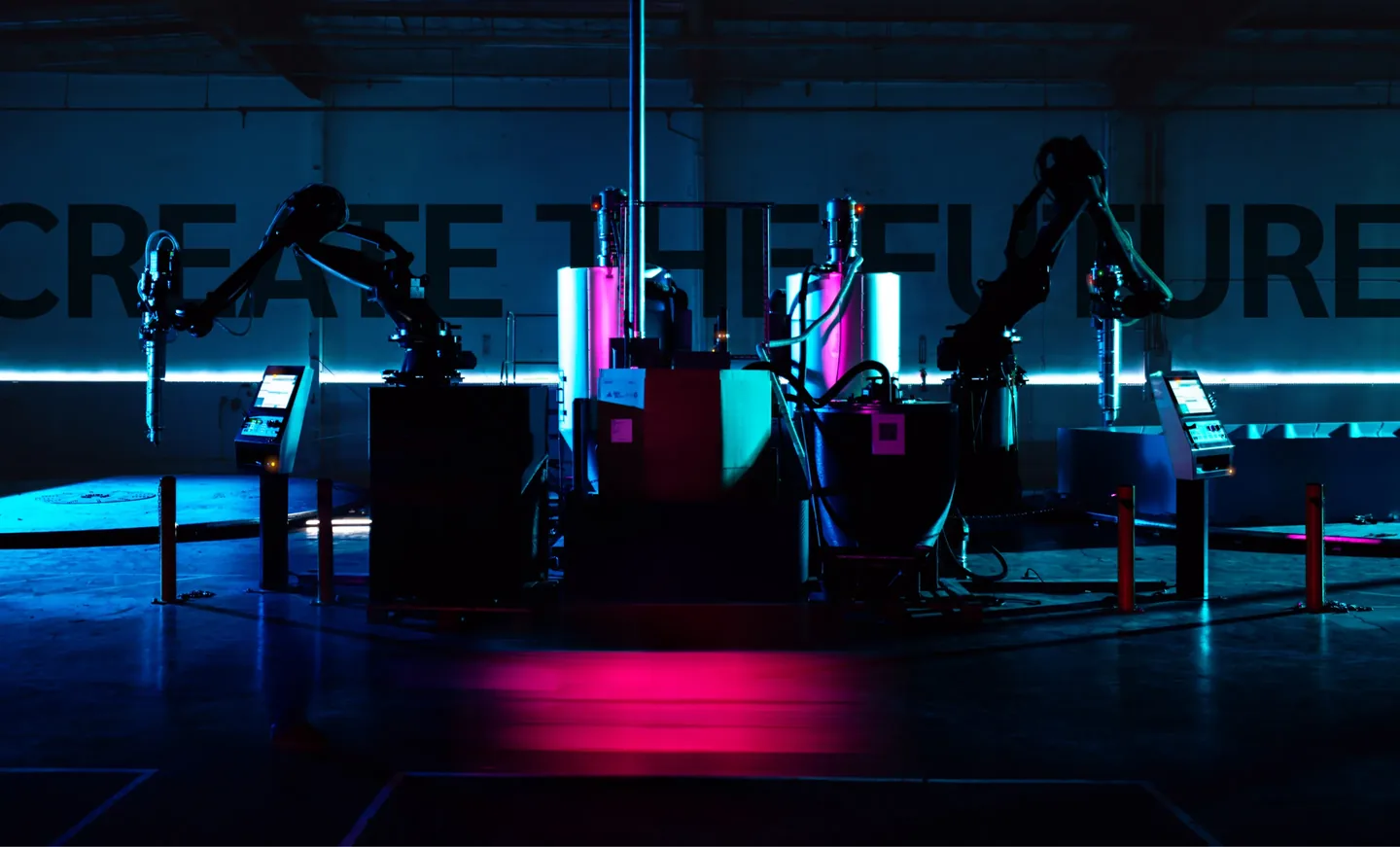
Prefabrication, reinvented by robots.
Most prefab homes are still framed by hand, just under a roof. Azure replaces the framing crew with a robotic 3D printer that lays down fortified recycled plastic layer by layer — roughly the equivalent of 100,000 plastic bottles per 120 sq ft of home.
Because the shell is printed rather than assembled from parts, the walls are seamless and sealed, tolerances are tight, and every home comes out consistent. What leaves the factory is a complete, finished dwelling — not a shell to upgrade later.
Factory-built vs. built on-site.
The same square footage, produced two very different ways. Prefabrication takes the weather, the waiting, and the guesswork out of the build.
- Built indoors in a controlled factory — no weather delays
- From $19,900, with predictable, fixed pricing
- Up to 70% faster than traditional construction
- Seamless printed shell from recycled plastic, near-zero waste
- Arrives finished with bathroom, kitchenette & utilities roughed in
- One manufacturer, one point of contact
- Exposed to weather, permitting, and scheduling delays
- Costs vary widely and can climb mid-build
- Weeks to months of on-site labor
- Significant construction waste to haul and dump
- You coordinate multiple trades and finishes
- Quality depends on whoever shows up that day
Prefab, once it’s on the ground.
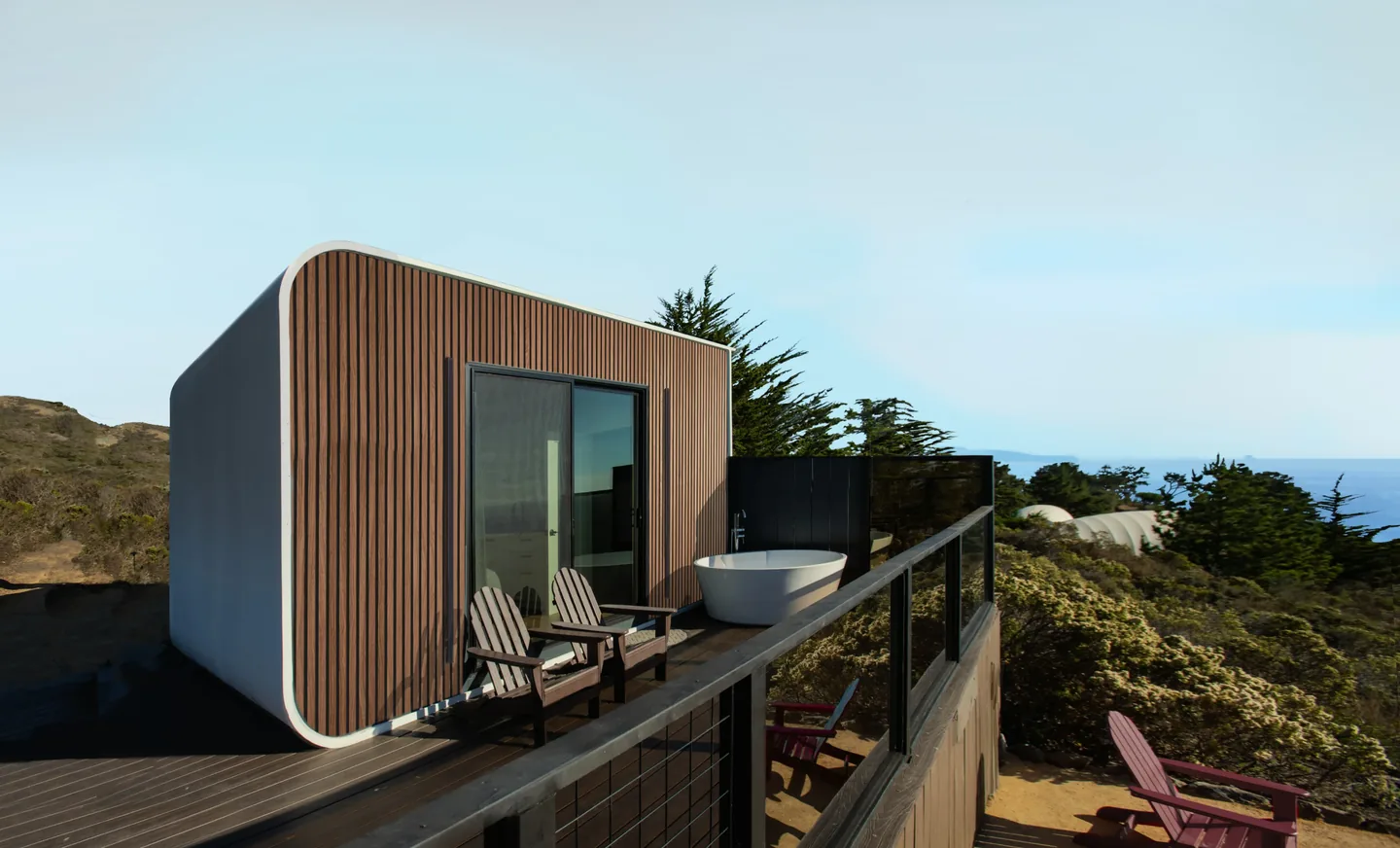 Deck studio
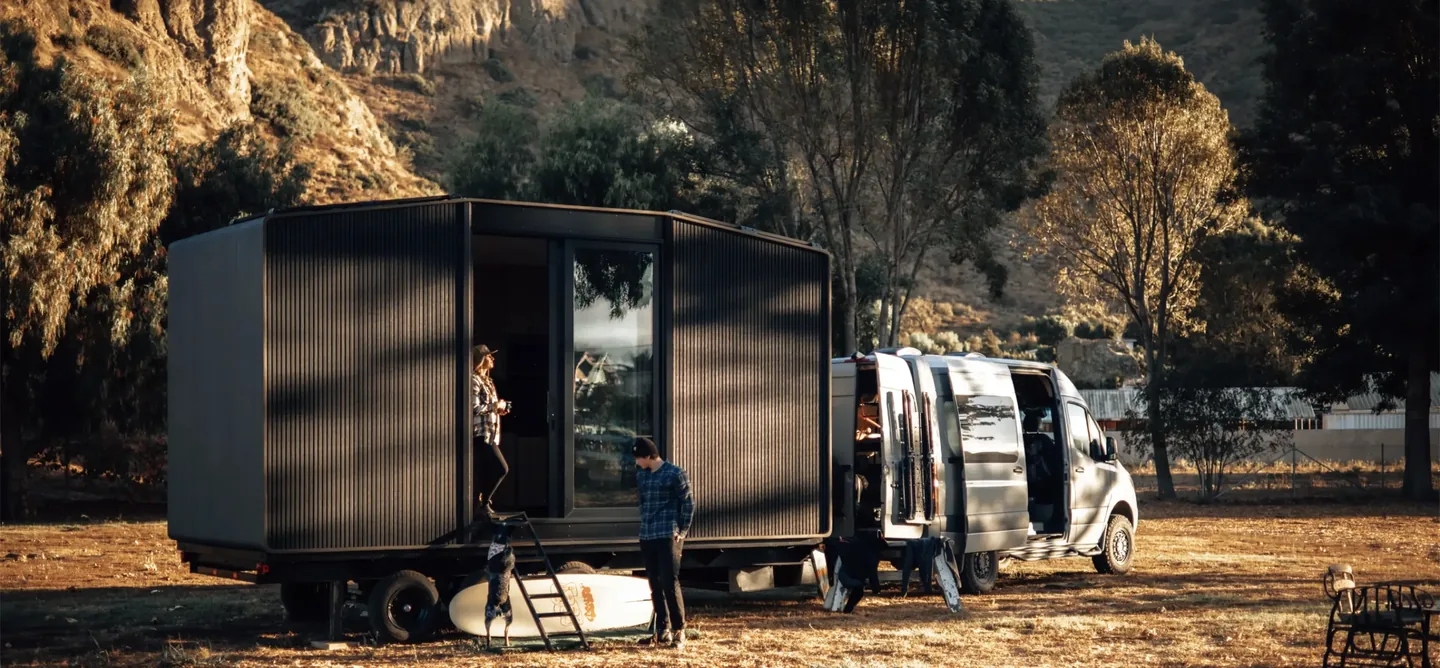 Home on wheels
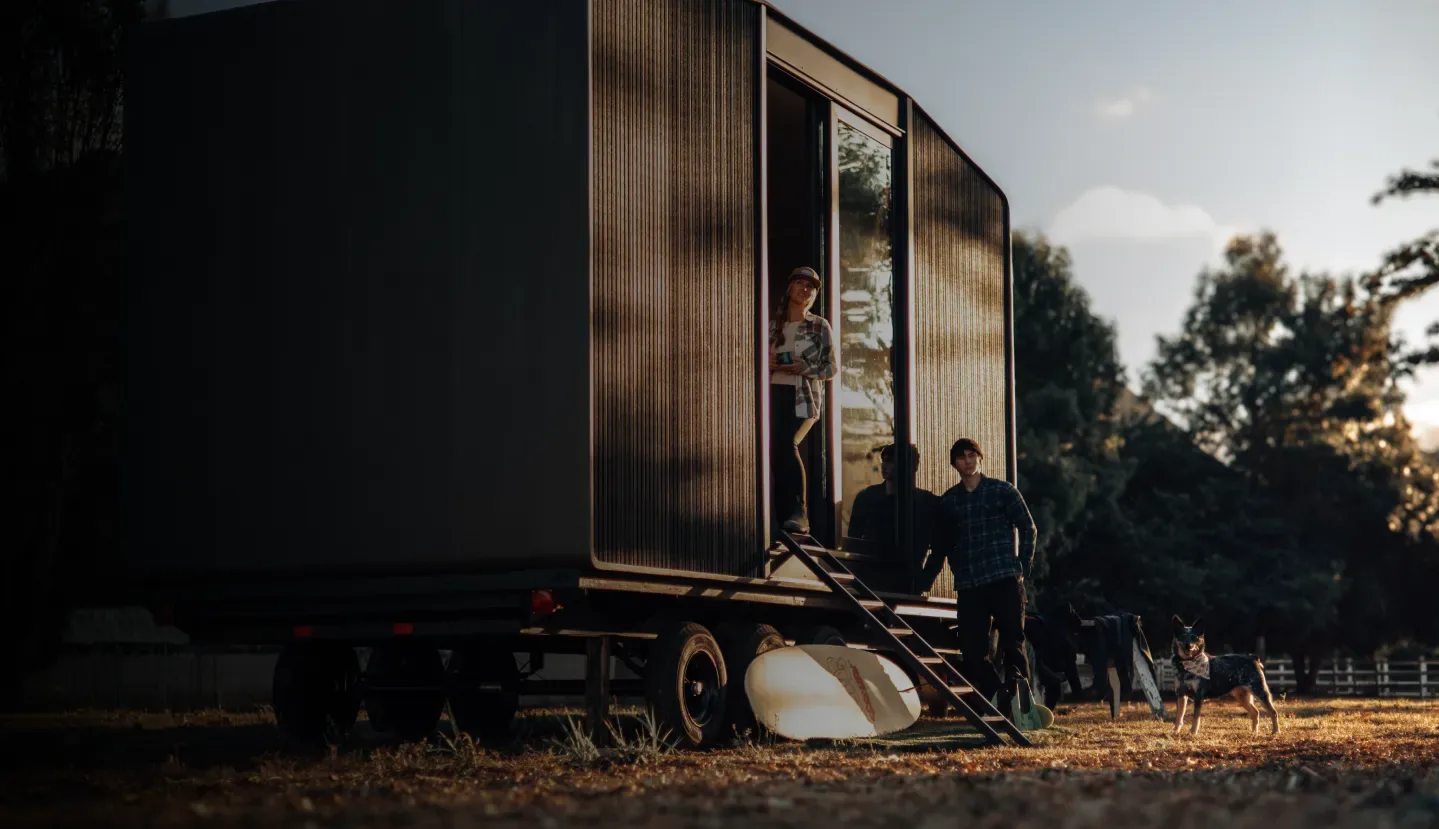 Glamping cabin
Get a quote on your prefab tiny home.
Tell us your size, site, and options — we’ll send fixed pricing and lead times, no obligation.
A better way to prefabricate.
Azure Printed Homes makes the world’s first robotically 3D-printed homes built from recycled plastic — recognized in TIME’s Best Inventions of 2025, and featured in Dwell, Newsweek, Fast Company, and CBS News. Prefabrication has always promised speed and cost certainty; printing the shell is what finally delivers both at scale.
- Made under one roof. Shell and fit-out happen in the same factory, so there’s no assembly of separately built modules and no gaps between trades.
- Genuinely sustainable. Each home reuses recycled plastic that would otherwise reach a landfill, with effectively zero print waste.
- Consistent and sealed. A printed envelope means tight tolerances, fewer air gaps, and lower energy use than a comparable stick-built unit.
- Fixed, attainable pricing. Factory production means predictable costs from $19,900, with financing available through our partner Acorn Finance.
Not sure how prefab fits your project?
Book a free consultation with an Azure specialist. We’ll walk you through the process, models, site plan, timeline, and budget.
Prefabricated tiny home FAQs.
What does “prefabricated” mean for a tiny home?
It means the home is built off-site in a factory rather than framed in place on your land. The structure is manufactured under controlled conditions, then transported to your lot and set down largely complete — ready to connect to utilities and live in. Azure prefabricates each tiny home as a single 3D-printed unit, so what arrives is finished, not a shell you complete yourself.
Prefab vs. modular vs. manufactured — what’s the difference?
“Prefab” is the umbrella term for any home built off-site. Modular homes are prefab units built in finished sections (“modules”) and assembled on site to local building codes. Manufactured homes are built to a single federal HUD code, usually on a permanent chassis. Azure’s tiny homes are prefabricated and 3D-printed as complete units, then delivered finished — combining the speed of prefab with the durability of a seamless, sealed printed shell.
How is a 3D-printed prefab tiny home actually built?
A robotic printer lays down fortified recycled plastic layer by layer to form the shell in about a day. Windows, doors, insulation, plumbing, electrical, the bathroom, and the kitchenette are then installed in the factory over the following days. The finished unit is trucked to your site, set in place, and connected — move-in ready. It’s up to 70% faster than a traditional site build.
How is a prefab tiny home delivered and installed on my site?
The completed home is loaded onto a flatbed truck and delivered to your lot as one finished piece. On arrival it’s set on its foundation or pad and connected to utilities. Because the unit leaves the factory finished, on-site work is measured in days, not the weeks or months a stick-built tiny home takes — with no crew of trades framing on your property.
Are prefab tiny homes durable and well-insulated?
Yes. Azure’s homes are 3D-printed from fortified recycled plastic into a seamless, sealed shell — fewer air gaps than a hand-framed home, which means lower energy use. Insulation is tuned to your climate so the unit performs year-round, and options like HVAC, solar panels, and battery storage make it viable for off-grid and remote sites.
More on Azure tiny homes.
Ready for a prefab tiny home?
Tell us about your site and how you’ll use the unit, and we’ll send pricing, specs, and lead times. We respond to every inquiry within one business day.
18101 S Figueroa St
Gardena, CA 90248