Finding emergency housing in Washington can feel overwhelming, especially when someone needs help quickly. A person may be facing eviction, sleeping in a car, staying with friends, leaving an unsafe situation, or trying to find shelter after a disaster. In those moments, the first priority is safety. The next step is knowing where to ask for help and what options may be available.
Washington has several emergency housing resources, including shelters, coordinated entry programs, rental assistance, eviction prevention, and local homeless service providers. These programs can be essential, but they are often under pressure. Demand can be high, housing supply can be limited, and some households may wait longer than they hoped.
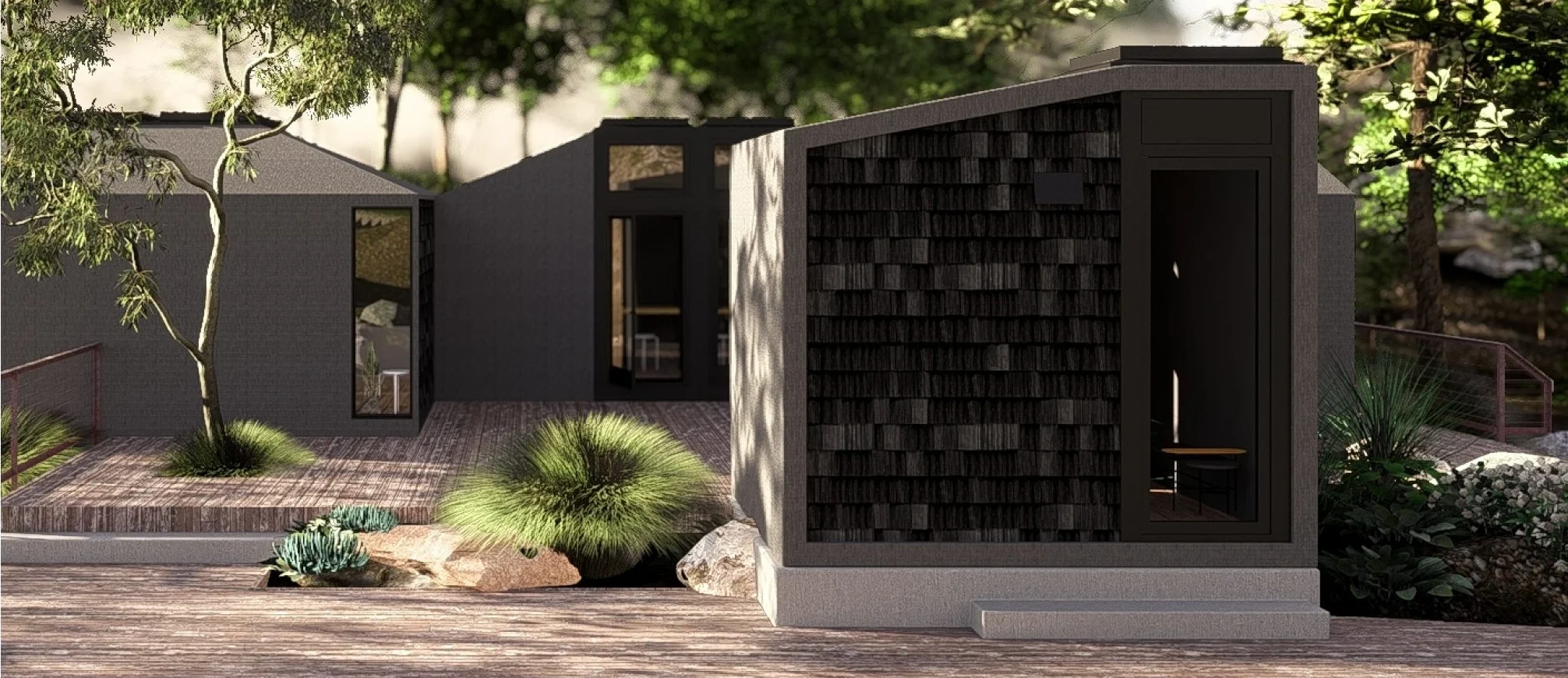
That is why emergency housing is not only a question of services. It is also a question of construction. Communities need more ways to create safe, practical housing faster. At Azure Printed Homes, we work in that space by creating robotically printed modular living spaces using recycled plastic. Our goal is to help make housing more flexible, more efficient, and easier to deploy where it is needed.
First Steps for Emergency Housing in Washington
When someone needs emergency housing in Washington, the best first step is usually to contact local housing resources rather than trying to search for openings one shelter at a time. Most areas use local referral systems to connect people with available help.
A person looking for emergency housing may need to:
- Call or contact Washington 211 for local housing and shelter referrals
- Ask about coordinated entry in their county
- Contact local homeless service providers
- Ask about emergency shelter, motel vouchers, or temporary housing
- Look into eviction prevention if they are still housed
- Keep documents and notices together
- Follow up often, since openings and funding can change
For immediate danger, a person should call emergency services. For housing instability, Washington 211 and local county housing programs are often the right starting point.
What Emergency Housing Options May Be Available?
Common options may include emergency shelter, short-term motel stays, transitional housing, rapid rehousing, rental assistance, eviction prevention, and referrals to longer-term affordable housing programs. Some programs focus on immediate safety, while others help people move into stable housing over time.
Emergency Shelter
Emergency shelters are designed to provide a safe place to stay right away or as soon as space becomes available. Some shelters serve adults, some serve families, and some serve specific groups.
Shelter availability can change daily. That is why calling local referral lines and coordinated entry programs matters. A shelter may not have space at the moment someone calls, but the same person may qualify for another type of support.
Rental Assistance and Eviction Prevention
A person does not always have to wait until they are unhoused to ask for help. If rent is overdue, an eviction notice has arrived, or a court date is scheduled, it may still be possible to get support.
Eviction prevention may include rent assistance, legal referrals, mediation, payment plans, or help connecting with local programs. Funding is not always available, but asking early gives a household more options.
Anyone facing eviction in Washington should keep copies of notices, lease documents, court papers, payment records, and messages from the landlord. These details can help when applying for assistance or speaking with a housing advocate.
Coordinated Entry
Coordinated entry is a system used in many communities to connect people with housing assistance based on need, availability, and local program rules. Instead of applying separately to many programs, a person may complete one intake process and be referred to possible resources.
This does not always mean help will be immediate. It does mean the person is entering the local housing response system, which can make it easier to be considered for the right type of assistance.
Modular Housing
While shelters and rental assistance address immediate needs, modular construction focuses on expanding housing supply itself. Rather than relying exclusively on existing units, communities can create additional housing capacity through purpose-built modular developments.
At Azure Printed Homes, we use robotic 3D printing technology and recycled materials to create modular living spaces designed for efficient production, delivery, and installation. These units can be used in a variety of housing projects, from small shelter communities to larger residential developments.
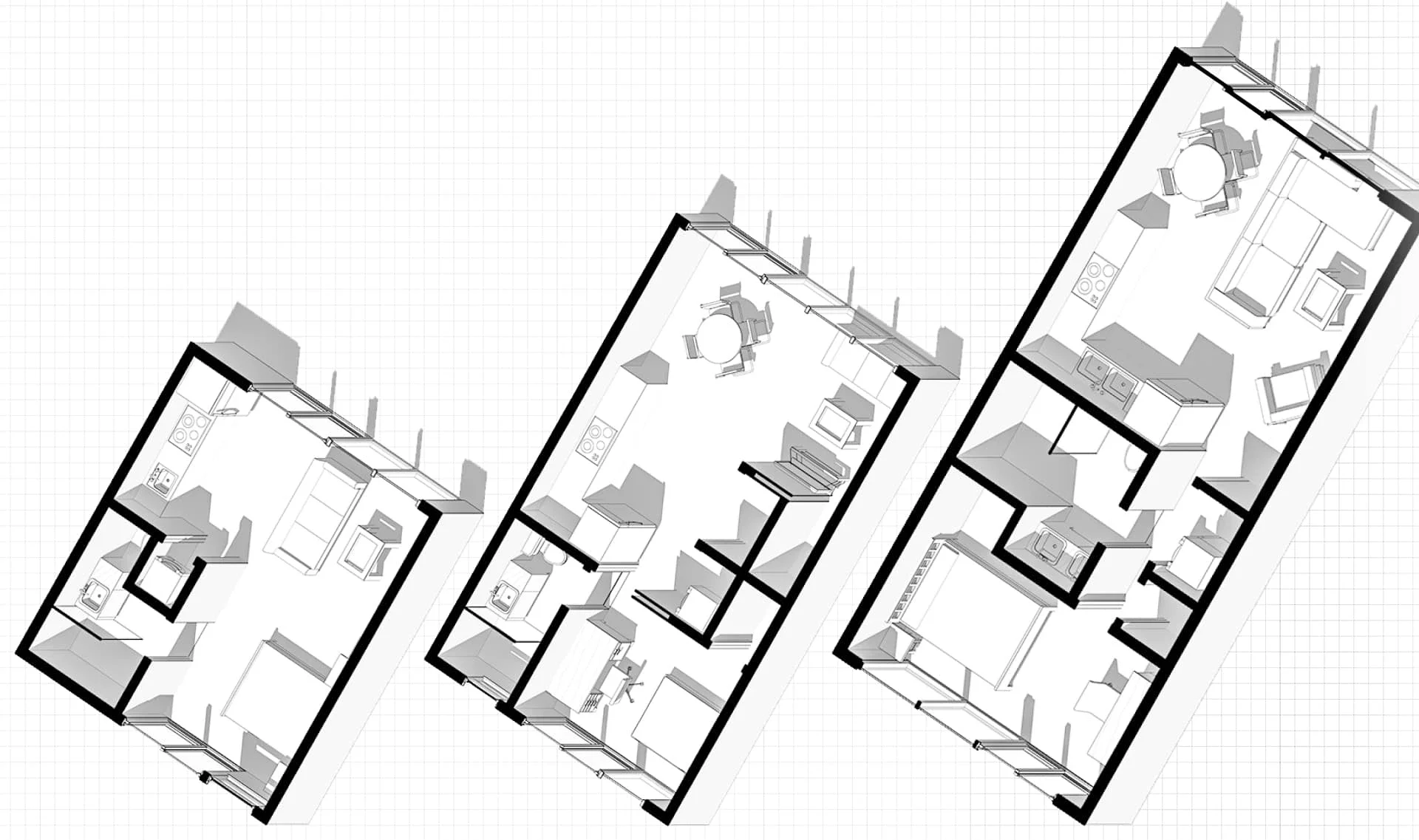
Types of Modular Housing Available
Different housing situations call for different types of structures. A person who needs short-term shelter may not need the same layout as a family looking for stable long-term housing. A city planning an emergency housing site may also have different needs than a homeowner creating additional space for a relative.
Compact Studio-Style Units
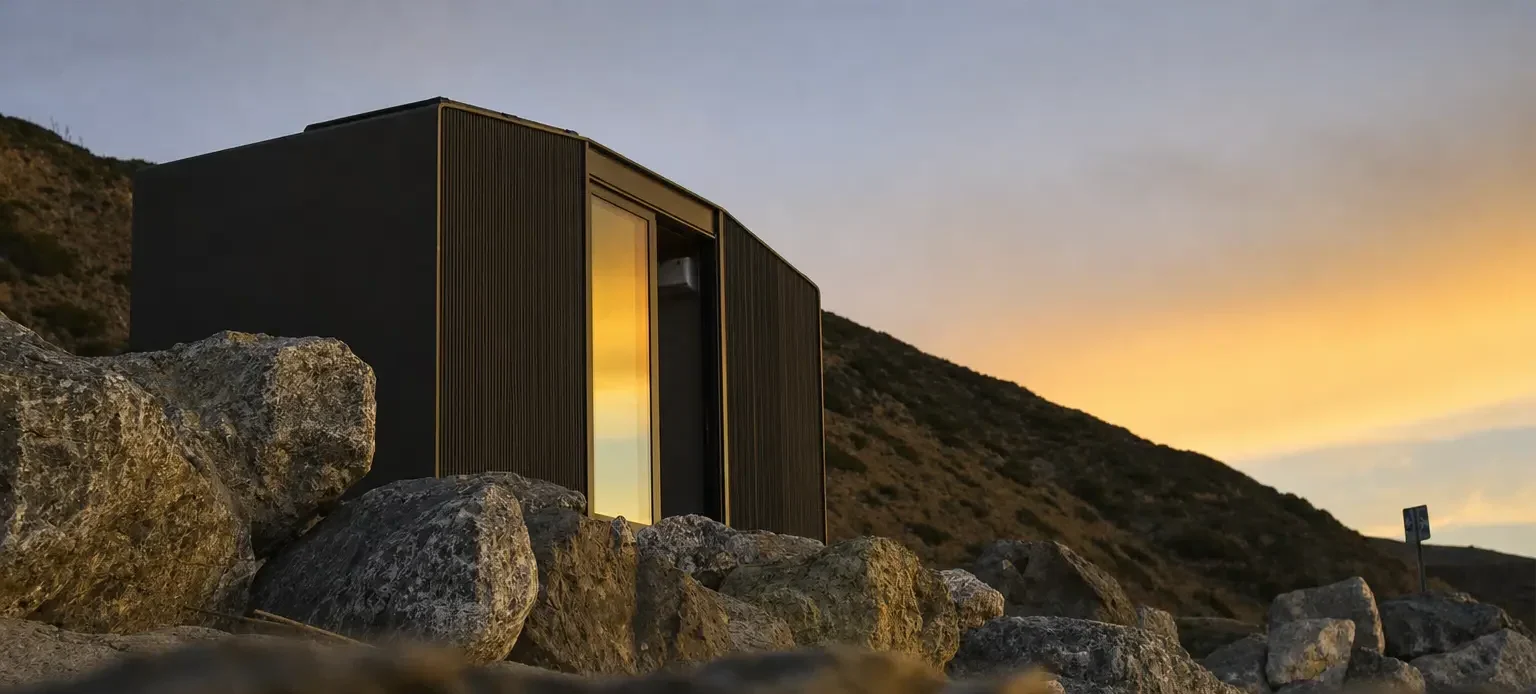
Compact studio-style units can provide private, efficient living space while minimizing land and infrastructure requirements. These units may be suitable for transitional housing, emergency housing communities, workforce housing, or individual living spaces.
At Azure Printed Homes, we offer compact models such as the A/D/C-100, A/D/C-120, and N100. These units are designed to maximize functionality within a smaller footprint while benefiting from our robotic printing process and modular construction approach.
Backyard Dwelling Units (ADUs)
Accessory Dwelling Units, commonly known as ADUs, can create additional housing on existing residential properties. In some situations, an ADU may provide housing for family members, caregivers, displaced relatives, or individuals who need independent living space close to an existing support network.
We design several ADU-style models that can be used for guest housing, family accommodations, rental opportunities, or long-term residential use.
Independent Living Units
Independent living units are designed for people who need more than temporary shelter. These homes can include living areas, bathrooms, kitchens, storage, and features that support year-round occupancy.
For housing organizations, nonprofits, and developers, independent living units can provide a more permanent solution than traditional emergency accommodations.
Family-Sized Modular Homes
Families often require additional space, privacy, and functionality. Larger modular homes can accommodate multiple occupants while providing the amenities needed for daily living.
At Azure Printed Homes, we offer larger residential models such as the A-360, A-540, A-720, and A-900. These homes are designed for projects that require more complete residential layouts and greater living capacity.
Homes on Wheels
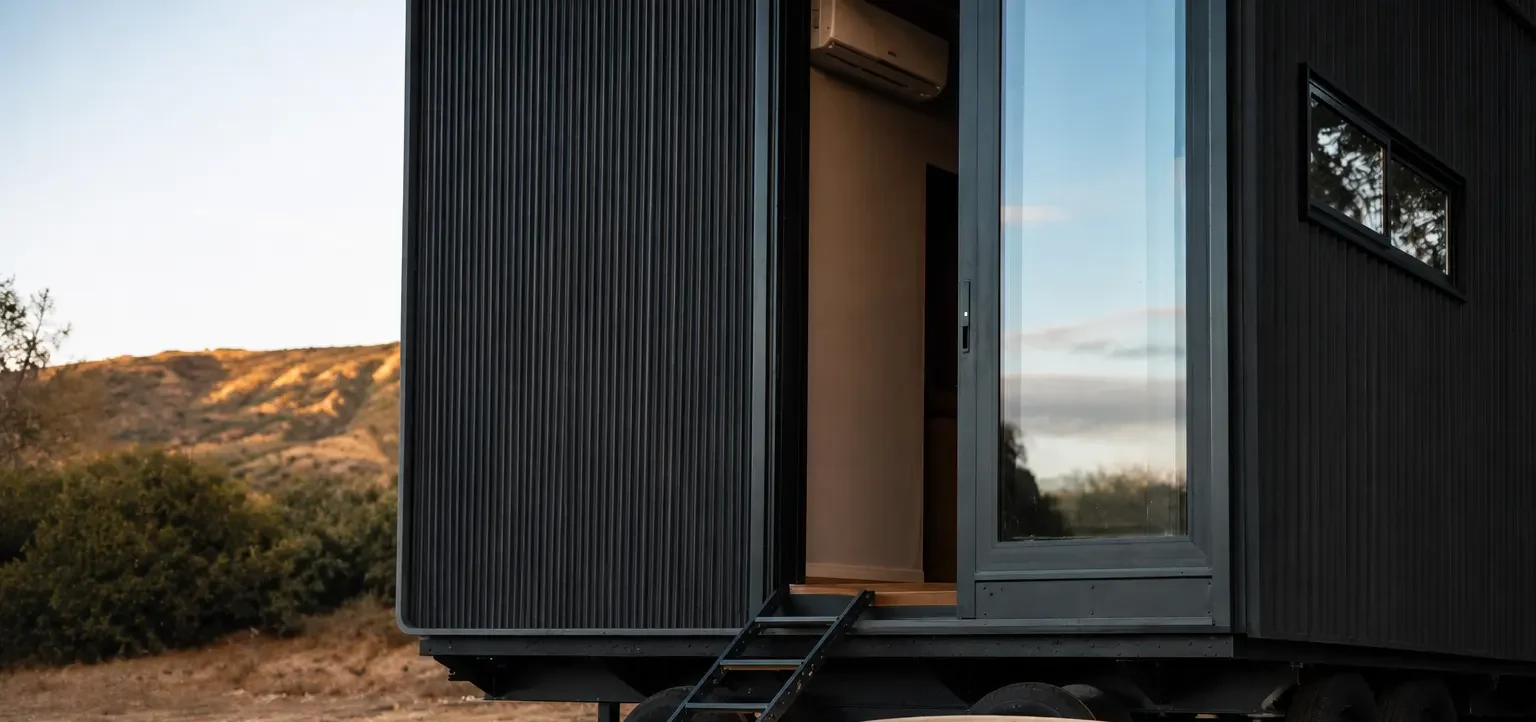
In some situations, mobility can be an important advantage. Homes on wheels provide flexibility for temporary placements, workforce housing programs, disaster response efforts, or projects where relocation may be necessary in the future.
Our X Series includes the X180, X270, and X360 models, offering different sizes and layouts while maintaining the flexibility of a mobile housing solution.
Multi-Unit Housing Developments
Modular construction is not limited to individual units. Communities, housing organizations, and developers can use modular housing as part of larger projects that include multiple residences on a single site.
We work with developers and organizations exploring ways to create housing communities that can be deployed more efficiently than many traditional construction projects.
Choosing the Right Modular Housing Solution
There is no single modular housing model that works for every project. A small studio may be ideal for transitional housing or workforce accommodations, while larger homes may be better suited for families or long-term residential use.
At Azure Printed Homes, we offer a range of modular living spaces designed to support different housing goals. The best choice depends on the number of occupants, intended use, available infrastructure, budget, and local regulations.
Modular Housing Cost
Costs depend on the model, square footage, configuration, finishes, site preparation, delivery, installation, utilities, and local permitting requirements. Smaller studio-style units can be a practical option for compact housing needs, while larger ADU-style models can support more complete residential use.
| Model | Approx. Size | Description | Azure Starting Price |
| A/D/C-100 | 100 sq ft | Compact studio-style unit for small living spaces, backyard use, workspaces, or flexible housing projects. | $24,900 |
| A/D/C-120 | 120 sq ft | Slightly larger compact studio model that can work for private rooms, small studios, or transitional housing layouts. | $29,900 |
| N100 | 100 sq ft | Compact 100 sq ft model designed for efficient use of space in small housing, studio, or flexible modular projects. | $24,900 |
| A-180 | 180 sq ft | Small ADU-style unit with more room than a basic studio, suitable for compact independent living or guest space. | $49,900 |
| A-360 | 360 sq ft | Larger ADU-style model that can support more complete living needs, including longer-term residential use. | $89,900 |
| A-540 | 540 sq ft | Mid-size modular home option for more comfortable daily living, guest housing, or small household use. | $134,900 |
| A-720 | 720 sq ft | Larger residential model with more flexibility for bedrooms, storage, and full-time living needs. | $174,900 |
| A-900 | 900 sq ft | Spacious modular home option for families, long-term housing, or larger residential projects. | $219,900 |
| X180 | 180 sq ft | Home-on-wheels model for flexible placement, mobile living, temporary housing, or projects that may need relocation. | $69,900 |
| X270 | 270 sq ft | Larger home-on-wheels option with more interior space for mobile or semi-flexible housing needs. | $84,900 |
| X360 | 360 sq ft | Spacious home-on-wheels model designed for greater comfort, flexibility, and longer stays. | $109,900 |
Final pricing can vary based on the site and project scope. A complete budget should also consider foundation or placement requirements, utility connections, transportation, installation, permitting, interior upgrades, accessibility needs, and any local code requirements.
The Modular Housing Process
One reason modular construction continues to gain attention is its streamlined process.
At Azure Printed Homes, the process generally follows five stages:
- Configure the unit and select design options.
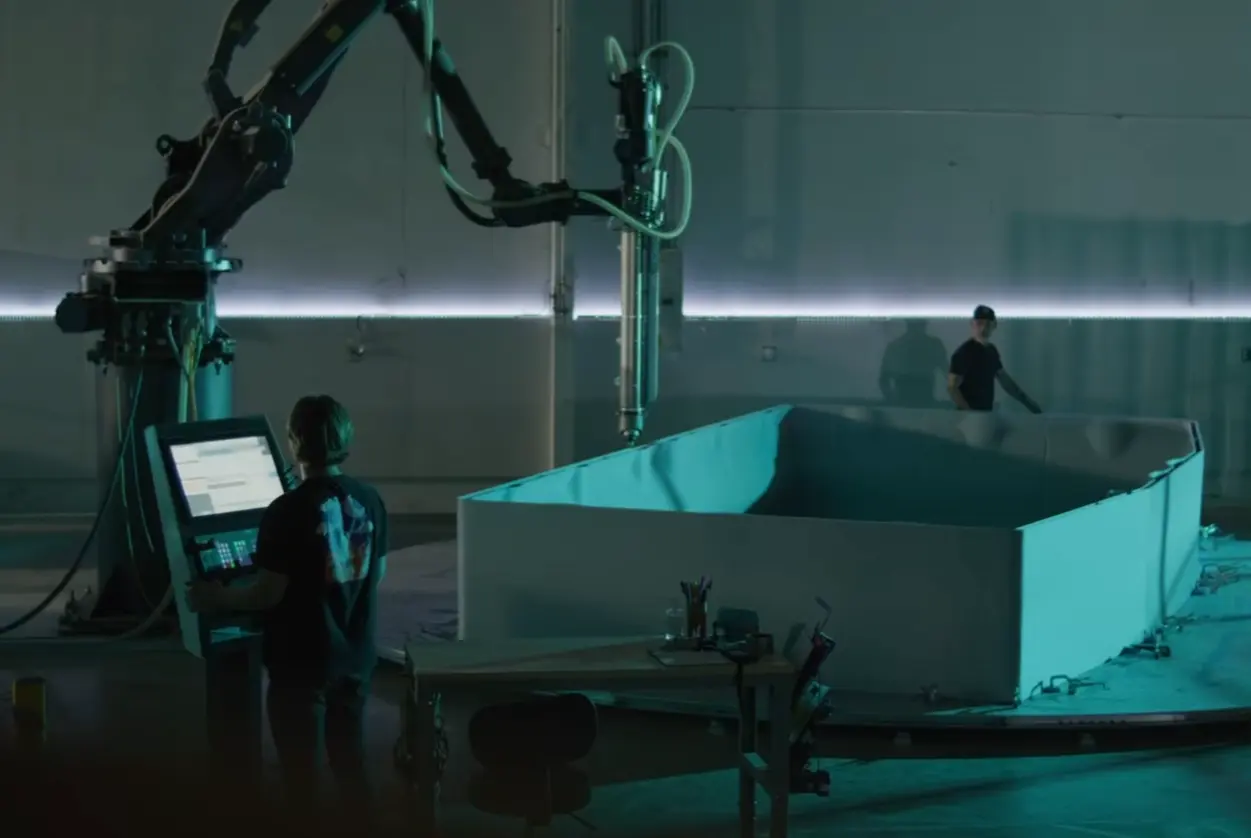
- Robotically print the structure using recycled materials.
- Install electrical systems, plumbing, and interior finishes.
- Deliver the completed unit.
- Complete on-site installation and utility connections.
Because much of the work occurs before delivery, project timelines can be more predictable than traditional site-built construction.
How Long the Process Takes and How to Prepare
The timeline for modular housing depends on the model, project size, site readiness, permits, delivery distance, utility work, and installation requirements. A single compact unit may move faster than a larger multi-unit housing project, especially when the land is already prepared and local approvals are clear.
At Azure Printed Homes, our process is built to be more predictable than traditional construction. After a unit is configured, the structure can be robotically printed in about one day. Finishes, electrical, plumbing, and interior work are completed afterward, with timing depending on the model and selected options. Delivery and installation then follow once the unit is ready and the site is prepared.
To prepare for a modular housing project, it helps to review the basics early:
- Define the purpose of the unit, such as emergency housing, transitional housing, family use, workforce housing, or long-term living.
- Confirm where the unit will be placed and whether the site has enough space.
- Check zoning, permits, and local housing rules before finalizing the model.
- Plan for utilities, including water, sewer or septic, electricity, HVAC, and internet if needed.
- Consider access for delivery and installation equipment.
- Set a budget that includes the unit price, site work, delivery, installation, permits, and utility connections.
- Decide which features are needed from the start, such as bathroom, kitchen, storage, solar, batteries, or accessibility upgrades.
The more prepared the site is, the smoother the process can be. For emergency or community housing projects, early planning with local officials, utility providers, and project partners can help reduce delays and make the housing solution easier to deploy.
Final Thoughts
So, how does someone get emergency housing in Washington? The first step is to contact local housing resources, including Washington 211, coordinated entry, county housing programs, and homeless service providers. If eviction is involved, asking for help early can make a real difference.
But the larger question is how communities can create more emergency and transitional housing before the next crisis happens. That is where modular printed construction can help. With faster production, flexible designs, and recycled materials, we at Azure Printed Homes offer a future-focused way to think about housing supply.
Emergency housing starts with immediate help. Long-term progress starts with building differently.