When you need emergency housing in Louisiana, the first step is not choosing a building. It is getting somewhere safe.
Start with local emergency resources first. In Louisiana, that usually means calling 2-1-1, checking with your parish emergency management office, or following state disaster updates if a storm, flood, fire, or other emergency has affected your area. If a federal disaster has been declared, FEMA support may also be part of the next step.
But emergency housing is not only about the first night after a crisis. That is the part people do not always talk about enough. Families, workers, students, seniors, and entire communities often need a clean, stable place to stay while repairs, insurance, permitting, and rebuilding slowly move forward.
That is where faster building matters.
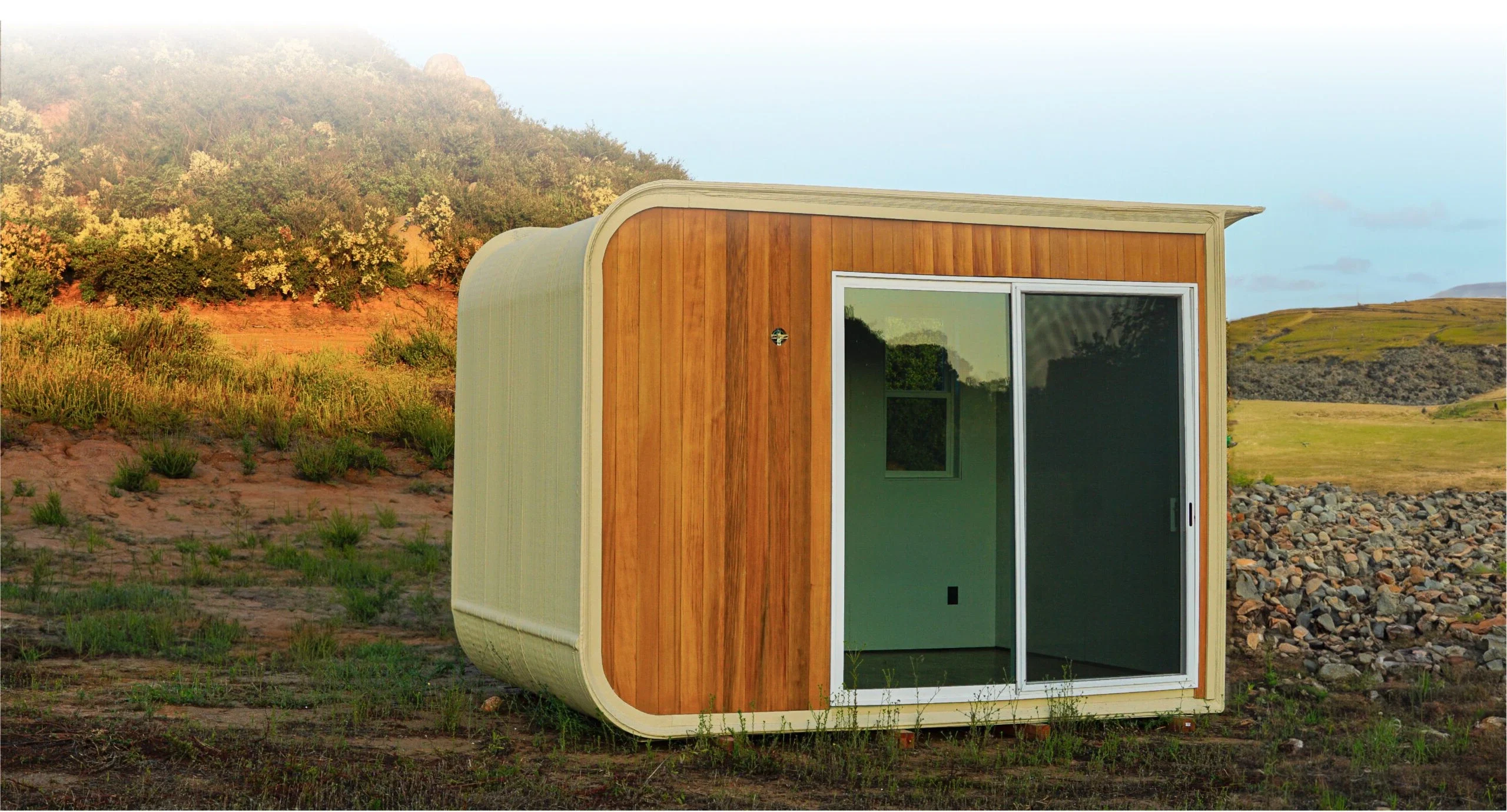
At Azure Printed Homes, we build future-focused modular living spaces using robotic 3D-printed construction, recycled materials, and a controlled factory process. Our goal is simple: help make housing easier to deliver when time, cost, and reliability matter most.
For emergency housing in Louisiana, that can mean looking beyond short-term shelter and planning for real recovery – move-in ready spaces, durable structures, and scalable housing that can support people while communities get back on their feet.
Start With Immediate Shelter and Local Help
If you do not have a safe place to sleep tonight, start with emergency support before looking at longer-term housing.
In Louisiana, 2-1-1 is usually one of the best first calls. It can connect people with shelter information, local housing resources, food support, utility help, and disaster recovery referrals. During major storms or disasters, local shelter information may also come through parish emergency management offices.
Your Parish Office of Homeland Security and Emergency Preparedness can be especially helpful because emergency response is often local. They may know which shelters are open, which areas are under evacuation, and where residents should go for updates.
When you call, be clear about the situation. A short explanation is enough.
You can say:
- I need a safe place to stay tonight
- My home was damaged and I cannot live there
- I was told to evacuate and need shelter information
- I have children, pets, medical needs, or mobility needs
- I am at risk of losing housing and need help before it gets worse
Those details matter. A family with young children may need different support than one adult. Someone with medical equipment, mobility needs, or a service animal may need a specific shelter or placement.
Check Disaster Assistance If Your Home Was Damaged
If your housing emergency was caused by a federally declared disaster, FEMA assistance may be part of the next step. This can include help with temporary housing, rental assistance, basic home repair, or other serious disaster-related needs for eligible households.
This does not mean everyone qualifies. It also does not mean FEMA is the only place to ask for help. But if a hurricane, flood, tornado, fire, or other declared disaster damaged your home, it is worth checking.
Try to keep the basics together:
- Photo ID
- Proof of address
- Insurance information
- Photos or videos of damage
- Receipts for hotels, repairs, supplies, or temporary housing
- FEMA application numbers
- Notes from calls with agencies, insurers, or landlords
A small folder on your phone is better than nothing. After a disaster, paperwork gets scattered quickly.
Know the Difference Between Shelter and Recovery Housing
Emergency shelter is the first step. Recovery housing is the next problem.
A shelter may help for a night or a few days. A hotel voucher may create a little breathing room. But many people in Louisiana need housing for weeks or months after a disaster. Repairs take time. Insurance takes time. Contractors get booked. Permits move slowly. Sometimes the home is technically still standing, but it is not safe to live in.
That gap is where communities often struggle.
People need a place that is safe, private, practical, and livable. Not perfect. Not fancy. Just something stable enough to let them work, cook, rest, care for children, and start putting life back together.
For parishes, nonprofits, developers, and recovery partners, this is where emergency building becomes part of the answer.
How Fast-Build Housing Supports Emergency Recovery
Emergency building is not regular construction on a tighter schedule. It has a different job. It needs to move quickly, but it still has to be safe, durable, and realistic for the site.
In Louisiana, that means planning for heat, humidity, heavy rain, drainage, flood risk, wind exposure, utility access, and local code requirements from the beginning. A fast unit that cannot connect to power, sit safely on the land, or handle local conditions does not solve much.
Speed Is Important, But the Site Still Comes First
Good emergency housing should be ready faster, but speed alone is not enough. The land has to support the unit. The utilities have to work. The site needs access for delivery, installation, maintenance, and emergency vehicles.
Strong emergency building should focus on:
- Faster delivery
- Durable materials
- Energy efficiency
- Clear utility connections
- Practical layouts
- Site access
- Drainage and elevation
- Local permitting
- Long-term use after the emergency phase
Factory-Built Housing Can Reduce Uncertainty
This is where modular housing can help. At Azure Printed Homes, our work is built around a simple idea: construction should be smarter, faster, and less wasteful.
We manufacture modular living spaces using robotic 3D printing, recycled plastic materials, and off-site fabrication. Because much of the work happens in a controlled factory setting, the process can be more predictable than a fully on-site build.
That matters during recovery. After a disaster, traditional construction can slow down quickly. Labor is stretched. Materials may be delayed. Weather keeps interrupting job sites. Costs are hard to pin down. Meanwhile, people still need somewhere to live.
Emergency Housing Needs a Clear Path From Need to Move-In
A factory-built process can help reduce some of that uncertainty. Units can be fabricated while site work is being planned. That does not remove the need for permits, foundations, grading, drainage, or utilities, but it can make the path from need to housing more organized.
Emergency modular housing may support:
- Displaced families waiting on repairs
- Interim housing after storms or floods
- Recovery housing near affected communities
- Workforce housing for repair crews or essential staff
- Supportive housing programs
- Small emergency housing villages
- Replacement housing where rebuilding has stalled
- Scalable housing for parishes, nonprofits, and development partners
The Best Emergency Housing Keeps Working After the Crisis
The best emergency housing is not just quick. It is useful after the first crisis has passed. A unit used for disaster recovery may later support workforce housing, family housing, supportive housing, guest space, or another local need, depending on the property and local rules.
That kind of flexibility matters when budgets are tight and communities cannot afford throwaway solutions. It is not a one-size-fits-all answer. The site, timeline, budget, and intended use all matter.
From Support Space to Full Housing: Choosing the Right Model
Not every emergency housing need calls for the same type of space. A single person waiting on repairs may need something different from a family. A parish planning temporary recovery housing may need a different approach than a homeowner adding a backyard unit.
That is why each Azure model is matched to a specific use case.
Studio Series
Our Studio Series models are compact and flexible. They are not meant to replace full housing for a family, but they can support emergency recovery in practical ways.
A studio unit may work well as:
- A caseworker office
- A private consultation space
- A recovery site support room
- A temporary work area
- A wellness or community support space
- A flexible backyard structure where local rules allow
In a recovery setting, those support spaces matter. People need more than beds. They need places to meet, organize, apply for help, speak privately, and get through the next step.
Homes on Wheels
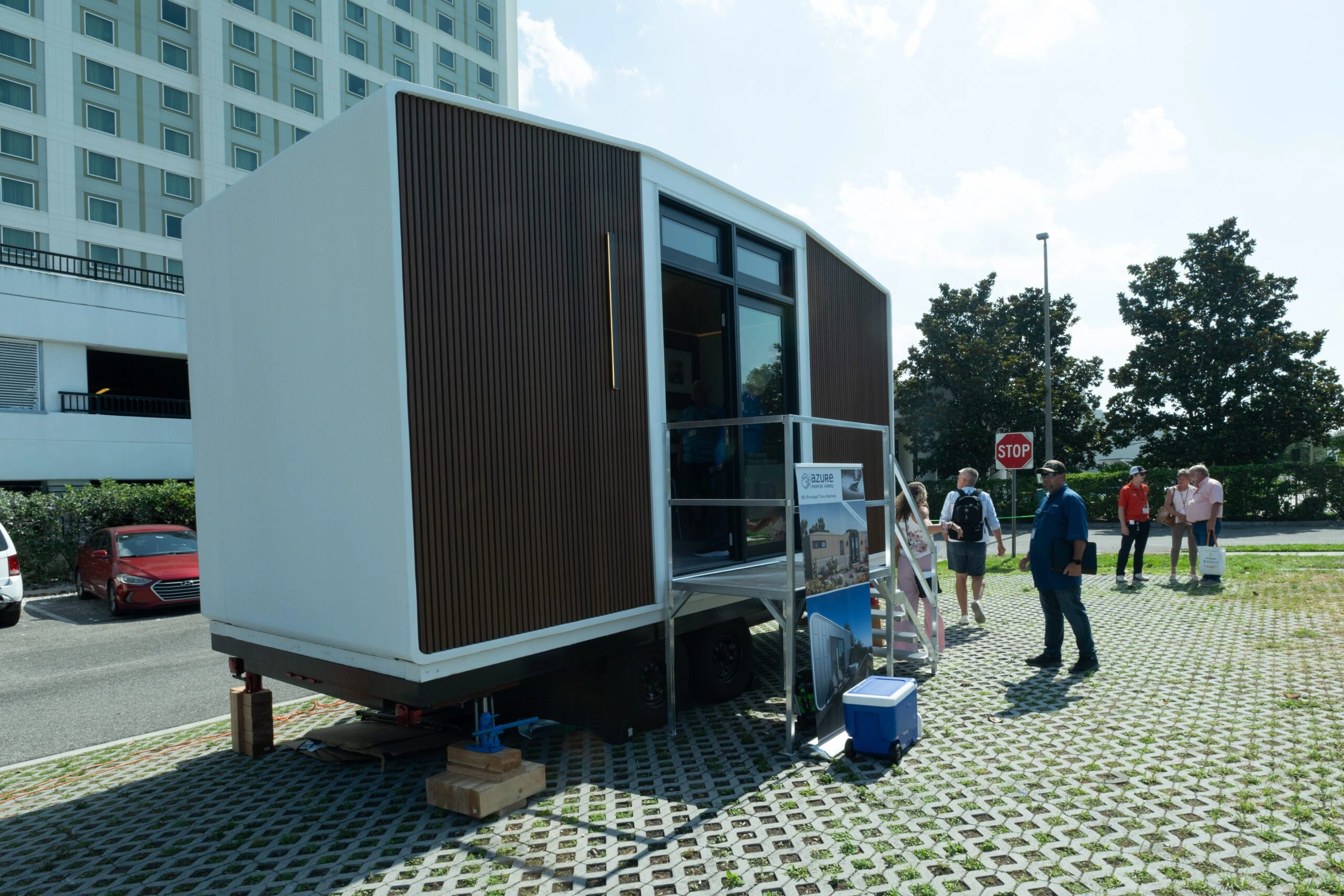
Our X Series Homes on Wheels are chassis-based models designed for mobility and comfort. These can make sense when flexibility matters and local placement rules allow it.
They may be useful for certain temporary housing settings, park-style placements, or properties that can legally support a movable unit. Still, a home on wheels cannot simply go anywhere. The site must allow it, and the unit still needs a practical plan for power, water, sewer, access, and drainage.
For emergency recovery, this category works best when the placement path is clear from the beginning.
Homes & ADUs
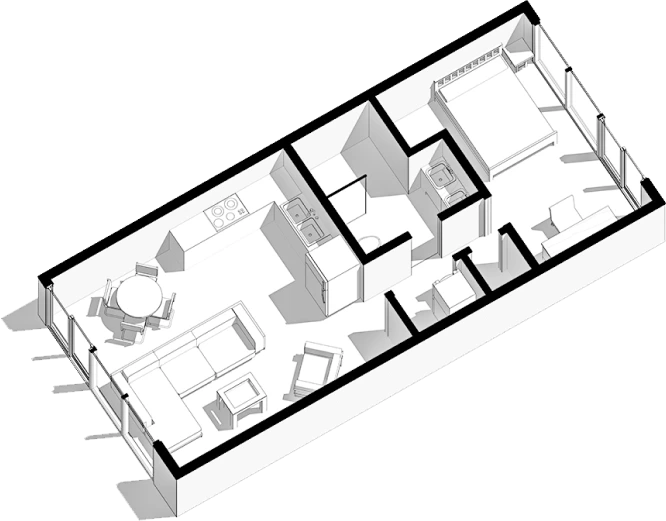
Our Homes & ADUs models are more relevant when people need a real living space. These units can include sleeping areas, bathrooms, kitchens, and the kind of daily function people need when recovery takes longer than expected.
This can be especially useful when:
- A family needs temporary housing on a property
- A homeowner is waiting on repairs
- A caregiver or relative needs separate space
- A property owner wants a longer-term housing solution
- A community needs livable units that can serve more than one purpose
For emergency building, this category is often the stronger fit because it supports actual day-to-day living, not just short-term shelter.
Professional Building Systems for Larger Recovery Projects
Some housing needs are bigger than one unit.
A parish, nonprofit, developer, architect, or general contractor may need a repeatable system that can support multiple residents or a larger recovery site.
Our professional approach combines industrialized building systems, off-site fabrication, light-gauge steel, high-performance envelopes, and optional 3D-printed recycled composite facades. It is designed for projects where speed, cost predictability, code alignment, and repeatable delivery all matter.
For emergency housing in Louisiana, this kind of system may help with:
- Multifamily recovery housing
- Interim housing for displaced residents
- Supportive housing
- Workforce housing
- Missing middle housing
- Rebuilds in areas with strict performance needs
- Larger sites where repeatable units reduce complexity
This is emergency building at a larger scale. Less scrambling. More planning. More room to recover.
What to Check Before Placing Emergency Housing in Louisiana
A good unit still needs the right site. That is true for a homeowner, a parish, a church, a nonprofit, or a developer.
Before placing modular or emergency-built housing, ask:
- Who owns the land?
- Is housing allowed on the property?
- Is the site in a flood zone?
- Does the unit need elevation?
- Can utilities connect safely?
- Is there enough room for delivery?
- Will the site drain properly after heavy rain?
- Are permits required for placement, foundation, utilities, or occupancy?
- How long will the unit stay?
- What happens to the unit after the emergency use ends?
In Louisiana, drainage and flood risk should never be treated as small details. A site that looks fine in dry weather can become a problem quickly. Emergency housing should not create another emergency.
Mistakes to Avoid
Emergency situations force quick decisions. That is normal. But a little caution can save time and money later.
Try to avoid:
- Waiting too long to call local resources
- Assuming FEMA applies to every emergency
- Throwing away receipts
- Failing to document damage
- Moving into unsafe housing because it is available quickly
- Buying a unit before checking local rules
- Ignoring flood elevation and drainage
- Forgetting about utilities
- Planning only for a few days when the need may last months
Emergency housing works best when the first step and the next step are planned together.
Final Word
Start with safety. Call 2-1-1. Contact your parish emergency office. If a declared disaster damaged your home, check FEMA assistance. If you are at risk of homelessness, ask about local housing providers, shelter, rental help, and rapid rehousing.
Then think about the longer recovery path.
Where will people stay after the first few nights? What happens if repairs take months? Is there land available? Can temporary or modular housing be placed legally? Would a faster-built unit help close the gap between shelter and permanent housing?
That is where emergency building can make a real difference.
Emergency housing should be practical. It should be fast where speed matters. It should be durable enough for real use. And above all, it should give people more than a place to wait.
It should help them start again.