Yes. A modular home is built to the same state and local building codes as a site-built house and sits on a permanent foundation, so with good installation and regular maintenance it can last as long as a comparable site-built home. There is no fixed expiration date. Lifespan depends mostly on the code it was built to, the materials, how well it was set and sealed on site, and how it is maintained.
Modular vs. Manufactured: Why the Code Matters
Much of the doubt about factory-built homes comes from mixing up two different categories.
Modular Homes
Modular homes are built in sections in a factory to the state building code, inspected during production, then placed on a permanent foundation. State programs certify them with labels. In North Carolina, for example, a modular unit carrying the state label is deemed to meet the North Carolina State Building Code, while the foundation, connections between units, utilities and zoning are handled locally. Because modular homes follow the same structural, energy and safety rules as site-built homes, their expected service life is generally compared with site-built construction rather than with older mobile homes.
Manufactured Homes
Manufactured homes are built on a permanent chassis to the federal HUD code, which has applied since June 1976. Homes built before that date, often called mobile homes, were not built to a national standard, and that history shapes how many people see factory-built housing.

What Affects How Long a Modular Home Lasts
Factory Construction
Modules are built indoors, so framing and materials are not exposed to rain or snow during construction. Each module must also withstand being lifted and transported, which means it is built to handle loads beyond those of normal use.
Installation
The weakest points of a modular home are usually the joints between modules. They need to be fastened, sealed and flashed correctly, and the home must sit on a level, properly designed foundation. Poor setting work can cause leaks or settling that shorten the home’s life.
Climate and Site
Wind, snow, moisture and soil all affect durability. A home designed for the loads in your area, with good drainage around the foundation, will age far better than one placed on a poorly prepared site.
Maintenance
Like any house, a modular home needs routine care: roof and gutter checks, exterior coatings, caulking around windows and doors, and servicing of heating and cooling equipment.
How Azure Printed Homes Builds for Durability
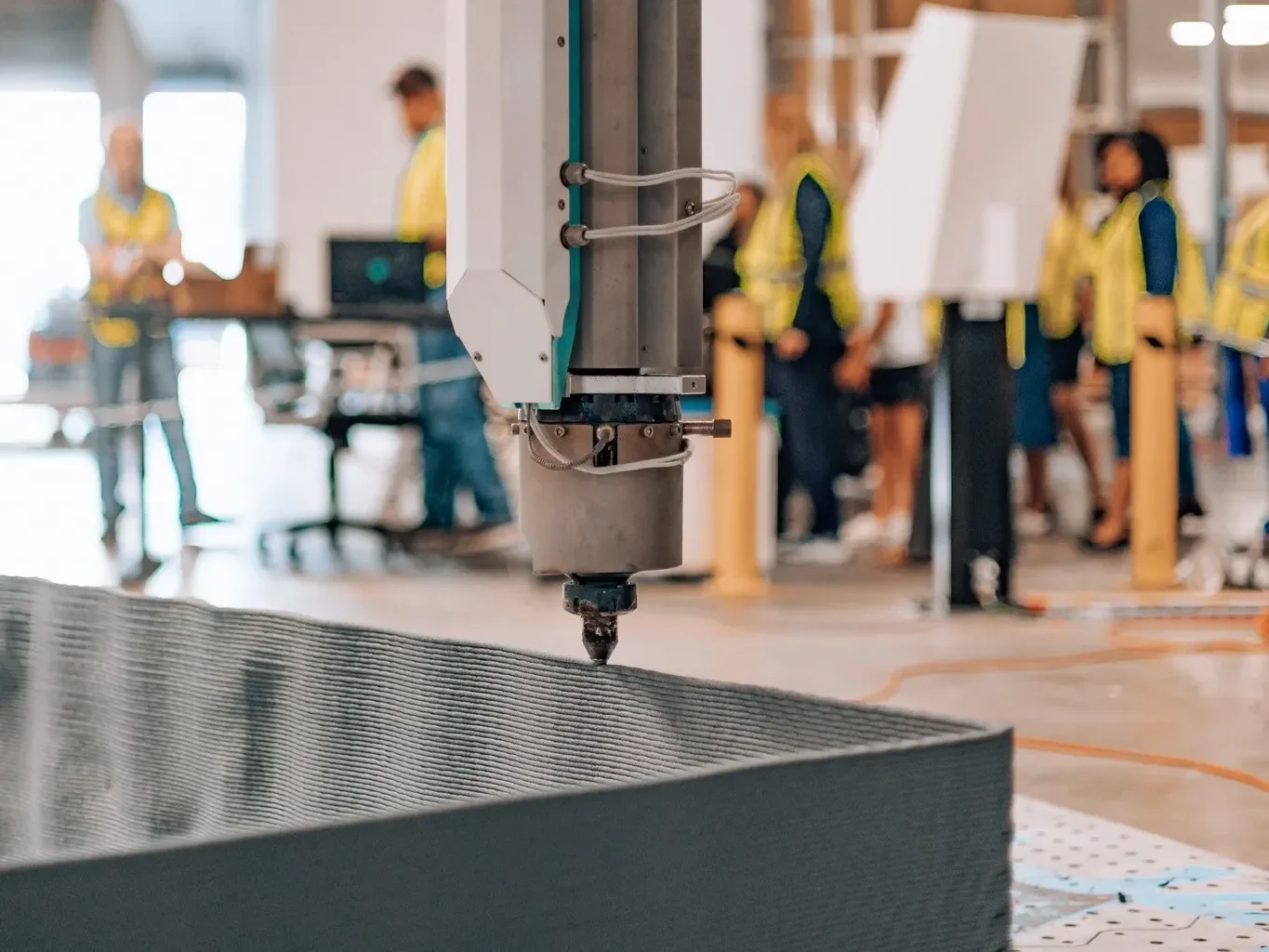
At Azure Printed Homes, our structures are robotically printed from a material that is more than 60% recycled plastic, or built with light-gauge steel for larger homes and for projects in high fire hazard severity zones. Several features address the factors above:
- Tested material: our print material has gone through accelerated, long-term weathering testing, and the recycled plastic is non-toxic and VOC-free.
- Water resistance: walls, roof and floor are printed as single pieces, and the structures are watertight, highly insulated and pest resistant.
- Wind and snow: modules are designed for wind speeds of up to 150 mph, which covers 95% of conditions in the continental U.S., and for snow loads under the ASCE 7-10 standard. Stronger wind ratings are available at extra cost.
- Module connections: modules are bolted and strapped together on the inside and sealed and flashed on the outside.
- Exterior coating: each structure has a UV protection layer with a 15-year UV and color warranty.
- Warranty: our studios and ADUs carry a ten-year warranty against defects in materials and workmanship.
Standard specifications also include insulation in the floors, walls and ceilings and Milgard double-pane windows.
Maintenance Schedule for a Long Life
- Exterior coating: for our printed shells, we recommend recoating the UV protection layer about every 15 years, much like repainting a traditional house.
- Roof and drainage: keep gutters and drainage clear so water moves away from the foundation.
- Seals: inspect caulking and flashing around windows, doors and module joints.
- Mechanical systems: service heating, cooling and water heating equipment on the manufacturer’s schedule.
- Foundation: watch for settling, cracks or standing water near the base.

Resale and Financing
Because modular homes are built to the local building code and placed on permanent foundations, they are generally appraised and financed in a similar way to site-built homes. Rules vary by lender and location, so confirm financing early. At Azure, financing is available through our partner, Acorn Finance.
Our modular homes can also be unbolted from the foundation and moved if your plans change.
How to Check the Quality of a Modular Home
- Labels and data plate: a modular home should carry the state or third-party labels required where it is installed, and a data plate listing design loads, codes and serial numbers.
- Design loads: confirm the wind and snow loads the home was designed for match your location.
- Foundation plan: ask for the foundation design and how the home will be anchored to it.
- Joint details: ask how the modules are connected, sealed and flashed on site.
- Warranty: read what the warranty covers, for how long, and what maintenance it requires.
- Documentation: keep the plans, labels and manuals for future repairs, inspections and resale.
Common Myths About Modular Homes
Modular Homes Are the Same as Mobile Homes
Modular homes are built to the state building code and set on permanent foundations. Mobile homes were built before the federal HUD code took effect in June 1976, and homes built to the HUD code since then are called manufactured homes.
Modular Homes Can’t Be Customized
Many manufacturers allow changes. At Azure, depending on the model, we can alter a unit’s dimensions, change its orientation on the lot, and add or remove a bedroom or bathroom in larger units. Fully custom projects can include multiple stories, elevators and balconies.
Factory-Built Means Lower Quality
Modular homes are inspected during production under state programs, and their materials are protected from weather while they are built. The foundation and on-site connections are then inspected locally, as with any new house.
Modular Homes Can’t Be Moved
Most stay where they are set, but our homes can be unbolted from the foundation and moved if your plans change. Our units ship by flatbed truck within the continental U.S., Mexico and Canada.
Conclusion
Modular homes are built to the same codes as site-built houses, so their lifespan depends on the same things: materials, installation and maintenance.
Our Homes & ADUs start at $89,900 and are designed for 150 mph winds, tested for long-term weathering and covered by a ten-year warranty. Contact us to learn more about how they are built.