Housing terms can get confusing because market rate housing and affordable housing are often discussed like they are building types. They are not. They describe how a home is priced, funded, and made available.
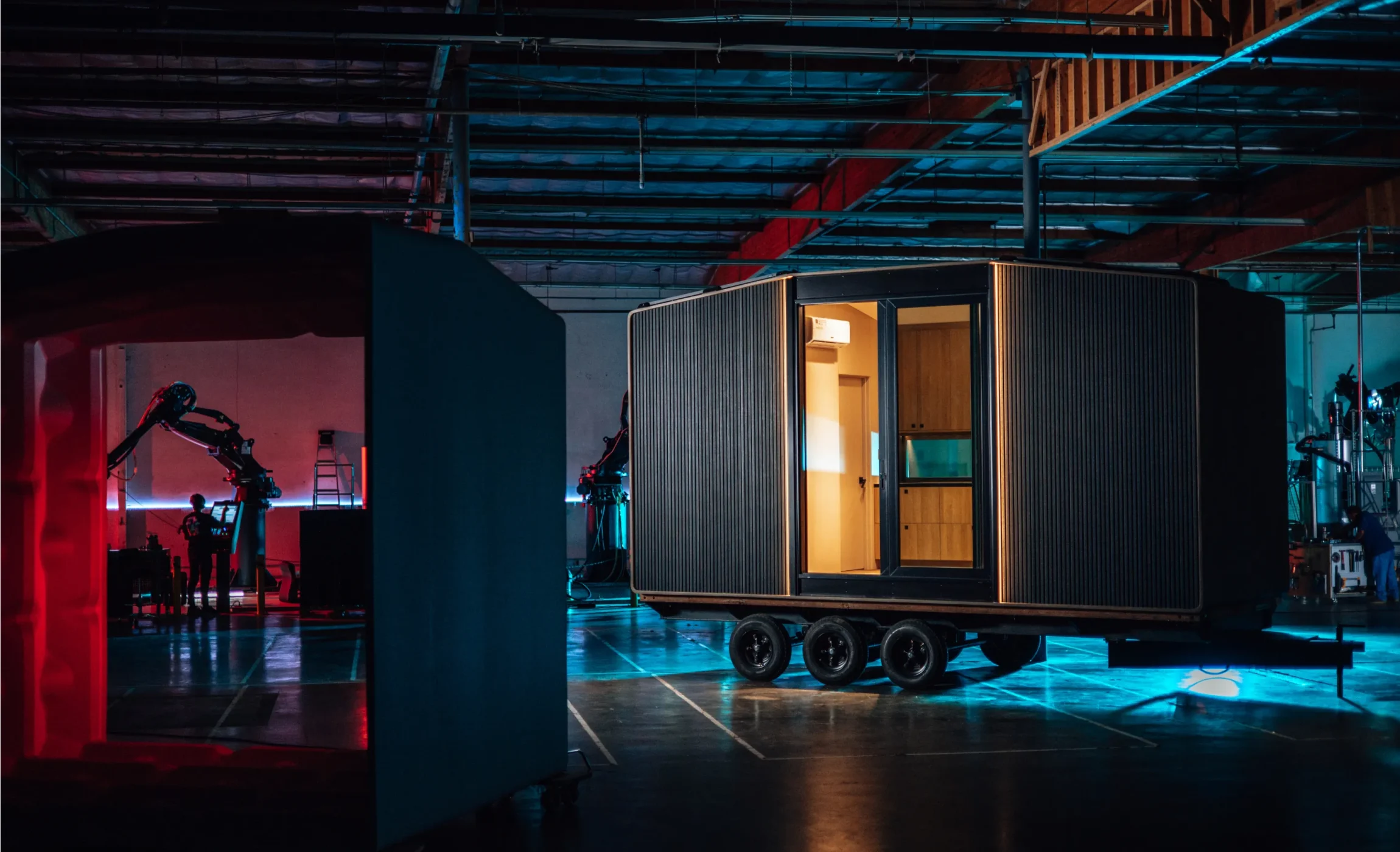
The same modular home, ADU, apartment, or single-family house could be market rate in one project and affordable in another. At Azure Printed Homes, we start with the purpose of the project, not the housing category. A backyard ADU may create market-rate rental housing, while the same construction approach can support affordable housing or workforce housing development. The housing model depends on how the project is financed, priced, and occupied.
What Market Rate Housing Means
Market rate housing is housing that is sold or rented at prices determined by the local real estate market. The cost depends on factors such as location, supply and demand, neighborhood amenities, property size, and the condition of the home rather than income limits or government assistance.
Because there are no income restrictions, market-rate housing is generally available to anyone who can qualify financially. That could include a first-time homebuyer purchasing a small home, a family renting an apartment, or someone building a custom residence on private land.
Market-rate housing can take many forms, including:
- Single-family homes
- Apartments and condominiums
- Townhomes
- Accessory dwelling units (ADUs)
- Modular homes
This is where many buyers become confused. A modular home isn’t automatically market rate housing simply because it’s factory-built, nor is it always a luxury product. We’ve delivered modular homes for private homeowners, residential developers, and larger communities where the homes are sold or rented at market rates. The construction process stays the same, while the housing program changes based on the project.
Another common misconception is that market-rate housing always sits at the high end of the market. In reality, “market rate” simply reflects local conditions. In one city, a modest home may be considered market rate, while in another, the same home could be priced very differently because demand, land values, and housing supply are not the same.
At the same time, market-rate developments remain an important part of increasing housing supply. As more homes enter the market, communities have greater flexibility to accommodate population growth and evolving housing needs.
Affordable Housing Explained
Affordable housing is designed to make housing accessible to households whose incomes make market-rate options difficult to afford. While programs vary, eligibility is often based on Area Median Income (AMI), and many are structured so qualifying households spend no more than about 30% of their income on housing.
Unlike market-rate housing, affordable housing may receive support through government programs, tax incentives, nonprofit organizations, or other funding sources. Those programs help bridge the gap between what residents can reasonably pay and the actual cost of developing and operating housing.
Affordable housing can include:
- Apartments
- Townhomes
- Single-family homes
- ADUs
- Mixed-income developments
- Modular communities
The important point is that affordable housing isn’t a style of home. It’s a housing program with specific pricing and eligibility requirements. A detached house can be affordable housing. So can an apartment, a duplex, or a modular home.
That’s one of the reasons modular construction has become part of many housing conversations. When we work with municipalities, developers, and housing organizations, the discussion usually starts with the community’s goals rather than the type of building. Some projects need permanent family housing, while others focus on workforce housing, transitional housing, or expanding the overall housing supply. We manufacture studios, ADUs, homes on wheels, and larger residential homes because each serves a different purpose within those broader housing strategies.
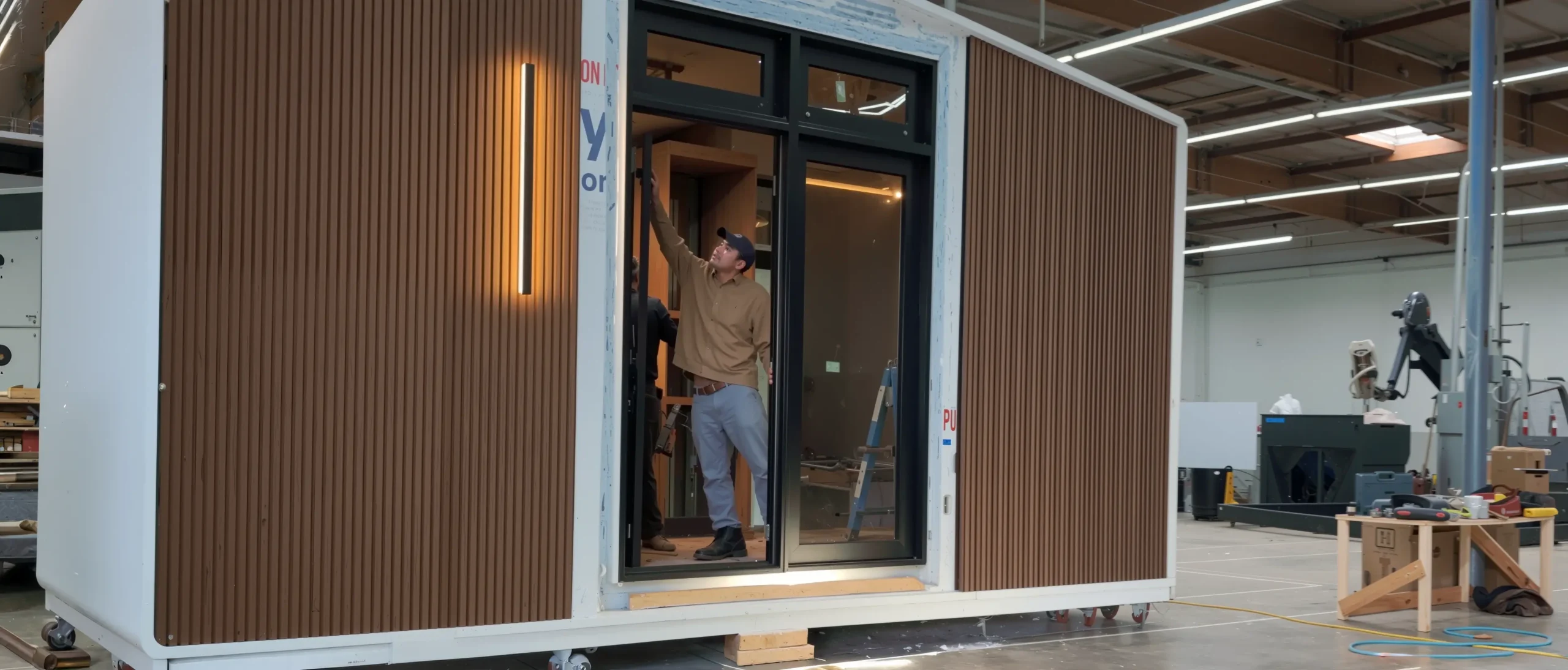
Factory-built construction can support affordable housing in another way. Building much of the home in a controlled manufacturing environment makes scheduling more predictable and reduces many of the delays that commonly affect site-built construction. That consistency becomes especially valuable when projects involve dozens or even hundreds of homes that need to be delivered on a defined timeline.
Market Rate Housing vs Affordable Housing Comparison
Although the two terms are often compared, they answer different questions. Market-rate housing describes how housing is priced by the market, while affordable housing describes who the housing is intended to serve and how affordability is maintained.
| Category | Market Rate Housing | Affordable Housing |
| Pricing | Determined by local supply and demand | Based on program requirements and affordability guidelines |
| Eligibility | No income restrictions | Usually limited by household income |
| Financial support | Typically does not rely on subsidies | May include public funding, tax credits, or housing assistance |
| Rent or sale price | Reflects current market conditions | Intended to remain within reach of qualifying households |
| Primary objective | Meet market demand | Increase access to housing for income-qualified residents |
| Common project types | Private developments, residential neighborhoods, rental communities | Income-restricted developments, workforce housing, mixed-income communities |
The distinction matters because it affects far more than the monthly payment. Financing, compliance requirements, long-term management, and tenant or buyer eligibility may all differ depending on the housing model.
From a construction perspective, however, those differences don’t necessarily change how a home is built. We approach every project by looking at what the client is trying to accomplish. The same modular home may become part of a market-rate subdivision in one community or an affordable housing development in another. The manufacturing process remains consistent, while the pricing model, funding structure, and occupancy requirements vary from project to project.
Housing Solutions That Can Support Both Models
Market rate and affordable housing are not building types. They are pricing and access models. That means the same physical home can serve different purposes depending on how the project is financed, managed, and occupied.
This is why flexible housing types matter. A compact studio, an ADU, a home on wheels, or a larger modular home can each support market-rate, affordable, workforce, or mixed-income housing when planned correctly.
Studios
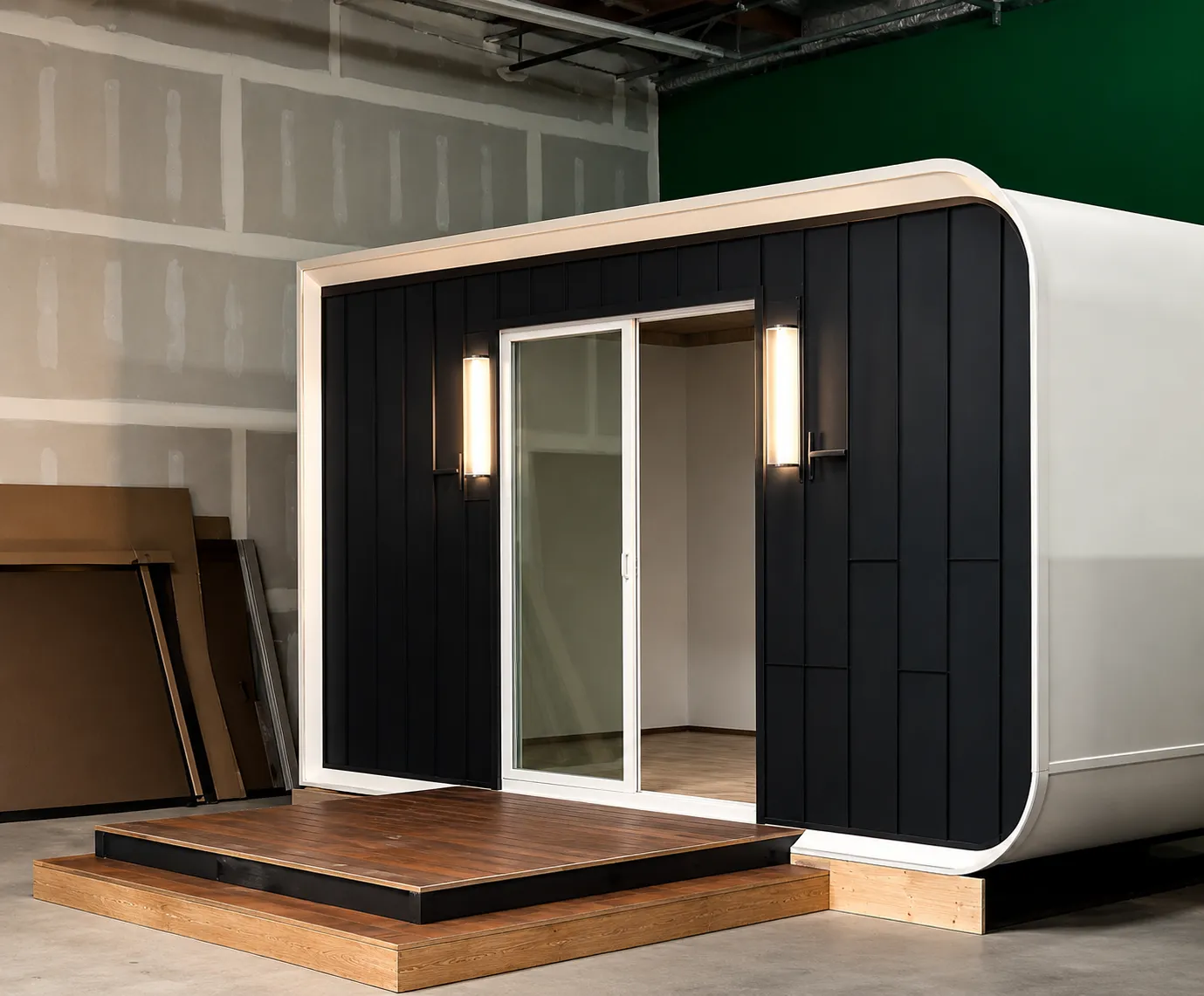
Studios are not usually full housing units, but they can support housing projects by adding flexible space. In a market-rate setting, a studio may serve as a backyard office, guest space, or rental-friendly property feature. In a community housing project, it may work as shared workspace, support space, or temporary-use space. Our Studio Series includes the N100, a 100-square-foot model starting at $24,900, and the A120, a 120-square-foot studio starting at $29,900.
ADUs
ADUs connect directly to both market-rate and affordable housing conversations. A homeowner may use an ADU as a market-rate rental, while a city or housing program may use ADUs to add income-restricted units on existing lots.
Our ADU lineup starts with the A180, a compact one-bedroom model starting at $49,900, and extends to larger models like the A360, A540, A720, and A900, with kitchens, bathrooms, and one or more bedrooms.
Homes on Wheels
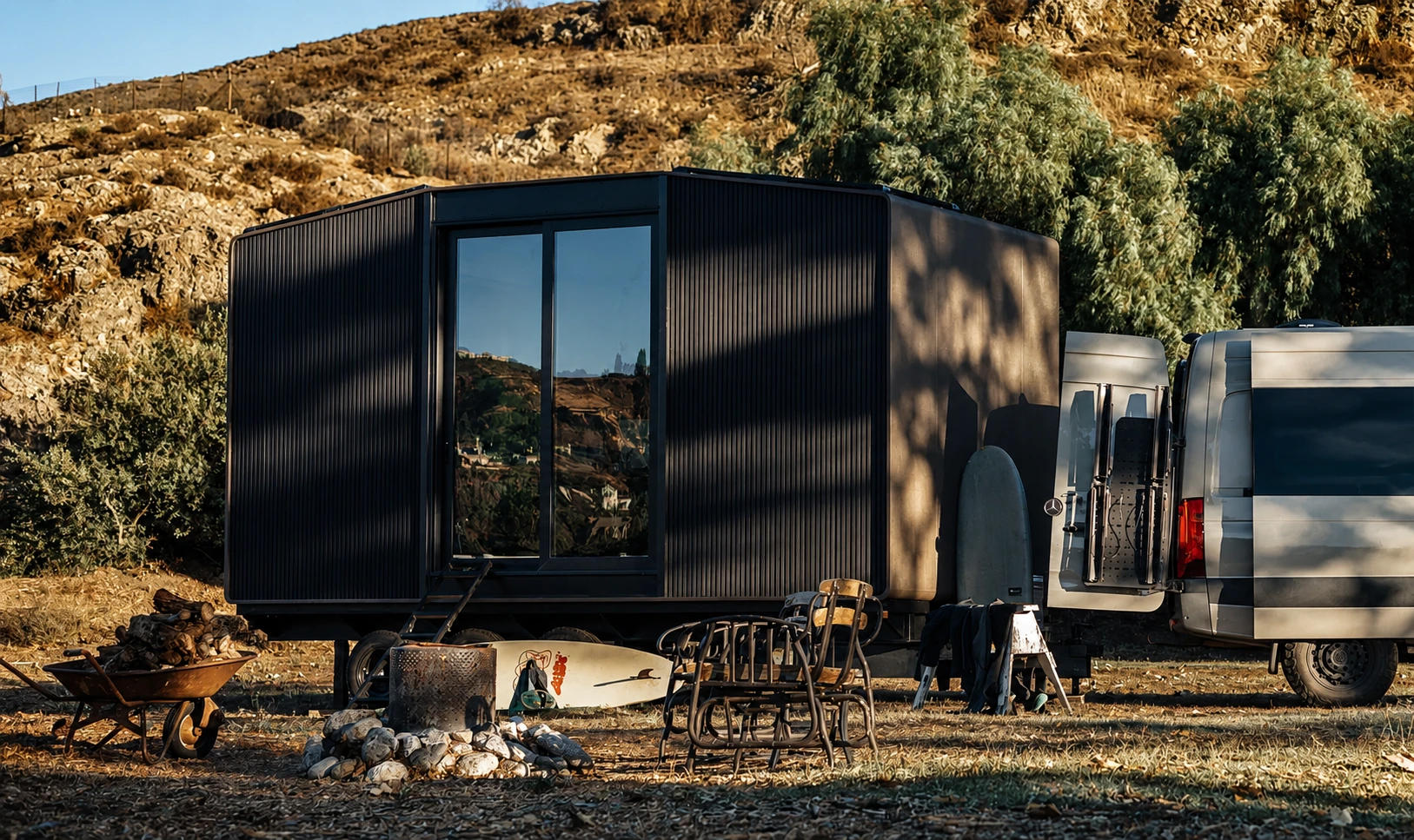
Homes on wheels can support projects where flexibility or temporary placement matters. They may be used for market-rate hospitality, workforce housing, temporary accommodations, or emergency housing. Our X Series includes the X180, X270, and X360, with starting prices from $69,900 to $109,900.
Larger Residential Homes
Larger modular homes are the clearest fit for permanent market-rate housing, affordable housing developments, and mixed-income communities.
Our A900 starts at $219,900 and includes about 900 square feet, two bedrooms, one-and-a-half bathrooms, and a full kitchen. For larger projects, we also design custom homes, giving homeowners and developers more flexibility when planning full residential communities.
Across these product types, the goal is the same: create housing that can adapt to the project. The financing model may change, but factory-built production, customizable layouts, electrical, plumbing, mechanical systems, and interior finishes remain part of the same streamlined process.
Which Housing Approach Fits Different Situations?
There isn’t a single housing model that’s right for every project. The best solution depends on who the housing is intended for, how it will be financed, the available land, and the community’s long-term goals.
The table below illustrates how different housing approaches are commonly used.
| Project or Goal | Market Rate Housing | Affordable Housing | Azure Solution |
| Primary residence | Excellent fit | Sometimes | Modular homes |
| Backyard rental unit | Excellent fit | Sometimes | ADUs |
| Multigenerational living | Excellent fit | Sometimes | ADUs or larger homes |
| Residential subdivision | Excellent fit | Sometimes | Modular homes |
| Workforce housing | Sometimes | Excellent fit | Modular homes and communities |
| Mixed-income development | Excellent fit | Excellent fit | Studios, ADUs, modular homes |
| Emergency or transitional housing | Sometimes | Excellent fit | Homes on wheels, studios, modular homes |
The most successful projects begin with a clear understanding of how the homes will be used. A homeowner adding a backyard ADU has very different priorities than a developer planning hundreds of homes or a municipality addressing a local housing shortage. Those differences influence everything from home size and layout to transportation, installation, and site planning.
What to Consider Before Choosing a Housing Strategy
Whether you’re building one home or an entire community, it’s worth looking beyond the purchase price. Housing projects are shaped by a combination of financial, regulatory, and practical considerations, and addressing them early can prevent expensive changes later.
Before moving forward, evaluate:
- Who the housing is intended to serve: A market-rate neighborhood, an affordable housing development, and a workforce housing project each have different objectives.
- Available land: Lot size, topography, access for delivery, and utility connections all influence the type of housing that makes sense.
- Local zoning and permitting: Regulations vary by jurisdiction and may determine whether ADUs, multifamily housing, or certain home sizes are permitted.
- Construction timeline: Projects with fixed deadlines often benefit from construction methods that provide greater scheduling predictability.
- Long-term plans: Think about how the property may be used in five, ten, or twenty years. A flexible design can often adapt as housing needs change.
These conversations happen early in every project we take on. Before recommending a particular model, we look at the property, the intended use, and the overall project goals. In some cases, a compact studio is all that’s needed. In others, a larger modular home or a collection of homes provides a better long-term solution. Starting with the purpose of the project makes it much easier to choose the right housing approach.
Common Myths About Market Rate and Affordable Housing
Before choosing a housing strategy, it helps to clear up a few assumptions. Market rate and affordable housing are often discussed in broad terms, but the reality is more practical. Price, eligibility, funding, construction method, and long-term use all matter. Once those pieces are separated, it becomes easier to understand what each housing model can actually do.
Myth 1: Market Rate Housing Is Always Luxury Housing
Market rate simply means the home is priced according to local market conditions. It doesn’t describe the size, quality, or price point of the home. A modest one-bedroom residence, a suburban family home, and a newly built modular home can all be considered market-rate housing if they’re sold or rented without income restrictions.
Myth 2: Affordable Housing Means Lower Quality
Affordability is determined by pricing and program requirements, not by construction standards. Affordable housing developments can include durable materials, energy-efficient systems, and modern finishes just like market-rate projects. We use the same manufacturing process whether a home becomes part of a private residential development or a larger housing initiative. Precision manufacturing, recycled materials, and factory quality control remain the same regardless of the housing program.
Myth 3: Affordable Housing Only Means Apartment Buildings
Apartments are only one type of affordable housing. Depending on local regulations and project goals, affordable housing may include detached homes, duplexes, townhomes, ADUs, modular communities, and mixed-income neighborhoods. Expanding the variety of available housing types gives communities more flexibility to respond to changing housing needs.
Myth 4: Modular Homes Are Only for Small Projects
Modular construction has expanded well beyond compact homes. While studios and ADUs remain popular, we also manufacture larger residential homes and work on projects ranging from individual backyard installations to community-scale developments. The same manufacturing approach can support a single homeowner, a residential developer, or a public housing initiative.
Conclusion
Market rate housing and affordable housing serve different purposes, but both are essential parts of a healthy housing market. One responds to local demand, while the other helps expand access to housing for households that qualify for additional support. Understanding that distinction makes it easier to evaluate new developments, compare housing options, and plan future projects.
It’s equally important to remember that the housing program and the construction method are separate decisions. Modular construction can support market-rate neighborhoods, affordable housing developments, workforce housing, mixed-income communities, and private residential projects alike.
At Azure Printed Homes, we’ve built our product lineup around that flexibility. From compact studios and ADUs to homes on wheels and larger residential homes, we manufacture housing that can adapt to different communities, different budgets, and different long-term goals. By combining factory-built production, customizable designs, recycled materials, and energy-efficient construction, we’re helping expand the range of housing solutions available as communities continue to grow and evolve.