Corporate housing is a simple idea with a formal name. It is housing arranged for people who need a place to stay because of work. That could be an employee relocating to a new city, a contractor working near a project site, a nurse on assignment, a consultant, or a team that needs to live close to the job for a while.
The space is usually furnished and ready to use. Instead of booking a hotel for months or asking someone to sign a normal apartment lease, the company arranges a place that feels more like a home. It usually includes furniture, utilities, internet, kitchen basics, and the everyday things people need to settle in.
At Azure Printed Homes, we look at corporate housing through a practical lens. People need real places to live while work is happening. Companies need housing that can be planned without turning every project into a construction puzzle. Sometimes that means using existing apartments. Sometimes it means looking at modular homes, ADUs, or flexible housing near the site, where local rules allow it.
The right setup depends on the people, the timeline, the land, and the budget.
A Place to Land While Work Happens
Corporate housing is usually used for temporary or medium-term stays. It sits between a hotel and a regular long-term rental.
A hotel is easy, but it can feel tight after a few weeks. A regular rental may be cheaper in some cases, but it can come with leases, furniture, deposits, utility setup, and move-out work. Corporate housing is meant to make that middle space easier.
It gives someone a more complete living setup without asking them to build a whole life there from scratch.
That matters more than people sometimes admit. Work travel can be tiring. Relocation can be stressful. Project schedules can change. A clean, comfortable place to sleep, cook, work, and reset can make a big difference.
Who Usually Needs It
Corporate housing is not only for executives. It can support many kinds of work situations.
Companies may use corporate housing for:
- Employees relocating for a new role
- Traveling healthcare workers
- Construction crews and project teams
- Consultants or temporary specialists
- Seasonal workers
- Interns or trainees
- Employees between homes during a move
- Field teams in areas with limited housing
The use case should shape the housing choice. A single employee moving for a corporate role may need something very different from a crew working near a remote site. A three-week stay is not the same as a nine-month assignment.
That is why the first question should not be only, “What is available?” A better question is, “Who is staying, how long will they be there, and what will make daily life work?”
The Basic Setup
Most corporate housing starts with a company need. Someone has to work somewhere, and they need housing nearby. From there, the company decides whether to book through a housing provider, rent directly, give the employee a stipend, or create a more dedicated housing plan.
From Need to Move-In
A typical setup looks like this:
- The company confirms the location and stay length
- A housing type is selected
- The space is furnished or already move-in ready
- Utilities, internet, and basic services are arranged
- The employee or team moves in
- The company handles billing, extensions, and move-out timing
Who Handles the Details?
In some cases, the company pays the housing provider directly. In others, the employee receives an allowance and chooses a place within company guidelines.
For one person, this can be fairly simple. For a larger team, it takes more coordination. Companies may need to think about parking, privacy, laundry, maintenance, cleaning, access to work, and what happens if the project runs longer than expected.
That last part is important. Work timelines are not always neat. Housing should have some room for real life.
What Comes With the Space
Corporate housing should reduce the small problems that make temporary living annoying. Nobody wants to arrive after a long workday and realize there is no internet, no cookware, and nowhere to sit besides the bed.
Most corporate housing includes furniture, kitchen basics, utilities, internet, bathroom essentials, and maintenance support. Some units also include laundry, parking, cleaning services, and flexible lease terms.
The exact setup depends on the provider, property, and budget. Some spaces feel like serviced apartments. Others are more basic and practical. For work crews or project housing, durability and easy maintenance may matter more than extra finishes.
The main point is that the person should be able to live normally. Sleep well. Cook a meal. Take calls. Store their things. Do laundry. Have privacy. Get through a work week without the housing becoming another job.
Where the Costs Can Shift
Corporate housing costs more than the monthly rent shown on a listing. That is where companies sometimes get surprised.
The full cost may include:
- Rent or unit fee
- Furniture and setup
- Utilities and internet
- Cleaning
- Parking
- Maintenance
- Security deposit
- Pet fees where allowed
- Extension or early move-out fees
A cheaper unit far from the work location may create transportation problems. A hotel may look easy, but long stays can add up quickly. A modular or site-based housing setup may need more planning upfront, but it can make sense when the need is repeated or tied to a specific location.
The best option is not always the lowest monthly price. It is the housing plan that fits the people, the job, the timeline, and the place.
When Hotels Stop Making Sense
Hotels are useful for short stays. They are easy to book, easy to leave, and good when plans are still uncertain.
But for longer stays, hotels can become uncomfortable and expensive. Even extended-stay hotels may not offer enough space, privacy, storage, or normal kitchen use. After a while, people want a door they can close, food they can make themselves, and a space that does not feel like a room they are passing through.
Corporate housing usually makes more sense when someone will stay for several weeks or months. It offers more of a daily rhythm. That can be especially helpful for relocation, long assignments, project work, and team housing.
For a few nights, a hotel is fine. For a real work stay, a real living space usually works better.
The Modular Housing Angle
Modular housing can enter the conversation when companies need more control over location, timing, or repeat use. This is especially true when rental supply is limited, the work site is far from normal housing, or the same type of housing need keeps coming back.
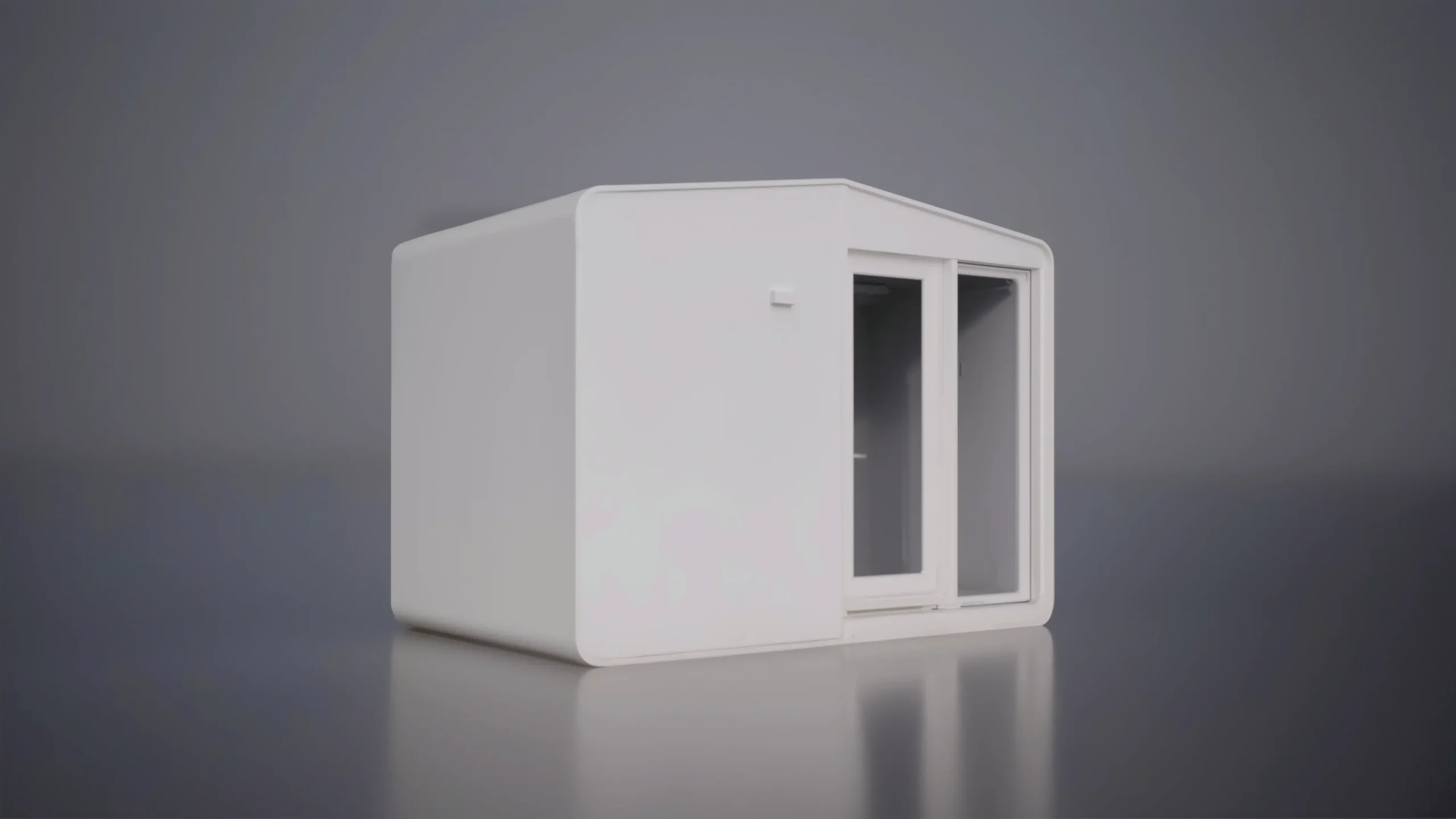
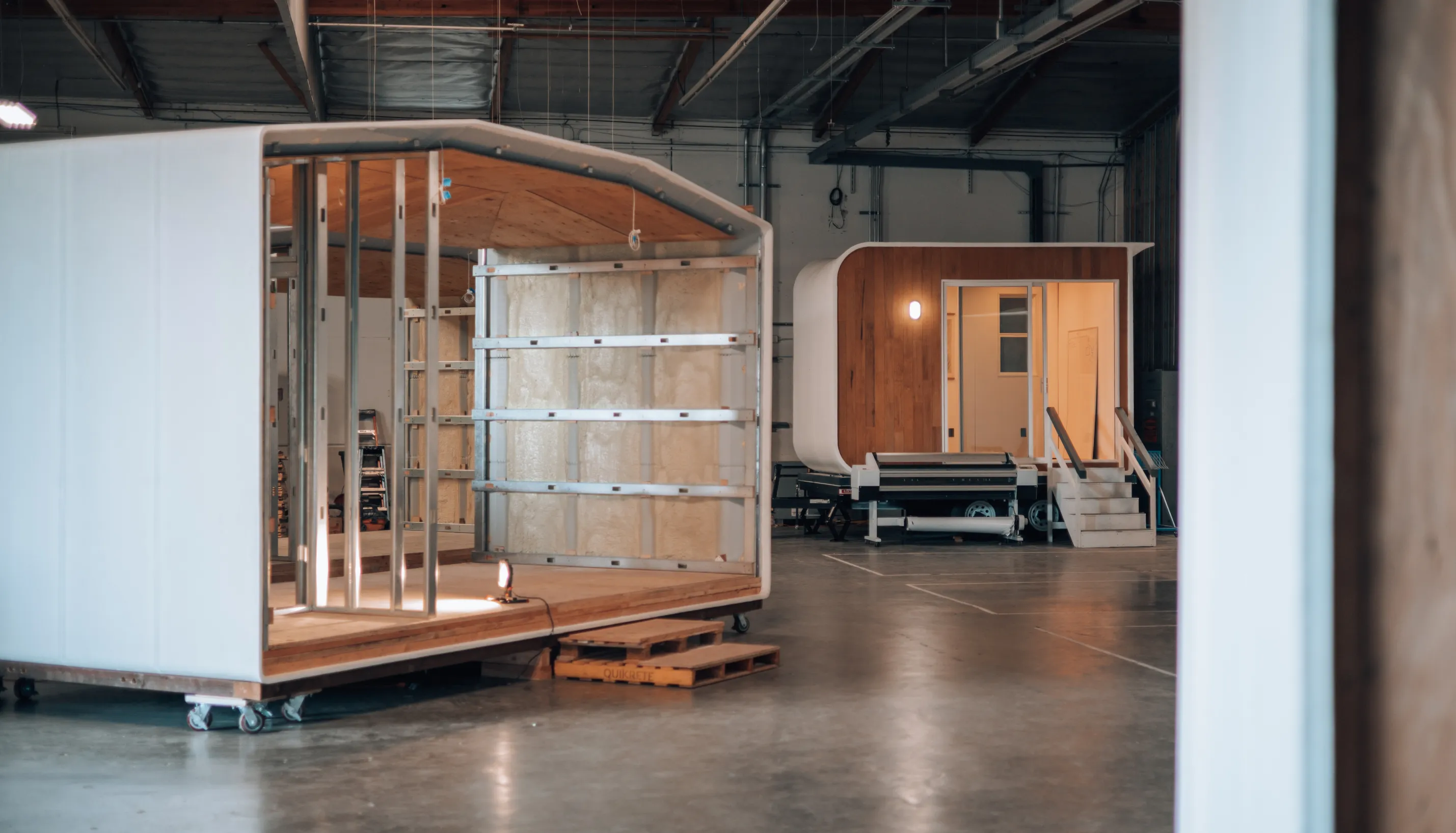
At Azure, we build modular living spaces using robotically 3D-printed construction and recycled materials. Our units are made in a controlled factory setting, then delivered for installation. That can make the build side more predictable, although the site still has to be ready and the local rules still matter.
For corporate housing, modular options may make sense when:
- The company has repeated housing needs
- Rental options nearby are limited
- Housing needs to be close to a project site
- A property owner wants to add living space
- Teams need private units instead of hotel rooms
- The housing plan may grow over time
This is not the right answer for every company. It works best when the location, use case, permits, utilities, and site conditions all line up.
Matching Models to Real Housing Needs
Corporate housing can take different forms, so the model has to match the job.
For Longer Residential Stays
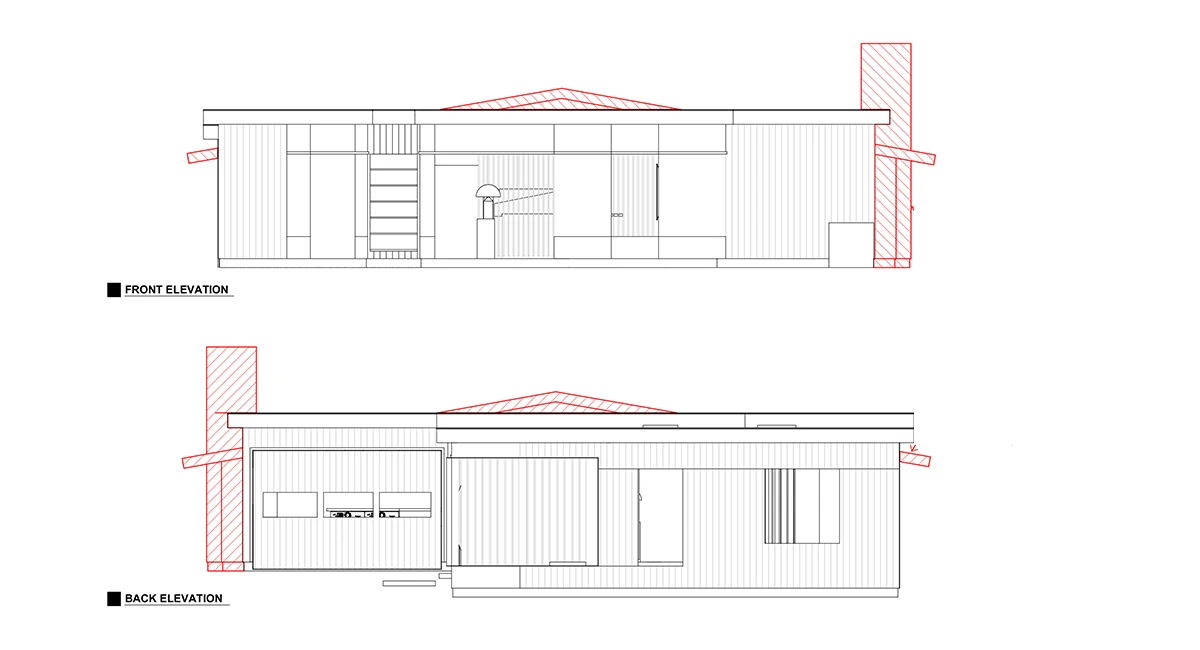
Our Homes & ADUs models are the strongest fit when the goal is complete living space. These units include residential-style layouts with kitchens, bathrooms, bedrooms, and utility planning. They can work for longer stays, family relocation, guest housing, or rental-style use where allowed.
For Flexible Placement
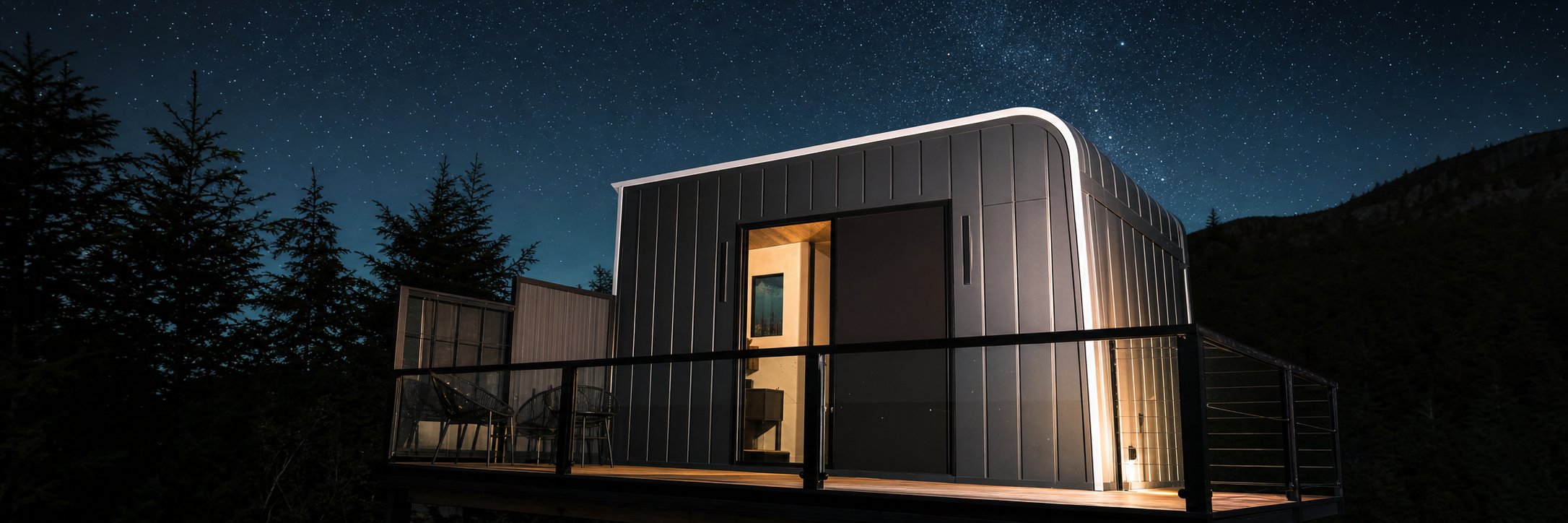
The X Series homes on wheels are different. They are chassis-based models designed for mobility and compact comfort. They may be useful for flexible placement, seasonal work, or project-based housing in places where this type of setup is allowed. The key is placement. A unit on wheels still needs a legal and practical place to sit.
For Support Space Around Housing
The Studio Series is not full housing. These compact structures are better for support uses like offices, meeting rooms, creative space, admin space, or wellness rooms near a larger housing setup. They can be useful, but they should not be treated as residential units.
That distinction matters. A good housing plan starts by matching the structure to the actual need, not forcing one model to do everything.
The Site Still Has a Say
Corporate housing often looks simple until the site gets involved.
A flat, accessible property with nearby utilities is one kind of project. A tight lot with drainage issues, limited delivery access, unclear zoning, or long utility runs is another.
Before choosing a housing setup, companies should look at local zoning, allowed use, permits, utility access, drainage, grading, delivery access, parking, fire access, and maintenance space.
This part is not exciting, but it protects the project. A housing plan can look good on paper and still fail if the property cannot support it.
At Azure, we think site planning should happen early. The unit matters, but so does the land. A corporate housing setup has to work as a real place, not just as a product.
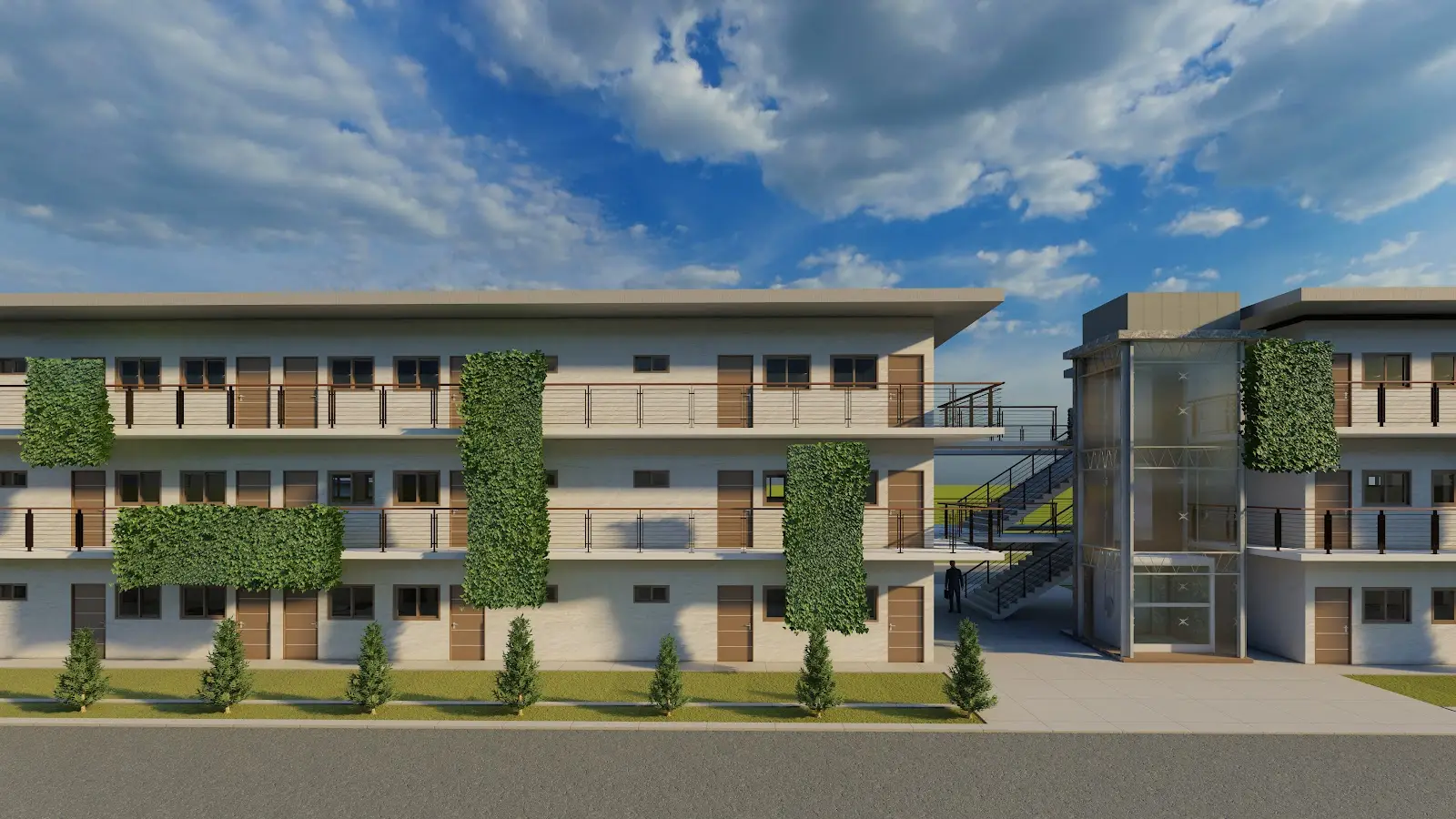
Comfort Is Not a Small Detail
Corporate housing needs to be practical, but practical does not mean uncomfortable.
People working away from home still need a good place to rest. They need heating and cooling, hot water, privacy, storage, reliable internet, and a layout that does not feel like a compromise every day.
This is especially true for longer stays. A space that works for one week may feel frustrating after three months. A small unit can still feel comfortable when the layout is thoughtful. A larger unit can still feel awkward if the basics are not planned well.
Good corporate housing should support the work without taking over someone’s life. That is the standard worth aiming for.
A Better Way to Plan It
The easiest way to plan corporate housing is to start with the people, not the property listing.
Ask:
- Who will live there?
- How long will they stay?
- Could the stay extend?
- Do they need private or shared space?
- How close should housing be to the work site?
- What is included in the full budget?
- Who handles maintenance?
- What happens when the project ends?
For modular or site-based housing, the questions go a step further. Can the unit be delivered? Are utilities available? Are permits required? Does the use fit local rules? Is the site ready?
These questions may feel basic, but they save time. Corporate housing works best when the plan is honest about the people, the place, and the timeline.
Final Thoughts
Corporate housing works by giving employees, contractors, or teams a ready-to-use place to live while work takes them somewhere else. It can be a furnished apartment, a rental home, an extended-stay setup, or a more dedicated housing solution near a project site.
For companies, the real value is not just convenience. It is having housing that fits the stay, supports the people, and keeps the work moving without creating extra stress.
At Azure Printed Homes, we see corporate housing as part of a bigger shift in how living spaces are planned. Work moves. Teams change. Housing needs to be more adaptable than it used to be.
The right setup is not always the fastest option or the cheapest one. It is the one that fits the people living there, the land it sits on, the rules around it, and the job it needs to support.