An Emergency Housing Voucher (EHV) is a federal rental assistance voucher created by the American Rescue Plan Act of 2021 to help people who are homeless, at risk of homelessness, fleeing domestic violence or human trafficking, or recently homeless find and keep housing. The program provided about 70,000 vouchers through local public housing agencies, with $5 billion in funding. Like a standard Housing Choice Voucher, an EHV pays part of the rent for a privately owned unit, and the tenant pays the rest based on income.
The program is now winding down. According to HUD, EHV funding is running out in 2026, and families still using an EHV are being moved to other voucher types.
Who Was Eligible for an Emergency Housing Voucher
EHVs were reserved for four groups of people:
- Homeless: individuals and families experiencing homelessness.
- At risk of homelessness: households in danger of losing their housing.
- Fleeing violence: people fleeing or attempting to flee domestic violence, dating violence, sexual assault, stalking or human trafficking.
- Recently homeless: households that were recently homeless and for whom rental assistance would prevent a return to homelessness or a high risk of housing instability.
How the EHV Program Works
Referrals Through the Continuum of Care
Unlike regular vouchers, EHVs were not available through an open waiting list. Public housing agencies received referrals mainly from their local Continuum of Care, the network of homeless service providers in each region, which uses a coordinated entry system to identify people with the greatest need. Victim service providers could also make referrals.
Finding a Unit
Once a household received a voucher, it searched for a rental unit on the private market. The unit had to pass an inspection and the rent had to fall within the program’s limits. The housing agency then paid its share of the rent directly to the landlord.
Paying Rent
The household generally pays about 30% of its adjusted income toward rent and utilities, and the voucher covers the remainder, up to the local payment standard. Agencies also received services fees that could pay for security and utility deposits, application fees, moving costs and landlord incentives to help families lease up faster.

EHV vs. Housing Choice Voucher
| Feature | Emergency Housing Voucher | Housing Choice Voucher |
| Created by | American Rescue Plan Act of 2021 | Long-standing HUD program |
| Who can receive one | Four specific groups tied to homelessness and violence | Low-income households that meet income limits |
| How to get one | Referral, mainly through the Continuum of Care | Apply through the public housing agency waiting list |
| Funding | One-time funding, now running out | Annual appropriations |
| Tenant share of rent | About 30% of adjusted income | About 30% of adjusted income |
What Is Happening to the EHV Program in 2026
When the program started, HUD expected the original funding to last until 2030. Rents rose faster than expected, and in 2025 HUD announced that EHV funding would run out in 2026. Agencies could not reissue a previously leased EHV to a new family after September 30, 2023, and in April 2025 HUD told agencies to stop issuing EHVs altogether.
Congress did not add new money to the EHV program in the 2026 appropriations law, but it allowed tenant protection voucher funding to support families who would otherwise lose their EHV. Under a HUD notice issued in September 2026, families leasing with an EHV as of September 30, 2026 are being moved to tenant protection vouchers by the end of December 2026. Funding for those vouchers in later years depends on future appropriations.
If you currently use an EHV, your public housing agency is the best source of information on your transition and any new paperwork.
Other Options If You Need Housing Help
- 211: call or text 211 to reach local shelters, rental assistance and housing programs.
- Continuum of Care: local homeless service providers can connect you with rapid rehousing and supportive housing.
- Housing Choice Vouchers: apply through your local public housing agency when its waiting list is open.
- Domestic violence services: the National Domestic Violence Hotline and local shelters provide confidential housing help.
- Veterans programs: the VA offers housing assistance for veterans who are homeless or at risk.
Why Supply Matters as Much as Vouchers
A voucher is only as useful as the apartments it can be used on. In tight rental markets, finding a landlord and a unit that qualified could take months. More housing, especially interim and supportive units, makes vouchers easier to use.
At Azure Printed Homes, we work with government agencies and nonprofits to build housing for unhoused and displaced communities. Our printing facilities can be established in weeks, and units are finished in our factory, so sites and units can be developed at the same time. Sleeping pods and bathrooms can be deployed quickly for emergency needs.
For larger projects, our developer building system offers rapidly deployable, code-compliant interim and supportive housing, with pre-engineered studio, one-bedroom and two-bedroom modules. Our printed units use a material that is more than 60% recycled plastic, about 100,000 plastic bottles for every 120 square feet.
Smaller self-contained homes are also available. Our Homes & ADUs start with the A-360, a one-bedroom home with a bathroom and kitchen, at $89,900, before site work, foundations, permits and delivery.

Can Homeowners Rent an ADU to a Voucher Holder?
Yes. Private landlords, including homeowners with an accessory dwelling unit, can rent to households with Housing Choice Vouchers and, during the transition, tenant protection vouchers. The unit must pass the housing agency’s inspection, and the rent must be reasonable for the local market and fall within the program’s limits. The agency then pays its share of the rent directly to the landlord each month.
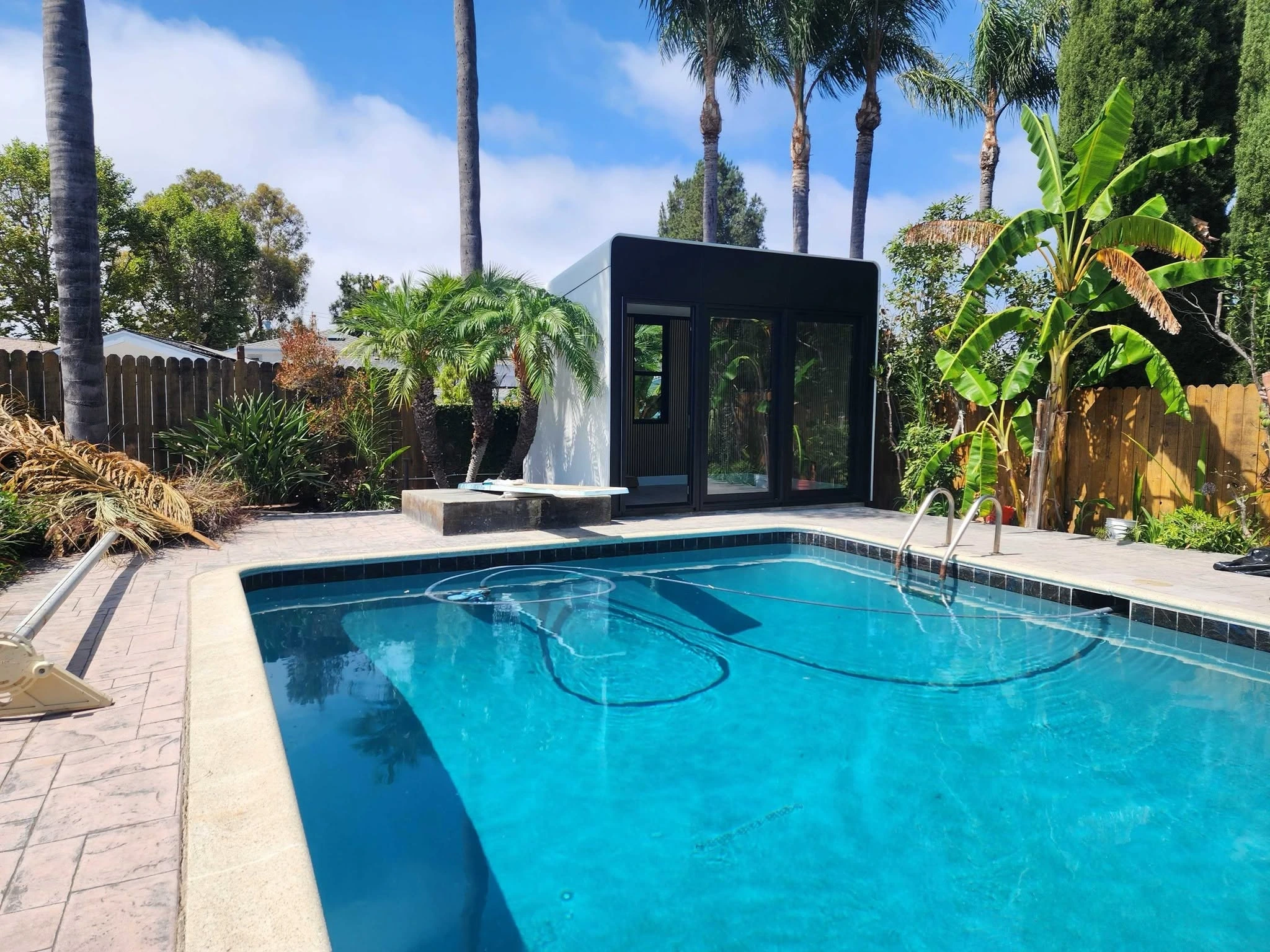
A permitted ADU with its own kitchen and bathroom can meet these requirements. Our Homes & ADUs are built in our factory with completed electrical, mechanical and plumbing work and standard finishes:
- A-360: one bedroom, one bathroom and a kitchen in 360 square feet, from $89,900.
- A-540: one bedroom, one bathroom and a kitchen in 540 square feet, from $134,900.
- A-900: two bedrooms and 1.5 baths in 900 square feet, from $219,900, suited to a family with children.
Site work, the foundation, permits and delivery are separate. For permanent units, we handle the building permit for the factory-built home, and the owner handles permits for the foundation and utilities.
How Long It Takes to Add Factory-Built Housing
For agencies, every month a project slips is another month families spend on a waiting list. Factory construction shortens that time because the site is prepared while the units are built.
For our ADUs and homes, a site plan typically takes two to four weeks, local approval can take 8 to 24 weeks, fabrication takes four to six weeks, and delivery and installation about one week. Where approval is quick, a unit can be delivered within 90 to 120 days. For larger projects, our printing facilities can be established in weeks almost anywhere and localize manufacturing close to where housing is needed.
Conclusion
An Emergency Housing Voucher is a rental assistance voucher created in 2021 for people who are homeless, at risk of homelessness, fleeing violence or recently homeless. Households received EHVs through referrals, mainly from the local Continuum of Care, and paid about 30% of their adjusted income toward rent. With funding running out in 2026, families still using an EHV are being moved to tenant protection vouchers.
For agencies and nonprofits working to add interim and supportive housing, contact us to discuss factory-built units for your community.