Renting your house to corporate housing can be a smart way to turn unused space into steadier rental income. But it is not the same as listing a home for weekend guests and hoping the calendar fills up.
Corporate housing is usually built around longer stays. The guest may be a traveling nurse, a relocated employee, a consultant, a project manager, an insurance housing guest, or someone working nearby for a few months. They need a place that feels easy to live in, not just nice in photos.
At Azure Printed Homes, we think about housing in a practical way. A good rental should be comfortable, efficient, simple to maintain, and matched to the property. It should also follow local rules, because a great-looking rental can still become a problem if the use is not allowed.
If you are asking, “How do I rent my house to corporate housing?” start with the basics: what kind of space you have, who it can serve, and what it needs to function well for longer stays.
Start With the Stay, Not the Listing
Before you furnish the space or write the listing, think about the kind of stay your home can support.
Corporate housing is not one single thing. A full house may work well for a family relocating to the area, an insurance placement, or a work team that needs several bedrooms. A detached ADU may be better for one person or a couple staying for 30, 60, or 90 days. A small backyard studio can add useful work space, but it usually is not a full housing unit unless it has the right residential setup.
That is why the use case matters so much.
A guest staying for two months will notice things a weekend guest may ignore. They need storage, laundry, good Wi-Fi, a working kitchen, parking, lighting, privacy, and a place to sit with a laptop. They need the house to work on a Tuesday night after work, not just look cute on a booking page.
A strong corporate rental usually has:
- A furnished bedroom with a good mattress
- A kitchen or kitchenette that supports real meals
- Reliable internet
- Heating and cooling
- Laundry access
- A simple workspace
- Clear parking
- Enough storage for longer stays
That list is not fancy, but it is important. Corporate housing is about livability first.
Check the Rules Before You Get Too Far
This is the part people want to leave for later. It should come early.
Before renting your house to corporate housing, check what your city, county, HOA, insurance provider, and mortgage terms allow. A 30-day furnished rental may be treated differently from a short-term vacation rental, but that does not mean it is automatically allowed.
Local rules can affect minimum rental length, business licenses, local taxes, occupancy, parking, ADU rental use, safety requirements, and whether the property can be rented in the way you plan.
The better question is not only, “Can I rent my house?” It is, “Can I rent this specific space for this specific type of stay?”
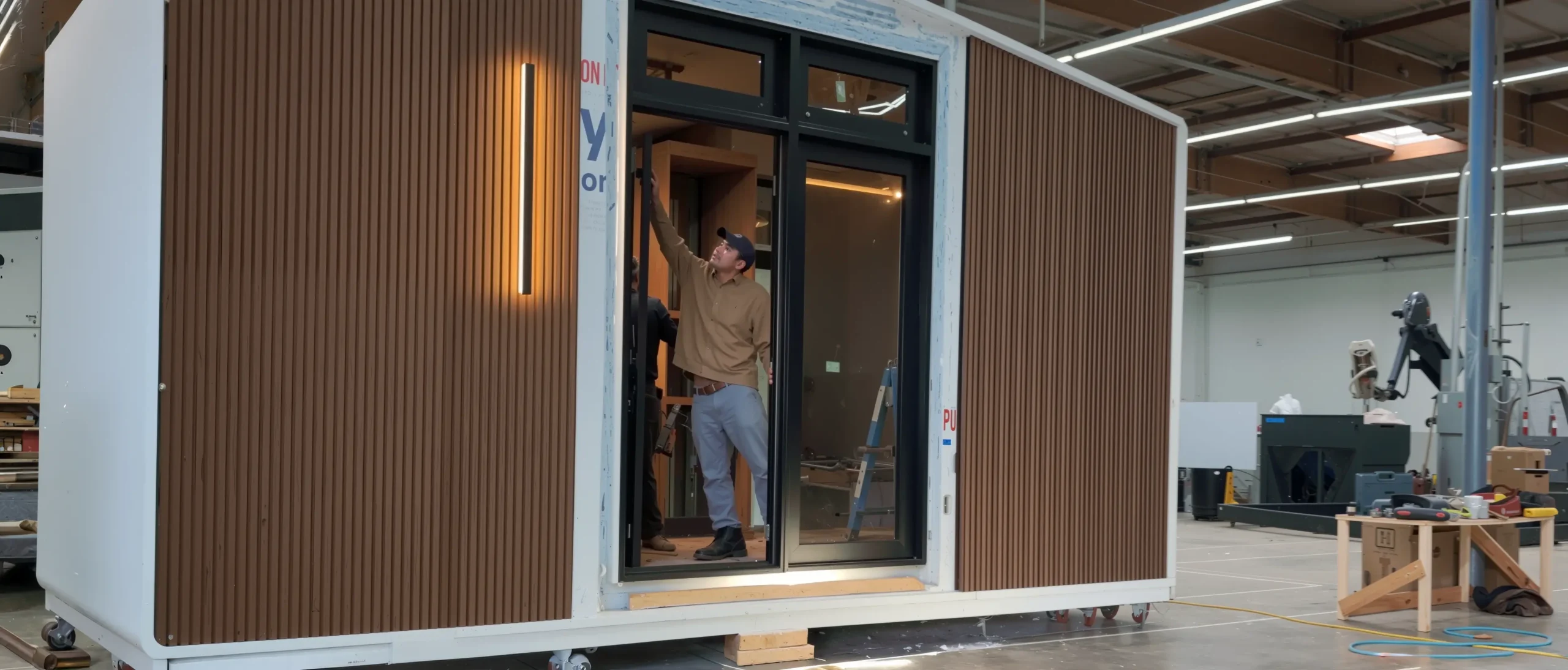
That distinction matters. A main house, ADU, home on wheels, and backyard studio may all follow different rules. At Azure, we separate our models for that same reason. Our Homes & ADUs are designed for more complete living uses, with kitchens, bathrooms, bedrooms, and utility planning. Our X Series homes on wheels are built for mobility and comfort, but placement rules matter. Our Studio Series works well as flexible backyard space, but it should not be confused with a full residential rental by default.
The category matters. The property matters. The intended use matters.
Make the Home Feel Easy to Live In
Corporate housing guests are usually not looking for a themed escape. They are looking for a place where life can run normally for a while.
Comfort Comes First
The sofa should be comfortable. The bed should be good. The kitchen should have enough cookware, dishes, utensils, and storage containers. The bathroom should feel clean and easy to use. The bedroom should have extra linens and enough space to unpack.
It helps to walk through the home like a guest arriving after a long day. Can they find the Wi-Fi? Can they make coffee in the morning? Is there a place to charge a phone by the bed? Can they take a video call without sitting on the couch with a laptop balanced on their knees?
Small things make a big difference over a longer stay.
Give People a Real Place to Work
A workspace is one of those things. It does not have to be a full office. A steady table, comfortable chair, good light, and nearby outlet can do a lot. If the home has a detached studio or extra room, that can make the rental more useful for remote workers or people who need quiet.
This is where a separate structure can add value. A backyard studio may not be the rental unit itself, but it can make the main house more attractive when it gives guests a quiet place to work, create, or step away from the rest of the home.
Price It Like a Monthly Home, Not a Weekend Stay
Corporate housing pricing is different from short-term rental pricing. You are not only charging for a night. You are offering a furnished home that someone can move into with less friction.
That can include furniture, utilities, internet, basic supplies, maintenance, and flexibility. But the price still has to make sense for the local market.
Start by comparing furnished rentals with similar size, location, condition, parking, laundry, and lease length. Do not compare your furnished corporate rental to an unfurnished apartment with a 12-month lease. Also do not rely only on vacation rental nightly rates. Both can throw off your numbers.
Think through the full cost of operating the home. Utilities, cleaning, repairs, internet, lawn care, furniture replacement, insurance, vacancy, taxes, and platform fees can all affect the final return.
The goal is not always the highest possible monthly rent. A fair price with good occupancy and respectful guests can be better than an aggressive price that leaves the home empty or attracts the wrong fit.
Find the Right Guest, Not Just Any Guest
The best corporate housing plan usually starts with a specific renter in mind.
If your home is near a hospital, traveling nurses or medical staff may be a good fit. If it is near a corporate campus, relocation guests or project workers may make more sense. If it has multiple bedrooms, insurance housing or family relocation could be a stronger match. If it is a small detached unit, a single professional may be the ideal guest.
Your listing should make that fit clear. Instead of trying to sound perfect for everyone, explain what the home actually offers.
Mention the things corporate guests care about: distance to major employers or hospitals, Wi-Fi, workspace, laundry, parking, number of beds and bathrooms, utilities, pet policy, and minimum stay.
Photos should also be useful, not only pretty. Show the kitchen, bedroom, bathroom, workspace, storage, laundry, parking, entrance, and outdoor access if it matters. A guest staying for months wants to understand the layout before they commit.
You can list the home through furnished rental platforms, medium-term rental platforms, travel nurse housing sites, corporate housing companies, relocation providers, insurance housing networks, or local property managers who handle furnished rentals. Some homeowners also reach out to nearby hospitals, employers, staffing firms, and relocation agents.
Use Clear Terms From the Beginning
A corporate housing rental still needs strong paperwork. Even when the guest seems responsible, the details should be clear.
Decide the minimum stay, rent, deposit, utility limits, pet rules, parking rules, guest limits, cleaning expectations, maintenance access, move-in process, and move-out process before anyone arrives.
Also be clear about who pays. Sometimes the guest pays directly. Sometimes a company, agency, or housing provider pays. If a business is involved, make sure the agreement explains who is responsible for rent, damage, extensions, early move-out, and communication.
It is also smart to document the condition of the home before move-in. Take photos. Keep an inventory list. Note furniture, appliances, linens, and any existing wear. This is not about being difficult. It keeps the relationship clean.

Where an ADU Can Make Sense
If you have room on your property, an ADU can be a strong fit for corporate housing where local rules allow it.
An ADU gives guests a private place to stay while keeping the main house separate. It can work for traveling professionals, temporary employees, relocation stays, visiting family, or longer guest use. It can also give homeowners more flexibility because the property is serving more than one purpose.
A Better Fit for Longer Stays
Our Homes & ADUs are the Azure models that usually fit this kind of rental thinking best. They are designed for real living, with kitchens, bathrooms, bedrooms, and utility connection planning. That makes them more suitable for longer stays than a simple backyard room.
But an ADU is still a real housing project. It needs local approval, site planning, utilities, drainage, foundation planning, access, and inspections. Factory-built construction can make the build path more predictable, but the property still has to be ready.
Think Through the Daily Details
The best ADU rental plans are practical from the start. They think about privacy, parking, Wi-Fi, laundry, storage, lighting, and how the guest will actually use the space day after day.
A Few Things Worth Checking Before You List
Before you put the home on the market, slow down and check the pieces that usually cause problems later.
Start with the rules and paperwork:
- Confirm that the rental use is allowed
- Check the minimum stay rules
- Review your insurance coverage
- Find out if you need a local license or tax registration
- Look at HOA restrictions if they apply
- Make sure parking rules are clear
Then look at the home itself. Test the Wi-Fi. Sit at the desk. Open the closets. Cook a simple meal. Run the laundry. Check the lighting at night. Make sure parking is easy to explain. These little tests can show you what a guest will notice right away.
The home does not have to be perfect. It does need to be honest, functional, and easy to manage.
Looking at the Bigger Picture
Not every corporate housing plan needs a new unit. Sometimes an existing home only needs better furnishing, clearer terms, and smarter positioning. Other times, a property has room for a separate ADU or small living space that can create a more flexible rental setup.
A Studio Series unit may add useful space to a property, especially as an office or creative room. An X Series home on wheels may work where chassis-based placement is allowed. A Homes & ADUs model may be a better fit when the goal is a more complete residential rental.
The right option depends on the land, the rules, the utilities, and the person who will live there. That is the real planning work.
Conclusion
Renting your house to corporate housing can be a smart move when the space is comfortable, legal, easy to manage, and matched to real demand.
The strongest rentals are not always the fanciest ones. They are the homes that make daily life simple. Good internet. A real bed. A usable kitchen. Laundry. Parking. Clear rules. Fast maintenance. A quiet place to work. Those things matter more over a two-month stay than trendy decor ever will.
If you are using an existing house, start by making it livable for longer stays. If you are thinking about an ADU or separate unit, start with the use case and local rules before choosing the model. If you are considering a home on wheels, make sure the placement path is clear.
Corporate housing works best when it feels settled from the first day. That is the goal. A place where someone can land, work, rest, and live comfortably for a while.