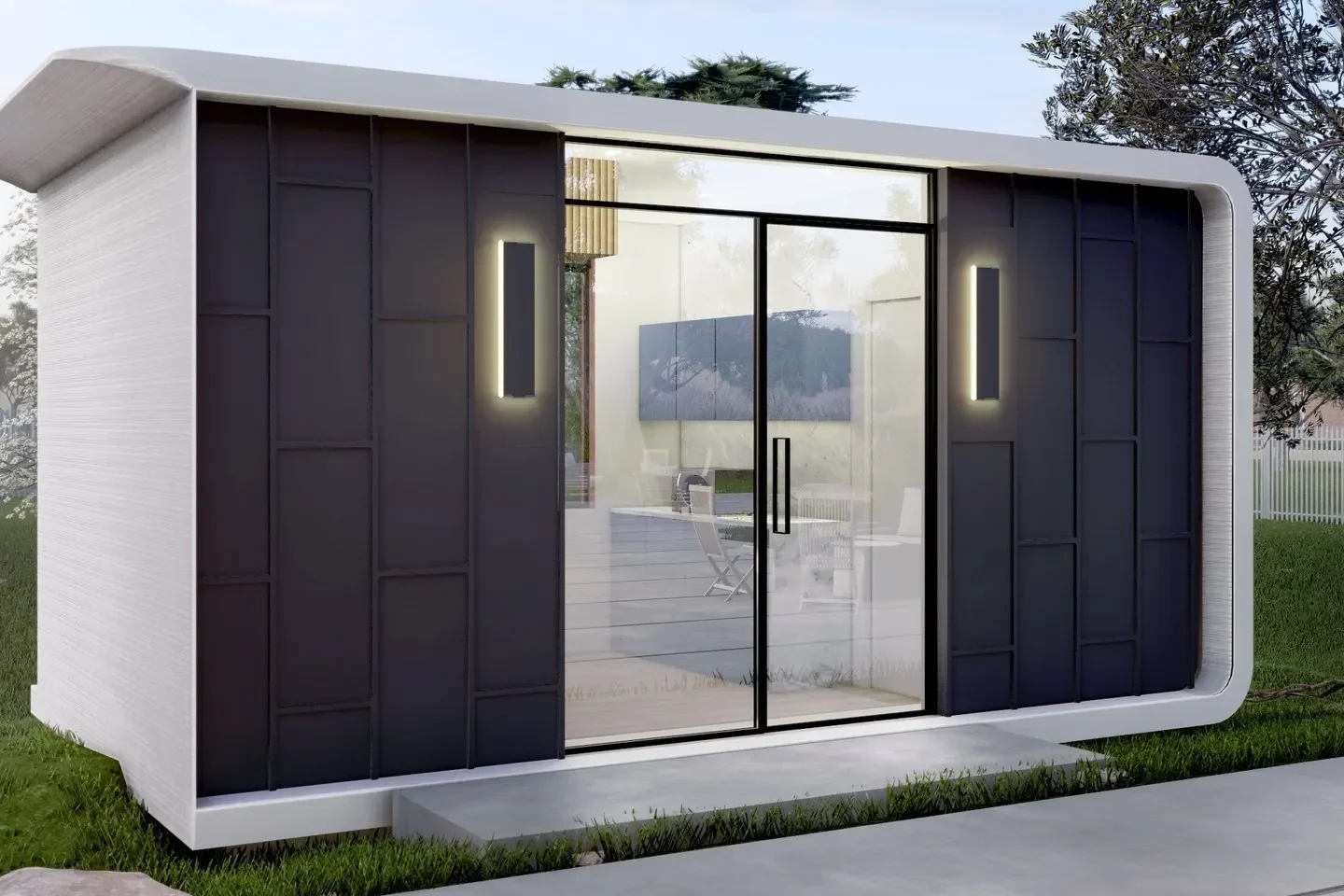
Corporate housing is temporary or mid-term housing for people who need a place to stay because of work. It can be used for relocations, project teams, traveling healthcare staff, construction crews, seasonal workers, consultants, interns, or employees who need to live near a job site for a set period of time.
The main idea is simple. Corporate housing gives someone a ready-to-use place to live when a hotel feels too limited and a long lease does not make sense.
That usually means a furnished space with the basics already handled. A bed. A bathroom. A kitchen or kitchenette. Heating and cooling. A place to work. Enough privacy to feel settled after a long day.
At Azure Printed Homes, we see corporate housing as a practical housing problem. People need a place that fits the work, the site, and the timeline. It does not have to be oversized or complicated. It needs to be comfortable, durable, easy to live in, and planned well enough that it helps the project instead of slowing it down.
A Place to Land While Work Is Happening
Corporate housing is not one exact type of property. It is more about the purpose of the housing.
A company may use a furnished apartment for one relocating employee. A healthcare group may need housing for traveling nurses. A construction company may need units near a job site. A project owner may need repeatable housing that can support workers for several months at a time.
Corporate housing may be used when:
- An employee is moving for a new role
- A team needs to stay close to a worksite
- A hospital needs temporary housing for traveling staff
- A company is training workers in another city
- A construction or infrastructure crew is away from home
- A seasonal team needs practical housing
- A family needs temporary housing during repairs or insurance work
- A public agency or nonprofit needs interim housing for a specific program
The common thread is time. Someone needs to live somewhere for work, but not necessarily forever.
That is why corporate housing sits in a useful middle space. It gives people more comfort than a short hotel stay, without forcing a company or worker into a long-term housing commitment.
Why Companies Use It
Housing can affect how well a work assignment goes. That may sound obvious, but it is easy to overlook.
If someone is away from home for weeks or months, the place they stay matters. A hotel room can feel fine for a few nights. After a while, it can start to feel cramped and tiring. Cooking becomes harder. Laundry becomes annoying. Work calls happen from the edge of a bed. Small things become daily frustrations.
Corporate housing helps reduce that friction.
Companies may use corporate housing to:
- Support employees during relocations
- Keep teams closer to project sites
- Reduce long hotel costs
- Give workers more privacy and routine
- Make temporary assignments easier to accept
- Support hiring in areas with limited rental supply
- Create more predictable housing plans
There is also a human side here. A person who can cook a normal meal, wash clothes, sleep properly, and close the door at the end of the day is going to have a better experience than someone living out of a suitcase for months.
That does not mean every work trip needs corporate housing. It means longer stays need a different kind of thinking.
Hotels, Leases, and the Space Between
Corporate housing often makes more sense when the stay is too long for a hotel but too short for a regular lease.
A hotel works well for quick trips. It is easy to book, easy to leave, and usually close to airports, offices, or meeting spots. But hotels are not always built for daily life. They are built for visits.
A regular lease works when someone knows they will stay in one place for a year or more. But it can be too rigid for a temporary assignment. The company or worker may have to deal with furniture, utilities, deposits, internet setup, and a commitment that lasts longer than the job.
Corporate housing fills that gap.
When a Hotel Is Enough
A hotel may be the better choice when the stay is only a few nights, the person needs daily service, or the trip is mostly meetings and travel.
For short stays, simplicity matters more than having a full living setup.
When Corporate Housing Makes More Sense
Corporate housing becomes more useful when someone needs to live in the space, not just sleep there.
It may be the better fit when:
- The stay lasts several weeks or months
- The person needs a kitchen
- Laundry and storage matter
- The worker needs a quiet place to take calls
- The company wants clearer monthly housing costs
- The assignment may extend or shift
The goal is not luxury. The goal is a place that supports normal life while work is happening.
What Good Corporate Housing Should Include
A good corporate housing setup should be easy to understand and easy to live in. It should not make the worker solve basic housing problems after arrival.
The essentials usually include:
- Sleeping space
- Bathroom access
- Kitchen or kitchenette
- Heating and cooling
- Basic furniture
- Internet or work-ready connectivity
- Storage
- Laundry access where possible
- Safe parking or site access
- Reliable utilities
For longer stays, layout matters more than people think. A compact space can work well if it is planned around real routines. A larger unit can still feel awkward if there is no useful storage, no good place to work, or no separation between sleeping and daily life.
This is why we do not think about small spaces only by square footage. A good housing unit has to work in the morning, after work, during a phone call, and on a quiet night when someone just wants to feel at home for a bit.
The Site Matters as Much as the Unit
Corporate housing is not only a housing decision. It is also a site decision.
Where will the unit go? Can people get to work easily? Is there space for delivery and installation? Are utilities available? What does the local authority allow? How long can people stay there? Is the housing temporary, permanent, movable, or part of a larger property plan?
These questions should come early.
Before choosing a housing format, it helps to review:
- The number of people who need housing
- The length of stay
- The type of work being supported
- The property and local rules
- Utility access
- Fire access and parking
- Delivery and installation needs
- Maintenance responsibilities
- What happens when the project changes or ends
That last point is important. Corporate housing often has to adjust. Teams rotate. Timelines shift. Projects grow. Sometimes the housing needs to stay longer than expected. Sometimes it needs to move or be reused somewhere else.
A better plan leaves room for real life.
Where Modular Housing Can Help
Modular housing can be a strong fit for corporate housing because it gives companies, developers, and project owners a more repeatable way to add usable space.
Instead of building everything from scratch on site, the structure is produced in a controlled environment, finished, delivered, and installed. That can make the timeline easier to plan and reduce some of the mess that comes with traditional construction.
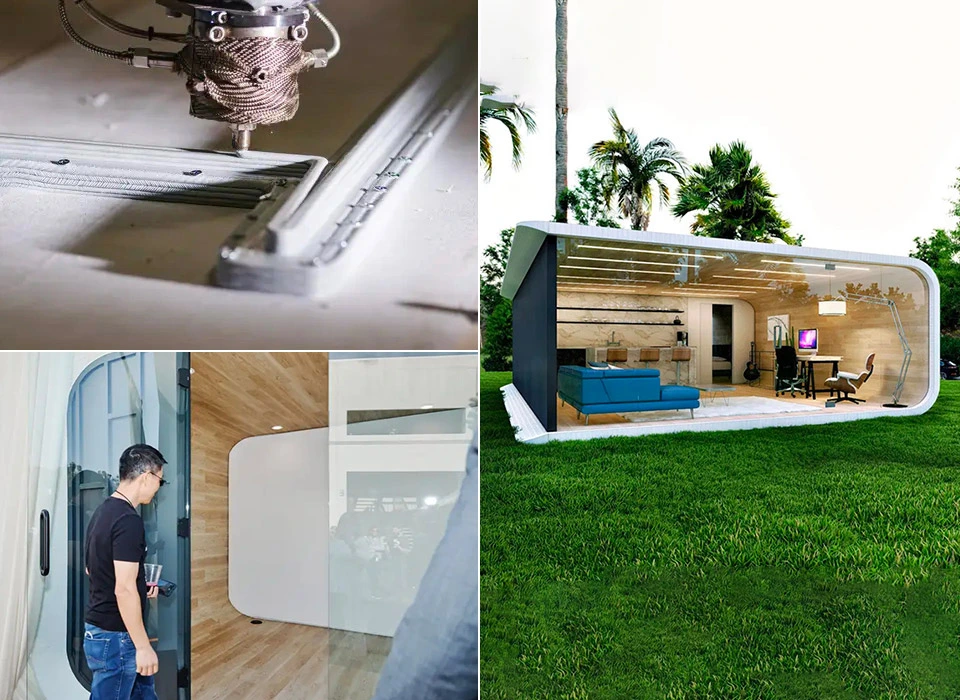
At Azure, we robotically 3D-print our units using recycled materials. The shell of a unit can be printed in about one day, then finishes, electrical, plumbing, and interior details are installed before delivery.
For corporate housing, the value is not just speed. It is predictability.
A company may need one unit now and more later. A developer may need a repeatable setup for a larger site. A healthcare provider may need practical housing near a facility. A public partner may need interim housing that can be planned with dignity and durability in mind.
The structure still has to fit the site and local rules. But a controlled manufacturing process can make the housing side easier to organize.
Different Work Housing Needs, Different Azure Models
Not every model is right for every corporate housing use. That is where the planning has to be honest.
Homes & ADUs for Longer Stays
Our Homes & ADUs are the strongest fit when the project needs more complete living space. These models include kitchens, bathrooms, bedrooms, and utility connection planning.
They can work for employee housing, guest housing, longer project stays, family support, or rental-style use where local rules allow it.
The models range from 360 sq ft to 900 sq ft. A 360 sq ft unit can work well for one person or a simple living setup. A 720 sq ft or 900 sq ft unit may make more sense when people need more room, longer stays, or a layout that feels closer to a traditional home.
This category usually needs more planning around permits, utilities, foundation, drainage, delivery, and inspections. That is not a bad thing. It just means the housing is being planned as real living space.
X Series for Flexible Placement
Our X Series homes on wheels are chassis-based models built for compact living and mobility. They may be useful where wheeled housing is allowed and where the project needs more flexibility.
This can be helpful for certain work sites, seasonal uses, park-style placements, or land plans where a movable unit makes more sense than a fixed structure.
The important part is placement. A home on wheels still needs a legal and practical place to go. It needs site access, drainage, utility planning, and a use case that fits local rules.
Mobility helps. It does not replace planning.
Studio Series for Support Space
Our Studio Series is not usually the main answer for full corporate housing because these units are better suited for flexible extra space. But they can still support a corporate housing setup.
A studio could work as a small office, check-in space, quiet work room, wellness room, storage area, or shared support structure near housing units.
That can be useful on sites where people need more than sleeping space. Sometimes the best housing plan includes small support spaces that make the whole site work better.
Costs Should Be Planned Honestly
Corporate housing budgets should include more than the model price.
The full project may include:
- Unit cost
- Delivery
- Site preparation
- Foundation or pad work
- Utility connections
- Permits and inspections
- Furniture and appliances
- Internet
- Insurance
- Cleaning and maintenance
- Management
- Future reuse or relocation
This is where a lot of plans become more realistic. A lower starting price helps, but it is not the full cost of housing people well.
The better question is not only, “What does the unit cost?” It is, “What will it take to make this unit usable on this site for this purpose?”
That question saves trouble.
Common Mistakes to Avoid
One common mistake is treating corporate housing as just a bed near a job site. That may solve the first night, but it may not support a person for two or three months.
Another mistake is choosing the unit before checking the site. A model may look right, but the land may need grading, utility work, access planning, or local approval.
A third mistake is assuming temporary housing can be less thoughtful because people are not staying forever. Temporary still means daily. People still need to sleep, shower, eat, work, store their things, and feel safe.
The housing does not need to be fancy. It does need to work.
A Practical Way to Think About It
Corporate housing is part of how work gets done. When a company asks people to move, travel, or stay near a project, housing becomes part of the operating plan.
The best projects usually start with a few simple questions:
- Who will live there?
- How long will they stay?
- What do they need each day?
- What type of unit fits that use?
- Where will the unit go?
- What rules apply?
- What will the full project cost be?
- Can the housing adapt if plans change?
These questions keep the process grounded. They also help avoid forcing the wrong housing format into the wrong situation.
Conclusion
Corporate housing means furnished housing for people who need a temporary or mid-term place to live because of work. It can support relocations, traveling professionals, project teams, seasonal staff, healthcare workers, construction crews, and other work-related needs.
The best corporate housing is practical. It gives people enough comfort, privacy, and routine to live well while they are away from home. It also fits the site, local rules, utilities, timeline, and budget.
At Azure Printed Homes, we see corporate housing as a real living plan, not just a temporary fix. A Studio Series unit may support a site as an office or shared space. An X Series home on wheels may work where flexible placement is allowed. A Homes & ADUs model may be the better fit for more complete employee housing or longer stays.
The right answer depends on the people, the land, and the purpose. When those pieces line up, corporate housing can make work assignments feel a lot more manageable.